

NFL Prospects Who Killed It at the Combine but Flew Under the Radar
Each year, the NFL Scouting Combine provides us with a clear look at the best athletes of the draft class. The problem with this highly visible workout is that everyone seems overly focused on the 40-yard dash.
Almost all of the top performers you read about from the combine are guys who posted blazing 40 times. Though it’s nice to run a fast 40, there is a lot more to a player’s athletic measurables than straight-ahead speed.
Using a system that I’ve been using since 2012 that combines all of a player’s athletic measurables to generate one composite grade, we can take a more complete look at how these players did at the combine.
What follows is a look at the best athletes from the 2015 scouting combine that nobody seemed to notice.
What the Grades Mean
1 of 11
To interpret the data within the measurables, use the key below:
Speed/Agility Grade: The combined average times of a prospect’s 40, short shuttle and three-cone drill. This allows for a better comparison of the straight ahead, lateral and change-of-direction speed of a given prospect.
Explosion Grade: The prospect’s combined number of bench reps, vertical jump and broad jump. This gives a more complete gauge of the prospect’s explosive capabilities.
Speed/Weight Grade: A score based on formula that takes into account the prospect's weight and the average of all three speed times to produce a number that reflects a player’s speed relative to his weight. The goal is to put prospects of various weight groups on a level playing field when determining speed.
These elements are then combined to create a Total Grade.
Justin Coleman, CB, Tennessee
2 of 11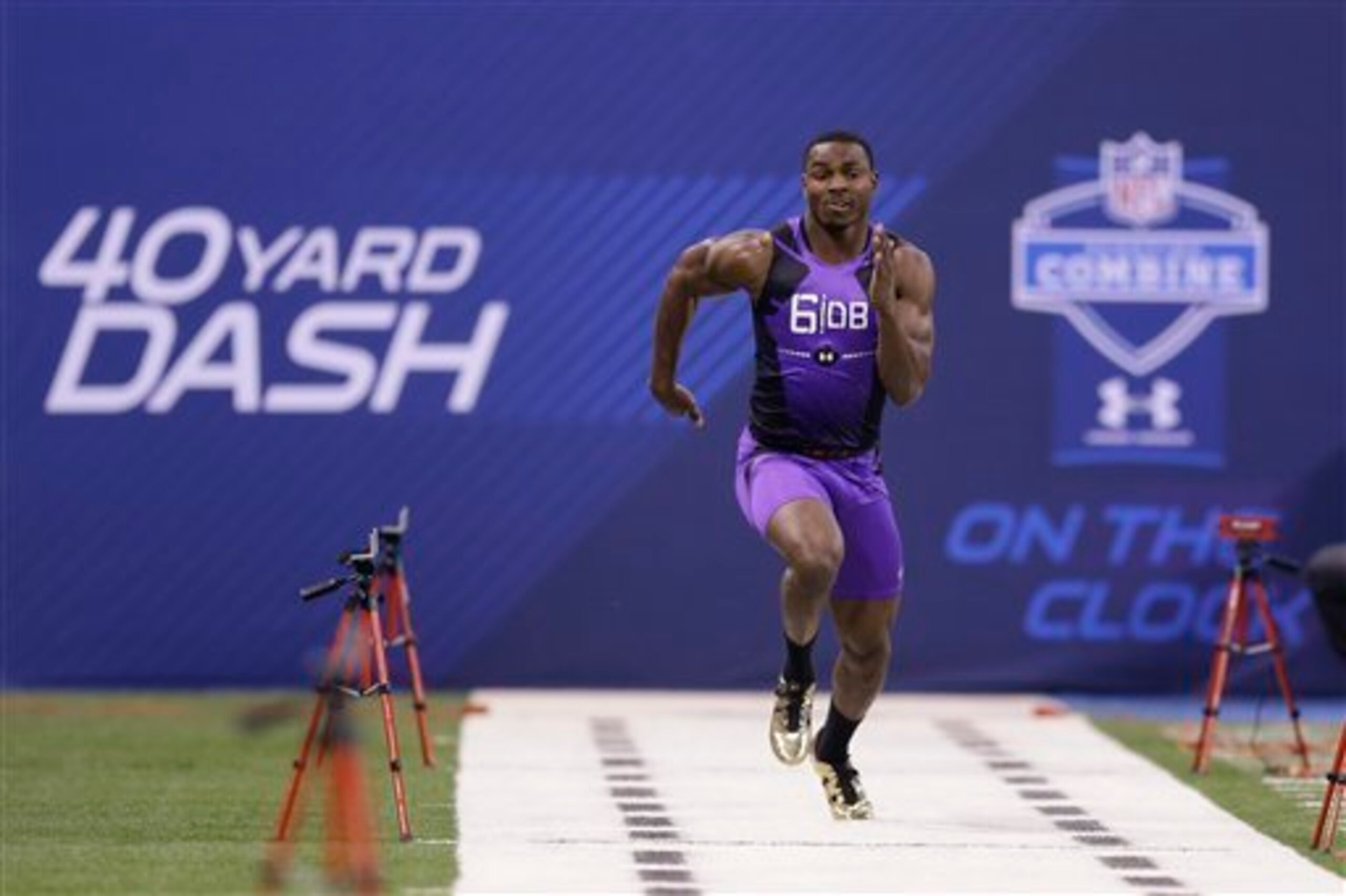
Arm/Hand Grade: 5.55
Height Grade (5’11”): 5
Speed/Agility Grade: 9.5
Explosion Grade: 7.5
Speed/Weight Grade (185 lbs): 7.2
Total Grade: 6.95
Michigan State's Trae Waynes caught everyone’s attention with his blazing 4.31 seconds in the 40-yard dash, but few people had anything to say about Justin Coleman.
Coleman’s Total Measurables Grade surpassed all cornerbacks who participated in every drill.
Though most people focus on the 40 times, few pay attention to the three-cone drill and the short shuttle, which is one of the biggest mistakes when looking at on-field testing. The latter two happen to be where Coleman thrives.
His 6.61 seconds in the three-cone drill was the best time of the 2015 draft class. He also completed the short shuttle in less than four seconds. These two exercises illustrate a player’s ability to change directions and lateral quickness, which is ideal for a cornerback.
Bobby McCain, CB, Memphis
3 of 11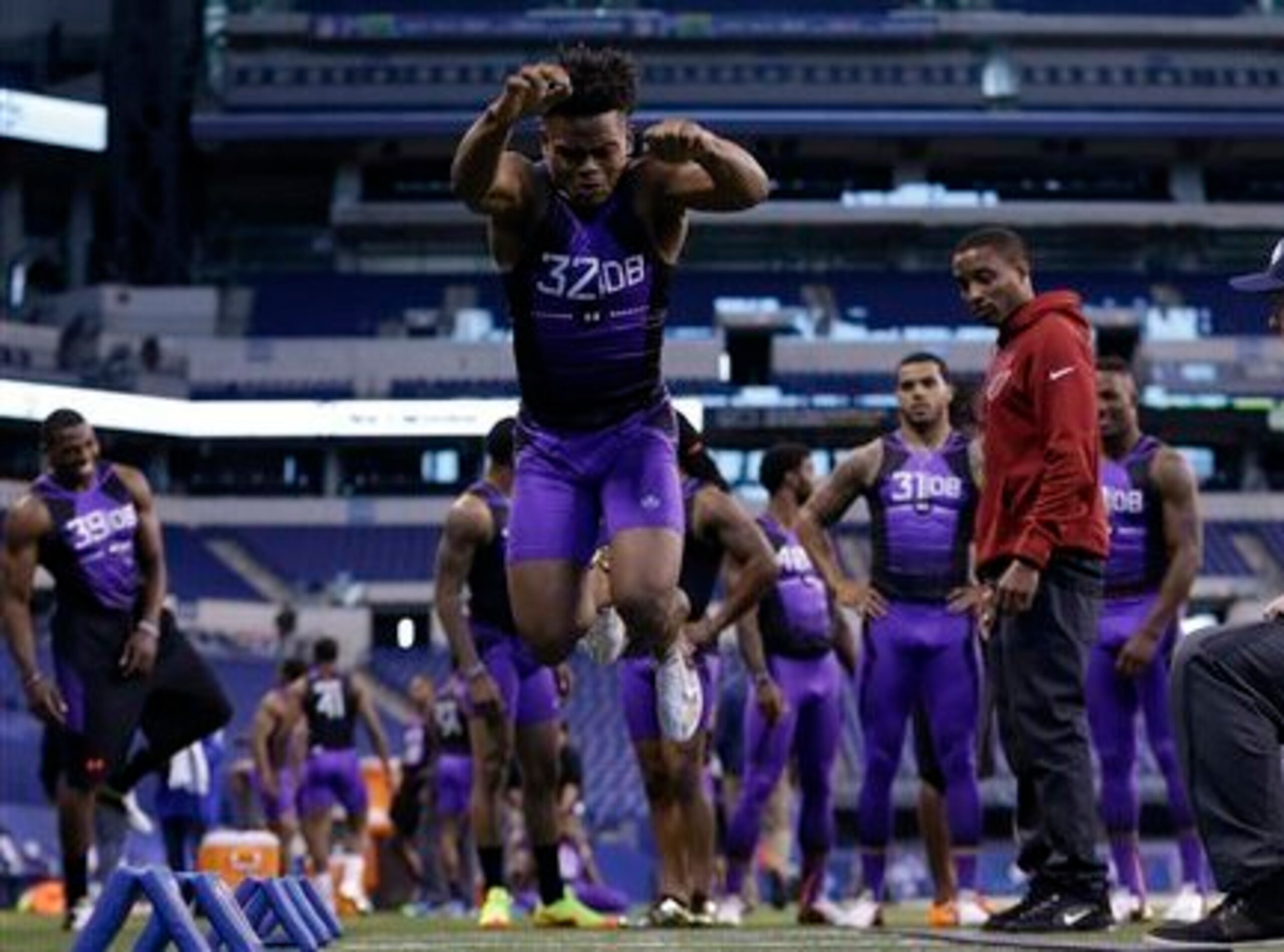
Arm/Hand Grade: 5.4
Height Grade (5’9”): 4
Speed/Agility Grade: 9.5
Explosion Grade: 7.5
Speed/Weight Grade (195 lbs): 7.8
Total Grade: 6.84
There’s no guarantee Bobby McCain will be a productive NFL player, but one thing is for sure—he has all the athletic tools required to be dominant, minus his height.
Like Justin Coleman, McCain excelled in the three-cone drill (6.8 seconds) and short shuttle (3.82). He weighed in at 195 pounds, which helped to make him the fastest cornerback pound-for-pound in the combine this year based on my calculations.
Based on athleticism alone, McCain would have graded higher than Coleman overall. However, he measured in two inches shorter than the latter, which wound up hurting him.
.jpg?w=2560 "Chiefs Giants Football")
.jpg?w=2560 "Steelers Buccaneers Football")
.jpg?w=2560 "Steelers Saints Football")
Derrick Lott, DT, Tennessee-Chattanooga
4 of 11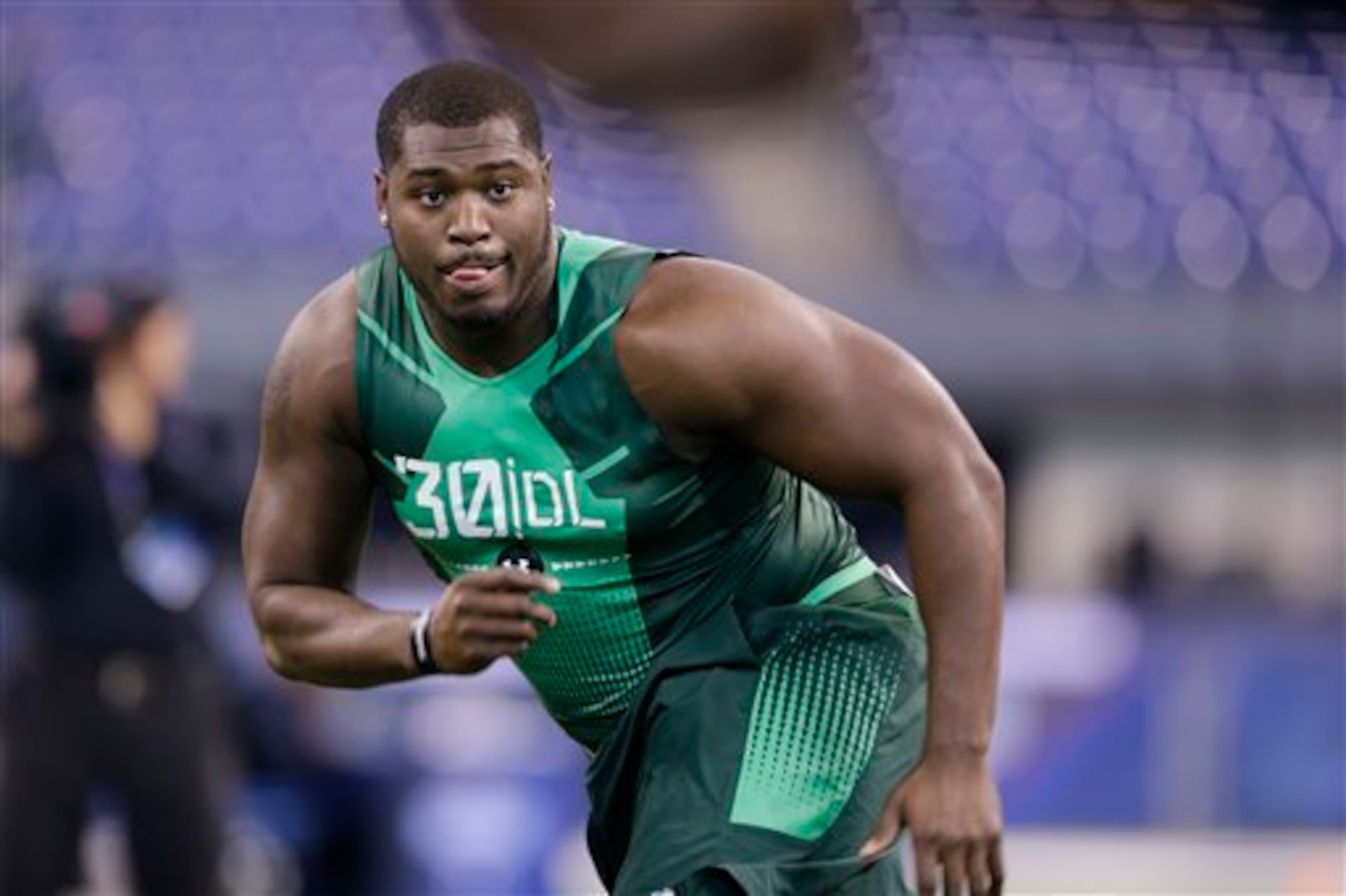
Arm/Hand Grade: 6.45
Height Grade (6’4”): 7
Speed/Agility Grade: 4
Explosion Grade: 4.5
Speed/Weight Grade (314 lbs): 8.6
Total Grade: 6.11
You likely haven't heard Derrick Lott's name until now. This is a strong class of defensive tackles, yet Lott graded out above all of them at the combine in terms of athletic measurables.
His claim to fame is his quickness relative to his weight, which can be seen in his 8.6 grade in that category. Lott was one of just two defensive linemen to run a sub-five-second 40-yard dash while weighing over 300 pounds.
Preston Smith, Edge, Mississippi State
5 of 11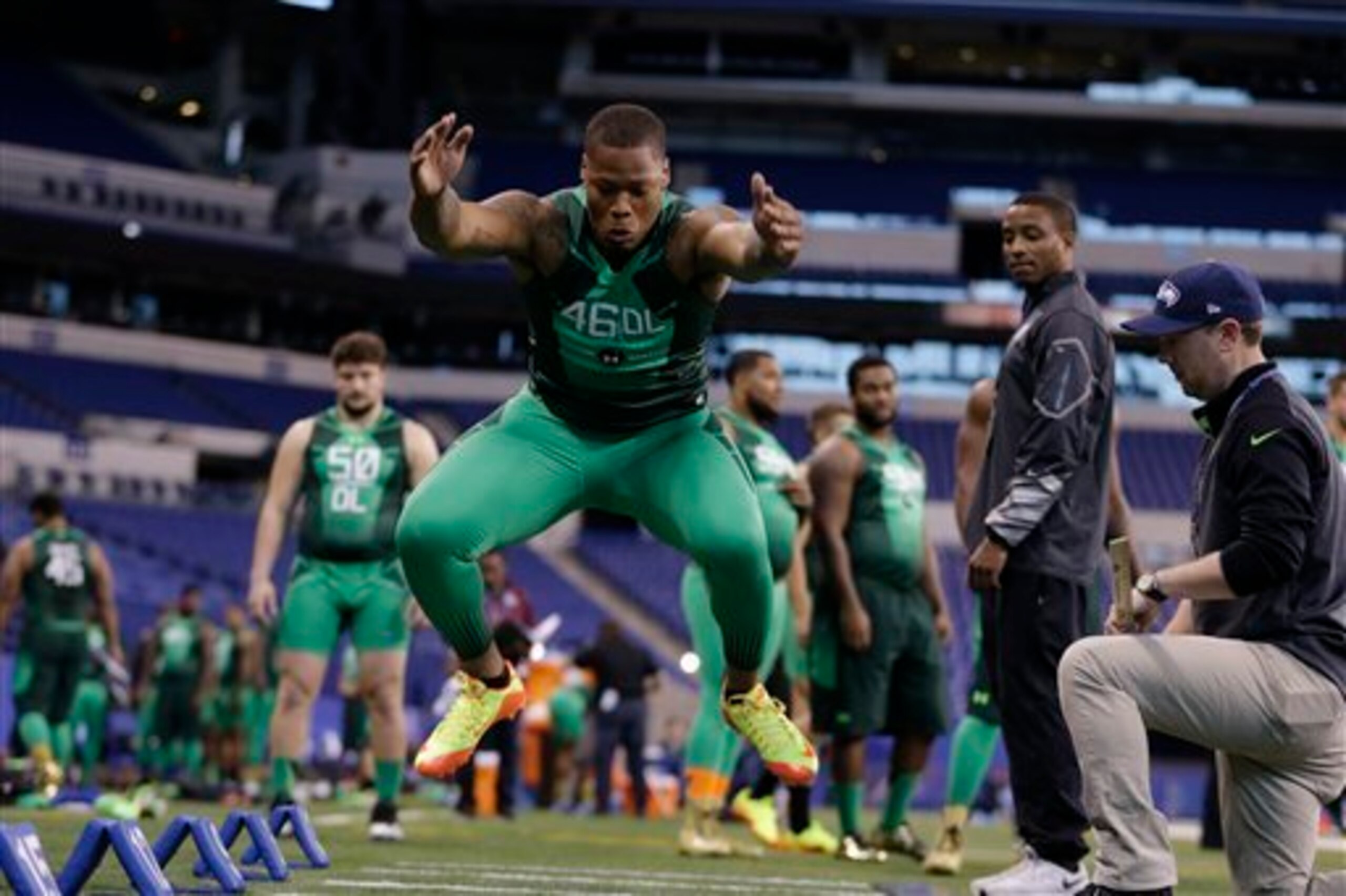
Arm/Hand Grade: 8.25
Height Grade (6’5”): 7.5
Speed/Agility Grade: 6
Explosion Grade: 7
Speed/Weight Grade (271 lbs): 8.8
Total Grade: 7.51
Most people know about the stellar performances Vic Beasley and Owamagbe Odighizuwa had at the combine, but few are aware Preston Smith was next in line for top edge-rusher performances.
His 4.74 seconds in the 40-yard dash was impressive, but what’s more noteworthy is him running that fast while weighing 271 pounds.
The edge-rusher from Mississippi State is a solid athlete all around, and he pairs his athletic gifts nicely with an ideal frame for the position. He is long and has giant hands, which helps in shedding blocks and tackling.
Stephone Anthony, LB, Clemson
6 of 11
Arm/Hand Grade: 7.5
Height Grade (6’3”): 6.5
Speed/Agility Grade: 7.5
Explosion Grade: 7.5
Speed/Weight Grade (243 lbs): 8.8
Total Grade: 7.56
Stephone Anthony graded out as the most athletic traditional linebacker based on the available combine numbers.
Of the non-rushing linebackers, Anthony placed second in the 40-yard dash (4.56 seconds), second in the short shuttle (4.03 seconds) and second in speed/weight grade.
He has great length (32.5-inch arms) and big hands (10.375 inches) for a linebacker.
Laurence Gibson, OT, Virginia Tech
7 of 11
Arm/Hand Grade: 8.3
Height Grade (6’6”): 8
Speed/Agility Grade: 3
Explosion Grade: 6
Speed/Weight Grade (305 lbs): 6.4
Total Grade: 6.34
Hobart & William Smith's Ali Marpet was the combine's top athlete among the offensive linemen, but his impressive day was well-documented.
Laurence Gibson had the second-best athletic grade of any offensive lineman at the combine, which flew far more under the radar.
Despite weighing 305 pounds, Gibson was able to run a 5.04-second 40-yard dash and had the fourth-best three-cone time among the offensive hogs.
The former Hokie is one of the lengthier linemen in this class with approximately 35-inch arms and 10.375-inch hands.
With so many tools to work with, Gibson’s stock should be pointed up throughout NFL circles.
Cameron Erving, OC, Florida State
8 of 11
Arm/Hand Grade: 7.85
Height Grade (6’5”): 7.5
Speed/Agility Grade: 3
Explosion Grade: 6
Speed/Weight Grade (313 lbs): 7.2
Total Grade: 6.31
Cameron Erving is unusually tall for a center at 6’5”, 313 pounds, but aside from that, he also boasts the highest grade of any center in the four years that I’ve been using this system.
Erving finished the combine with the second-highest explosion total of all participating offensive linemen in this draft class. He benched 225 pounds 30 times, had a vertical jump of 30.5 inches and a broad jump of 112 inches. Each of those numbers is impressive for a guy his size.
Based on combining his tape with his athletic tools, he has established himself as the best center in this draft by far.
Malcolm Brown, RB, Texas
9 of 11
Note: there is no height grade for RBs because it doesn't matter much for the position.
Hand Grade: 7.8
Speed/Agility Grade: 7.5
Explosion Grade: 6
Speed/Weight Grade (224 lbs): 7.8
Total Grade: 7.28
Few people would likely identify Malcolm Brown as having one of the combine's best performances for running backs.
At 5’11”, 224 pounds, he managed to pull off a 6.86-second three-cone drill in Indianapolis. That was the fourth-best time for his positional group.
When you average out his speed and agility times and factor in weight, he had the second-best grade among running backs. He also has the biggest hands (10.25 inches) of the group as well.
Brown may lack flat-out blazing speed, but he is quick enough to hit holes and big enough to break arm tackles at the next level.
Justin Cox, S, Mississippi St
10 of 11
Arm/Hand Grade: 5.4
Height Grade (6’1”): 5.6
Speed/Agility Grade: 8
Explosion Grade: 7.5
Speed/Weight Grade (191 lbs): 6
Total Grade: 6.5
In terms of athletic measurables, the most impressive safety at the combine this year was Utah’s Eric Rowe.
Rowe actually received some love for his numbers, so let's move on to the safety who finished right behind him but received virtually no accolades for his work in Indianapolis. That man is Justin Cox from Mississippi State.
He has good height at 6'1" and had the third-best speed/agility score among the safeties.
The big question for Cox as he heads into the NFL will be whether he can be a true football player. He certainly has the athleticism and measurables to succeed, but the intangibles and instincts will be critical.
Blake Bell, TE, Oklahoma
11 of 11
Arm/Hand Grade: 7.15
Height Grade (6’6”): 8
Speed/Agility Grade: 6.5
Explosion Grade: 5
Speed/Weight Grade (252 lbs): 8.2
Total Grade: 6.97
Aside from the fact that Oklahoma’s Blake Bell has the ideal frame for an NFL tight end, he makes this list primarily because of the way he can move.
Bell might have run an average 40-yard dash time (4.8 seconds), but that doesn’t mean he’s slow. He posted the fastest three-cone time among tight ends despite carrying 252 pounds.
When looking at the data collected over the last four years, Bell actually turned out one of the better combine performances of any tight end over that time. He will likely have a spot in the top 100 over four years of draft prospects.
Not only was he the tallest tight end in Indianapolis, but he also had the best speed/weight grade.
Ryan Riddle is a former NFL player who writes for Bleacher Report.
.jpg?w=2560 "Titans Colts Football")
.jpg?w=2560 "Eagles Jaguars Football")
.jpg?w=2560 "🚨 Week 8 AP Top 25 Poll")


.jpg?w=2560 "Updates from EVERY Game")