
7 Hidden Gems the San Francisco 49ers Should Have Noticed at the Combine
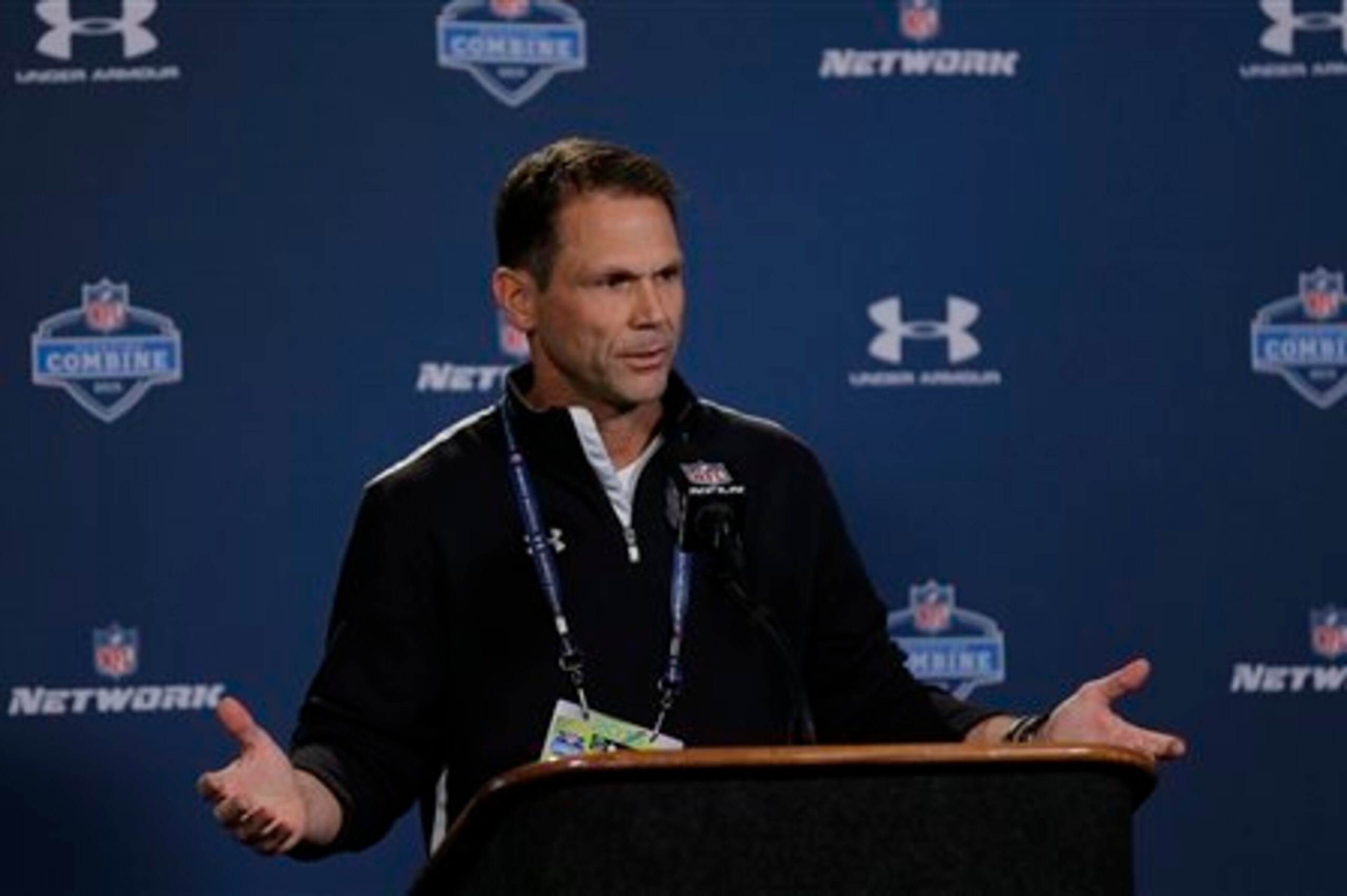
When Trent Baalke and the rest of the San Francisco 49ers’ front-office staff observes the NFL Scouting Combine, they have to remember to take everything they see with a grain of salt.
The sort of numbers and performances put up in Indianapolis are done in workout gear with no opposing pressure, as opposed to in-game situations. Simply because a player turns in a fast 40-yard dash or an impressive vertical leap doesn’t mean he can light it up on the field—the game film needs to remain the most important aspect of evaluating a player.
That being said, an eye-popping combine performance is a cue to go back to that film to re-evaluate. When someone looks better than you expected on the field in Indianapolis, you need to go back to the tape and try to see what you missed the first time—perhaps you’ve found a player deserving of a closer look.
After watching hours of people running in shorts, I’ve come up with a small list of players who caught my eye unexpectedly. These aren’t surefire first-rounders like Kevin White or Vic Beasley, but players who are penciled in as later-round picks who may have raised their stock in Indianapolis.
That’s a wide category and can range from second-round picks who looked polished to potential undrafted free agents who made their case for hearing their name called late in the 2015 draft. Here’s players at key positions of need for the 49ers who turned some heads during their workouts.
WR Darren Waller, Georgia Tech
1 of 7
CBSSports.com Projection: seventh-round free agent
6’6”, 238 pounds
40-yard dash: 4.46 seconds
Vertical jump: 37 inches
While watching the first-round receivers carefully, I kept an eye out for Darren Waller, whom I named as one of the late-round sleepers to keep an eye on before the combine. He didn’t disappoint.
Running a sub-4.5 40-yard dash at his weight is very impressive. Football Outsiders developed a metric called “speed score,” primarily for running backs, which adjusts a player’s 40-yard time to account for their weight, as it’s more impressive to run a 4.5 when you weigh 220 pounds than it is to run a 4.3 when you’re under 175 pounds—you have to account for your own mass when you’re barreling forward.
While the metric is meant specifically for running backs, it does tell us a little bit about a receiver’s deep-threat potential. By my count, the top five receivers with the fastest speed scores at the 2015 combine include three first-round picks in Kevin White, Dorial Green-Beckham and Jaelen Strong and two late-round sleepers. One is Georgia’s Chris Conley, and the other, topping the entire table, was Darren Waller.
Waller also showed some lateral quickness and explosion. He ran the 60-yard shuttle in 11.35 seconds, the fourth-fastest time among receivers. Add that to a 6’6” frame with legitimate hands and you have a very interesting prospect.
He played in a triple-option scheme in college and is raw as raw can be, with only 51 career receptions in college, but he showed why he’s an enticing development prospect with a great day at the combine.
If you had to make a pick on a receiver just based on measurables such as height, weight and the combine drill results, you’d have Waller right alongside the Kevin Whites and Dorial Green-Beckhams of the world. That kind of raw potential on Day 3 would be a great pickup.
DE Preston Smith, Mississippi State
2 of 7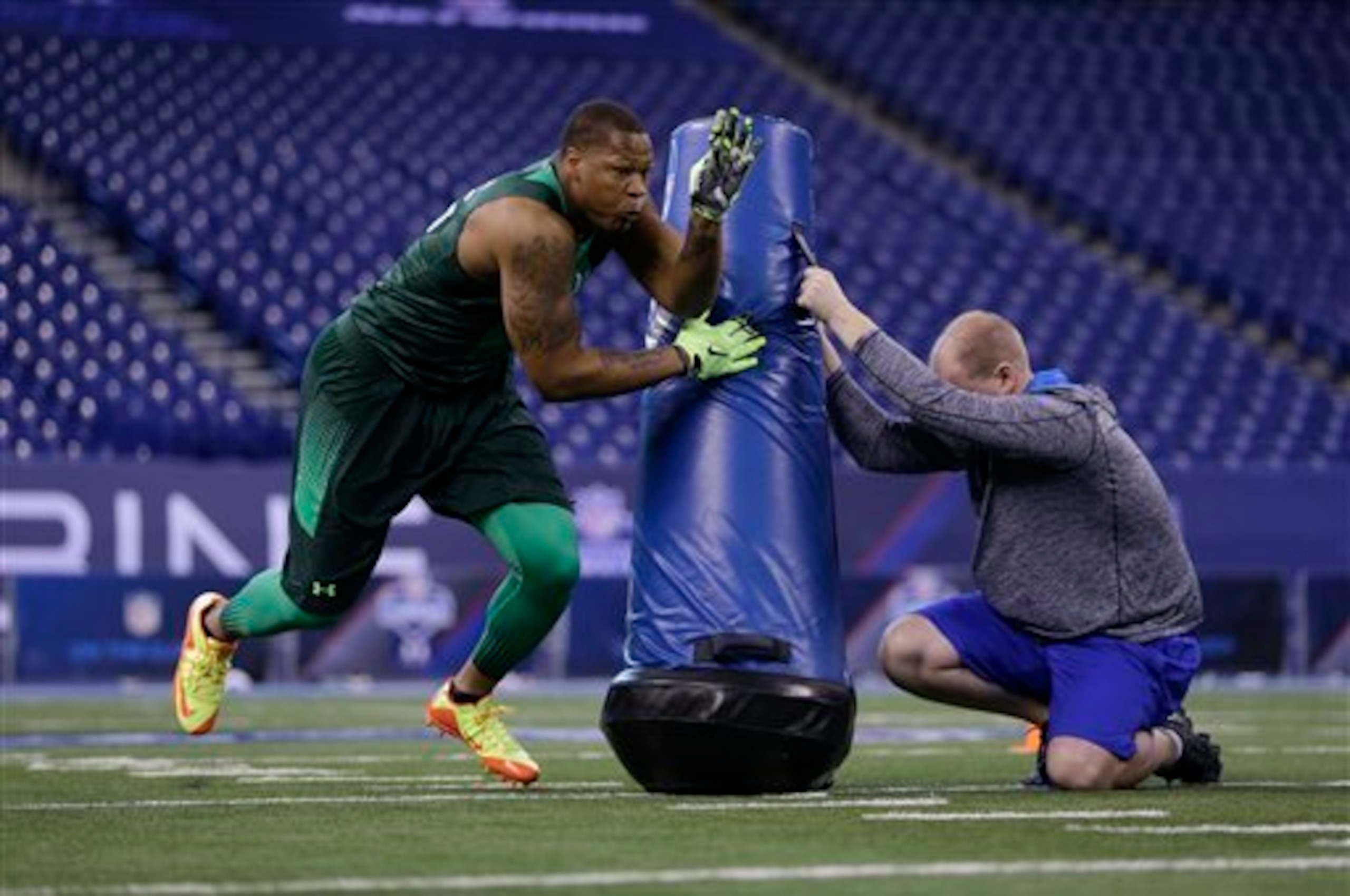
CBSSports.com Projection: Round 3
6’5”, 271 pounds
4.74 40-yard dash
121-inch broad jump
Preston Smith shot up the leaderboards on all the various drills at the combine. He had the fourth-fastest 40-yard dash among defensive linemen at 4.74 seconds, the second-longest broad jump at 121 inches, the fastest three-cone drill time at 7.07 seconds and the second-fastest 60-yard shuttle drill at 11.7 seconds. Basically, he showed speed and explosive power equal to anything anyone else showed at the combine.
During the actual drills, he looked very solid as well. He moved well, showing strength and quick hands. He didn’t stand out there quite as much as he did in the raw-skill tests, but he was definitely in the upper half of linemen as they were put through their paces.
Scouts, such as NFL.com’s Lance Zierlein questioned if Smith had the right sort of "quick-twitch athleticism" to react quickly at the NFL level. Smith certainly gave a strong rebuttal to those concerns in Indianapolis.
He’s a little small for your prototypical 3-4 end, but he’s not out of the question to fit the position—Justin Smith, for example, is an inch shorter and just about the same weight, as is Tank Carradine. He would fit well into San Francisco’s hybrid fronts.
OG Ali Marpet, Hobart
3 of 7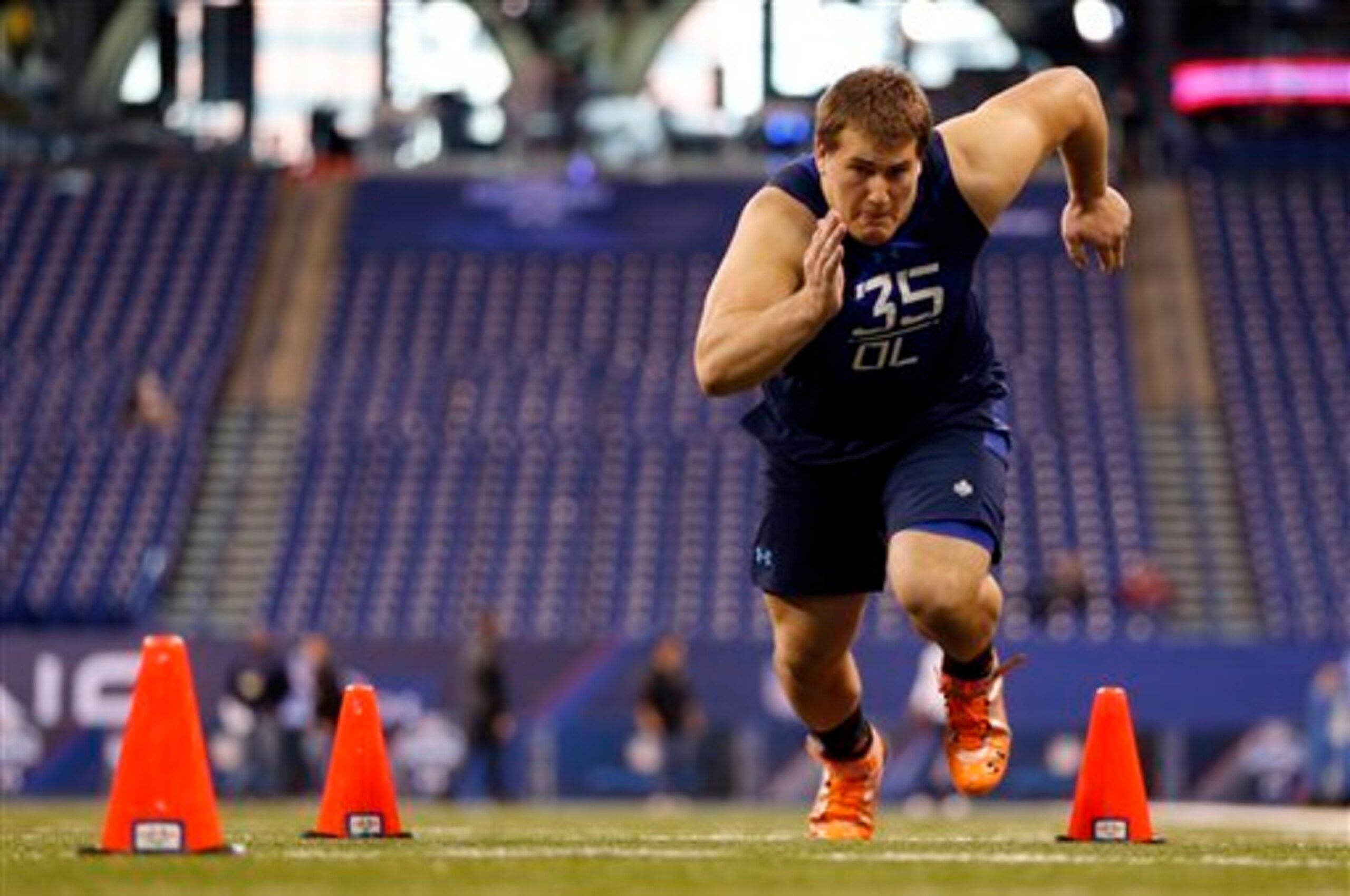
CBSSports.com Projection: Rounds 3-4
6’4”, 307 pounds
4.98 40-yard dash
7.33-second three-cone drill
Hobart is a tiny D-III school playing in the Liberty League. It finished 12-1 in 2014, losing in the quarterfinals of the Division III Football Championship. It’s not exactly a powerhouse churning out NFL prospects; only four Hobart alumni have ever made the NFL, with none appearing in the league since 1937.
That might change with Ali Marpet. Question marks remain about his ability to handle the massive jump in quality that he’d face in the NFL, but he impressed at the combine, continuing a generally solid predraft campaign.
A 40-yard dash is not particularly meaningful for offensive linemen, as they are never asked to run 40 yards on one play. However, their initial burst can be determined by their 10-yard dash times, and Marpet led all offensive linemen by running the first 10 yards in just 1.74 seconds, unofficially, according to WalterFootball.com. That shows some explosiveness at the point of attack.
Add in his 80-plus-inch wingspan and ability to play anywhere along the line of scrimmage—he was a tackle in college, but he projects as an NFL center or guard—and you have a very interesting prospect.
He also looked very, very solid in his positional drills, looking smooth and fluid. He looked athletic and, perhaps most importantly, he looked like he fit in with the rest of the linemen at the combine, all of whom had to deal with much tougher competition in college.

TE MyCole Pruitt, Southern Illinois
4 of 7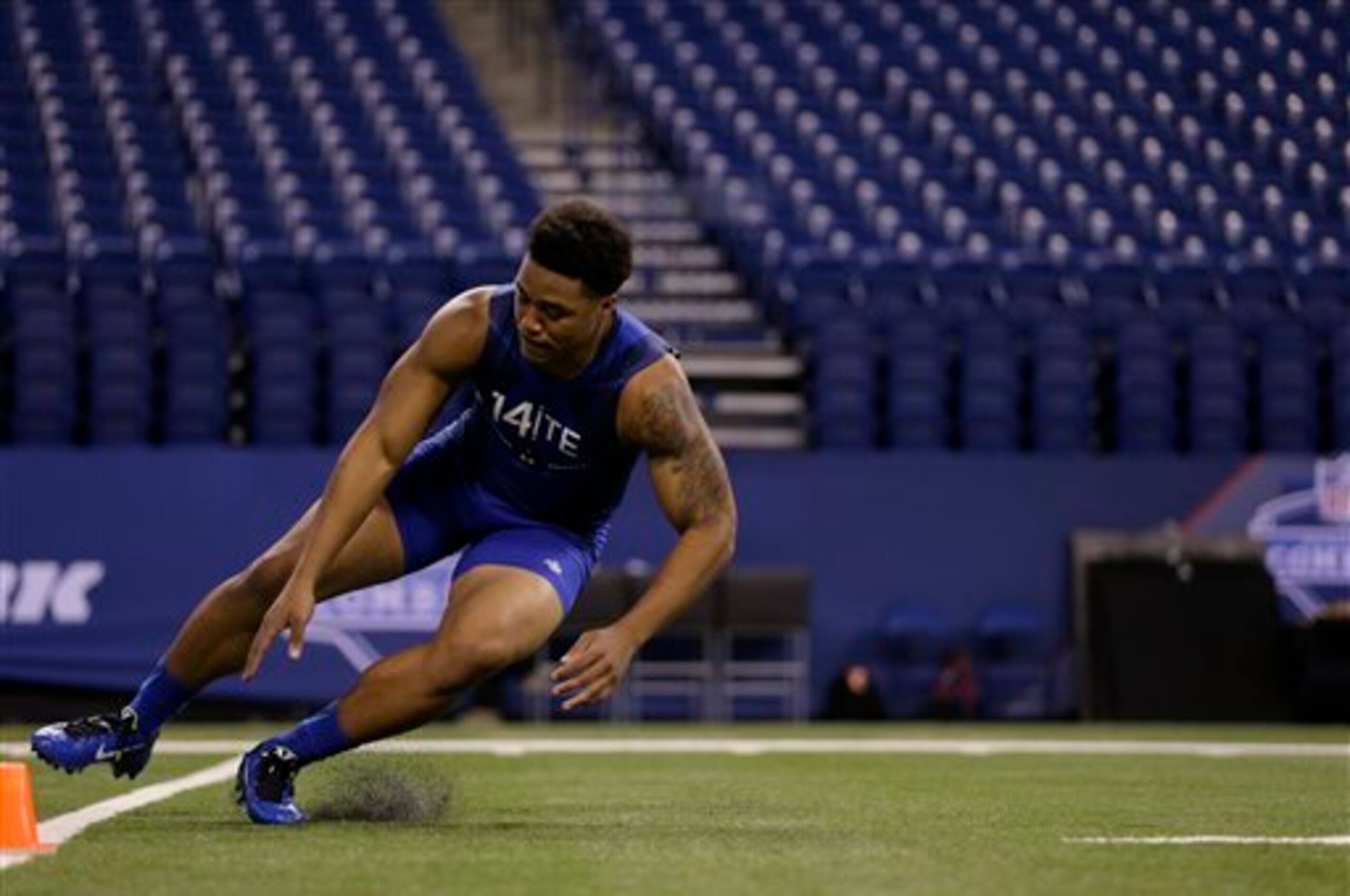
CBSSports.com Projection: Round 5
6’2”, 251 pounds
4.58 40-yard dash
38-inch vertical jump
118-inch broad jump
The tight ends, as a group, were a little underwhelming. One of them did stand head-and-shoulders above the rest when it came to measureables, however—Southern Illinois’ MyCole Pruitt.
Pruitt finished with the top 40-yard dash time, the top vertical jump, the fourth-longest broad jump, the third-fastest 20-yard shuttle and the third-fastest 60-yard shuttle among tight ends, lighting up the scoreboard again and again. It was, by far, the most impressive performance, even outdoing consensus No. 1 Maxx Williams from Minnesota.
The form didn’t show up as much in the drills, however. He looked tight while running routes and making his breaks, and just generally didn’t seem as fluid as the top of the class. In a weak batch of tight ends, however, Pruitt could be one of the more appealing of the bunch.
You can teach better effort and competitiveness; you can’t wave a magic wand and give someone that kind of speed or jumping ability. He may not be a Vernon Davis-type star at tight end, but he might develop into a solid complementary piece for two-tight end sets.
DB Eric Rowe, Utah
5 of 7
CBSSports.com Projection: Rounds 4-5
6’1”, 205 pounds
4.45 40-yard dash
39-inch vertical jump
125-inch broad jump
I’m not fully sure what Eric Rowe’s position will be in the NFL—he played his first three seasons in Utah as a free safety before moving over to cornerback last year. At the combine, he tested with the safeties, but I think he can still play corner—he was solid enough in drills.
I have the hunch that he’ll be the sort of player a team drafts and then tries to fit into its scheme. For the 49ers, that might be a nickel-safety sort of role, coming in in a “big nickel” package. That would allow him to use his run-stopping ability most effectively while using his size to cover tight ends and the like.
There were some questions about Rowe’s speed entering the combine, and his 4.45 40-yard dash pretty much answers all of those. That’s pretty impressive for a defender of his size; only four defensive backs measured in as taller than Rowe and only seven were faster. That’s a pretty solid skill set for someone down in the third day of the draft.
He also showed some surprising strength, scoring 19 reps on the bench press. Add in finishes in the top 10 in the various jumping categories and you have a long, physical defender who can, on paper at least, match up with top receivers in the league.
Obviously, only one year as a cover cornerback would make him more of a project at that position, and he doesn’t have the world’s greatest hands, but he definitely did enough to catch my eye at the combine.
QB Brett Hundley, UCLA
6 of 7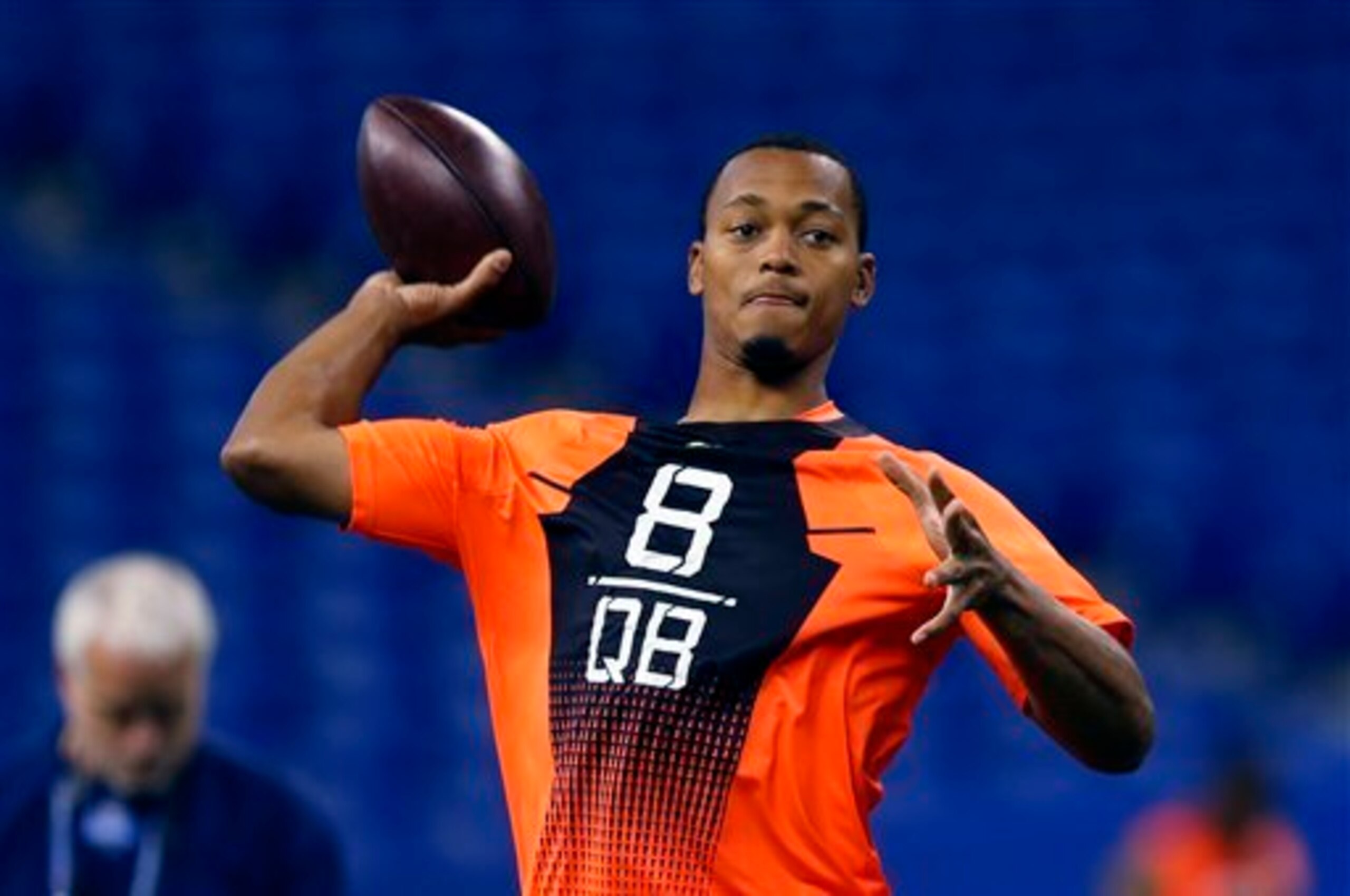
CBSSports.com Projection: Round 2
6’3”, 226 pounds
4.63 40-yard dash
36-inch vertical jump
120-inch broad jump
6.93-second three-cone drill
3.98-second 20-yard shuttle
It is not surprising Brett Hundley looked good at the combine—his questions lie in his ability to run an NFL-style scheme from the pocket, not with his athleticism. It’s no surprise, then, that Hundley was in the top five in the 40-yard dash, broad jump and vertical jumps at the combine. That was expected of him.
More useful, and perhaps more promising, was his work in passing drills. Hundley had to skip the Senior Bowl due to injury, but he looked just fine slinging the ball, showing good accuracy on his deep passes. His footwork looked solid, and he showed the ability to make every kind of throw needed in the NFL.
The big question is whether or not he can do that under pressure, as he’s shown poor pocket awareness. That’s not judged at the combine, though, so he shined.
The 49ers will start Colin Kaepernick in 2015, but they aren’t necessarily committed to him after that. If the new regime in town decides they don’t like Jim Harbaugh’s quarterback, it wouldn’t be entirely insane to use a mid-round pick on someone like Hundley—he has the tools to eventually develop into a starting quarterback.
RB Ameer Abdullah, Nebraska
7 of 7
CBSSports.com Projection: Round 2
5’9”, 205 pounds
4.6-second 40-yard dash
42.5-inch vertical jump
130-inch broad jump
6.79-second three-cone drill
3.95-second 20-yard shuttle
First, we have the elephant in the room—a 4.6-second 40-yard dash time is not very good for a tiny back, at only 205 pounds. That’s a very disappointing number Ameer Abdullah needs to improve upon at his pro day.
A 4.5 would be a more acceptable time, and a 4.35 or so is a top time for a back of that size. He’s run somewhere between those latter two numbers in the past, so that’s something to keep an eye out going forward.
Assuming the 40 was a bit of a fluke and you see everything else that he can do. Abdullah was my favorite receiving running back of the day by far. I think the 49ers need to work their backs into the passing game to help cut down on the sacks they took in 2014, and Abdullah looked like a natural in Indianapolis, with soft hands and incredible juking ability in the open field.
Abdullah could be a Shane Vereen type in the NFL, and we just saw what Vereen could do against the Seattle Seahawks in the Super Bowl. With his ridiculous explosion and fantastic change-of-direction tests—Abdullah ranked first in the vertical jump, broad jump, three-cone drill and 20-yard shuttle among running backs—you have a potentially dynamic weapon on the field. Now, if he can just get that raw speed up.
Bryan Knowles is a Featured Columnist for Bleacher Report, covering the San Francisco 49ers. Follow him @BryKno on Twitter.
.jpg?w=2560 "Rams Eagles Football")

.jpg?w=2560 "Grading WWE Raw 🔠")


.jpg?w=2560 "Injury-stricken Seahawks signing veteran RB")
