
10 NCAA Basketball Players Who Have Improved Their NBA Stock the Most This Year
Quite a few college players were practically locked into their NBA draft position before the season even started.
We knew freshmen such as Jahlil Okafor, Karl-Anthony Towns and Stanley Johnson would be lottery picks before they stepped on campus. And we knew that centers Frank Kaminsky and Willie Cauley-Stein would probably be first-round picks as long as they didn't regress from last year's performances.
However, a number of players have significantly enhanced their NBA prospects with their play this season. A few players who were not even on the NBA radar a year ago have transformed themselves into players likely to be drafted by the NBA either this year or next.
The NBA status of college players is constantly in flux, so we won't know for sure where players stand until just before the June 25 draft. But with the help of ratings services such as DraftExpress, NBADraft.net and ESPN.com, we ranked 10 players whose 2014-15 performances have significantly improved their NBA stock.
10. Robert Upshaw, Washington
1 of 10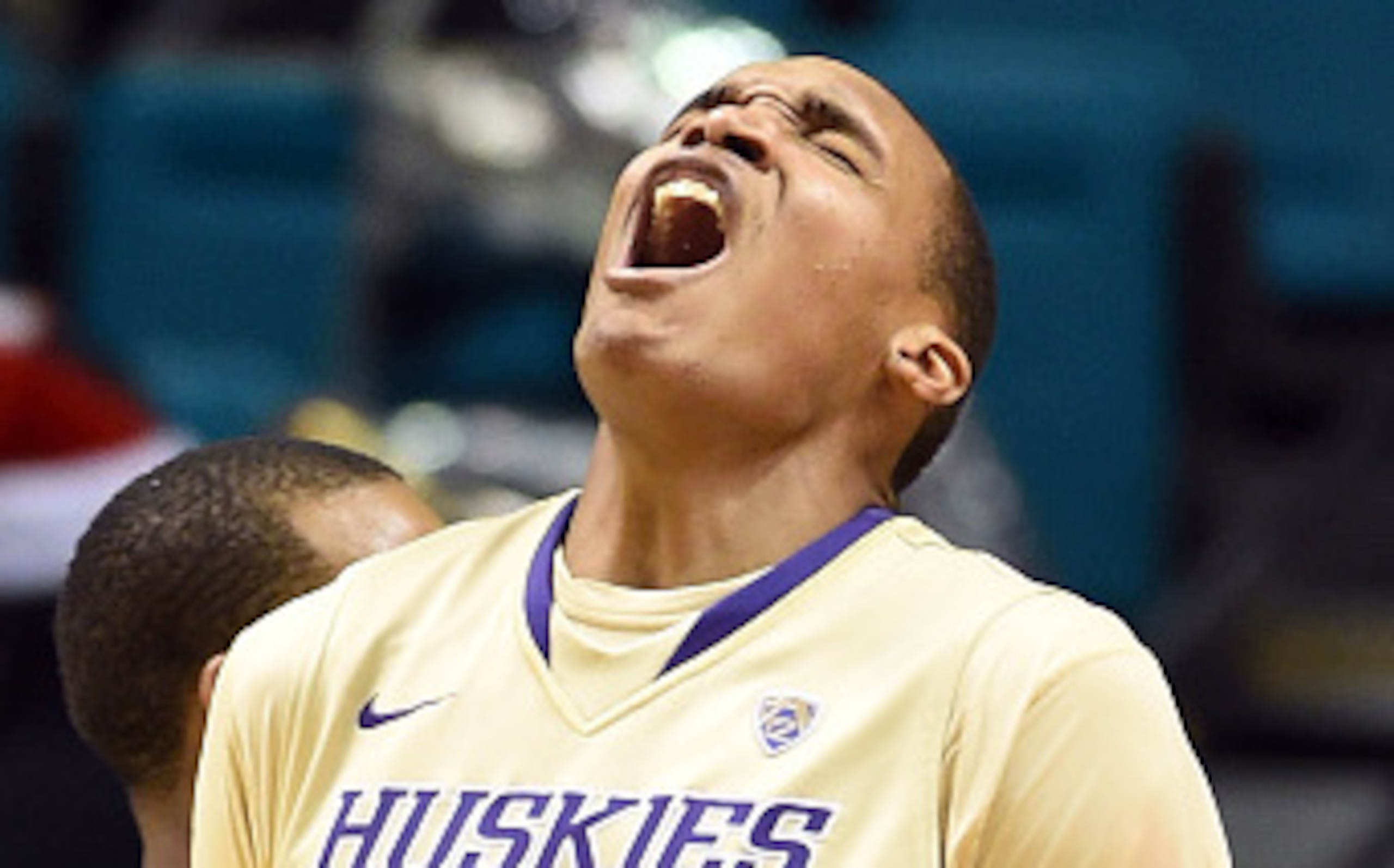
Robert Upshaw is an unusual case, one that will be difficult for NBA scouts to unravel.
On the court this season, the 7'0" Upshaw looked like a lottery pick. However, off-court issues may make pro teams hesitant to draft him. A month ago, you would have said Upshaw probably was a top-20 pick. Now, who knows?
Upshaw began his college career at Fresno State in the 2012-13 season. He missed his first four games because of a knee injury then played 22 games, including five starts. He had unspectacular numbers: 4.1 points and 3.8 rebounds in 16.4 minutes per game. But despite his limited playing time he led the team in blocks with 39, an average of 1.8 blocks per game.
But he was suspended three different times for violating teams rules. The third such violation led to his dismissal from the Fresno State program in August 2013.
No explanation for the dismissal was provided, but Yahoo Sports' Jeff Eisenberg reported Upshaw spent time in the summer of 2013 at John Lucas' Houston-based treatment program.
He enrolled at Washington but was not allowed to participate in practice while he was sitting out last season as a transfer.
Upshaw suddenly became a star this season as a sophomore. He averaged just 24.9 minutes in his 19 games, all but four as a sixth man. Yet he produced 10.9 points on 59.3 percent shooting and 8.2 rebounds. But what made him special was his shot-blocking ability. Despite his limited court time, Upshaw led the nation in blocks, averaging 4.5 a game.
Picked to finish sixth in the conference, the Huskies won their first 11 games and were ranked No. 13 in the Associated Press poll. Many cited Upshaw as the reason for Washington's surprising start, with his newfound maturity apparently being responsible for his improvement on and off the floor.
Upshaw zoomed up the charts of NBA prospects. Not even on the NBA radar before the season started, Upshaw was slotted as the No. 18 overall pick by DraftExpress in its January 14 mock draft.
Then, on January 26, Washington dismissed Upshaw from the team for an unspecified violation of team rules. His NBA stock fell.
Now teams must decide whether Upshaw's potential is worth the risk. DraftExpress still lists him as the last pick of the first round in its 2015 mock draft, while NBADraft.net puts him at the 19th pick of the second round.
Upshaw's on-court performance this season raised his NBA stock dramatically, and it was still a net gain after his off-court behavior caused him to slip.
9. Tyrone Wallace, California
2 of 10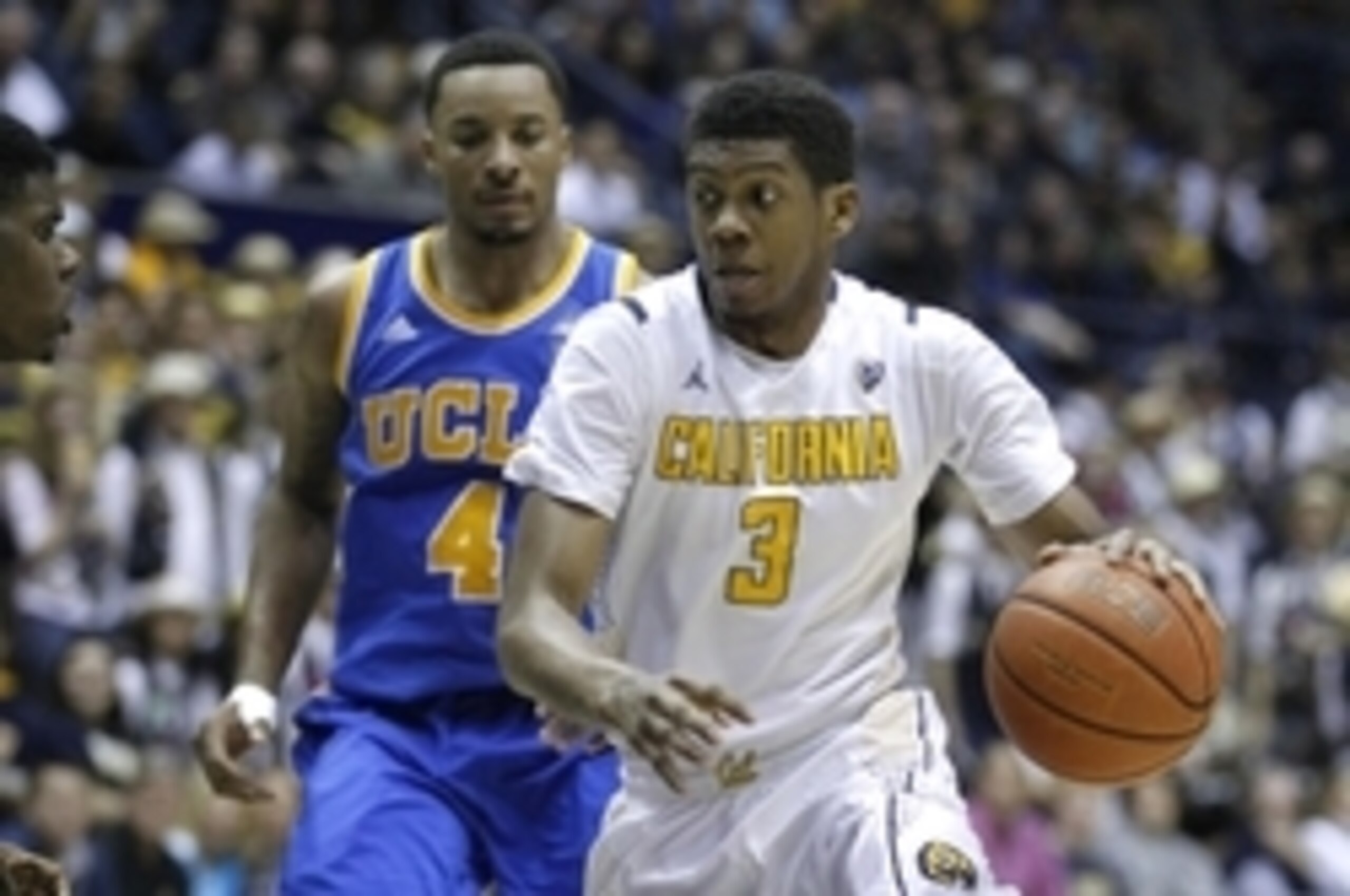
Junior Tyrone Wallace was a complementary player his first two years at California. He averaged a respectable 11.2 points, 4.1 rebounds and 2.7 assists as a sophomore wing player in Mike Montgomery's final year as the Bears' coach.
When Cuonzo Martin arrived as Cal's new head coach, he needed to find a replacement for Justin Cobbs, who had been the Bears' point guard the past three seasons. Martin selected Wallace as his point guard, and the choice has radically changed Wallace's NBA status.
Operating with the ball in his hands and tasked with initiating the Bears offense, the slender 6'5" Wallace has done virtually everything for the Bears. As impressive as his 17.2 scoring average is, his 7.2 rebounds per game, which lead the team, are even more impressive. What is most significant to NBA scouts is that Wallace has proved himself as a playmaker, averaging a team-leading 3.7 assists a game.
Wallace's outside shot remains suspect, as indicated by his 31.6 percent three-point shooting and 59.6 percent foul shooting. However, his ability to penetrate then finish with either hand or pass to an open teammate has made him attractive to the NBA. He is good in transition, and his long arms and quickness make him a capable defender, all of which has been noticed by NBA scouts.
After being a non-factor in NBA evaluations his first two seasons, Wallace is now projected to be the last player taken in the first round in NBADraft.net's 2015 mock draft, while DraftExpress lists him as the fifth player taken in the second round. He is long enough to play the shooting guard spot in the pros, and that versatility appeals to the pros.
The responsibility load placed on Wallace seems to be taking its toll on him. His numbers have gone down over the past two months, and his NBA stock has dropped a bit as well. On January 7, Wallace was averaging 19.1 points, 8.4 rebounds and 4.1 assists through 16 games. DraftExpress had him slotted as the No. 24 overall pick at that point, and he has slipped 11 spots since.
8. Terry Rozier, Louisville
3 of 10
Louisville sophomore Terry Rozier started to gain attention this past summer, according to a CollegeBasketballTalk report by Rob Dauster. Rozier then confirmed his NBA readiness with a breakout season in 2014-15.
After averaging just 7.0 points, 3.1 rebounds and 1.8 assists last season while playing behind All-American Russ Smith, Rozier is averaging 17.7 points this season on 42.7 percent shooting. He is also adding 5.5 rebounds and 2.5 assists per contest this season.
He has also shown an ability to be a floor leader from the point position, which is critical since the 6'1" Rozier is probably too small to make it in the NBA as a shooting guard.
Rozier's NBA stock has risen to the point where he could be a lottery pick. NBADraft.net projects him as the No. 16 overall pick in its 2015 mock draft, while DraftExpress lists him as the eighth pick of the second round in its mock draft.
The disparity in the two rankings stems from lingering questions about whether Rozier can play the point in the NBA. Leery NBA scouts no doubt see comparisons to the 6'0" Smith, who played a similar role for Louisville last season. Despite being a first-team All-American, Smith was not taken until midway through the second round in last year's NBA draft and has played just seven games this season for two NBA teams.
Rozier might get more opportunities to display his ball-handling skills now that Chris Jones is gone, although that has not been the case yet. In Louisville's first game without Jones, Rozier played all 40 minutes and scored 22 points in Monday's 52-51 victory over Georgia Tech. However, he had just one assist as Quentin Snider took over most of the playmaking chores.
Because of its offensive shortcomings, Louisville needs Rozier's scoring more than ever, which means it must task others with distributing.

.jpg?w=2560)
7. Rakeem Christmas, Syracuse
4 of 10
Injured freshman Chris McCullough is Syracuse's top pro prospect. But no Syracuse player has improved his draft status more this season than senior Rakeem Christmas.
Ranked as the nation's No. 20 recruit in the class of 2011 by ESPN and No. 21 by Scout.com, Christmas did not come close to reaching the level expected in his first three years of college.
Last season as a junior he averaged 5.8 points, 5.1 rebounds and 1.9 blocks, and those numbers represented an improvement over his first two seasons. NBA scouts had stopped looking at him.
However, after three seasons of mediocrity, Christmas suddenly and inexplicably started producing like an All-American as a senior. He is averaging 18.1 points, 9.3 rebounds and 2.5 blocks this season, numbers that dwarf those of McCullough, who suffered a season-ending injury in January when he tore his anterior cruciate ligament.
Christmas' production is increasing as the season progresses. He had 29 points on 9-of-10 shooting against Louisville on February 18 then had 20 points and 12 rebounds on Saturday against Pittsburgh. He was limited to 28 minutes because of foul trouble in Tuesday's road win against Notre Dame but still produced 14 points and 12 rebounds. Christmas has been a strong inside presence on both ends of the floor.
The concern among NBA officials is whether they can find a position for Christmas. At 6'9" he may not be big enough to play center, and he may not have the skill set and shooting range needed to be a power forward.
That and an inability to showcase his talents in the NCAA tournament probably will keep him out of the first round of the 2015 NBA draft. However, NBADraft.net projects him to be an early second-round pick, while DraftExpress expects him to be taken late in the second round.
The fact that he is likely to drafted at all says a lot of about his dramatic improvement following three forgettable seasons.
6. Jakob Poeltl, Utah
5 of 10
Utah freshman center Jakob Poeltl burst into draft contention with his play early in the season. He has not been as impressive lately, but he is still ranked as the No. 20 NBA prospect by ESPN.com and is projected to be the No. 16 overall pick in the 2015 NBA draft by DraftExpress.
That's quite a jump for a player who was a relatively unknown Austrian big man before being spotted by Utah assistant coach Andy Hill, as described in a Yahoo Sports' Jeff Eisenberg.
Poeltl has a few things going for him. Being a 7-footer is the first thing in his favor. But having good footwork, decent athleticism and good touch around the basket are part of a pretty complete package. He can also block shots, which is a major factor for NBA teams that need a defensive stopper in the middle.
When he blocked seven shots and pulled down 12 rebounds in a four-point road loss to San Diego State in Utah's second game of the season, people started to pay attention even though he had just four points.
He had 24 points, 12 boards and five blocks in a win against overmatched North Dakota in the fifth game then gained more acclaim for collecting 12 points, 11 rebounds and three blocks in the victory over Wichita State on December 3. That's when his NBA draft status peaked.
Poeltl's presence in the middle is one of the main reasons Utah rose as high as No. 8 in the AP Top 25 before falling to its current spot at No. 13.
Although his offensive game is limited at the moment, he has the physical gifts necessary to expand his game considerably. The expected improvement has not materialized yet, though, as Poeltl's play has leveled off over the past month.
Although he could be a first-round draft pick this year, Poeltl may be better served waiting another year before turning pro. With that thought in mind, NBADraft.net included Poeltl only in its 2016 mock draft, projecting him to be the 24th overall pick.
5. Kris Dunn, Providence
6 of 10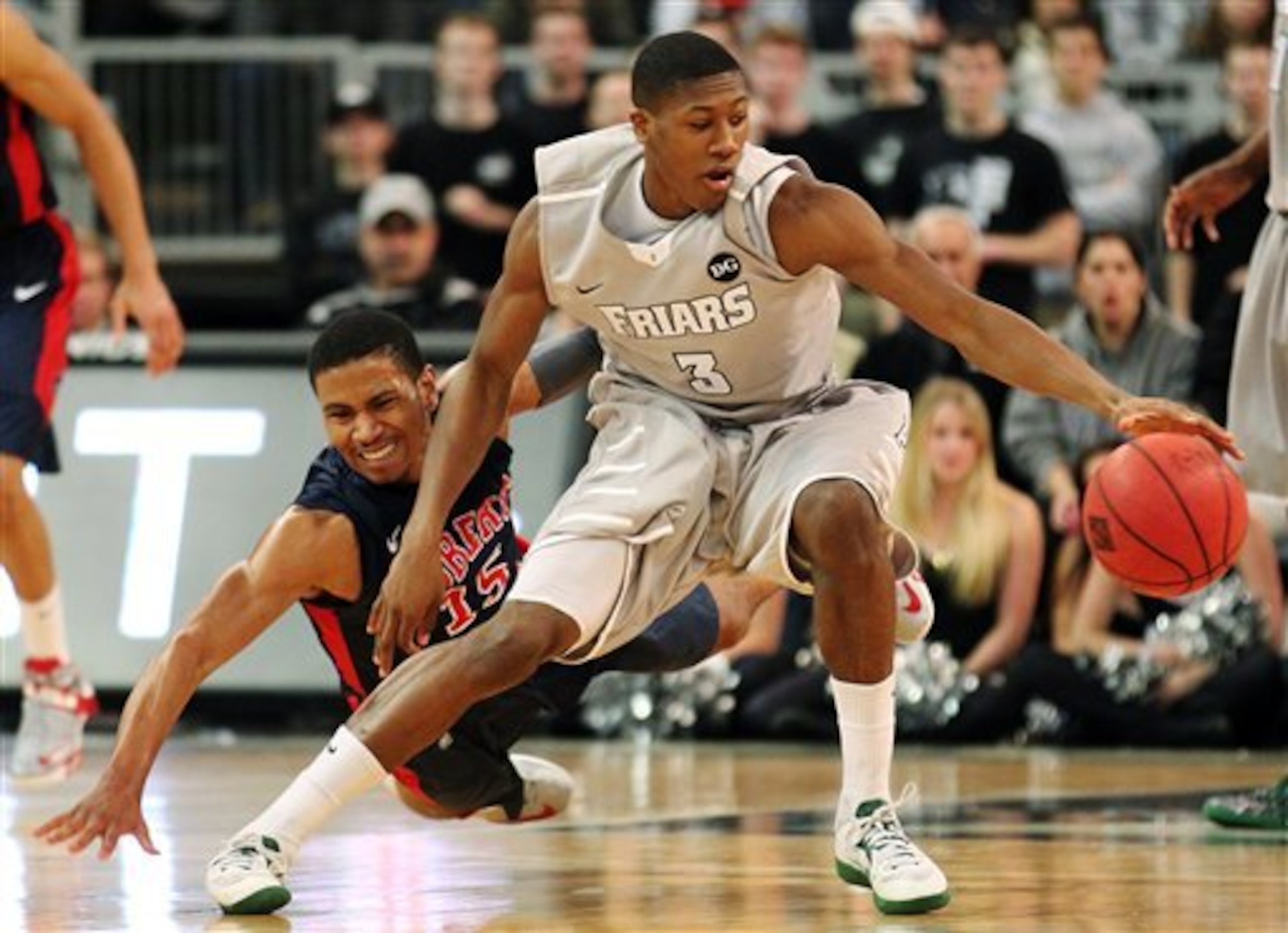
Injuries prevented Providence guard Kris Dunn from reaching expectations his first two seasons, taking him off the NBA's radar.
He missed the first nine games of his freshman season because of a shoulder problem and averaged only 5.7 points, 4.1 rebounds and 3.2 assists while shooting just 39.8 percent from the field and 28.6 percent on three-pointers.
Things got worse last season. Dunn was limited to four games before shoulder surgery ended his season, having averaged just 3.8 points on 31.6 percent shooting. It earned him a medical redshirt, however, making him a third-year sophomore in 2014-15.
Two things changed this season. First and most importantly, Dunn was healthy. Second, Bryce Cotton, the Friars' all-Big East point guard last season, was gone.
The 6'3" Dunn took over the point guard spot and ran with it. He is averaging 15.1 points on respectable 48.2 percent shooting, including 33.9 percent on three-pointers. He is fourth in the nation in assists, averaging 7.4 a game, and is pulling down 5.7 rebounds a game.
Dunn still turns the ball over too much, but his versatility has helped Providence to a 19-9 record, putting it in position for an NCAA tournament berth.
His NBA stock has risen dramatically. DraftExpress has him pegged as the 29th pick of the first round in its 2015 mock draft, while NBADraft.net projects Dunn to be the 27th overall selection in the 2016 draft.
Dunn's stock may rise further because his numbers have been improving lately. His disappointing four-point game against Villanova on Tuesday ended a 12-game run in which Dunn averaged 19.1 points, 6.1 rebounds and 7.4 assists while shooting 41.2 percent on three-pointers.
4. Jerian Grant, Notre Dame
7 of 10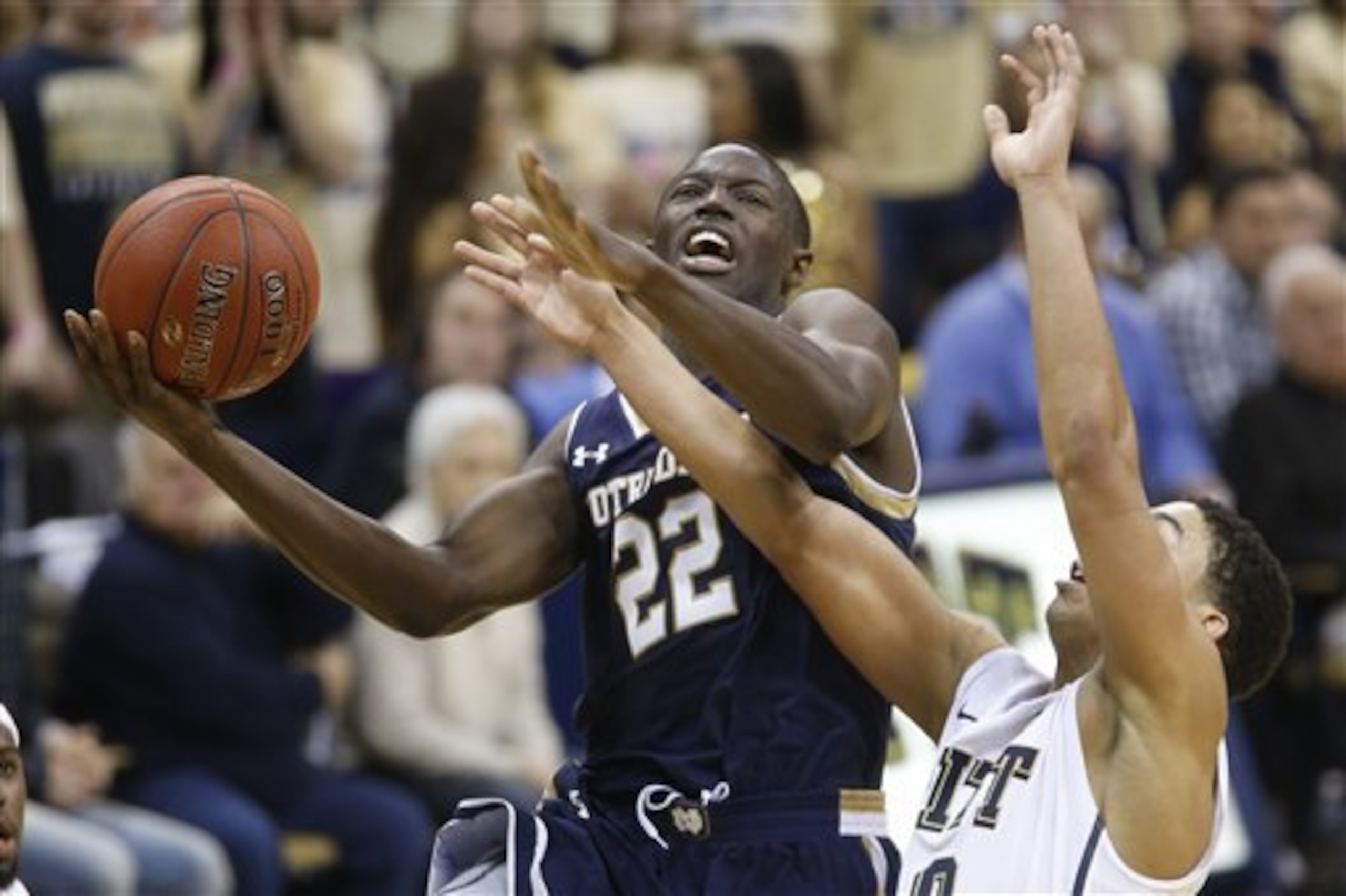
Notre Dame point guard Jerian Grant is providing evidence that a player's NBA draft status is not based solely on statistics. Grant's numbers have actually gone down from last season, but his draft stock has gone up.
Coming off a junior season in which he averaged 19.0 points on 51.8 percent shooting, including 40.8 percent on three-pointers, Grant was slotted in the No. 56 position in DraftExpress' 2015 mock draft when this season began.
Now, with a scoring average of 16.9 points on 49.5 percent shooting, including 33.6 percent from long range this season as a senior, Grant is projected as the No. 17 overall pick by DraftExpress and No. 19 by NBADraft.net.
Grant's rise in pro potential has to do with what he has meant to the success of his team. The epitome of a floor leader, the 6'5" Grant is the type of player NBA teams want at the point guard spot. He has shown he can produce offense in a number of ways, sometimes hitting a critical three-point shot, sometimes driving for a dunk and sometimes creating an opening and passing to a teammate for an open shot.
His ability to make the right play at the crucial moments is a major reason the Irish are 8-3 in games decided by five points or fewer or in overtime.
Grant's importance in Notre Dame's rise to its current No. 9 ranking in the Associated Press poll was demonstrated in the team's January 28 victory over Duke. He had 23 points, 12 assists and six rebounds while hitting 9 of 15 shots and playing all 40 minutes in the 77-73 win.
Notre Dame rallied from a 10-point deficit with less than 11 minutes left in that game, and Grant provided all the big plays down the stretch. In the final 67 seconds he hit a jumper just as the shot clock expired, tossed a pass to an open Steve Vasturia for a three-point shot, again as the shot clock expired, and blocked a layup attempt.
By contrast, when he was limited to seven points and four assists a week later, Duke beat the Irish by 30 points.
Notre Dame's climb from being unranked in preseason to a spot in the Top 10 has aided Grant's rise in the eyes of NBA scouts. He is cited as the main reason for that ascent.
3. Devin Booker, Kentucky
8 of 10
Freshman Devin Booker came to Kentucky as a McDonald's All-American, but as the nation's No. 18-ranked recruit in the class, according to ESPN.com, and No. 28, according to Scout.com, he was far from the most promising freshman or sophomore at Kentucky, which was loaded with high school stars.
Before the season began, DraftExpress did not even list Booker in its 2015 NBA mock draft, projecting him as the No. 20 pick in the 2016 draft.
A lot has changed since then. He is averaging 11.1 points, which doesn't sound like much. But he is just 0.1 of a point off the team lead on a squad that is unbeaten and ranked No. 1. Plus, he is doing it while averaging just 21.6 minutes per game on a team where nobody plays more than 26 minutes.
More significant is the way he shoots the ball, finishes on the break and handles himself on the court.
Booker is Kentucky's most reliable three-point threat, hitting 45.3 percent of his long-range attempts. His shooting percentage has dropped off a bit after going 3-of-12 on three-point shots in two recent games, but he countered that by showing a willingness and ability to aggressively drive to the basket as well.
At 6'6" Booker is tall enough to be a shooting guard in the NBA, and he continues to show the varied skills and poise needed to be a quality pro player.
Even though Booker could benefit from another year of college so he can add some needed muscle, DraftExpress projects him as the No. 14 pick in the 2015 draft. NBADraft.net lists him as the No. 8 pick in its 2016 mock draft. Perhaps most significantly, ESPN ranks him as the No. 13 NBA prospect right now.
2. D'Angelo Russell, Ohio State
9 of 10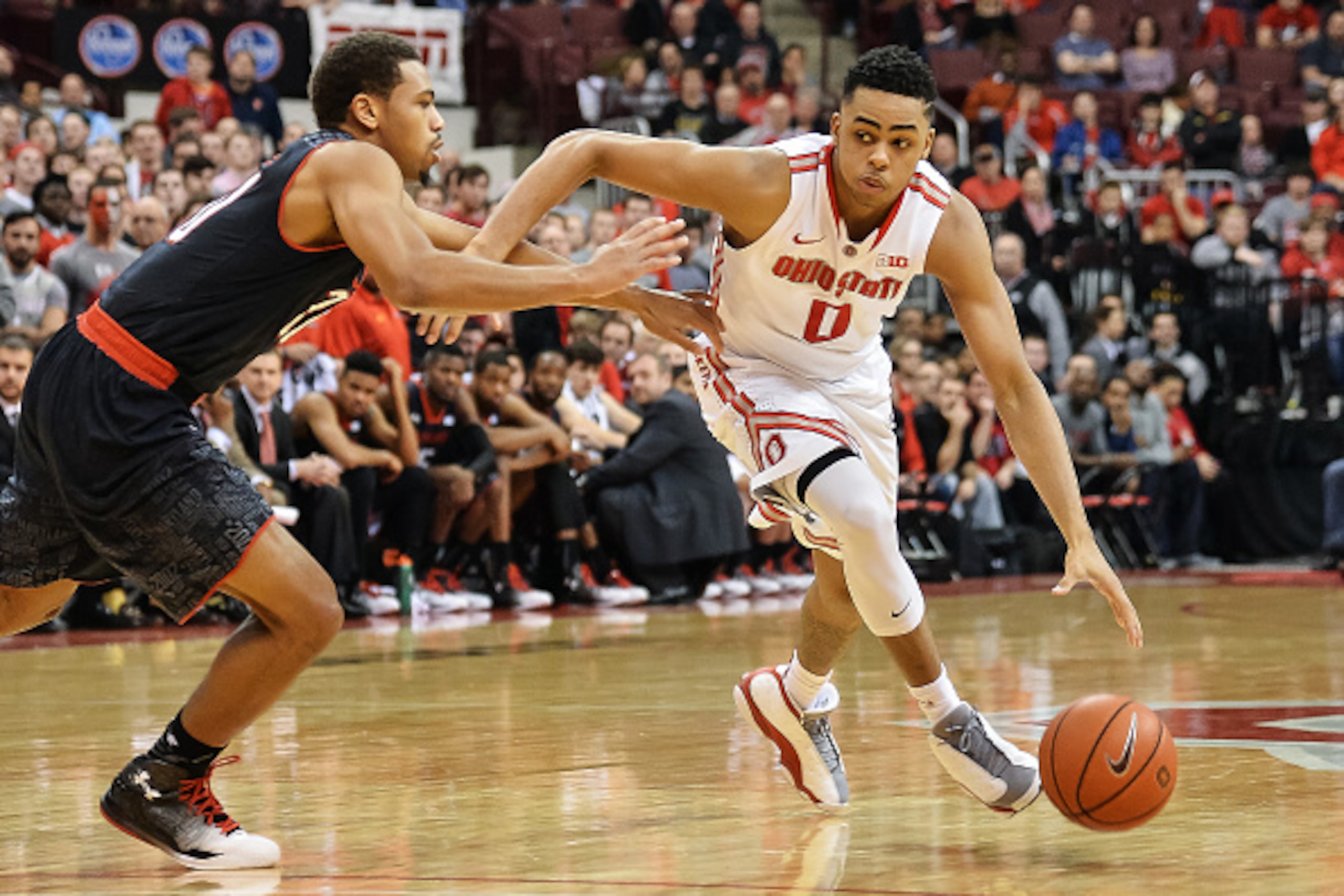
NBA mock draft boards are typically fairly fluid with players moving up and down regularly until you reach the lottery picks. Once you reach the top 10 or so, advancing just a slot or two is difficult. Players in that range are usually pretty entrenched in their draft position, and it takes something special to displace those near the top.
Ohio State freshman point guard D'Angelo Russell has done it, however, based on his play over the past two months.
Ranked as the nation's No. 13 recruit by ESPN.com and by Scout.com, Russell was expected to make an immediate impact. However, as a 6'5" shooting guard, he did not enter his freshman season with as much NBA buzz as the many talented big men in that freshman class.
His performances early this season showed his ability to score points, and he quickly moved off the periphery to the No. 13 overall draft slot in DraftExpress' mock draft in late November.
Russell's NBA stock started to rise further as he showed the ball-handling skills that could make him a top-flight NBA point guard. Considered a combo guard rather than a true point guard, Russell is the floor leader for the Buckeyes, generating much of what Ohio State does offensively with his court vision, passing skills, basketball instincts and ability to score in nearly every way imaginable.
Russell does everything for the Buckeyes and is the chief reason they are likely to reach the NCAA tournament.
He is averaging 19.0 points, 5.8 rebounds and 5.4 assists for the season. From January 1 through February 3 his production rose, and so did his draft stock. During that 10-game stretch, Russell averaged 22.6 points, 7.6 rebounds and 5.7 assists while shooting 50.6 percent, including 45.8 percent on three-pointers. His triple-double of 23 points, 11 rebounds and 11 assists in the February 8 victory over Rutgers displayed all his talents.
He moved past some of the nation's top players in mock drafts and is currently projected as the No. 3 overall pick in this year's draft by both DraftExpress and NBADraft.net. He is slotted as the No. 4 NBA prospect by ESPN.com.
Russell was as high as the No. 2 pick on DraftExpress' mock draft just a week ago, but he slipped to No. 3 because he has struggled a bit over his past three games. An article by CollegeBasketballTalk's Scott Phillips suggested Ohio State may be putting too much of a burden on Russell. We'll see.
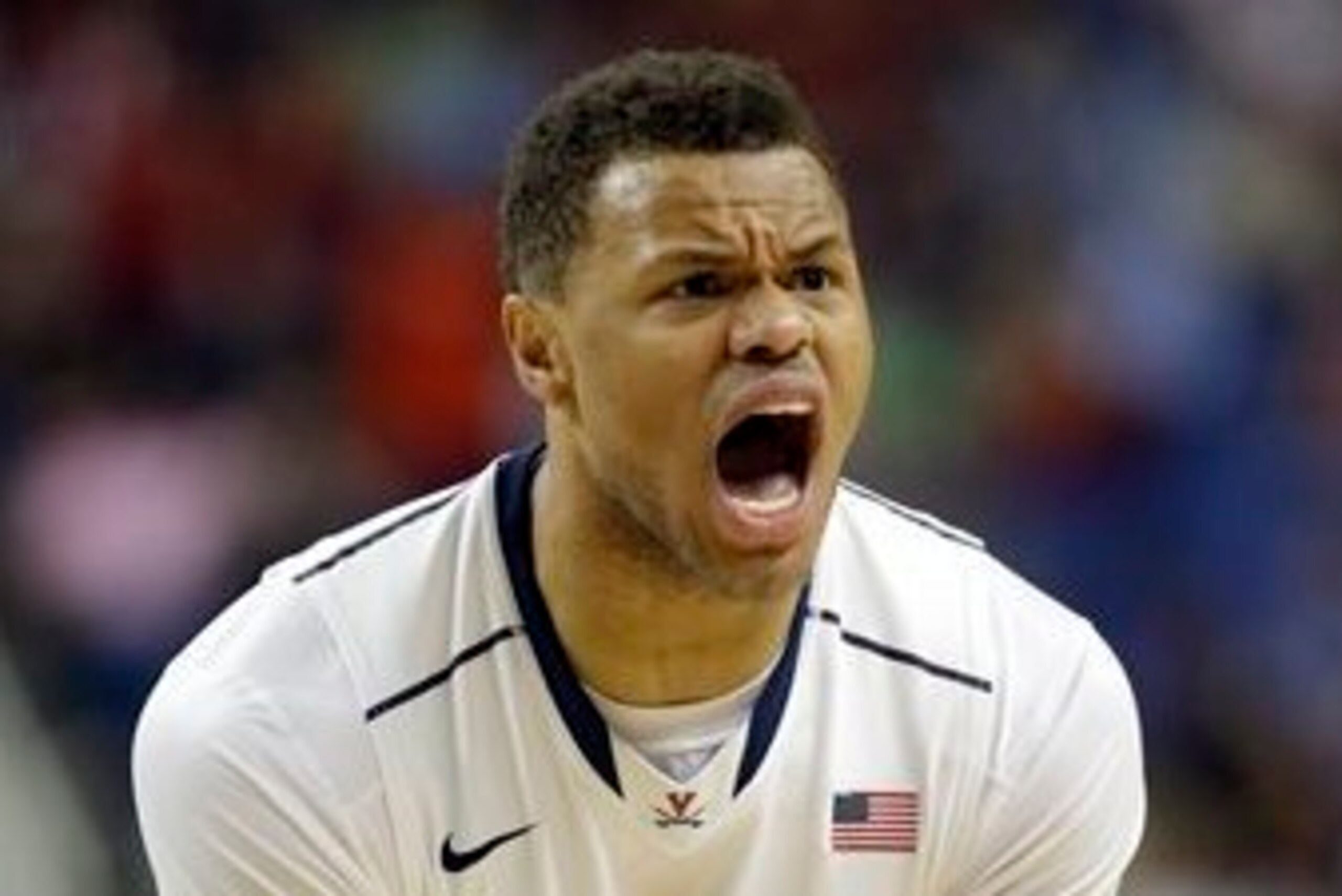
1. Justin Anderson, Virginia
10 of 10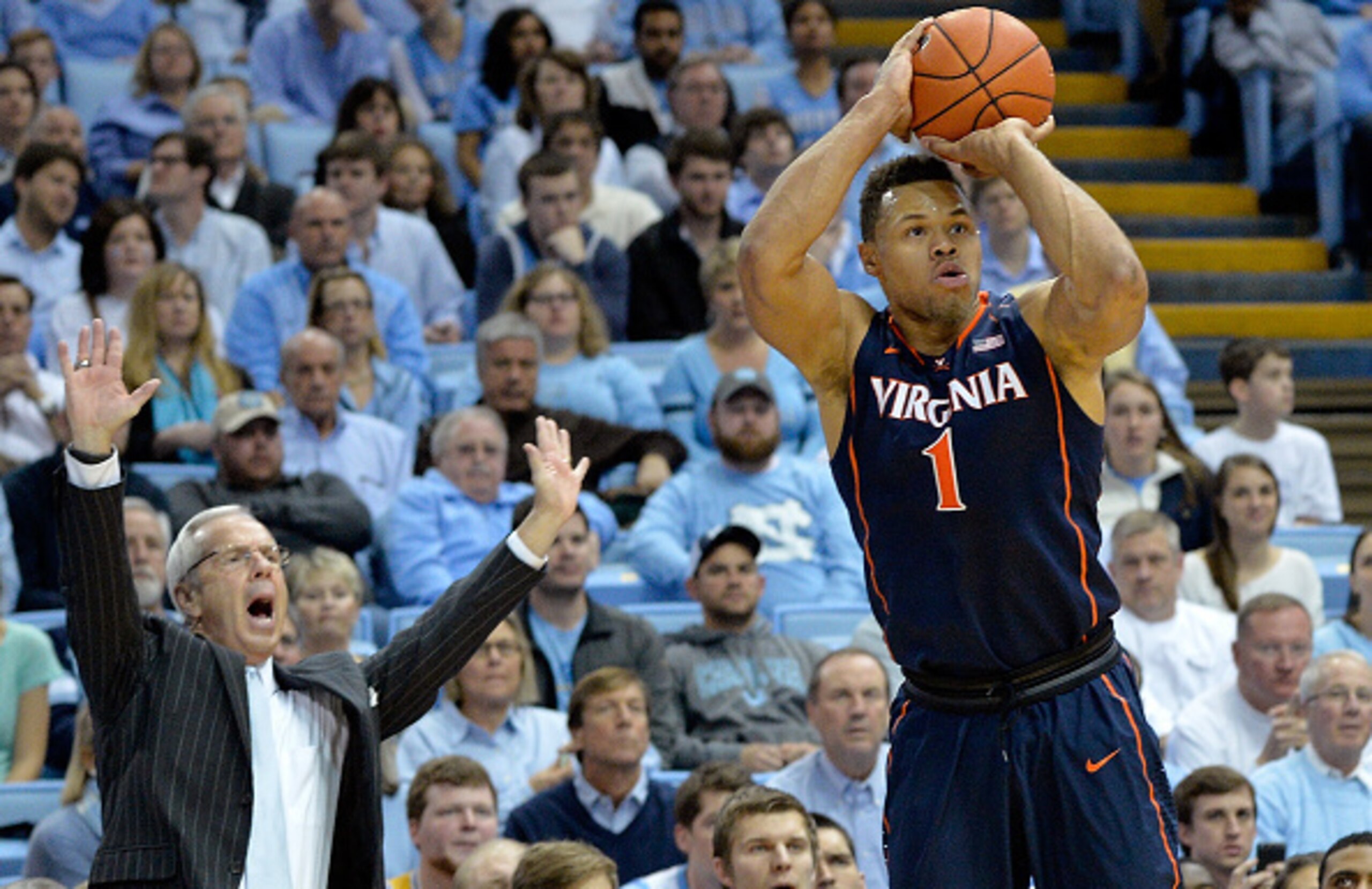
Virginia junior Justin Anderson can only sit and wait, hoping the broken finger on his left hand heals sufficiently for him to make an impact in the NCAA tournament. That injury and subsequent performances could affect his decision on whether to enter the NBA draft this year.
The fact that Anderson even has a decision to make speaks to how far his NBA stock has risen this season.
Anderson was just another player for Virginia last season, sinking into the background of the Tony Bennett style that focuses on defense and promotes low-scoring games.
The 6'6" Anderson was not even a starter last season as a sophomore, ranking fourth on the team in scoring at 7.8 points a game while shooting 40.7 percent from the field and just 29.4 percent from three-point range. Those numbers won't get a shooting guard into the NBA even if he is a lockdown defender as Anderson was.
Players don't figure to improve dramatically from their sophomore to their junior seasons, but Anderson made a quantum leap.
Through the first 21 games of this season, he was leading the team in scoring at 13.9 points per game, and 13.9 points in Bennett's disciplined system translates to about 18.9 points in most systems. More significant was the fact that he was shooting 50 percent from the field and 49.7 percent on three-pointers.
Suddenly the fact that Anderson was strong and athletic and an excellent defender mattered a great deal.
Anderson rose to the No. 24 slot in the first round of DraftExpess' mock draft and to No. 23 on the NBADraft.net's 2015 mock draft.
That's where Anderson sits at the moment, even though he has been sidelined since breaking his finger in the 22nd game of the season on February 7. The fact that Virginia was less dominant in its first few games without Anderson may help his draft status. A bigger factor will be how he performs when he returns.


.jpg?w=2560 "Viral Rams Coach Vid 🖕")

.jpg?w=2560 "Injury-stricken Seahawks signing veteran RB")
