

How MLB's Current Superstars Compare to Legends of the Past
If we had any sense of fairness, we would only ever look at contemporary baseball superstars in their own light. It's not like great ballplayers come off an assembly line, after all.
But darn it, we just can't help making comparisons. We're always drawing lines between great players of the present and great players of the past. And more often than not, it's a silly thing to do.
Other times, however...well, that's what we're here to talk about.
TOP NEWS

Realistic Offseason Trade Ideas 💡

Players Who Were Worse Than You Think in 2026 ⚾

Yankees Sloppy in Game 2 Loss 😬
There's no shortage of superstars in today's MLB, and surely all of them have been compared to a legend of the past at some point or another. But rather than weigh all of the different comparisons, we're going to focus on five that (a) are especially prevalent and (b) can actually be validated.
Starting with...
Mike Trout vs. Mickey Mantle

This is a comparison you've heard before, and not just since Mike Trout burst onto the scene in 2012. The Los Angeles Angels wunderkind has been drawing Mickey Mantle comparisons since he was a prospect—even a contemporary of Mantle's couldn't help it.
"He's a strong guy, runs really well, power," Al Kaline told John Lowe of the Detroit Free Press. "He reminds me a little bit of a Mantle."
To Kaline's point, the comparison sticks partially because it's hard to ignore the physical similarities between the two. Mantle was a well-put-together guy who had immense power and, at least earlier in his career, the blazing speed to match. That's Trout in a nutshell.
But another big reason the comparison sticks is because Trout and Mantle's early careers have both followed roughly the same trajectory. Both got their first taste of the majors at the age of 19 and immediately seized stardom at the age of 20.
So with Trout now three full seasons into his career, how do his first three years of stardom compare to Mantle's? Here are some numbers, courtesy of Baseball-Reference.com and FanGraphs:
| Trout | 2012-2014 | 453 | 2060 | 93 | 98 | 172 | 170 | 27.5 |
| Mantle | 1952-1954 | 415 | 1815 | 71 | 17 | 156 | 156 | 18.7 |
You'll know most of these stats, but the ones with the pluses likely require some explanation.
The OPS+ metric is OPS that's adjusted for parks and leagues and put on a scale where 100 is average. The wRC+ metric is the same thing except based on the more complicated weighted on-base average. Both metrics are handy for comparing players from different eras, as we're doing here.
At any rate, both metrics agree that Trout has been a better hitter than Mantle in his early stardom. The stolen base disparity highlights how Trout has also been more active on the basepaths, which is no surprise given what happened to Mantle's knee in 1951. Not pictured is how the defensive metrics also favor Trout.
When you have a few more games played, you're going to have a sizable advantage in wins above replacement like the one Trout has. To this extent, you can actually make the argument that the Trout-Mantle comparison is more of a compliment to Mantle than to Trout.
Two things, though. For those who measure success in rings, yes, Mantle did already have three rings by the time his age-22 season in 1954 was in the books. But perhaps more importantly, WAR says Mantle's age-22 season was his best to date. Of Trout's age-22 season, WAR says the opposite.
On that note, the Trout-Mantle comparison could indeed be short-lived. Whereas Mantle was still coming into his own at age 22, Trout may have already peaked.
For now, however, it's an apt comparison. Probably more apt than it has any right to be, in fact.
Miguel Cabrera vs. Albert Pujols

Whereas the Trout-Mantle comparison was somewhat straightforward, this one is a bit trickier.
For starters, Albert Pujols is still around. After that, there's no arguing that Miguel Cabrera has never been the baserunner or defender that Pujols once was.
But if you want to compare sticks only? Yeah, that can be done.
Eventually, Cabrera and Pujols are going to go down as two of the greatest right-handed hitters ever. But these days, the debate has become which will go into the books as the greatest hitter of his generation. Matt Snyder of CBSSports.com and MLB.com's Matthew Leach both pondered the idea in 2013.
However, it's hard to put Cabrera and Pujols on the same level if you compare their career arcs or their respective peaks.
Without going too in-depth, Pujols' 170 OPS+ and 86.4 WAR through his age-31 season trumps Cabrera's 154 OPS+ and 58.8 WAR through his own age-31 season. Also, Cabrera's 171 OPS+ over the last five seasons doesn't match the 177 OPS+ Pujols put up across eight seasons between 2003 and 2010.
But if you want to compare what Cabrera has done in his recent peak to what Pujols was doing in the same 27-31 age range? Yeah, we can do that:
| Cabrera | 2010-2014 | 779 | 3370 | 181 | 13 | 171 | 166 | 33.4 |
| Pujols | 2007-2011 | 772 | 3371 | 195 | 48 | 172 | 170 | 40.4 |
Pujols' activity on the basepaths and strong defense help explain the WAR gap. But when it comes to hitting only, it's pretty much even. Cabrera between the ages of 27 and 31 basically put up the same numbers as Pujols between the ages of 27 and 31.
That reality does have a downside, though. Just as Pujols hit a wall in his age-31 season in 2011, Cabrera did the same in 2014. In both cases, their numbers were good but not quite up to their lofty norms.
In Pujols' case, we know that 2011 season was the preamble to an inevitable decline. Given his health issues, the same thing could happen with Cabrera.
Maybe. But until then, there's nothing wrong with comparing Cabrera now to Pujols at the same age. It works.
Buster Posey vs. Johnny Bench

Whether Buster Posey is baseball's best catcher these days is debatable, but what's not debatable is that it's hard to ask for more in a catcher.
Posey is an elite offensive catcher and an above-average defender to boot. He also has a reputation as a leader and a winner, and it's safe to say he's earned both.
That's why Posey is often associated with Johnny Bench, the ultimate hitting, defending, leading and winning catcher. Heck, even Bench welcomed the comparison in an interview with CSN Bay Area.
The trouble is that the comparison works better with appearances than it does with performances.
One issue is that Bench had played in twice as many games through his age-27 season than Posey has through his own age-27 season. And though Posey stands out as a better pure hitter, trumping Bench in average and on-base percentage, Bench was a superior power threat and defender. He was particularly more dominant in controlling the running game, as he routinely threw out between 40 and 50 percent of would-be thieves.
What we can do, however, is compare Posey's recent three-year peak (2012-2014) to either of Bench's early-career three-year peaks (1970-1972 or 1972-1974). If we do that, we get this:
| Posey | 2012-2014 | 443 | 1810 | 61 | 3 | 150 | 147 | 18.0 |
| Bench | 1970-1972 | 454 | 1937 | 112 | 13 | 139 | 136 | 20.0 |
| Bench | 1972-1974 | 459 | 2012 | 98 | 15 | 142 | 138 | 21.1 |
Peak Posey hasn't hit for as much power, swiped as many bases or played defense quite like peak Bench. But overall, his bat has been notably louder than Bench's. Add in consistently good, if not quite great, defense, and it's a reasonably fair fight in the WAR column.
For what it's worth, you can also point to how Posey's peak ('12-'14) has produced two rings. By the end of his second awesome three-year stretch in 1974, Bench was still working on getting his first.
It bears repeating that the Posey-Bench comparison works better with appearances than it does with numbers. But if you've gotten the sense that Posey's recent run of success is reminiscent of Bench at his best, know that it's not misplaced.
Felix Hernandez vs. Dwight Gooden

Like with Posey and his catching brethren, it's debatable whether Felix Hernandez is baseball's best right-handed pitcher. What's not debatable, however, is that nobody has been as good as consistently.
Hernandez is the rare pitcher who has power stuff and a deep arsenal of pitches, and he's also mastered command and sequencing. As such, it's tempting to compare him to Pedro Martinez.
But nah. Let's use somebody a bit more reasonable: Dwight Gooden.
Ira Berkow of The New York Times cited Gooden as a comp for Hernandez as far back as 2006, in part because both are power pitchers who broke into the majors as teenagers. You can take it from Seattle Mariners manager Lloyd McClendon, however, that the comparison still works.
"Felix is unique, probably a combination of Doc Gooden and Greg Maddux," McClendon told John McGrath of The News Tribune. "The devastating changeup, the big hook, the fastball that's 94-95 miles per hour."
Hernandez is through his age-28 season, which is convenient, because Gooden's age-28 season in 1993 was basically his last really good season. And as luck would have it, their production through their age-28 seasons is very similar.
When we compare the two, though, we're really picturing peak Hernandez versus peak Gooden—Hernandez's six most recent seasons going up against Gooden's first six seasons.
So let's go there:
| Hernandez | 2009-2014 | 199 | 1394.1 | 24.2 | 6.3 | 141 | 74 | 33.5 |
| Gooden | 1984-1989 | 175 | 1291.0 | 22.4 | 7.3 | 132 | 71 | 30.7 |
First, know that ERA+ does the same thing for ERA that OPS+ does for OPS. FIP- does the same thing for FIP. That stands for fielding independent pitching, and it's a metric that focuses on what pitchers can control: strikeouts, walks, home runs and hit-by-pitches. And unlike with ERA+, lower is better with FIP-.
Those, then, would be the two most important columns, and they say it's basically a toss-up.
Hernandez has been better from a strictly runs-allowed perspective, and over more innings to boot. Gooden, however, was arguably more dominant. For more on that, you can dig deeper and see that his strikeout rate was 7.7 points better than the league average during that span, compared to 5.0 points for Hernandez's recent strikeout rate.
In so many words, the Hernandez-Gooden comparison works just as well from a statistical standpoint as it does from an appearances standpoint. Both have been similarly productive through their age-28 seasons and similarly dominant during their peaks.
Clayton Kershaw vs. Sandy Koufax
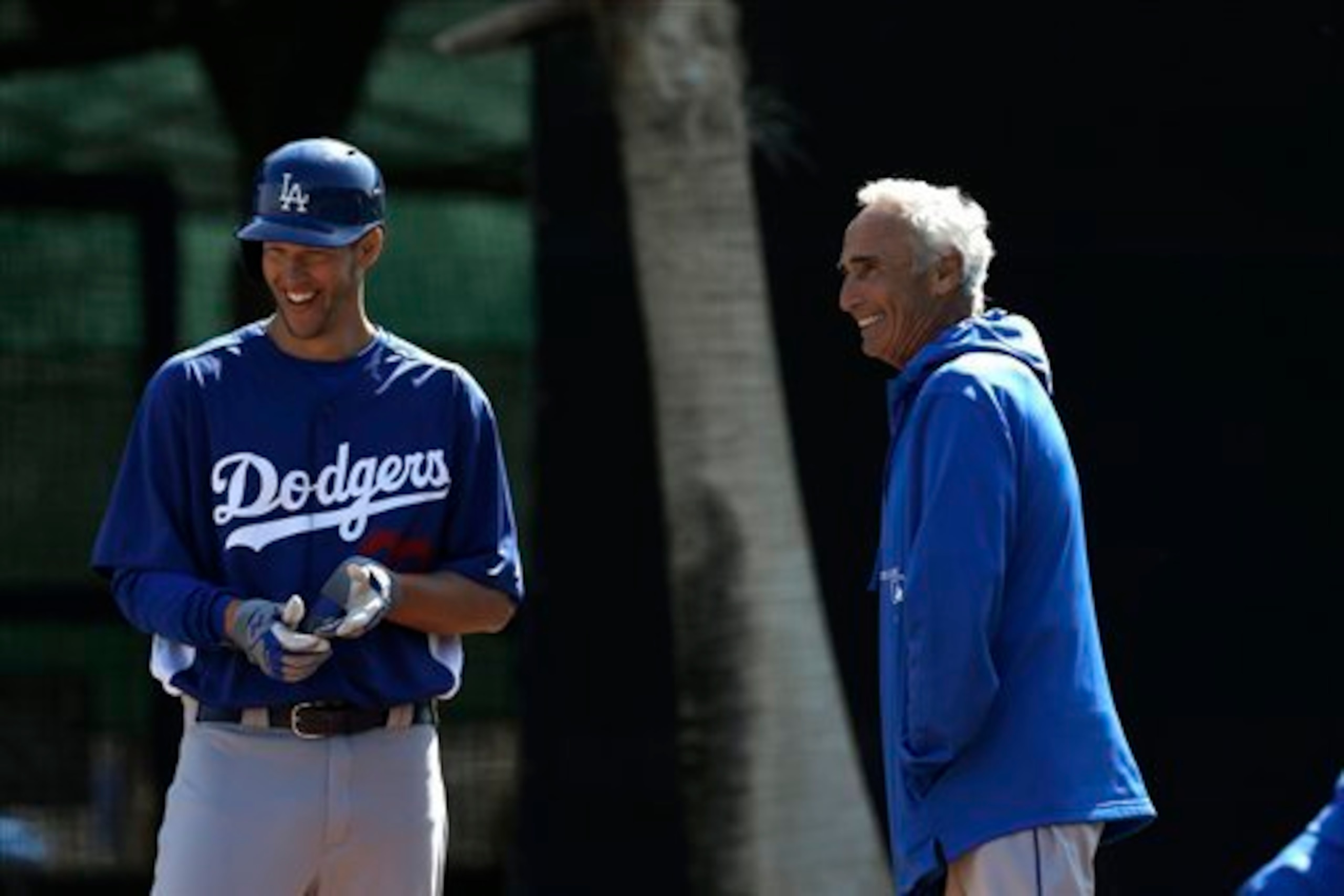
Yup, you knew this one was coming. No modern-day-great vs. old-school-great comparison is easier to make than Clayton Kershaw and Sandy Koufax.
There's obviously the Los Angeles Dodgers connection. Both throw left-handed. And just as Kershaw has good heat and nasty breaking stuff, so did Koufax.
And though extreme talent is clearly another similarity, Kershaw was quick to wave that off when he first heard the comparison.
"If you're going to get compared to somebody, that's the guy," he said, per Ken Gurnick of MLB.com. "It's the biggest honor you can get. But I also take that with a grain of salt. In his prime, he was the best ever. I have to get a lot better to prove that right."
Has Kershaw actually gotten that much better, though?
It doesn't sound too crazy on the surface. Kershaw's four most recent seasons have produced three National League Cy Young Awards and four ERA titles. So did Koufax's final four seasons.
Also, you'll be surprised how well they measure up statistically:
| Kershaw | 2011-2014 | 126 | 895.1 | 27.3 | 5.8 | 172 | 66 | 28.2 |
| Koufax | 1963-1966 | 150 | 1192.2 | 26.4 | 5.6 | 172 | 67 | 36.5 |
The biggest difference you see here is the workload, as Koufax's four-year peak consisted of nearly 300 more innings than Kershaw's four-year peak.
But aside from that, the word "wow" will come to mind when looking at the rate stats. ERA+ and FIP- agree that today's Kershaw and peak Koufax are basically the same pitcher, and the similarities between their walk and strikeout rates only underscore the point.
Of course, the catch is that Koufax's strikeout rate between '63 and '66 was 10.7 points better than league average. Kershaw's 2011-2014 strikeout rate is only 7.6 points better than league average.
Between that and the workload, it's still not fair to compare today's Kershaw to peak Koufax, whose four-year stretch of dominance remains the definition of pitching excellence.
What Kershaw is doing now, however, is good enough for the rarely bestowed "Koufaxian" label. He hasn't been as good as Koufax, but that he's at least been reminiscent of Koufax is one hell of a compliment.
Note: Stats courtesy of Baseball-Reference.com and FanGraphs unless otherwise noted/linked.
If you want to talk baseball, hit me up on Twitter.


.jpg?w=2560 "Grading WWE Raw 🔠")
.jpg?w=2560 "Viral Rams Coach Vid 🖕")
.jpg?w=2560 "Injury-stricken Seahawks signing veteran RB")
.jpg?w=2560 "Bijan's INSANE 1st Half 🤩")

.jpg?w=2560 "2 NFL Officials Suspended")

