

NFL Combine Matters for Mike Zimmer and the Minnesota Vikings
Every year as the NFL combine begins, fans of every team, including the Minnesota Vikings, will hear much about how the combine doesn't matter, or at the very least only encourages teams to do a second pass on the tape. If recent history is any indication, the Vikings are not one of the teams that holds entirely true to that rule.
Under Mike Zimmer, the Minnesota Vikings have changed their approach to player acquisition and the draft. It's clear that they ditched the previous rule of drafting or acquiring players from the same school, and instead have focused much more on talent—and high-potential, physically appealing talent at that; with raw but tantalizing players in Anthony Barr and Jerick McKinnon as high-value picks for the Vikings.
TOP NEWS
.jpg?w=2560 "Chiefs Giants Football")
Mahomes Told Teammate to Leave Meeting
.jpg?w=2560 "Steelers Buccaneers Football")
Baker Gets Glove From Rays 🧤
.jpg?w=2560 "Steelers Saints Football")
Steelers Roll Saints in Paris
As time goes on, it will be easier to develop a model for what the Vikings will do in a draft or how they approach the combine, but as the team moves forward, trends are already emerging.
The Vikings have had around 70 player transactions since Mike Zimmer and his staff joined the team, and in those 70 transactions, some patterns point to clear indications that the Vikings value combine metrics. While it's true that any one of these sets of patterns could be a coincidence (after all, 70 total player transactions spread out across 11 position groups is not a significant sample size), but the body of work implies that the combine carries a high degree of importance for a squad that trusts its coaching staff to develop the most out of its players.
Note: All combine and pro day scores, unless otherwise noted, come from NFLDraftScout.Com's extensive databases, not the official NFL combine scores.
Cornerbacks
Mike Zimmer's favorite position group, cornerbacks, have been a weakness for the Vikings stretching back nearly a decade, with occasional glimmers from Antoine Winfield or a pre-injury Cedric Griffin counterbalanced by a host of busts or also-rans, like Chris Cook, Asher Allen, post-injury Cedric Griffin, Marcus McCauley, Benny Sapp, Karl Paymah, Lito Sheppard, Brandon Burton and, if he counts, Frazier-era Josh Robinson.
With Zimmer's presence, the Vikings have immediately improved their form in the secondary, though it's not as if the position group is resolved by any means. While Josh Robinson had an underrated year and a strong start, games like his first one against the Chicago Bears call into question his ability to consistently hold up as an outside cornerback. On the inside, Captain Munnerlyn struggled mightily, with solid stretches of play punctuated by the most egregious mistakes possible.
One could say the Vikings are looking for physically imposing cornerbacks, especially in a division full of receivers over 6'4", but their transaction model so far doesn't take into account length (no cornerback has joined the team after Zimmer was hired who has particularly long arms, and they've ranged from 29" to 31.625" long) or height (from 5'9" Captain Munnerlyn to 6'1.5" Chris Greenwood).
But nearly every single one of them ran the 40-yard dash in 4.46 seconds or faster. Given that the average cornerback at the combine has run a 4.49-second 40-yard dash, that seems significant. The 20-yard and 10-yard splits do not seem to be significant, however, as those vary wildly. Vikings cornerbacks have run between 2.64-second to 2.50-second 20-yard splits (average is 2.57), while running 1.43- to 1.58-second 10-yard splits (average is 1.54).
One thing worth keeping an eye on: jump numbers. Neither the broad jump nor the vertical leap seems to be an indication by itself that it could draw the Vikings' eyes, but both seem to be relevant when combined. Of the nine cornerbacks the Vikings have acquired since Zimmer's arrival, six have jumped over the average of 157.5 combined inches for cornerbacks.
Josh Cooper is the lone exception to both rules, and he was shed fairly quickly by the Vikings. One of the exceptions to the jump rule, DeMarcus Van Dyke, has lightning-fast speed and so may have been excepted because of his other physical skills.
| Player | 40-Yard Dash | Jump Score (Inches) |
| Captain Munnerlyn | 4.45 | 158.8 |
| Derek Cox | 4.39 | 176.5 |
| Kendall James | 4.40 | 159.0 |
| Jabari Price | 4.44 | 141.5 |
| Julian Posey | 4.46 | 170.5 |
| Josh Cooper | 4.65 | 146.5 |
| Chris Greenwood | 4.38 | 176.0 |
| DeMarcus Van Dyke | 4.25 | 154.5 |
| Jalil Carter | 4.38 | 162.0 |
| Average NFL CB | 4.49 | 157.5 |
| Average Vikings CB | 4.42 | 160.6 |
Defensive End
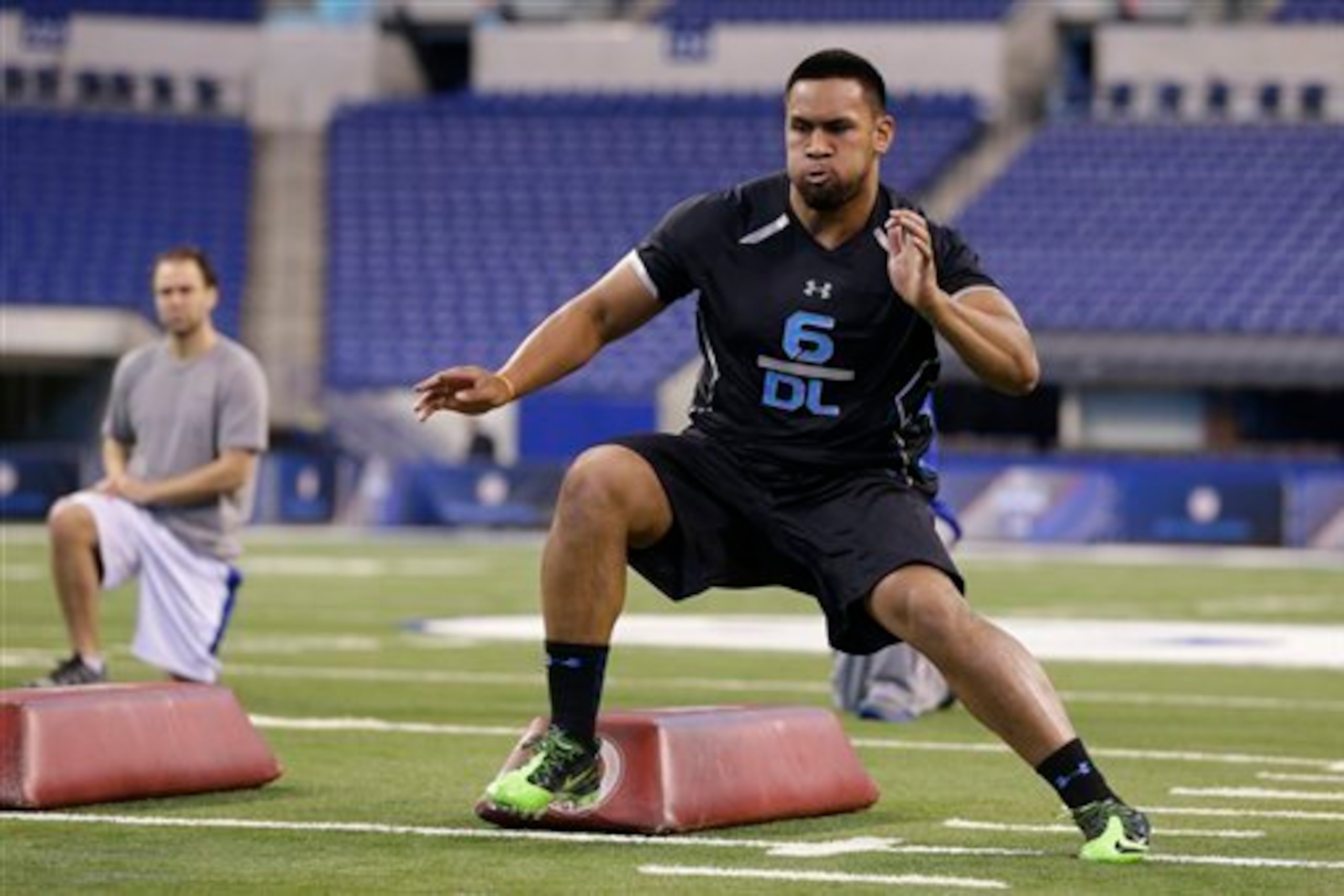
Before going into any specific combine numbers for pass-rushers for Vikings players, it behooves us to look at the use of a filter mechanism built by Bleacher Report writer and draft expert Justis Mosqueda he consistently refers to as "Math Rushers." That mechanism produces a metric for all defensive linemen and pass-rushing outside linebackers, and it's a difficult set of combine measures to pass. In the draft, there were only eight players who qualified, and the Vikings grabbed two of them (Anthony Barr and Scott Crichton).
Of the nine undrafted free agents Mosqueda was aware of, Minnesota signed one (Rakim Cox). Three of 17 doesn't seem like much of a coincidence, and though it may not be because they follow Mosqueda's specific formula, it could be because they have one similar.
The Vikings' acquisitions at defensive end were not driven by the 40-yard dash, like they seem to be for cornerback, but there is a chance they pay attention to the 10-yard split. Of the seven defensive ends acquired by the Vikings, five had equal or faster-than-league-average 10-yard splits (1.65) for the position, and the other two were undrafted free agents.
Eight of the nine players also had faster-than-average three-cone scores and subsequently combined three-cone and short-shuttle times. The other one was undrafted free agent Jake Snyder.
While Tyler Scott and Jake Snyder had times enough to overwhelm the Vikings' average score in the 10-yard split, it still looks like a significant measure the Vikings use.
| Player | |||
| Player | 10-Yard Split | Three Cone | Total Agility (Seconds) |
| Corey Wootton | 1.66 | 7.00 | 11.28 |
| Jake Snyder | 1.74 | 7.50 | 12.01 |
| Tyler Scott | 1.78 | 7.26 | 11.68 |
| Rakim Cox | 1.62 | 7.14 | 11.55 |
| Scott Crichton | 1.64 | 7.19 | 11.48 |
| Justin Trattou | 1.62 | 7.12 | 11.59 |
| Leon Mackey | 1.64 | 7.28 | 11.80 |
| Average NFL DE | 1.66 | 7.35 | 11.82 |
| Average Vikings DE | 1.67 | 7.20 | 11.60 |
Defensive Tackle
The Vikings aren't stringent about agility for their defensive tackles, but they do seem to care about explosion scores. The average defensive tackle at the NFL combine over the past decade has had a vertical leap of 29.4 inches, and all but one defensive tackle acquired by the Vikings exceeded that score. Every single defensive tackle had equal or better scores in adjusted explosion (which combines vertical leap, broad jump and accounts for weight and height) metrics as well.
The only exception was Isame Faciane, who was signed as an undrafted free agent after the Vikings hired his former line coach from Florida International, assistant defensive line coach Andre Patterson.
| Player | Vertical Leap | Broad Jump | Explosion Index |
| Kheeston Randall | 34 | 111 | 1.02 |
| Linval Joseph | 30 | 100 | 1.01 |
| Tom Johnson | 29.5 | 105 | 0.96 |
| Isame Faciane | 29 | 113 | 0.98 |
| Shamar Stephen | 30.5 | 103 | 0.97 |
| Chigbo Anunoby | 36 | N/A | N/A |
| Average NFL DT | 29.4 | 104 | 0.96 |
| Average Vikings DT | 31.5 | 106.4 | 0.99 |
Linebacker
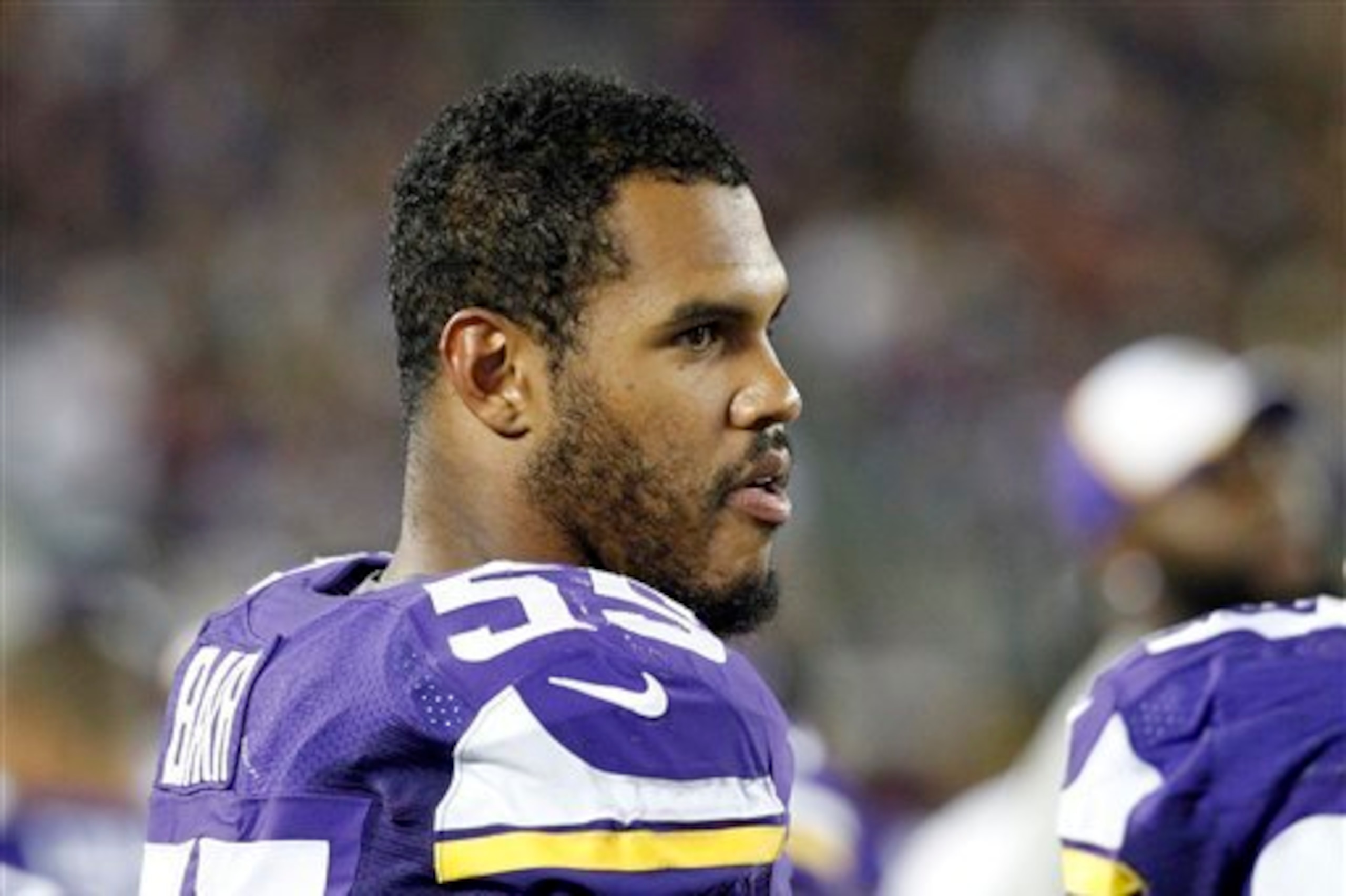
The Vikings absolutely like speed here, and the acquisitions of Anthony Barr, Justin Jackson, Brandon Watts, Justin Anderson and others are good evidence of this.
All but one of the nine acquired linebackers had faster-than-league-average scores for non-pass-rushing linebackers, and that one was Terrell Manning, a veteran pickup who was quickly waived. Many passed it with significant room to spare, and it seems as if the Vikings care less about weight and more about speed (though they may be looking for special teams candidates, which clouds the analysis).
Anthony Barr was the only linebacker acquired who pushed over 240 pounds (at 255), which is not an indication of preferring small players so much as sacrificing that weight for speed. The only players to run below a 4.7-second 40-yard dash were undrafted free agents (or Terrell Manning), and two ran sub-4.5 40-yard dashes (and a third, Anthony Barr, reportedly ran a 4.44 40-yard dash, with NFL Draft Scout reporting an even lower time. Given that UCLA uses electronic timing at its Pro Days, it sure seems like something significant worth pondering.
Note: Justin Jackson's 40-yard-dash time was taken from Bruce Feldman's reporting of internal Wake Forest player testing.
In addition, seven of the eight Vikings linebacker acquisitions for which we have data had better broad-jump scores, and six had better vertical-leap scores than the NFL average at the position. All but one had better adjusted-explosion scores than NFL average.
| Player | 40-Yard Dash | Vertical Leap | Broad Jump | Explosion Index |
| Simoni Lawrence | 4.59 | 40 | 123 | 0.96 |
| Terrell Manning | 4.79 | 32 | 114 | 0.84 |
| Dom Decicco | 4.64 | N/A | N/A | N/A |
| Mike Zimmer | 4.72 | 31.5 | 112 | 0.82 |
| Brandon Watts | 4.41 | 37.5 | 122 | 0.89 |
| Anthony Barr | 4.56 | 34.5 | 119 | 0.92 |
| Justin Jackson | 4.44 | 39.5 | 123 | 0.97 |
| Josh Kaddu | 4.67 | 34 | 120 | 0.88 |
| Justin Anderson | 4.68 | 37 | 121 | 0.92 |
| Average NFL LB | 4.75 | 33.5 | 115 | 0.87 |
| Average Vikings LB | 4.61 | 35.75 | 119.25 | 0.90 |
Guard
The Vikings acquired only one center since they hired Mike Zimmer, so that position doesn't have enough data to even draw sketchy conclusions, but at guard they've had five player transactions. Not enough to be certain of anything, but enough to look for trends in the future (especially as they enter this offseason with a need at guard).
Minnesota does not have a preference for speed, it seems, at guard, either at the 40-yard dash level or at the splits of 20 and 10 yards. All but one guard had longer vertical leaps than the NFL average, and those same four had quicker three-cone times as well. The bench-press and vertical-leap numbers do not seem to matter, but with only five acquisitions so far, things could change.
| Player | Broad Jump | Three Cone |
| Vladimir Ducasse | 91 | 8.25 |
| Austin Wentworth | 103 | 7.71 |
| Conor Boffeli | 101 | 7.44 |
| David Yankey | 103 | 7.81 |
| Jordan McCray | 100 | 7.57 |
| Average NFL OG | 99.9 | 7.94 |
| Average Vikings OG | 99.6 | 7.76 |
Again, though the average in the broad jump is lower than the NFL average, the pattern seems to be to prefer higher broad-jump scores than the NFL typically has at guard. For what it's worth, Zac Kerin, an undrafted free-agent center from Toledo, had higher broad-jump and three-cone scores than the average NFL guard (103 inches and 7.55 seconds)
Tackle
With only six tackles acquired by the Vikings since last offseason, the results are about as tentative as they are for guard, especially with limited information on what are critically known as tackle traits, like arm length. For what it's worth, three acquisitions had very long arms (Matt Hall, Antonio Richardson and J'Marcus Webb), and a fourth had longer-than-average arms (Pierce Burton). Michael Harris, who played with Norv Turner in San Diego, did not have long arms, and Mike Remmers doesn't seem to have an arm measurement, though has been praised for his size and is 6'5". For the most part, it seems relevant.
There doesn't seem to be a pattern with regard to speed at any level for the tackles, nor is there a bench-press requirement. No agility scores seemed to play a big role, but every tackle met or exceeded the average broad-jump score, and those who merely met it weighed more than 10 pounds more than the average tackle.
| Player | Arm Length | Broad Jump |
| Antonio Richardson | 35 | 112 |
| Pierce Burton | 33.25 | 102 |
| Matt Hall | 34.375 | 101 |
| Michael Harris | 32.25 | 105 |
| Mike Remmers | N/A | 103 |
| J'Marcus Webb | 36 | 101 |
| Average NFL OT | 33.5 | 101.0 |
| Average Vikings OT | 34.2 | 104.0 |
Running Back
The Vikings grab freaks at running back, if the limited sample of five players is any indication. Four of them outperformed peers at the 40-yard dash, 20-yard split, 10-yard split, bench press, short shuttle and three cone. All five met or exceeded their peers at the vertical leap. It is difficult to nail down which metrics they favor for running backs, because it seems to be everything.
The only player who did not consistently beat other combine invitees at running back was undrafted free agent Dominique Williams. For what it's worth, Ben Tate and Jerick McKinnon have two of the five most impressive combine performances at running back since 1999. The Vikings really want athletic freaks.
| Player | 40-Yard Dash | 20-Yard Split | 10-Yard Split | Bench | Vertical Leap | Broad Jump | Short Shuttle | Three Cone |
| Dominique Williams | 4.65 | 2.67 | 1.63 | 19 | 34.5 | 120 | 4.26 | 6.72 |
| Jerick McKinnon | 4.37 | 2.49 | 1.52 | 32 | 40.5 | 132 | 4.12 | 6.83 |
| Ben Tate | 4.34 | 2.52 | 1.49 | 26 | 40.5 | 124 | 4.12 | 6.91 |
| Henry Josey | 4.43 | 2.47 | 1.52 | 20 | 34.5 | 118 | 4.13 | 7.07 |
| Joe Banyard | 4.46 | 2.59 | 1.47 | 25 | 35.5 | 120 | 4.29 | 7.06 |
| Average NFL RB | 4.55 | 2.61 | 1.57 | 20.2 | 34.8 | 117.9 | 4.26 | 7.06 |
| Average Vikings RB | 4.45 | 2.55 | 1.53 | 24.4 | 37.1 | 122.8 | 4.18 | 6.92 |
Safety
So far, the Vikings do not seem to have a model for athletic performances of safeties. Once they do, it may further be complicated by the addition of players like Chris Crocker, who were signed to help teach the scheme but did not seemingly expect to make the roster.

Tight End
Of the five tight ends the Vikings acquired, it seems as if speed and leaping ability are certain prerequisites. All five tight ends beat 4.7 seconds in the 40-yard dash, and the average is 4.79. All but one, Marqueis Gray, exceeded the NFL average at tight end in vertical leap. There does not seem to be a requirement for the agility or strength scores.
| Player | 40-Yard Dash | Vertical Leap |
| A.C. Leonard | 4.50 | 33 |
| Mike Higgins | 4.67 | 40 |
| Marqueis Gray | 4.68 | 30 |
| RaShaun Allen | 4.68 | 38 |
| Ryan Otten | 4.69 | 33 |
| Average NFL TE | 4.79 | 32.7 |
| Average Vikings TE | 4.64 | 34.8 |
Wide Receiver
Receivers seemingly must be able to jump. The only receiver not to exceed the NFL wide receiver average at the vertical leap was mid-camp signing Andy Cruse, with Lestar Jean, Erik Lora, Donte Foster, Ty Walker and Charles Johnson hitting over the NFL average of 35.4 with room to spare. Kain Colter was not medically cleared to jump either the vertical or the broad jump on his pro day.
The 40-yard dash seems to carry no weight for the Vikings, as four of the seven players the Vikings brought in ran slower than NFL average. Only two players ran slower than NFL average at the position in the three-cone: Lestar Jean, who was cut before training camp, and Charles Johnson, who may have been excused for his experience with Norv Turner and for being a 6'2" phenom who ran a sub-4.4 40-yard dash at 215 pounds.
It also seems as if the explosion index, typically used for linemen, is relevant here, though that could be a byproduct of the emphasis on the vertical leap.
| Player | Vertical Leap | Three Cone | Explosion Index |
| Lestar Jean | 37.5 | 7.45 | 0.81 |
| Kain Colter | N/A | 6.68 | N/A |
| Erik Lora | 36 | 6.72 | 0.82 |
| Donte Foster | 42 | 6.79 | 0.85 |
| Andy Cruse | 34 | 6.83 | 0.80 |
| Tyrone Walker | 39 | 6.99 | 0.83 |
| Charles Johnson | 39.5 | 7.04 | 0.91 |
| Average NFL WR | 35.4 | 6.99 | 0.78 |
| Average Vikings WR | 38 | 6.93 | 0.84 |
It seems clear that at least for some positions, the Vikings are more than happy to let the combine guide their draft board, often to a significant degree. This may help fans identify beforehand who the most likely targets are after the combine process is over and they stew until the draft starts.
.jpg?w=2560 "Eagles Jaguars Football")
.jpg?w=2560 "Titans Colts Football")
.jpg?w=2560 "🚨 Week 8 AP Top 25 Poll")

.jpg?w=2560 "Updates from EVERY Game")