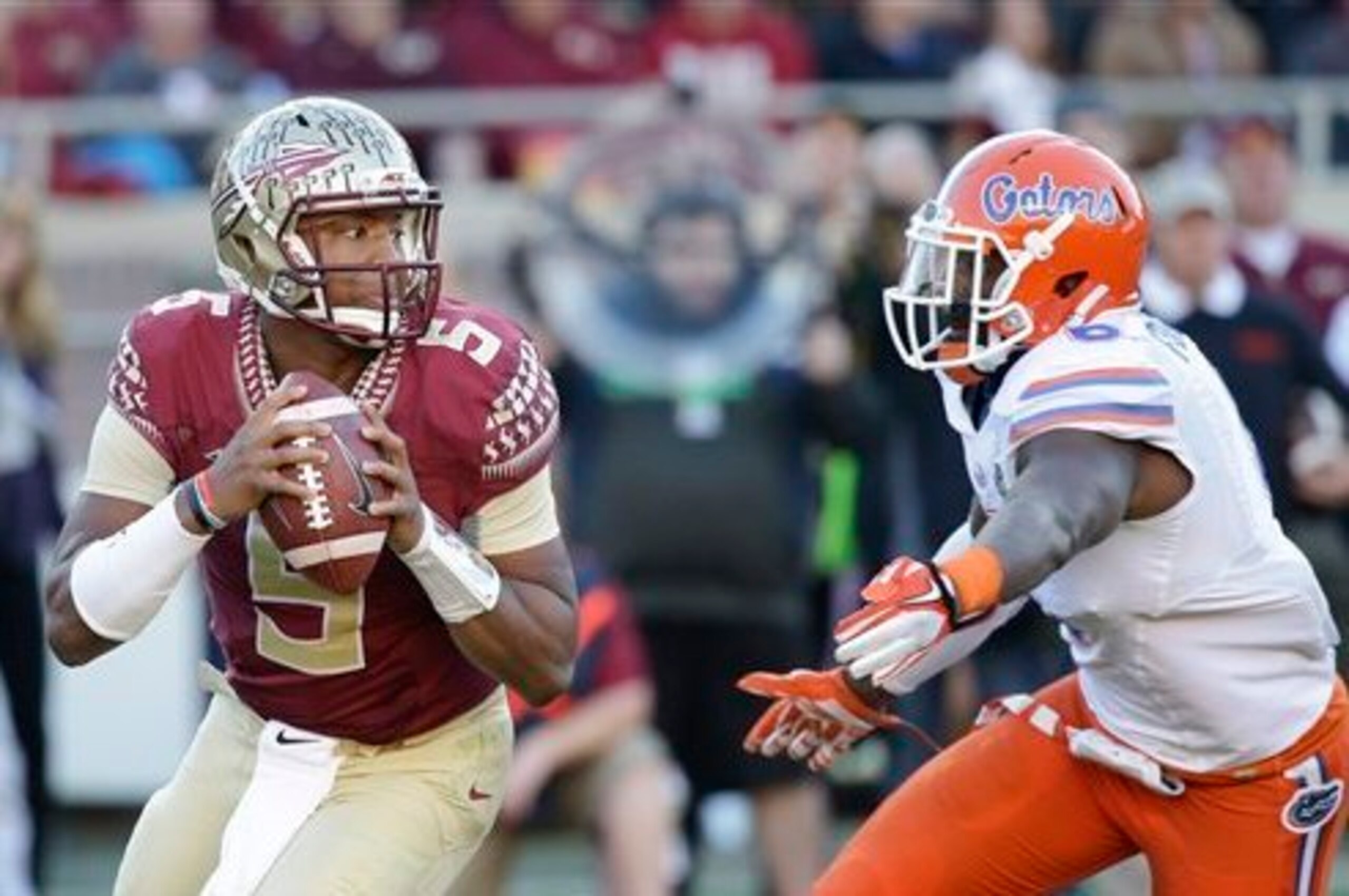

Ranking the Top 50 Players Invited to the 2015 NFL Scouting Combine
Arguably the marquee event of the predraft season, the 2015 NFL Scouting Combine will bring all of the top prospects for the 2015 NFL draft together to see how the players stack up with one another in terms of size, strength and athleticism.
While there were some notable snubs from this year’s list of combine invites, all of the players who should be considered as potential first- or second-round picks will be present in Indianapolis. Some players might opt out of participating in a full on-field workout, but all invitees will interview with NFL teams and go through official weigh-ins.
That makes the combine a valuable tool for draft evaluations, but it’s only one part of the process. The meat and potatoes of scouting reports have already been compiled from scouts’ evaluations of how well each prospect played in their collegiate careers.
As such, we can already take a look at who the best players are in this year’s draft, as there should only be minor changes to the rankings—barring injuries or off-field troubles—from here on out.
The following slideshow can be viewed as a “big board” of the draft’s top 50 players. It is not intended to project the order in which these players will actually be selected.
50. Ty Sambrailo, OT/G, Colorado State
1 of 50
Ty Sambrailo played at both tackle spots and both guard positions on the Colorado State offensive line over the course of his four-year collegiate career, and he has the physical tools to emerge as a starter at any of them.
A 6’5”, 315-pound lineman with a background in competitive skiing, Sambrailo moves well for a big man. A good second-level blocker who packs a solid punch, Sambrailo is at his best in the ground game.
As exposed by a bad week at the Senior Bowl, Sambrailo is not quite ready to be an NFL pass protector. He does not explode cleanly out of his stance, and he allows defenders to get inside his pads and drive him backward too easily.
Sambrailo had a dominant career at Colorado State, but he did not often have to face off against top-notch pass-rushers. If he develops well, he has the length and skills to be a left or right tackle, but he might be best suited by a move inside to guard.
49. Arik Armstead, DE/DT, Oregon
2 of 50
Arik Armstead has been described by Bleacher Report’s Justis Mosqueda as the most divisive prospect in this year’s draft class. Projected by some draft analysts to be an early first-round pick, the Oregon defensive end has impressive measurables but is a raw talent who needs significant development to reach his potential.
A fluid athlete listed at 6’8” and 290 pounds, Armstead has ideal measurables for the 3-4 defensive end position. He exhibits the skills to beat blockers inside and outside with both power and quickness.
Not consistently productive for the Ducks defense, Armstead must continue to work on his technique. Specifically, he lacks a diverse array of pass-rushing moves and needs to improve upon his hand skills.
Armstead’s projection to a 4-3 defense is uncertain; he would likely be asked to bulk up and play defensive tackle, as he lacks the bend needed to be an effective edge-rusher. For a 3-4 defensive end, however, he has as much potential as anyone in this year’s draft.
48. P.J. Williams, CB, Florida State
3 of 50
Listed at 6’0” and 196 pounds, P.J. Williams has the tools to become a great outside cornerback in the NFL. An explosive athlete, he moves fluidly in pass coverage and is a physical hitter in run support.
After a breakout sophomore season, Williams’ development in 2014 did not live up to expectations. He was caught out of position too often and missed too many tackles to be billed as a shutdown corner.
Williams gave up some big plays this past season, but he has also made some of his own. If he can focus on staying consistent rather than trying to make highlight-reel plays and hits, he has the potential to be as good as any cornerback in this year’s draft class.
Widely projected as a second-round draft pick, Williams has enough upside that a team could take a chance on him in Round 1.

.jpg?w=2560 "Falcons Saints Football")
.jpg?w=2560 "Rams Eagles Football")
47. Mario Edwards Jr., DE/DT, Florida State
4 of 50
Like P.J. Williams, Mario Edwards Jr. did not meet expectations with his play in his junior season, but the Florida State product remains worthy of early-round consideration because of his high upside.
Both explosive and powerful for a 6’3”, 294-pound defensive lineman, Edwards has the tools to win both outside and inside. He exhibits the strength to move blockers backward, while he also has impressive closing speed in pursuit.
That said, Edwards only recorded eight sacks in an underwhelming three years for the Seminoles. To become an impact player as a pass-rusher, he needs to learn how to use his hands more effectively.
Edwards has the versatility to play as either a defensive end or defensive tackle in a 4-3 front, or as a defensive end in a 3-4 scheme. He’s one of the boom-or-bust players in this year’s draft class, but he has high potential and could prove to be a very valuable Day 2 pick.
46. Nelson Agholor, WR, USC
5 of 50
The 2015 draft could be the third in a row in which a USC wide receiver is a second-round pick. A second-tier talent at his position in this year’s class, Nelson Agholor looks likely to follow in the footsteps of 2013 No. 41 overall pick Robert Woods and 2014 No. 39 overall pick Marqise Lee.
A smooth athlete, Agholor is a sharp route-runner who skillfully uses his quickness to navigate the open field. Regularly able to find creases in defenses and separate with strong breaks, he caught 104 passes for 1,313 yards and 12 touchdowns for the Trojans this past season.
Not the biggest or most explosive receiver, Agholor is unlikely to stand out at the combine. He is more likely to win at the intermediate level than as a deep threat in the NFL, and he might be best suited to play as a slot receiver as a result.
Either way, Agholor’s ability to get open and his sure hands should make him a valuable second or third option on an NFL offense. Also a skilled returner, he had a pair of punt-return touchdowns in each of his final two seasons at USC.
45. Nate Orchard, OLB, Utah
6 of 50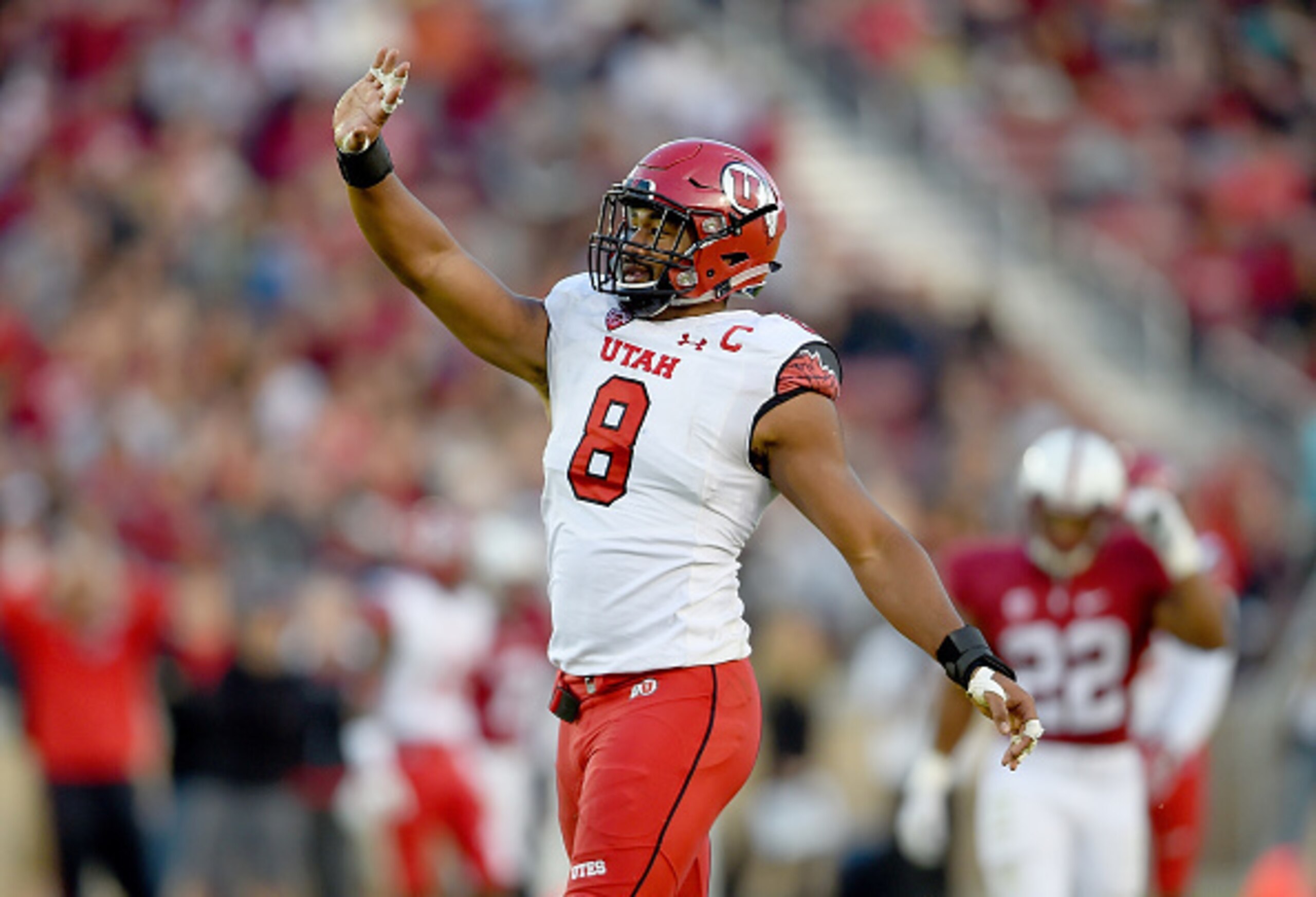
In Nate Orchard’s first three seasons at Utah, he recorded only 6.5 combined sacks. In his final season in 2014, he put up 18.5 sacks as he emerged as one of the best pass-rushers in college football.
Orchard made a difference when he improved his technique. As a senior, he showed off an impressive variety of pass-rushing moves as he was able to work around blockers with his hands and generate power as a bull-rusher.
From a physical standpoint, Orchard has unspectacular tools. He has less-than-ideal size for an edge-defender at 6’4” and 255 pounds and is not particularly explosive, while he lacks the movement skills in space to effectively drop back into coverage.
Orchard’s massive improvement in 2014 from previous years is intriguing, and his technical skill set should enable him to be at least moderately productive right away. His ceiling is limited, but he should at least be a quality addition to a rotation of 4-3 defensive ends or 3-4 outside linebackers.
44. Eddie Goldman, DT, Florida State
7 of 50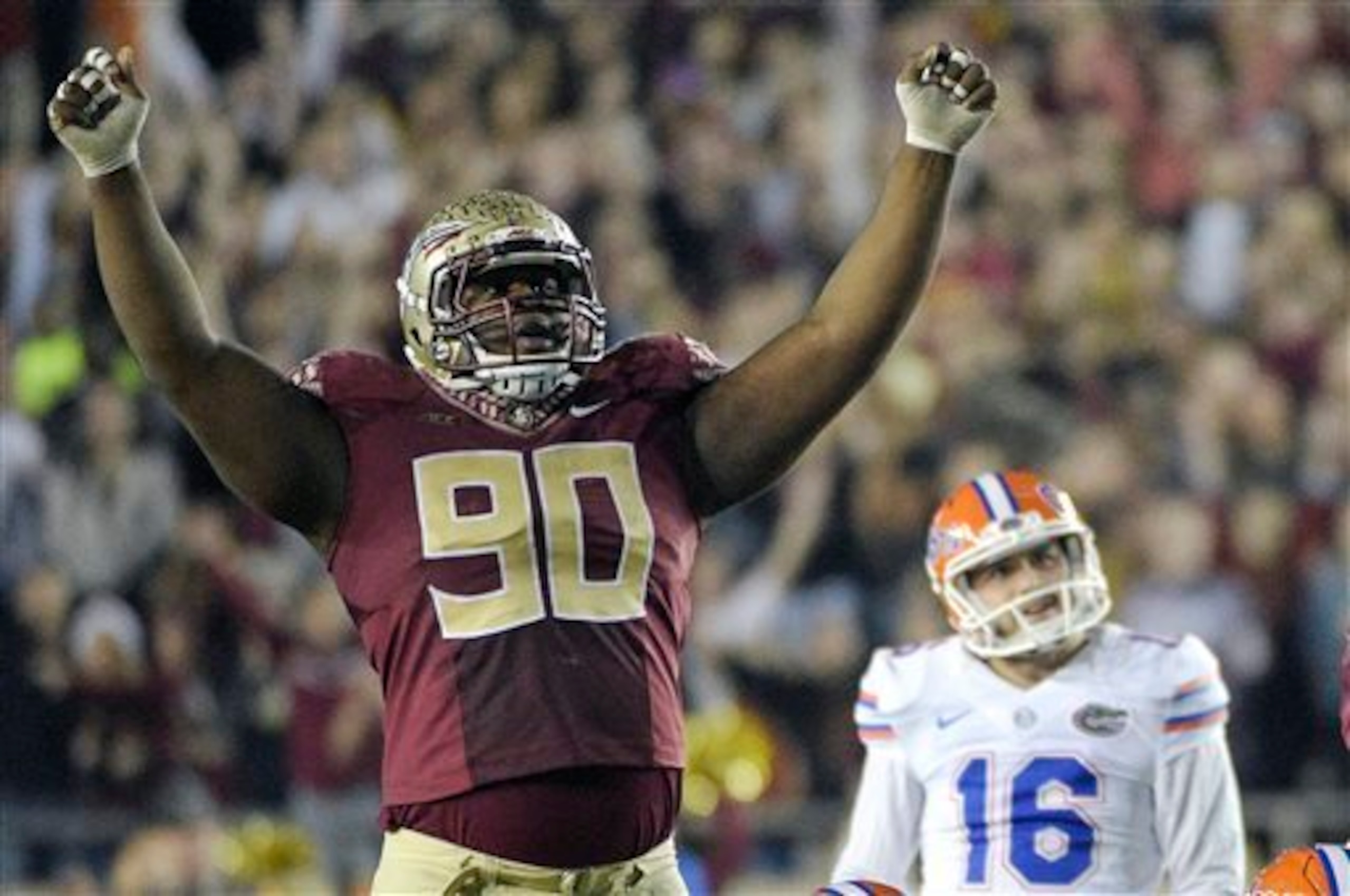
After two quiet seasons to start his Florida State career, Eddie Goldman had a breakout campaign in 2014 and became the most disruptive player on the Seminoles defensive line. He could end up being a first-round draft pick as a result.
Goldman is listed at 6’4” and 320 pounds and has good quickness for his size. His combination of point-of-attack strength and interior pass-rushing ability makes him a fit for a 4-3 defensive front, where he could play either defensive tackle spot.
When Goldman is at his best, he looks like a future star. That said, there were stretches in games this past season when he made minimal impact.
To live up to his billing as an early-round prospect, Goldman must keep his motor consistently running. If he can do that and continue to improve like he did this past season, he could be one of the best players from this draft class.
43. Clive Walford, TE, Miami (Florida)
8 of 50
Arguably the most dynamic downfield playmaker among tight end prospects in this year’s draft, Miami’s Clive Walford has the skill set to be a terrific weapon for an NFL offense.
A very good athlete at 6’4” and 258 pounds, Walford fits the modern archetype of a “Joker” tight end. Essentially an oversized wide receiver, he can create mismatches versus defensive backs with his size and against linebackers with his speed.
Sure-handed as a pass-catcher and smooth enough to extend plays after the catch, Walford is at his most dangerous over the middle but can also be moved outside or to the backfield in an effort to exploit gaps in defenses.
Walford is unspectacular as a run-blocker, but the team that drafts him will add a spark to its passing game. He is well worth a second-round pick.
42. Duke Johnson, RB, Miami (Florida)
9 of 50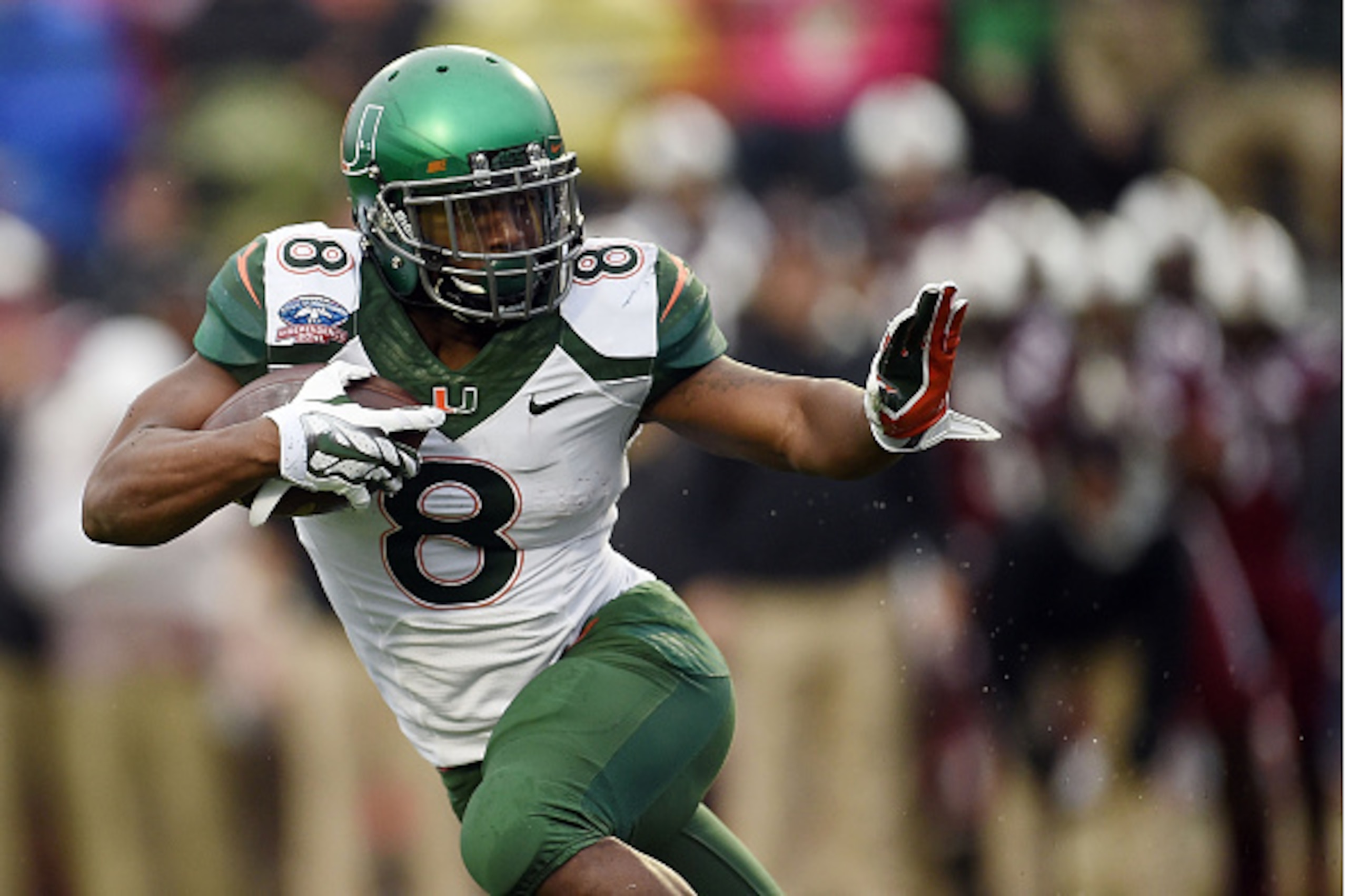
An explosive playmaker who can make game-changing plays as a runner, receiver and even as a returner, Duke Johnson might be the most complete running back in this year’s draft class.
Johnson, who ran for 1,652 yards and 10 touchdowns this past season, recorded 32 total scores and more than 5,500 all-purpose yards in his three-year collegiate career, despite missing the final five games of Miami’s 2013 season with a fractured ankle.
A short but hard-charging runner, listed at 5’9” and 206 pounds, Johnson exhibits the abilities to bounce off contact and to make defenders miss in the open field. Also a skilled pass-catcher out of the backfield, Johnson is better in space than between the tackles but has the tools to be an every-down feature back in the NFL.
Given the recent devaluation of the running back position, Johnson is unlikely to be a first-round pick, but he should be a solid second-round selection.
41. Carl Davis, DT, Iowa
10 of 50
Had Carl Davis performed throughout his senior season like he did all week at the Senior Bowl, he would be much higher on this list.
Dominant in that all-star game after being named the Senior Bowl Practice Player of the Week by a panel of NFL scouts, Davis has the tools to be an outstanding interior defensive lineman. At 6’5” and 315 pounds, he has an excellent burst for his size and can explode into opposing backfields to blow up plays.
Davis’ 2014 season at Iowa did not live up to expectations. He recorded only 36 total tackles, nine tackles for loss and two sacks while he failed to be a consistently formidable run-stopper. It’s uncertain whether he can deliver the type of play he showed in Mobile when playing for the full duration of a four-quarter football game.
Even so, Davis’ impressive tools could vault him as high as the first round. Defensive tackles with his combination of physical skills are hard to find, and he could be a valuable addition to the middle of a 4-3 defense if he plays up to his potential.
40. Gerod Holliman, FS, Louisville
11 of 50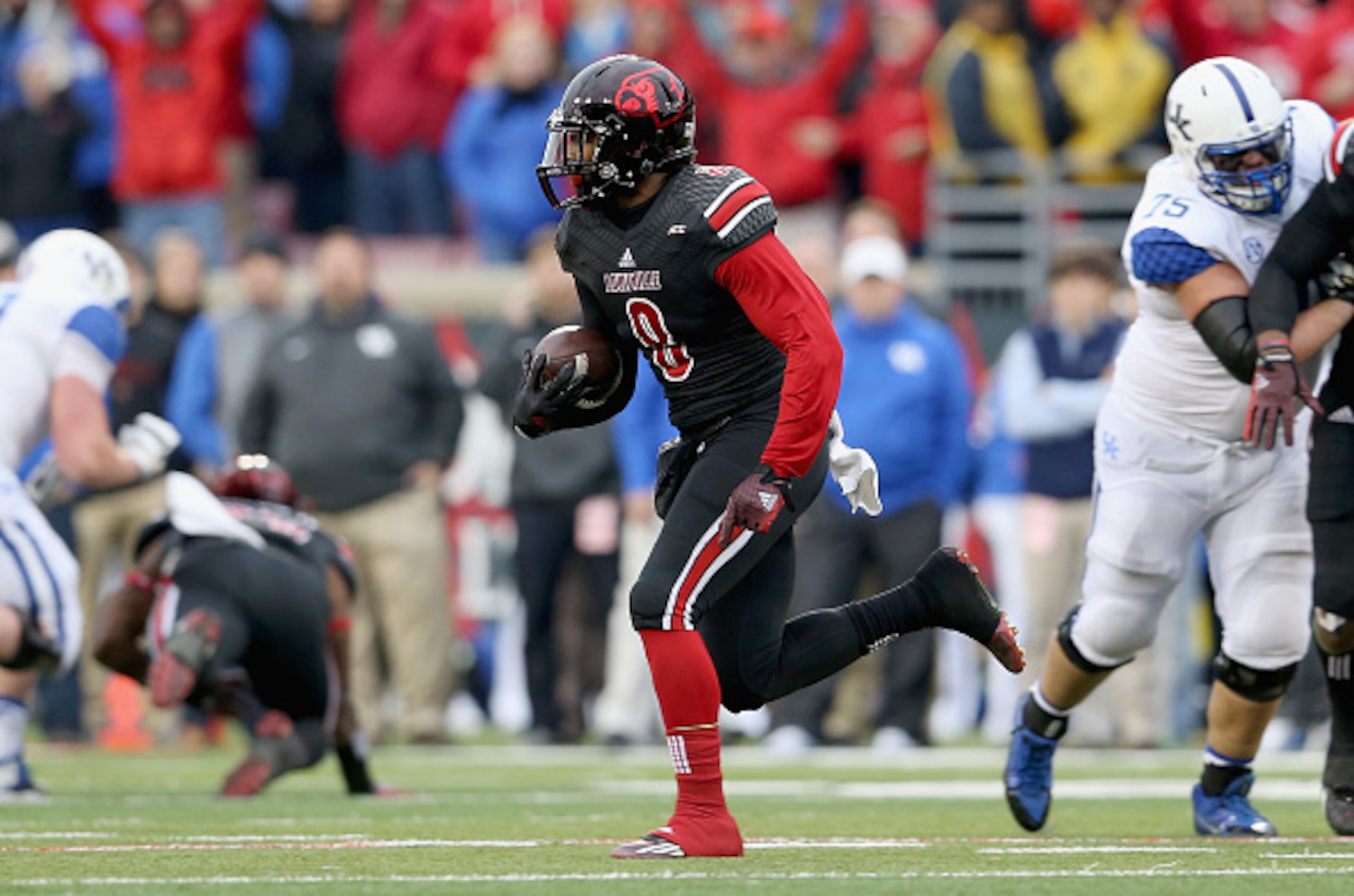
In his only season as a starter at Louisville, Gerod Holliman put his big-play ability on full display as he tied an NCAA single-season record with 14 interceptions.
A fluid athlete, Holliman left no doubt that he fits the ball-hawk description. Well-sized for the safety position at 6’2” and 213 pounds, he demonstrated the range to make plays all over the field while often handling deep-coverage responsibilities.
While Holliman’s interception numbers were impressive, his tackling numbers were relatively low for a safety, in part because he is a poor form tackler. He will be a liability in run support if he does not improve that aspect of his game.
Holliman needs to be more consistent in coverage as well, but he still projects as the best center field free safety in a weak draft class for defensive backs. With high-end physical tools and terrific ball skills, he could develop into a great NFL player.
39. Eli Harold, DE/OLB, Virginia
12 of 50
Eli Harold is not the most productive or well-known pass-rushing prospect in this year’s draft, but the Virginia product turns the corner as well as any edge defender in the class.
Harold combines an explosive burst off the line of scrimmage with great bend around the outside. He is quick with his hands and has terrific closing speed in pursuit.
Listed at 6’4” and 250 pounds, Harold does not exhibit much strength in his film. This could make him a liability in run defense, especially as a defensive end in a 4-3 front, if he is unable to bulk up.
Harold’s length and movement skills make him scheme-versatile, but he is not experienced with dropping back into coverage. At this point, he is a developmental prospect for any defense, but he has the tools to develop into an impact player.
38. Trae Waynes, CB, Michigan State
13 of 50
A long, lean and athletic defensive back with great ball skills, Michigan State’s Trae Waynes is widely projected to be the first cornerback selected in this year’s draft class.
Waynes has better height and speed than former teammate and 2014 first-round pick Darqueze Dennard, so it’s easy to see why Waynes is drawing Round 1 projections of his own. He is a skilled man-coverage cornerback who plays with physicality and competes for the ball in the air, while he is also a solid tackler in run support.
Waynes’ game is not without its flaws. He needs to learn how to manage his physicality better, as he tends to make contact downfield that will draw penalties in the NFL. He is also susceptible to getting beat by underneath routes because he will turn and run, looking downfield rather than backpedaling and keeping the receiver in front of him.
Those technical issues could lead to some early struggles for Waynes, and he also needs to add some bulk to his frame. However, he has the physical tools to emerge as a quality starting cornerback.
37. Jake Fisher, OT, Oregon
14 of 50
Coming from an uptempo offense with a zone-blocking scheme that requires its offensive linemen to have great movement skills, Jake Fisher had a dominant senior season at Oregon and is one of the most impressive tackles in this year’s draft class.
Listed at 6’6” and 300 pounds, Fisher has the combination of foot skills and length that NFL teams covet at the left tackle position. He would benefit from adding some bulk to his frame, but he exhibits the strength to withstand bull-rushes and hold his own as a run-blocker.
Playing in front of a dual-threat quarterback in a quick-passing system, Fisher is somewhat untested in pass protection, as he rarely had to hold the pocket for long periods. He also drew a significant number of penalties this past season, which will only increase in the NFL if he does not improve his technique against tougher opponents.
Fisher is not well-suited for a power-running offense, but he has high upside for a zone-blocking team. While his long-term value could be highest as a left tackle, he also has experience at right tackle and guard, and he could line up at either spot early in his career.
36. Brett Hundley, QB, UCLA
15 of 50
The most polarizing quarterback prospect in this year’s draft class, UCLA’s Brett Hundley has the physical potential to emerge as a starter, but numerous flaws in his game could hold him back from NFL success.
A 6’3”, 226-pound passer with a strong arm and great athleticism for his size, Hundley’s raw tools are as impressive as those of any quarterback in this year’s draft class. He has the capability to make any throw on the field and complements that with the running abilities to both make defenders miss and finish through them.
While Hundley has great arm talent, he has not shown the ability to consistently throw the ball with accuracy and touch downfield. He also has issues against the pass rush, which will only be amplified in the NFL, as he has poor pocket awareness and is slow in his progressions.
If Hundley can overcome his flaws, he could be a franchise quarterback. That will likely entice a team to draft him early. The team that does select him, however, would be best suited to give him time to develop rather than throwing him into the fire immediately.
35. Tyler Lockett, WR, Kansas State
16 of 50
If Tyler Lockett was a little bit bigger, he would probably grade out as a first-round pick. At 5’11” and 175 pounds, he’s likely to be a Day 2 pick instead, but he could turn out to be one of the biggest steals of the draft.
While Lockett is a small receiver who lacks elite speed, he makes up for it with his superb route running. He competes for the ball in the air, despite his lack of size, and uses his quickness to not only separate from coverages but extend plays in the open field.
Also a skilled punt and kickoff returner, Lockett should bring immediate value to the field as a slot receiver and intermediate target.
His ability to win deep is limited by his measurables, and his small hands can give him trouble with some catches, but even NFL cornerbacks will have trouble defending his routes. In a best-case scenario, Lockett could emerge as an Antonio Brown-like weapon in a passing offense.
34. Paul Dawson, LB, TCU
17 of 50
A little-known player outside of TCU going into his senior year, Paul Dawson has emerged as a potential first-round pick after being one of college football’s most productive defensive players this past season.
Dawson was all over the field for the Horned Frogs in 2014, as he recorded 136 total tackles, 20 tackles for loss, six sacks, four interceptions and two forced fumbles. Utilizing a great combination of athletic range and instincts, he seemed to be a constant presence around the ball.
Listed at only 6’2” and 230 pounds, Dawson is fairly small but should be a good fit for the weak-side linebacker position with his ability to cover ground.
The most important part of the combine for Dawson will be his interviews. He will have to convince teams that rumblings of character concerns, which he addressed with USA Today’s Tom Pelissero last week, shouldn't stop them from selecting him early in the draft.
33. Lorenzo Mauldin, OLB/DE, Louisville
18 of 50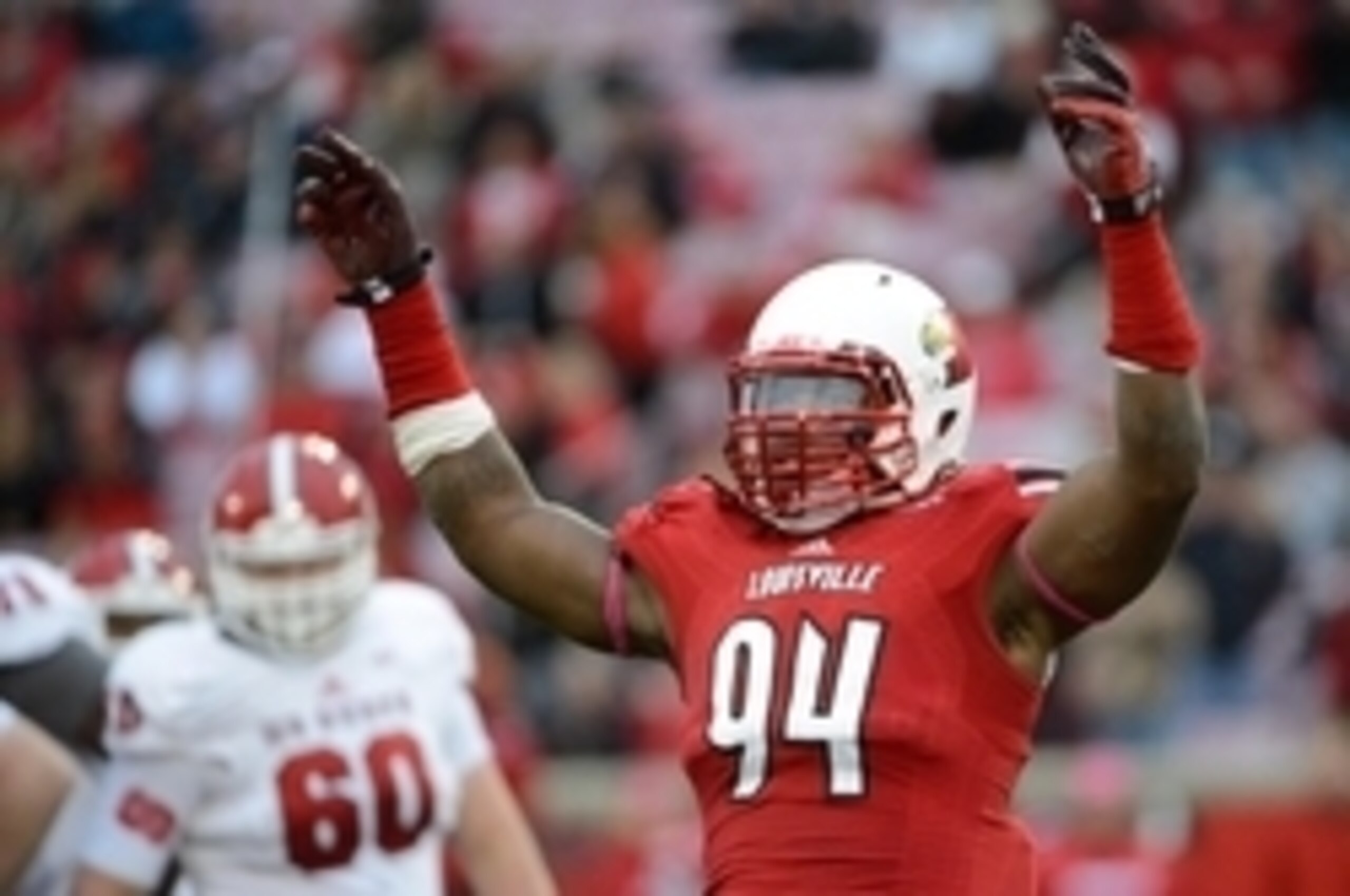
A 6’4”, 252-pound edge player who drops back into coverage fluidly and has experience at both 4-3 defensive end and 3-4 outside linebacker, Lorenzo Mauldin is arguably the most well-rounded prospect in a loaded position group at this year’s draft class.
While Mauldin lacks the explosiveness to be a top pass-rusher, his versatility makes him a fit as an every-down player in any scheme. He is a strong edge-setter against the run, can beat blockers with his hands and matches up against receiving tight ends without being a liability.
Not outstanding in any area but solid in every facet of the game, Mauldin is best suited to be a complementary defender for a team with a more explosive pass-rusher on the other side.
Given the league’s usual emphasis of physical traits and pass-rushing potential, Mauldin is unlikely to be a first-round pick, but he could be a great value selection on Day 2.
32. Markus Golden, DE/OLB, Missouri
19 of 50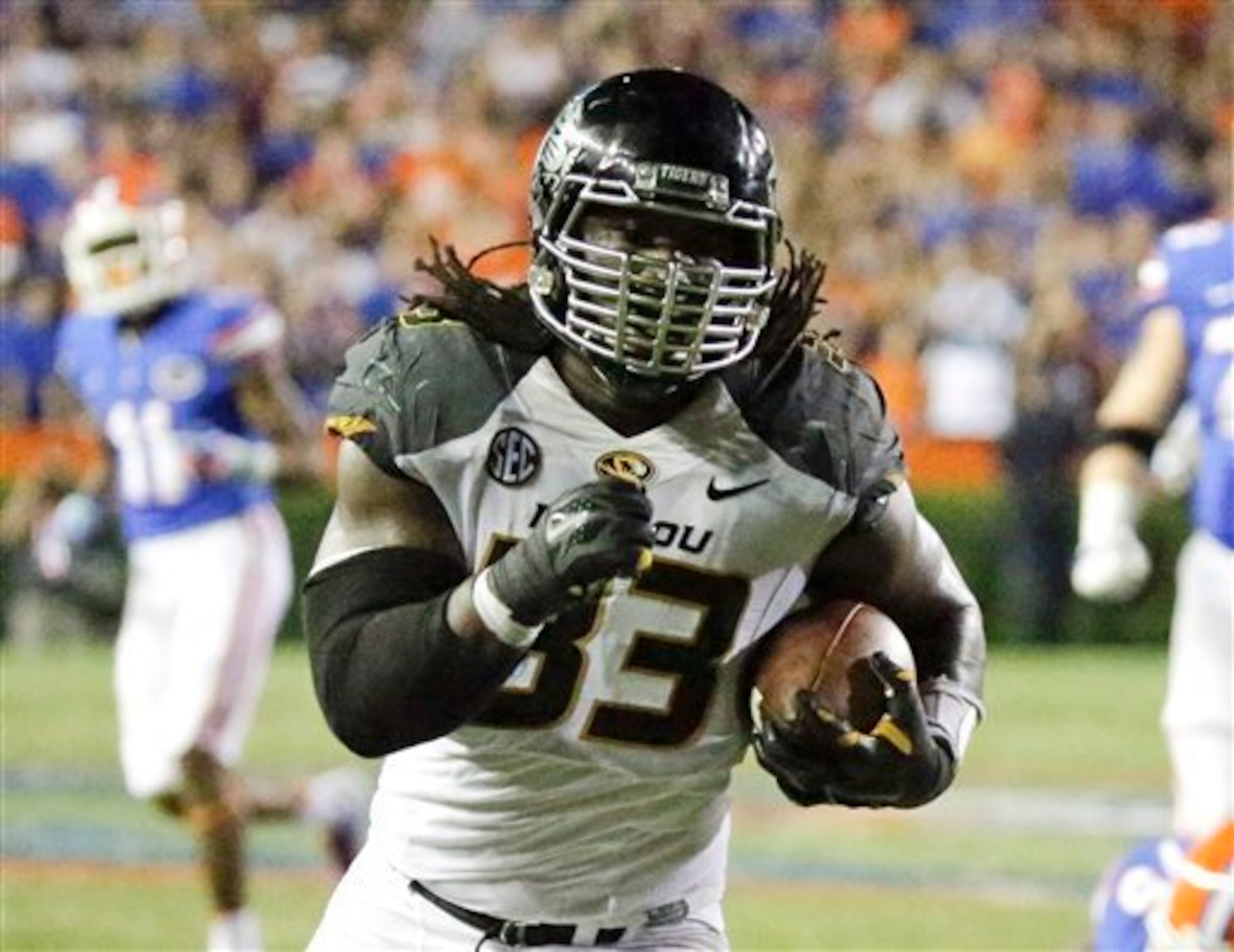
Markus Golden was overshadowed this past season by the success of his teammate and fellow draft prospect Shane Ray, but Golden was Missouri’s best defensive player down the stretch. The case can be made that Golden is also the Tigers’ best prospect in this year’s draft.
Despite a lingering hamstring injury that limited his effectiveness in the middle of the year, Golden still finished this past season with 20 tackles for loss, including 10 sacks.
A high-motor player, Golden is good at using his hands to work his way around blockers. He has a natural bend around the edge and an impressive closing burst in pursuit.
At 6’3” and 260 pounds with 31” arms, Golden lacks the height and length scouts covet in edge defenders. He is sometimes able to use his low center of gravity as an advantage, as he is effective at winning with leverage as a bull-rusher. Still, his measurables could make the difference between being a Day 2 pick and a first-rounder.
31. Eric Kendricks, LB, UCLA
20 of 50
Listed at only 6’0” and 230 pounds, Eric Kendricks will be red-flagged for size on some draft boards, but a team willing to look past his measurables can come away with a productive linebacker.
Kendricks might not grade out as an explosive athlete, either, but his playmaking range was readily apparent throughout his UCLA career, in which he accumulated a whopping 475 total tackles.
A four-year starter for the Bruins, Kendricks exhibits great instincts and is fluid in getting to the ball. He is also very good at dropping back into coverage, arguably better than any other linebacker prospect in this year’s draft.
While his size could give him some issues against bigger blockers as a run defender, his ability to make plays all over the field and get himself in the right positions should make him a three-down player in an NFL defense.
30. Denzel Perryman, ILB, Miami (Florida)
21 of 50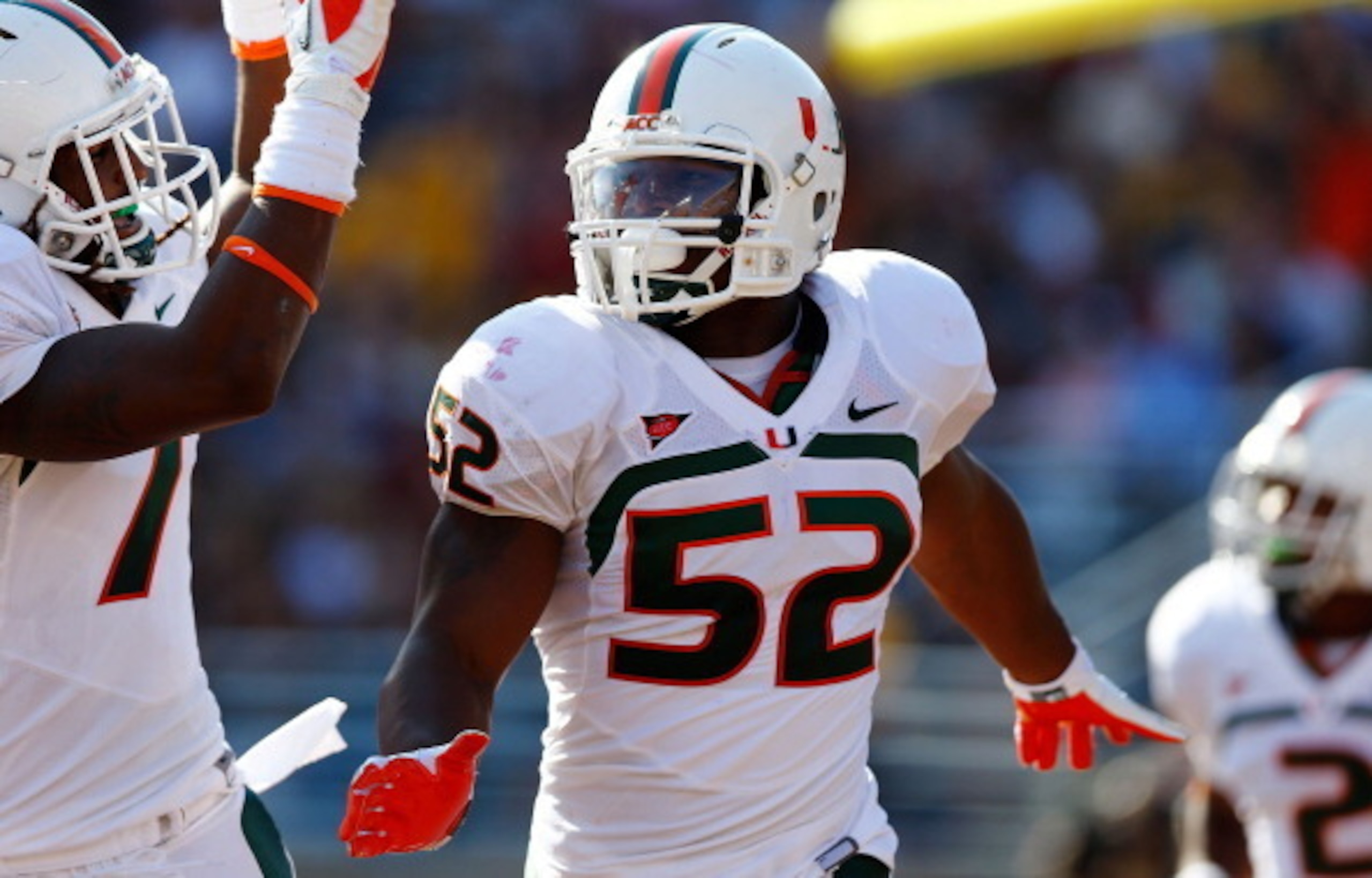
An authoritative tackler who is an explosive downhill run defender, Denzel Perryman might be the best between-the-hashes defensive playmaker in this year’s draft class.
Coming from a Miami program that has a rich tradition of producing NFL linebackers, Perryman recorded 218 total tackles over the past two seasons. He rarely misses tackles and can be a difference-maker as a blitzer.
Some draft analysts are down on Perryman, largely because of his athletic limitations. Also short for a linebacker at 6'0” and 242 pounds, he likely won't be a regular sideline-to-sideline playmaker and could have trouble dropping back into coverage.
Nonetheless, a team looking for a run-stopping middle linebacker should look no further than Perryman, whose ability to make plays around the line of scrimmage and inside 10 yards should immediately help a defense.
29. Ereck Flowers, OT, Miami (Florida)
22 of 50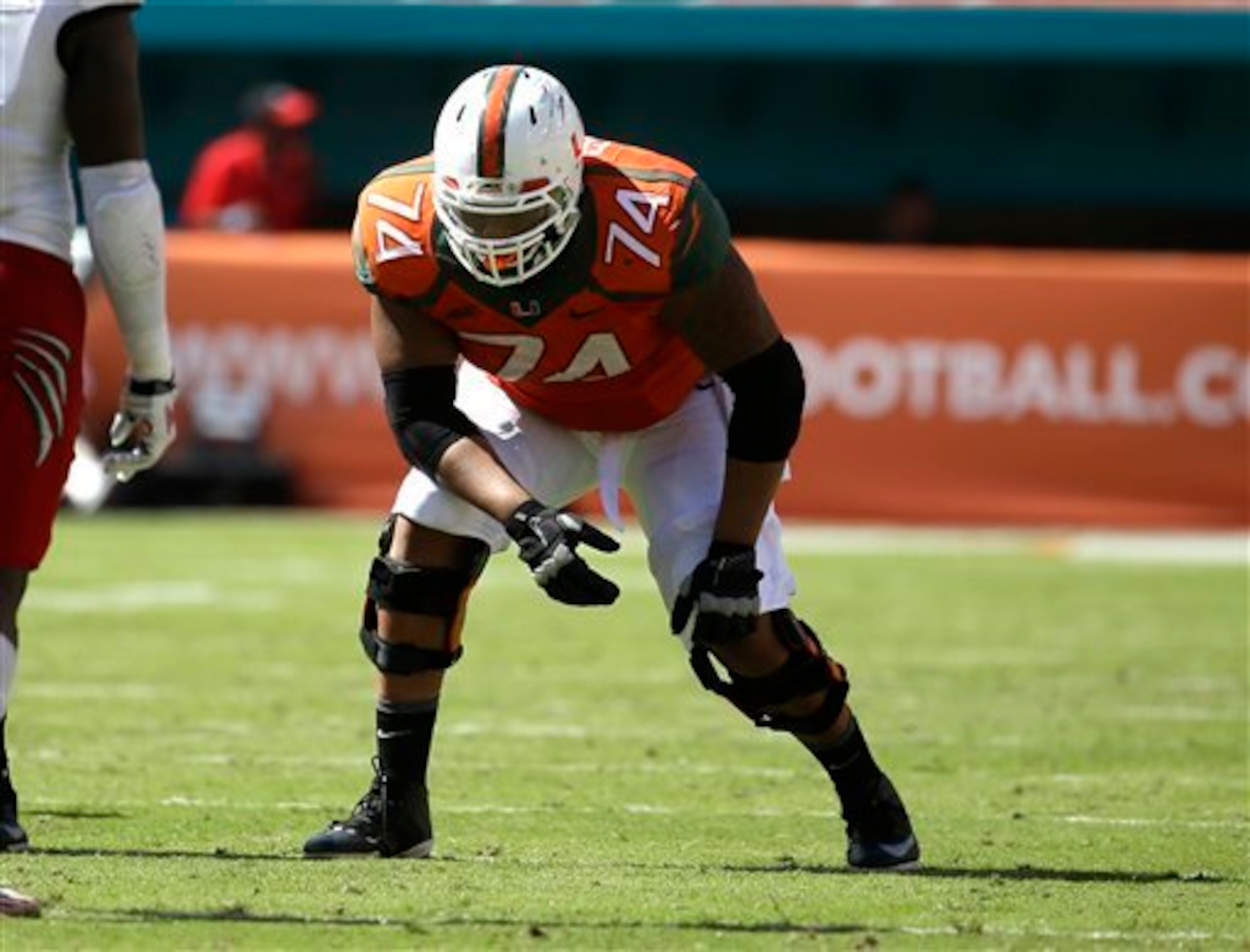
Possessing a prototypical combination of size and athleticism for an NFL offensive tackle, Ereck Flowers could end up being a very high selection in this year’s draft.
Listed at 6’6” and 324 pounds, Flowers is a massive tackle with a long reach. He has enough quickness to sustain the edge of the pocket against speed-rushers while he can make impact downfield run blocks at the second level.
When Flowers gets his hands on an opponent, he is typically able to take the defender out of the play, but he was not dominant at Miami. He has some issues with leverage and balance, especially in pass protection, and needs to continue improving his technique to reach his potential.
Flowers is a project whose flaws will probably be exposed early in his NFL career, but he has the potential to develop into a star if he continues along his positive developmental track.
28. A.J. Cann, G, South Carolina
23 of 50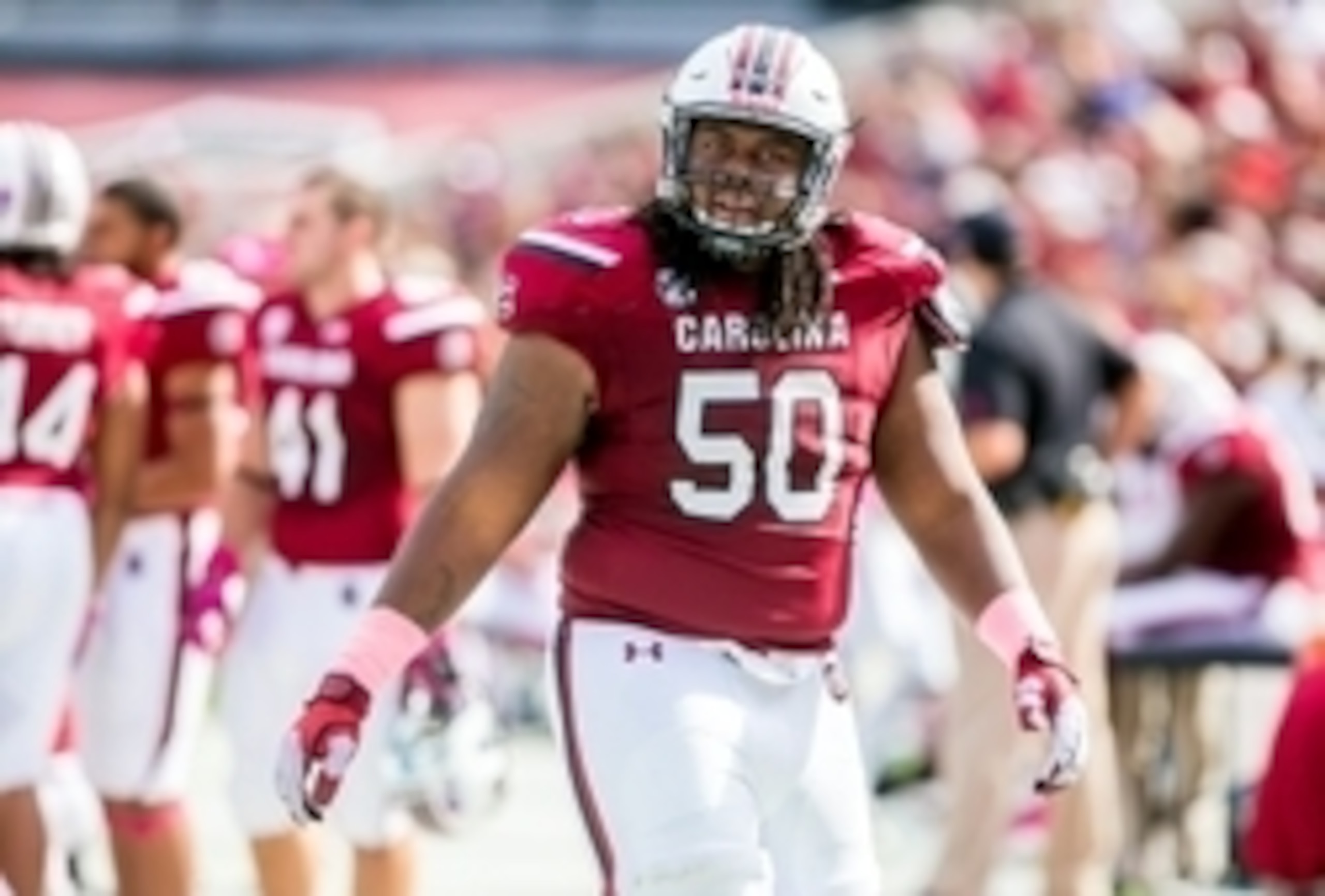
A four-year starting left guard at South Carolina, A.J. Cann is a technically sound offensive lineman who should be able to step in right away at the same position and have success in the NFL.
Listed at 6’4” and 311 pounds, Cann is an adept pass protector and solid run-blocker who moves his feet well. He packs a strong punch and is able to generate the power and leverage to move defenders off the line of scrimmage.
There is nothing physically spectacular about Cann. He has less-than-ideal height and is not particularly explosive going downfield off the line of scrimmage.
Overall, however, there are no major flaws or limitations that should keep Cann from having long-term success in the NFL. He would be a great pick in the first or second round for a team looking for a quick fix on its interior offensive line.
27. Owamagbe Odighizuwa, DE, UCLA
24 of 50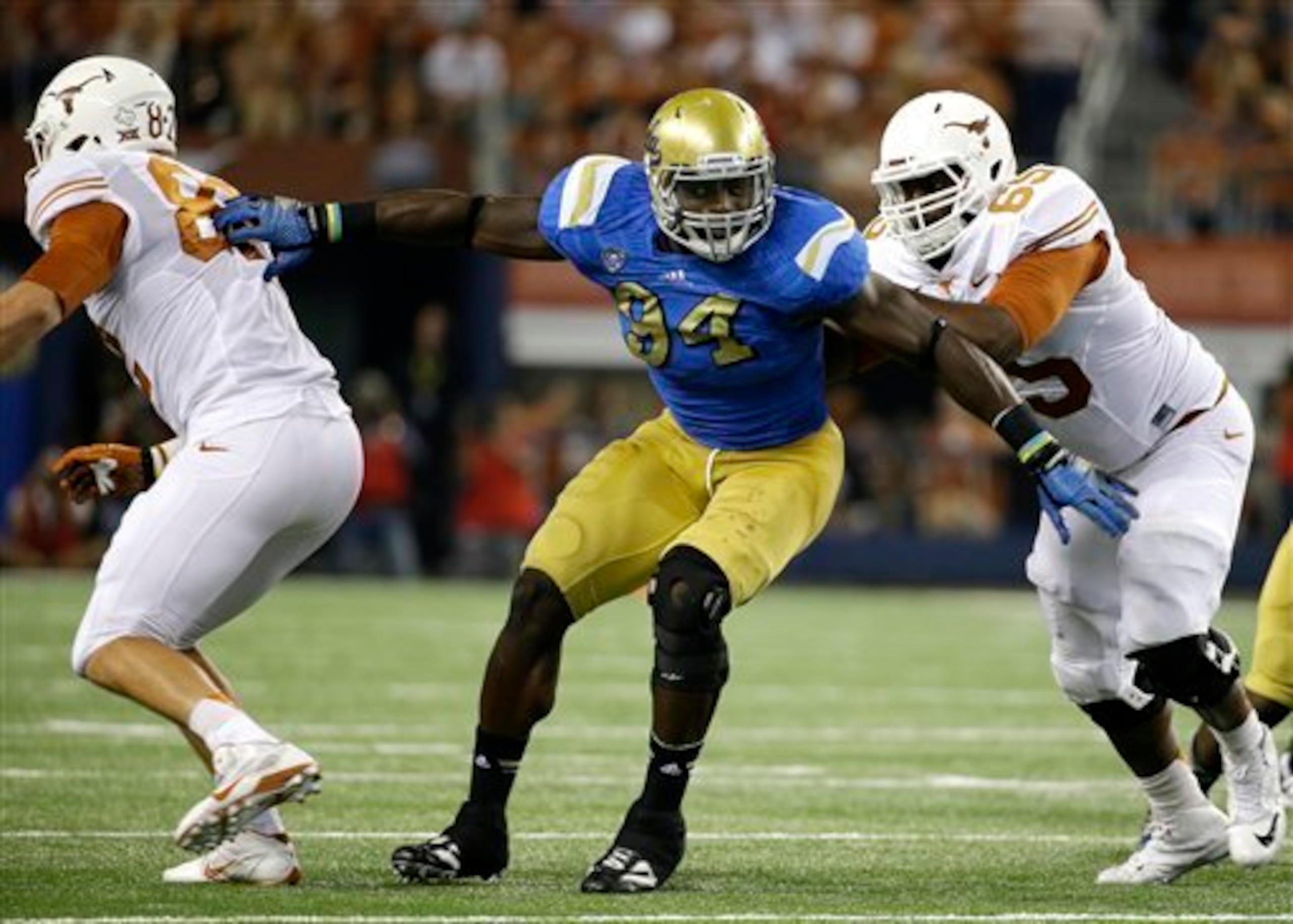
Owamagbe Odighizuwa’s name is tough to spell, but NFL teams will want to remember him because the UCLA product, who is of Nigerian descent, has one of the most complete skill sets among defensive ends in this year’s draft.
While Odighizuwa is not a spectacular athlete, he combines good first-step quickness with long arms and violent hands, making him a challenging matchup for opposing blockers. He can work his way into the backfield for tackles for loss as a result, but he is also a strong point-of-attack run defender who holds his ground well.
Having played as a 5-technique in UCLA’s 3-4 defense, Odighizuwa has the ability to play both inside and outside. He is best suited to be a 4-3 defensive end, at 6’3” and 270 pounds, but he could also play situationally as an interior pass-rusher.
Odighizuwa is not a great fit for an NFL 3-4 defense, but he projects very well as a left defensive end for an even front. He can be an every-down player with his ability to stop the run and either get after the quarterback himself or occupy blocks to free up teammates.
26. Jaelen Strong, WR, Arizona State
25 of 50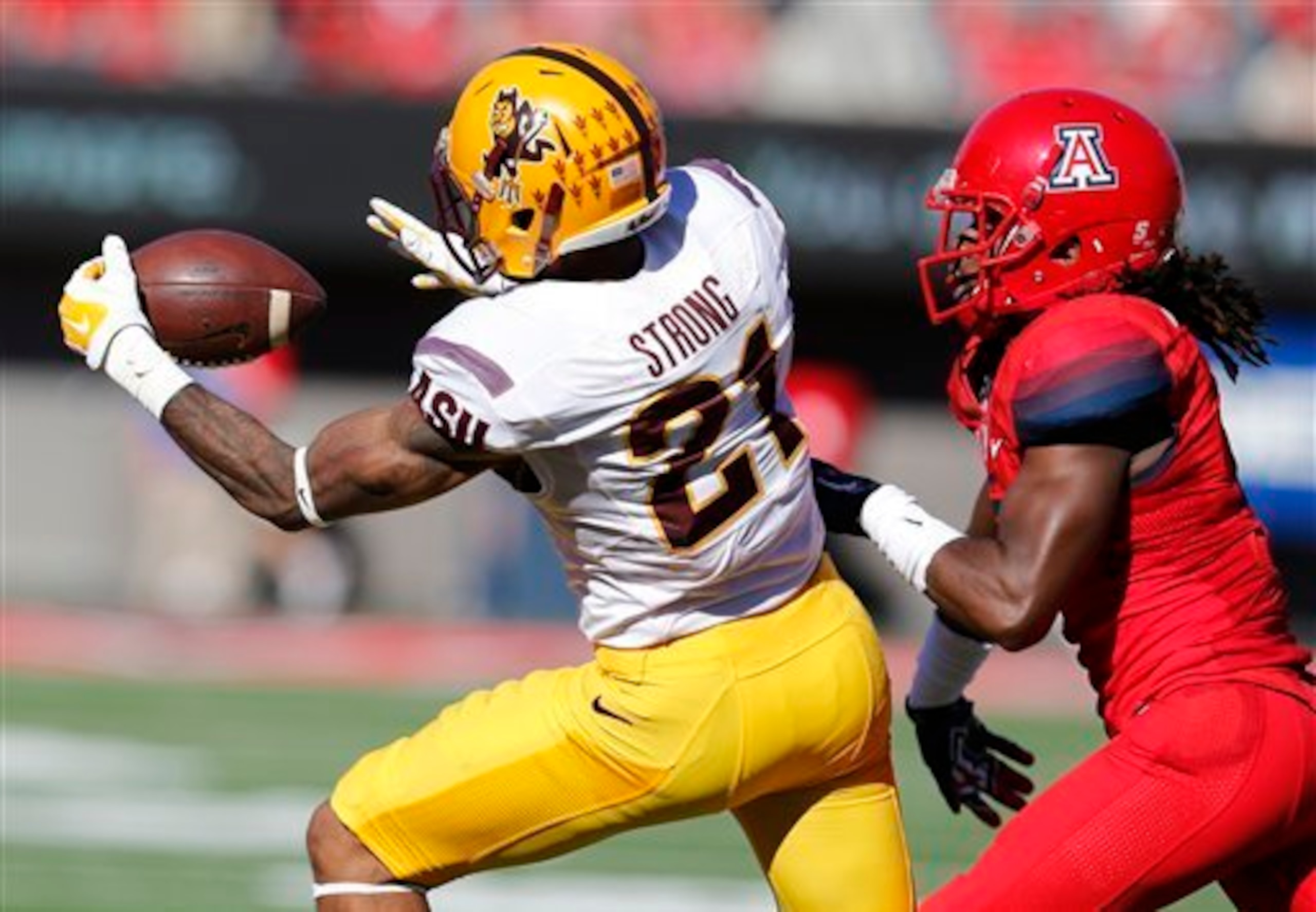
A big, physical target who attacks the ball in the air, Jaelen Strong recorded more than 1,100 yards in each of his two playing seasons at Arizona State, and he projects as a No. 2 wideout for an NFL offense.
Listed at 6’3” and 215 pounds, Strong is as his surname suggests, and he uses his size and leaping ability to win in jump-ball situations.
Strong does not stand out as an explosive athlete, and he could have some issues gaining separation on NFL cornerbacks. Although he tracks deep balls nicely, he is more of a possession receiver than a big-play threat.
That said, he is a very good intermediate route-runner who has reliable hands and can be a go-to target for third-down conversions. He is well worth a late first-round pick for a team needing to add size to its receiving corps.
25. Michael Bennett, DT/DE, Ohio State
26 of 50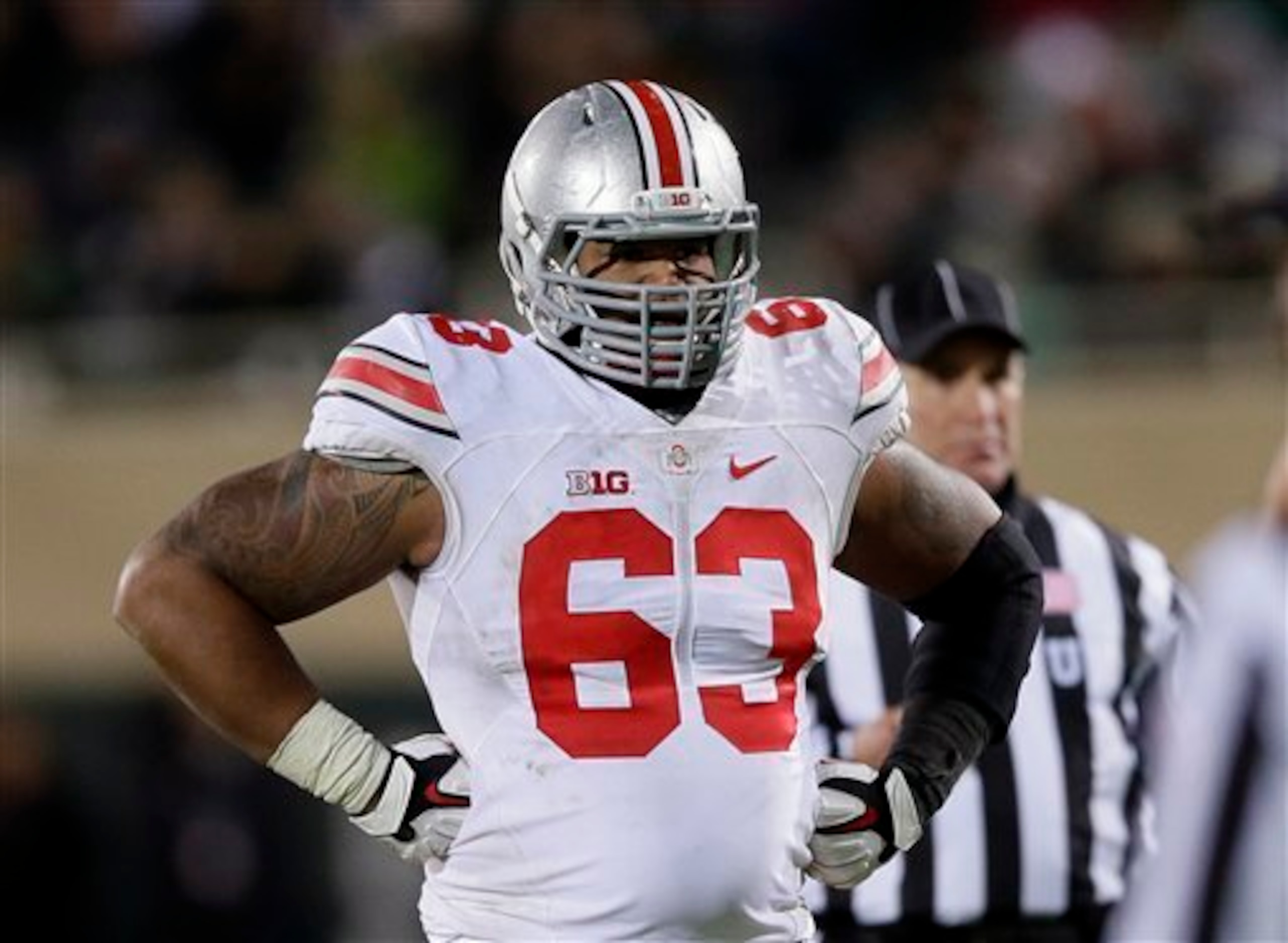
The best 2015 draft prospect from this year’s national championship team, Ohio State defensive lineman Michael Bennett has a case for being the top interior penetrator in the class.
Bennett has terrific burst for a defensive tackle, while he also exhibits the pass-rushing moves to work his way off blocks. He won’t be mistaken for a power player, but he can bull rush effectively when he has leverage against his opponent.
Listed at only 6’2” and 288 pounds, Bennett is small for an interior defensive lineman and can be overpowered at times when trying to defend the point of attack versus the run.
Nonetheless, Bennett’s athleticism, motor and ability to blow up plays in the backfield should make him a late first-round or early second-round pick. He has the versatility to play as both a 3-technique tackle and a defensive end in a 4-3 front, while he could also project as a 5-technique defensive end for a 3-4 scheme.
24. Shane Ray, DE/OLB, Missouri
27 of 50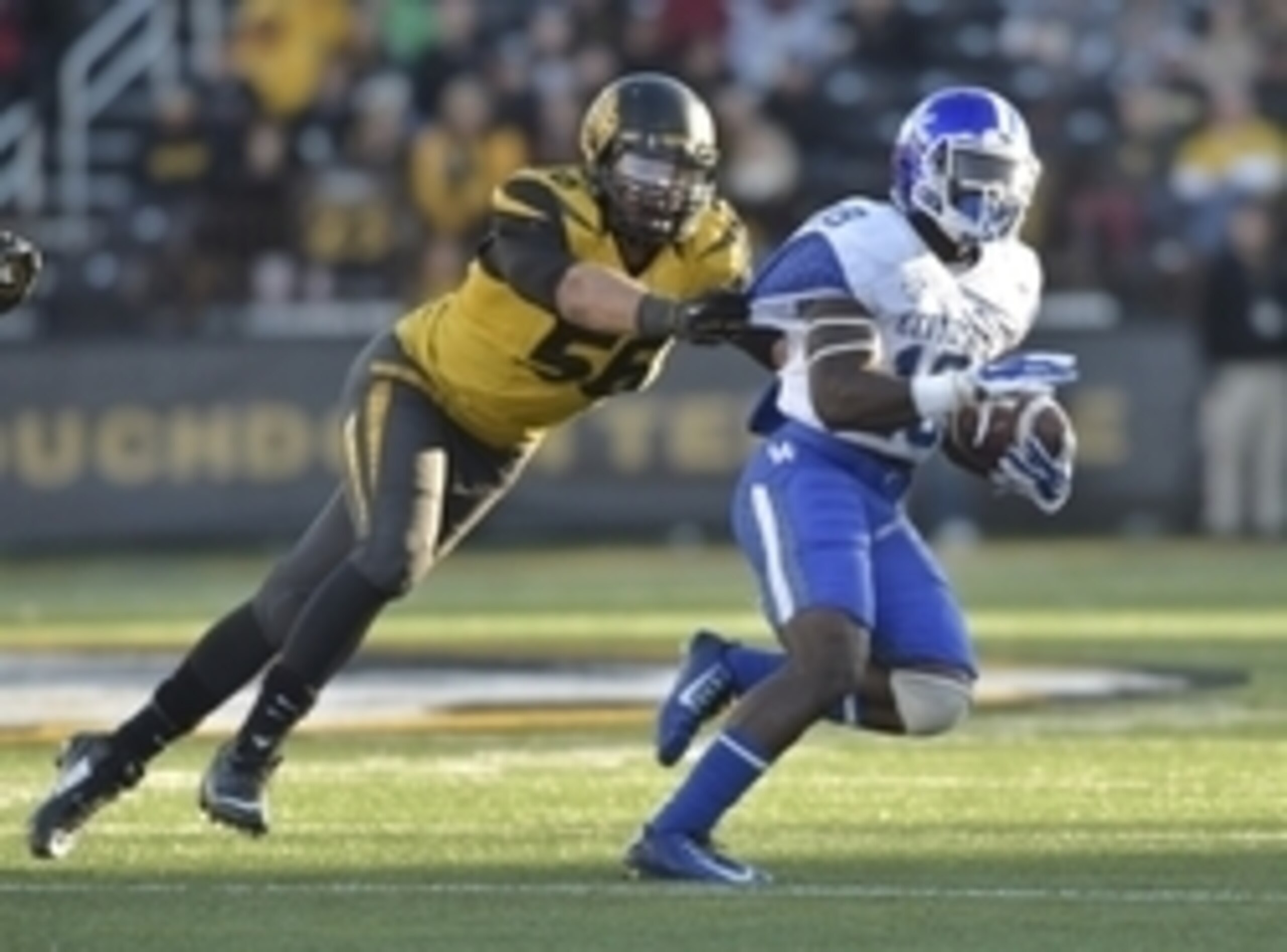
In his first and only season as a starter at Missouri, Shane Ray emerged as one of college football’s elite pass-rushers, finishing the season with 14 sacks.
Utilizing an explosive get-off, Ray can erupt through a gap at the line of scrimmage and quickly blow up a play in the backfield. Quick and active with his hands, he can work his way off blockers to get free and also gets the leverage to be an effective bull-rusher.
Listed at only 6’3” and 245 pounds, Ray is a bit undersized for an edge defender and will not be able to line up inside like he sometimes did at Missouri. He might need to bulk up to effectively play the run as a 4-3 defensive end or prove he can play in space as a 3-4 outside linebacker.
At the least, Ray should make an impact quickly in the NFL as a situational pass-rusher. He faces some development to become an every-down difference-maker, but he could still be a high draft pick because of his ability to get after the quarterback.
23. Maxx Williams, TE, Minnesota
28 of 50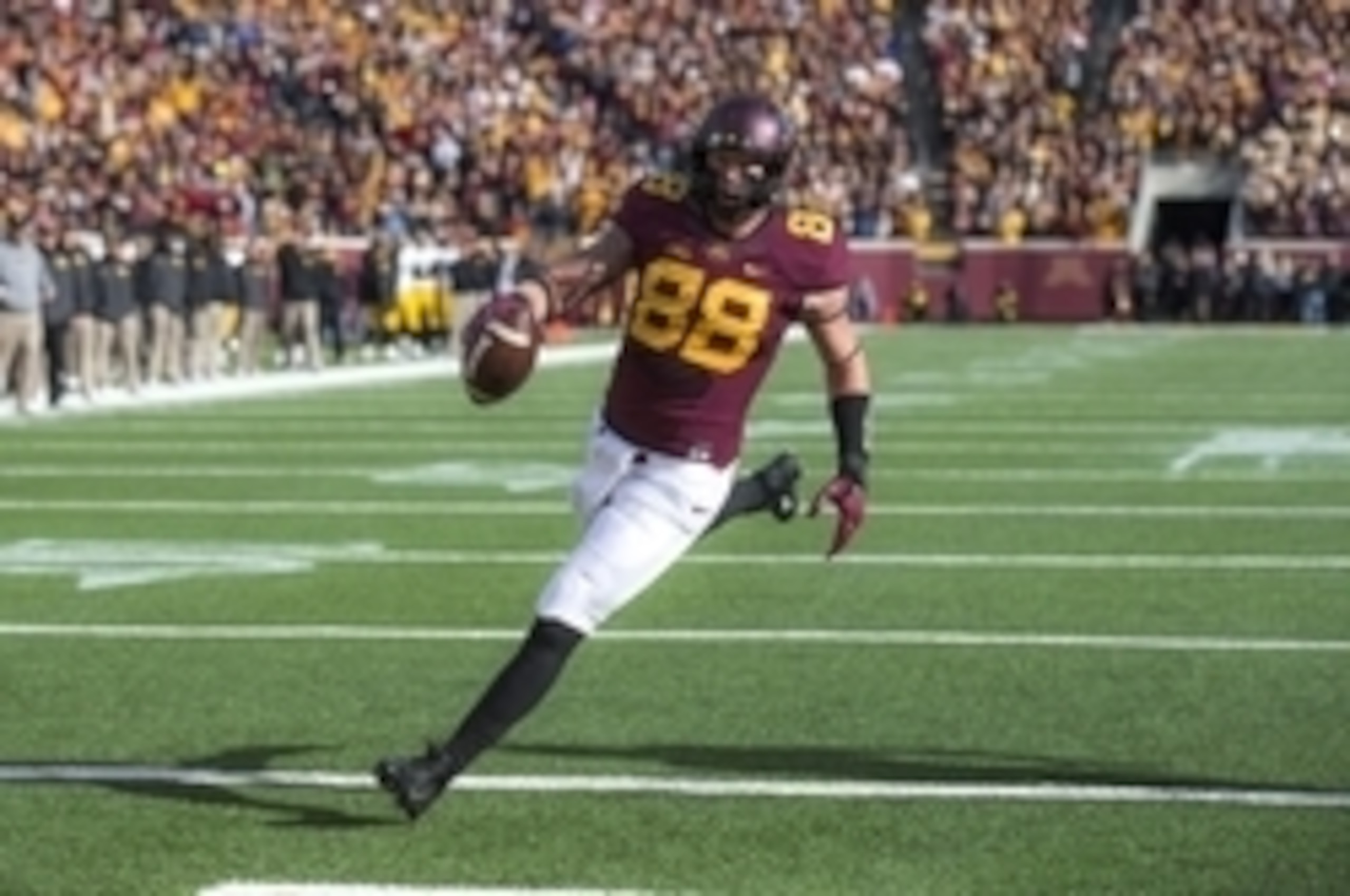
The closest thing to a prototype tight end prospect in this year’s draft class, Minnesota’s Maxx Williams has huge upside as a downfield receiving threat who can line up all over an offensive formation.
A gifted pass-catcher with terrific ball skills, Williams is a tough target to cover over the middle at 6’4” and 250 pounds. Also a great athlete for his size, he will run by linebackers and has the movement skills to extend plays for bigger gains after the catch.
Williams’ college statistics were modest, but that was mostly because of poor quarterback play; he was easily Minnesota’s leading receiver this past season. He must continue to develop as an in-line blocker, but he has the potential to make a difference in that area as well, especially if he can build upon his frame.
Every team in the NFL should be looking for its own version of Rob Gronkowski, and while Williams’ game might never approach that level, he brings a similar skill set to the table that could make him a dangerous weapon.
22. Todd Gurley, RB, Georgia
29 of 50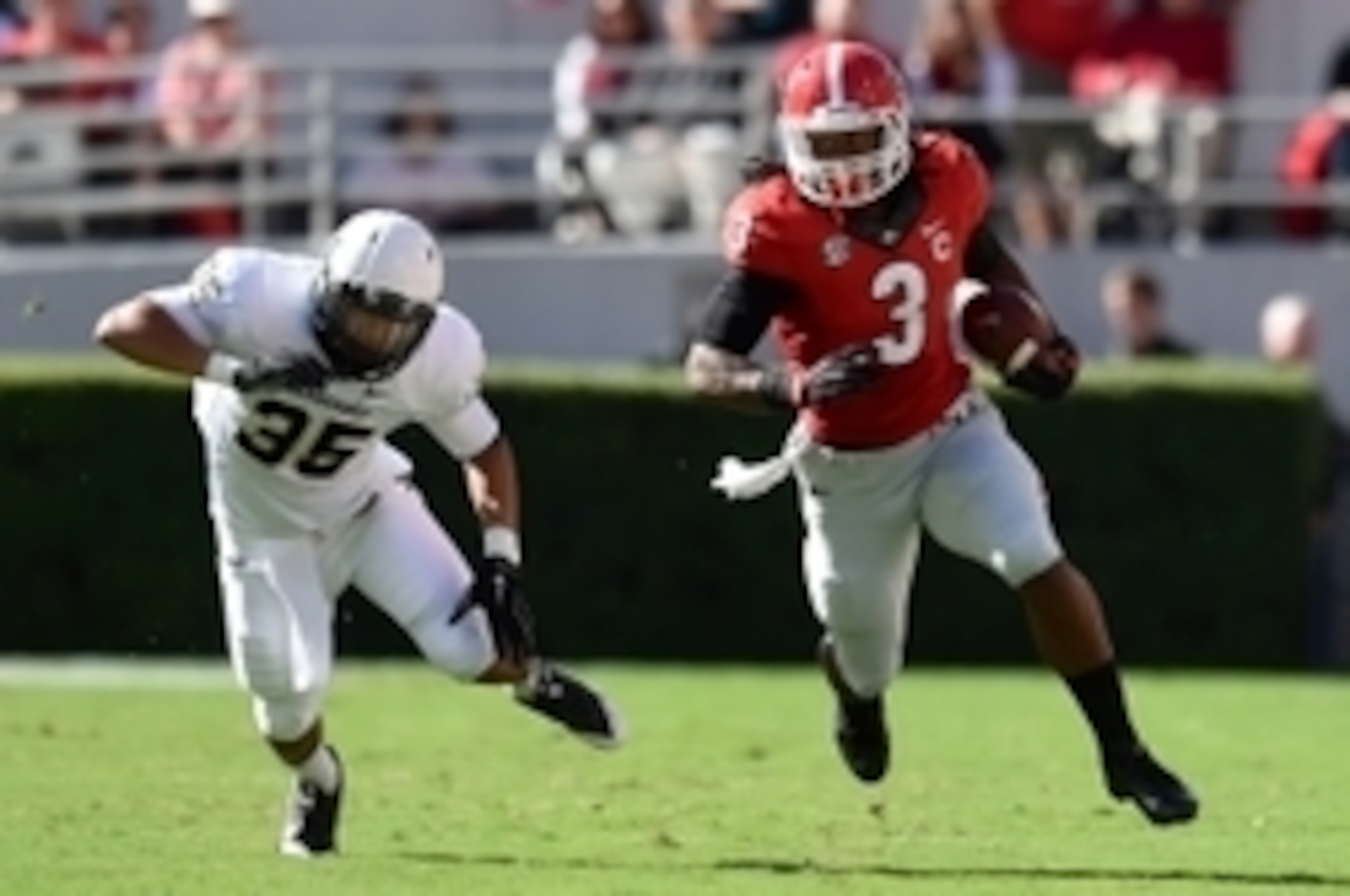
Despite the fact that there have been no running backs selected in the first round of the past two NFL drafts, Georgia’s Todd Gurley is so talented that even with a torn ACL, he still warrants first-round consideration.
If Gurley was uninjured, he would be well within the mix to be a top-15 pick. At 6’1” and 226 pounds, he has a rare combination of size, speed, agility and power.
Gurley exhibits good vision between the tackles and can both make defenders miss and finish through contact. He is also a skilled receiver out of the backfield and holds his own as a pass protector.
After his ACL injury and an injury-plagued 2013 season, Gurley’s medical history makes him a risky pick. If he returns to full speed and stays healthy, he could become one of the NFL’s biggest stars.
21. Marcus Peters, CB, Washington
30 of 50From a standpoint of on-field talent, Marcus Peters stands out as the best cornerback prospect in this year’s draft.
Peters has the size, length, fluidity and ball skills NFL scouts look for at the cornerback position. He moves his feet well and is physical in coverage, while he is also a solid tackler in run support.
Performing well in combine interviews will be vital to Peters’ draft stock. Dismissed from the Washington football program after a number of incidents this past season, Peters—who admitted himself that he deserved to be kicked off the team in a recent interview with USA Today’s Tom Pelissero—must convince NFL decision-makers that his behavior going forward will not be problematic.
Peters still needs to make improvements to his technique, and that is only going to happen if he is more receptive to his NFL coaching staff than he was to Washington’s. He is a risky pick for an early-round investment but has the skill set to be an excellent pro cornerback.
20. Melvin Gordon, RB, Wisconsin
31 of 50
With 2,587 rushing yards and 29 rushing touchdowns on 343 carries, Melvin Gordon’s 2014 season was one of the best for a running back in college football history. Now going forward to the NFL, Gordon should be in line to end the two-year drought on first-round picks at his position.
Week in and week out, Gordon proved that he is a special talent. A 6’1”, 213-pound runner with rare acceleration and outstanding open-field cutting ability, Gordon is a threat to turn any play into a big one.
Gordon’s effectiveness as a between-the-tackles runner might be limited in the NFL, where he will not see the huge creases that Wisconsin's offensive line often created for him. There are also questions over his ability to be a passing-game weapon, as he caught just 22 passes in his three-year collegiate career.
All told, Gordon’s ability to create in space should make him an immediate X-factor for any offense. There are legitimate reasons to question whether he can be an every-down, feature back, but he has superstar potential if he can continue to improve upon his weaknesses.
19. Andrus Peat, OT, Stanford
32 of 50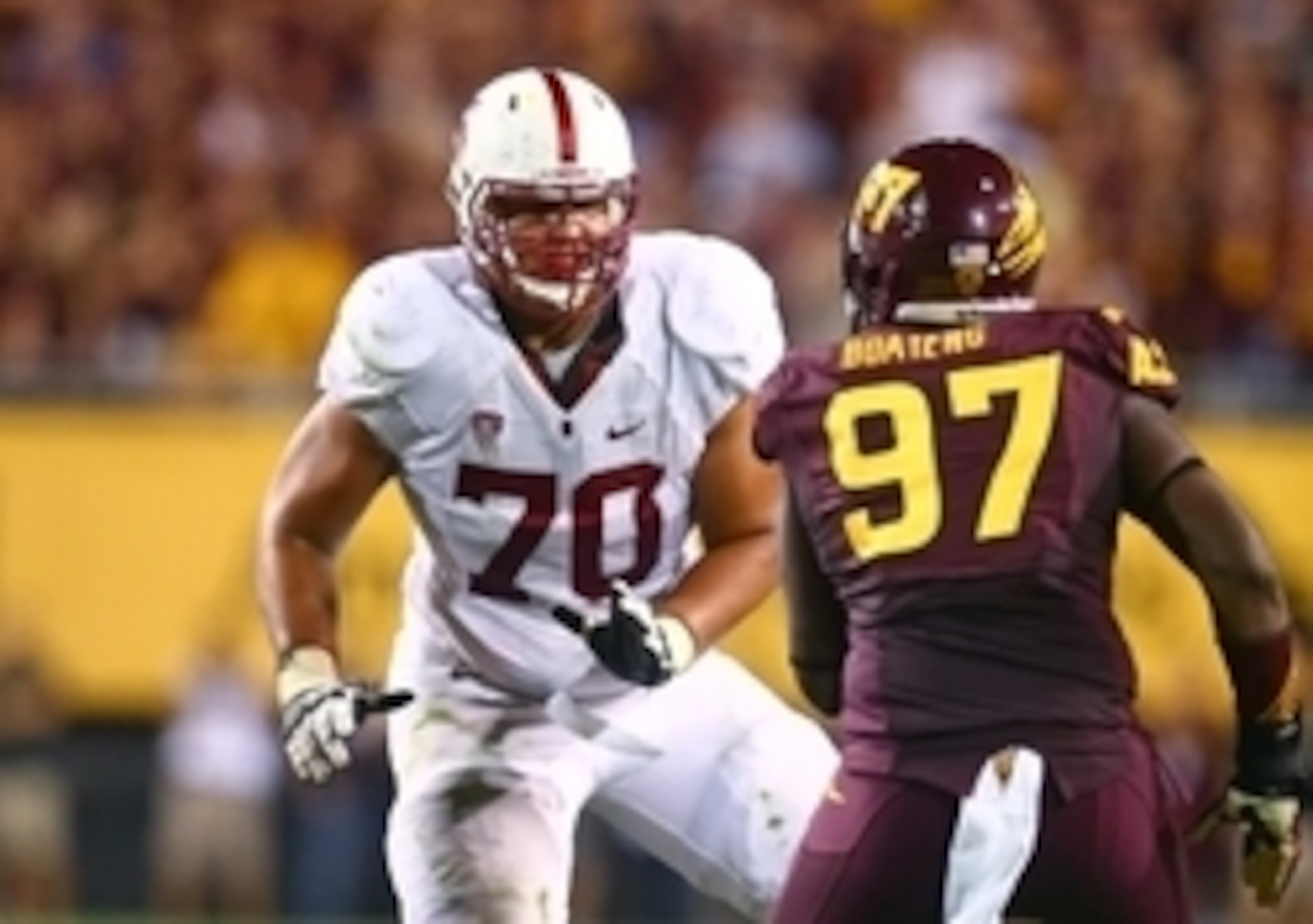
A fluid athlete listed at 6’7” and 316 pounds, Andrus Peat has the key traits that NFL teams crave at the left tackle position. With proper coaching and technical development, Peat has the potential to be a terrific blind-side pass protector at the next level.
Peat’s play was met with varying reviews this past season, but his gifts are evident. He uses his reach and foot skills well to keep pass-rushers outside the pocket, is good with his hand placement and typically absorbs bull rushes well.
As a run-blocker, Peat has an explosive start off the line of scrimmage and is very effective at sticking defenders at the second level. His game lacks a power element, however, and he is more likely to be driven backward himself than to push a defender downfield off the line of scrimmage.
Peat can lapse in his technique at times and exhibits no mean streak, but his ceiling is arguably the highest of any offensive tackle in this year’s draft. He could come off the board quickly if a team sees Peat as its franchise left tackle.
18. Jordan Phillips, NT, Oklahoma
33 of 50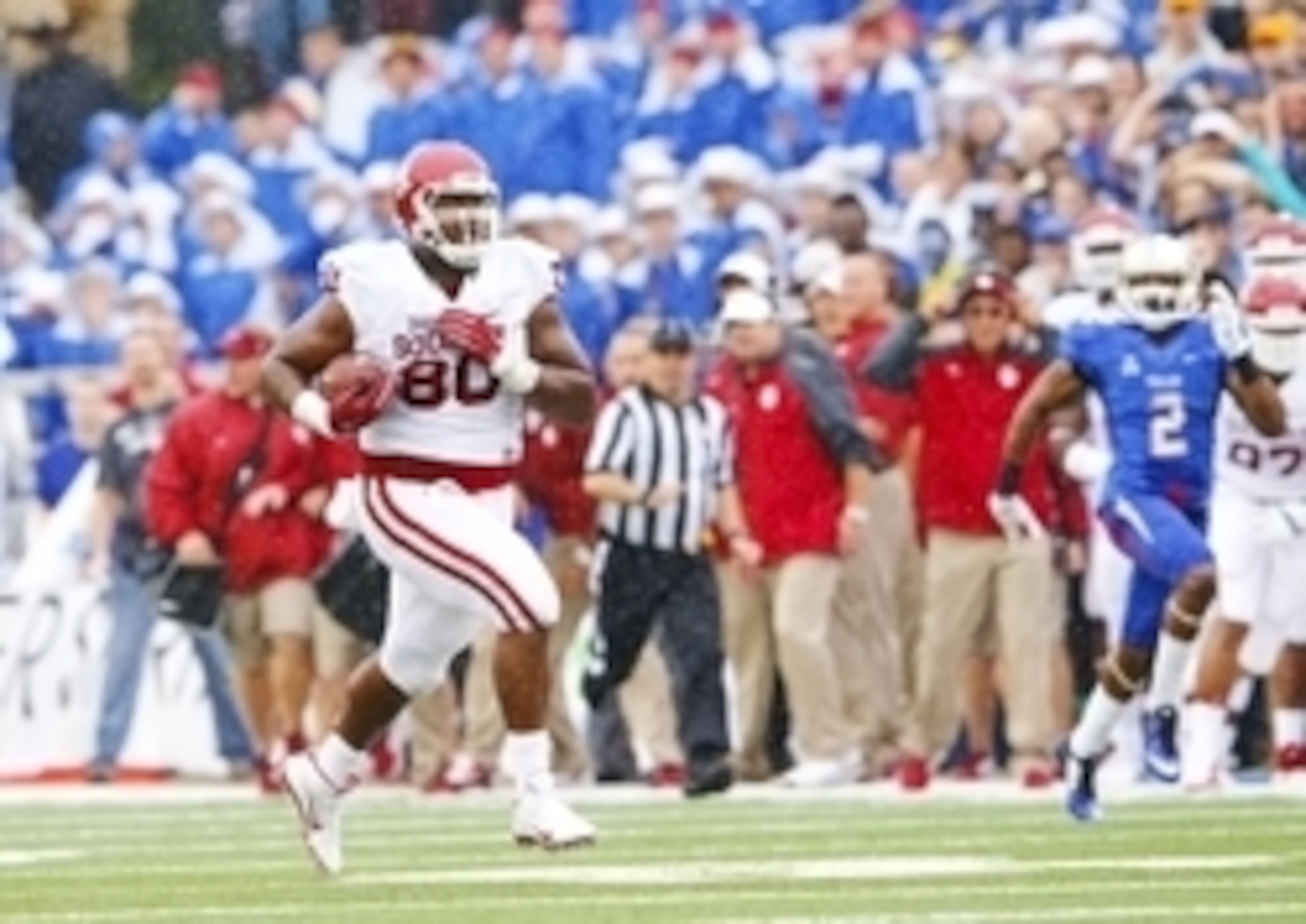
The best 3-4 nose tackle prospect in this year’s class, Oklahoma’s Jordan Phillips has a combination of size and athletic ability that could make him one of the standouts of this year’s combine.
Phillips is a gargantuan 6’6” and 334 pounds, but he doesn’t move like a giant. With an explosive burst off the line of scrimmage and nimble feet, Phillips is more than just a space-eater. He can bulldoze blockers backward with a bull rush and has the quickness to shoot through gaps and blow up plays.
However, Phillips is still a raw talent after two collegiate seasons. His game will need some seasoning for him to be regularly successful, but few players in the draft have higher upside.
Phillips will be heavily scrutinized in the medical evaluation at the combine after suffering a back injury in 2013, but if all checks out, he should be a solid first-round pick. On the field at Lucas Oil Stadium, Phillips could make a Dontari Poe-like statement with the way he runs for a big man.
17. Landon Collins, SS, Alabama
34 of 50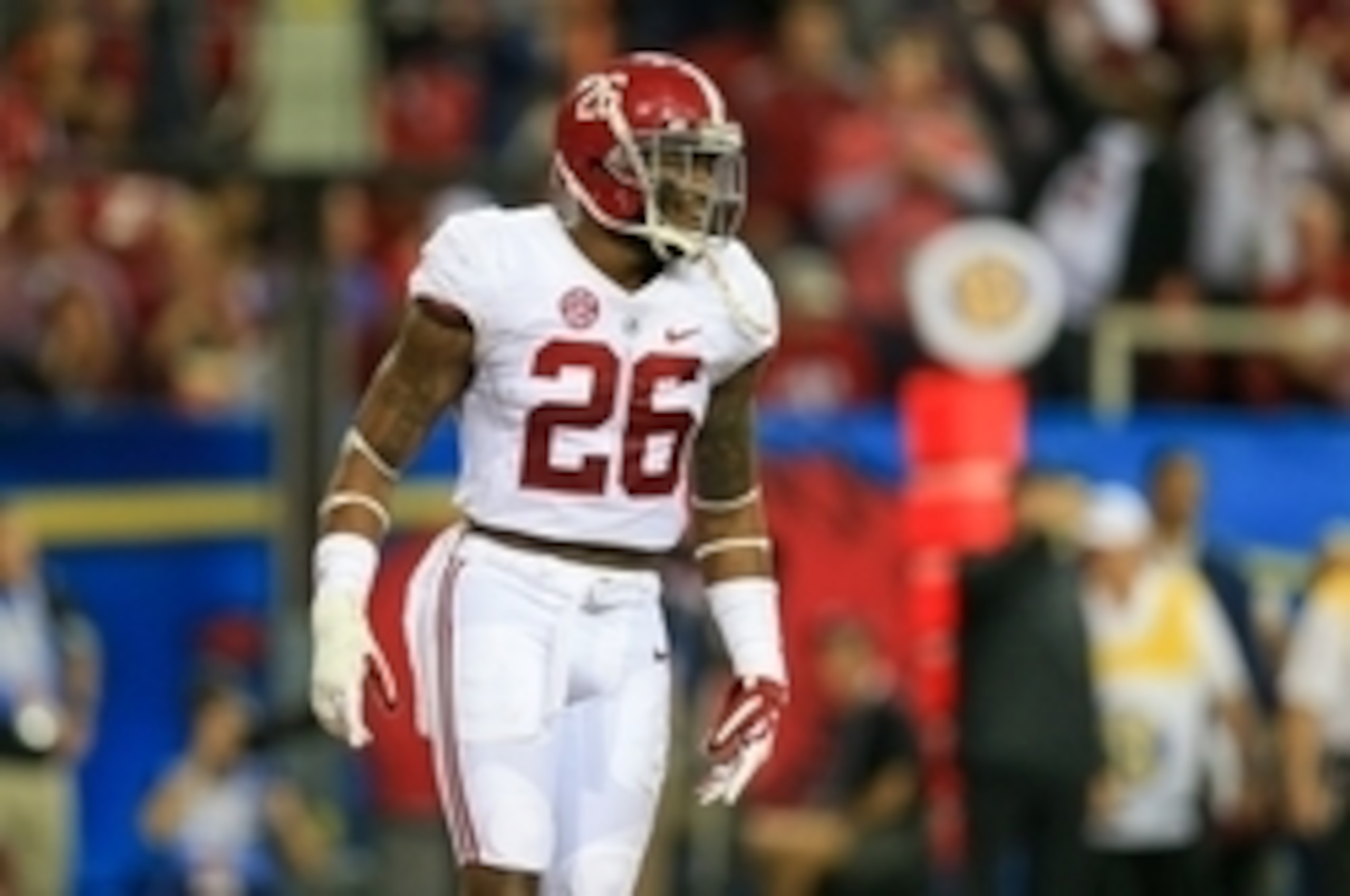
Perhaps the only surefire first-round pick among defensive backs this year, Alabama’s Landon Collins has the tools to be a terrific strong safety in the NFL.
A rangy athlete and physical hitter, Collins has very good ball skills and can make plays all over the field, but he is at his best in the box. He is a sound tackler in run support and a well-built prospect, listed at 6’0” and 222 pounds.
Collins’ play in coverage was somewhat disappointing in 2014, which made it evident that he is better suited to be a strong safety than a free safety in the pros, but he has the fluidity and versatility to play as a deep center fielder if needed.
Either way, Collins should be a difference-maker in an NFL secondary. At a position where there is a lack of pro-ready talents in this year’s draft class, Collins is expected to fit within the top 20 overall picks.
16. Randy Gregory, DE/OLB, Nebraska
35 of 50
As epitomic of the boom-or-bust label as any prospect in this year’s draft class, Nebraska’s Randy Gregory has the physical qualities of a star pass-rusher but remains a very raw talent.
Gregory has an exceptional combination of burst off the line, lateral agility and length. He bends the edge naturally, has outstanding pursuit speed for a 6’6” defender, can get his hands on passes with his long arms and has the versatility to play both on the line and as a linebacker.
On the other end of the equation, Gregory has a listed weight of just 240 pounds and lacks the strength to hold up regularly against the run. While he is quick and violent with his hands, he has few defined pass-rushing moves and is far too reliant on his physical ability.
Gregory could immediately make some plays on an NFL defense simply because of his tools, and he has the potential for stardom. At this point, however, he is more flashy than productive. Gregory is widely projected to be a top-10 pick, which will make him a high-risk, high-reward selection.
15. Hau’oli Kikaha, OLB, Washington
36 of 50
As a prospect, Hau’oli Kikaha is in many ways the antithesis of the aforementioned Randy Gregory. The Football Bowl Subdivision leader in sacks for 2014, Kikaha is the most technically proficient pass-rusher in the class, but he lacks high-end physical potential.
Kikaha recorded 19 quarterback takedowns this past season, and his excellent hand skills were the biggest reason for that. He has a vast arsenal of pass-rushing moves, turns the corner very well and is able to generate power as a bull-rusher.
At only 6’3” and 246 pounds, Kikaha is undersized for an edge defender. That leads to concern about his ability to play the run, but he exhibited solid strength on the edge in college and is a capable wrap-up tackler.
Kikaha lacks the natural movement skills to play as an off-ball linebacker, but he is well-suited to line up as an outside linebacker in a 3-4 scheme. His medicals will be scrutinized heavily at the combine, as he has two ACL tears in his history, but he is a player who should make an immediate impact in the NFL, even though his ceiling is relatively low.
14. Danny Shelton, DT, Washington
37 of 50
A 6’2”, 339-pound nose tackle would typically be known for doing the dirty work to help players around him accumulate statistics, but Washington’s Danny Shelton has the athleticism to make plays along the entire line of scrimmage.
Shelton has a tremendous activity level for his size, as he recorded 93 total tackles, including 16.5 for loss, in his senior season. He is strong at the point of attack but also quick to penetrate. He moves his feet very well, while he can also overwhelm opponents with power.
Although Shelton is shorter than ideal for his position, his lack of height can be advantageous at times. He regularly wins with leverage and is a tough opponent to move off the line of scrimmage.
Shelton is not great with his hands and will need continued technical development to reach his full potential. That said, he projects very well to a 4-3 defense, in which he could play either defensive tackle spot, while he could also be a gap-plugging nose tackle in a 3-4 front.
13. Kevin White, WR, West Virginia
38 of 50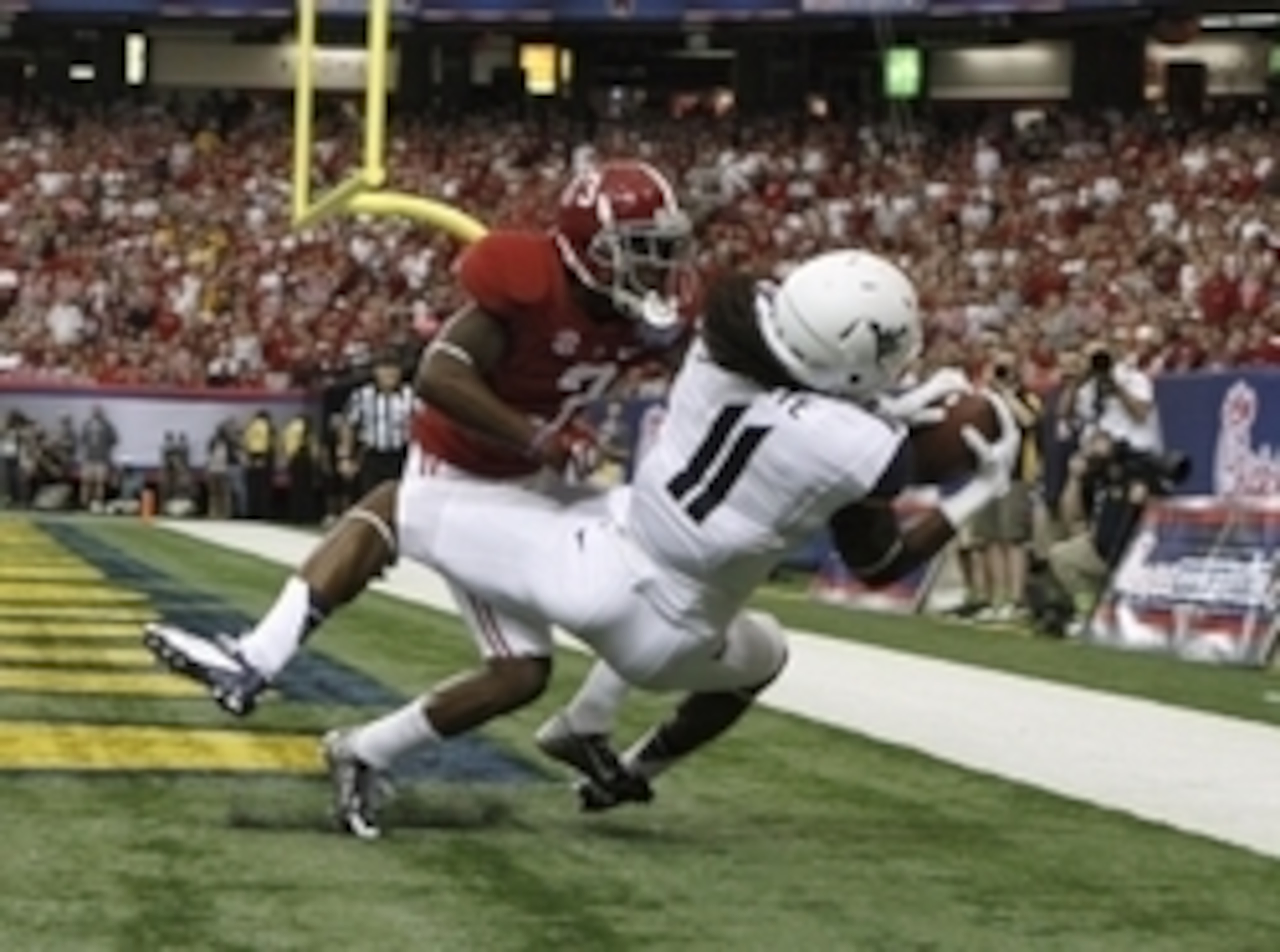
There might not be any player in the 2015 draft who bolstered his stock more in 2014 than West Virginia wide receiver Kevin White. He was a relatively unproductive player prior to the season, but White improved his game exponentially as a senior and caught 109 passes for 1,447 yards and 10 touchdowns.
White is a big target at 6’3” and 210 pounds, possesses enough strength as a wideout to fight through contact and can high-point the ball well.
White does not have excellent speed, but his terrific ball skills enable him to overcome that, as he can make plays even when he doesn't have clean separation. He’s not dangerous in the open field, but he has a natural stride and finishes plays well.
He is also a quality route-runner and solid run-blocker. White has a well-rounded skill set that could make him a No. 1 receiver on an NFL depth chart. He is projected to be a top-20 pick and could go in the top 10.
12. Vic Beasley, OLB, Clemson
39 of 50
An explosive edge player who accumulated 44.5 tackles for loss over the past two years, Clemson’s Vic Beasley has as much ability to disrupt plays in the backfield as any defensive prospect in this year’s draft.
Beasley has a lightning-quick first step and combines that with an impressive array of pass-rushing moves. He utilizes his hands and agility to beat blockers inside and outside, and he even shows some ability to get inside a blocker’s pads and drive his opponent backward with a bull rush.
Listed at only 6’3” and 235 pounds, Beasley is undersized for an edge defender and has limited growth potential. Not big or strong enough to continue playing defensive end at the next level, he is facing a likely transition to linebacker, ideally in a 3-4 scheme but possibly even in a 4-3 unit.
The good news for Beasley is he has shown the movement skills in space that should enable him to make a successful transition. He might start out his career as a situational pass-rusher only, but he has the tools to be a second-level run-defender and can even drop back into coverage as he becomes acclimated to a new position.
11. Malcom Brown, DT, Texas
40 of 50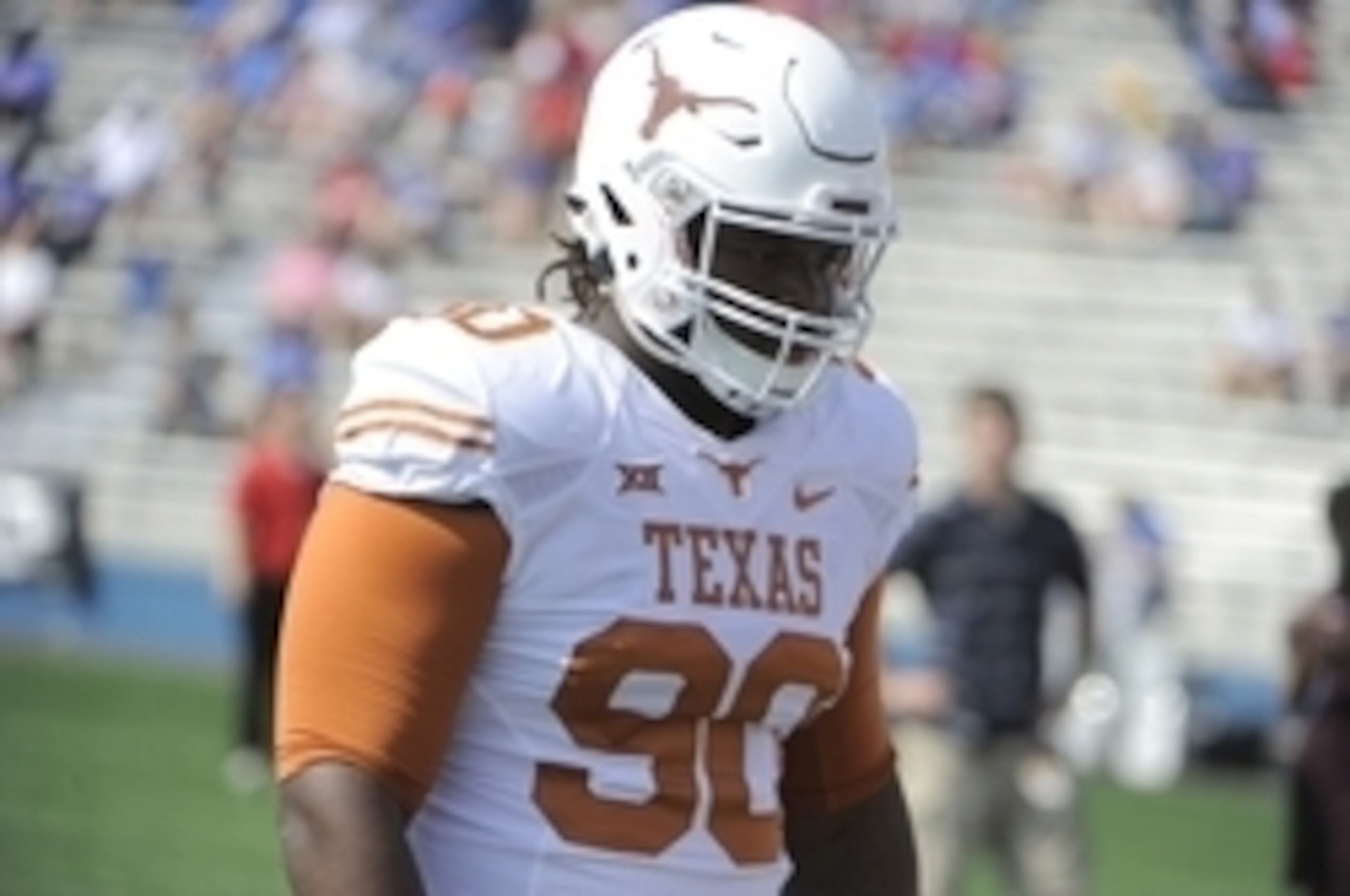
Texas’ Malcom Brown is a prospect who has not received as much attention as he deserves heading into the combine. He has a well-rounded set of skills and physical attributes that could make him an asset to any NFL team’s interior defensive line.
Brown is impressively quick for a defensive tackle listed at 6’2” and 320 pounds, as he combines the size of a nose tackle with the athleticism of a penetrator. He also exhibits point-of-attack strength versus the run, which makes him an effective interior pass-rusher.
Brown’s game is still developing from a technical standpoint, but he has made steady improvement. He does not have ideal height and length, but he is powerful with his hands and can stack and shed his way by opponents.
Brown has the versatility to play either defensive tackle spot in a 4-3 front and both nose tackle and defensive end for a 3-4 scheme. With that ability to play multiple roles, he could be a valuable cog of an NFL defensive line for years to come.
10. Alvin “Bud” Dupree, DE/OLB, Kentucky
41 of 50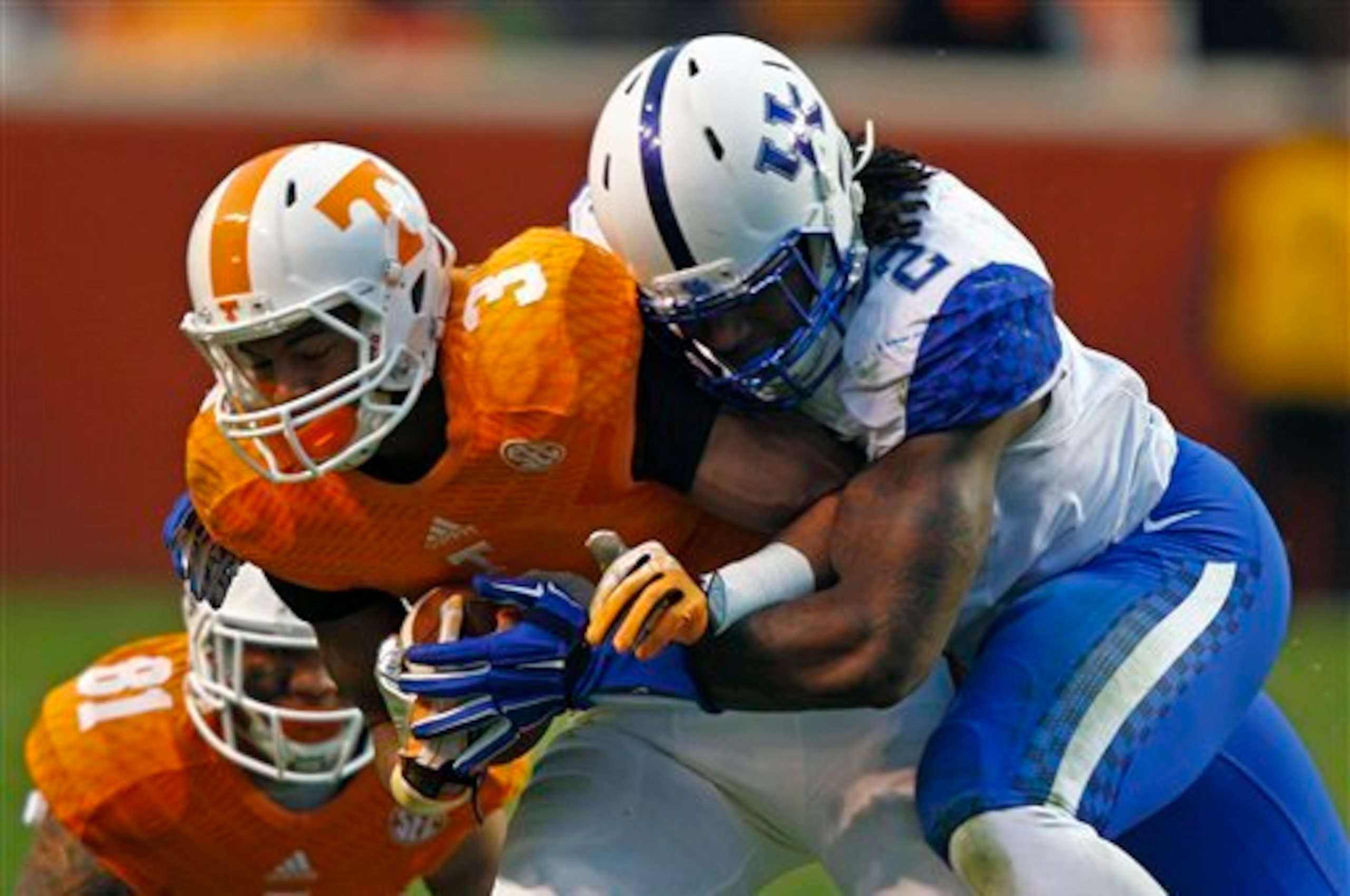
Alvin “Bud” Dupree is another of the many hybrid edge defenders vying for position as potential first-round picks in this year’s draft. He has a combination of athleticism, size and versatility that makes him a potential star at the next level.
Dupree is an explosive and fluid mover, and he played both defensive end and strong-side linebacker at Kentucky. Listed at 6’4” and 264 pounds, he has the size and strength to play on the line of scrimmage but also has the abilities of a linebacker to drop back into space and into coverage.
Dupree is a very good run defender both along the line and in pursuit. He can bring pressure with speed and power off the edge, but he needs to develop better hand skills to be a more effective pass-rusher.
Dupree is ideally suited to play as a 3-4 outside linebacker, but he could also continue to play either defensive end or linebacker in a 4-3 scheme. That versatility, along with his skill as a run defender, puts him ahead of most of the other edge-defender projects on these rankings.
9. La'el Collins, OT/G, LSU
42 of 50
A first-team All-SEC and second-team All-American selection as a senior, La’el Collins is a polished offensive line prospect with the skills to become a starter quickly at either tackle or guard.
Collins was largely dominant in two years at left tackle and one at left guard for LSU. He is listed as a 6’5”, 321-pound lineman, and he uses his size well to consume rushers in pass protection and punish defenders with power as a run-blocker.
The big question mark with Collins is whether he is athletic enough to continue playing on the outside. He is not particularly fleet of foot, so he might not have the agility to consistently block the edge against speed-rushers.
To Collins’ credit, he shut down the vast majority of his opponents while playing tough competition in the SEC. His potential to be a star guard is probably greater than his ability to excel as a left tackle, but he does enough things well to make up for his athletic limitations and continue playing on the edge if needed.
8. Jameis Winston, QB, Florida State
43 of 50
Jameis Winston is one of the 2015 draft’s toughest evaluations both on and off the field. He has the tools of a franchise quarterback but looks like a risky investment at the top of the draft.
Winston has all the physical qualities of a star signal-caller. He is a cannon-armed passer with great size and enough athleticism to make plays with his feet. For a quarterback with just two collegiate seasons under his belt, he has the rare ability to fit throws between tight windows and make big plays under pressure.
On the other end of the spectrum, Winston is coming off a tumultuous 2014 season in which he threw 18 interceptions and ranked just 27th in the FBS in passer rating. He made some bad errors in his on-field decision-making, while his off-field decision-making has also been under heavy scrutiny over the past couple of years.
Despite the concerns, Winston is widely projected to be a top-10 pick and could come off the board at No. 1 overall. At the most important position on the field, he has rare potential. If he harnesses it, he could be the face of an NFL organization for many years to come.
7. DeVante Parker, WR, Louisville
44 of 50
DeVante Parker is a long, athletic receiver who can make spectacular catches look easy. He has the physical gifts and playmaking ability to be the star pass-catcher of an NFL offense.
Parker has a very good release off the line, is a fluid runner and has the route-running skills to regularly create separation. But he is truly exceptional at the catch point. Listed at 6’3” and 211 pounds, the Louisville product can leap high in the air to high-point passes, has tremendous body control and holds up through physical coverage.
While not naturally dynamic in the open field, Parker has enough speed to extend plays for big gains. He has proved tough to bring down, as he utilizes his size and strength to finish through contact.
Parker is not a burner, but he otherwise has all the tools to be a No. 1 wide receiver. After really producing like one in his injury-abridged senior season for the Cardinals, he should be a top-15 draft pick.
6. Shaq Thompson, OLB/SS, Washington
45 of 50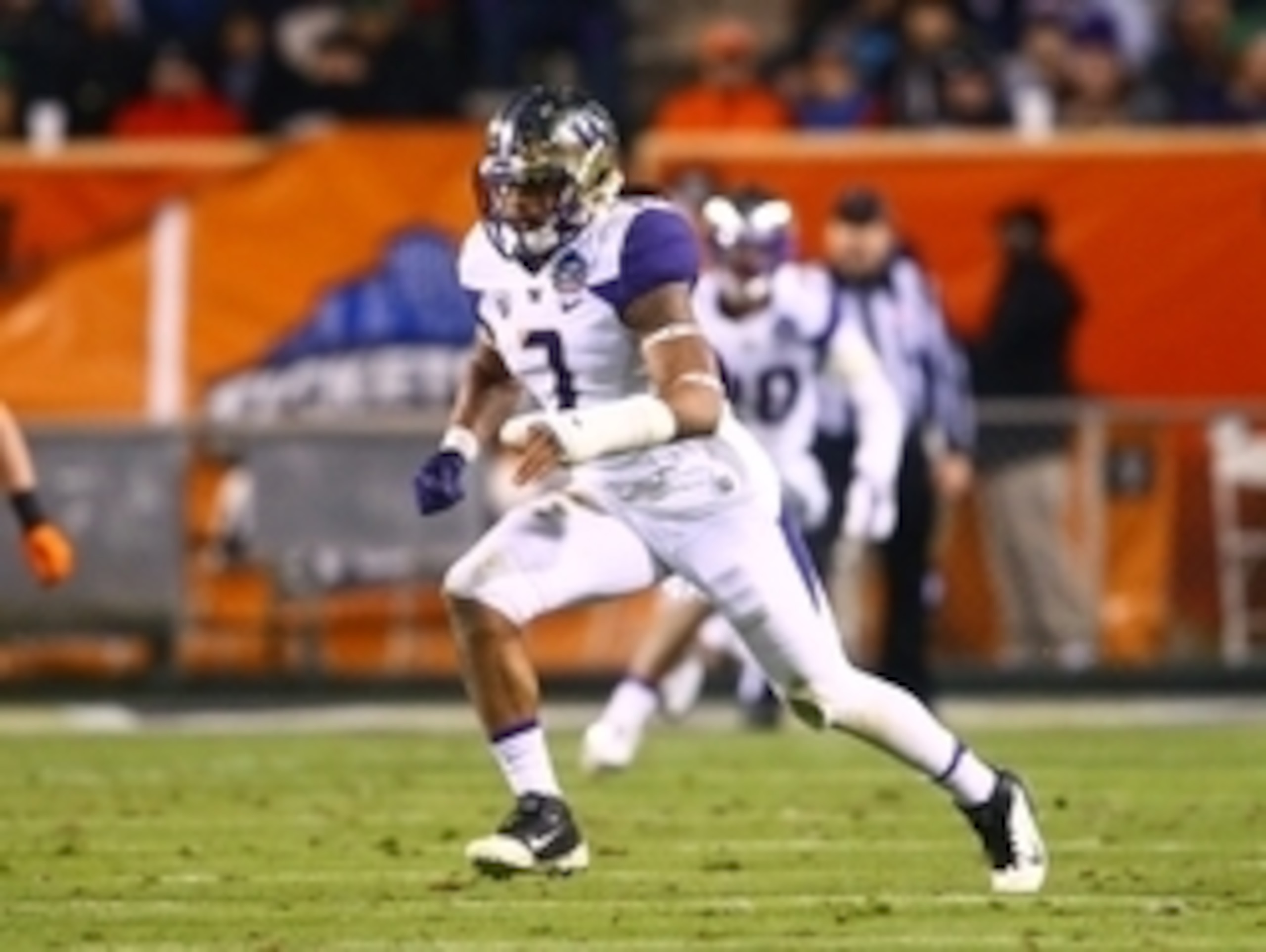
In three years at Washington, Shaq Thompson was Mr. Versatility. He is a tremendous all-around athlete, as he spent time playing linebacker, defensive back and even some running back while also contributing on special teams.
That versatility should translate to the next level, and it makes him one of the top playmakers in this year’s draft class. Coming off a year in which he scored four defensive touchdowns, Thompson has the potential to be a spark plug for any defense.
He is listed at 6’1” and 228 pounds, which has led many to label him as a “tweener.” While linebacker is his best position, his measurables—both in his limited size and in his great speed—are more befitting of a strong safety.
That would have hurt his draft stock a few years ago, but it shouldn’t in 2015. In a league where passing is increasingly emphasized and hybrid linebacker/safety players are increasingly common, Thompson has the skill set to fulfill multiple roles on a defense and be an asset both in run defense and coverage.
5. Brandon Scherff, OT/G, Iowa
46 of 50
Brandon Scherff is the most complete offensive line prospect in this year’s draft and should be a solid top-10 pick. He already proved himself in college, as he was a dominant three-year starter at left tackle for Iowa.
Listed at 6’5” and 320 pounds, Scherff is a physical mauler who can powerfully drive his opponents away from the line of scrimmage. He also uses his exceptional athleticism to move well to the second level as a run-blocker, and he has generally good footwork in pass protection.
Scherff is better in the ground game than in pass blocking, so many draft analysts view him as a candidate to convert to guard. This is also in part because of a perceived lack of length, which could be confirmed at the combine this week.
With a move inside, Scherff could end up being an immediate star like Zack Martin of the Dallas Cowboys and Joel Bitonio of the Cleveland Browns were as 2014 rookies. But Scherff is a stronger candidate to take over a starting tackle position on an NFL offensive line than any other lineman a team could select early in the draft.
4. Marcus Mariota, QB, Oregon
47 of 50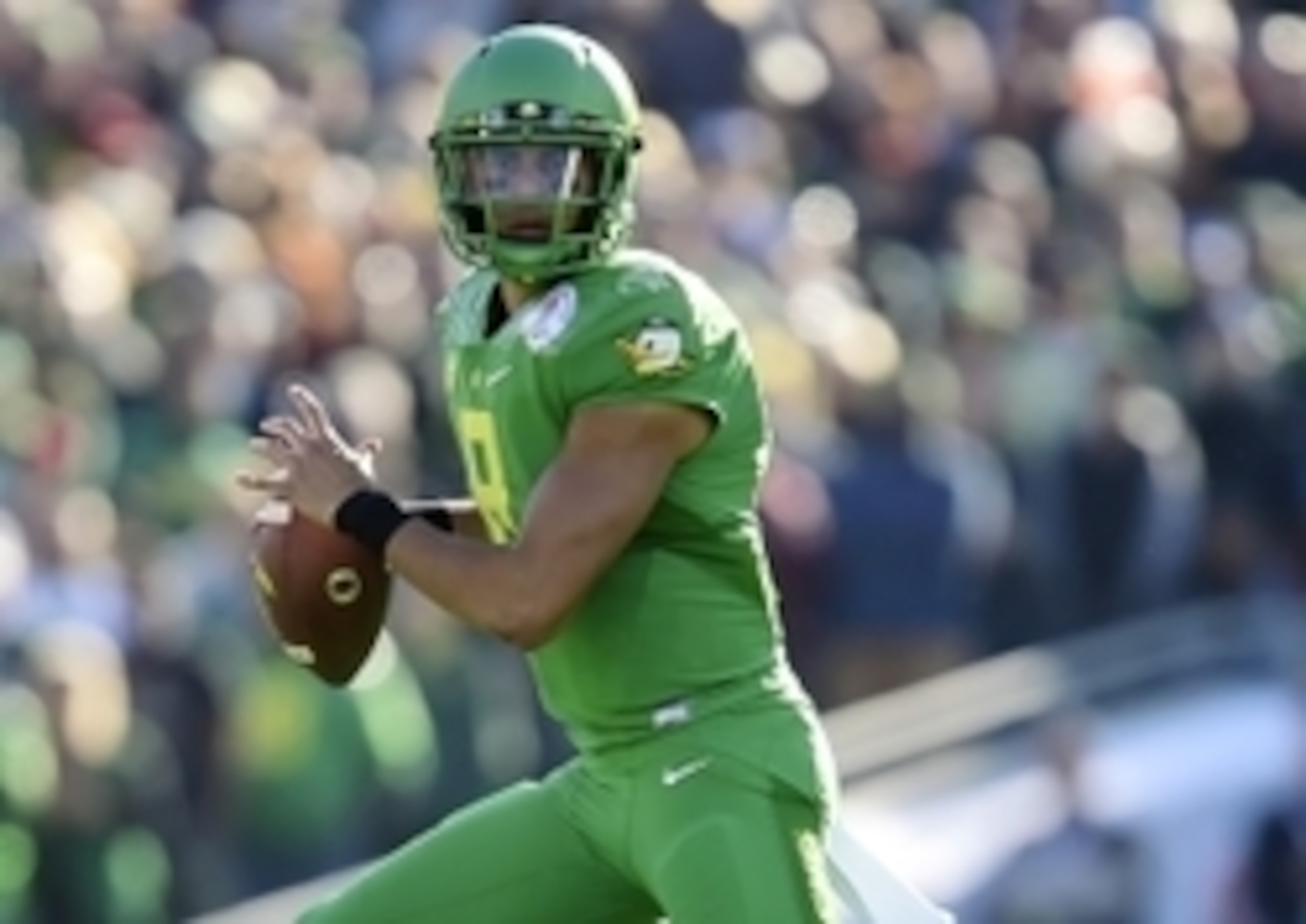
Coming off a year in which he won the Heisman Trophy and was the best quarterback in college football, Oregon’s Marcus Mariota should absolutely be one of the first players selected in the 2015 draft.
A 6’4”, 219-pound quarterback who throws the ball with consistent velocity and has terrific athleticism, Mariota fits the prototype for the modern dual-threat. He does an outstanding job making plays on the run but also improved significantly within the pocket in 2014.
The concern many analysts and scouts have with Mariota is that he could have trouble transitioning to a pro-style offense from Oregon’s uptempo system. He didn’t have to make many passes against tight coverage for the Ducks, as he often had wide-open receivers downfield or made quick, short throws.
Even with those questions, Mariota is still worth a top pick—potentially the top pick—in this year’s draft. A leader who comes with no off-field baggage whatsoever, Mariota has all the tools and intangibles to develop into a very good NFL starter.
3. Amari Cooper, WR, Alabama
48 of 50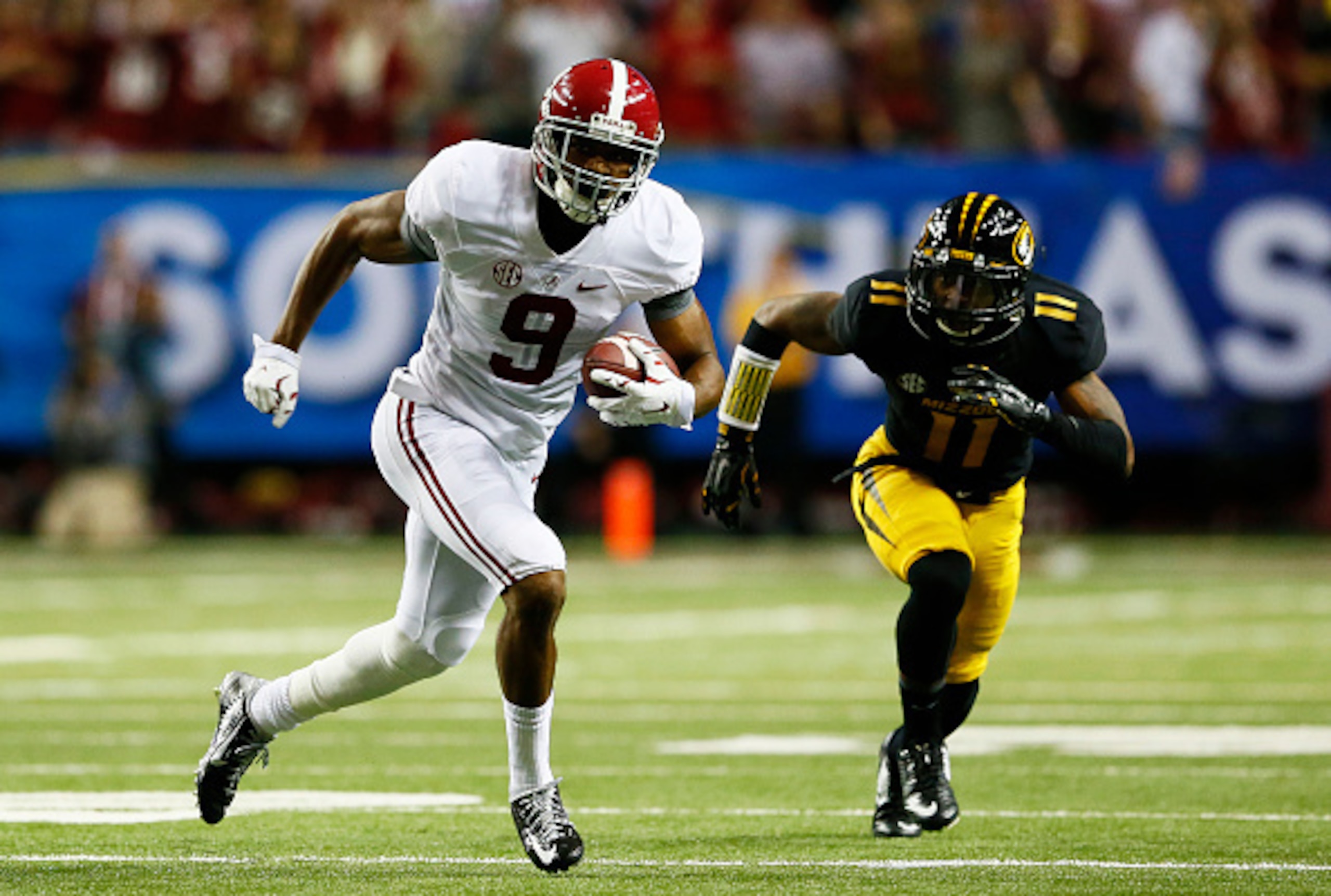
The most complete wide receiver in this year’s draft class, Alabama’s Amari Cooper should be able to immediately establish himself as a go-to playmaker for an NFL passing offense.
Cooper is a sharp route-runner who explodes in and out of his breaks, and he excels at getting open at the intermediate level. He is a natural runner in the open field who excels at tracking the ball in the air and can extend plays for big gains with his lateral quickness.
Cooper does not have exceptional measurables for his position, but he high-points the ball well enough to make catches over coverage. He does everything a receiver needs to do to be successful, with run blocking as his only real weakness.
It’s possible Cooper could slide a bit on draft day if teams favor size over polish and production, but whichever franchise selects him should immediately reap the rewards.
2. Dante Fowler, DE/OLB, Florida
49 of 50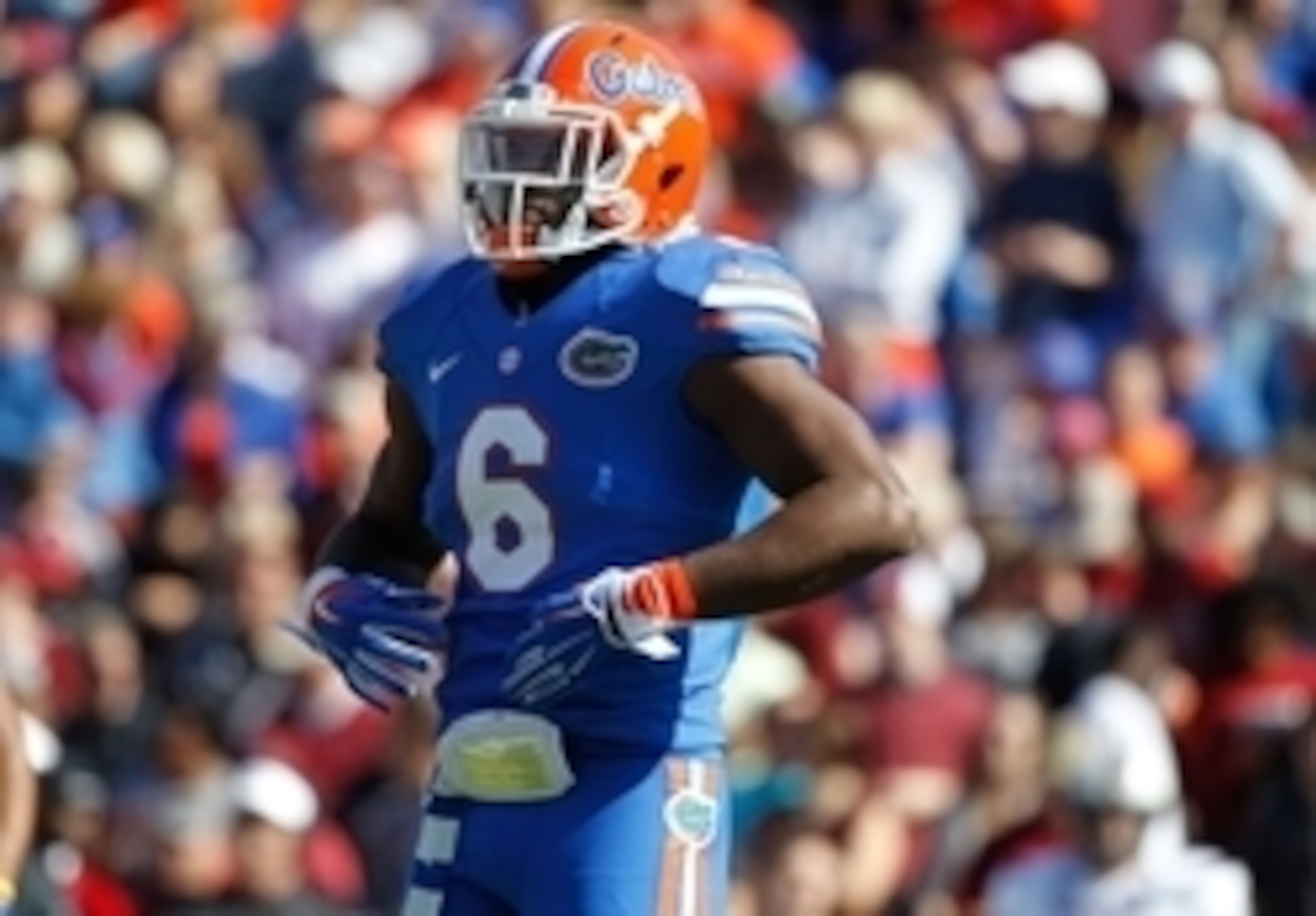
For a team forced to make a decision between the explosive edge-defender prospects in this year’s draft, the top choice should be Florida’s Dante Fowler, who is the best athlete of the bunch and also the most complete player.
Fowler has an exceptional combination of burst and quickness with which he can close on a quarterback or ball-carrier in a hurry. He can line up all over a defensive formation and holds his ground effectively against the run.
Listed at 6’3” and 260 pounds, Fowler has the tools to be great as either a 4-3 defensive end or 3-4 outside linebacker. His game remains a work in progress from a technical standpoint, as he has good length and is active with his hands but can develop more effective pass-rushing moves.
While Fowler is more of a project than one would expect from the second-best overall prospect in the entire draft, he truly has the potential to be the best player from a class that is short on elite talent.
1. Leonard Williams, DT/DE, USC
50 of 50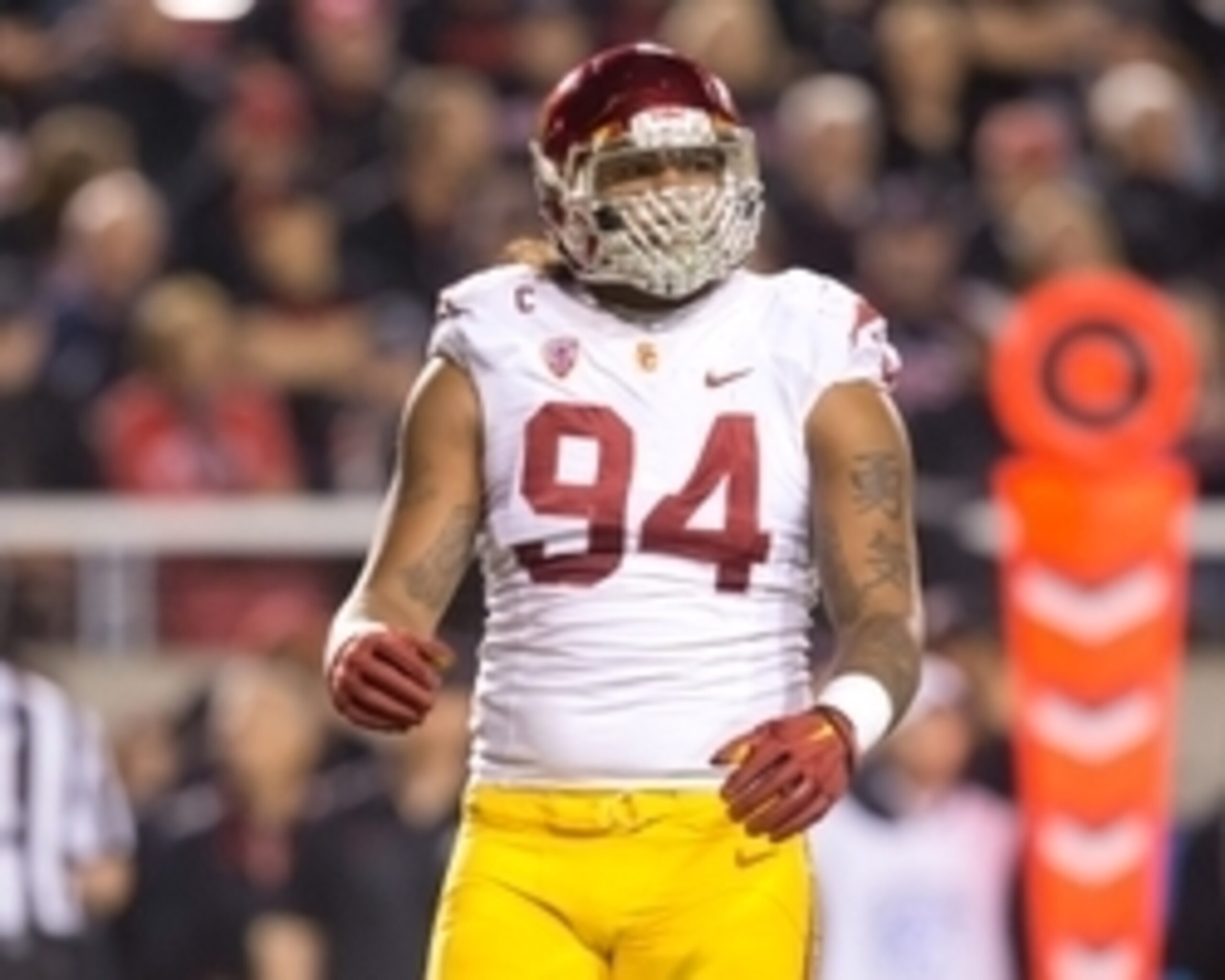
Leonard Williams stands out, by a fairly significant margin, as the best prospect in the 2015 draft. He is perhaps the only non-quarterback who would be considered an elite talent in a class with more top-end talent, and he should be one of the top three players selected this year.
A terrific athlete with listed measurables of 6’5” and 300 pounds, Williams can be effective playing both inside and outside. He is explosive in pursuit and a sound tackler, assets that make him a defensive tackle capable of playing all along the line of scrimmage.
Williams has great strength at the point of attack and can overpower his opponents. He is also violent with his hands and can effectively shed blocks at the line of scrimmage to work his way through gaps.
The only major question with Williams is the condition of his shoulders, as he has played through labrum tears. So long as he avoids being medically red-flagged at the combine, there is no other significant reason for concern that should stop a team from drafting him.
Dan Hope is an NFL/NFL Draft Featured Columnist for Bleacher Report.
.jpg?w=2560 "Texans-Mixon Released Football")

.jpg?w=2560 "Grading WWE Raw 🔠")


.jpg?w=2560 "2 NFL Officials Suspended")
