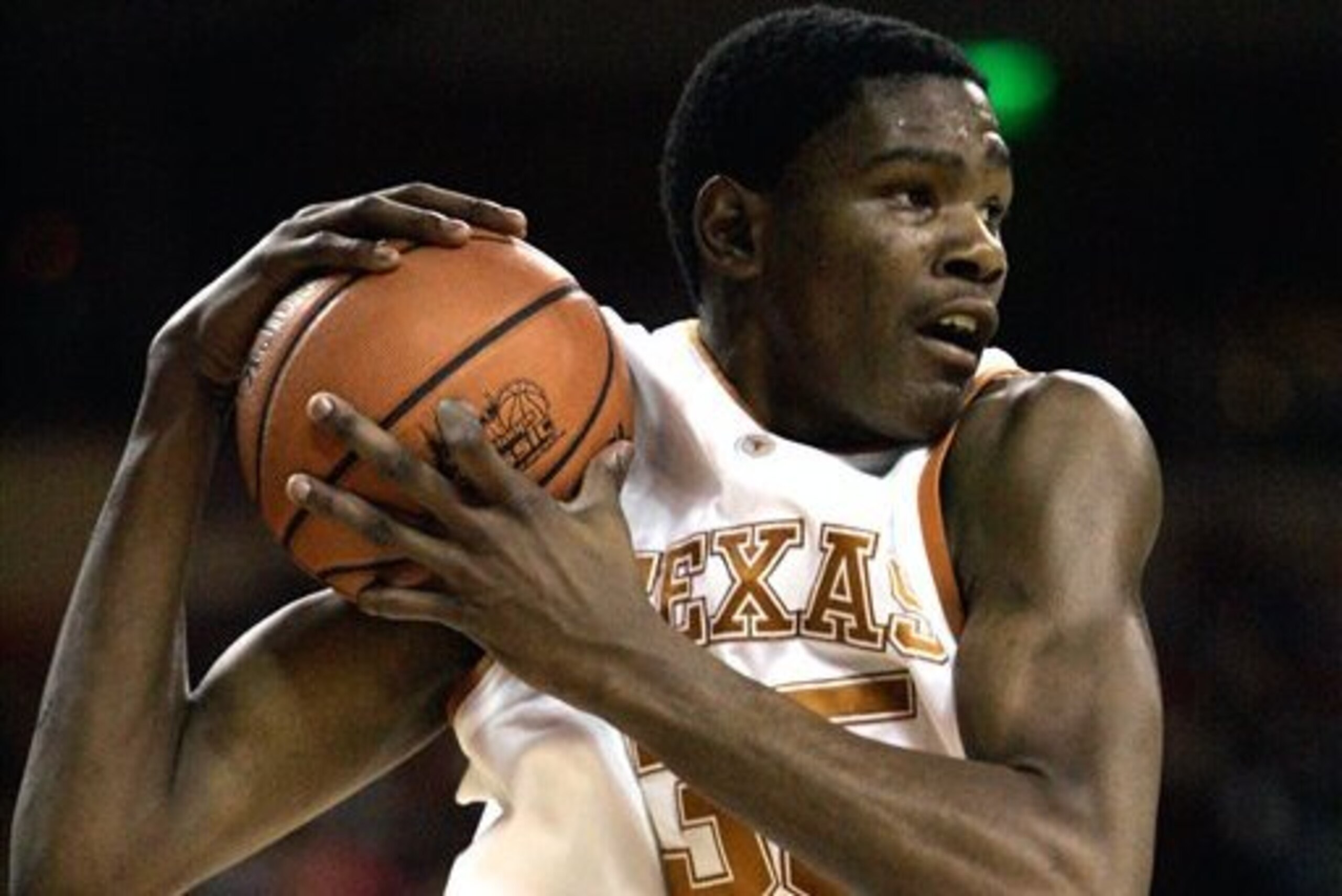

Power Ranking College Basketball's Wooden Award Winners from the 2000s
Awards season is in full bloom. That makes it a great time to be alive. For example, we have the Oscars coming up in just one week. Aw yeah. Not to be outdone by some crazy non-sports thing, college basketball's right in the thick of this awards business as it rounds the final quarter pole of its regular season.
You can't talk college basketball awards without talking about the granddaddy of all the individual accolades, the accolade that which we call the John R. Wooden Award. Presented each year to the best men's and women's college baller, it's one of the very hottest pieces of hardware that's possible to receive at this level of the sport. Don't touch the Wooden Award, son (or daughter). You might get burned.
On Feb. 11, The Los Angeles Athletic Club, which gives out the award, released a list of the top 20 candidates. And it got us to thinking: Who among recent Wooden award winners stands out today? And who doesn't stand out as much? Every Wooden recipient is clearly a great player. But some are greater than others.
So in the spirit of public service that fundamentally fuels all slideshow journalism, let us now rank the Wooden awardees of the 2000s, from 2000-2014. This ranking covers the men's side of the sport and is based on individual and team production in the season each player won the award and, to a lesser but still important extent, what the player accomplished on the court after college. Here we go.
15. Doug McDermott, Creighton
1 of 15
Year of Award: 2014
Key Season Stats: 26.7 ppg, 52.6 FG%, 44.9 3FG%, 7 rpg
His nickname is Dougie McBuckets. The nickname works because it is descriptive.
Doug McDermott, a 6'8" small forward, did almost nothing in his senior season except put the ball in the net. He accounted for 34 percent of the Creighton Blue Jays' offensive output.
But it all reached an anticlimactic conclusion last spring when Baylor upended Creighton in the first weekend of the Big Dance. It's not the way the Blue Jays had hoped to end the season.
At the pro level, McDermott gets, at best, an incomplete scorecard. He has battled injuries and managed only three points per game in less than 10 minutes per contest in 22 appearances for the Chicago Bulls. For his own sake, here's hoping those numbers move upward when he returns to full health.
14. J.J. Redick, Duke
2 of 15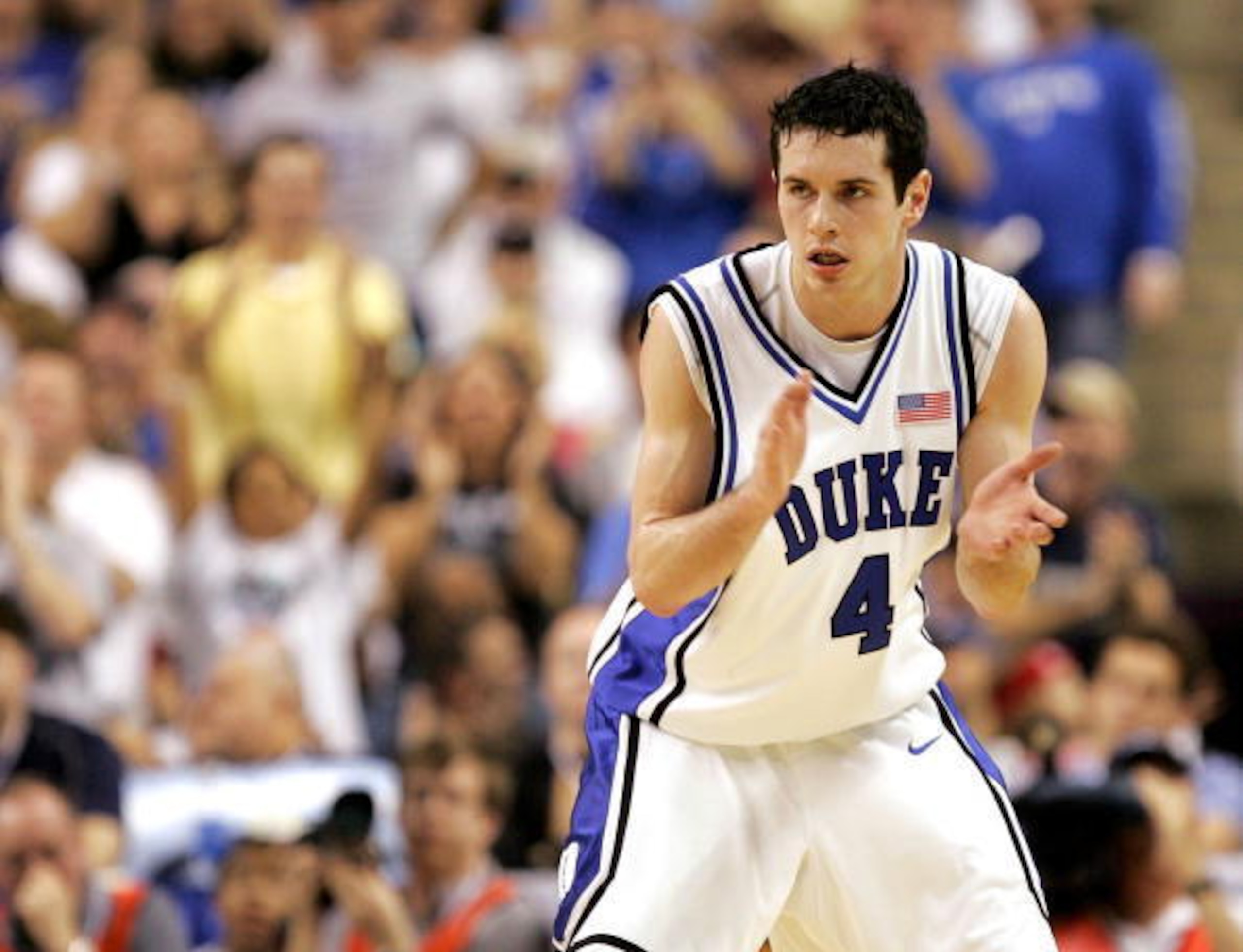
Year of Award: 2006
Key Season Stats: 26.8 ppg, 42 3PFG%, 86 FT%, 1.4 spg, 2.6 apg, 2 rpg, 37.1 mpg
There has never been any magical formula to J.J. Redick's success. Shoot the three, make the three.
During his award-winning senior tour in Durham, Redick put it up more than nine times a game from outside the arc, accounting for about half of his 18 field-goal attempts per game. It's what led him to become Duke's all-time leading scorer.
The Blue Devils fell to LSU in the Sweet 16 that season, but that doesn't change Redick's place as one of the greatest shooters in college basketball history. Though he has worked to advance other phases of his game as a pro, he remains very much a specialist in the NBA.
The 6'4" guard is hampered in this sort of comparison by his lack of an all-around game, including notable defensive deficiencies.
13. Jimmer Fredette, BYU
3 of 15
Year of Award: 2011
Key Season Stats: 28.9 ppg, 45.2 FG%, 39.6 3PFG%, 4.3 apg, 3.4 rpg, 1.3 spg
Ah, Jimmer Mania. It feels like it was only yesterday, it really does. And we thought we would all live forever.
Jimmer Fredette was a one-man gang for the BYU Cougars and a one-man craze for anyone with a television during his senior season in 2010-11, which culminated in a run to the Sweet 16.
During that season, Fredette hoisted an average of 20.7 shots per game, 8.5 of which came from deep. He scored 35 percent of the Cougars' 81.4 points per game.
Jimmer did it fairly efficiently, though, and he chipped in some nice assists and rebounding totals, too.
So far, his pro career has been fairly moribund. In 14 minutes per game, he's averaging a pretty paltry 6.4 points. And his season-by-season numbers are not trending in the right direction.
Where have you gone, Jimmer Fredette? A nation turns its lonely eyes to you.


12. Evan Turner, Ohio State
4 of 15
Year of Award: 2010
Key Season Stats: 20.4 ppg, 51.9 FG%, 6 apg, 9.2 rpg
It's true: Evan Turner has had a fairly anonymous NBA run. Equally true: While at Ohio State, Evan Turner was one nasty dude.
His stats demonstrate simply and clearly how efficient and productive the combo guard really was. He could do everything, with a flexible scoring game and a high basketball IQ.
The Buckeyes were upset, however, in the Sweet 16 in Turner's third and final season in Columbus. Still, when he declared for the draft, he did so as one of the hottest prospects in his class and went second overall to the Philadelphia 76ers.
With the putrid 76ers, then the Pacers and now the Boston Celtics, Turner has struggled to distinguish himself. He has managed an adequate 10.8 points, 3.3 assists and 5.2 rebounds per game but hasn't found a way to translate his college excellence to the next level. He's not the first or last player to have this happen, but it's probably fair to say he has not met expectations.
While fans continue to wait for him to click in the pros, his greatness in college remains unassailable.
11. Trey Burke, Michigan
5 of 15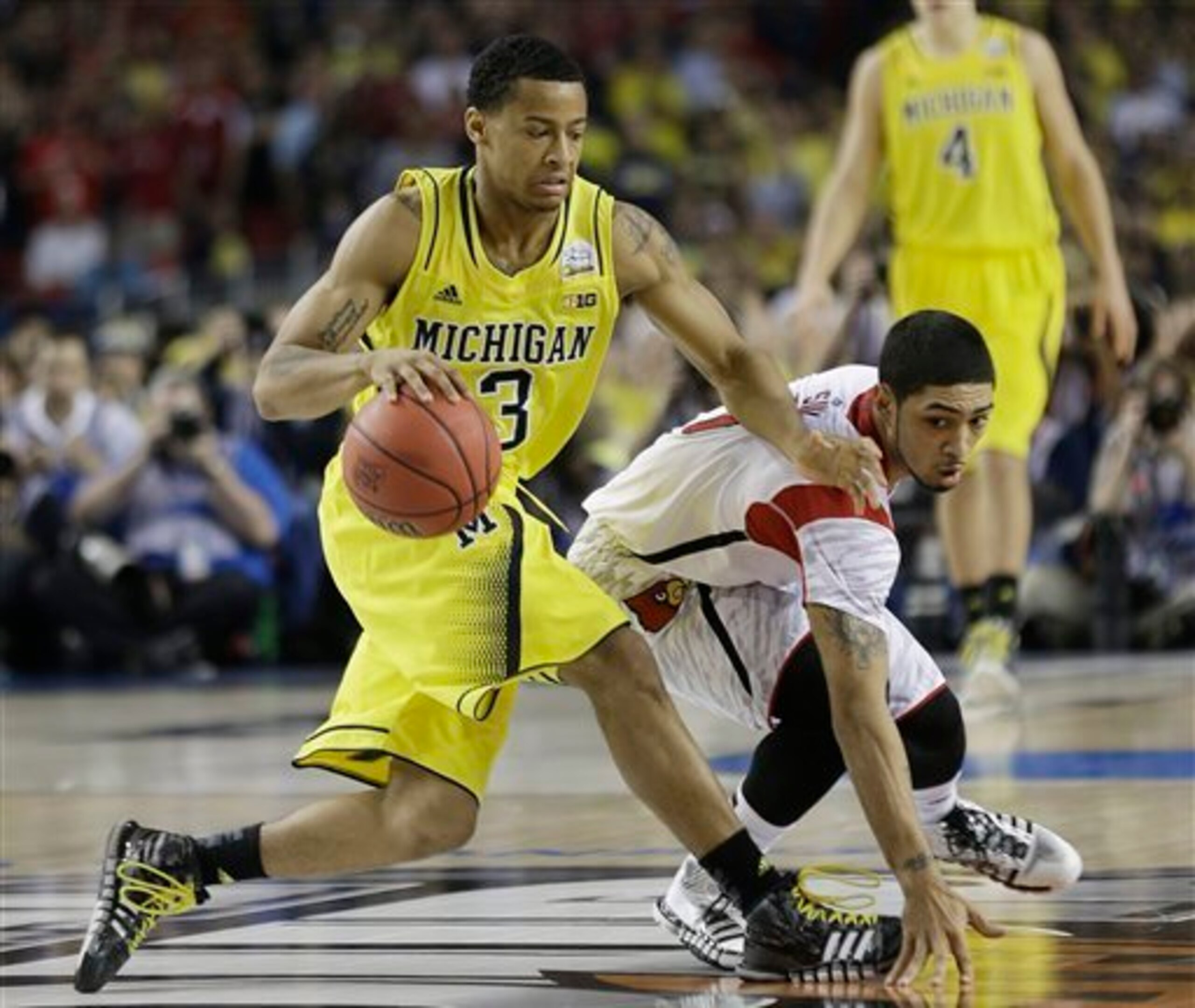
Year of Award: 2013
Key Season Stats: 18.6 ppg, 6.7 apg, 1.6 spg
Michigan fans will always adore Trey Burke for carrying the Michigan Wolverines to the 2012-13 national title game. And rightly so.
The school's record holder for assists in a single season (260), Burke is picking up with the Utah Jazz where he left off in Ann Arbor. He nabbed first-team All-Rookie honors last year, 12.8 points and 5.7 assists per game, and is not far off those numbers in his second season thus far (12.6 points and 4.7 assists per game).
The jury's still out on what Burke will do over the long term in the NBA, but so far so good.
10. Jason Williams, Duke
6 of 15
Year of Award: 2002
Key Season Stats: 21.3 ppg, 5.3 apg, 38.3 3PFG%, 2.2 spg
In 2002 people widely took Duke as a favorite to repeat as national champs. It didn't happen; the Blue Devils were ultimately upset by Indiana in the Big Dance.
But boy, was that team ever loaded. Carlos Boozer, Mike Dunleavy, Chris Duhon, Dahntay Jones and Daniel Ewing all went on to play in the NBA. But none of those Duke stars shone brighter that season than Jason Williams.
Williams (who went on to call himself Jay) famously sustained major injuries in a motorcycle accident, and that in turn nipped his pro career in the bud. That, plus his Duke team's relative underachievement in the postseason, dims his star somewhat. But he was still an excellent player, with a sharp jump shot, quick first step and exceptional floor leadership.
9. Shane Battier, Duke
7 of 15
Year of Award: 2001
Key Season Stats: 19.9 ppg, 2.3 bpg, 2.1 spg
Shane Battier played an interesting and telling role in his Wooden-winning, national-title-winning senior season with the Duke Blue Devils: He was simultaneously their best player, floor leader and key glue guy.
His stats from 2000-01 are impressive, but it was the proverbial little things that put him above the rest. Who else among Wooden Award winners was best known for his ability to draw a charge?
That attention to detail fueled a 15-season NBA tenure in which he famously helped pioneer the use of advanced sabermetrics as an honest-to-goodness difference-maker on the hardwood. In retrospect, Battier is earning big accolades for quietly achieving big things that didn't show up in the stat sheet, at least not a regular stat sheet.
8. Kenyon Martin, Cincinnati
8 of 15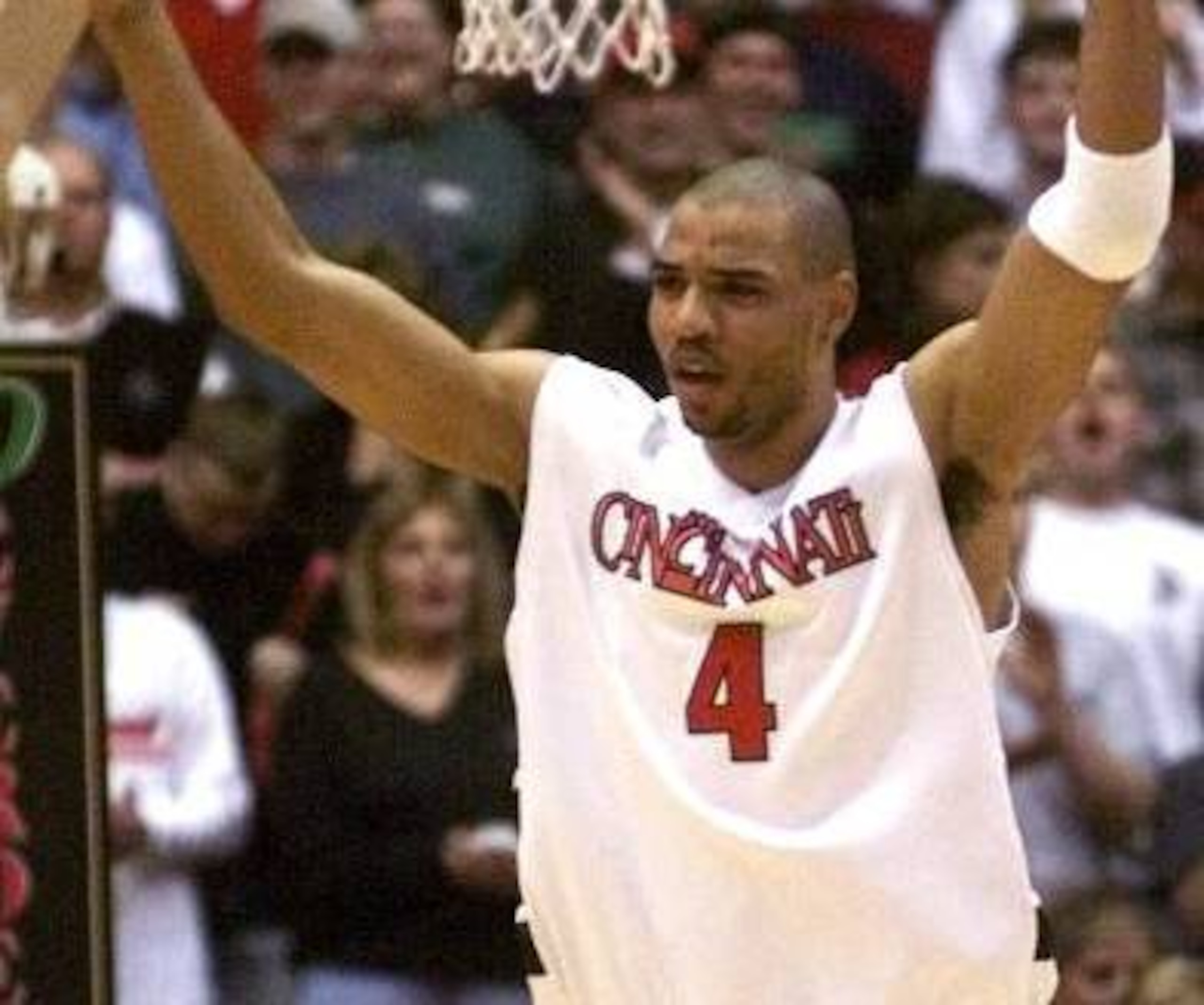
Year of Award: 2000
Key Season Stats: 18.9 ppg, 57 FG%, 9.7 rpg
Kenyon Martin was the centerpiece of one of the best teams in recent memory that did not ultimately win the championship. That disappointing outcome, as you know, was largely—OK, solely—the result of Martin breaking his leg in the Conference USA quarterfinals.
Martin was easily the best player on the best team that season, leading a Cincinnati Bearcats squad that intimidated opponents into submission.
The 6'9" Martin is still enjoying a pro career as a legitimate impact player, but he was truly dominant at Cincinnati.
7. Andrew Bogut, Utah
9 of 15
Year of Award: 2005
Key Season Stats: 20.5 ppg, 62 FG%, 12.2 rpg, 1.9 bpg
It's easy to forget about Andrew Bogut in these sorts of discussions. If a Croatian-Australian 7-footer dominates the Mountain West Conference from his home base of Salt Lake City, Utah, all while sporting some kind of emo hair cut, does he really make a sound?
The answer, though, is a definite yes. He dominated college basketball in the 2004-05 campaign. The Utes' postseason ended in the Sweet 16 that season, which limited Bogut's national exposure but doesn't change the fact that he was dominant.
And lest you think he was a big fish in a small pond, consider his pro tenure. Despite a career rife with extended injury layoffs, Bogut has been productive during his time on the court. In 2011 he led the league in blocks with 2.6 per contest. This season with the Golden State Warriors, one of the league's best clubs, he is averaging 6.6 points, 8.4 rebounds and 1.8 blocks in about 24 minutes a game.
6. T.J. Ford, Texas
10 of 15
Year of Award: 2003
Key Season Stats: 15 ppg, 7.7 apg, 2 spg
The lightning-quick T.J. Ford had a great statistical sophomore season at point guard for the Texas Longhorns (obviously, since he won the Wooden Award and all). And behind that effort, Texas reached its first Final Four since 1947.
His pro numbers are fairly strong as well (11.2 points and 5.8 assists per game over eight seasons). But Ford still struggled to find consistency. A lot of that had to do with the injuries that plagued Ford throughout his playing career, most notably the major spine trauma he suffered in a game in 2004 that hampered him for the rest of his professional days.
He was never a terrific shooter or defender, preferring a slashing, full-court approach to the game over the typical half-court style. Turnovers always seemed to loom as a significant risk factor.
All of this is grading on a relative scale, though. Ford was truly great at Texas and made for a solid pro.
5. Tyler Hansbrough, North Carolina
11 of 15
Year of Award: 2008
Key Season Stats: 20.7 ppg, 51 FG%, 8.1 rpg, 1.2 spg
The ACC's all-time leading scorer never got it done with a lot of style. But he did get it done.
Despite taking a statistical dip during his senior season in every major stat category, Tyler Hansbrough still raked in the hardware in his final season. The most important of those hardwares would be that piece of wood you get for winning the national title.
The 6'9" power forward has notched a decent, if unspectacular, pro resume, logging 7.4 points and 4.5 rebounds per game with the Indiana Pacers and now the Toronto Raptors.
4. Jameer Nelson, St. Joseph's
12 of 15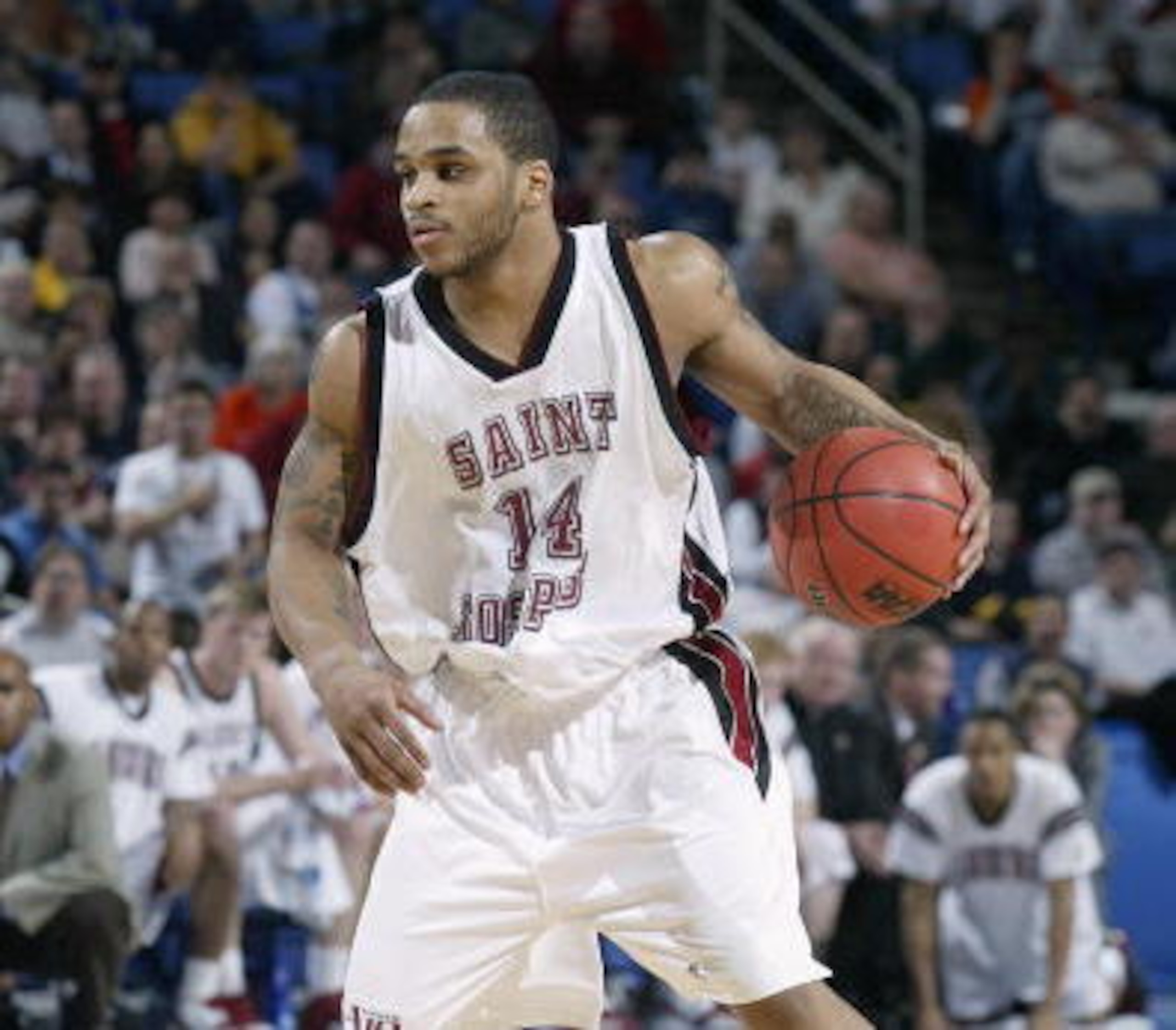
Year of Award: 2004
Key Season Stats: 20.6 ppg, 5.3 apg, 4.6 rpg, 2 spg
It was hard not to get swept up in the 2003-04 enjoyed by St. Joseph's, the A-10 school in Philadelphia that enjoyed unprecedented success—a 27-0 regular season and an Elite Eight berth—behind do-it-all point guard Jameer Nelson and backcourt running mate Delonte West.
Nelson was the unquestioned star for the Hawks, in equal parts a balanced scorer, sharp playmaker and heady floor general. You plugged him in, and you got your production, game after game. That diverse and steady style has served him well in the pros, where he is still active.
3. Blake Griffin, Oklahoma
13 of 15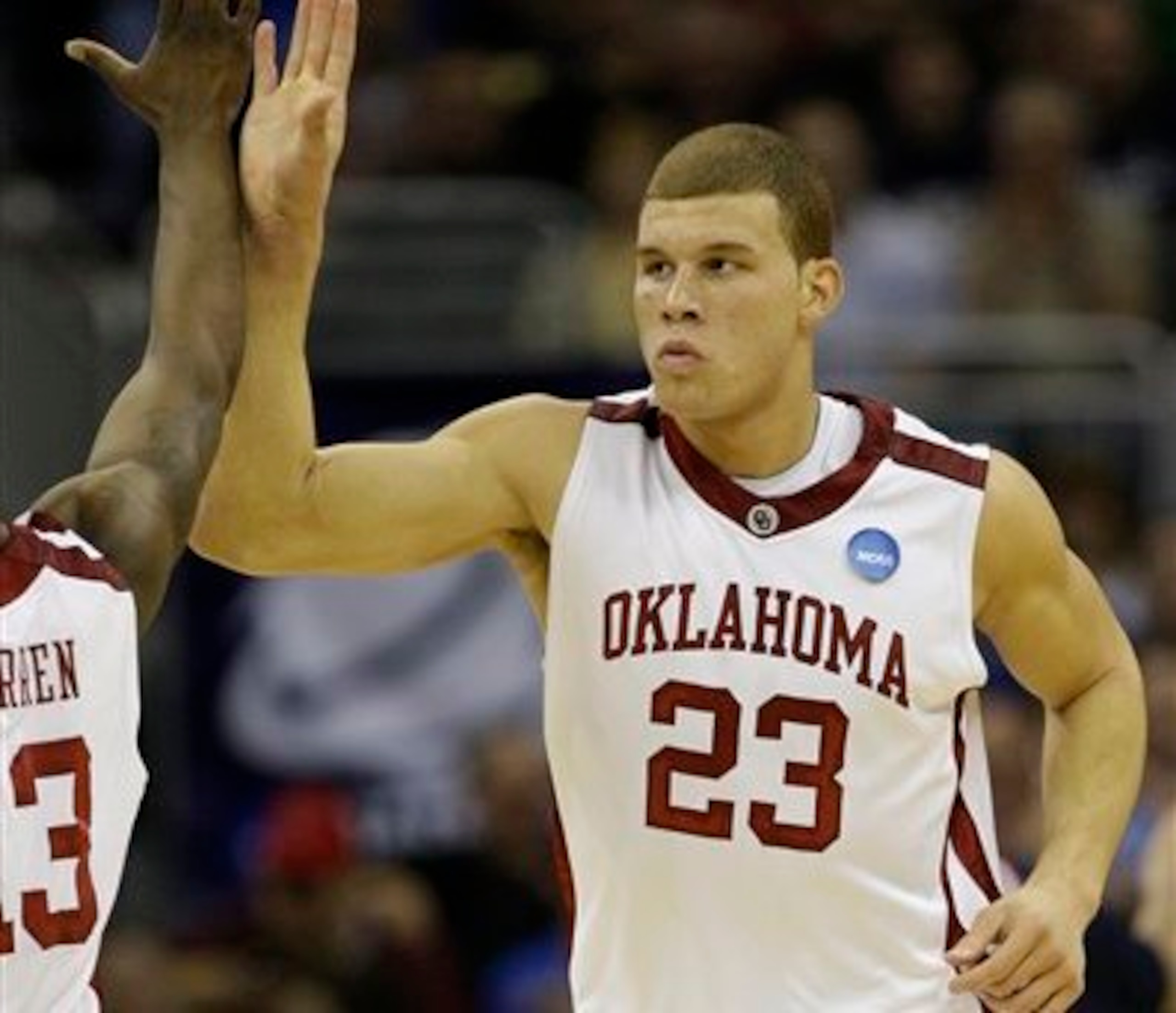
Year of Award: 2009
Key Season Stats: 22.7 ppg, 65.4 FG%, 14.4 rpg, 2.3 apg, 1.2 bpg, 1.1 spg
Blake Griffin has earned his greatest measure of mainstream fame by selling and dunking over automobiles. His role as Chris Paul's alley-oop partner for the Los Angeles Clippers has netted plenty of success, but it all sort of overshadows his two stat-sheet-stuffing seasons at Oklahoma.
Although his bread and butter in Norman was also his dunking, as evidenced by the eye-popping 65 percent shooting clip that only comes from taking lots of high-percentage shots. But the rebounding and assist numbers speak to the thoroughness with which he patrolled the Sooners paint.
Oklahoma's team performance in Griffin's big season was probably not what anyone wanted it to be. Though the Sooners finished 30-6, they failed to capture a Big 12 regular-season or tournament title. An Elite Eight tourney run is nothing to snort at, even if they were surely hoping for a Final Four appearance.
2. Anthony Davis, Kentucky
14 of 15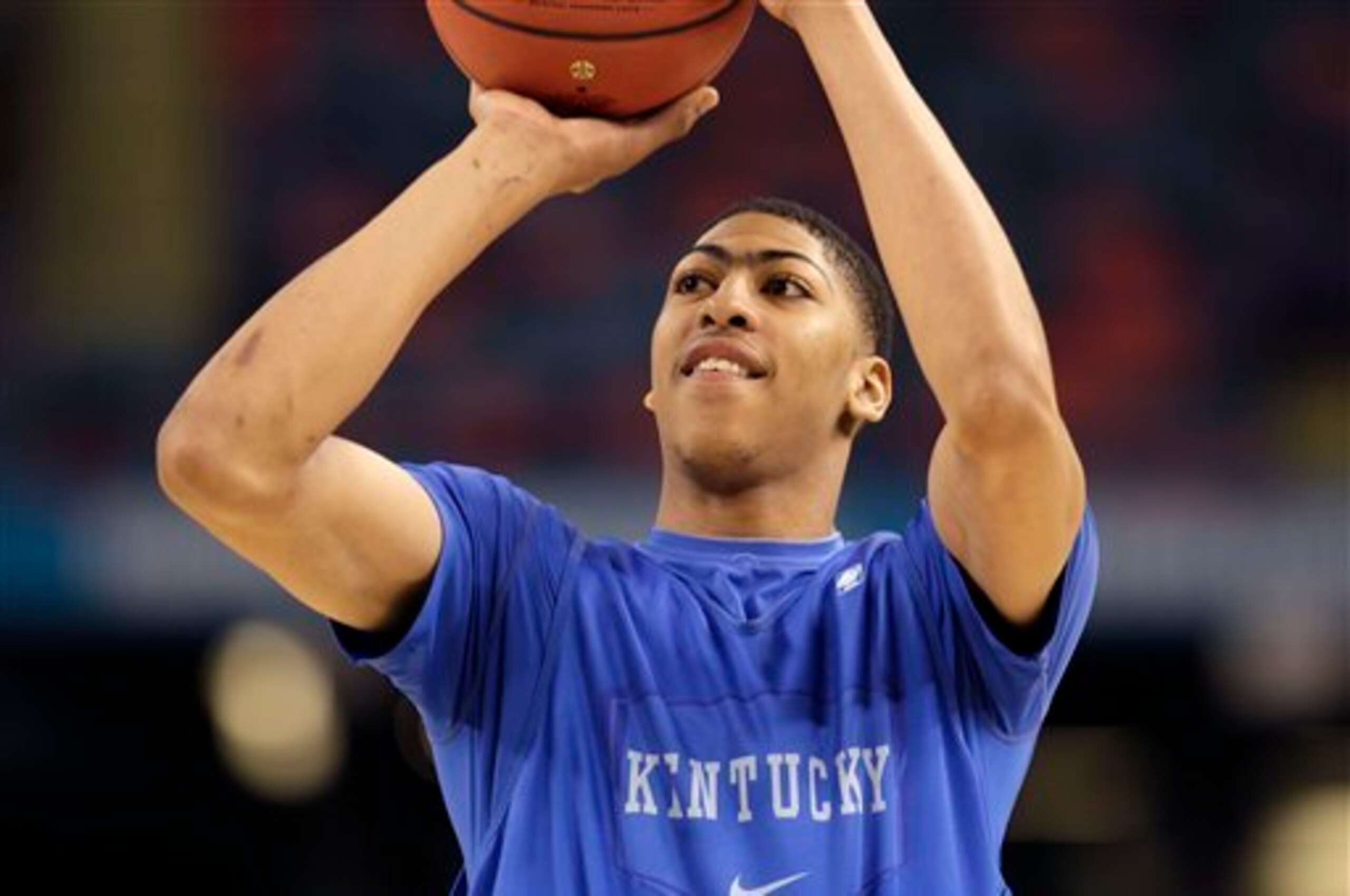
Year of Award: 2012
Key Season Stats: 14.2 ppg, 62.3 FG%, 10.4 rpg, 4.7 bpg
I don't see why he can't just shave the brow. Come on, man. Make a thing out of it. Do it publicly and give the money to charity or something. Just make it go away. It's really distracting.
In any case, Anthony Davis only spent one season in college. So it's a good thing he accomplished everything there was to accomplish. He took in just about every trophy there was to take in, including the national championship.
And now all he's doing is playing some of the best ball in the NBA in only his second season in the league. In both seasons, he has made the All-Star team. At the 2014-15 halfway point, he is logging 24.5 points per game and on his way to once again leading the league in blocks (2.7 per contest thus far). Goodness gracious.
Are you The Man, Anthony Davis? I think you are. You know what, keep the brow. I wouldn't want to see you do anything to accidentally sap your powers or something.
1. Kevin Durant, Texas
15 of 15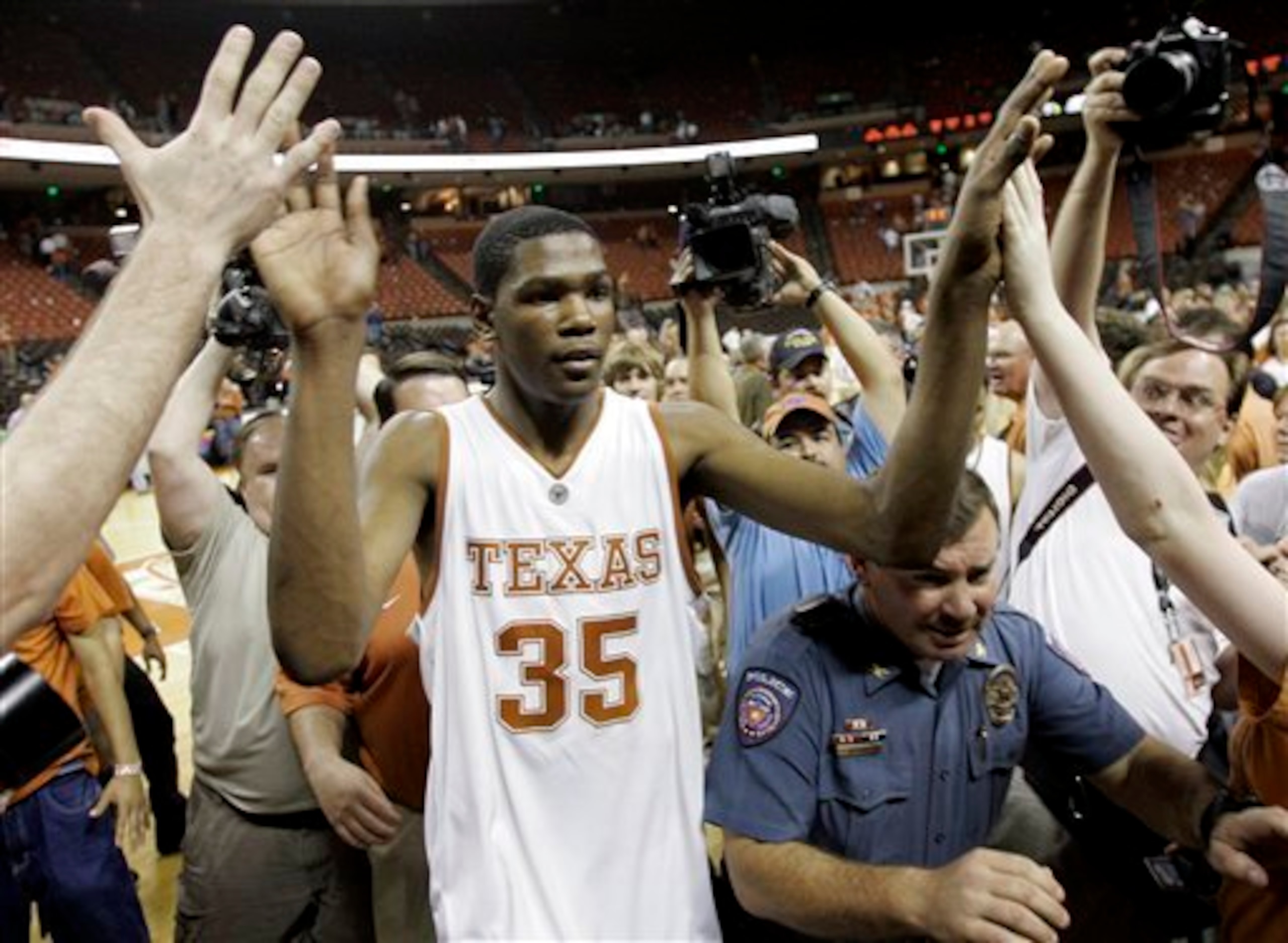
Year of Award: 2007
Key Season Stats: 25.8 ppg, 47.3 FG%, 11.1 rpg, 1.3 apg, 1.9 spg, 1.9 bpg
The top spot, it is not rocket science.
In his lone season in Austin, Kevin Durant destroyed anyone who dared oppose him. He scored almost at will from inside and outside and topside and frontside and every other side possible. His rebounding and defense weren't half bad, either.
A second-round tournament loss to USC was a letdown for Texas fans, but Durant did his part with 30 points and nine rebounds. And his individual production, both at the college and pro levels, more than makes up for the team failure.
You might say he continues to do his part in the NBA, where he is the reigning MVP and a six-time All-Star. He's had nagging injuries this season but is still averaging 26 points per game when healthy. That offensive brilliance first came to the nation's attention during that prodigy season in Austin.
Stats courtesy of Basketball-Reference.com.
.jpg?w=2560)
.jpg?w=2560 "Rams Eagles Football")
.jpg?w=2560 "Bijan's INSANE 1st Half 🤩")
.jpg?w=2560 "Injury-stricken Seahawks signing veteran RB")

.jpg?w=2560 "2 NFL Officials Suspended")

