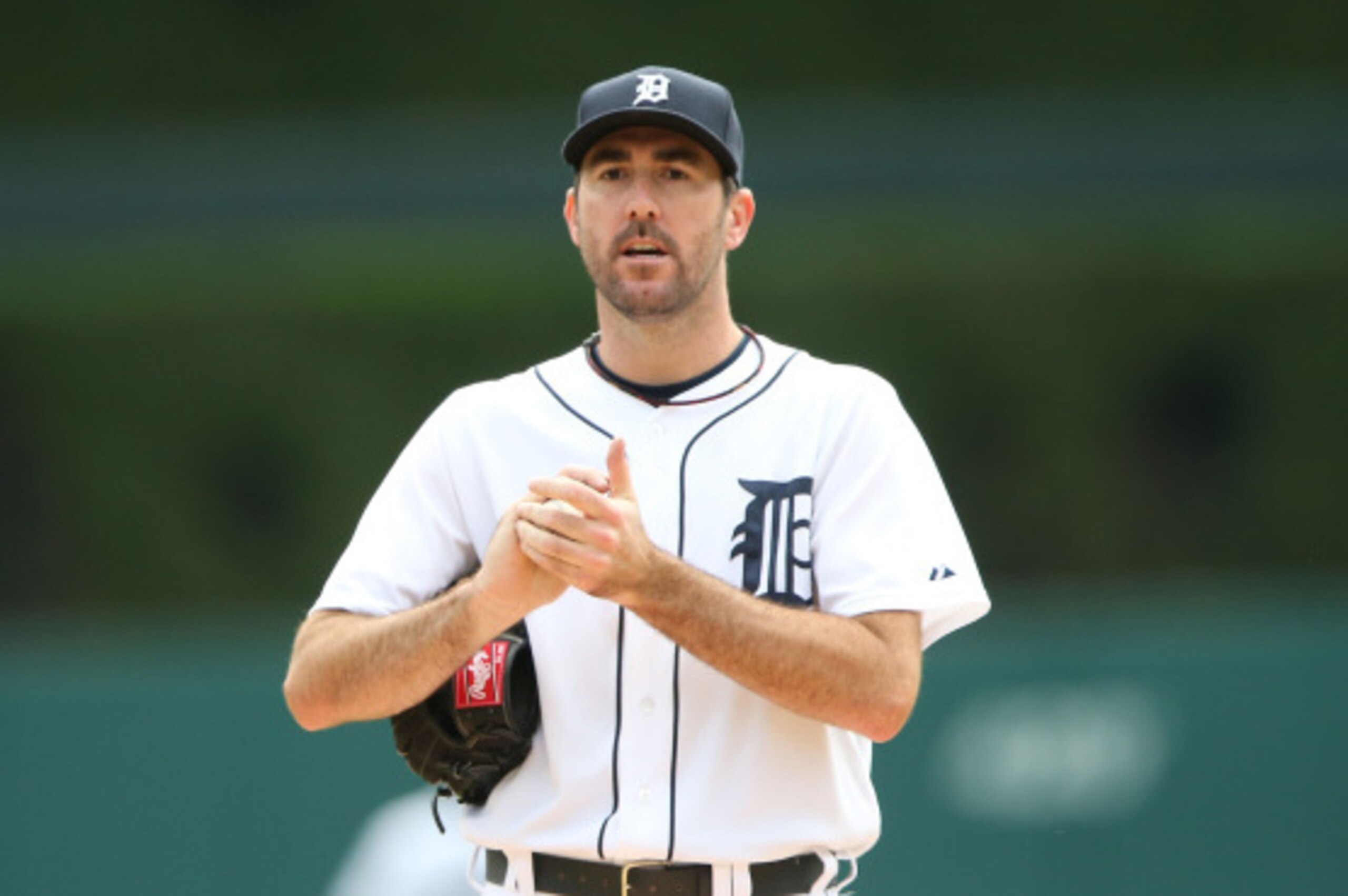


You know, durable pitchers are pretty great. They can throw a lot of pitches and eat a lot of innings, which are increasingly valuable skills in these times of pitch counts and innings limits.
But here's the thing about durable pitchers: They're durable right up until, suddenly, they're not. An iron man can quickly become made of glass, and you just know we're going to see it happen in 2015.
That brings us to why we're here. Like we did with one-year wonders, we're here to jump the gun on the whole "time will tell" thing and try to predict which workhorses are finally going to break down in 2015.
Admittedly, this is a lot trickier. Predicting breakdowns is less of an exact science than predicting performance declines. But fortunately, there are some things we can use to make educated guesses.
Beyond taking it for granted that all pitchers only have so many bullets in them, we can borrow from FanGraphs' Jeff Zimmerman's disabled list projections and assume that age counts too. He's also found that slider and curveball pitchers are at extra risk. In addition, a study Jon Roegele did for Beyond the Box Score suggests higher velocity could mean more risk. Lindsay Berra of ESPN The Magazine is one of many who have covered the danger of bad mechanics. And lastly, Russell A. Carleton of Baseball Prospectus has found that recent injury issues tend to be pretty good predictors of future injuries.
With these things in mind, I managed to come up with a list of 10 workhorses who could be in danger this year. Let's start counting 'em down, from least likely to break down to most likely to break down.
10. Felix Hernandez, Seattle Mariners
1 of 10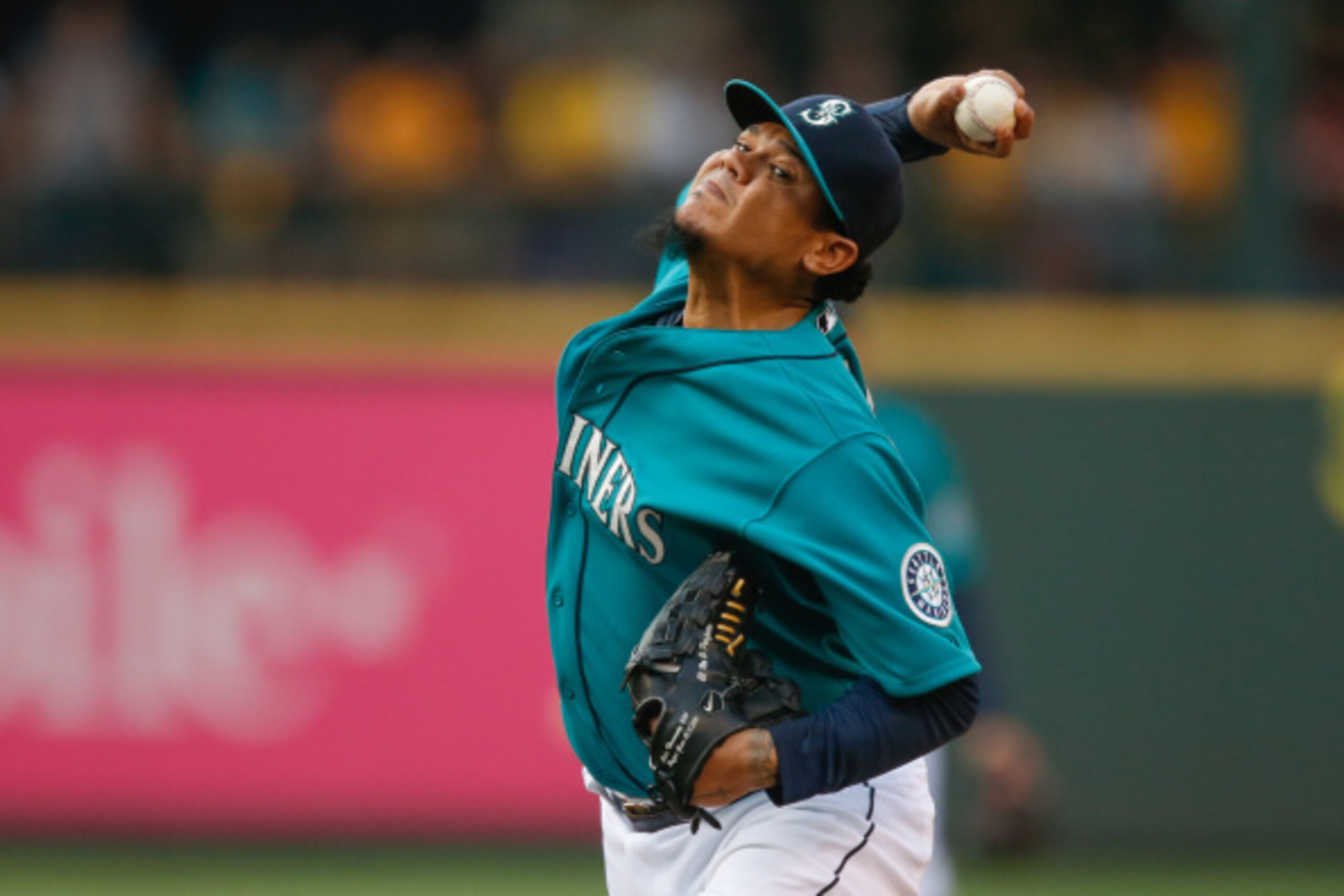
I can practically hear Seattle Mariners fans crying out in unison, "Say it ain't so!"
But I wouldn't advise Mariners fans to freak out too much. Felix Hernandez has a pretty clean injury history, mechanics that don't set off alarm bells and, as Brooks Baseball can show, a repertoire of pitches that includes less than 25 percent curveballs and sliders. Oh, and he's not even 29 years old yet.
And yet, you can't help but be a little worried about King Felix. All you have to do is look at his workload.
Since Hernandez's first full season in 2006, nobody has thrown more regular-season innings than his 1,976.1. And though the data only goes back as far as 2000, it's also notable that he's thrown more pitches than any other pitcher through the age of 28. And by far, to boot.
On the bright side, the name immediately behind Hernandez on that last list is CC Sabathia, who didn't break down until he was past 30. Immediately behind Sabathia, however, is Matt Cain. He broke down last year in what was his age-29 season, the same season Hernandez is headed for in 2015.
That Hernandez has a few things that don't highlight him as an injury risk is welcome news. But in light of immense workload he's handled, he's at least worth a finger-crossing for 2015.
9. James Shields, San Diego Padres
2 of 10
The San Diego Padres spent $75 million on James Shields in hopes that he would solidify the top of their rotation. Did they make an obvious mistake?
Not necessarily. You can take it from Grantland's Ben Lindbergh, who wrote:
"Research shows that neither pitchers who’ve thrown as many regular-season pitches in a single year as Shields did last season nor those who’ve pitched in the playoffs have subsequently underperformed their projections as a group, at least in the following season. The more consecutive 200-inning seasons a pitcher has behind him, the more likely he is to sustain the streak.
"
But like with Felix Hernandez, you can't help but be worried about Shields anyway. Because, also like Hernandez, all it takes is one look at his workload.
Shields has topped 200 innings every year since 2007 and in doing so has thrown more pitches than everyone except Justin Verlander. Crossing over into his 30s hasn't slowed him down in the slightest, in more ways than one. Including the postseason, he's averaged 240 innings a year since 2011, and Brooks Baseball can show that he's pitched the last few with increased velocity.
With Shields heading into his age-33 season, you fear the CC Sabathia effect. Sabathia was a 200-inning workhorse through age 32 but finally broke down in his age-33 season in 2014.
Shields' clean injury history and past durability suggest he should be OK. But after firing so many bullets in his first 32 years, he's also at least worth a finger-crossing.
8. Ervin Santana, Minnesota Twins
3 of 10
The Minnesota Twins' primary motivation for signing Ervin Santana seems obvious. According to FanGraphs, no American League team has gotten fewer innings out of its starters since 2011 than they have.
Santana looks like just the guy for that job. He's pitched at least 195 innings in four of the last five years and is ninth among all pitchers in innings in that span.
But with Santana heading into his age-32 season, his age is an automatic concern. And while it speaks to his efficiency that he's only 17th in pitches since 2010, the worry there is that one of his primary pitches is a particularly dangerous pitch.
Per FanGraphs, no qualified starter has thrown sliders at a higher rate than Santana since 2010. And though it's a positive sign that he mixed in some more changeups in 2014, he still finished third among qualified starters in slider percentage.
Two things that will calm Twins fans down are the fact that Santana's recent injury history is pretty clean and Parker Hageman of the Minneapolis Star Tribune did a fine breakdown of how Santana's mechanics have been cleaned up in the last two seasons. But after so many innings and so many sliders, some skepticism is warranted.
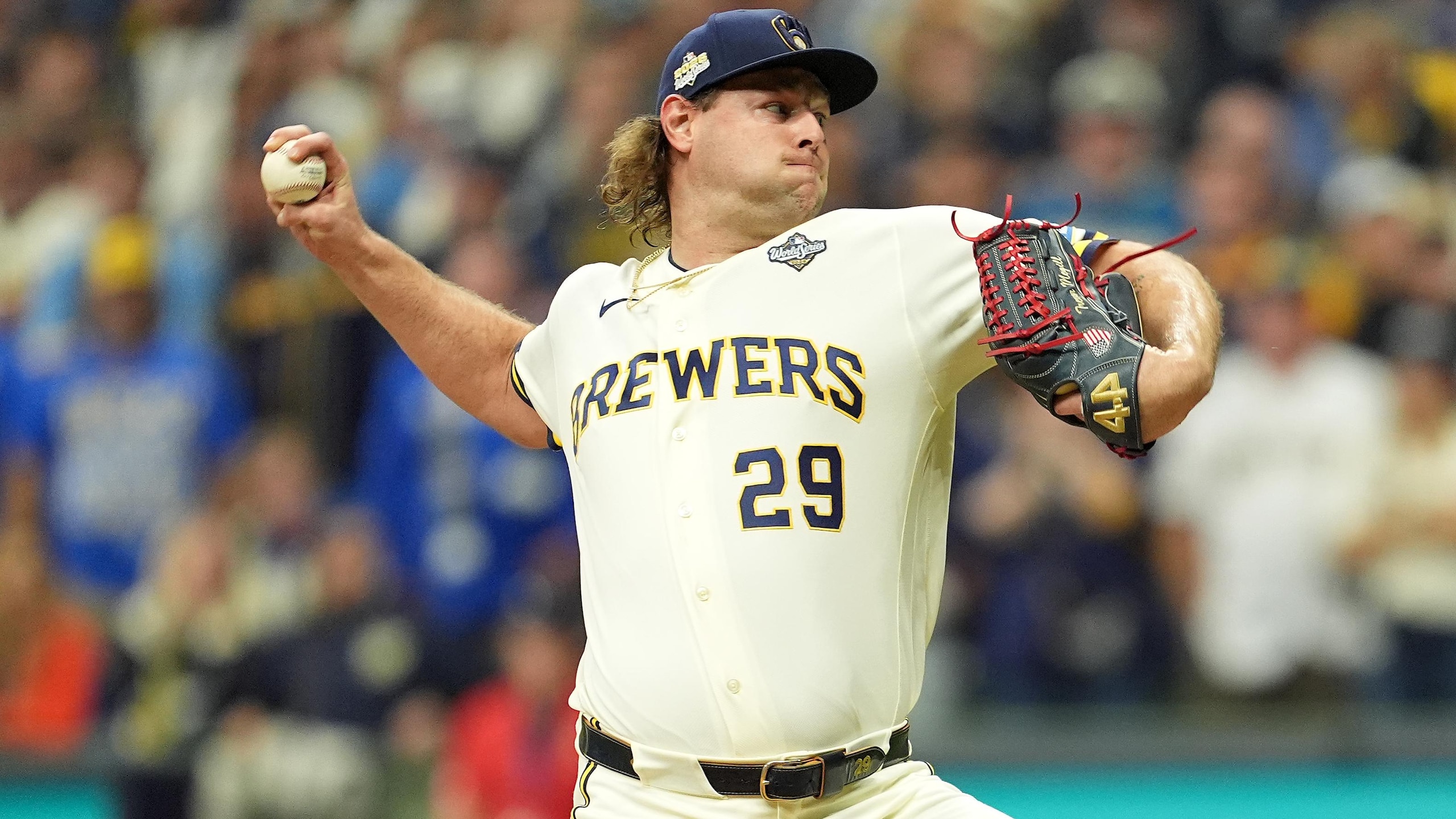


7. Cole Hamels, Philadelphia Phillies
4 of 10
The main reason everyone wants to trade for Cole Hamels is because he's really good. Though he tends to be overlooked, he's been one of baseball's best pitchers since breaking into the league in 2006.
Hamels' durability is another plus. He's pitched at least 200 innings in six of seven seasons and is sixth in innings since 2010 with 1,064.2. As a testament to his efficiency, he's only 11th in pitches in that span.
That's something that actually bodes well going forward. So does the reality that Hamels doesn't lean too heavily on his curveball, preferring to keep hitters off-balance with his drool-worthy changeup.
But at 31, Hamels' age is something worth worrying about. That, according to Brooks Baseball, his velocity has been trending upward might be another thing worth worrying about. But most concerning of all is how Hamels' 2014 season started late because of arm fatigue.
In light of all that, Jeff Zimmerman's calculation of a 40.2 percent chance of Hamels ending up on the DL in 2015 adds up. Put another way, that's the likelihood of the Phillies coming to regret not trading Hamels this winter.
6. C.J. Wilson, Los Angeles Angels
5 of 10
Granted, C.J. Wilson is coming off a year in which he really wasn't much of a workhorse. He made it to only 175.2 innings, thus falling short of 200 innings for the first time since 2010.
And even if you go all the way back to 2010, you may be surprised to hear that Wilson isn't among the top 10 in innings pitched. He's only 12th, just behind Hiroki Kuroda.
That's a little misleading, however. Though Wilson is only 12th in innings since 2010, he's fourth in pitches thrown. That's what happens when you're a solid strikeout artist who also gives up a lot of hits and a lot of walks. Efficiency is not the name of Wilson's game, and that's put his arm through a lot.
That Wilson is heading into his age-34 season is one thing to worry about. Another is how, according to Brooks Baseball, curveballs and sliders account for more than 25 percent of his pitches. Lastly, there's how he's coming off a year that was slowed by hip and ankle injuries.
For 2015, Zimmerman gives Wilson a 43.5 percent chance of landing on the DL. Next to his workload, his age, his pitch selection and his recent injury history, that might actually be a little conservative.
5. R.A. Dickey, Toronto Blue Jays
6 of 10
Tim Wakefield pitched into his mid-40s. Hoyt Wilhelm pitched into his late-40s. Tom Candiotti only made it to his early 40s, but that's not counting his extracurricular pitching in the baseball classic 61*.
Knowing that, fellow knuckleballer R.A. Dickey looks safe heading into 2015. But maybe he won't be.
Only James Shields has thrown more regular-season innings than Dickey since the start of 2012. And while Dickey's 674.0 innings since then are a lot for anyone, they're especially a lot for a guy who's now on the wrong side of 40.
Also, Dickey's not like other knuckleballers. His is very likely the fastest knuckleball ever. That could mean his arm is being taxed more than the average knuckleballer, and that's without even getting into the inefficiency of his mechanics. Here's Doug Thorburn of Baseball Prospectus:
"Dickey might have the lowest hip-shoulder separation in the game, with virtually no load with the upper half as well as very late hip rotation, such that hips and shoulders are essentially firing together after foot strike.
"
In light of all this, it's no surprise that Zimmerman gives Dickey a 45.3 percent chance of hitting the DL in 2015. His late-career surge may come to a sudden halt.
4. Bartolo Colon, New York Mets
7 of 10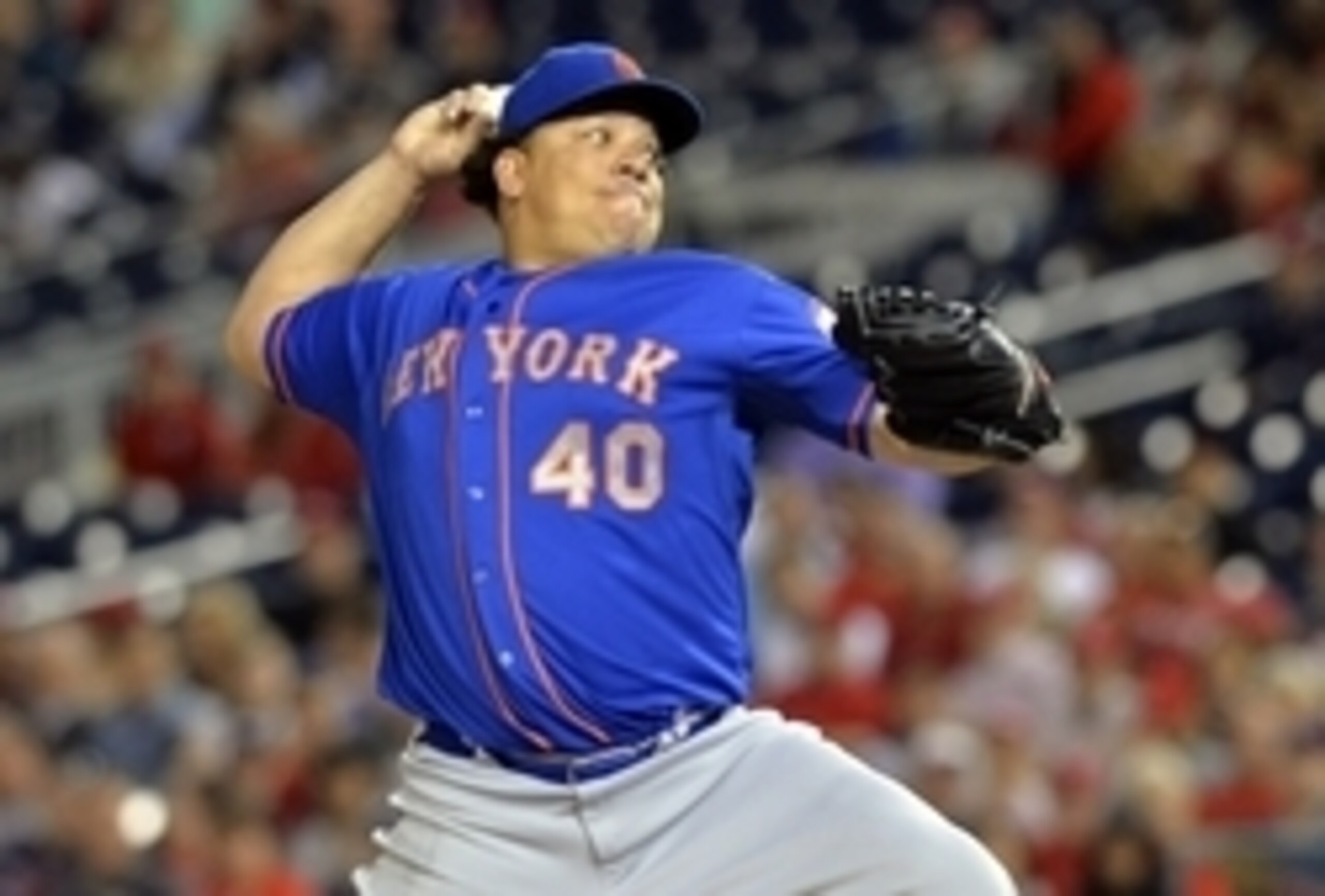
When Bartolo Colon crossed the 200-inning plateau last year, it was the first time he had done so since his Cy Young season all the way back in 2005. That many seasons in between 200-inning campaigns is a lot.
But while Colon hasn't been busy racking up 200-inning seasons in recent years, he has been eating (go ahead, make your jokes) an awful lot of innings for a guy his age.
Beginning with his age-38 season in 2011, Colon has pitched 709.1 innings in the last four years. That puts him on a small list of pitchers who have pitched at least 700 innings between their age-38 and age-41 seasons. That he's thrown 390 innings in his age-40 and age-41 seasons puts him on an even smaller list.
Two of the more recent additions to that last list are Tom Glavine and Kenny Rogers, and that doesn't bode especially well for Colon. Though both were fine at age 40 and age 41, both broke down at 42. Rogers' elbow quit on him in 2007, and Glavine's quit on him in 2008.
The bright side is that Colon doesn't look like a walking breakdown risk from a mechanical, velocity or repertoire standpoint, and even his recent injury history isn't that bad. But in light of his age and workload, it's hard to argue with him being at the very top of Zimmerman's DL projections.
3. A.J. Burnett, Pittsburgh Pirates
8 of 10
After a rough year in Philadelphia, A.J. Burnett took less money to return to Pittsburgh. He told reporters there's "no other place I want to finish my career," and he and the Pirates together are indeed a good fit.
The Pirates, however, have several reasons to fear that Burnett might not be able to stay on the mound in 2015.
With Burnett heading for his age-38 season, he's definitely old. And with four straight 190-inning seasons in his wake, he's definitely been worked hard for a guy his age. To boot, the most recent season saw him throw his most pitches since 2008.
Burnett's repertoire is also worth worrying about. He's been pitching at high velocity his whole career and has thrown a lot of curveballs. Especially recently, in fact, as FanGraphs can show that no other qualified pitcher has thrown curveballs at a higher rate than Burnett since 2011.
Because Zimmerman's research holds that curveballs are even more dangerous than sliders, about the only thing Burnett has going for him is a relatively clean recent injury history. But with everything else sending up red flags, it's no wonder Zimmerman gives him a 54.4 percent DL probability for 2015.
2. Adam Wainwright, St. Louis Cardinals
9 of 10
When you think of workhorses in the game today, Adam Wainwright might come to mind first.
Rightfully so. He's logged close to 670 innings in the last three seasons, including darn near 470 in the last two. Add in what he's done in the postseason, and you get an additional 66 innings and 1,051 pitches. That's an awful lot of mileage for only three seasons.
But that would be concerning even if it was a younger man under the microscope. Having recently turned 33, Wainwright is most definitely not young. That heightens the concern level.
Heightening it even further is Wainwright's love of his curveball, as he's in the top three in curveball percentage since the start of 2012. And if it's raw numbers we're talking, only A.J. Burnett has thrown more curveballs.
Then there's the state of Wainwright's right elbow. Though he managed to soldier through, it bothered him throughout the 2014 season. When it was over, he had surgery on it.
That Zimmerman is only giving Wainwright a 37.0 DL probability for 2015 speaks to his track record of durability. But knowing how much work he's had to endure, how many curveballs he's thrown and how his elbow was just cut open, I can't help but feel like that percentage is way too conservative.
1. Justin Verlander, Detroit Tigers
10 of 10
For Justin Verlander, it seems the inevitable decline has already started. After so many years of excellent pitching, he never got on track in 2014 and ultimately finished with an ugly 4.54 ERA.
The bright side is that Verlander hasn't broken down yet. The not-so-bright side is that that could very well happen next.
In adding another 206 innings to his track record in 2014, Verlander has now thrown more regular-season innings than anyone outside of Felix Hernandez in 2006. But he's thrown close to 2,000 more pitches than King Felix in that same span. And since 2011, he's thrown about 990 innings and over 16,000 pitches between the regular season and the postseason.
Toss in how Verlander is heading into his age-32 season. Then toss in so many years of pitching at high velocities. And then how, according to Brooks Baseball, sliders and curveballs account for about 30 percent of his pitches. And lastly, how he couldn't make it through 2014 without an MRI on his shoulder.
Like with Adam Wainwright, it speaks to Verlander's track record that Zimmerman only has him down for a 35.7 percent chance for the DL in 2015. Pretty much everything else, however, suggests that Verlander's durability is on thin ice.
Note: Stats courtesy of Baseball-Reference.com unless otherwise noted/linked.


.jpg?w=2560 "Raiders Could Start Mendoza")


.jpg?w=2560 "Rodgers Iced Out on Plane 💎")
.jpg?w=2560 "🚨 Week 8 AP Top 25 Poll")
.jpg?w=2560 "Packers Safety Slams Refs 🤬")

.jpg?w=2560 "Fantasy Waiver Wire Stars 🤩")