
Playing 'Innovative or Foolish' on Each Suggested MLB Change
With Major League Baseball implementing things like testing for performance-enhancing drugs, a second Wild Card and instant replay within the last 10 years, you wonder where the league could go next. What other changes could be made?
Oh, there are ideas. In fact, with new commissioner Rob Manfred officially taking over for Bud Selig last week, the air is thick with them.
Some of these ideas are innovative. Others are foolish. What we're going to do is play a game that decides which is which.
I've narrowed things down to a list of what I consider to be the 10 most fascinating suggestions, ranging from the most controversial pace-of-play proposal to various means for increasing offense to growing MLB's business. When you're ready for them, go ahead and step into the box.
A Pitch Clock?
1 of 10A clock? In baseball?
It's possible. MLB experimented with time limits for pitchers—12 seconds with the bases empty, 20 seconds with runners on—in the Arizona Fall League, and will continue it in the minors this season.
From an aesthetic perspective...nah. Just nah. That there is no race against time is one of baseball's charms. Players go at their own pace, and in doing so get to be the masters of the flow of games.
And yet, baseball's focus isn't misplaced. Games are indeed getting longer, and the PITCHf/x figures at FanGraphs can vouch that the pace of pitchers is a factor. In the last eight years, the average time between pitches has gone from 21.5 seconds to 23.0 seconds.
Cue FanGraphs' David G. Temple to explain what a pitch clock could do: "A 20-second pitch clock means three seconds would be lobbed off of every pitch. That’s 870 seconds saved, or 14.5 minutes, or about 8 percent of the total game time."
It may not sound like much, but that's right where MLB vice president Joe Torre wants to be in terms of shortening games. It's also an amount of time that could strike the right balance between making games shorter without making them feel rushed.
A pitch clock would be jarring at first, no doubt about it. But if it were to work as well in reality as it does in theory, here's to thinking fans could come to not only accept it but embrace it.
Verdict: Innovative
Ban Defensive Shifts?
2 of 10Rob Manfred said a lot of things when he took office, but the idea of banning defensive shifts that he floated to ESPN's Karl Ravech certainly got the most attention.
It's not just him, in case you're wondering. Tom Verducci of Sports Illustrated first proposed the idea in July, and Jeff Passan of Yahoo Sports found a couple of general managers who are on board with it.
It's no secret why this idea is worthy of consideration. The 2014 season saw the use of defensive shifts go from a grassroots campaign to a full-on revolution. Everyone shifted, and shifted a lot. And based on appearances, that had a lot to do with MLB having its worst offensive season in decades.
How much shifts actually suppressed offense, however, is a good question.
A study by Steve Moyer of The Wall Street Journal found that, yes, shifts did help take hits away in 2014. At the same time, the league's batting average on balls in play continued to hover around .300, suggesting that shifts aren't frequent or smartly planned enough to completely overwhelm the forces of luck.
In other words, shifts are a good idea without being an obvious problem. That's reason enough to conclude MLB's focus should be elsewhere. The cherry on top is ESPN.com's Buster Olney's argument that shifting is a sound strategy that could and should force a widespread adaptation.
In all, I'd put it like this: Targeting shifts as a means to increase offense isn't necessarily a bad idea, but it's not the right one.
Verdict: Foolish
Alter the Strike Zone?
3 of 10
Banning shifts isn't Manfred's only idea for increasing offense. According to Ken Rosenthal of Fox Sports, MLB sent a whole packet of offense-boosting ideas for consideration to the MLB Players Association.
Among them is the possibility of adjusting the strike zone, which is not a new idea. Grantland's Ben Lindbergh has written about it. So has Anthony Castrovince for Sports on Earth. And so have I, for that matter. The short version of our thoughts: The strike zone is a problem, and a big one.
Literally, in fact. Research has shown that the called strike zone has ballooned in size in recent years, which explains why you're seeing so many strikeouts and so few walks. That is to say, the strike zone is a reason why you're seeing games that are both longer and less action-packed.
As for what shrinking the strike zone could accomplish, here's Lindbergh:
"Research has shown that the value of changing a single strike to a ball...is worth approximately 0.14 runs. Multiply those 3,094 alternate-history strikes by 0.14, and the calculator spits out 433 runs: the number that could have been scored last season, had the strike zone never expanded.
"
Add 433 runs to 2014's total, and the average goes from 4.07 to 4.16. That's 2013 levels of offense, so it's not like we're talking of sending things back to the steroid era.
You may also be comforted to know that adjusting the strike zone isn't unprecedented. It's been done several times over the years, including as recently as 1996, when it was the pitchers who needed help.
Because there's a history of MLB's adjusting the strike zone as needed, "innovative" isn't the best word to use here. But given the state of things, it does look like it's time for another adjustment.
Verdict: Innovative


Make the DH Universal?
4 of 10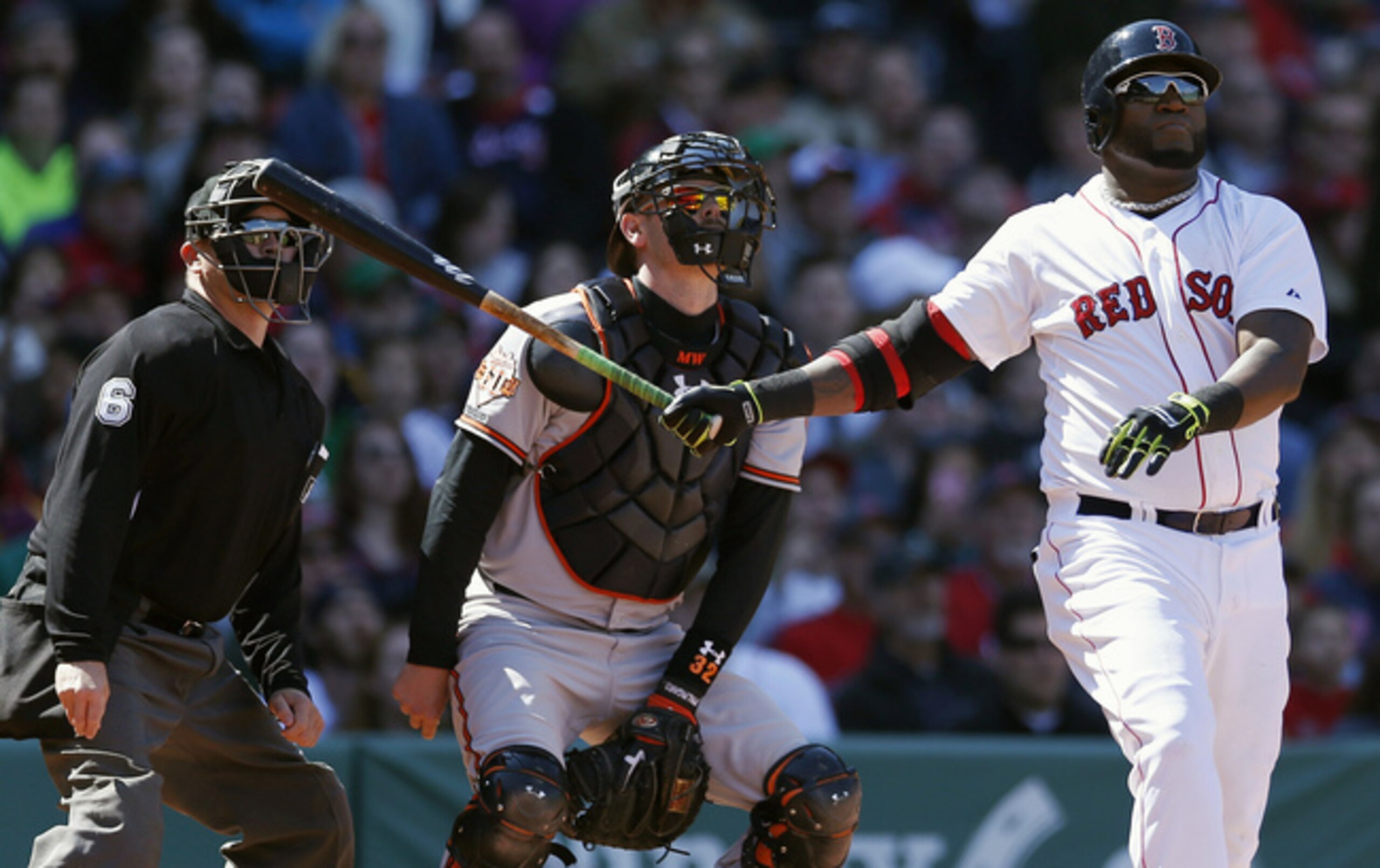
Among the other offense-boosting ideas in the aforementioned packet sent from MLB to the MLBPA? Introducing the designated hitter into the National League, thereby making it universal.
You know the arguments against this one. The main one is that it would kill National League-style baseball, which is so much more nuanced than American League-style baseball. And yes, there is something to the notion that the DH helps breed albatross contracts.
But if it seems like the pressure for the National League to adopt the DH is increasing, that's because it is. When Nick Cafardo of The Boston Globe pushed for the DH in the NL, he joined a growing list of pundits who have gotten behind the cause in recent years.
The decline in offense has a lot to do with that, and the reason why adding the DH to the NL would fix it is self-explanatory. But making the DH universal would also put the two leagues on an even playing field at a time when interleague play is an everyday, year-long thing. It would also protect pitchers from injuries and give the NL a much-needed fighting chance for free-agent bats.
Yes, a certain style of play would be lost if the DH is put in the National League. Not everyone would be happy about that. But personal viewing preference is a subjective argument in favor of keeping the DH out of the National League, and there frankly aren't many objective arguments to go with it.
Not nearly as many as there are on the other side of the fence, anyway.
Verdict: Innovative
Lower the Mound?
5 of 10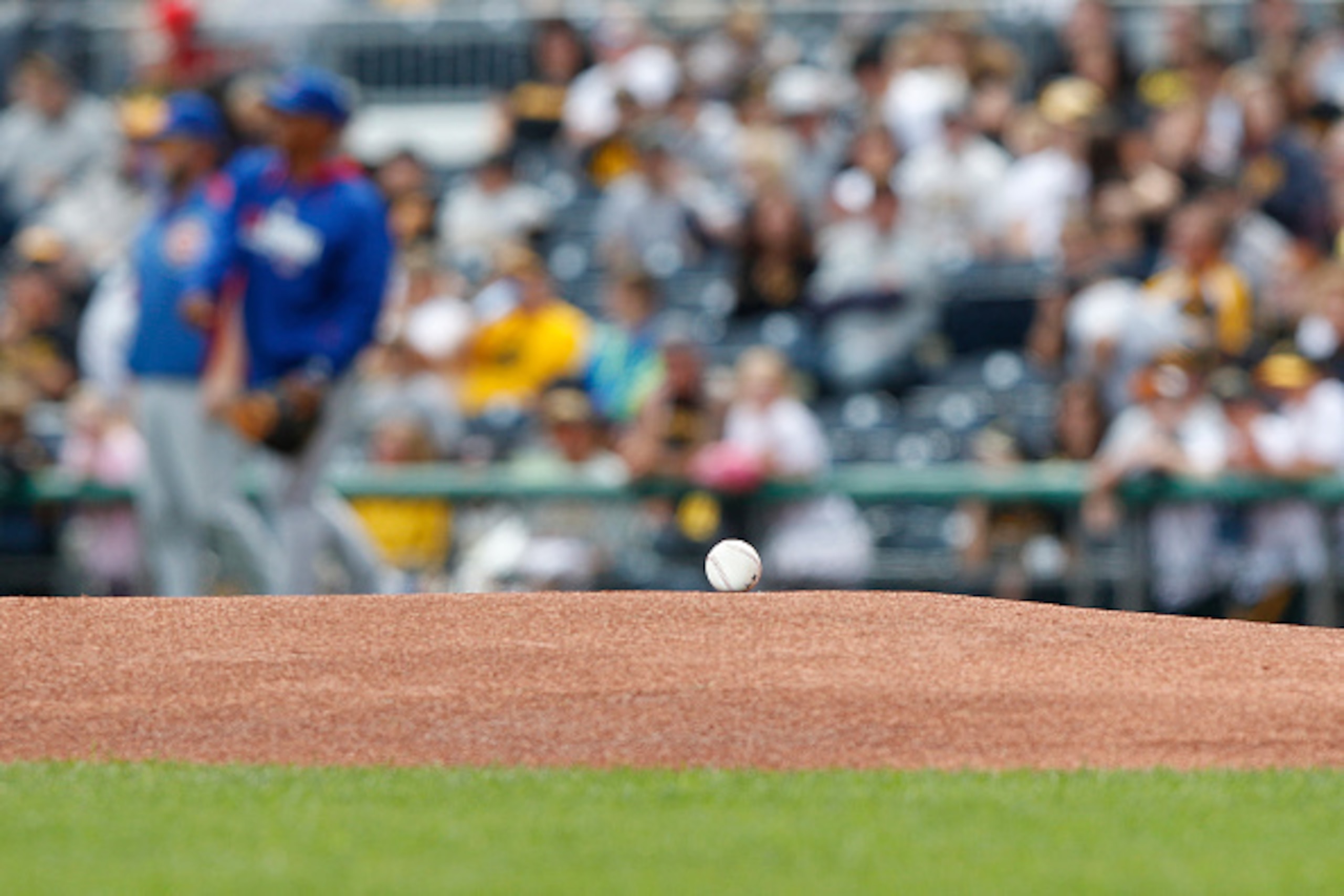
Another idea in MLB's packet of offense-boosting ideas is lowering the mound, which we know could work.
It was after the historic pitching season of 1968 when MLB last lowered the mound, and the league's OPS climbed by 50 points in 1969. A similar rise these days would take the league's OPS from .700 to .750, which is where it was in 2009 before the "Year of the Pitcher" arrived in 2010.
As a bonus, lowering the mound might help reduce pitcher injuries. Tom Verducci spoke to former pitcher-turned-biomechanics expert Tom House last May and came away with the impression that "...the greater the slope of the mound, the greater the forces that are applied to the arm. Reduce the height of the mound, and you reduce the forces upon the arm."
Sounds great!
But it isn't the consensus. In a position statement issued last summer, Dr. James Andrews said research into the relationship between mound height and injury risk has yet to produce anything solid. That leaves us to consider the anecdotal evidence, which isn't kind to the idea of lowering the mound.
I dug up a 1969 quote from Mickey Lolich in which he feared that the lower mound was responsible for his sudden elbow pain. More recently, MLB.com's Tracy Ringolsby spoke to Rick Honeycutt and Nolan Ryan, who said that raising the mound is actually the best way to prevent injuries.
Since it can't be disproved that lowering the mound would do more good than harm on the injury front, MLB's better off not risking it. And with offense there to be gained through shrinking the strike zone or adding the DH instead of lowering the mound, MLB has even fewer reasons to risk it.
Verdict: Foolish
Restrict Relief Pitcher Usage?
6 of 10
Earlier, we looked at how the increasingly slower pauses between pitches are contributing to baseball's increasingly slower pace. But there's another thing going on the mound that's not helping.
So. Many. Pitching changes.
Jonah Keri and Neil Payne crunched the numbers for FiveThirtyEight.com last August and found that the number of relief pitchers used has increased while the number of reliever innings has remained relatively steady. Contributing to that is the number of one-and-done relief appearances, which have skyrocketed.
Which brings us to the suggestion box. Dave Cameron of FanGraphs suggested a limit of four pitchers for the first nine innings. Ken Rosenthal and Tom Verducci both think there should be a rule requiring relievers to face more than just one batter.
Cameron's idea is easily disregarded, as FanGraphs' Paul Swydan noted that very few games feature more than four relievers anyway. The idea of requiring relievers to face more than one batter is harder to disregard. That would result in fewer pitching changes, which means it would help speed up games. More than likely, it would also help increase offense.
And yet it's hard to call it an "innovative" idea, precisely because innovation is what it would be stopping. Like with the idea of outlawing shifts, restricting pitcher usage would bar managers from using sound strategy.
In light of that and Swydan's point that games with an excess of relievers are more infrequent than you might think, restricting reliever usage is less than a no-brainer.
Verdict: Foolish
Time to Expand?
7 of 10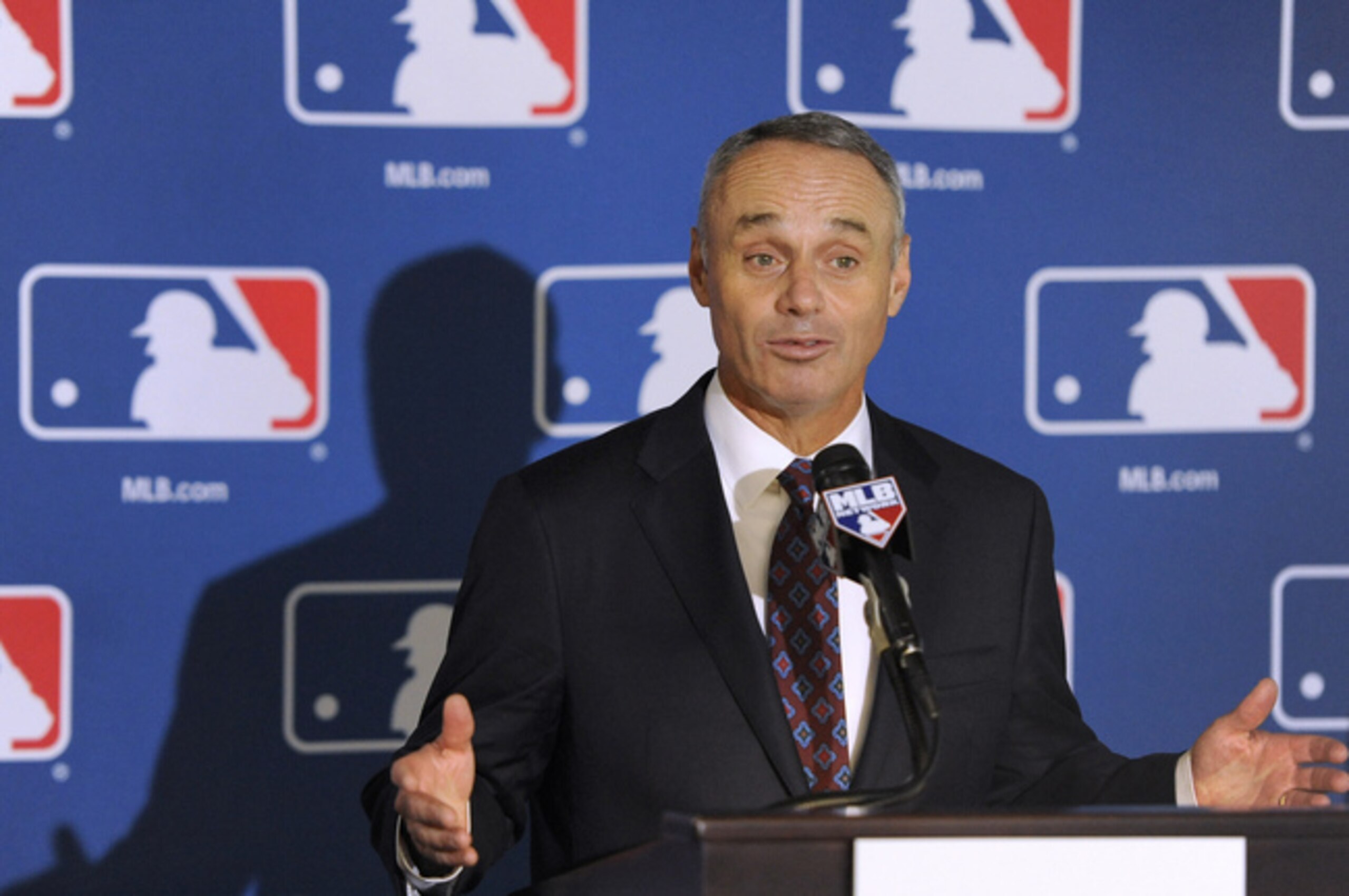
We're coming up on 20 years since MLB's last expansion in 1998, which was its sixth expansion since 1961. Knowing that, is there any pressure on MLB to expand again?
If you ask Manfred, not at all.
“I don’t see it in the immediate future. At a minimum, it’s a ways down the road. I just don’t see any immediate push for it," he said in an interview with Tyler Kepner of The New York Times.
There is a really good argument to be made for expansion, however.
Jeff Zimmerman at Hardball Times noted that MLB's growth isn't keeping up with the USA's population growth, and there's also growing interest in the game on the international scene. There should be enough talent for 32 teams, and having 32 teams could allow MLB to kill everyday interleague play.
But I'm not so sure.
While the USA's population may be growing, there are mixed signals about MLB's popularity. Baseball should get its popularity trending upward and then worry about expanding.
Besides, I'd personally have a lot of talent spread out over fewer teams than a lot of talent spread out over more teams. It's obviously a lot more complicated, but that's surely one of the reasons the league has experienced increased parity in recent years.
Verdict: Foolish
How About International Expansion?
8 of 10
Alright, so that last conclusion might make you wonder why we're even talking about this. Short answer: because it's worth talking about.
Major League Baseball's international expansion was something Bud Selig touched on here and there throughout his tenure, including at the very end. And while Manfred may not see expansion happening anytime soon, he did pick up the international-expansion torch in an interview with the Los Angeles Times.
The Times' Bill Shaikin listed one Canadian city (Montreal) and two Mexican cities (Monterrey and Mexico City) as places of interest to Manfred. Goodness knows there are plenty of other baseball-crazy cities in Central and South America, and we know Australia is also on MLB's radar.
In the end, though, it's stating the obvious that practicality must be just as important as business. Baseball can have its eyes on as many markets as it wants, but it must not expand to any of them unless having a team in a given region could work from a travel and scheduling standpoint.
If yes, well, shoot. Why not? We may refer to baseball as the national pastime, but in reality it's become an international pastime. Baseball would be acknowledging that by expanding internationally and could absolutely make it work if done responsibly.
And at the right time, of course. Maybe that's not now, but that doesn't mean it can't be later.
Verdict: Innovative
An International Draft?
9 of 10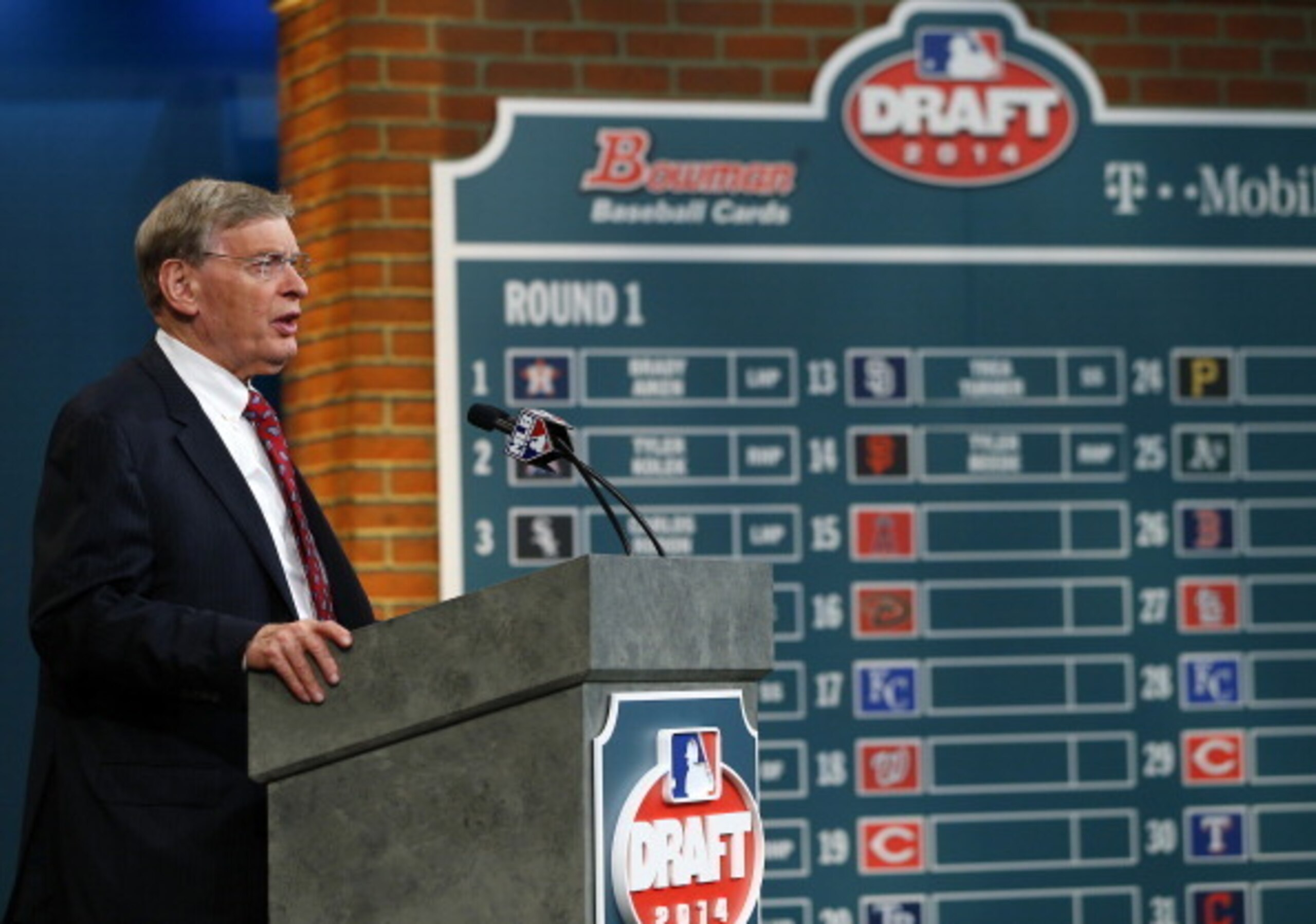
There is no draft on the international amateur market. If a team wants a prospect, it doesn't need to worry about being positioned to get him. It can just write a check.
But maybe not for much longer.
"Inevitable," Manfred told Kepner of an international draft. "It’s going to come someday. When? It’s going to be a product of negotiation with the players. I think there is a natural appeal to a single vehicle for entry into the game, no matter where you hail from. It’s the most efficient way to promote competitive balance."
Hypothetically, Manfred is right about competitive balance. The spending limits MLB placed on the international market were supposed to give needy teams a fighting chance against the rich teams. But as the New York Yankees can vouch, the penalties for going over the limits aren't formidable enough to do the job. Turning talent acquisition on the international market into a draft could solve that.
But while the idea does have some legs, an international draft could create problems. Alex Remington ran through those at Hardball Times, with the key fears being:
- It could cap the number of international players who get chosen to play pro ball.
- It could take away year-round scouting of prospects, forcing teams to economize.
- It could heighten the incentive for prospects to lie about their ages.
- Overall, it stands to limit the flow of money from MLB to countries that really need it.
Sound complicated?
That's because it is. The idea of an international draft may make sense in theory, but making it work in a way that would please everyone borders on impossible.
Verdict: Foolish
Or No Draft at All?
10 of 10
Everyone loves drafts. They look good on TV, and they're the best part of owning a fantasy team. Drafts are fun.
But aren't they also kind of stupid? Or maybe really, really stupid?
Rany Jazayerli of Grantland thinks so, and for good reason. Whereas most prospective professionals rightly have some choice about where they get to work, drafts take that choice away from young athletes. And while that can be entertaining for us, it's a raw deal for them.
So Jazayerli proposed a different system: settle on which players are eligible to go pro, give each team a spending cap based on the previous year's standing, and let teams and prospects find each other.
Such a system isn't just on his mind. In a piece for Fox Sports, Dave Cameron proposed such a system could work for both domestic and foreign players. And for the life of me, I can't think of a reason why such a system shouldn't exist.
Yes, doing away with the draft and turning things back into a free-market kind of system would mean turning back the clock to the old days. You know, the days when the Yankees and other rich teams could afford to hoard all the best young players the country could produce.
But the spending limits would be the difference this time around, and they could actually do the trick if the penalties for going over were tough enough. As a result, the system would strike a nice balance between giving prospects a choice while also making sure the needy teams get their fill of talent.
I doubt MLB will consider this suggestion anytime soon. But it's a good one.
Verdict: Innovative

.jpg?w=2560 "Grading WWE Raw 🔠")

.jpg?w=2560 "Bijan's INSANE 1st Half 🤩")
.jpg?w=2560 "Viral Rams Coach Vid 🖕")
.jpg?w=2560 "Injury-stricken Seahawks signing veteran RB")


.jpg?w=2560 "2 NFL Officials Suspended")
