
The Biggest X-Factors in College Basketball in 2014-15
How will this college basketball season play out? That's all up to the X-factors.
What, exactly, is an X-factor? The easy description is that it's something that can make or break a game. But there's far more to it than that.
Certain players, teams or situations just have the ability to impact the game in a way that can't be controlled. When they're at their best, they tilt the balance of the game in their (or their team's) favor, almost like it was predetermined.
We've found some of the biggest X-factors in college basketball to give you an advance warning of what to expect as the 2014-15 season goes on. When one of these ends up determining an outcome, you'll know why.
Arizona State's Curtain of Distraction
1 of 12When in doubt, create confusion.
Arizona State (11-10, 3-5 Pac-12) has gone 10-4 at home this season, including Wednesday's 73-55 win over Oregon State. This can mostly be attributed to the Sun Devils being more comfortable playing in Wells Fargo Arena than elsewhere, but they also have a secret weapon. One that hides behind a curtain until the opponents hit the free-throw line in the second half.
Behind the "Curtain of Distraction" is a wide array of gimmicks and antics put on by students in ASU's 942 Crew with the goal of throwing off the foul shooter. According to Jeff Eisenberg of Yahoo Sports, entering Wednesday, opponents were shooting 71.2 percent from the line in the first half but only 60 percent when dealing with the curtain.
"Everything they've done with the curtain has been awesome and has really helped us a lot," ASU center Eric Jacobsen told Eisenberg.
Oregon State, a 73 percent shooting team from the free-throw line, went 2-of-5 in the second half on Wednesday after making 1-of-3 before halftime while shooting away from the student section.
Hilton Magic
2 of 12
Iowa State's 18-game home-court win streak at Hilton Coliseum isn't anywhere close to the longest active streak in the country. Both Arizona and Gonzaga have current streaks that are in the 30s.
But there's still something about games played in Ames that brings out the wild and wacky, and things usually always end with the Cyclones coming out as victors.
It's called Hilton Magic.
Coined by reporter Buck Turnbull of The Des Moines Register in 1989 after Iowa State upset third-ranked Missouri, the moniker is meant to explain how, year in and year out, ISU finds ways to win games it shouldn't when at home. It's taken on a different meaning since coach Fred Hoiberg has raised the program to new heights in the last few years, as now it means that opponents have a tough time pulling their own upsets in Hilton.
ISU is 58-4 at home since the beginning of the 2011-12 season.
Jahlil Okafor's First Step
3 of 12
When the ball gets fed to the big man inside for Duke, it's almost like guaranteed points. Assuming he doesn't miss the shot, Jahlil Okafor is almost always going to get a good look, which is why he's shooting 66.2 percent and averaging 18.7 points per game.
And the main reason the 6'11" freshman is a major contender for National Player of the Year honors is how he gets those good looks. It's all about that first step, when Okafor goes from a standing (or slightly bent) stance and then almost instantly turns in one direction or another before his defender has a chance to react.
"Okafor has great body control that, when combined with a keen court awareness, strength and foot speed, makes defending him a leviathan endeavor," Matthew Giles of The Washington Post wrote.
Opponents have taken to double- and triple-teaming Okafor in hopes of preventing him from being able to make those moves to the basket. That's when he breaks out crisp passing, evidenced by his 30 assists and only 50 turnovers.
.jpg?w=2560 "Seahawks Chiefs Football")


Kentucky's Platoon System
4 of 12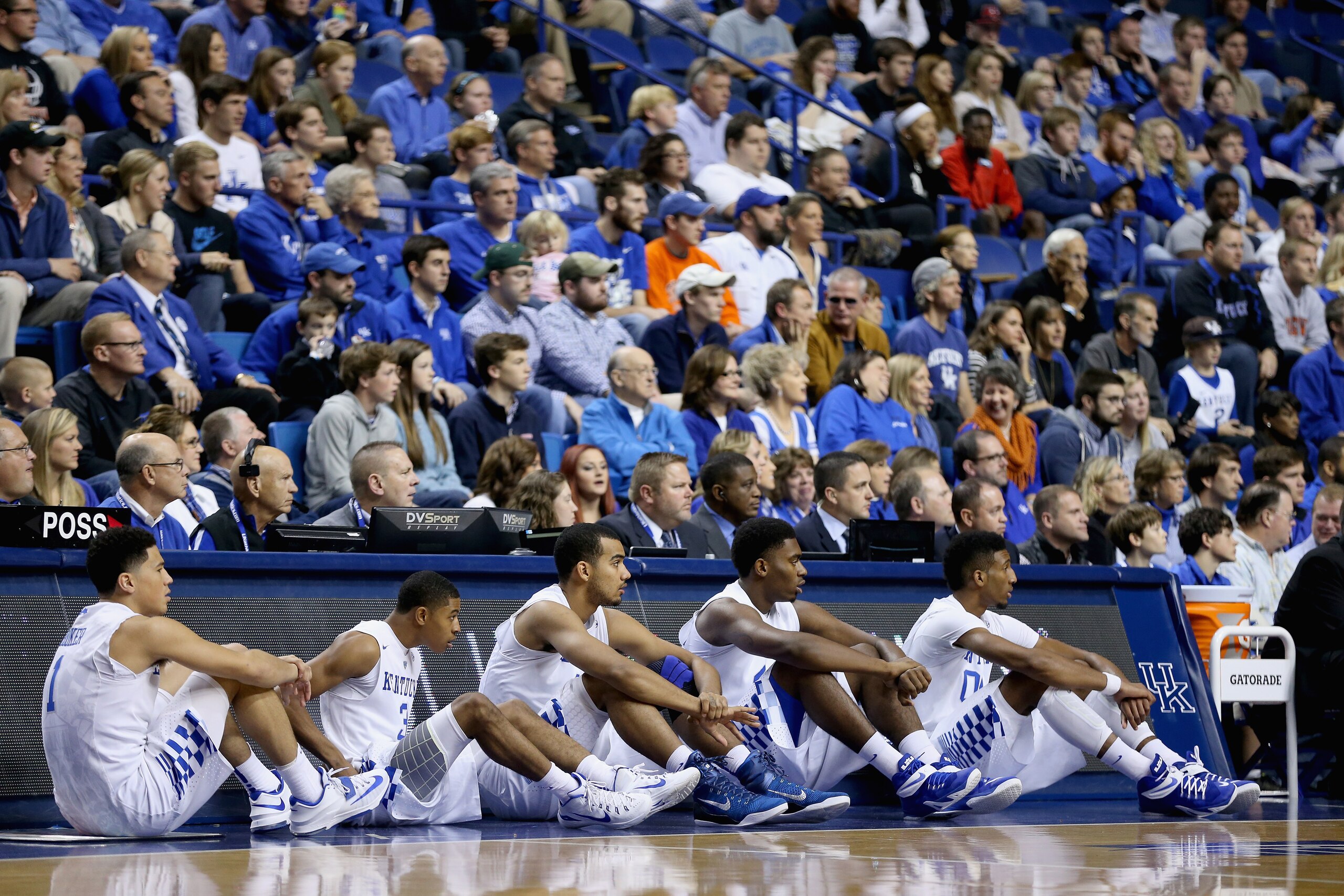
There have been times this season when Kentucky feels like both the best team in the country and the No. 2 overall club. The Wildcats starters would be No. 1, and their backups, known as the second unit or the other half of the "platoon" that coach John Calipari has used this year, would rank second.
Maximizing a roster with nine McDonald's All-Americans, Calipari has been able to spread out the minutes in a way that doesn't get anybody's feelings hurt. Not including junior Alex Poythress, who was lost for the year with a knee injury in December, Kentucky has 10 players averaging at least 10 minutes per game.
While this won't make for outlandish individual numbers, it does prevent the Wildcats from ever wearing down. And when the NCAA tournament begins, it will mean they can send wave after wave of fresh players onto the court.
Late-Game Review Delays
5 of 12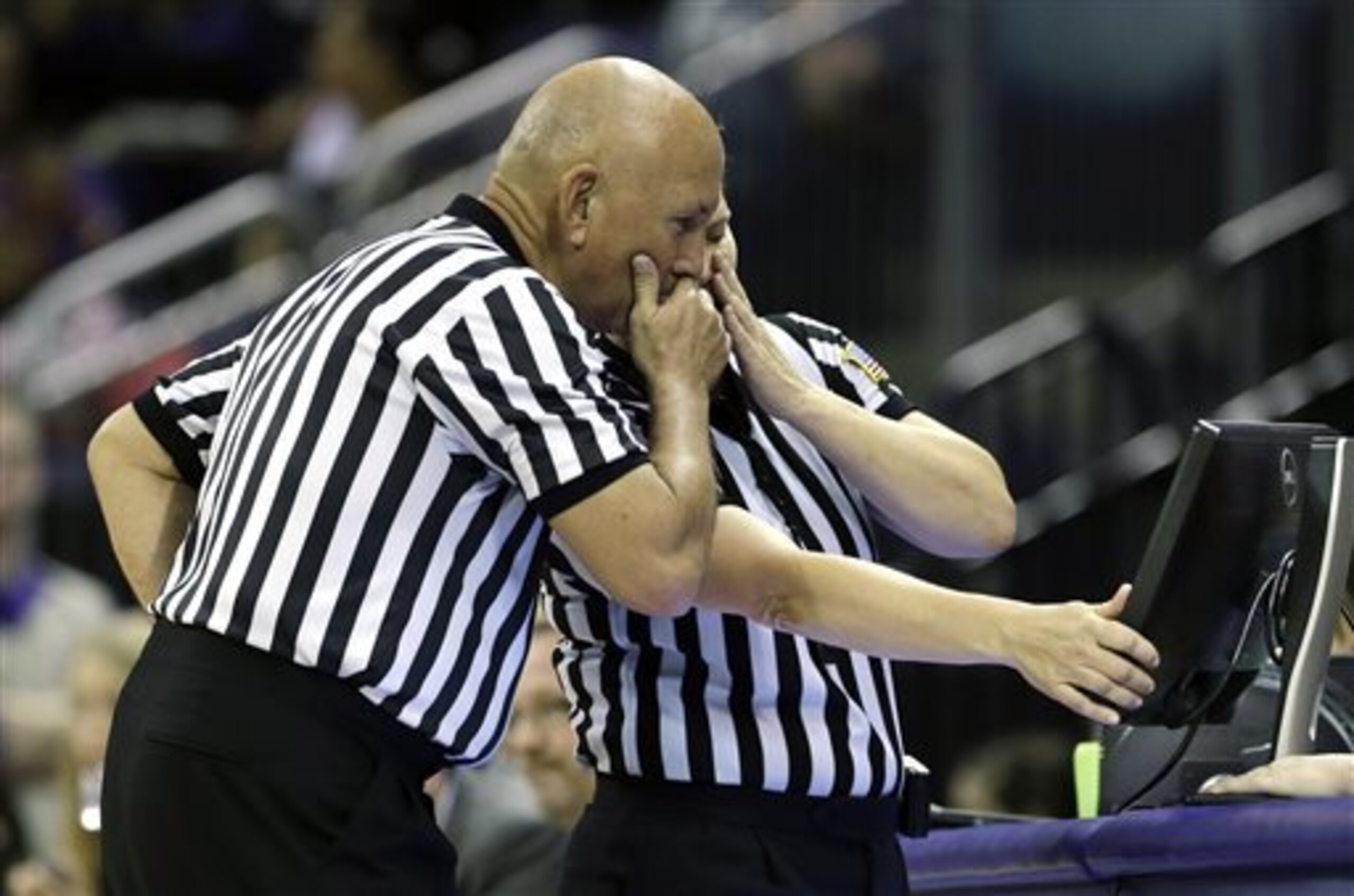
The ability to review key plays in college basketball has prevented some bad calls late in games from penalizing those they were initially called against. By going to the monitor to confirm who touched the ball last, whether a clutch shot counted for two or three or whether a flying elbow was inadvertent or malicious is a great advancement. Same with determining how much time should be left on the clock in the final minute.
But why must it take so long to get settled?
Anyone who's watched a college game on TV has been through the drill: After a big play, the officials huddle around a small, 1980s-era monitor and spend a small eternity trying to make a determination. Meanwhile, the broadcast has shown 12 replays, several of which clearly show what the call should be, and after four or five you've got time to use the restroom and get a snack.
This isn't a call to eliminate replays, not at all. Instead, something needs to be done, in terms of technological advances, to make this go quicker. In many instances, the forced break either helps a team that's trailing (and has no timeouts available to halt play) or causes a team that was on a roll to lose all sense of momentum.
Speed it up, folks.
Marcus Paige's Late-Game Fire
6 of 12
It hasn't shown up much yet this season, but don't think Marcus Paige's ability to take over games down the stretch doesn't exist anymore. When opponents start thinking the junior guard isn't going to be a factor, that's when he'll come through in the clutch.
Last season, en route to scoring 17.5 points per game, Paige regularly went off in the second half and often nearly single-handedly led North Carolina back from big deficits. This year, with a more balanced offensive rotation, he's not needed to do that.
Paige has actually struggled for much of this season, sitting at 14.1 points per game and 39.5 percent shooting (compared to 44 percent as a sophomore), but since ACC play began, he's shooting 45.4 percent and 46.8 percent from three-point range.
The one time he has needed to step up late, though, Paige came through. Trailing 71-70 with the clock winding down, Paige's running layup with 8.5 seconds left beat Louisville on Jan. 10.
Mid-Majors Doing Damage
7 of 12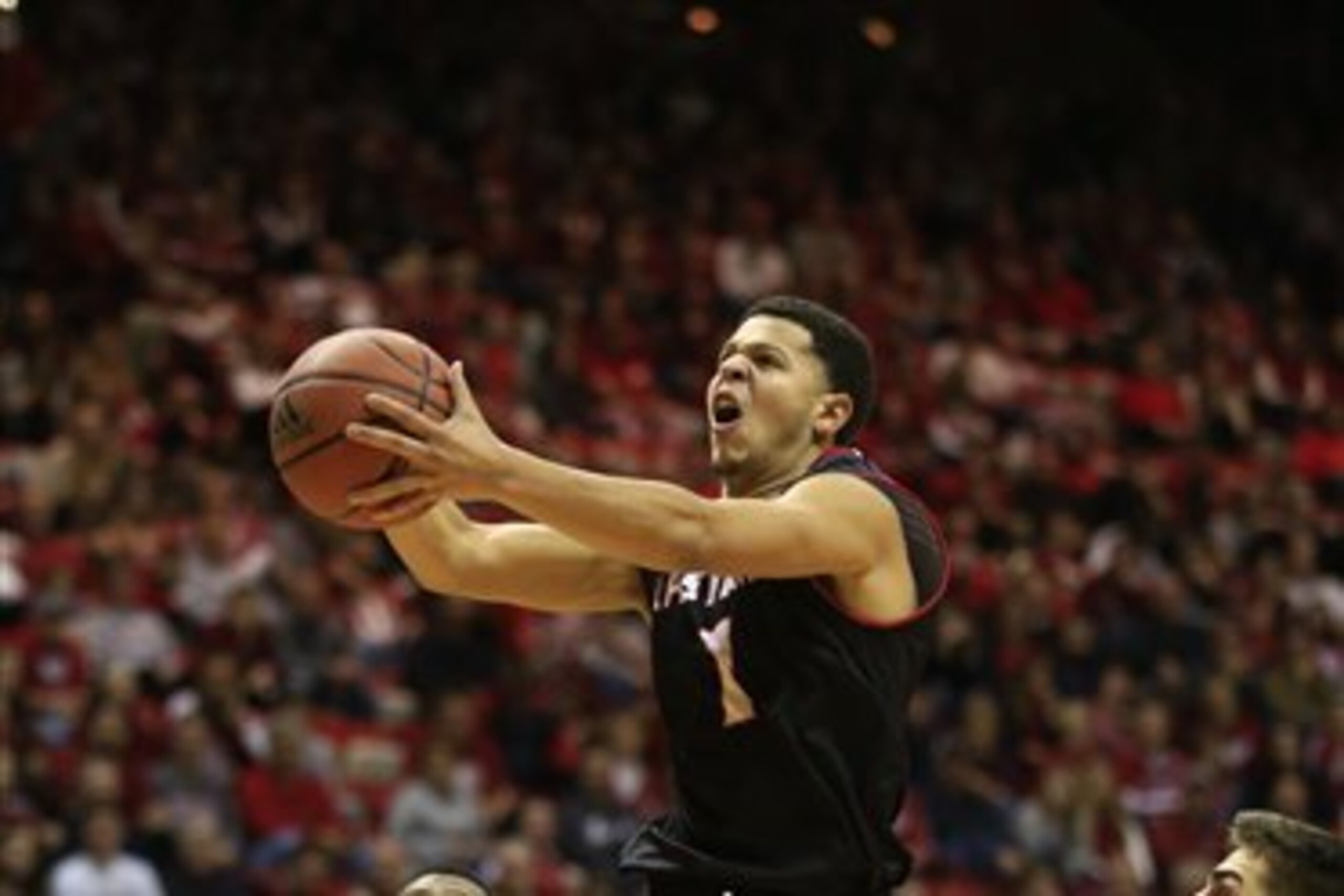
Fear the unknown.
With 351 teams in Division I, it's hard to track each and every one. Power programs have a slew of student managers whose job it is to tape any and every game that's televised, just in case they end up getting paired with a relatively faceless opponent from a smaller conference during the NCAA tournament.
But no amount of advanced research can prepare teams for all of the potential foes that come along, which is why we see a few of these little brothers knocking off the big boys in March.
The ability for such teams to pull off an upset or two—remember Florida Gulf Coast?—is one of the many things that makes the Big Dance the greatest sporting event in the world; but it's also part of what makes it so unique. Few other sports make it possible to have those kind of results, but they happen with regularity in college hoops.
Though much can still happen, here's a list of potential mid-major party-crashers to keep an eye on when filling out your brackets in a few weeks:
- Eastern Washington (15-5, 6-1 Big Sky)
- Green Bay (17-4, 6-1 Horizon)
- High Point (17-5, 8-2 Big South)
- Iona (15-6, 8-2 MAAC)
- Murray State (18-4, 8-0 Ohio valley)
- North Carolina Central (16-5, 8-0 MEAC)
- North Florida (14-9, 6-0 Atlantic Sun)
- Stephen F. Austin (17-3, 7-0 Southland)
- UC Davis (15-4, 5-1 Big West)
- Western Kentucky (14-6, 7-1 Conference USA)
- Wofford (16-5, 7-1 Southern)
Notre Dame's Shooters
8 of 12
They can (and will) make a shot from anywhere. Just ask Duke.
On Wednesday night, the nation's No. 2 team in field-goal percentage made 29 of 56 shots in a 77-73 home victory. That included some ridiculous makes, like when leading scorer Jerian Grant was stripped by a Duke defender only to lunge after the ball as it rolled toward the basket and fling himself backward for a fallaway jumper with 1:11 left and the shot clock about to expire in a one-point game.
Naturally, Grant drained the shot. Earlier in the game, he made a pull-up three-pointer from just beyond the edge of the giant shamrock on Notre Dame's home court.
"Whatever Jerian wants to do," Notre Dame coach Mike Brey told Andrew Owens of Blue & Gold Illustrated.
Arguably the biggest surprise of this college season has been Notre Dame, which is now 20-2 and 8-1 in ACC play. Its only conference loss was to unbeaten Virginia, while it knocked off Duke and won at North Carolina.
Shooting 52.1 percent as a team, every starter is making at least 47.5 of their shots.
Rico Gathers' Monster Rebounding
9 of 12
Entering Thursday night, there were 20 players in Division I who averaged at least 10 rebounds per game, including seven players from power conferences.
But none of them have been as monstrous on the boards as Rico Gathers, Baylor's 6'8", 280-pound junior forward who is second nationally at 11.9 rebounds per game and is dominating on the offensive glass. Of his 238 rebounds, 109 are offensive, more than all but one player in Division I.
Gathers is also averaging 10.7 points per game, getting most of them on putbacks. He has 10 double-doubles, including a 25-point, 28-rebound effort against NAIA school Huston-Tillotson.
VCU's Havoc
10 of 12
There have been some notable "named" playing styles in college basketball over the years that rose to the level of getting their own nickname. One of the most famous was the "40 Minutes of Hell" approach that Arkansas implemented in the 1990s under coach Nolan Richardson.
For VCU, it's all about Havoc.
Similar to the Arkansas approach, the Rams basically play a full-court press for nearly the entire game, constantly putting pressure on the ball-handler in hopes of getting steals and forcing turnovers. Not surprisingly, VCU is third in Division I in turnover margin (plus-seven) and third in steals per game (10.5).
Leading that charge is senior guard Briante Weber, who leads the country with 3.79 steals per game and is on pace to become the all-time NCAA leader in that category. With 368 for his career, Weber needs 18 more to pass Providence's John Linehan.
Virginia's 'Pack Line' Defense
11 of 12
Virginia coach Tony Bennett spent a lot of time around basketball courts growing up, first while following father Dick Bennett's coach career and then playing himself before joining dad on the bench. And in that time he picked up a lot of valuable knowledge, including how to operate what's become the country's toughest defensive style.
Known as the "pack line" defense, the unbeaten Cavaliers use a man-to-man approach that focuses on containment by forcing players into bad situations. After that, it's a matter of doing the little things like getting a hand up and working the boards.
"Encourage dribble penetration into help, takeaway post touches, force contested jumpers over the top of the defense and clean up the defensive glass," Rob Dauster of NBC Sports wrote.
Although it might seem like something that's easy to beat—Dauster noted that teams with shooters able to make contested three-pointers will have an edge—no one has done so to this point in 2014-15. Virginia allows 49.1 points per game, which is tops in the nation, and its 34.1 percent field-goal defense is second-best nationally.
Wisconsin's Experience
12 of 12
The one-and-done rule and the rise of freshmen contributing immediately has made young talent seem more important than experience. Wisconsin would beg to differ.
The Badgers brought back four starters from last year's Final Four team, all of whom are juniors or seniors this season. Throw in a pair of sophomores who are seeing more minutes and a senior reserve who's worked his way up the ladder, and you have the most veteran squad among the country's powers.
Even with senior guard Traevon Jackson out with a foot injury, Wisconsin still starts three upperclassmen. No freshman plays more than 3.1 minutes per game, and that's usually in garbage time.
Bo Ryan values experience, and he rewards dedication. Senior center Frank Kaminsky bided his time for two seasons as a reserve, then broke through last year; now the 7-footer has developed into a legitimate NBA player. Had he left after last season, that might not have been the case.
When the NCAA tournament gets going in seven weeks, look for experienced teams like Wisconsin to reign supreme against many more-talented-yet-less-tested clubs.
Follow Brian J. Pedersen on Twitter at @realBJP.