

We spend the entire college basketball season indirectly discussing which teams are worthy of a No. 1 seed in March, but here we're placing odds on whether highly ranked teams such as Kentucky, Virginia and Gonzaga will actually be on the top line on Selection Sunday.
To get an idea of who the four No. 1 seeds are at the moment, you can look at any projected bracket—though we would prefer you choose ours. But good luck finding each top team's chances of ultimately becoming a No. 1 seed anywhere other than here.
With just two months remaining until the start of the tournament, is Kentucky already a stone-cold lock for a No. 1 seed? If the Wildcats aren't at 100 percent, where are they? And would you believe that Virginia Commonwealth is one of 10 teams most legitimately in the running for a No. 1 seed?
Odds on the following slides are fictitious but they're carefully calculated. They add up to 381.8 out of a maximum 400 percent, meaning that a bet on the field has odds of 9-2 (18.2 percent).
RPI, KenPom.com (KP) and ESPN's BPI ratings were used in conjunction with the eye test to determine the most deserving teams. Past performance comprised roughly 85 percent of the thought process, but remaining schedule was also a strong contributing factor.
Computer ratings current through start of play on Tuesday, January 20. Win-loss records current through start of play on Wednesday, January 21.
Honorable Mentions
1 of 11
North Carolina (14-4; RPI: 10; KP: 9; BPI: 6)
The Tar Heels have an outstanding computer profile, but they also already have four losses. If they go undefeated the rest of the way—which would include a road win over Louisville, a home win over Virginia and a pair of wins over Duke—then, yes, they'll absolutely be worthy of a No. 1 seed. But that seems unlikely at best.
Utah (14-3; RPI: 12; KP: 6; BPI: 10)
Another excellent computer profile, but where are the quality wins? The Utes have played extremely well this season—Saturday's blowout loss to Arizona, notwithstanding—but a home win over Wichita State in overtime is their only victory over a surefire NCAA tournament team. Even if they win the rematch with Arizona, a No. 1 seed is a long-shot scenario.
Iowa State (14-3; RPI: 15; KP: 19; BPI: 20)
The Cyclones aren't particularly close to the No. 1 discussion at the moment, but they'll have at least eight more chances at quality wins simply because they play in the Big 12. Based on current RPI ratings, Iowa State would enter the Big 12 tournament with 16 games against the RPI Top 50 already on its resume.
Wichita State (16-2; RPI: 11; KP: 11; BPI: 14)
Their best nonconference win was either a home game against Seton Hall or a home game against Alabama, but if the Shockers can push their record to 32-2, it's only a matter of time before we start arguing about their merits for a No. 1 seed for a second straight year.
Notre Dame (17-2; RPI: 39; KP: 15; BPI: 11)
Louisville (15-3; RPI: 30; KP: 13; BPI: 12)
A pair of ACC teams with gaudy records that played weak nonconference schedules, both Louisville and Notre Dame would at least have a strong case for a No. 1 seed if they were to win the ACC. Louisville still plays two games against Virginia, and Notre Dame still has a pair of showdowns with Duke, so they each would need to really earn that title.
10. Maryland Terrapins
2 of 11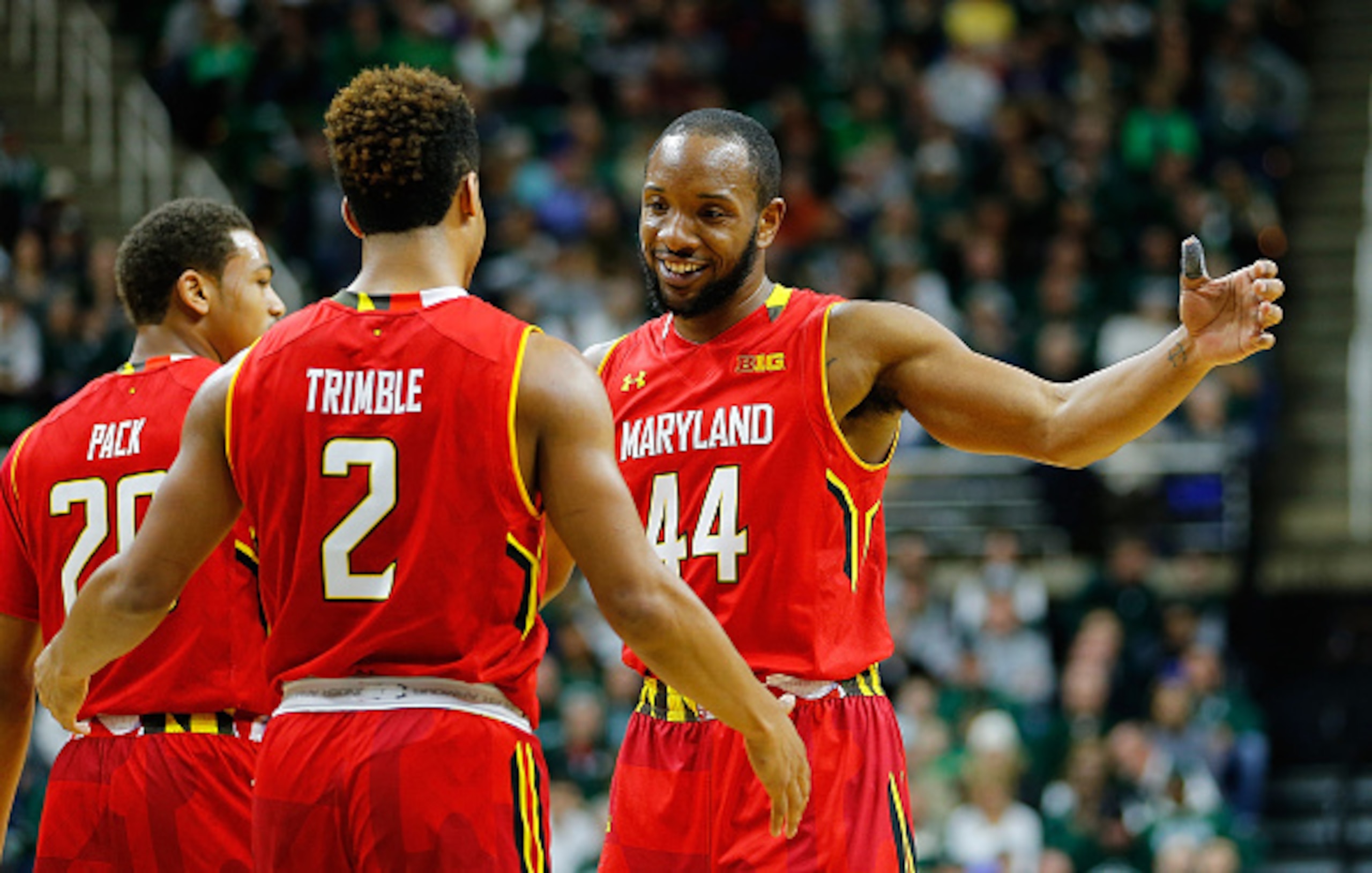
By the Numbers: 17-2; RPI: 13; KP: 16; BPI: 17
Three Best Wins: 72-63 vs. Iowa State (neutral court); 68-66 at Michigan State; 73-64 at Oklahoma State
Losses: 64-57 at Illinois; 76-65 vs. Virginia
Odds of No. 1 Seed: 10-1 (9.1 percent chance)
Over the summer, it seemed Maryland would finish in 10th place in the Big Ten.
Now, it looks like the Terrapins are the 10th-most likely team to earn a No. 1 seed.
That escalated quickly.
They already have seven RPI Top 100 wins and should be headed for quite a few more. We've noted on multiple occasions that the Big Ten is significantly weaker than in years past, but it's hardly a mid-major conference. There are still a ton of quality wins to be had.
But it's going to take more than a bunch of good victories over middle-of-the-road teams to get a No. 1 seed. The neutral-court win over Iowa State looks very nice, but Maryland will need to bookend it with a home win over Wisconsin on February 24.
If nothing else, the Terrapins must have that game in order to jump ahead of the Badgers in the national pecking order. The second-best team in the ACC might be worthy of a No. 1 seed this year, but there's almost no chance of the Big Ten getting two No. 1 seeds unless the only loss that either Maryland or Wisconsin suffers before the Big Ten Championship Game is that showdown in late February.
We'll see what happens over the next four weeks, but Maryland should be favored in that game. Thus, Maryland's chance of winning each of its remaining contests would seem to be better than the chances of North Carolina, Notre Dame or Louisville flawlessly executing the rest of their ACC schedules.
9. VCU Rams
3 of 11
By the Numbers: 15-3; RPI: 4; KP: 18; BPI: 16
Three Best Wins: 93-87 vs. Northern Iowa; 68-47 at Cincinnati; 71-65 vs. Davidson
Losses: 74-57 vs. Virginia; 77-53 vs. Villanova (neutral court); 73-67 at Old Dominion
Odds of No. 1 Seed: 8-1 (11.1 percent chance)
Take away the RPI ranking and this is a ludicrous proposition.
None of VCU's losses can really be considered bad, but the Rams have three of them without any marquee wins to counterbalance things. A week ago, Davidson was a bubble team with three losses to very good teams and nothing much to brag about for quality wins, so how can VCU be in the discussion for a No. 1 seed because of a double-overtime win against Northern Iowa?
However, regardless of how much you hate the metric, you can't just throw out RPI. Not when the Rams have KP and BPI ranks strong enough to suggest that it isn't a complete fluke that they're near the top of the RPI hierarchy.
With the possible exception of the road games against Davidson and George Washington, VCU will be favored in every remaining contest that it plays, so let's pretend that the Rams will actually make it to Selection Sunday without another loss.
Their RPI will drop a little bit—playing five games against Saint Louis, George Mason and St. Bonaventure tends to have that effect—but it wouldn't plummet by any means. We'd be looking at a 31-3 team with an RPI rank around 10 and losses to two teams contending for a No. 1 seed and Old Dominion.
If the Monarchs skate through the rest of their C-USA schedule without a loss and earn a No. 5 or No. 6 seed, it might be enough for VCU to earn a No. 1. Conversely, if they suffer a few more losses and miss the tournament, that's bad-news bears for the Rams.
There's a lot up in the air, but the odds of both VCU and Old Dominion going undefeated for the next two months seems at least marginally more likely than the odds of some of the other candidates running the table.
.jpg?w=2560 "Seahawks Chiefs Football")


8. Villanova Wildcats
4 of 11
By the Numbers: 17-2; RPI: 5; KP: 7; BPI: 8
Three Best Wins:77-53 vs. VCU (neutral court); 67-55 vs. Butler; 88-75 vs. Xavier
Losses: 66-61 at Seton Hall; 78-58 at Georgetown
Odds of No. 1 Seed: 5-1 (16.7 percent chance)
Most of Villanova's nonconference wins don't look anywhere near as nice as they once did.
Villanova won games against Temple and Syracuse in mid-December, but the Owls dropped out of the RPI Top 50 as a result of their current three-game losing streak, and the Orange joined them after a loss to Clemson over the weekend.
Throw in Michigan's never-ending fall from grace, and the Wildcats have but one win against an RPI Top 50 team from outside the Big East.
It's certainly not Villanova's fault that those teams have taken a turn for the worse, but it doesn't help Villanova's case for a No. 1 seed, either.
Prior to Monday's night shellacking at the hands of Georgetown, the Wildcats were in great shape for a spot on the top line. However, you get the feeling that's just the way things are going to go in the Big East this year. The Wildcats were able to go 16-2 in conference last season en route to a No. 2 seed, but every night is going to be an adventure this year.
Villanova will probably still win the Big East, but with road games against Butler, Xavier and Providence still on the schedule, we wouldn't bet on the Wildcats doing so with fewer than four losses. And four conference losses plus one marquee nonconference win isn't very likely to equate to a No. 1 seed.
7. Arizona Wildcats
5 of 11
By the Numbers: 16-2; RPI: 7; KP: 5; BPI: 5
Three Best Wins: 66-63 vs. Gonzaga; 69-51 vs. Utah; 61-59 vs. San Diego State (neutral court)
Losses: 58-56 at Oregon State; 71-67 at UNLV
Odds of No. 1 Seed: 4-1 (20.0 percent chance)
Arizona is ranked No. 7 or better in each of the three rating systems. Only Kentucky and Virginia can also make that claim.
But playing in the weakest of the six power conferences, according to KenPom.com, could eventually be Arizona's undoing.
The Wildcats currently have just three RPI Top 70 wins and already have two bad losses. If they go 13-0 the rest of the way—or even 12-1 with a loss at Utah—they should be in strong position for a spot on the top line. Any other losses, though, and they're either adding another bad loss or missing out on one of their very limited remaining shots at a quality win.
Look at it this way: After the win over Utah (but before Villanova's loss to Georgetown), ESPN Insider Joe Lunardi had Arizona rated as the No. 7 overall seed. The Wildcats are probably now at No. 6, but what can they do to impress the committee other than root for losses to the top teams?
Would wins over Stanford and Washington really move the needle, while Duke and Virginia are playing each other in addition to Louisville, North Carolina and Notre Dame?
The Wildcats not only need to keep winning, but they need a fair amount of help from the teams currently ranked ahead of them. They don't need to get all the way to No. 1, but even moving up two or three spots could be a real chore.
6. Kansas Jayhawks
6 of 11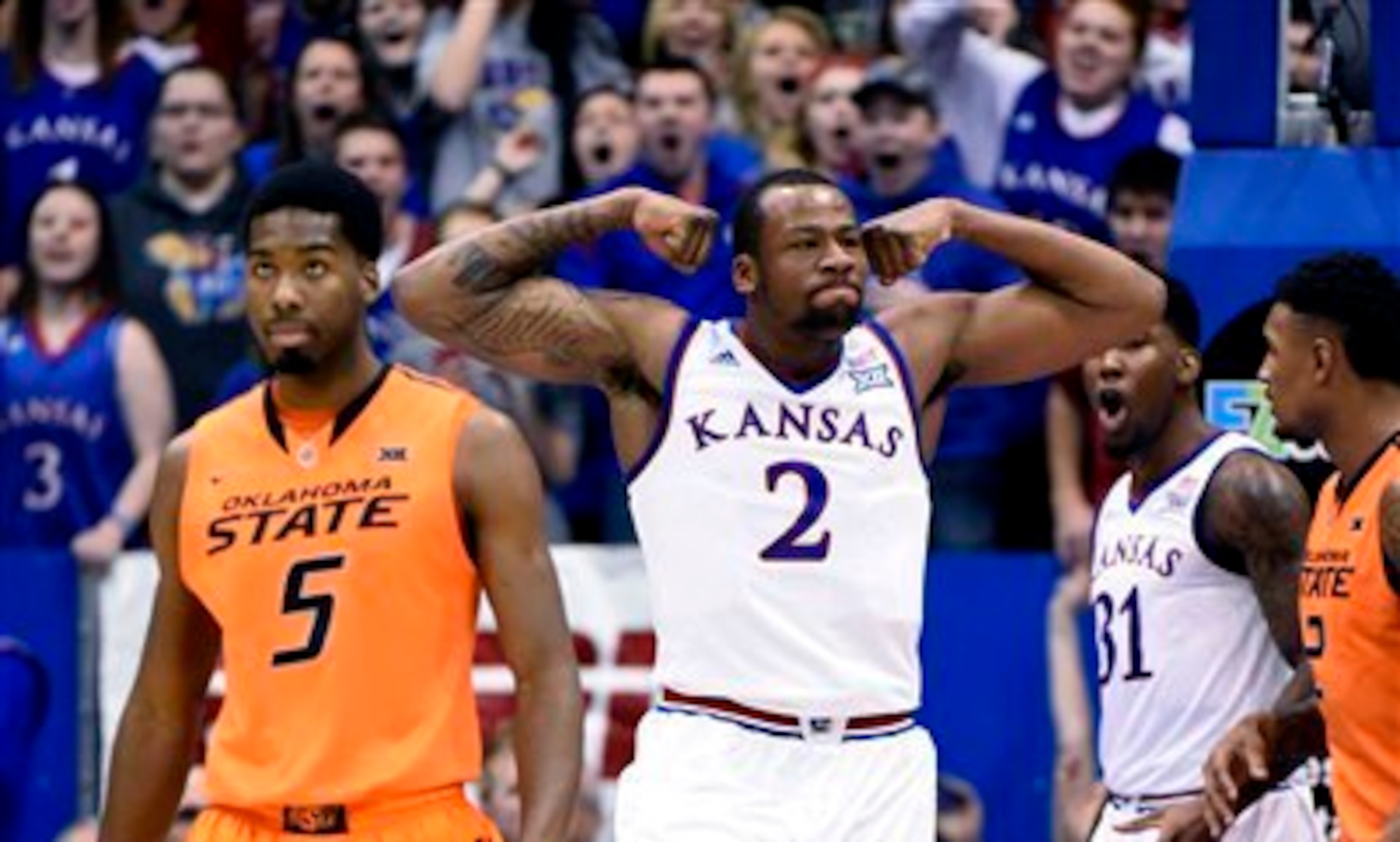
By the Numbers: 15-3; RPI: 3; KP: 17; BPI: 9
Three Best Wins: 63-60 vs. Utah; 75-70 at Georgetown; 56-55 at Baylor
Losses: 72-40 vs. Kentucky (neutral court); 77-52 at Temple; 86-81 at Iowa State
Odds of No. 1 Seed: 3-1 (25.0 percent chance)
The loss to Kentucky was disturbing to watch, but it doesn't even remotely eliminate Kansas from consideration for a No. 1 seed. Similarly, the blowout loss to Temple seems so out of place when surrounded by more than a few quality wins.
And now that they're into the meat of the Big 12 schedule, the Jayhawks are really starting to flex their muscles.
Before completely giving it away and needing a late rally to win the game, they held a 19-point halftime lead against a very good Oklahoma team on Monday night. We've been waiting all season for a game in which all the key players actually show up to play for Kansas, and that's about as close as the Jayhawks have come to fulfilling their potential.
They got a combined 32 points and 22 rebounds from their freshman duo of Kelly Oubre and Cliff Alexander. Perry Ellis had the 16 points and eight rebounds that used to quietly be the norm for him. Brannen Greene was hitting outside shots and Frank Mason directed traffic well from the point. They were a good shooting night from Wayne Selden away from having a complete game.
That's why a 25 percent chance at a No. 1 seed probably seems low, even though they are ranked outside the AP Top 10 at No. 11. Kansas is already near the top of all the computer metrics, will finish the season with approximately 24 games against the RPI Top 100 and is still getting better.
The problem is that there are simply too many hurdles in the Big 12. If the Jayhawks can get to 14-4 in winning the conference, they'll have a very strong case for a No. 1 seed. But there are a lot of potential losses left on that schedule. According to KenPom.com, they will have a less than 70 percent chance of winning in 10 of their remaining 13 games.
5. Wisconsin Badgers
7 of 11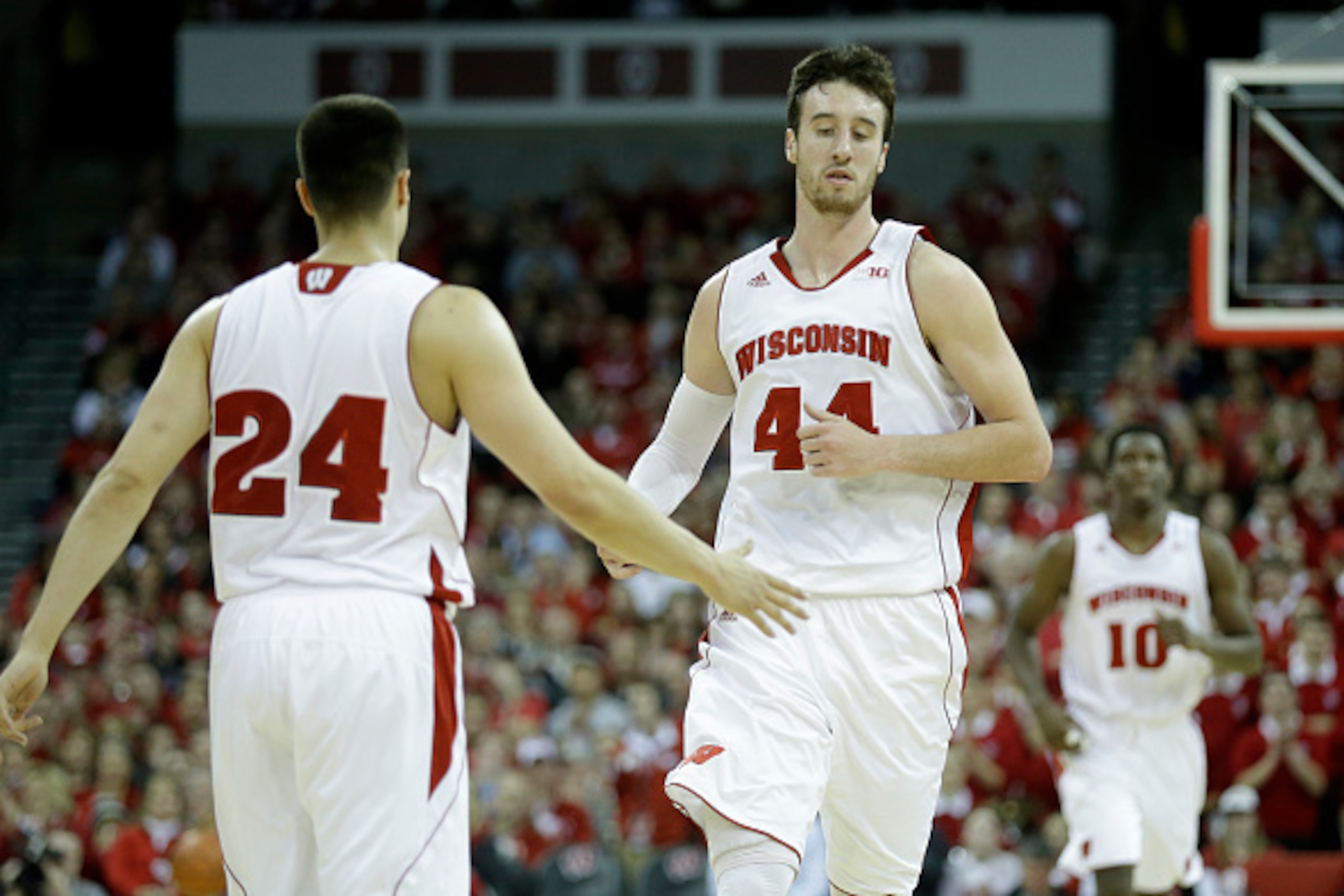
By the Numbers: 17-2; RPI: 9; KP: 4; BPI: 4
Three Best Wins: 68-65 vs. Georgetown (neutral court); 69-56 vs. Oklahoma (neutral court); 82-50 vs. Iowa
Losses: 80-70 vs. Duke; 67-62 at Rutgers
Odds of No. 1 Seed: 5-2 (28.6 percent chance)
Wisconsin has always been a very efficient, turnover-free team, but who could have possibly guessed that the Badgers would get even better after losing their starting point guard?
In their first game without Traevon Jackson, Wisconsin beat Nebraska, 70-55, committing just six turnovers. But the Badgers were just getting warmed up.
After the win over the Cornhuskers, Jim Polzin of the Wisconsin State Journal wrote about Bronson Koenig's rapid adaptation to the starting role in place of Jackson.
"A point guard’s job, is taking care of the ball and kind of controlling tempo and not turning it over and just getting people the ball in positions to score and make plays," Koenig said, per Polzin.
With Koenig running the point to perfection on Tuesday night, the Badgers absolutely obliterated newly ranked Iowa. The Hawkeyes came into the game as an above-average defensive team, creating 7.4 steals per game. But Wisconsin committed just one turnover in the rout—a shot-clock violation after an air-balled three-pointer.
It wasn't quite a perfect game, but it was essentially a no-hitter. Koenig had 13 points and two assists.
So, yes, the Badgers lost to Rutgers without Frank Kaminsky for the entire game and without Jackson for much of the second half, but they are still in great shape to win the Big Ten and contend for a No. 1 seed.
That conference title paired with six nonconference wins against the RPI Top 100 would be tough to deny.
4. Duke Blue Devils
8 of 11
By the Numbers: 16-2; RPI: 6; KP: 8; BPI: 6
Three Best Wins: 80-70 at Wisconsin; 63-52 at Louisville; 70-59 vs. Stanford (neutral court)
Losses: 87-75 at North Carolina State; 90-74 vs. Miami
Odds of No. 1 Seed: 3-2 (40.0 percent chance)
The losses to Miami and North Carolina State were troubling, but the Blue Devils have responded well with back-to-back wins by double digits over Louisville and Pittsburgh.
That doesn't nearly wipe the slate clean, but it does bring us back to remembering how dominant they were earlier in the season.
Jahlil Okafor is an outstanding offensive presence in the post. But it's the play of freshman point guard Tyus Jones that seems to dictate whether Duke wins or loses by double digits against above-average teams.
In the two losses, Jones had a total of 10 points, six assists and four turnovers. He didn't make a single three-pointer and was abused on defense by opposing lead guards.
Apparently the introduction of zone defense really helped his confidence, as Jones has 32 points, 12 assists and five turnovers in the past two games against opponents who shot 20.0 percent from three-point range.
This is the version of Jones we remember from big wins over Wisconsin, Michigan State and Connecticut. Okafor is a great start, but if the Blue Devils can keep their one-two punch going strong, they'll be right near the top of the most top-heavy conference in the nation.
The ACC is far from guaranteed to produce two No. 1 seeds, but it's hard to imagine that both the first- and second-place finishers won't have the necessary resumes to at least be one of the final teams in consideration for a spot on the top line.
3. Gonzaga Bulldogs
9 of 11
By the Numbers: 18-1; RPI: 8; KP: 3; BPI: 3
Three Best Wins: 72-56 vs. SMU; 73-66 vs. St. John's; 88-76 vs. Georgia (neutral court)
Losses: 66-63 at Arizona
Odds of No. 1 Seed: 1-1 (50.0 percent chance)
For most of the teams on this list, we're asking whether they might be able to win all of their remaining games.
For Gonzaga, it's more of a question of how we deal with the Bulldogs when they inevitably do.
According to KenPom.com, not only is Gonzaga favored to win each of its remaining games, but there's only one left on the schedule that Gonzaga should win by fewer than 14 points—a road contest against Saint Mary's that the Bulldogs still have a 76 percent chance of winning.
It's 2013-14 Wichita State all over again. The only difference is that Gonzaga actually played a very good team and narrowly lost in overtime. If we ignore the Arizona game that they almost and probably should have won, the Bulldogs are undefeated without anything resembling a marquee win.
SMU, Georgia and St. John's are all very much on the bubble, and the only likely way that BYU gets into the tournament is by winning at Gonzaga at the end of the season.
What happens if all of those teams miss the tournament? How much good can 33 wins do if none of them are against quality squads?
It will depend heavily on what goes down in the major conferences.
If the Big 12 fails to produce a clear favorite or if the ACC produces an obvious favorite with no clear-cut option at No. 2, then Gonzaga should earn a No. 1 seed, regardless of whether its best wins came against tournament squads.
Conversely, if Kansas runs away with the Big 12, Duke and Virginia take care of business in the ACC and Kentucky keeps being Kentucky, would the selection committee even bother making an argument for Gonzaga?
Even assuming a 33-1 record, there's still a lot up in the air for the Bulldogs, even though their on-court product has been incredible.
2. Virginia Cavaliers
10 of 11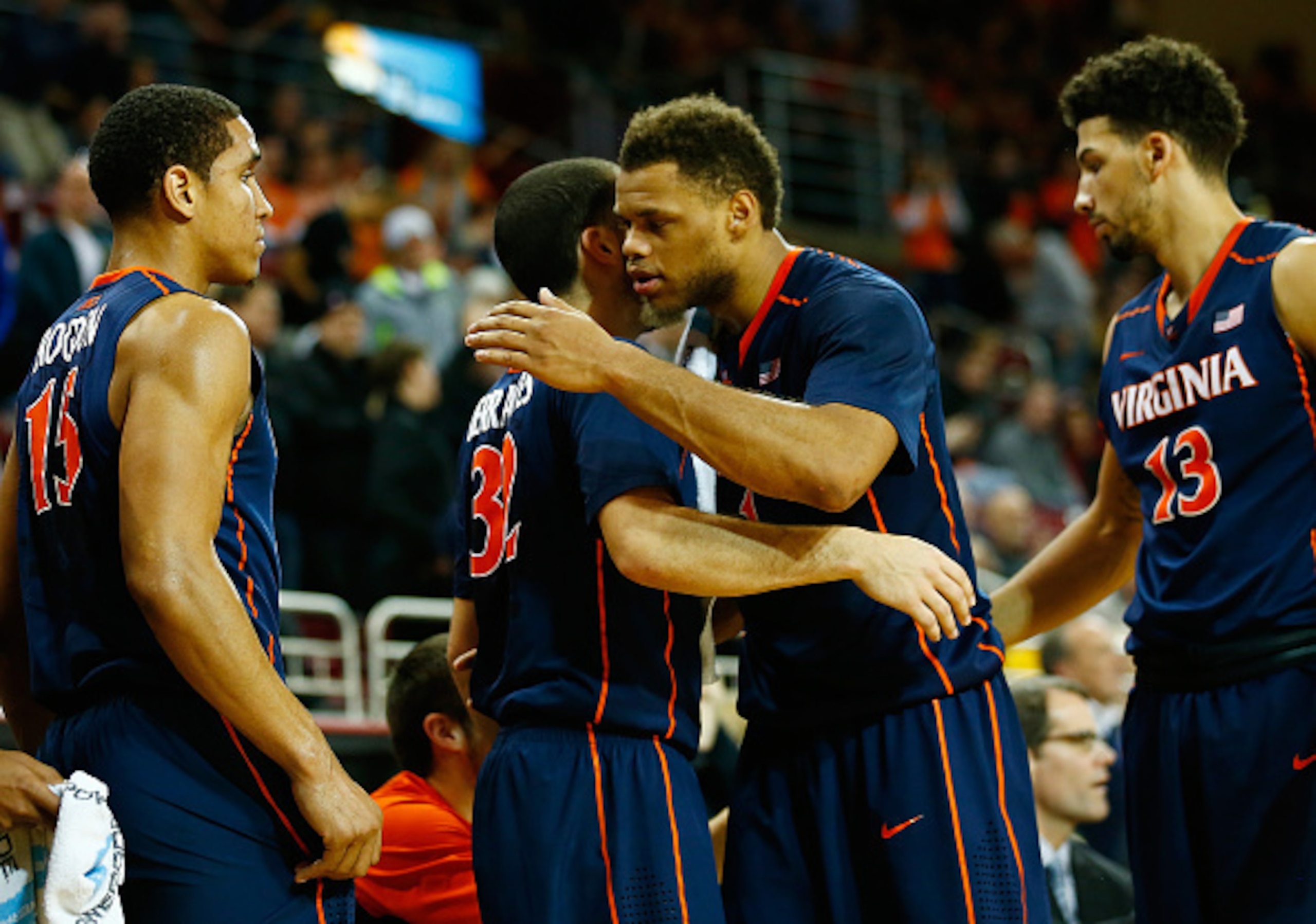
By the Numbers: 17-0; RPI: 2; KP: 2; BPI: 2
Three Best Wins: 74-57 at VCU; 76-65 at Maryland; 62-56 at Notre Dame
Losses: None
Odds of No. 1 Seed: 1-5 (83.3 percent chance)
To say this early in the season a team will earn a No. 1 seed would be very high praise five out of six times, but think about how much bad Virginia would need to do in order to make up for all the good of the first 11 weeks.
The Cavaliers have 11 RPI Top 100 wins. Six of those victories came away from home. They have three true wins against teams who are either top 10 candidates or honorable mentions on this list.
Even if they were to lose all three of their upcoming games against Duke, North Carolina and Louisville, they would still have an extremely strong case for a No. 1 seed. And they're actually favored to win all those games, according to KenPom.com.
Basically, Virginia just needs to avoid suffering multiple unfathomable losses to teams like Virginia Tech, which should be no problem for a squad as disciplined and mentally tough as Tony Bennett's.
The bigger question for the team that insanely has three of the top five players in the KenPom.com Player of the Year standings: Can Virginia go undefeated?
In addition to being favored in each remaining regular-season game, Virginia gets a 23.7 percent chance of entering the ACC tournament without a loss, per KenPom.com. Road games against North Carolina and Louisville are the only instances where the Cavaliers have less than an 85 percent chance of winning.
That certainly sounds like a recipe for a No. 1 seed.
1. Kentucky Wildcats
11 of 11
By the Numbers: 18-0; RPI: 1; KP: 1; BPI: 1
Three Best Wins: 72-40 vs. Kansas (neutral court); 84-70 vs. North Carolina; 63-51 vs. Texas
Losses: None
Odds of No. 1 Seed: 1-50 (98.0 percent chance)
Those are "Rafael Nadal at his peak in the first round of the French Open" odds, and they don't even seem high enough.
With this line, you would need to bet $5,000 to win $100, but that's free money, right?
Maybe the Wildcats lose an SEC game to South Carolina or Florida and cede the No. 1 overall seed to Virginia, but can you even imagine a scenario in which Kentucky doesn't finish the season as one of the four best teams in the country?
We've grown to expect the unexpected, but surely that cannot happen. Not with such a talented roster that is only going to continue to look better as teams around the country deal with fatigue, while the platooning Wildcats feel fresh as daisies.
In addition to being one of the most athletically gifted teams, Kentucky played a challenging schedule that resulted in five RPI Top 30 wins. No other team in the country can boast more than three such wins on the season, let alone exclusively in nonconference play.
It's not quite a guarantee. The entire team could come down with pneumonia resulting in 13 consecutive losses. But if there's any squad in the country that should already be planning on facing a No. 16 seed in two months, it's Kentucky.
Kerry Miller covers college basketball for Bleacher Report. You can follow him on Twitter: @kerrancejames.




.jpg?w=2560 "Raiders Sticking with Cousins")