The Best Unde-the-Radar Rivalries in College Basketball
Any basketball fan is familiar with the rivalry between Duke and North Carolina. Other high-profile rivalries, such as Louisville-Kentucky, Indiana-Purdue and Xavier-Cincinnati, strike a chord with most hoops fans as well.
However, there are a number of intriguing rivalries that lie outside the limelight, mostly in smaller conferences and some not even in Division I. They don't get the publicity or television exposure that the Blue Devils and Tar Heels receive in their matchups, but the intensity and history of those rivalries are often just as significant.
We take a look at the 10 best under-the-radar rivalries, ranking them in terms of significance.
10. Austin Peay vs. Murray State
1 of 10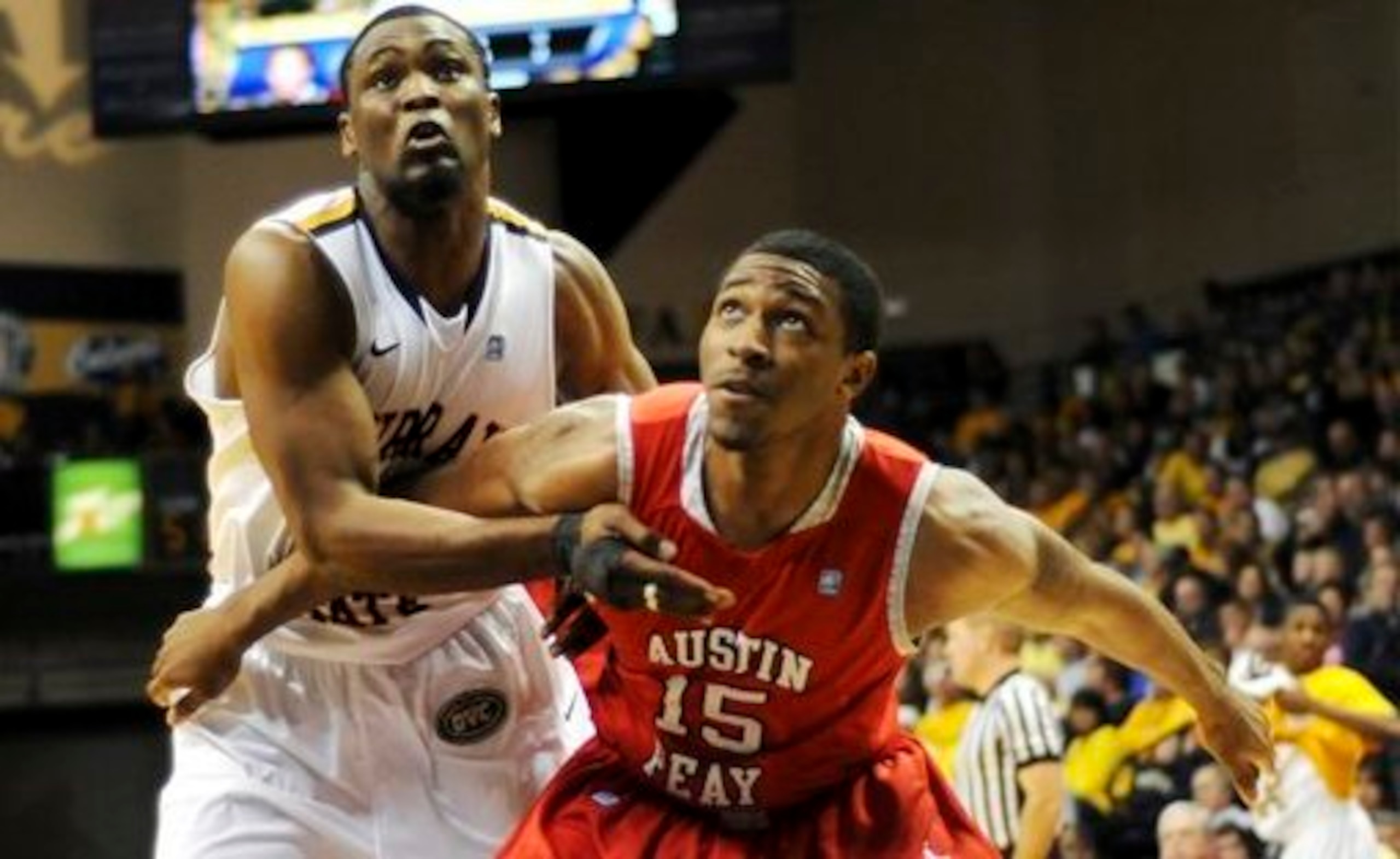
The rivalry between Murray State and Austin Peay has faded a bit in recent years, as Austin Peay has had a few lean seasons recently.
But from 1987 to 2010, either Austin Peay, Murray State or both played in every Ohio Valley Conference tournament championship game. They faced off against each other in five of those championship games, including three in a row from 1995 to 1997.
In the past 12 years, each team has won or shared four regular-season conference titles.
The campuses are located about 68 miles apart; Murray State in Murray, Kentucky, and Austin Peay in Clarksville, Tennessee.
The teams have played each other 122 times since their first meeting in 1942, with Murray State holding an 81-41 lead. The Racers won the first 13 games against Austin Peay and currently own a seven-game winning streak over the Governors.
Murray State has continued to be an Ohio Valley title contender and is 7-0 in conference play this season. The Racers' first game against Austin Peay is Feb. 7, with the rematch just two weeks later. The Governors are just 2-4 and in last place in their division of the conference at the moment.
Murray State has a longer rivalry with Western Kentucky, a team the Racers have played 152 times. But the Hilltoppers play in a different conference, making their meetings a little less significant.
9. Iona vs. Manhattan
2 of 10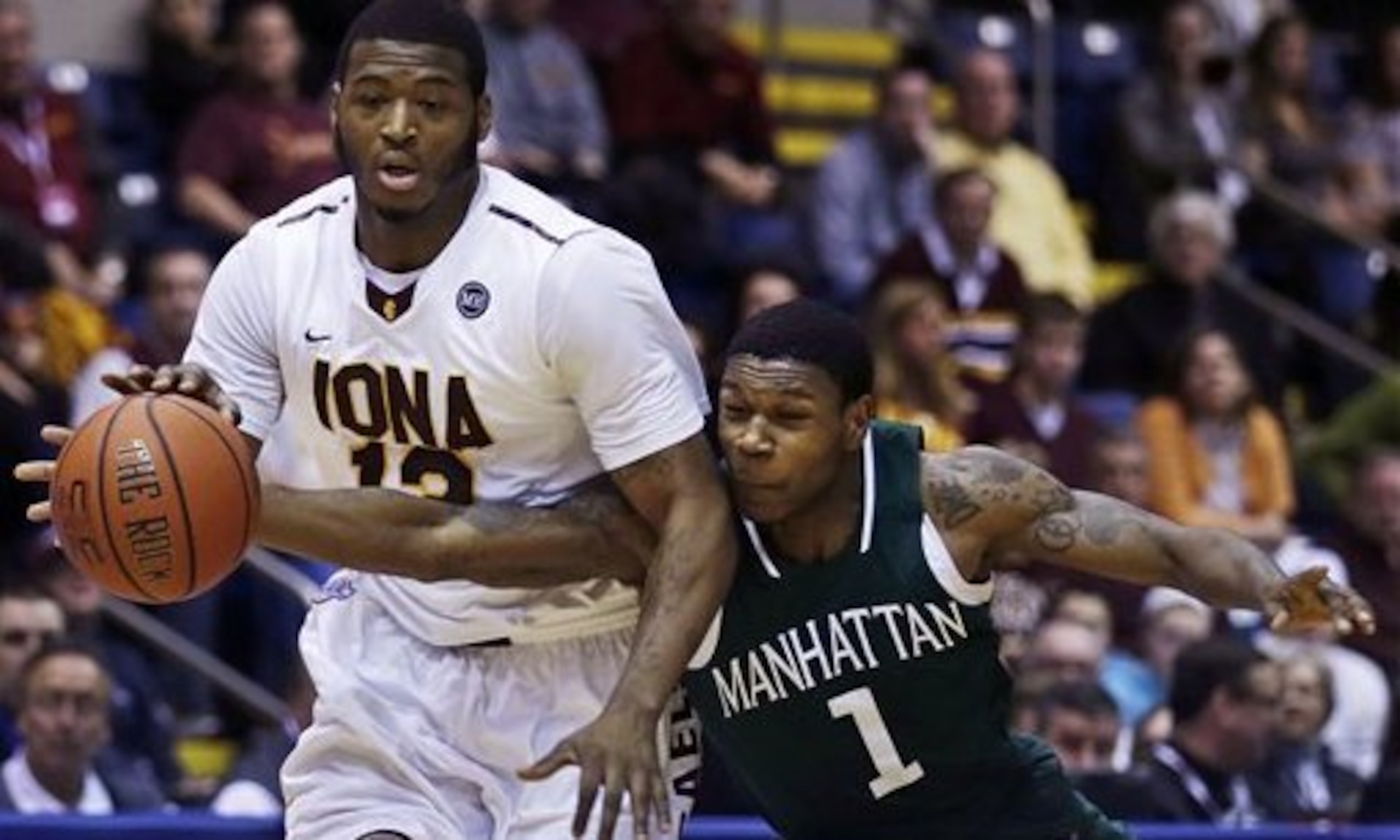
Iona and Manhattan, a pair of small Catholic universities located in the New York area about 10 minutes apart, happen to be the two best Metro Atlantic Athletic Conference teams over the past few years.
They met in the past two MAAC tournament championship games, with each team winning one of the two tense battles, both of which were decided by three points.
Iona and Manhattan finished first and second in the final MAAC regular-season standings last season, and it could happen again this season. Iona currently sits in first place with an 8-2 conference mark, while Manhattan is within striking distance at 6-4.
They will meet for the 86th time on Feb. 13 in the first of their two regular-season meetings, and there's a good chance they will meet for a third time in the conference tournament. Iona holds a 46-39 lead in the series that began in the 1946-47 season, and Manhattan coach Steve Masiello acknowledges the intensity of the rivalry.
"I’ve played in Kentucky-Louisville," Masiello said in a New York Times article last year. "There is no difference in the feelings. ... I have to want to beat them in everything. From recruiting, to staff, to stationery, to our pens. Everything we have has to be better than Iona’s."
Masiello is responsible for bringing Manhattan back to Iona's level, and only a strange turn of events kept him at Manhattan. After Manhattan got an NCAA tournament berth last year, South Florida hired him as its head coach.
But when South Florida officials discovered that Masiello did not graduate from Kentucky, as he claimed in his resume, the offer was rescinded, per ESPN.com. Masiello was fortunate that Manhattan allowed him to return as its coach after he got his degree.
Because of his return to Manhattan, the Jaspers' rivalry with Iona is likely to remain significant.
8. LIU Brooklyn vs. St. Francis (N.Y.)
3 of 10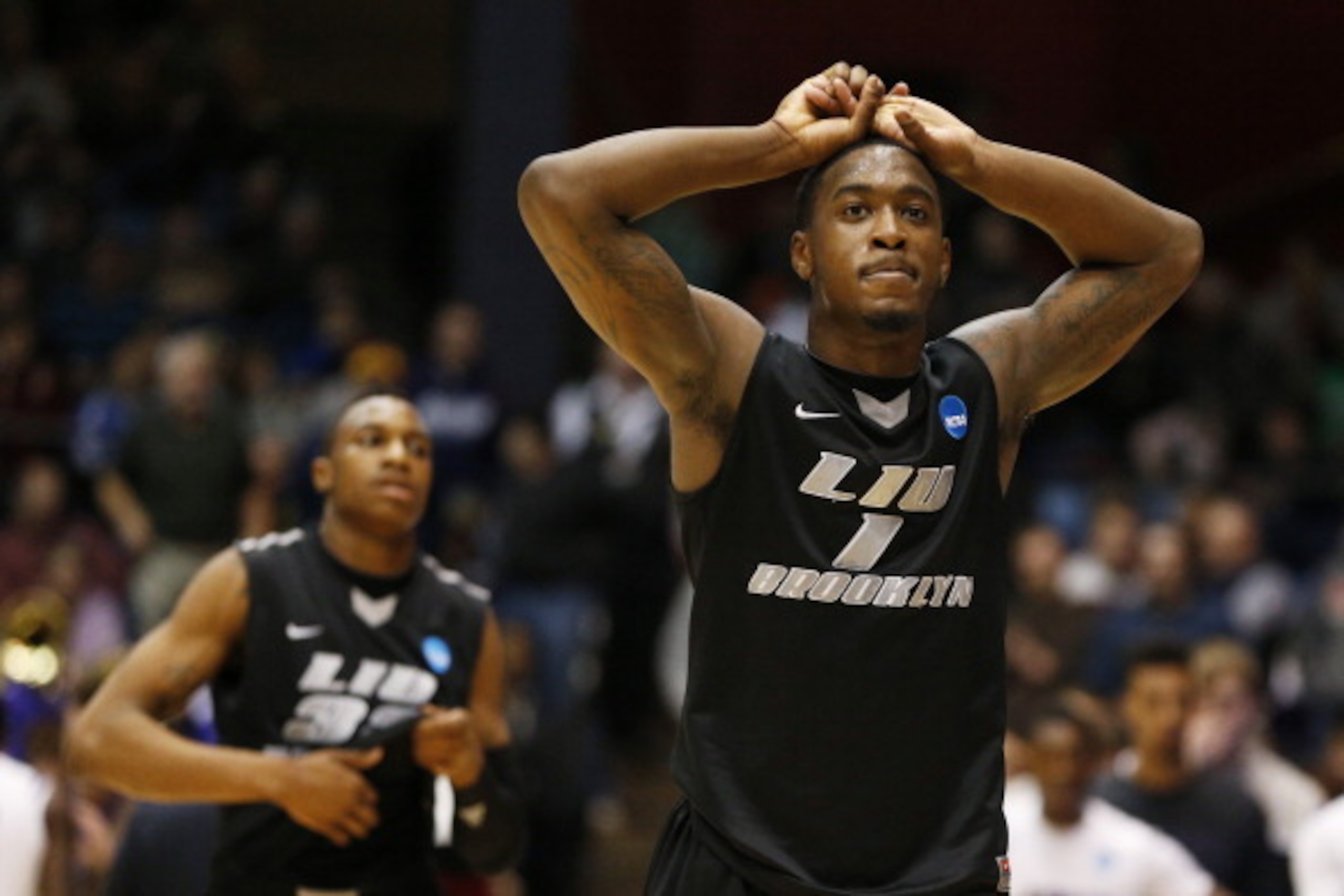
LIU Brooklyn and St. Francis (N.Y.) are both located in Brooklyn, separated by a 10-minute walk or one stop on the subway.
Both are members of the Northeast Conference, and they have played each other exactly 100 times since their first meeting in the 1928-29 season, with LIU leading 63-37.
Since the 1975-76 season, one meeting each season between the two rivals has been dubbed The Battle of Brooklyn, with an MVP trophy awarded to the game's best player. LIU also leads The Battle of Brooklyn series 23-16.
The teams met at Madison Square Garden in 2012, and they have played at the Barclays Center, home of the Brooklyn Nets, the past two seasons, with last season's game at Barclays earning The Battle of Brooklyn designation.
The LIU Blackbirds have dominated the overall series with St. Francis in recent years, winning seven of the last eight meetings. But St. Francis has major goals in mind as it prepares for the season's first meeting with LIU on Saturday, which is this year's Battle of Brooklyn game.
The Terriers were the preseason favorites in the Northeast Conference, and they currently are 6-2 in the conference, tied for first place. St. Francis is one of five original Division I schools that has never played in the NCAA tournament, and the Terriers are hoping this is their year.
LIU has played in the NCAA tournament six times, including three consecutive years from 2011 through 2013. But the Blackbirds are just 3-5 in conference play this season. They could make their season by ruining St. Francis' hopes.
.jpg?w=2560 "Seahawks Chiefs Football")


7. Akron vs. Kent State
4 of 10
Perhaps the best indication of the rivalry between Kent State and Akron came in the final regular-season game of the 2006-07 season, with the Mid-American Conference division title on the line in a game at Kent State.
Akron player Romeo Travis had left courtside tickets to the game for his friend and high school teammate LeBron James. James was a member of the Cleveland Cavaliers at the time and perhaps the most beloved person in Ohio. But he is also famous for being from Akron, and when he arrived at the game, the 6,327 Kent State fans booed him loudly. They also booed him during and after the game.
These two Ohio schools are just 15 miles apart, and Kent State holds a slim 71-69 lead in the 140-game series that started in the 1915-16 season.
After Akron beat Kent State in overtime in the finals of the 2011 MAC tournament to earn an NCAA tournament berth, a Kent State player was accidentally stepped on by celebrating Akron players who had rushed onto the court.
That nearly led to an altercation, according to an Associated Press account, as coaches from both teams had to separate players and security personnel came onto the court to help.
In the closing seconds of Kent State's 75-69 victory over Akron in 2008, a hard foul caused a skirmish among the players, according to an Akron Beacon Journal report.
The melee spilled into the front row of the stands, causing an injury to a woman spectator. Fans began throwing debris onto the court, and Kent State coach Jim Christian grabbed a microphone and scolded the crowd.
''This is a big rivalry, and you can't really expect anything less than high intensity,'' said Akron player Nick Dials after the game, according to the Akron Beacon Journal story.
The two teams routinely vie for the MAC title, with Akron getting to the NCAA tournament three times in the past six seasons and Kent State participating in the Big Dance five times since 1999, including an Elite Eight berth in 2002.
More of the same is expected this season. Kent State currently leads the MAC East with a 5-1 conference record, one game ahead of Akron. The two teams meet for the first time this season on Feb. 10 at Akron, and they'll meet again on March 6 in both teams' final regular-season game.
6. Hampden-Sydney vs. Randolph-Macon
5 of 10Randolph-Macon and Hampden-Sydney both have had considerable success in NCAA Division III tournaments, but those games are no more competitive than the ones between the two Virginia schools.
The rivalry runs across all sports, with football being the linchpin but basketball attracting more attention recently because of the teams' national success.
Former Randolph-Macon coach Mike Rhoades said the following in a 2008 ESPN.com story by Chris Preston:
"In the 2003 game at our place, we were ranked No. 1 and Hampden-Sydney was ranked No. 3. The game was sold out two weeks prior. We had to put in what I call 'Gucci rows' for alums who wanted to sit in the first two rows. We won the game and earned the top seed in the [Old Dominion Athletic Conference] tournament, then beat them in the finals on a tip-in.
"
Rhoades neglected to mention that the Hampden-Sydney Tigers won the first game between the two teams that year before 2,115 fans, nearly double the Tigers' second-largest home crowd that season.
The next season, both were ranked in the top 10 when No. 8-ranked Randolph-Macon, which was coming off its first loss, stunned top-ranked and unbeaten Hampden-Sydney. The Tigers again won the rematch later that season in front of a packed house.
Hampden-Sydney had reached the Division III Final Four in 2003, and it was national runner-up in 1999. Randolph-Macon has been more successful lately, getting into the NCAA Division III tournament each of the past five years and reaching the Final Four in 2010.
The Randolph-Macon Yellow Jackets lead the series 87-53 since the first game in 1956. But the rivalry has been a lot closer since the 1989-90 season, when Randolph-Macon dropped down from Division II to Division III and joined the Old Dominion Athletic Conference. The Yellow Jackets hold only a 36-29 advantage since then.
Proximity and similarity fuel the rivalry. Hampden-Sydney, located in Farmville, Virginia, and Randolph-Macon, located in Ashland, Virginia, are about 80 miles apart on opposite sides of Richmond. Both are liberal arts schools with similar enrollments—Hampden-Sydney having about 1,100 undergraduates and Randolph-Macon about 1,300.
Both were all-male schools for quite a while, and Hampden-Sydney still is, while Randolph-Macon went co-ed in 1972.
The Yellow Jackets are 13-2 this season and ranked No. 11 nationally in the Jan. 20 Division III poll. They easily beat Hampden-Sydney 77-55 in their first meeting this season. That could change the second time around.
5. Penn vs. Princeton
6 of 10
For quite a while, the Penn-Princeton rivalry was nearly as significant as Duke-North Carolina. The Ivy League title and resulting berth in the NCAA tournament always seemed to come down to the final regular-season game, which was always played between the Tigers and Quakers.
The Penn-Princeton dual has been pushed off the national radar screen the past several years, first by Cornell's three-year reign in the league, and now by Harvard's dominance in the Ivies.
Nonetheless, Penn and Princeton still meet in their final regular-season game, and their impressive run of dominance is immune to recent shortcomings.
Penn and Princeton have met 231 times since their first game in 1903, the most-played rivalry in Ivy League basketball. Penn holds a 124-107 lead.
Princeton, first with Bill Bradley and later with Pete Carril's precise backdoor offense, won 26 conference titles. Penn, with future Detroit Pistons coach Chuck Daly as its head coach for a while, won 25. No other Ivy League team has won more than four.
Penn or Princeton won or shared the Ivy League title in 44 of the 45 seasons between 1963 and 2007. The lone exception was 1988—Cornell won. Penn and Princeton finished tied for first four times in that span.
Princeton's Jadwin Gym and The Palestra in Philadelphia are by far the two largest arenas in the Ivy League.
Princeton won the two teams' first meeting this season by four points in both teams' first conference game of the season, and they will face each other on March 10 in both teams' final game.
Their traditional meeting in the season's final game often had increased importance, because the winner would frequently be the NCAA tournament representative from the Ivy League, which does not have a conference tournament. That probably won't be the case this season, though.
4. Belmont vs. Lipscomb
7 of 10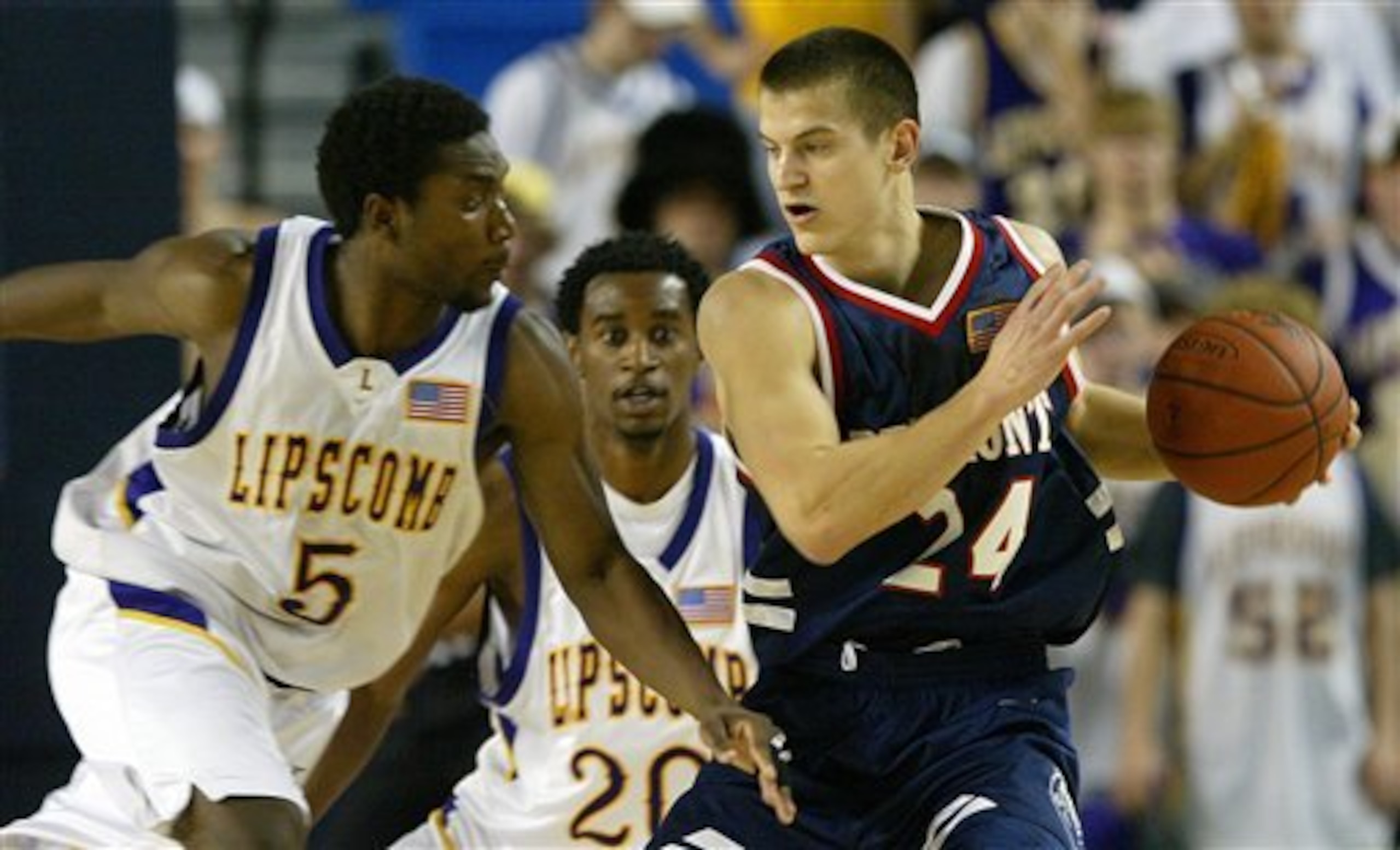
The Belmont-Lipscomb rivalry is distinctive for two reasons: proximity and crossover.
The two schools are less than three miles apart and are situated on the same street in Nashville (Belmont Boulevard), thus the rivalry is known as the Battle of the Boulevard.
However, they almost seem connected at the hip because of the personnel links.
Current Lipscomb head coach Casey Alexander played for Belmont and current Bruins head coach Rick Byrd. In 1995, with Alexander as its point guard and Byrd as its coach, Belmont, then an NAIA school, went 37-2, earned a No. 1 ranking and got to the semifinals of the NAIA tournament. Alexander was on Byrd's staff at Belmont for 16 years.
Lipscomb assistant coach Steve Drabyn was an all-conference guard for Belmont and Byrd in 2004.
Then there is the case of Chad Lang. As a Lipscomb graduate student this season, Lang was Lipscomb's starting center when the Bisons played Belmont earlier this season. But last season, he scored six points in two games against Lipscomb while playing as a reserve center for Belmont.
The teams have met 136 times dating back to 1953. Lipscomb holds a 73-63 edge, but most of those games were played when both schools were NAIA members. As NCAA Division I members, Belmont holds a 16-9 record.
In 2006, Belmont and Lipscomb advanced to the finals of the Atlantic Sun tournament, with the teams knowing that the winner would earn its first-ever NCAA tournament berth. Belmont won 74-69 in overtime to get to the NCAA tournament.
Lipscomb played in the NIT that year. Belmont has played in the NCAA tournament six times since that first berth in 2006, but Lipscomb has not been to any postseason tournament since that 2006 season.
Both schools were members of the Atlantic Sun Conference until Belmont moved to the Ohio Valley Conference in 2012. However, the two schools still play twice a year early in the season, sometimes opening the season against each other.
This season, Belmont won both meetings, winning 87-62 at Belmont on Nov. 17 and 82-77 at Lipscomb a week later. Belmont has won seven straight games against the Bisons and is clearly the better basketball program at the moment.
Both teams have a shot at an NCAA tournament berth this season, though, with Belmont leading the Ohio Valley East with a 5-2 conference record, while Lipscomb is in second place in the Atlantic Sun at 4-1.
(We would be remiss if we did not acknowledge that the plural form of "bison" typically is bison, but Lipscomb usually uses the nickname "bisons.")
3. Colorado State vs. Wyoming
8 of 10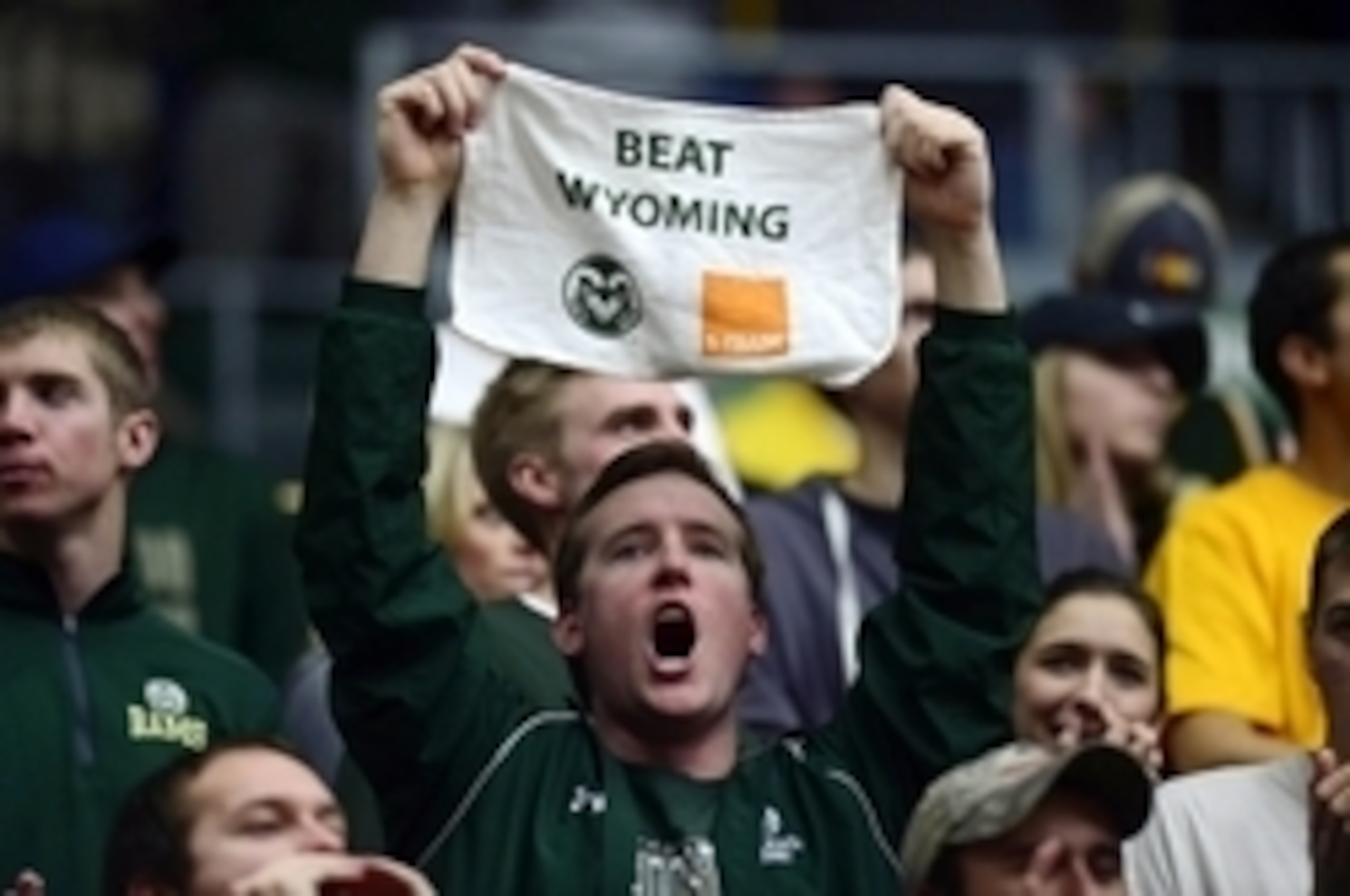
The rivalry between Colorado State and Wyoming is finally getting some of the attention it deserves this season. That's because both teams are in the thick of the Mountain West Conference race, and both have been ranked in the Top 25 at one point this season.
The Border War is the name of this fierce competition between these schools located 68 miles apart in Laramie, Wyoming, and Fort Collins, Colorado.
They have played each other 222 times since their first meeting in the 1910-11 season, with Wyoming holding a 130-92 edge. That includes Wyoming's 60-54 victory on Colorado State's home court on Jan. 7.
This rivalry usually gets lost in the high altitude of the Rockies, with most college basketball fans barely aware these teams exist. The focus is on the Border War this season because Wyoming is in first place in the Mountain West with a 5-1 record, just a game ahead of Colorado State, which is tied with San Diego State and Fresno.
Their Feb. 4 game at Wyoming may determine whether either can break the stranglehold San Diego State and New Mexico have had on the conference in recent years. Neither Colorado State nor Wyoming has won a regular-season conference title since the Cowboys finished on top in 2002.
The coaches are high-profile guys, with Wyoming's Larry Shyatt spending five years as Clemson's head coach, and Colorado State's Larry Eustachy having plenty of success as the head coach at Iowa State and Southern Mississippi.
Even when the games do not impact the conference race, the contests between Colorado State and Wyoming are tough affairs. Last season, a shove by Wyoming's Nathan Sobey that sent Colorado State's Daniel Bejarano to the floor resulted in Bejarano needing four sutures in his lip.
"Why do you think it's called what it's called? We're going to war. We're going to sit here and play tough. It's a rivalry game, and we want to win it, but it's not going to be easy," Bejarano said, according to a report in the Coloradoan. "I might need some stitches, you might see some blood, but I'm going to do whatever I can out there."
2. Gonzaga vs. St. Mary's
9 of 10
Gonzaga has ruled the West Coast Conference for nearly two decades, but it always seems to be swatting away the pesky fly known as St. Mary's.
It has created the best rivalry on the West Coast, with the Gaels of Moraga, California, often having a roster filled with Australians, and the Bulldogs of Spokane, Washington, frequently having a Canadian or two among their starters.
For years, Gonzaga treated St. Mary's like its weak little sister. From 2004 through 2009, the Gaels finished second to Gonzaga in the regular-season standings five times.
The Gaels were getting stronger under coach Randy Bennett, but so was Gonzaga, which was building itself into national prominence under Mark Few. The Gaels finally managed to knock off Gonzaga in 2008, but they still finished second in the standings that year and lost to the Bulldogs in the WCC tournament.
The Bulldogs won the WCC regular-season title again in 2010, with St. Mary's second once again. But in the 2010 WCC tournament championship game, the Gaels turned the tables on Gonzaga in a big way, recording a 19-point victory before advancing to the Sweet 16 of the NCAA tournament.
St. Mary's and Gonzaga finished tied for the regular-season title in 2011, and that season St. Mary's handed Gonzaga one of only two home conference losses the Bulldogs have suffered at the McCarthey Center, which opened in 2004.
St. Mary's did it one better the next season, finishing alone in first place, one game ahead of Gonzaga—the only time in the past 14 seasons that Gonzaga did not win or share a regular-season title.
The Gaels pummeled the Bulldogs 83-62 in their regular-season meeting at St. Mary's, and the Gaels put an exclamation mark on that season by beating Gonzaga in overtime in the conference tournament title game.
When Brigham Young joined the WCC in the 2011-12 season, what had been virtually a two-team conference was expected to become a three-team conference. But in two of BYU's first three years in the conference, Gonzaga and St. Mary's again finished first and second.
And it appears Gonzaga and St. Mary's will be the top dogs again this season, as BYU already has four conference losses.
When Gonzaga and St. Mary's met for the first time this season, both teams had 7-0 conference records. Gonzaga won that game convincingly 68-47.
But that game was in Spokane, where the Bulldogs are almost unbeatable. They will have a tougher time when they come to Moraga to face the Gaels in St. Mary's tiny—but loud—3,500-seat gym.
1. Calvin vs. Hope
10 of 10A 2005 ESPN poll to determine the greatest college basketball rivalries had—not surprisingly—Duke-North Carolina at No. 1, followed by the Tennessee-Connecticut women, then Louisville-Kentucky. But there, at No. 4, ahead of the likes of Xavier-Cincinnati and Indiana-Purdue, was the Hope-Calvin rivalry.
The two Division III schools are separated by about 30 miles (Calvin in Grand Rapids, Michigan, and Hope in Holland, Michigan) and a division in religions that no one can really explain. Calvin is affiliated with the Christian Reformed Church, which, in 1857, broke away from the Reformed Church in America, which has connections to Hope.
More significant is that their men's basketball teams have played each other 189 times since 1920, with Hope holding a 98-91 advantage. That includes Calvin's 88-64 victory in front of a sellout crowd of 3,434 at Hope this season.
Hope has scored 12,843 points in the series, compared with Calvin's 12,778—a margin of just 65 points.
The games are always sellouts, and they are televised in the state. In January 2000, moderator Tim Russert announced the winner of the game on Meet the Press, according to Chimes, the Calvin student newspaper.
In 1997, the teams decided to play their game at Van Andel Arena in downtown Grand Rapids, and the game drew 11,442 people, a Division III attendance record.
The series was interrupted from 1925 to 1929 because of fights and vandalism, according to a New York Times story on the rivalry, and it was interrupted again from 1937 to 1943 because of rowdy fans.
Calvin and Hope have dominated the Michigan Intercollegiate Athletic Association, with one or the other winning or sharing 58 regular-season championship since 1953.
They are in the thick of the conference race again this season, with Calvin (12-5 overall, 5-1 MIAA) tied for first place with Trine and one game ahead of Hope (11-6, 4-2). It could come down to Hope's game at Calvin on Feb. 4.
The schools have had their fair share of success on a national level, too, meeting a number of times in the NCAA tournament. The teams met five times in the 2006-07 season—twice during the regular season, once in a holiday tournament, once in the MIAA tournament and once in the NCAA tournament.
The final word on the Hope-Calvin series is that it may be the only rivalry that has its own website.