
The Biggest Flops of the 2014-15 College Basketball Season
Flops are based on a failure to achieve expected success. Misguided projections are sometimes more to blame for the perceived underachievement than the team or player, but that's the way it is in sports.
The 2014-2015 college basketball season does not feature any spectacular flops. Not yet, at least.
There's nothing like the season Kentucky had in 2012-13. The defending national champion Wildcats started the season ranked No. 3 but failed to earn an NCAA tournament berth and lost to Robert Morris in the first round of the National Invitation Tournament.
However, there have been some significant disappointments or perceived underachievements.
We focused on high-profile players and programs, cutting some slack to first-year Coppin State coach Michael Grant, whose only win in 16 games this season came against Goldey-Beacom, and to Delaware, which is 3-13 after going 25-10 last season.
We don't like to call any college player a flop, particularly at midseason, when he is apt to collect himself and turn things around by the time the NCAA tournament rolls around. But we did mention a few among our 10 so-called flops for 2014-15.
Florida
1 of 10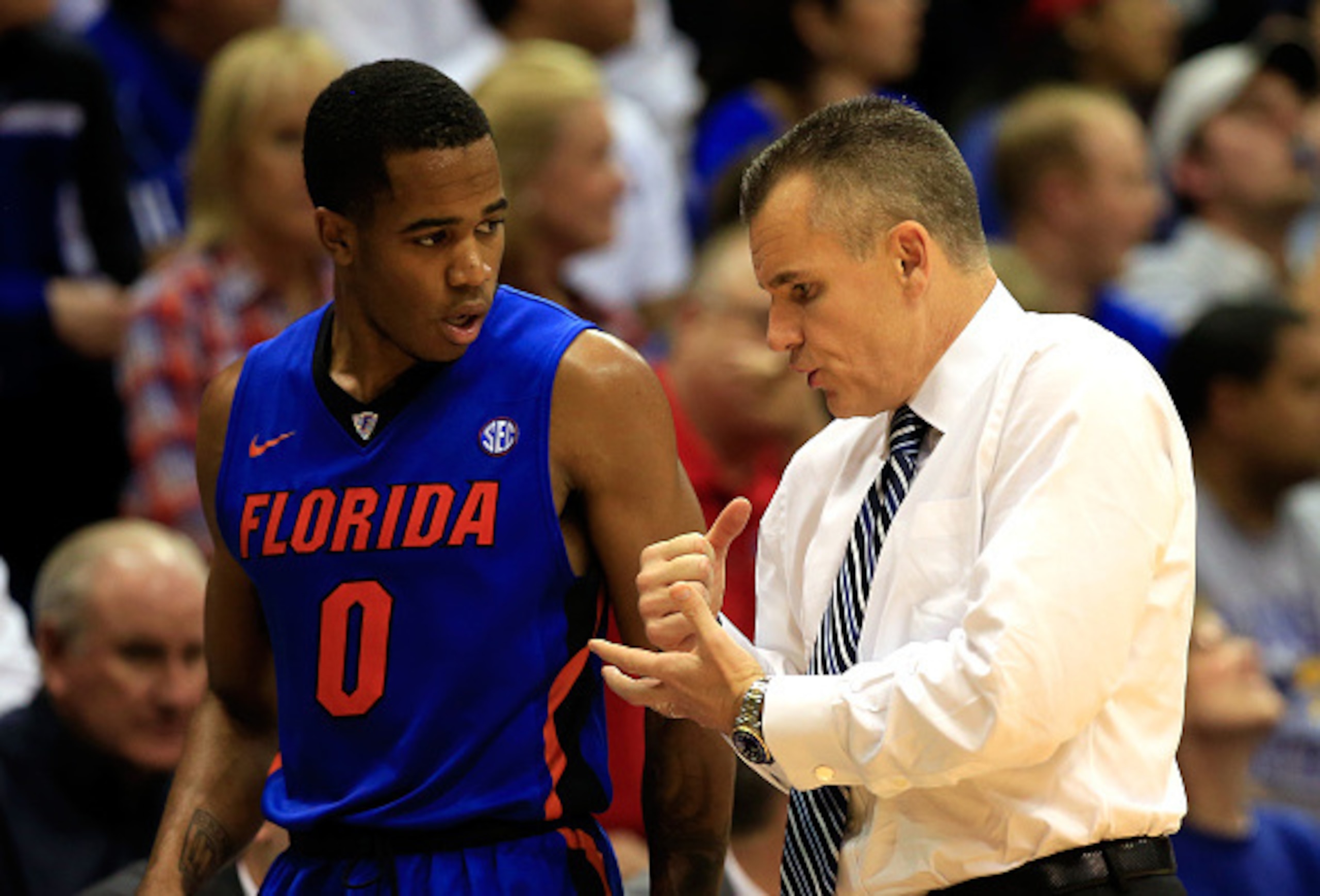
Billy Donovan has been through this before at Florida. After winning a second straight national championship in 2007, the Gators failed to reach the NCAA tournament the next two seasons.
Donovan rebuilt Florida and reached at least the Elite Eight four consecutive seasons, starting in 2011 and culminating with a Final Four appearance last season.
Florida finished the 2013-14 regular season as the nation's No. 1-ranked team and the No. 1 overall seed in the NCAA tournament. It seemed Donovan had established a program that could compete for a national championship every year.
The same was expected this season. Despite the loss of three starters, the Gators were ranked No. 7 in the preseason Associated Press poll.
But a difficult early-season schedule got the better of Florida, which lost four of its first seven games.
The Gators have been out of the top 25 since Dec. 1, and they have no notable wins. Their season-opening victory over William & Mary and a road victory over South Carolina probably rank as their best wins of the season, and that is not much to hang their hat on.
It didn't help that starting center and leading rebounder Jon Horford recently was suspended for a week because of what the Tampa Bay Times called an attitude problem. He is expected back on the court for the Gators' next game.
The Gators are 2-0 in the SEC, but those wins came against South Carolina and Mississippi State, teams picked to finish 12th and 14th, respectively, in the SEC's preseason poll. The Gators were picked to finish second and were seen as the only significant challenge to Kentucky.
Now, with a 10-6 record, a No. 79 RPI ranking and no wins over any top-100 RPI teams, the Gators may not even make the NCAA tournament. These days at Florida, that would rate as a flop.
Los Angeles-Area Teams
2 of 10
Southern California college basketball fans can usually count on at least one of the nine Division I schools in the Los Angeles area to produce some sizzle. But there isn't much to cheer about in la-la land this season.
Pepperdine is the only one of the nine teams that seems to have something going, and the Waves still have some things to prove.
UCLA, the flagship team of the L.A. area, has won three in a row. But that doesn't erase the fact that the Bruins (11-7) would not be in the NCAA tournament if the field were picked today.
It also does not wipe out UCLA's recent five-game losing streak, which included two losses by more than 30 points. One of those was an 83-44 loss to Kentucky, where the Bruins scored only seven points in the first half.
That is half the previous UCLA record for fewest points in a half (14). It was also the fewest points in a half by a Kentucky opponent since 1943, when the Wildcats allowed Carnegie Tech to score seven points in each half of a 61-14 rout.
Last year, in Steve Alford's first year as head coach, the Bruins finished second in the Pac-12, won the conference tournament and got to the Sweet 16 of the NCAA tournament. He was expected to achieve something similar every year, but it has not materialized this season.
USC was expected to add some pizzazz when it hired coach Andy Enfield, who dazzled the country when his Florida Gulf Coast "Dunk City" squad got to the Sweet 16 of the 2013 NCAA tournament.
However, the Trojans finished last in the Pac-12 with a 2-16 conference record in Enfield's first season, and they don't look like they are headed anywhere in Enfield's second season either. USC lost at home to Army during its nonconference schedule and is 1-4 in conference play, getting squashed at home by rival UCLA 83-66 in its most recent game.
UC Irvine was picked to win the Big West in the conference's preseason poll, and Long Beach State and Cal State Northridge were expected to be contenders as well. But none of them has a winning record at the moment.
Cal State Fullerton and UC Riverside were not expected to do much, and they have performed accordingly.
Loyola Marymount was picked to finish ninth in the 10-team West Coast Conference, and despite those low expectations, the team has still been a disappointment in Mike Dunlap's first year as head coach. The Lions have lost 11 of their last 12 games and are 0-5 in the WCC, alone in last place.
Pepperdine is the region's one shining light. The Waves, picked to finished tied for seventh in the West Coast Conference, are 11-5 overall and 4-1 in the conference, including a road win over BYU. However, Pepperdine faces a challenging schedule over the next seven games and could fade away.
Marcus Paige, North Carolina
3 of 10
North Carolina guard Marcus Paige may have begun to turn his season around by hitting the game-winning shot in the 72-71 victory over Louisville on Jan. 10.
He continued his resurgence the next game by giving his best performance of the season, hitting all five of his three-point attempts while collecting 23 points, nine assists, four steals, five rebounds and no turnovers in a victory over North Carolina State.
As impressive as that performance was, it was just one game, and Paige still has a ways to go to crawl out of a season-long slump and match preseason expectations.
Big things were expected of Paige this season after he averaged 17.5 points and 4.2 assists last season as a sophomore.
Paige was particularly productive at the end of last season, averaging 22.3 points over the final four games, which included an ACC regular-season game against Duke, an ACC tournament game and two NCAA tournament games.
Based on that, Paige was the top vote-getter while being named to the Associated Press preseason first-team All-American squad this season. Paige was also voted the preseason Atlantic Coast Conference Player of the Year by the media, receiving more than double the votes the runner-up got.
But things have not gone as smoothly as they did last season.
His scoring average is down to 13.9 points, his assists are down to 3.9 a game and his rebounding numbers and steals have decreased from last season as well. Most troubling is the fact that his shooting percentage has dropped to 38.0 percent this season.
Things were not looking particularly bright for Paige in the Louisville game until his final play. He was just 3-of-11 with eight points and four turnovers before he made a difficult driving layup with 8.5 seconds left to win the game.
"I said jokingly to my teammates that I was back," Paige said after the win over Louisville, per The Associated Press (via ESPN.com). "I know I haven't been playing the way I'm capable of playing, you guys know that, it's pretty well-documented at this point. And I need to play better."
Paige's turnaround is being hindered by injury. He has been bothered by plantar fasciitis in his right foot since late December, according to the Greensboro News & Record, and he has had ankle and hip injuries as well. The physical problems have caused him to miss practice time, and they've affected his game.
Nothing seemed to bother Paige against North Carolina State, though, suggesting his junior season may not end up as a flop.
.jpg?w=2560 "Seahawks Chiefs Football")


Connecticut
4 of 10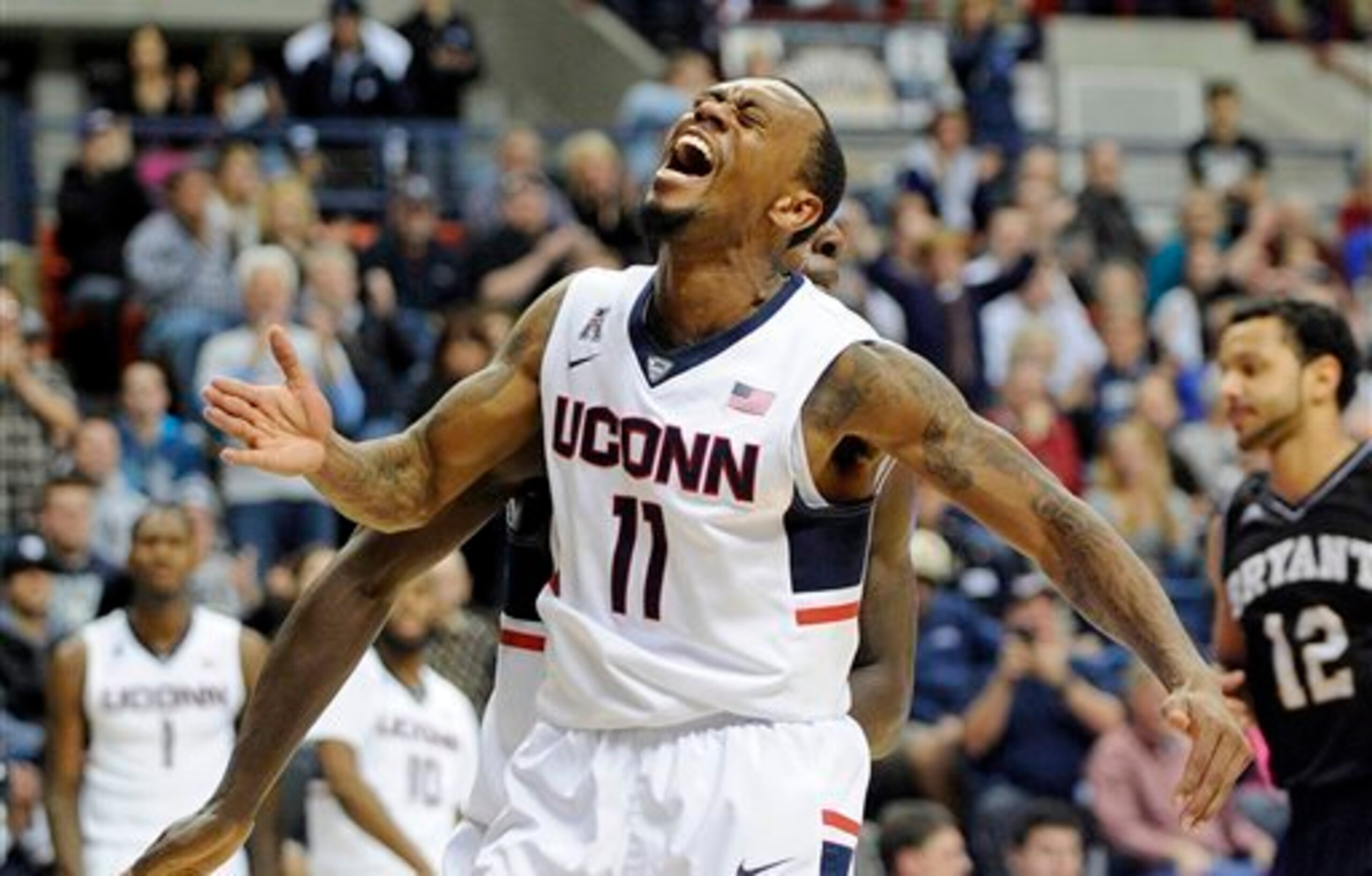
Connecticut coach Kevin Ollie was a hot item last spring, and it's easy to see why.
In 2012-13, his first season as a head coach at any level, he coaxed 20 wins out of a UConn team that presumably had little motivation since it was ineligible for postseason play. In his second season, all he did was win the national championship with an impressive run through the NCAA tournament.
After what an ESPN.com article called "some minor flirtation with NBA front offices," Ollie signed a lucrative long-term contract with UConn. Last June, ESPN.com ranked him as the 10th-best coach in college basketball today.
Almost anything UConn did this season would be a disappointment after that early run of success.
Despite the loss of star point guard Shabazz Napier and three other starters, the Huskies were ranked No. 17 in the preseason Associated Press poll. That was primarily because of the presence of Ollie and Ryan Boatright, the lone returning starter.
However, the Huskies quickly fell out of the rankings with a three-game losing streak that ended with an embarrassing home loss to Yale. They seemed to be settling down with wins over Florida and Cincinnati in January, but Ollie was disappointed in his team's performance in its most recent game, a 66-58 loss to unranked Tulsa.
"We cannot have lackluster games like that, we are not talented enough to do it," Ollie told the Hartford Courant. "We have to play at a level five, and I thought tonight was level three at best."
The loss to Tulsa dropped UConn's record to 9-6 overall and 2-2 in the American Athletic Conference. The Huskies have not beaten a ranked team this season, and they are in danger of missing the NCAA tournament.
It would be the fourth time in eight years that the national champion failed to make the NCAA tournament the following season, but that doesn't make it any less disappointing.
Michigan
5 of 10
Michigan's struggles this season were exemplified when it got behind Ohio State 52-24 four minutes into the second half this week. The Buckeyes, who eventually won the game 71-52, are a good team, but they are not ranked and are not the powerhouse they have been in recent years.
Being down by 28 points to that Ohio State squad and having scored just 24 points several minutes into the second half spoke volumes about the Wolverines.
Obviously, Michigan is having a down year. The Wolverines started slowly last season too but ended up winning the rugged Big Ten by three games and reaching the NCAA tournament Elite Eight after finishing as the national runner-up the previous year.
Although Michigan lost its top two scorers from last season's squad (Nik Stauskas and Glenn Robinson III), it was expected to compete for the Big Ten title again. The Wolverines started the season ranked No. 24 and won six of their first seven games, losing only to Villanova, which is currently ranked No. 5.
However, things went south from there. Consecutive home losses to New Jersey Institute of Technology and Eastern Michigan were inexplicable, and that started a four-game losing streak that included a 27-point loss to Arizona.
The Wolverines have won four of their past six games, but those four victories were achieved in close Big Ten games against Illinois, Purdue and Minnesota, which are a combined 1-12 in conference play, and against Coppin State.
And the pasting Michigan took at Ohio State will be difficult to shake. Certainly, the foul trouble that limited Derrick Walton Jr.'s playing time played a part in that loss, but that does not account for the Wolverines' missing of their first 12 shots of the second half.
The season is not lost for Michigan, which is 10-7 overall and 3-2 in the Big Ten, but it will have to pick up its play to avoid missing the NCAA tournament for the first time since 2010.
Steve Masiello, Manhattan
6 of 10
Starting the 2014-15 season with a 2-7 record as the coach at Manhattan College was certainly not what Steve Masiello expected back in March.
His Jaspers finished last season with a 25-8 mark and nearly upset Louisville in the NCAA tournament. Masiello was a hot 36-year-old coach, and in late March, he accepted an offer to coach at South Florida, according to a CBS Sports report. The Wall Street Journal reported it was a five-year deal worth $6.06 million.
However, the offer was rescinded when South Florida officials performing a background check discovered Masiello did not receive a degree from Kentucky as he claimed in his resume, ESPN.com reported.
Masiello was fortunate that Manhattan allowed him to return as the Jaspers coach, but he was put on unpaid leave until he received his degree. Masiello got his degree in October and was reinstated as Manhattan's coach.
The Jaspers had lost three starters from last season's team, including their star, George Beamon. Nonetheless, Manhattan was picked to finish third in the 11-team Metro Atlantic Athletic Conference in a preseason coaches poll.
Last season, the Jaspers got off to a 10-2 start, including an 18-point road win over South Carolina. This season, facing a tougher early-season schedule, the Jaspers won only two of their first nine games.
Things looked particularly bleak when Manhattan lost a Jan. 2 game at Niagara, which was picked to finish last in the MAAC and is just 3-12 at the moment. That loss dropped the Manhattan record to 4-8 overall and 1-2 in the MAAC.
Recent results have provided hope, however.
The Jaspers and Masiello seem to be pulling themselves out of the gutter, having won five of their last six games to improve to 7-8 overall and 4-2 in the conference.
Should the Jaspers continue their surge and make the NCAA tournament again after Masiello's offseason woes and the poor start, it could turn a flop into a story of perseverance.
Kansas Recruiting Class
7 of 10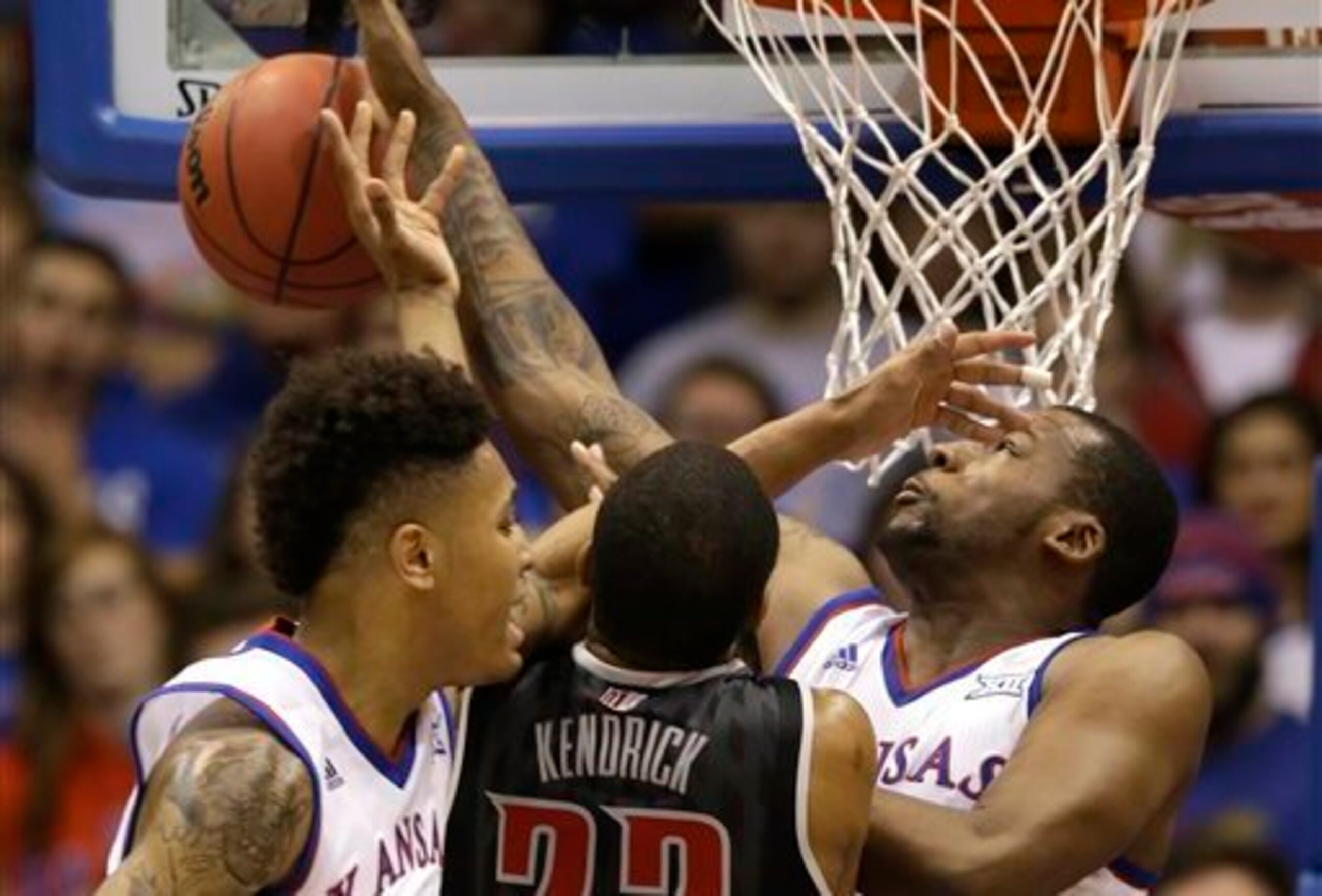
Kansas is doing fine, and freshmen Cliff Alexander and Kelly Oubre Jr. seem to be making significant progress. But Kansas' incoming group of four freshmen was ranked as the No. 3 recruiting class in the country by Rivals.com, a group that was expected to make nearly as big an impact as the freshmen at Duke and Kentucky.
That has not happened, and in some ways, this may represent the shortcomings of recruiting-site projections rather than the failings of some players who acquire the pressure of high expectations.
Besides Alexander, ranked as the nation's No. 4 high school prospect by Rivals.com, and Oubre, who was No. 6 on the Rivals.com list, the Jayhawks signed Sviatoslav Mykhailiuk, a 6'8" wing player from Ukraine who brought an excellent outside shot and plenty of hype with him.
Mykhailiuk, who did not turn 17 until June, was the only freshman to start in Kansas' opener and looked like he might turn out to be the star of the Jayhawks' freshman class.
But he shot only 2-of-10 in his first two games, and his playing time has diminished dramatically. Most of his playing time recently has come in blowouts, and he did not play at all in the victory over Oklahoma State.
Alexander, the presumed star of the Kansas recruiting class, has started just one game and is averaging 8.2 points and 5.4 rebounds. The 6'8" Alexander does seem to be improving, but not as much as Oubre, who has played well recently after a slow start.
Oubre, a small forward, averaged just 2.1 points in limited playing time over the first seven games and seemed headed for a terribly disappointing season. But he broke out with a 23-point, 10-rebound game against Lafayette on Dec. 20 and is now a starter who averaged 13.6 points and 6.8 rebounds in his last seven games.
Guard Devonte' Graham is the fourth member of the Jayhawks' freshman class, and he was ranked as the No. 36 recruit in the country by Rivals.com.
He was getting meaningful playing time until he suffered a toe injury in the Dec. 10 game against Georgetown that threatened to end his season, according to a Topeka Capital-Journal report. However, he was back for the Jan. 10 game against Texas Tech and has totaled 11 points, nine assists and seven rebounds in his two games since his return.
Three of the four Kansas freshman are helping the Jayhawks this season, although their impact has been considerably less than projected.
Kim Anderson, Missouri
8 of 10
Missouri's first-year coach Kim Anderson found out in the humbling loss to Kentucky that it's a long way from the Division II dominance he had at Central Missouri to achieving success at the highest level of Division I.
Anderson won 30 games or more three times in his 12 seasons at Central Missouri, capping it off with a Division II national championship last season. When Frank Haith left Missouri to become Tulsa's head coach after last season, Anderson was invited to travel the 100 miles to Columbia, Mo., to take his place.
Haith had won at least 23 games in each of his three seasons at Missouri, getting to the NCAA tournament twice. Similar success was expected of Anderson, even though he would be operating with limited talent.
Four of the five starters from last season's team, including stars Jabari Brown and Jordan Clarkson, were gone. But the Tigers were picked to finish seventh in the 14-team Southeastern Conference in the preseason poll, meaning they figured to have a shot at an NCAA tournament berth.
However, the Tigers began the season with a home loss to Missouri-Kansas City, which is 5-13 at the moment, and things have not been much better for Missouri since. The Tigers' only win of note was an overtime victory over LSU, and Missouri has lost five of its last seven games to fall to 7-8 overall and 1-2 in the SEC.
Missouri has not finished with fewer than 23 wins since 2007-08 and has not had a losing season since 2005-06.
Reaching 23 wins this season seems impossible, and a winning record is in doubt after the 86-37 shellacking the Tigers took against Kentucky. That represented the Tigers’ lowest point total in a game since a 41-36 loss at Oklahoma on Jan. 9, 1950.
That's not the kind of accomplishment a coach wants on his resume in his first season.
Big Ten
9 of 10
On Jan. 10 of last year, three of the top five teams in the Associated Press poll were from the Big Ten. No one doubted that the Big Ten was the best conference in the country. It was the No. 1-ranked conference in the country, based on RPI.
The addition of Maryland, with its strong basketball tradition, figured to add to the overall strength of the Big Ten, which has had a representative in the Final Four each of the past three seasons and five of the past six.
Things have been different this season. The Big Ten is currently No. 5 in RPI conference rankings, and after starting the season with four top-25 teams, the Big Ten has only two ranked teams now, with one being newcomer Maryland.
The handful of impressive nonconference wins, such as Maryland's victory over Iowa State and Iowa's win over North Carolina, are more than offset by a series of bad losses.
Defending conference champ Michigan lost to New Jersey Institute of Technology. Perennial powerhouse Michigan State lost to Texas Southern. Indiana was beaten by Eastern Washington. Nebraska lost to Incarnate Word. Purdue was beaten by Gardner Webb.
Rutgers had losses to St. Peter's and St. Francis of Pennylvania. And all of those losses took place on the home court of the Big Ten team.
Michigan, Michigan State and Ohio State, the traditional flag-bearers for Big Ten basketball, have all slipped out of the top 25. Indiana, ranked No. 1 to start the 2012-13 season, is also unranked.
Wisconsin, which began the season ranked No. 3, is down to No. 7 and faces serious questions now that point guard Traevon Jackson is sidelined for at least a month with a broken foot.
Certainly teams like Michigan State and Ohio State could have late-season surges and join Wisconsin and Maryland as postseason forces. But the Big Ten is far from the monster it was last season.
Chris Jones, Louisville
10 of 10Louisville guard Chris Jones deserves a place on this list because he was responsible for a flop in both the literal and figurative sense.
Jones may have flopped twice in the Cardinals' game against Kentucky on Dec. 27, but it was the one involving Kentucky center Dakari Johnson that elicited criticism.
Johnson was swinging his arms while holding the ball, trying to create space, when his elbow came fairly close to the chin of Jones, who was defending. Jones' head snapped back, and he fell backward as if he had been hit with a heavy elbow blow.
No foul was called on the play, as Jones stroked his jaw in apparent pain while walking back down court.
A video replay of the play showed that Jones' face was never touched by Johnson's elbow.
That flop not only flopped as a means of getting a foul call, but it flopped as a means of enhancing Jones' basketball reputation.
Television commentator Jay Bilas called Jones' flop "embarrassing," as noted by The Washington Post, and Louisville coach Rick Pitino benched Jones for the start of the Cardinals' next game against Long Beach State because of it.
Jones shot just 3-of-15 against Kentucky, so it was initially assumed that was the reason Jones played just nine minutes against Long Beach State.
But Pitino later gave Eric Crawford of WDRB TV in Louisville a different explanation:
"I didn't start Chris, not because of his shooting percentages, I didn't start him because of the flop issue. I was very upset at that. We don't do that type of thing. And then to fake it with the jaw like you got hit. You can't fake it. In junior college you do it. But you can't fake it. It's on TV. You can't fake those things.
"