
Ranking the Most Explosive Scorers in College Basketball in 2014-15
You've heard of players scoring a quiet 20 points, right? That's a player who is barely noticed during the game as he picks up points here and there throughout the contest. A look at the postgame box score shows he scored 20 points, much to your surprise.
Well, the "explosive scorer" is not that guy. The explosive scorer piles up a lot of points with viewers being well aware of his production. He typically puts up points in a variety of ways, perhaps hitting a three-pointer, then getting in front of the pack for a fast-break layup, then finishing off a dribble drive with a powerful dunk.
He is usually capable of impressive athletic feats, often overwhelming defenders with his physical gifts. However, the trademark of the explosive scorer is his ability to score a lot of points in a short span of time. He may go scoreless for a half, then score a dozen points in the first five minutes of the second half.
On the pro level, Russell Westbrook may be the best example of an explosive scorer.
You will note that several players likely to be All-Americans are not on this list. For example, Duke center Jahlil Okafor is an outstanding scorer and quite possibly the best player in the country. But he is a consistent, efficient low-post scorer who depends on others to get him the ball. That does not exactly fit our definition of an explosive scorer.
With that in mind, we rank the 15 most explosive scorers in college basketball in 2014-15.
15. Tyler Harvey/Venky Jois, Eastern Washington
1 of 15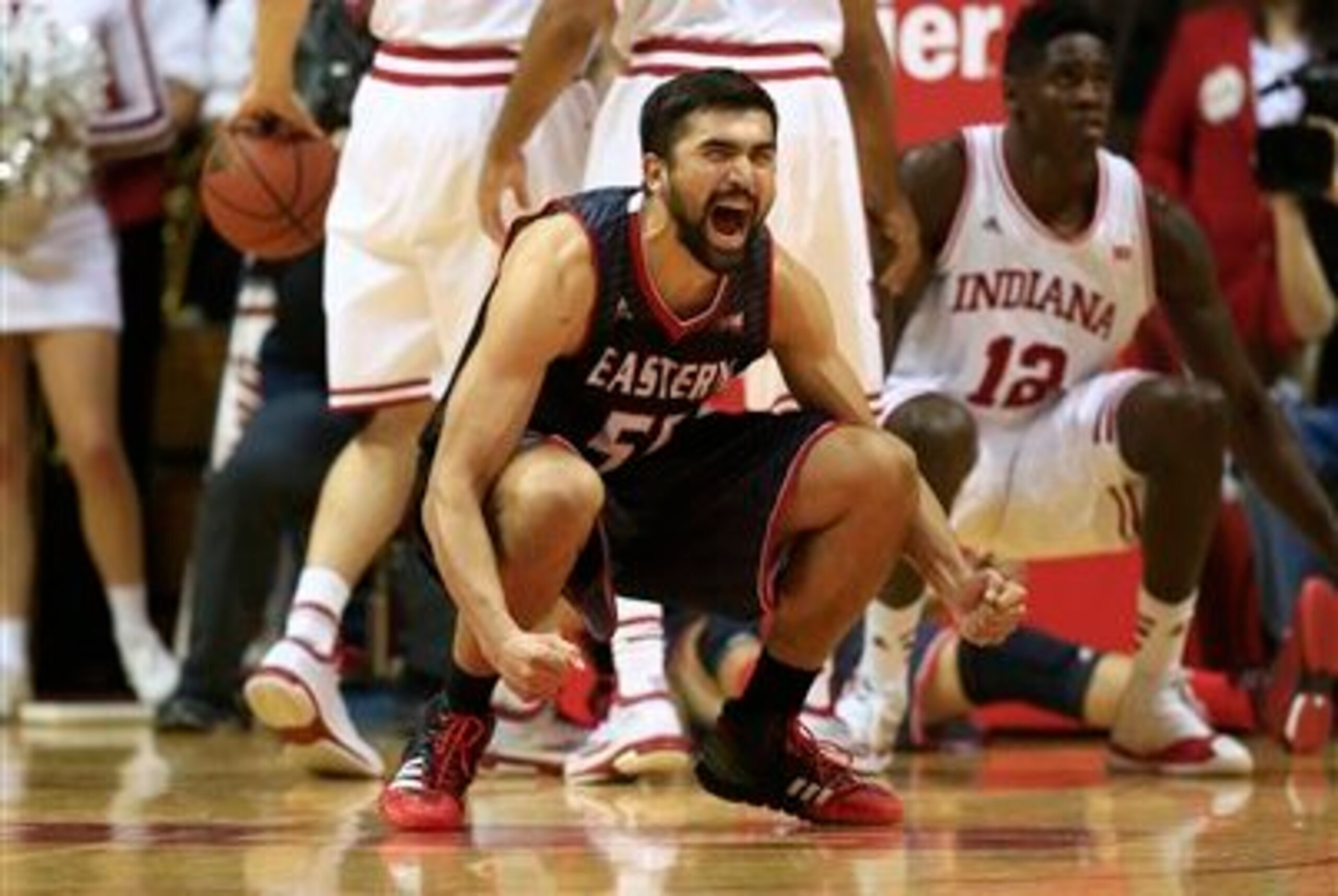
OK, we hedged a bet here with a joint ranking. Because the Eastern Washington tandem of Tyler Harvey and Venky Jois is the highest-scoring duo in Division I, we felt they deserved a place on the list, albeit a shared spot.
The 6'4" Harvey is one of the best shooters in Division I. He leads the nation in scoring, at 23.4 points a game, and in three-pointers made, at 4.6 per contest, while making 50 percent of his shots beyond the arc. The 6'8" Jois is not far behind at 19.1 points a game, although he seldom shoots from long range.
Neither is what you would consider an athletic marvel, but the pair can score a lot of points in a short period of time, making them an explosive combination.
Harvey and Jois combined to score the Eagles' first 25 points in their victory over Weber State in their Big Sky opener.
They accounted for 21 of the Eagles' first 24 points against California, and those two were the only Eastern Washington players with a field goal in that game until Drew Brandon made a three-pointer with 16:40 left in the second half. Harvey and Jois finished with 54 of the Eagles' 67 points against the Bears.
“Venky and Tyler are obviously very, very special, but we just have to work to get the supporting cast there with them,” Eastern Washington head coach Jim Hayford told the Spokane Spokesman Review after the 11-point loss to Cal.
Either can erupt at any moment in the Eagles' fast-paced attack. Jois scored 15 points in the final four minutes of a victory over Seattle, and Harvey had 17 points, including five three-pointers, in the first 8:12 of a six-point win over Lewis Clark State.
Granted, the caliber of the competition Jois and Harvey face is not great. But the numbers they put up and the speed with which they do it are great.
14. Tyler Haws, BYU
2 of 15
With some reluctance, we put BYU guard Tyler Haws in this list.
He gets most of his points on jumpers in an offense that promotes his high-volume shooting. He seldom explodes with a scoring burst, usually spacing his points throughout the course of a game. Furthermore, many of his points come from the foul line, an important but less spectacular way to score. (There's nothing explosive about nailing a pair of free throws.)
These are all laudable traits but not things that come to mind when discussing "explosive scorers."
However, it's impossible to ignore the fact that the 6'5" Haws is among the nation's leaders in scoring this season at 21.6 points a game after ranking sixth in the country in that category last season at 23.4 a game. He has a variety of reliable jump shots and can drive on occasion, and he has done it while playing against high-level competition.
He has gone on scoring tears on a few occasions. He scored 18 of his 35 points against Utah State in the final 9:16 of the game, but he is not prone to that kind of scoring surge.
He is explosive enough as a scorer to make the fringe of our list.
13. Terran Petteway, Nebraska
3 of 15
Nebraska forward Terran Petteway is not a classic example of an explosive offensive weapon.
Petteway does not have the athleticism or dazzling moves that most players on this list possess. He operates best out of the pick-and-roll, using change of speed, shiftiness and a fluid style to create scoring opportunities and frequent trips to the foul line. His game tends more toward subtlety than explosiveness.
However, he is an aggressive player who can keep Nebraska in games virtually by himself. He was the main reason the Cornhuskers surprised nearly everyone last season by landing an NCAA tournament berth.
He is averaging 18.9 points this season after averaging 18.1 points last season as a sophomore. He is clearly one of the nation's best scorers, which is why he is on this list. The reason he is not higher is because his scoring usually is spread fairly evenly over the course of a game, making him more of a quiet scorer.
The 6'6" Petteway seldom has the dramatic scoring binges that typically characterize explosive scorers, although he does have his moments. Petteway carried Nebraska to a win over Loyola Marymount this season by scoring seven of his 17 points in overtime. Last season, he made a habit of scoring most of his points in the second half, helping Nebraska to some unlikely victories.
.jpg?w=2560 "Seahawks Chiefs Football")


12. Justise Winslow, Duke
4 of 15
You may wonder what a player who is averaging just 12.7 points, third best on his own team, could be doing on this list.
Duke freshman Justise Winslow is here because of his explosive offensive skills, which allow him to score points in bunches in a number of dazzling ways.
Winslow won't be the college scorer that freshman teammate Jahlil Okafor is. To maximize their team's success, the Blue Devils must take advantage of Okafor's ability to make plays from the low post, giving him as many touches as possible.
But when the athletic, nimble, 6'6" Winslow makes a move toward the basket, you can see why he is projected to be a top-10 NBA draft choice by both NBADraft.net and DraftExpress.com.
His game may translate better to the pro level than the college level, and his scoring is apt to increase when he hits the NBA.
Winslow's athleticism was demonstrated in this Deadspin video, which shows Winslow jumping over Stanford guard Chasson Randle to block a shot, and it is demonstrated nearly every time he touches the ball.
After Duke's early-season victory over Michigan State, ESPN.com's Eamonn Brennan gave proper respect to Okafor, Quinn Cook and Tyus Jones. Then he wrote, "But none of the above were quite as impressive, both in obvious bursts and in the overall flow of the game, as Winslow, the Blue Devils' 6-foot-6, 225-pound jack-of-all-positions."
Teammate Jones also praised Winslow, per CBSSports.com:
"He's been amazing. He can score the ball in so many different ways. Physically gifted, so it's hard to match up with him. And out in transition, he's unstoppable. The thing is, he's been knocking down jump shots. When he's making those, that makes guys have to respect him, close out, and then that's when he gets to the cup. It rounds out his game and what he's improved on the most.
"
Winslow is averaging better than 12 points a game despite averaging just over 27 minutes a game and having to fit into a system built around a center (Okafor) likely to be the No. 1 pick in the NBA draft.
Winslow's 20 points against Wake Forest, which included two pivotal three-pointers within 49 seconds of each other in the second half, demonstrated his explosive capabilities.
11. R.J. Hunter, Georgia State
5 of 15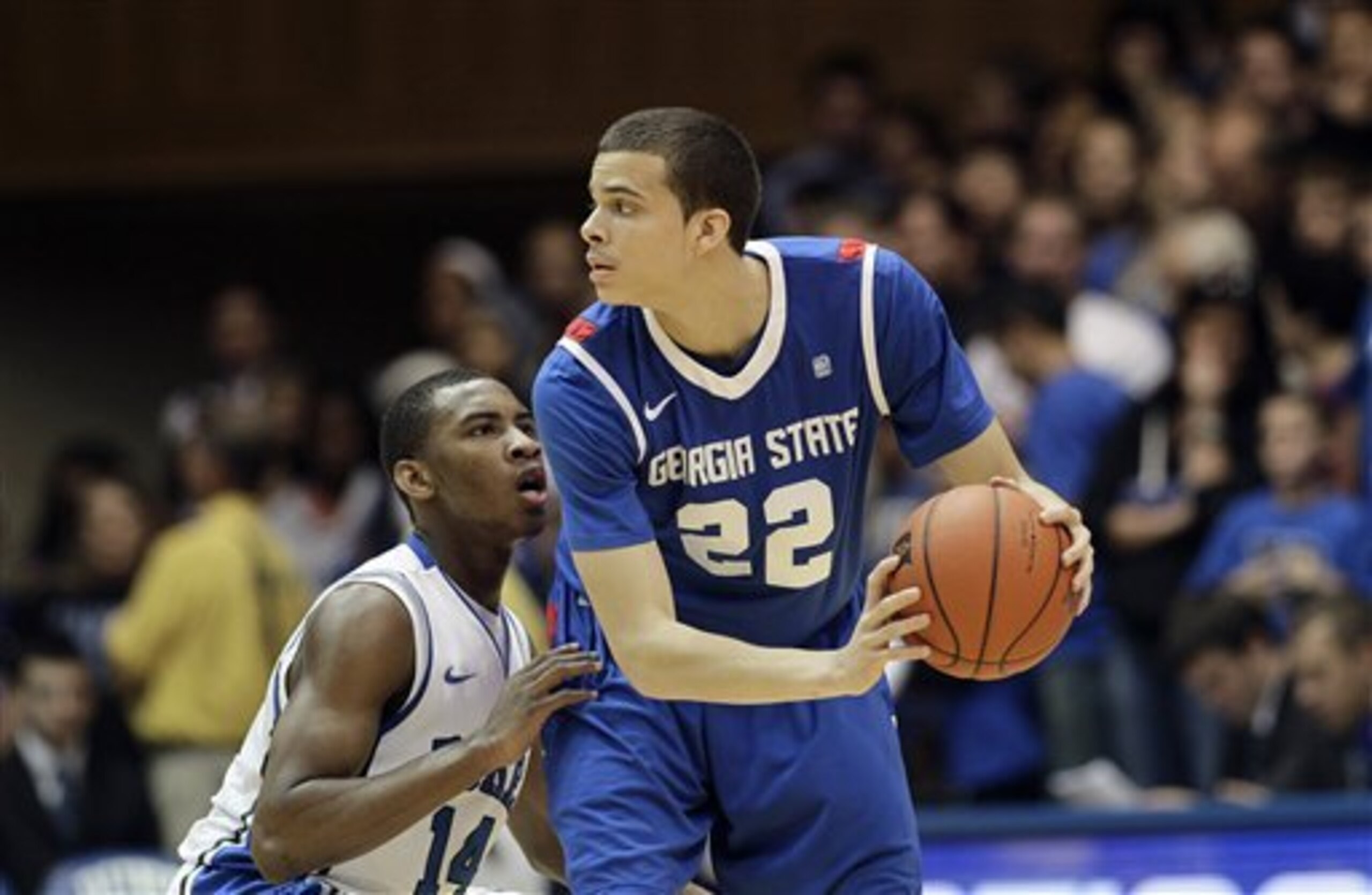
Georgia State guard R.J. Hunter is different from most of the others on this list for one reason: He is not particularly athletic. Lacking that trait typically disqualifies a player from consideration as an explosive scorer. In fact, Hunter gets nearly all his points from his one refined skill: his jump shot.
How can a jump-shooter be considered an explosive scorer? It's possible when he makes those shots in bunches and at critical times.
Pro scouts have taken notice. Hunter is projected as a first-round draft pick by DraftExpress.com, although there are conflicting views on his pro potential because he lacks elite athleticism.
Nonetheless, Hunter is deceptively quick and agile, and he finds countless ways to get into position to launch his picture-perfect jump shots. Usually such perimeter players can be contained with defensive face-guarding, but Hunter knows how to create space for his shots.
Opposing defenses are focusing more on Hunter this season. His scoring average is up to 19.2 points per game, but his shooting percentage on three-pointers is down to just 28.2 percent. Arkansas-Little Rock played a box-and-one defense against him in a Jan. 3 game, and Hunter did not score until the final minute of the first half. Hunter still demonstrated his explosive scoring potential by finishing with 14 points in a Georgia State win.
Hunter is streaky, and he disappears at times, as he did while missing all 10 of his three-point shots and scoring a season-low 10 points in 46 minutes during a double-overtime loss to Texas State on Jan. 5.
However, like many explosive scorers, he can suddenly reappear with a flurry of points. Hunter made five three-pointers during a 19-point first half before finishing with 29 points in a victory over Oakland. He scored 11 of his 27 points in the final three minutes against IUPUI, turning a four-point deficit into a three-point win.
10. Tyrone Wallace, California
6 of 15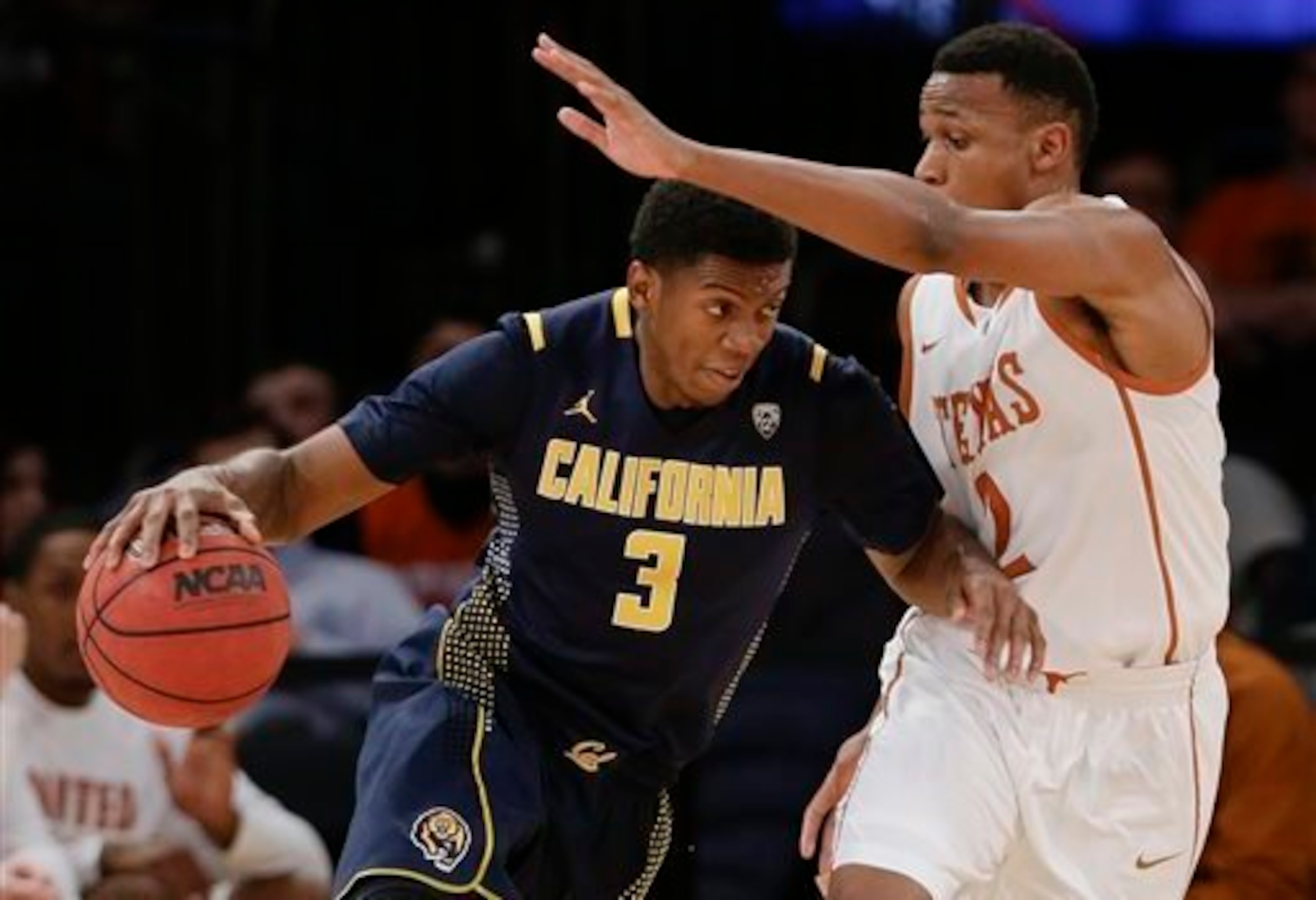
California junior guard Tyrone Wallace was not able to demonstrate his explosive offensive skills until this season. He had been a complementary player his first two college years, playing second fiddle to Allen Crabbe as a freshman and Justin Cobbs as a sophomore.
Now, with those players gone and new coach Cuonzo Martin making him a point guard, Wallace has demonstrated how explosive he can be. He has improved his three-point shooting to a respectable 36.2 percent, but his main offensive skill is his ability to score on a break and finish off dribble penetration.
Despite his slender physique, the 6'5" Wallace does his best work in the paint. He has a knack for creating space, drawing fouls and scoring amid the big men.
Wallace can bide his time for long stretches before deciding to impose his will on a game.
His only points in the first half against Princeton came on a three-pointer in the final minute. Not coincidentally, Cal trailed by nine points at the break. In the second half, Martin simply had Wallace take the ball at the top of the key and create plays. Wallace scored 17 points after halftime, including eight of the Bears' first 10 second-half points, and Cal won by 10.
Against Washington, Wallace missed his first eight shots and didn't score until less than six minutes remained in the first half. But he wound up with 19 points as the Bears overcame a five-point halftime deficit to win by six.
Wallace is averaging 19.1 points this season, but he has to pick and choose his moments to score because he has so many other responsibilities. He also leads the team in rebounding (8.4 per game) and assists (4.1 per game).
His pro stock has risen to the point that DraftExpess.com projects him to be a first-round NBA draft pick.
9. Rashad Vaughn, UNLV
7 of 15
Everyone knew UNLV freshman Rashad Vaughn had pro potential, but it wasn't until he scored 21 points in the Rebels' upset of then-No. 3 Arizona that observers were convinced he would be a big-time scorer in college.
The 6'6" Vaughn leads the Rebels in scoring at 17.5 points, and his smooth style lacks the flamboyance of many explosive scorers. But Vaughn's points make noise because they come at critical moments.
Both of his first-half three-pointers against Arizona came when the Wildcats were on the verge of pulling away, and each of his second-half buckets came at a critical moment. UNLV trailed by six points four minutes into the second half when Vaughn scored on consecutive possessions to lead a 6-0 Rebels run that tied the game. His five points in a span of 1:49 late in the game expanded a one-point UNLV lead to five.
Vaughn scored 26 points in his college debut, and his three-pointer with 1:06 left in that game against Morehead State broke a tie and provided the Rebels' final points in a 60-59 victory.
In the two-point loss to Nevada, Vaughn scored 13 of UNLV's final 14 points, including a three-pointer with 1:24 left that temporarily put the Rebels ahead by two.
DraftExpress.com projects Vaughn as a late-first-round pick in the upcoming NBA draft, largely because of his offensive skills.
His talent was apparent in high school at Findlay Prep. After watching Vaughn score 14 points in 15 minutes during last season's McDonald's All-American Game, SI.com's Chris Johnson wrote, "Vaughn, who is considered one of best pure scorers in the 2014 class, scored 14 points and grabbed five rebounds. Vaughn is extremely athletic and his shooting range extends out to the three-point line."
8. Jack Gibbs, Davidson
8 of 15
It's unfair but also inevitable that Jack Gibbs is being compared with Steph Curry. Like Curry, Gibbs is a Davidson guard with a sweet outside shot. And, like Curry, Gibbs can score in bunches.
Gibbs, a sophomore, is averaging 16.9 points in just over 30 minutes a game. But those raw numbers don't tell you how dominant Gibbs can be when he gets hot or how invisible he can be when he's not.
In consecutive early-season games against Campbell and North Carolina, Gibbs was a combined 3-of-17 from the field for a total of 12 points. In the next game, against Central Florida on the road, he went 15-of-17 from the floor, including 5-of-7 on three-pointers, to finish with 37 points in 32 minutes. He scored 13 points in one five-minute stretch.
Gibbs scored 32 points against Richmond, with 21 of them coming in the first half, when he hit five three-pointers. The next game, against Virginia Commonwealth, Gibbs went 1-of-8 from the field and didn't convert his only field goal until less than six minutes remained in the game.
Although Gibbs can disappear at times, he has the potential to score 30 in any given game and can erupt for 20 in a half. His explosive presence is a chief reason the Wildcats are a surprising 10-3.
"Clearly, [Gibbs is] becoming one of the great guards in America," Davidson coach Bob McKillop told The Associated Press, via FoxSports.com.
7. Jerian Grant, Notre Dame
9 of 15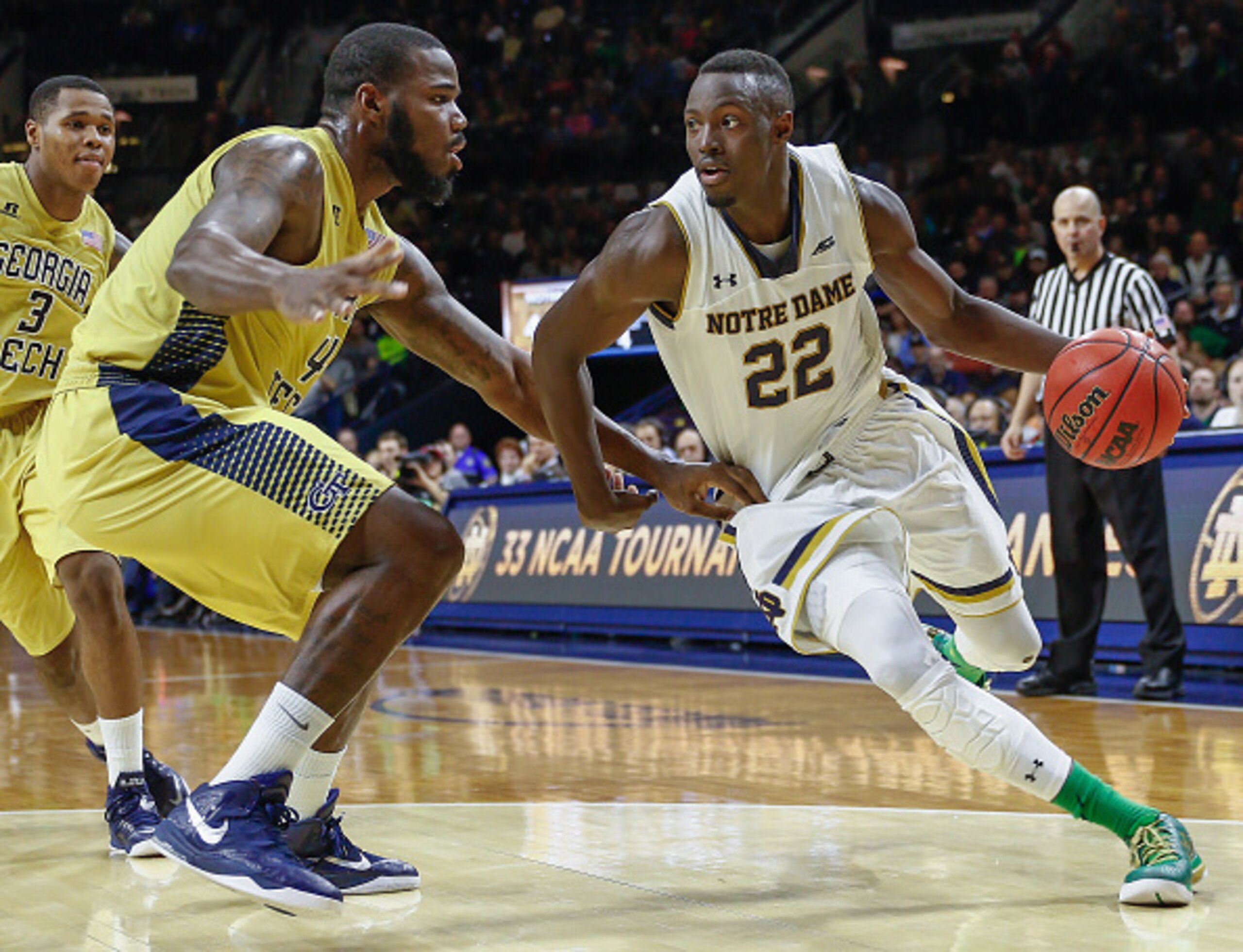
There is disagreement about whether Notre Dame's Jerian Grant is a point guard or a shooting guard, but there is no debate about the fact that he can score and can score in bunches.
Like many explosive scorers, Grant is streaky and can have disastrous games at times. He was 1-of-8 with eight points in a loss to North Carolina. Also like many explosive scorers, that kind of performance is not indicative of what is likely to come before or after. Two days before that poor showing against the Tar Heels, Grant scored 24 points in a double-overtime victory over Georgia Tech.
Grant, the son of former NBA player Harvey Grant, started this season off the radar because he played only 12 games last season before being suspended for academic matters. It's clear he makes a major difference for the Irish, who finished 15-17 last season but are off to a 15-1 start this season.
Grant's mere presence makes Notre Dame a more explosive team offensively, and his ability to score in a number of ways when points are needed most makes the Irish a contender in the Atlantic Coast Conference.
Grant's spectacular dunk against Georgia Tech midway through the second half got the Irish within two, with the accompanying free throw making it a one-point game. Grant scored nine of the team's final 17 points of regulation to force an overtime, and Notre Dame eventually won in two overtimes.
6. Chasson Randle, Stanford
10 of 15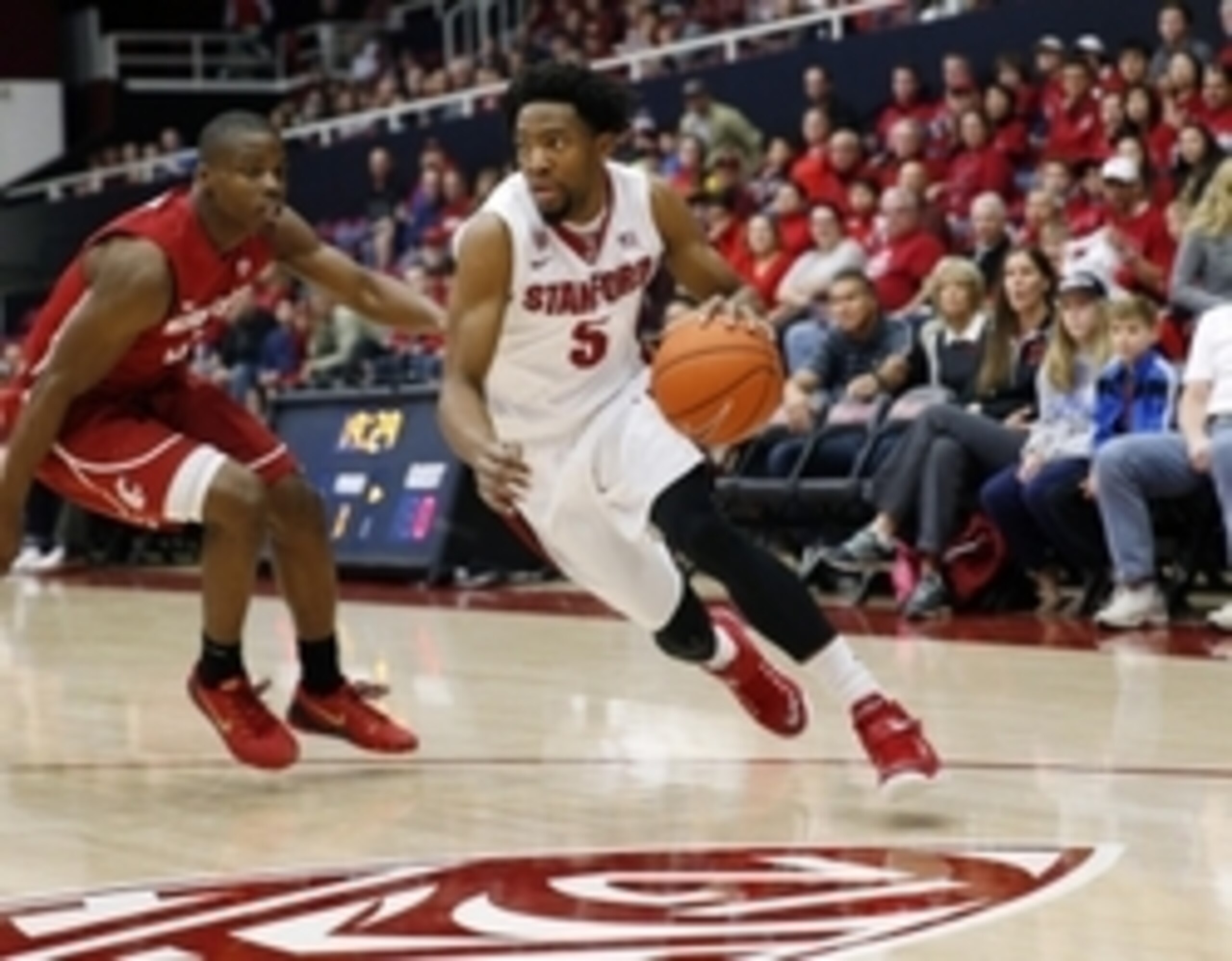
Stanford guard Chasson Randle looks terrible at times, taking poor shots while missing badly on a series of shots. Then suddenly, without warning, he can be perfect for long stretches, making everything he throws toward the rim.
Randle's offensive arsenal is vast. He is an excellent finisher off the break. He can hit three-pointers when he's hot. He has a nice mid-range game. He can dunk over bigger players. However, his best trait is his ability to finish off the dribble in the half court.
That was best displayed in Stanford's overtime victory over Washington on Jan. 5.
With Stanford down by two with less than eight seconds left in regulation, Randle was simply given the ball at the top of the key, with a screen available if he needed it. The 6'2" Randle beat his defender, then confronted 7'0" Washington center Robert Upshaw, the nation's leading shot-blocker, who already had four blocks in that game. Randle never hesitated, putting his body into Upshaw's to create just a bit of space before he banked in the layup over Upshaw's outstretched hand with 2.2 seconds left to force overtime.
Randle had missed his first five shots of the second half against Washington, then scored seven points in 1:19 to turn a three-point deficit into a one-point lead. He scored 12 of Stanford's final 16 points in regulation.
Two days earlier, in the victory over Washington State, Randle went 0-of-7 in the first half, scoring just one point. He then made his first two shots after halftime, scored seven points in the first 2:27 of the second half and scored 17 of his 18 points after intermission.
"He’s an attacking player. He’s one of the best finishing guards in college," Stanford coach Johnny Dawkins said, according to the San Francisco Chronicle.
5. D'Angelo Russell, Ohio State
11 of 15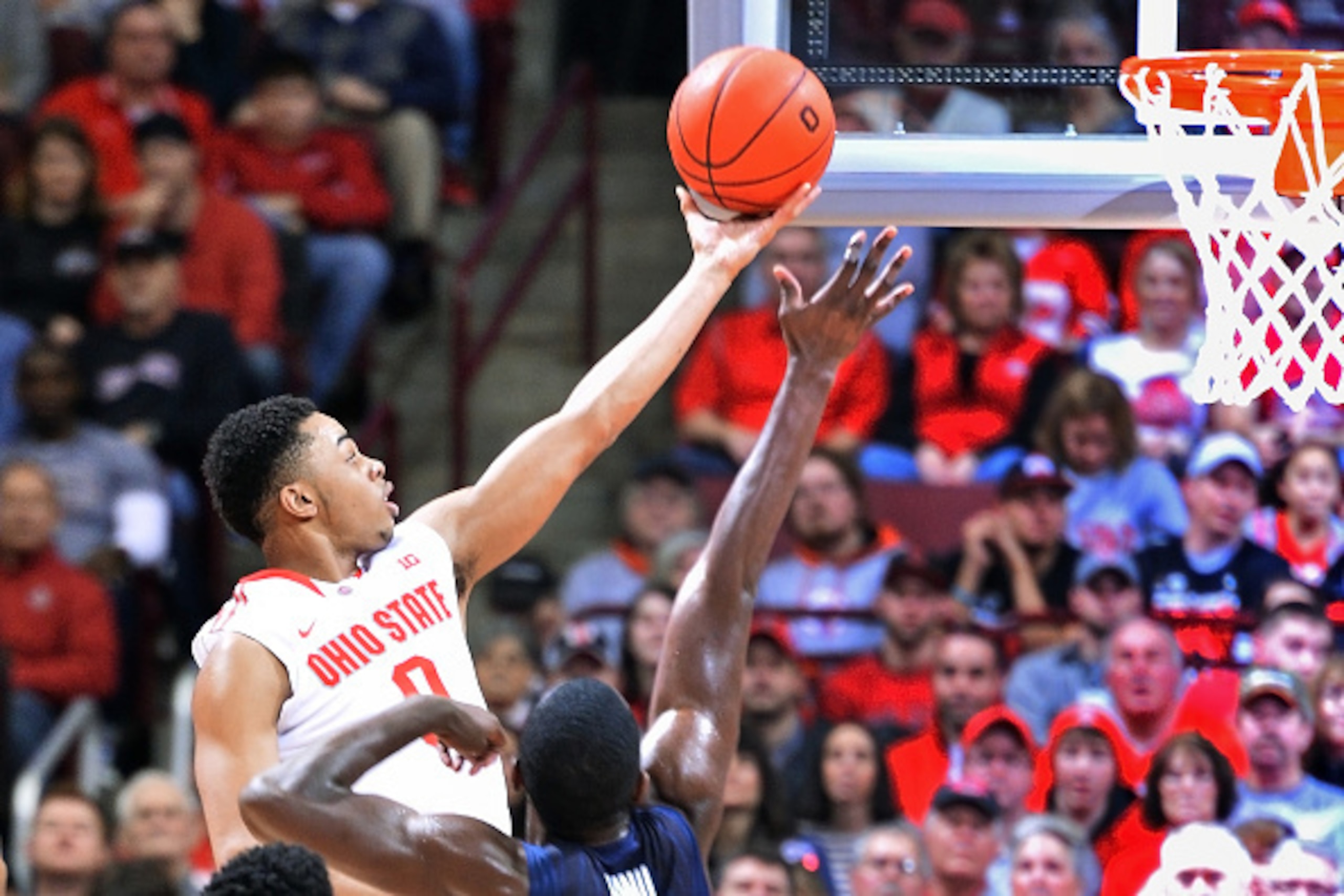
Ohio State freshman guard D'Angelo Russell showed his explosive potential in his third college game, scoring 32 points against Sacred Heart.
“I just told myself whoever was guarding me, I was going to destroy him,” Russell said, according to the Columbus Dispatch.
That sounds like a player determined to score in bursts, which is what the versatile Russell does. Sometimes he vanishes for a while before erupting in a scoring frenzy, and sometimes it's the other way around.
His big night against Sacred Heart came five days after a six-point, seven-turnover performance in a loss to Marquette.
Against Minnesota, he scored 25 points on 10-of-10 shooting in the first half, running the Gophers ragged and helping the Buckeyes to a 12-point lead at the break. He scored 14 of Ohio State's 16 points in one first-half stretch. But Russell went 0-of-7 from the field the rest of the game, and his only points after halftime were two critical free throws in overtime that helped Ohio State survive.
Against Illinois, Russell scored eight of his 22 points during a 15-0 Ohio State run in the second half that turned a 44-41 deficit into a 56-44 lead.
"I'm a risk-taker," Russell told Ari Wasserman of the Northeast Ohio Media Group. Wasserman probably captured the mercurial Russell best when he wrote, "[Ohio State coach Thad] Matta won't come out and say it, but when Russell is good, Ohio State is good. And when he's bad, well, you know."
Russell's ability to score points in a hurry and in a variety of ways makes him attractive to the pros. Both NBADraft.net and DraftExpress.com project him as a top-10 NBA draft pick.
4. LaDontae Henton, Providence
12 of 15
LaDontae Henton's nickname is "Buckets," a moniker he earned as a seventh-grader when all he could do on the basketball court was score, according to NBC Sports' Rob Dauster.
The Providence small forward can do a few other things now, but scoring is still what he does best. And he does it in bunches while averaging 21.3 points this season.
Henton scored 12 of his 25 points against Miami during a five-minute stretch early in the second half that put the Friars in command. Against Massachusetts, he scored 27 points, including eight in a span of 1:07 early in the second half when the Friars put the game away.
Henton tallied 17 points in a span of less than nine minutes during a 29-point performance in a six-point win over Yale. All but three of his 35 points against Creighton came in the game's first 30 minutes, when the outcome was still in doubt.
Henton's best game was against Notre Dame, when he scored 38 points and did his best work at crunch time. With 1:45 left, he hit a jump shot to cut Notre Dame’s lead to 71-70. A minute later, Henton made a three-point shot that put the Friars ahead by two points. After the Irish regained the lead by a point, Henton drew a foul and hit both free throws with 14.3 seconds left to provide the final points in Providence's 75-74 victory.
Henton has had a couple bad games, collecting three points against Kentucky and nine against Boston College in consecutive games while shooting 5-of-24 in that two-game stretch. But as quickly as he disappeared, he reappeared, scoring at least 15 points in each of his eight games since then.
When explosive offensive players like Henton get on a roll, they can do a lot of damage in a short period.
3. John Brown, High Point
13 of 15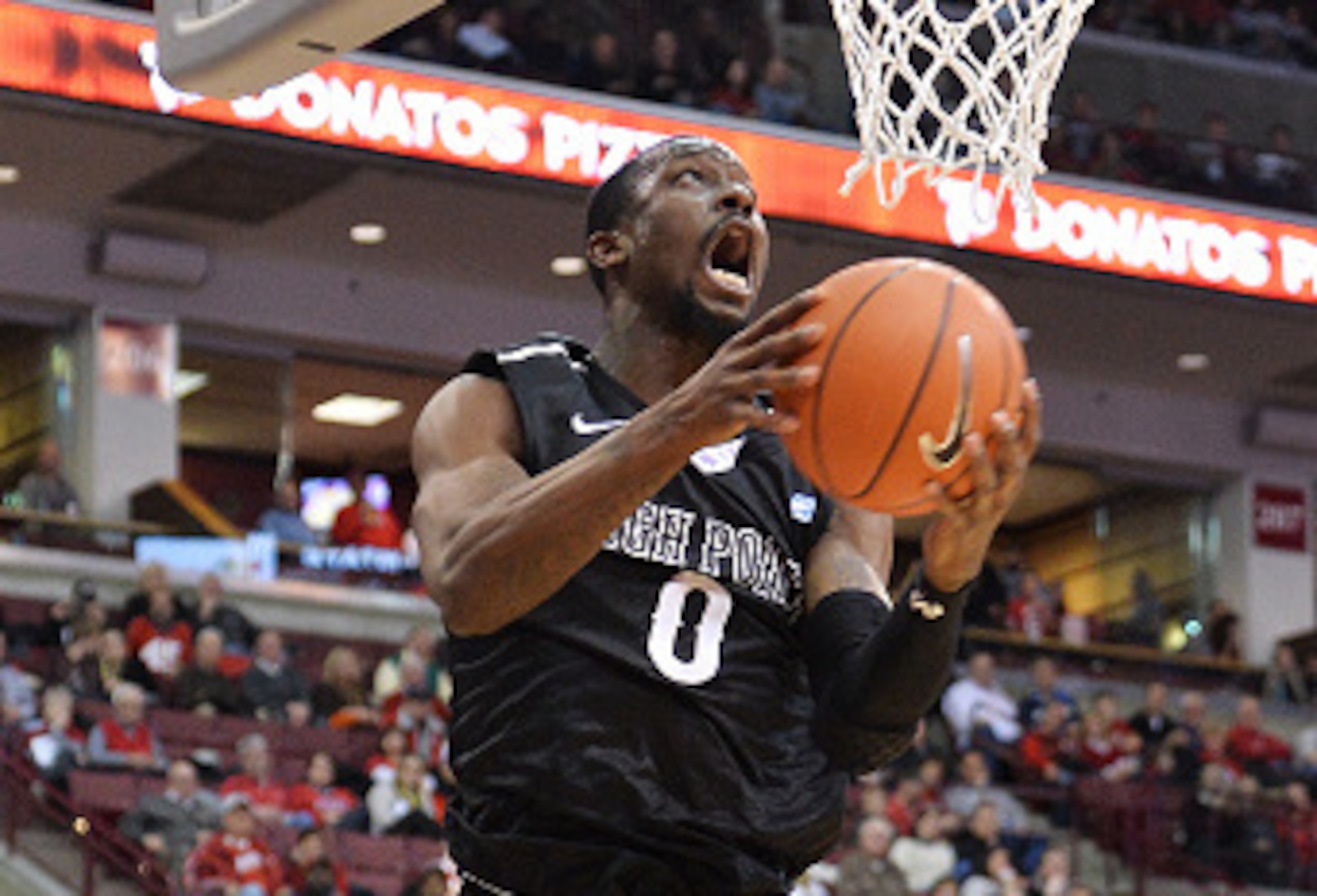
High point forward John Brown is an athletic wonder whose motor never stops. He simply hustles more, jumps higher and runs faster than anyone else on the court. He scores points in bunches and with a flair, and his dunks have become legendary.
The Sporting News ranked him as the third-best dunker in the country this season, and it had this description regarding his area of expertise: "Athleticism. He can dunk over you, around you or through you. He can leap from the foul line or from inside the paint. He's got a variety of moves to use. He may be the most well-rounded dunker in the country and has more opportunities than anyone else to show off his stuff."
Brown scored 26 points against Clemson, including 10 points in a five-minute stretch in which High Point reduced a nine-point deficit to two points with 3:04 left in the game. He had 24 points in just 28 minutes of court time against James Madison, with 17 of those points coming in the second half when the Panthers overcame a one-point halftime deficit for a nine-point victory.
He was Big South Player of the Year as a sophomore, and even his coach, Scott Cherry, knows he probably should be playing in a conference like the ACC.
However, Brown did not start playing organized basketball until his junior year in high school. Then, as NBC Sports' Dauster explains, he was not on course to qualify for a Division I scholarship because he transferred schools and wasn't aware of what he needed academically.
He finally got a scholarship to High Point but had to sit out a year. That's when he discovered he needed something else to play in college.
“I had to learn how to dribble,” he said, per Dauster. “You can run, you can jump, you can catch, you can do all of that. You don’t know how to dribble? You might as well give it up.”
Now he can dribble and score in bunches, averaging 19.2 points this season after averaging 19.5 points last season.
2. Joseph Young, Oregon
14 of 15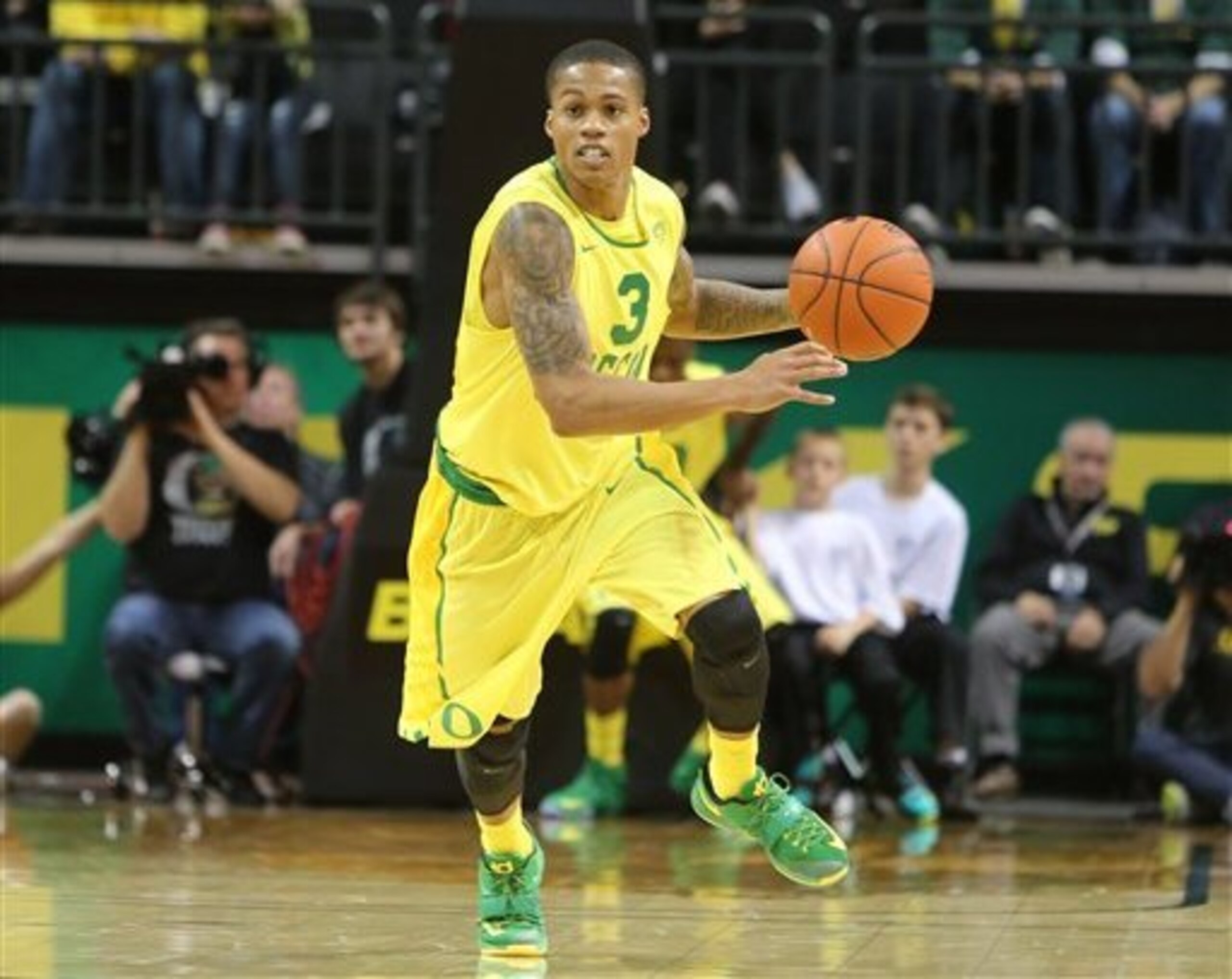
Joseph Young benefits from coach Dana Altman's fast-paced style, which fits perfectly with Young's skills.
The 6'2" guard is at his best in the open court in a free-wheeling game, which allows him to display his athleticism and varied offensive skills. He can make a three-pointer one moment, drive baseline for a dunk in the next, then turn a steal into a fast-break layup in the next.
There are times when he simply disappears from the offense for long stretches, then suddenly breaks out for 10 or 12 points, often in spectacular fashion. That's the definition of an explosive scorer.
One prime example came in the Ducks' Pac-12 opener against Oregon State on Jan. 3. Oregon led by just two points late in the first half, but Young scored four points in the final two minutes of the first half and 11 in the first five minutes of the second to give Oregon a nine-point lead. Young hit three three-pointers, two free throws, one layup and one mid-range jumper in that frantic seven-minute stretch. He finished with 27 points, and the Ducks won by 12.
Last season against Oregon State, Young scored on drives on five consecutive possessions, producing 10 points in three minutes.
His most extensive explosive sequences came last season during a road trip against the Arizona schools.
Young went scoreless in the first half against Arizona but scored 14 in the second half of a two-point loss. That was nothing compared with what he did two days later at Arizona State.
Shut out again in the first half, Young exploded for 29 points after halftime, including the Ducks' final 11 points of the game. He made four three-point shots in the second half while helping the Ducks nearly overcome a 20-point halftime deficit. Young had a chance to tie the game in the closing seconds, but his reverse layup attempt was blocked by Arizona State's 7'2" Jordan Bachynski, preserving the Sun Devils' 74-72 victory.
Young is averaging 20.1 points this season, and his explosive ability is not surprising given the fact that his father is Michael Young, a member of Houston's Phi Slamma Jamma team of the 1980s.
"'Subtle' is not often a word associated with Joseph Young's offensive style," wrote Andrew Greif of the Oregonian last March. "When the slender junior guard gets on a roll during his debut Oregon season, he makes it obvious."
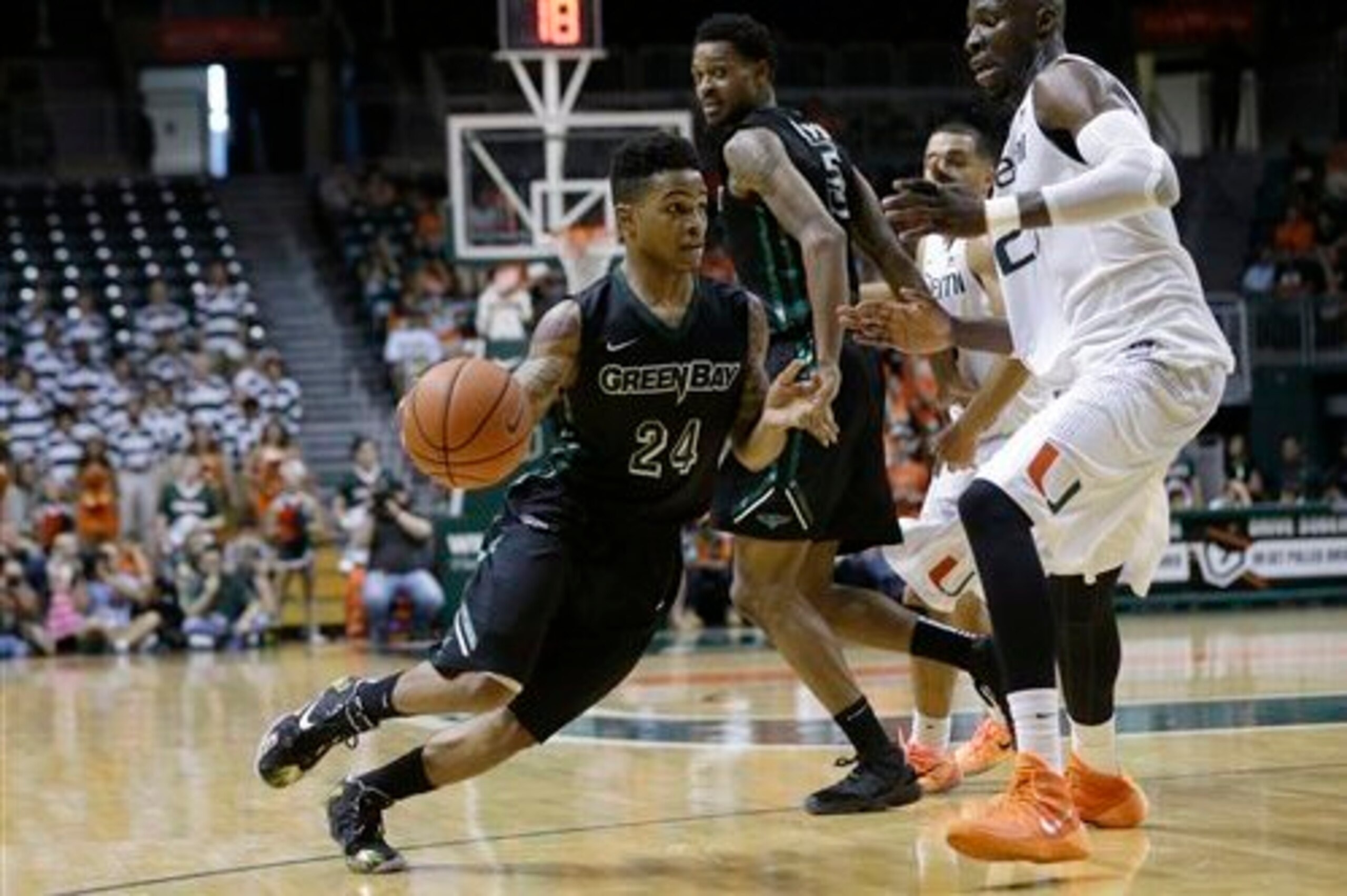
1. Keifer Sykes, Green Bay
15 of 15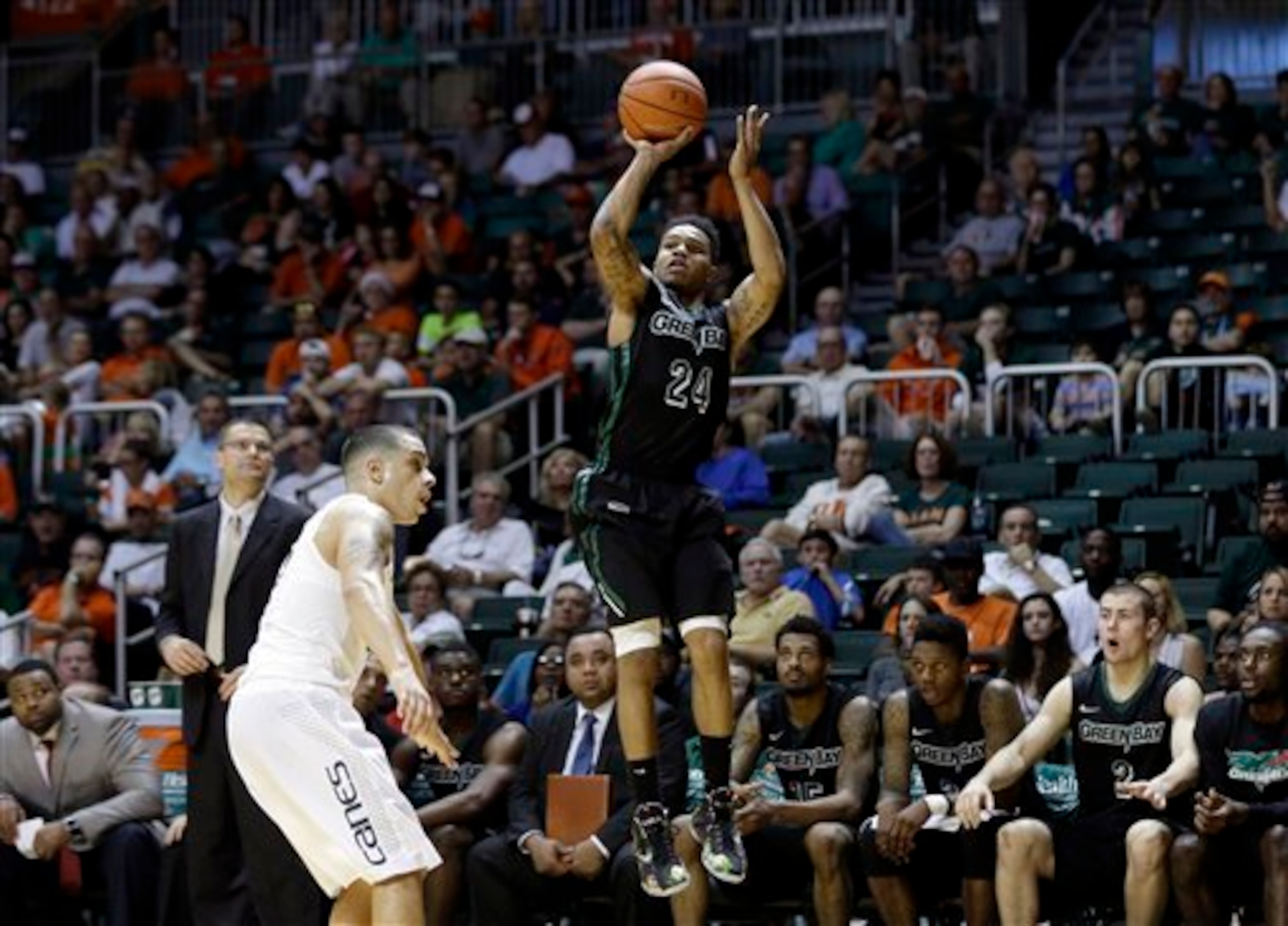
Green Bay guard Keifer Sykes burst into the national consciousness last season when Sykes, generously listed as 6'0", nearly dunked over 7'0" Wisconsin center Frank Kaminsky.
Even though Sykes missed that dunk attempt, he scored 32 points in the loss to the Badgers, putting up points in nearly every conceivable way, as shown in this highlight video.
He has the mentality of an aggressive scorer, with the athletic ability to challenge anyone.
"When I see someone standing under the rim, I see through them," Sykes said, according to ESPN.com. "I try to go and finish."
Grantland's Adam Doster described him as the country's "most explosive lead guard" and claims Sykes has a 45-inch vertical leap.
Sykes' scoring average is down this season, at 17.9 per game, after averaging 20.3 last season. However, his production has increased lately. In a Jan. 5 victory over Wright State, Sykes scored 28 points, with 23 coming in the first 16 minutes of the second half. In one stretch spanning 3:44, Sykes scored 12 points, a run that included a dunk, a layup, two mid-range jumpers and a three-point shot.
Sykes is a good bet to repeat as the Horizon League Player of the Year, and he may have a future in the NBA despite his size. NBADraft.net projects him as an early-second-round pick in the upcoming NBA draft, and DraftExpress.com projects him as a late-second-round selection.