Picking a 1990s Greatest Test Cricket XI
A youngster starting to enjoy cricket in the 1990s was lucky enough to find a Test game boasting a number of all-time great performers.
The bowling ranks were especially deep, with world-class spinners and a battery of top pacemen plying their trade.
The batsmen from that decade weren't too shabby either and would go on to break a host of records in the Test and one-day game.
There was a changing of the guard in the Test ranks, with the West Indies dethroned by Australia as the world's best side. That fact has been recognised in the make-up of our best XI of the decade.
Read on to see who has made the cut. Feel free to comment about any contentious inclusions and omissions.
Selection Criteria
1 of 13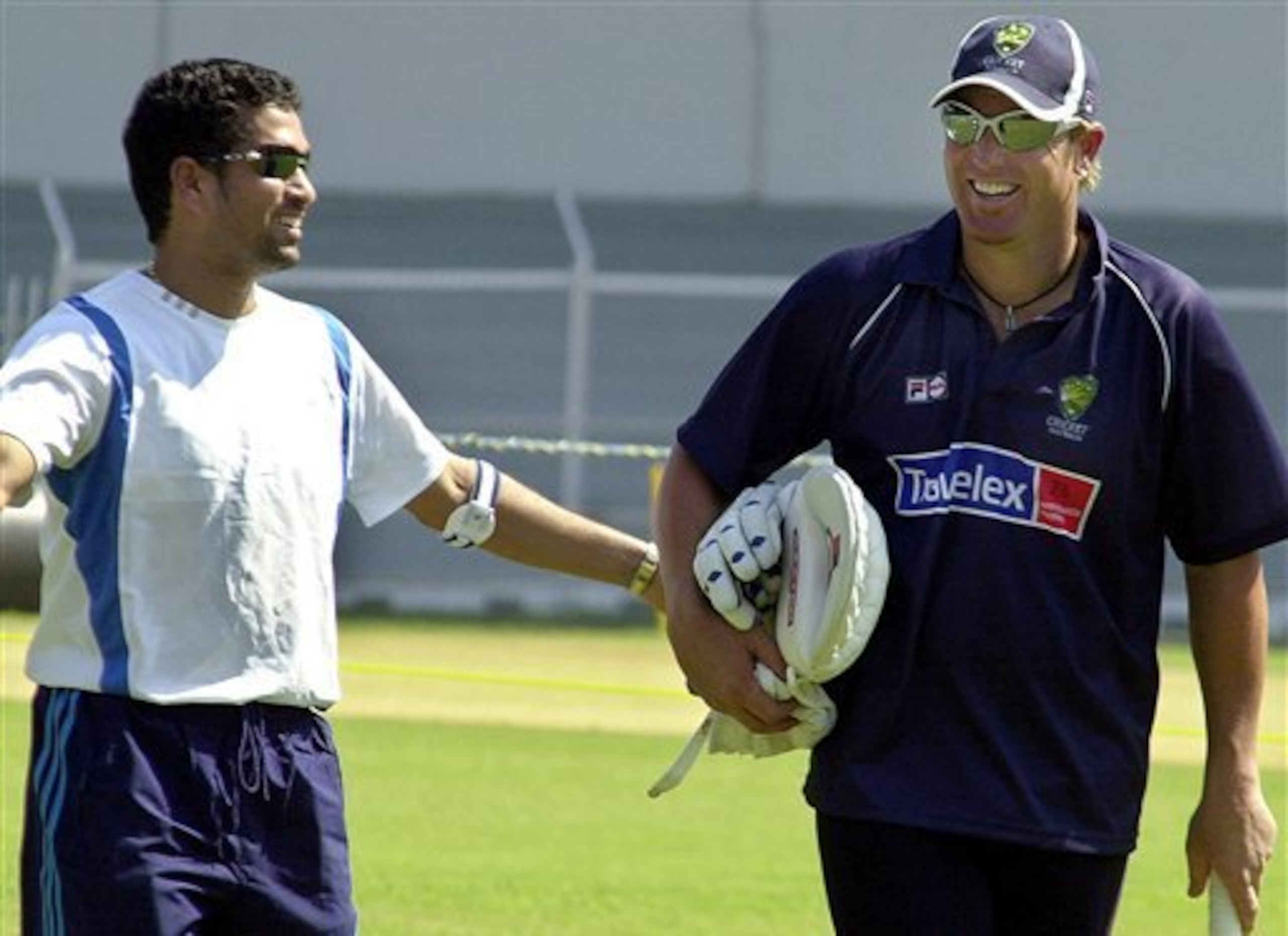
Oodles of runs and stacks of wickets were the main criteria for selection into the greatest 1990s XI. The final side isn't just a collection of players with the best averages, though.
Extra value was placed on performances against the highest quality of opposition. Runs and wickets against Australia and the West Indies counted for more than a good record against Zimbabwe.
However, cricket is about entertainment as well as winning, and that has been factored into the team. Attacking and stylish batsmen were largely preferred to stodgy grinders. Similarly, bowlers capable of producing a spectacular spell were favoured over more methodical performers.
Honourable Mentions
2 of 13
Trying to whittle so many fine performers down to just XI proved a tricky task, especially where the bowlers were concerned.
Waqar Younis heads the list of notable omissions. The Pakistani great's relative lack of success against Australia and India counted against him. He failed to take five wickets in an innings against either opponent.
Other pacemen to miss out were Glenn McGrath, Courtney Walsh and Shaun Pollock.
The calibre of the spinners was strong too. Anil Kumble, Mushtaq Ahmed and Muttiah Muralitharan all just failed to make the cut.
Despite scoring stacks of runs Alec Stewart, Mark Waugh, Mark Taylor and Michael Atherton didn't make the final XI. Neither did David Boon, Graham Thorpe, Inzamam-ul-Haq, Rahul Dravid, Andy Flower or Saeed Anwar.
The class of the names missing out shows just what quality was on show during the 1990s.
1. Graham Gooch
3 of 13Tests: 45
Runs: 4,176 at 51.55
Wickets: 9 at 49.66
Despite only playing for the first half the decade, Graham Gooch was still the 11th leading Test run scorer of the 1990s.
After being tormented by Terry Alderman in 1989, Gooch put the hours in at the nets and created a new technique that would serve him well in the twilight of his career.
In an England side that often struggled, Gooch was always the big wicket to get. Some wags argued that the tail started once Gooch was back in the pavilion.
The Essex opener saved his best work for the quick men. Rather than his record-breaking 333 against India, Gooch's best knock was arguably his 1991 effort at Headingley against the mighty West Indians.
Against an attack that featured Curtly Ambrose, Patrick Patterson, Malcolm Marshall and Courtney Walsh, Gooch scored an unbeaten 154 out of England's second innings total of 252.
The home side went on to win by 115 runs, thanks largely to Gooch's spectacular effort.
.jpg?w=2560 "Titans Giants Football")

2. Michael Slater
4 of 13Tests: 58
Runs: 4,425 at 45.15
Thanks to advances in the ODI and Twenty20 game, spectators have become used to seeing openers tee-off, even in Test cricket. It wasn't always that way.
One man who helped shatter the shackles was Australia's Michael Slater. For most opening batsmen from that era, the opening hour was a time for survival. For Slater, it was a time to show who was boss in the middle.
If the ball was there to be hit, he'd smash it. Nowhere was this more evident than against old enemy. England fans of a certain age still have nightmares about the Phillip DeFreitas long-hop that Slater dispatched to the boundary to start the 1994/95 Ashes.
As a marker for what was to come, he couldn't have done better. Australia went on to win the series three games to one.
3. Brian Lara
5 of 13Tests: 65
Runs: 5,573 at 51.60
One of the two all-time great batsman to make his debut in the 1990s, Brian Lara comes in at three in our 1990s XI.
Statistically, Lara enjoyed his greatest success of the decade against England. The true test of a player is how he handles the toughest opposition. In the 1990s, the Trinidadian's record against the all-conquering Australians was peerless.
Arguably his finest collection of innings came against the Aussies in 1999. With the West Indies no longer the force of yore, Lara carried the team on his shoulders, scoring centuries in three successive matches.
Best of the lot was an unbeaten 153 in Barbados which helped the West Indies chase down an unlikely victory target of 308. No other batsman passed 38 as Lara dismantled an attack that included Glenn McGrath, Shane Warne, Jason Gillespie and Stuart MacGill.
4. Sachin Tendulkar
6 of 13Tests: 69
Runs: 5,626 at 58.00
Wickets: 13 at 35.38
Joining Lara in the all-time great club is Sachin Tendulkar, who is in at four. Tendulkar gave notice of his talents in the 1990 series against England, scoring his maiden Test century at Old Trafford, aged just 17.
Plenty more runs followed as the “Little Master” lived up to the enormous hype that accompanied his career.
Writing in The Telegraph, Shane Warne described Tendulkar as the greatest batsmen of his generation: "He was easily the best in all conditions against all types of bowling and he had a wonderful temperament. The pressure he was under from the India public was immense but he handled himself on and off the field in a way that was respected by all.”
Who are we to argue with the greatest spinner to ever draw breath?
5. Steve Waugh
7 of 13Tests: 89
Runs: 6,213 at 53.10
Wickets: 47 at 29.23
With all these stroke players at the top of the order, we've opted for some grit at five. And in the 1990s, they didn't come grittier than Steve Waugh.
The Aussie hardman was no respecter of reputations and was fearless in the middle. How many other batsmen would dare to go toe-to-toe with a rampaging Curtly Ambrose?
Waugh senior may not have had the flair of brother Mark or many other more technically accomplished batsmen. All he did was score runs—and plenty of them.
He is the leading run-scorer in our best of the 1990s XI. If our life depended on a nominated batsman scoring a century, Steve Waugh would be high on the list.
6. Aravinda De Silva
8 of 13
Tests: 62
Runs: 4,448 at 46.82
Wickets: 23 at 38.17
Without a genuine world-class all-rounder on offer, picking the sixth batsman was a tricky proposition.
For flair, there was Mark Waugh or Mohammad Azharuddin. For weight of runs, Alec Stewart or Inzamam-ul-Haq. For stickability, early era Rahul Dravid or late era Allan Border.
The closest a batsman came to fulfilling all those characteristics was Aravinda de Silva. The diminutive Sri Lankan is probably best remembered for his one-day exploits. He was no slouch in the five-day game either, averaging over 46 during the 1990s.
Prolific, destructive and stylish, De Silva helped Sri Lanka go from minnow to global power in the 1990s.
7. Ian Healy
9 of 13Tests: 102
Runs: 3,949 at 28.61
Despite a strong case for including Andy Flower, Ian Healy is the wicketkeeper in the 1990s side. The tough Aussie was the perfect foil for Shane Warne and a master of the dark arts of mental disintegration.
He was no mug with the bat either and often saved his best work for when his team really needed it.
On the rare occasions that England had Australia on the rack during the 1990s, Healy would invariably come in at seven and shove the momentum back their way.
With those annoying runs and the constant cries of “bowling Shane” Healy became a bete noir for pommie fans. Healy wouldn't have had it any other way.
8. Shane Warne
10 of 13Tests: 80
Runs: 1,577 at 15.61
Wickets: 351 at 25.66
Forget the quicks, no bowler caused batsmen more mental anguish than Shane Warne. The Australian leg-spinner was the leading wicket-taker of the 1990s, bagging 351 victims.
Capable of making even high-class batsmen look exceedingly ordinary, Warne was the master of cricket's most difficult art.
While Warne relied on a hugely spun leg-break for most of his wickets in the latter stages of his career, pre-shoulder operation he was even more dangerous.
Of Warne's variations, the most deadly was the flipper. After softening the batsman up with a juicy long-hop, Warne would follow it up by bowling what seemed to be a repeat delivery. The next ball would be a much quicker back-spinner which often left the poor victim trapped lbw or bowled.
If Gooch lbw b Alderman was the signature Ashes dismissal of the 1980s, Stewart b Warne was the 1990s equivalent.
Warne is the best spinner to have played the game and walks into the team of the 1990s.
9. Wasim Akram
11 of 13Tests: 62
Runs: 1,956 at 22.74
Wickets: 289 at 21.45
“Wasim for England” was a regular cry from the waggish element at Wasim Akram's adopted home of Old Trafford. What England would have given for a player as talented as the great Pakistani.
Able to move the ball both ways at considerable pace, Wasim was one of the most dangerous bowlers of the 1990s. Reverse swinging the ball before it became commonplace, the great left-arm seamer could make even the best batsmen look foolish.
Wasim never quite fulfilled his potential with the bat but remained a dangerous lower-order hitter who could transform a game if on-song.
With his flowing locks and explosive run-up, something was always likely to happen whenever Wasim was given the ball.
10. Curtly Ambrose
12 of 13Tests: 71
Runs: 1,016 at 12.24
Wickets: 309 at 20.14
With 309 victims, Curtly Ambrose was Test cricket's leading fast-bowler in the 1990s. The combination of unerring accuracy and steepling bounce was deadly. No bowler had a better average than Ambrose during the 1990s.
Genuinely quick in the early stages of his career, the giant Antiguan could run through sides when in the mood. When he did get on a roll, it was often absolutely spectacular to watch.
Ambrose is the one of the greatest fast bowlers of this and any era. And whatever you do, don't ask him to take off his sweatbands.
11. Allan Donald
13 of 13Tests: 59
Runs: 532 at 11.08
Wickets: 284 at 21.83
When South Africa returned to the Test fold, one of the main reasons they were so competitive so quickly was the presence of a fiery young fast bowler from Bloemfontein.
From his debut against the West Indies in 1992, Allan Donald would go on to become one of the most feared bowlers of the decade.
The South African picked up 284 wickets in just 59 matches during the 1990s. A strike rate of a wicket every 45.7 balls puts him right up there with the best.
In among a glittering Test career, Donald found time to enjoy a lengthy and highly successful county stint with Warwickshire.
Fast, aggressive, committed and highly skilful. What's not to like?
All stats relate to performances from the 1990s only and come courtesy of ESPNCricinfo.com.