
Stock Watch for Top College Basketball Teams After First Month of 2014-15 Season
Has it really been a month already?
After having to wait seemingly forever for the 2014-15 college basketball season to begin, quickly the first month of competition has breezed by and we're only a few weeks from getting into the thick of the conference slates. A lot has happened in this first month, particularly for some of the game's top teams, so much so you might have missed a few things along the way.
For the purposes of this article, the definition of "top" isn't based on preseason (or current) rankings, but rather identifying teams based on how notable and popular they are. These are the ones who, more than other schools, tend to have each and every result factor into their evaluation.
With that in mind, check out our stock watch for 10 of the top Division I teams through the first month of the 2014-15 season.
Arizona Wildcats
1 of 12
Rising
Arizona has started 10-0 for the third straight season, getting to 21-0 last year and 14-0 in 2012-13, but the Wildcats haven't gotten fat on cupcakes. In addition to winning the Maui Invitational by knocking off Missouri, Kansas State and San Diego State, Arizona also handed Gonzaga its only loss of the season and is coming off a 27-point win over Michigan.
The loss of NBA draft picks Aaron Gordon and Nick Johnson has had an impact on the Wildcats' offensive flow at times, yet they're shooting slightly better from three-point range (36.6 percent, from 36.4 percent) than a year ago. Where Arizona isn't lacking is with scoring punch on the inside, as junior forward Brandon Ashley's return from a foot injury suffered in February has reaped major benefits.
Sophomore forward Rondae Hollis-Jefferson might be the top sixth man in the country, ranking second on the team in scoring (12.4 points per game) and leading in rebounding (6.7) while shooting 57.7 percent from the field. Freshman wing Stanley Johnson leads the Wildcats with 14.1 points per game, along with 6.5 rebounds per contest.
Arizona remains most effective on the defensive end, holding opponents to 39.1 percent shooting and 59.4 points per game.
The Wildcats haven't played a true road game yet, but have two in a row coming up at UTEP and UNLV before jumping into Pac-12 play.
Next stock evaluation: Dec. 19 at UTEP
Connecticut Huskies
2 of 12
Falling
Life as a defending champion isn't all public appearances, autographs and handshakes, as Connecticut (4-3) has discovered in most of its games this season. The nonconference schedule is no tougher than a year ago, but a team that was expected to have some early struggles has shown plenty of flaws.
Starting with a come-from-behind home win over Bryant on opening night through a three-game skid (including at home, to Yale), the Huskies have far more resembled the 2013-14 team that limped late in the regular season than the one that caught fire in postseason play. That's because not all of the pieces are working together at the same time, with only senior guard Ryan Boatright playing consistently all season.
Boatright, averaging 18.9 points, 5.6 rebounds and 4.1 assists, has been the team's unquestioned leader in his best effort to replace Shabazz Napier. Boatright's become more aggressive going to the basket, but at the same time his outside shooting has suffered, a teamwide problem that has UConn hitting only 29.2 percent of its three-pointers.
Freshman wing Daniel Hamilton has made an instant impact, averaging 12.1 points and 6.6 rebounds, while sophomore center Amida Brimah had a breakout game in Sunday's win over Coppin State with 40 points (on 13-of-13 shooting) and 12 rebounds.
The good news for UConn is that the American Athletic Conference as a whole appears way down. Louisville has moved to the ACC, while Cincinnati, Memphis and SMU have all had their struggles.
Next stock evaluation: Dec. 18 vs. Duke (in East Rutherford, New Jersey)
Duke Blue Devils
3 of 12
Rising
Only Kentucky has looked more consistently impressive as Duke (9-0) has this season, though Monday's 75-62 win over Elon wasn't the most impressive performance. Much of that had to do with a 12-day layoff between games, with the previous outing being the Blue Devils' 10-point win at then-No. 2 Wisconsin.
Duke is starting three true freshmen, yet that young lineup hasn't looked the least bit inexperienced because guard Tyus Jones, wing Justise Winslow and center Jahlil Okafor came into college with a wealth of international experience. That trio combined to average 39.6 points, 15.8 rebounds and 9.5 assists entering Monday, when Okafor became the first Duke player with a 20-20 game (he had 25 points and 20 rebounds) since Elton Brand in 1998.
Jones and senior guard Quinn Cook have been a deadly 1-2 punch on the perimeter, not just with their shooting and passing but also as the anchors of a defense that's shown much improvement from a year ago.
Duke looks like a strong bet to remain unbeaten heading into a Jan. 17 game at Louisville, which would also be the first opportunity for coach Mike Krzyzewski to reach 1,000 career victories.
Next stock evaluation: Dec. 18 vs. Connecticut (in East Rutherford, New Jersey)

.jpg?w=2560 "NBA Gambling Charges")
Kansas Jayhawks
4 of 12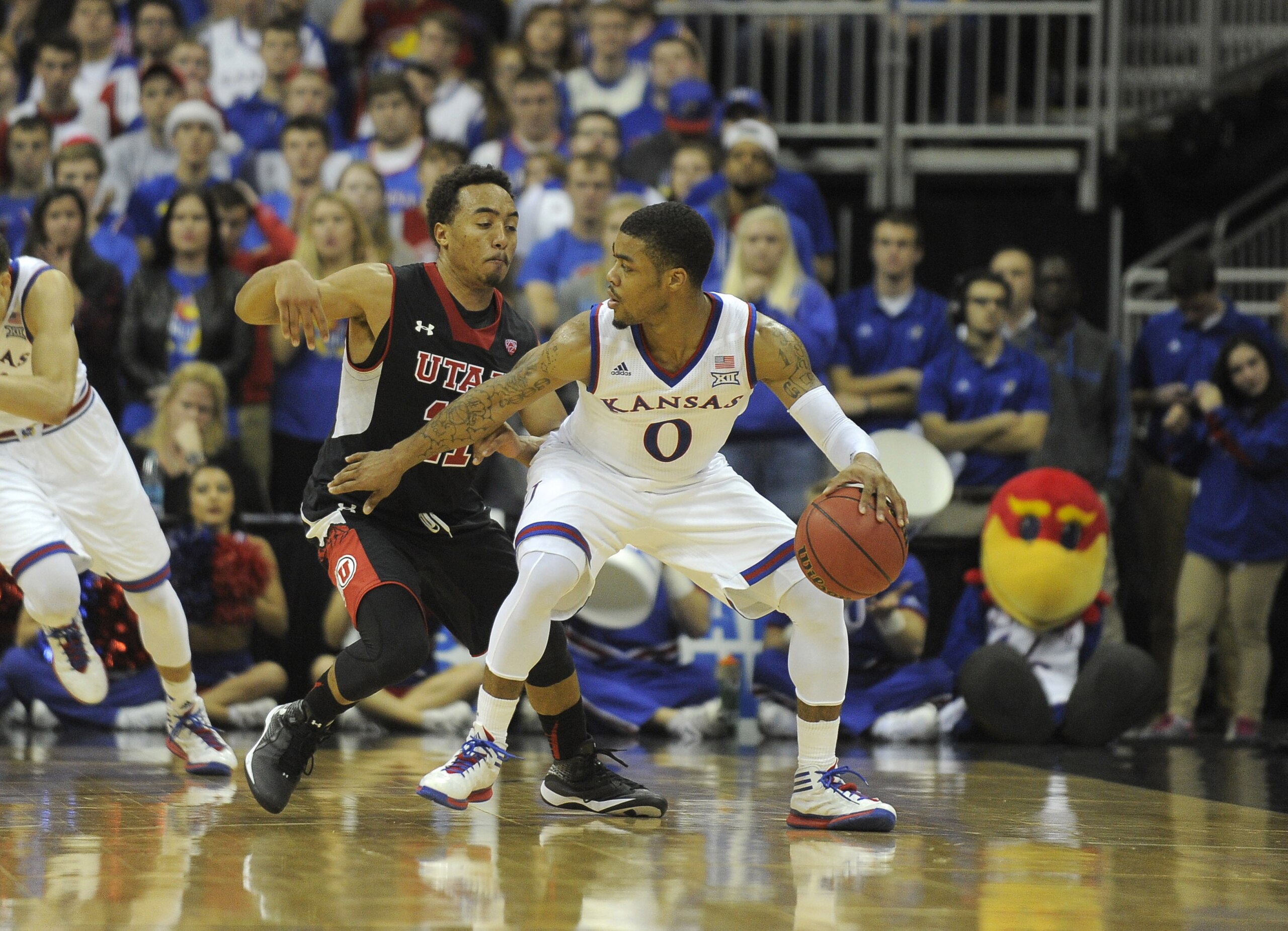
Rising
Kansas (8-1) has already suffered a humbling loss and fought for several narrow victories, giving this rebuilding team plenty of early tests that figure to pay off major dividends when the Big 12 schedule starts in three weeks.
The Jayhawks lost by 32 points to Kentucky at the Champions Classic in their second game, but since then have knocked off Michigan State to win the Orlando Classic and also earned tight wins over Florida, at Georgetown and against Utah in Kansas City. Those have been their last four games, won by a combined 19 points.
Still searching for the offensive leadership lost when Joel Embiid and Andrew Wiggins turned pro after one season, Kansas has leaned heavily on its few veterans (junior forward Perry Ellis and sophomore guards Frank Mason and Wayne Selden) while bringing along a group of talented freshmen very slowly. None of the Jayhawks' first-year players is averaging more than 19 points per game.
Kansas was dealt a significant blow over the weekend when coach Bill Self announced freshman guard Devonte' Graham will miss a month with a toe injury.
It's been far from the dominant Kansas teams we've seen in the past, but still one that's shown improvement as the season has progressed and should be up to speed and ready to contend for an 11th straight Big 12 regular-season title.
Next stock evaluation: Dec. 22 at Temple
Kentucky Wildcats
5 of 12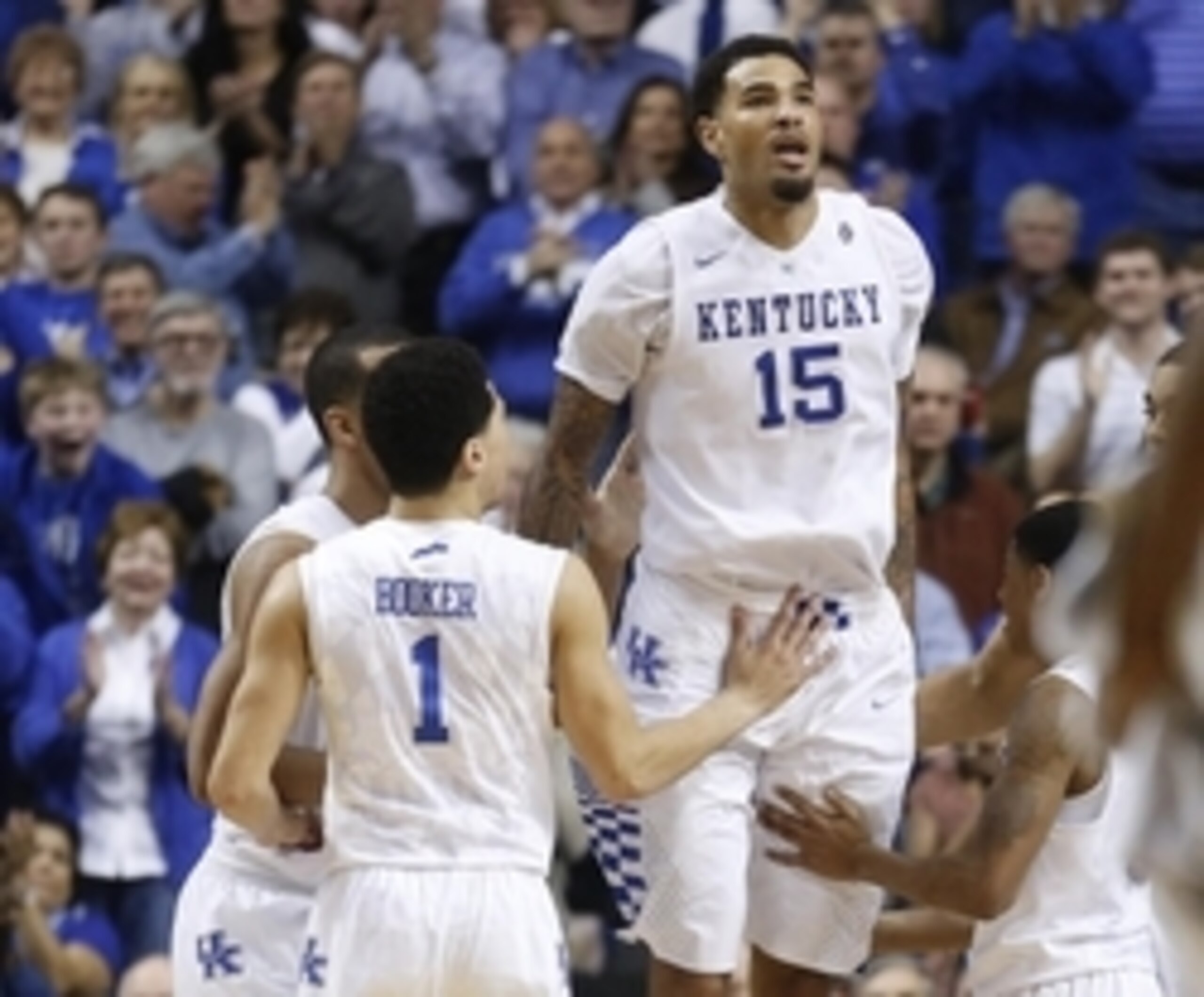
Rising
More than a quarter of the way toward an elusive 40-0 season, Kentucky (11-0) is far and away the best team in the country this season. This was projected by most experts before the year, due to the Wildcats' overabundance of talent and coach John Calipari's bold plan to use a platoon system to spread out playing time, but with each game we're seeing more and more how strong this team is.
The Wildcats have faced three ranked teams, and won those games by an average of 19.3 points. Overall they're winning by a 28.2-point margin, holding opponents to 48 points per game and 32.5 percent shooting.
The platoon system has made it so no one or two players stand out, statistically, yet if their numbers are extrapolated over 32 or 40 minutes the data for most is staggering. Junior forward Willie Cauley-Stein has been the most dominant, shooting 62.3 percent while averaging 10.7 points and 6.8 points in only 24.5 minutes per game.
It hasn't been all perfect for Kentucky, though. Some slow starts against inferior competition has led to poor offensive showings, but even those games have ended in double-digit wins because the Wildcats are able to wear down foes with their depth. That depth has taken some hits, with freshmen Devin Booker and Tyler Ulis missing time with minor injuries and junior forward Alex Poythress going down with a season-ending knee injury last week.
With the SEC looking like it might be down even more than a year ago, Kentucky's toughest remaining games could be in the next few weeks with Saturday's clash against UCLA in Chicago and then a trip to unbeaten Louisville on Dec. 27.
Next stock evaluation: Dec. 20 vs. UCLA (in Chicago)
Louisville Cardinals
6 of 12
Rising
When you have Montrezl Harrell, things are never going to be too bad. But Louisville (9-0) is off to a hot start because of more than just the dominant junior forward, as coach Rick Pitino has gotten huge contributions from his revamped backcourt to keep things balanced.
Harrell is averaging 17.0 points and 10.4 rebounds and shooting 62.1 percent, helped by many monstrous dunks but also smart shooting form all over the court. Opponents who might have planned to overload on him haven't been able to do so because seniors Chris Jones (12.9) and Wayne Blackshear (12.8) and sophomore Terry Rozier (15.1) are all contributing to the scoring. Each of them has taken on a piece of what Russ Smith brought to the court last year, making the Cardinals more diverse.
The defensive effort has let up a bit in the last few games, but Louisville is still holding teams to 34.1 percent shooting and 52.9 points per game.
The schedule hasn't been particularly hard to this point, though, with seven home games (including one against then-unbeaten Ohio State) and wins over Indiana in New York City and Minnesota in Puerto Rico. But that's going to change very soon, starting with the Dec. 27 home game against top-ranked Kentucky and then the Cardinals' first foray into ACC play.
Next stock evaluation: Dec. 27 vs. Kentucky
Michigan Wolverines
7 of 12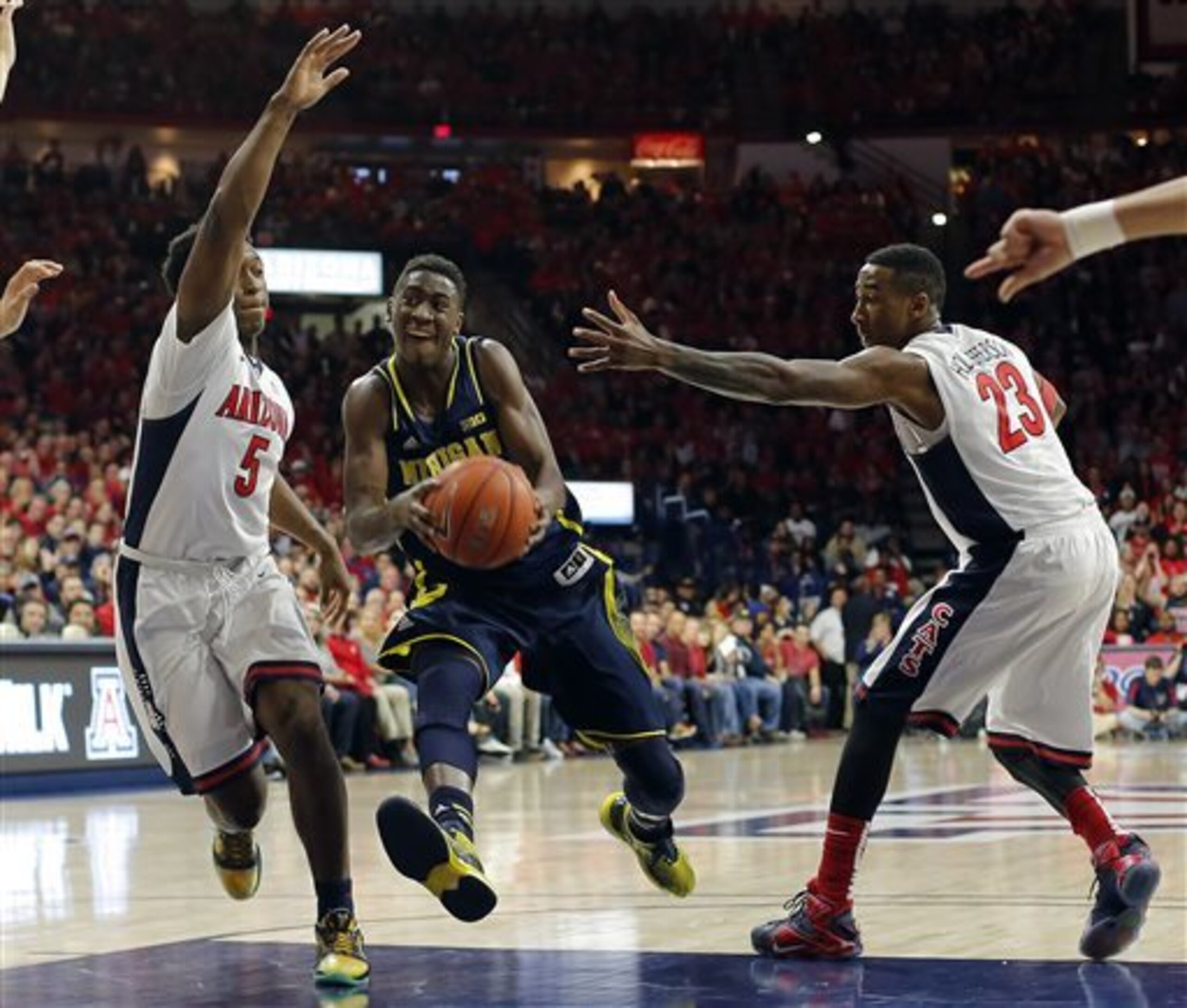
Falling
No established power has had more struggles this season than Michigan (6-4), which is really feeling the loss of Mitch McGary, Glenn Robinson and Nik Stauskas. Those last two were able to do so much last season it helped negate a lack of size, but this season the Wolverines are getting exploited inside and overall on the defensive end.
This has been noticed quite often during Michigan's three-game losing streak, its longest in four seasons, which included embarrassing home losses to NJIT and Eastern Michigan before losing by 27 points at Arizona on Saturday.
Michigan has been out-rebounded in most of its games this season, ranking 219th out of 351 Division I teams with a 49.6 percent rebounding rate. Junior guard Caris LeVert, at 5.2 rebounds per game, is the team's top rebounder, with 6'9" freshmen Mark Donnal and Ricky Doyle failing to hold their own on the boards. The transfer of 6'10" senior Jon Horford to Florida has impacted this team more than expected.
LeVert is averaging a team-high 16.7 points per game and hitting 48.1 percent of his three-pointers, but on two-point shots he's making only 40.5 percent.
There's an overall lack of effective big men in the Big Ten this season, so all is not lost for Michigan. But it has to find a way to avoid being porous inside to stay in the hunt.
Next stock evaluation: Dec. 20 vs. SMU
North Carolina Tar Heels
8 of 12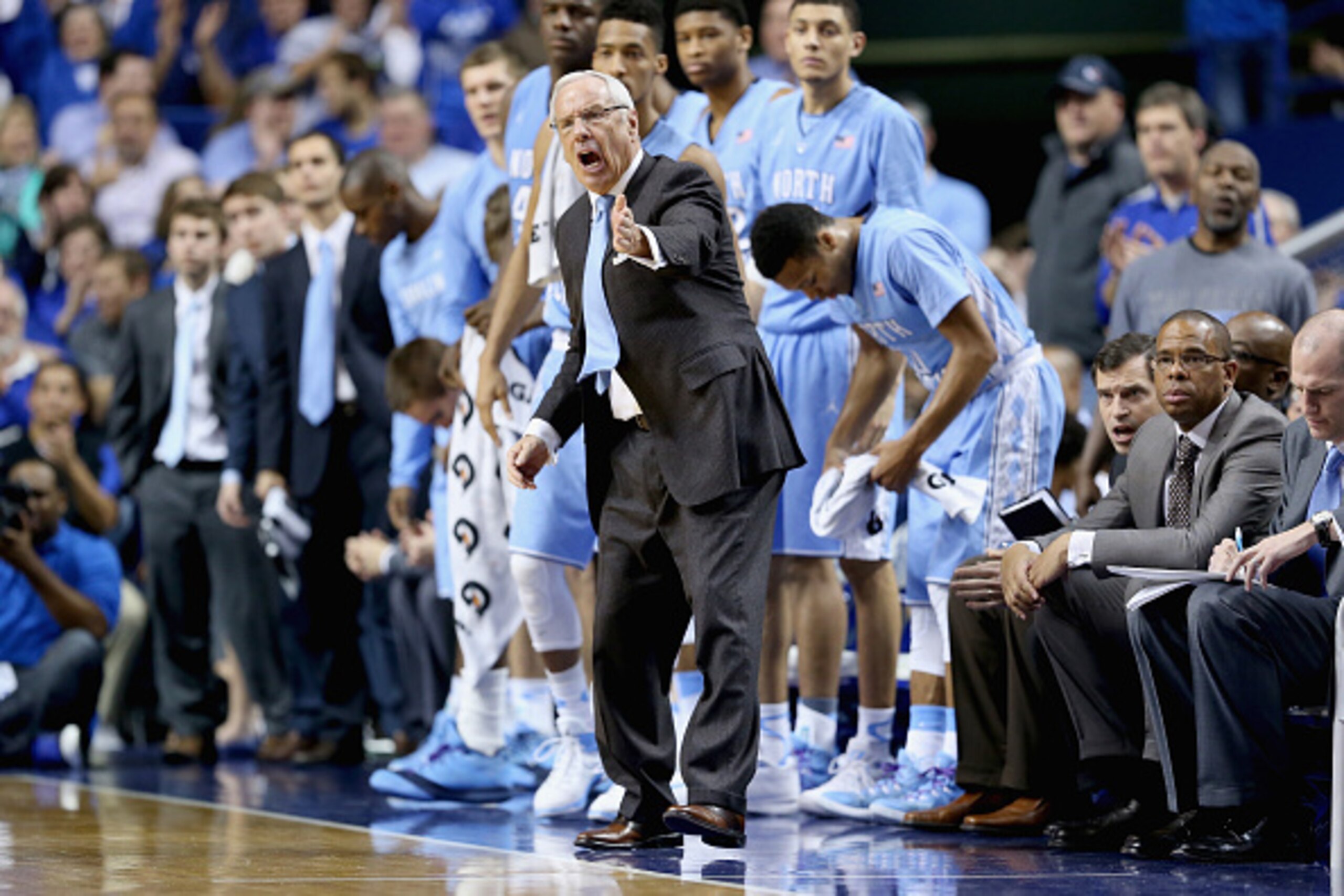
Falling
North Carolina (6-3) has a deeper, more diverse offensive team this season, yet the hot-and-cold results that plagued the Tar Heels throughout last year still exist. Even more concerning is that junior Marcus Paige has appeared tentative and either unwilling or unable to take over when others struggle to produce.
Paige's scoring is down 20 percent, from 17.5 to 14.0 points per game, but that was expected with an increased emphasis on post play. However, Paige's accuracy is also way down as he's spent more time working as the distributor than a guy who can dominate offensively. And with no other perimeter player shooting well from outside—UNC shoots 29.7 percent on three-pointers—he's trying to play two positions.
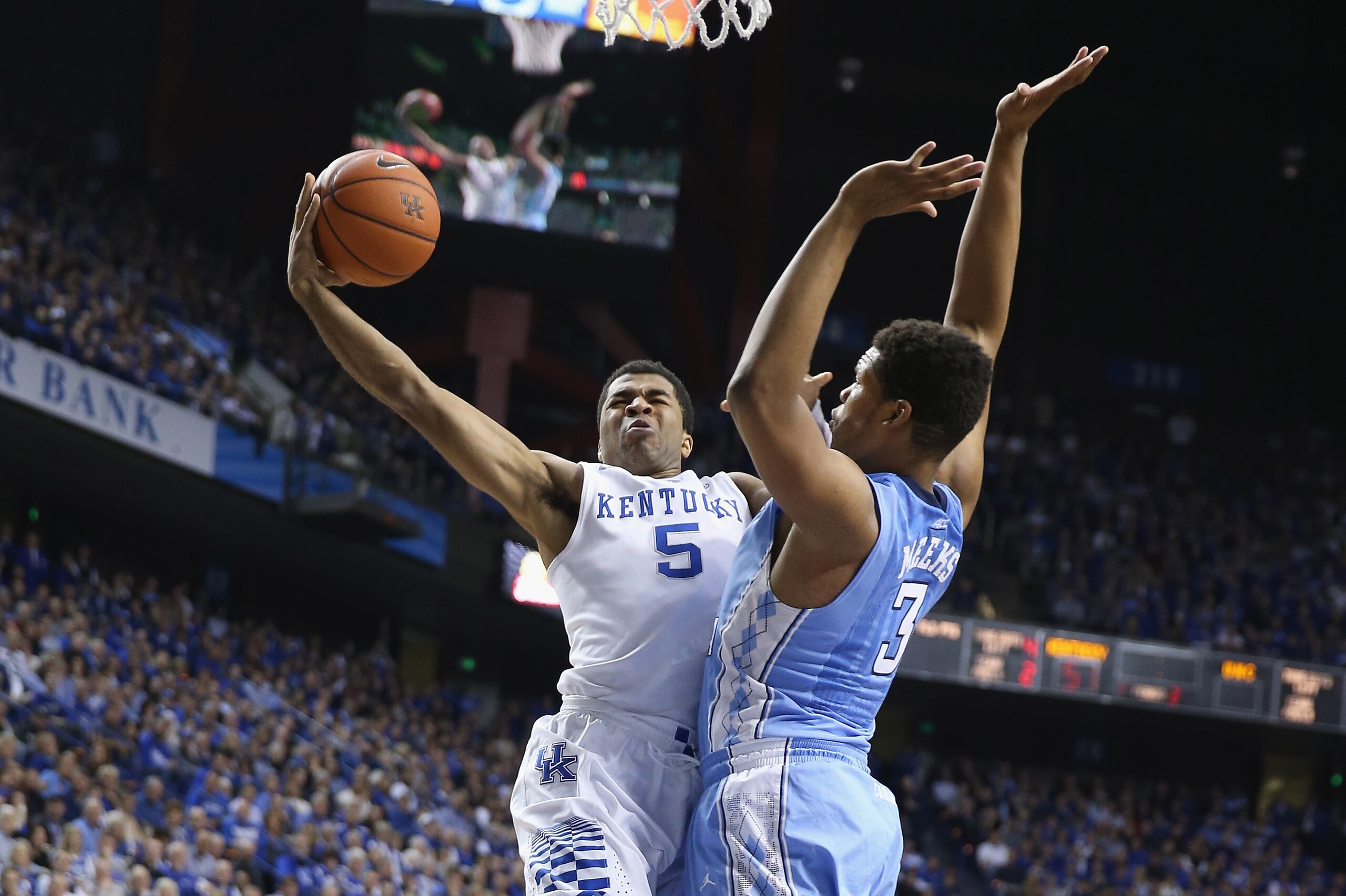
Most promising for the Tar Heels has been the post play of junior Brice Johnson and sophomore Kennedy Meeks. The forwards have combined for 25.0 points and 16.4 rebounds per game, with Meeks shooting 62.3 percent, though they've been picked on by more seasoned post players on the defensive end.
The Heels actually had the best offensive performance of any team against Kentucky this season, but the defensive woes made that a moot point. With a remaining schedule that features eight games against currently ranked teams, defensive improvement must occur to get the ship righted.
Next stock evaluation: Dec. 20 vs. Ohio State (in Chicago)
Syracuse Orange
9 of 12
Falling
Syracuse (6-3) began last season 25-0, only to fade down the stretch as its perimeter play fell off and its lack of inside presence became a major issue. The post play has been much better this year, but the outside shooting has gotten worse.
Senior forward Rakeem Christmas is among the most improved players in the country, averaging 16.4 points, 8.6 rebounds and 2.3 blocks per game while shooting 60.4 percent from the field. Freshman forward Chris McCullough has been a solid contributor with 13.3 points and 8.6 rebounds on 53.5 percent shooting.
The rest of the team, though, is shooting 37.2 from the field , and collectively the Orange make a Division I-worst 22.5 percent from three-point range.
Next stock evaluation: Dec. 20 at Villanova
UCLA Bruins
10 of 12
Falling
The starters for UCLA (8-3) are a pretty good group, made up of what little was left after the Bruins were raided by the NBA last season and a pair of promising newcomers. But there's a severe drop-off once you get to UCLA's bench, which has contributed only 11.2 percent of the scoring despite playing 22.6 percent of the minutes.
That lack of depth has been a major factor in the Bruins' three losses, with either foul trouble or off games by starters leading to a lack of production against Oklahoma and North Carolina in the Bahamas and in Saturday's home loss to Gonzaga.
The starting group has looked very good, however, particularly sophomore guard Bryce Alford (18 points, 6.7 assists per game) and freshman forward Kevon Looney (13.9 points, 10.9 rebounds).
Where that group has struggled has been with taking care of the ball, averaging nearly 13 turnovers per game.
Next stock evaluation: Dec. 20 vs. Kentucky (in Chicago)
Wichita State Shockers
11 of 12
Falling
Wichita State (8-1) has won 38 of its last 39 regular-season games, losing for the first time in more than a year outside of the postseason with an overtime setback at Utah on Dec. 3. But the Shockers' stock is on a downward trend for more than just that one defeat, as they've struggled since at home against Seton Hall and had to make a massive rally to win Saturday at Detroit.
Junior guard Fred VanVleet has seen his shooting accuracy take a major tumble, from 48.4 percent last season to 37.6 percent so far this year. He's taking a lot more shots, too, four more per game, but with only a 23.3 percent efficiency from three-point range it looks like he's forcing the issue.
Junior guard Ron Baker has picked up the slack, improving to 51 percent shooting and leading the team at 18.5 points per game. Senior forward Darius Carter is holding his own as an undersized 6'7" post, but he's averaging only 5.8 rebounds per game.
The Shockers' stock figures to rise up once it gets into Missouri Valley Conference play, but the league isn't as soft as last year. Northern Iowa, Illinois State and Evansville have all looked good early, which could make for more tests as the season progresses.
Next stock evaluation: Jan. 17 at Evansville
Wisconsin Badgers
12 of 12
Rising
If not for having drawn Duke in the Big Ten/ACC Challenge, Wisconsin (10-1) would be unbeaten and looking like a solid bet to return to the Final Four. The Badgers still figure to be one of the top contenders for a deep NCAA tourney run, because Duke shot so well in that game no team was apt to beat the Blue Devils.
That's the result that's going to stand out for Wisconsin to this point, but it's not indicative of how the Badgers have played overall. Take that one out of the equation and the other 10 opponents have shot 35.9 percent and averaged 48.9 points per game.
Wisconsin's own offense has been crisp and efficient, with senior forward Frank Kaminsky picking up where he left off last season. He's averaging 16.0 points and 7.6 rebounds per game, shooting 54.5 percent overall and 42.4 percent from three-point range.
The emergence of sophomore forward Nigel Hayes as another post presence has been a big boost, with Hayes averaging 11.7 points and 7.6 rebounds on 56.8 percent shooting.
The Big Ten has performed very poorly this preseason, other than Wisconsin, which could make for smooth sailing in league play. But the Badgers will still have plenty of tests, starting with a West Coast trip this weekend to face California.
Next stock evaluation: Dec. 22 at California
Follow Brian J. Pedersen on Twitter at @realBJP.

.jpg?w=2560 "Aikman Blasts Cowboys WR 🫣")

.jpg?w=2560 "Jonathan Taylor Landing Spots")