

Why Federer-Nadal Era Is Evidence of Tennis' Continued Evolution
Tennis fans like to discuss the Roger Federer-Rafael Nadal era. It’s easy to proclaim it as a Golden Era, because of unprecedented records and superstar accomplishments. Young or recently converted fans have watched this unfold front and center, and it’s an easier kind of living history than trying to remember the past or take an historian’s approach to the maddening comparisons and conditions of previous decades.
However, part of the approach to understanding the modern game is to study the past eras, its legendary players and the various styles that evolved tennis into the sport it is now. The 1960s’ star Rocket Rod Laver was a completely different kind of player than we see now, yet he was instrumental in how tennis has evolved.
TOP NEWS
.jpg?w=2560 "Titans Giants Football")
OBJ Calls Out Giants After Release
.jpg?w=2560 "Cardinals Giants Football")
NFL investigating referee after viral exchange with player

Week 5 AP Top 25 Poll 🔢
As Laver and his sport evolved into the Open era in 1968, professionalism continued to improve the quality of tennis, expand into deeper fields of players, and produce champions with bigger and greater skills from one generation to the next. This is not to say that a past legend was not better for his time, or that he would not play differently in 2014 than in 1968, but there is no question that the sport’s quality has increased.

Removing a Couple of Fallacies
An associate of mine made a comment that tennis now is not so radically different than 10-15 years ago because Federer is more dominant now than he was in 2002. Let’s take this line of thinking and start earlier from one era to the next in a madcap debate of anti-Darwinism tennis.
Ken Rosewall, who had one of the longest and most successful careers in tennis history, was winning Grand Slam titles in 1953 and as late as 1970. Therefore, the quality of play in the early 1970s was not substantially different than it was in the early 1950s.
Jimmy Connors, coming off his dominant 1974 season, was humbled a year later by the likes of 1960s veterans John Newcombe and Arthur Ashe, who were in the twilight of their careers. Therefore, tennis stars of the pre-Open era may have played at a time that was equally as tough or perhaps better if they could rock 1975 Connors.
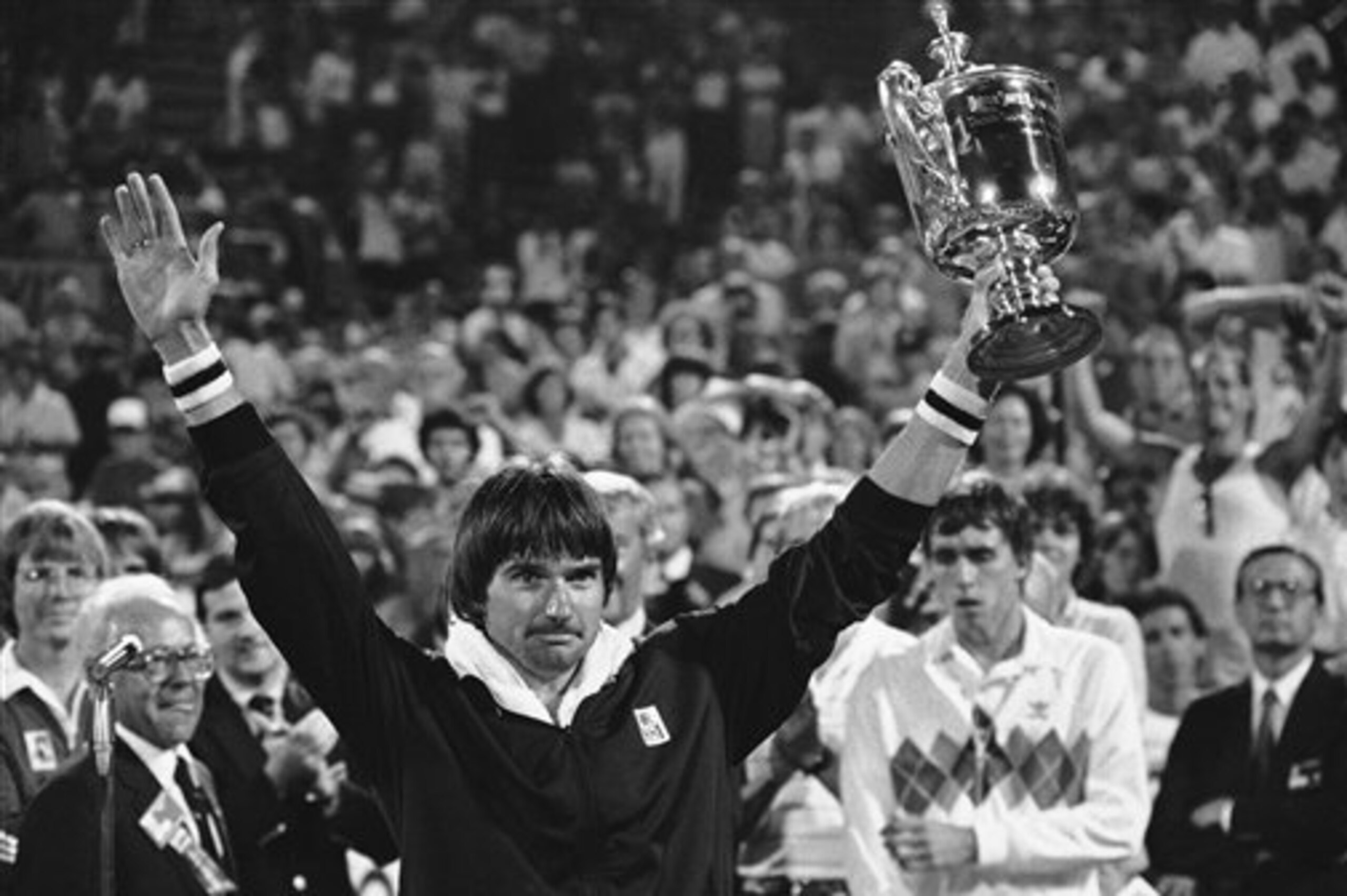
Heading into his 30th birthday, Connors was a dominant force in 1982, winning Wimbledon and the U.S. Open, while young Ivan Lendl won 15 titles but no major. Therefore, the quality of tennis was no better than it was in the early 1970s.
Eight years later, Lendl was polishing off an eighth major at the 1990 Australian Open against a field of younger stars like Boris Becker, Stefan Edberg and Pete Sampras. Therefore, Lendl was now playing in a weaker era if he could still be so dominant.
Sampras, who couldn’t win a major title from 1991-92 because of a deep field including Edberg, Andre Agassi and Jim Courier, was able to win the 2002 U.S. Open title against a field that included Federer, Marat Safin and Lleyton Hewitt. Therefore, the quality of tennis may not have been much different, and was perhaps even weaker by 2002.
Young Federer, who couldn’t win a major in 2002, won Wimbledon in 2012 as a 30-year-old veteran. Therefore, his competition like Nadal and Novak Djokovic must not have been as tough as the field in 2002.
OK, anyone who has not thrown his or her laptop or phone into the wall because of the farcical analysis listed above knows that there are thousands of variables to explain each link in the seemingly logical chain. Why is it so wrong?
First, there is the fallacy that we are framing this around hand-picked lows and highs of one legend’s performances from one decade to the next. Why should we assume that the level of one player is somehow constant over a period of eight to 10 years? It conveniently ignores or accepts peaks, disregards health or poor play, all while somehow trying to serve as anecdotal evidence for an entire ATP tour and time period.
Second, we cannot form an aggregate conclusion based on smaller, disparate elements and neatly link them into an overarching principle. That’s like looking at Europe and saying Paris is fairly close to Moscow because Moscow is relatively close to Minsk, which is reasonably close to Warsaw, which is kind of near Prague, which is close enough to Frankfurt, and bordering France where we find Paris.
And clearly the phonograph is an entirely different technology for playing music in the late 19th century than using an MP3 player in 2014, right?
Could we really take a talented but injury-plagued player like Tommy Haas to measure a decade? For instance, Haas had a nice season in 2013 but he could do nothing in 2010 or 2003. To claim that he hails from a great or poor generation of players is an entirely different argument than to study the triumphs and trials in his inconsistent career.
How is something like youth and age in tennis to be evaluated? Is an aging player at a disadvantage because he cannot recover so easily for subsequent matches, or does he have the advantage because of his savvy, experience and ability to navigate pressure?
And so it goes.
Tennis Keeps Evolving
Tennis players are much bigger, stronger and fitter in 2014 than 1968. The stars have teams with trainers, coaches and video analysis. They have greater access to sports fitness, training and psychology. They use lighter and more powerful rackets, more specialized strings and have fine-tuned their games against deeper fields of competitors.
They have better footwork, forehands and a variety of techniques that have added greater hitting prowess, more levels of spins and strategies.
Technology not only explains much of how tennis has changed into a more physical and grueling sport, but it has forced players to keep competing and winning against more difficult circumstances. Servers hit harder with their new rackets and strings, but the service returner must be better than ever.
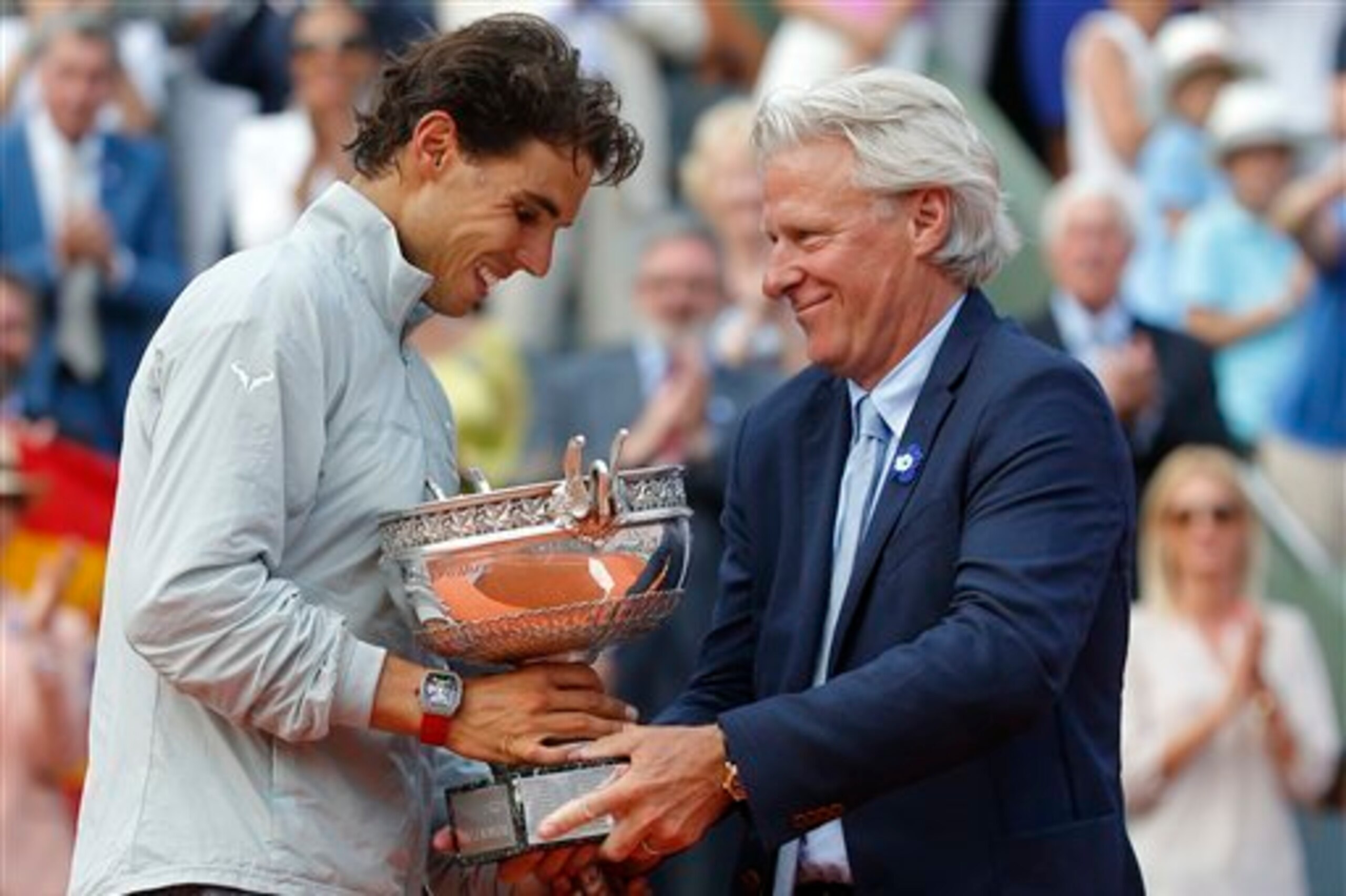
There is indeed a speed difference when Nadal and Djokovic must return against countless players on the tour who can blast over 120 mph. Connors used a less impressive racket in the 1970s, but he also had a lot more time to return the serve. There’s a lot less basis for comparing Djokovic to Connors, but at least it’s easier to compare Djokovic to Andre Agassi or to compare Agassi to Connors.
Likewise, comparing eras allows us to look at some of the overlap from one period to the next, though it can be argued that tennis observers who like to define eras cannot really do so from one year to the next. What we do know is that tennis is gradually making changes that continue to produce small upgrades and changes. It’s the players who keep evolving tennis as they compete with each other to win titles.
Laver in 1968 was the standard that teenage Connors had to overcome to be the best player in the world. Connors took his own talents including a double-backhand and return of service to combine with the aggressive mentality that he saw on tour in his day.
Eventually, other players like Bjorn Borg and Lendl built on this with their own brands of topspin and baseline bashing.
Similarly, Federer took notes from the stars he watched growing up, even as he grew into his own talents. He could look at Sampras’ serve, Agassi’s groundstrokes and grow much of his game on red clay, along with other surfaces. Federer and Nadal learned to adapt their skills to all surfaces, and Sampras stated in 2013 that more homogenized conditions aided their skills and success, according to Tennis.com:
"There are four guys who are mentally and physically better than the rest, move better and compete a little harder, they physically are great athletes. How is a guy who is going to stay back going to beat Novak? It’s not going to happen. It's almost fitting they’ve been dominating, with the way things are and the way the way they are playing. They are much better at the same thing.
"
Federer is evidence of how tennis builds on itself, learning from the past, reshaping in the present and creating something new for the future. His dominant leap into 2004 sped up the evolution of his sport, forcing players like young Nadal to find ways to beat him and thereby change the patterns and methods of how they played.
The Federer-Nadal era produced a fierce kind of competition, not merely between each other but changing their competitors as well. They expanded the dimensions of tennis courts with their shots, while adapting to the demands of several new surfaces. If 1960s tennis was a version of daylight hide and seek, 2014 tennis is laser tag in a dark arena. The rules, demands and results have become quicker and more demanding.
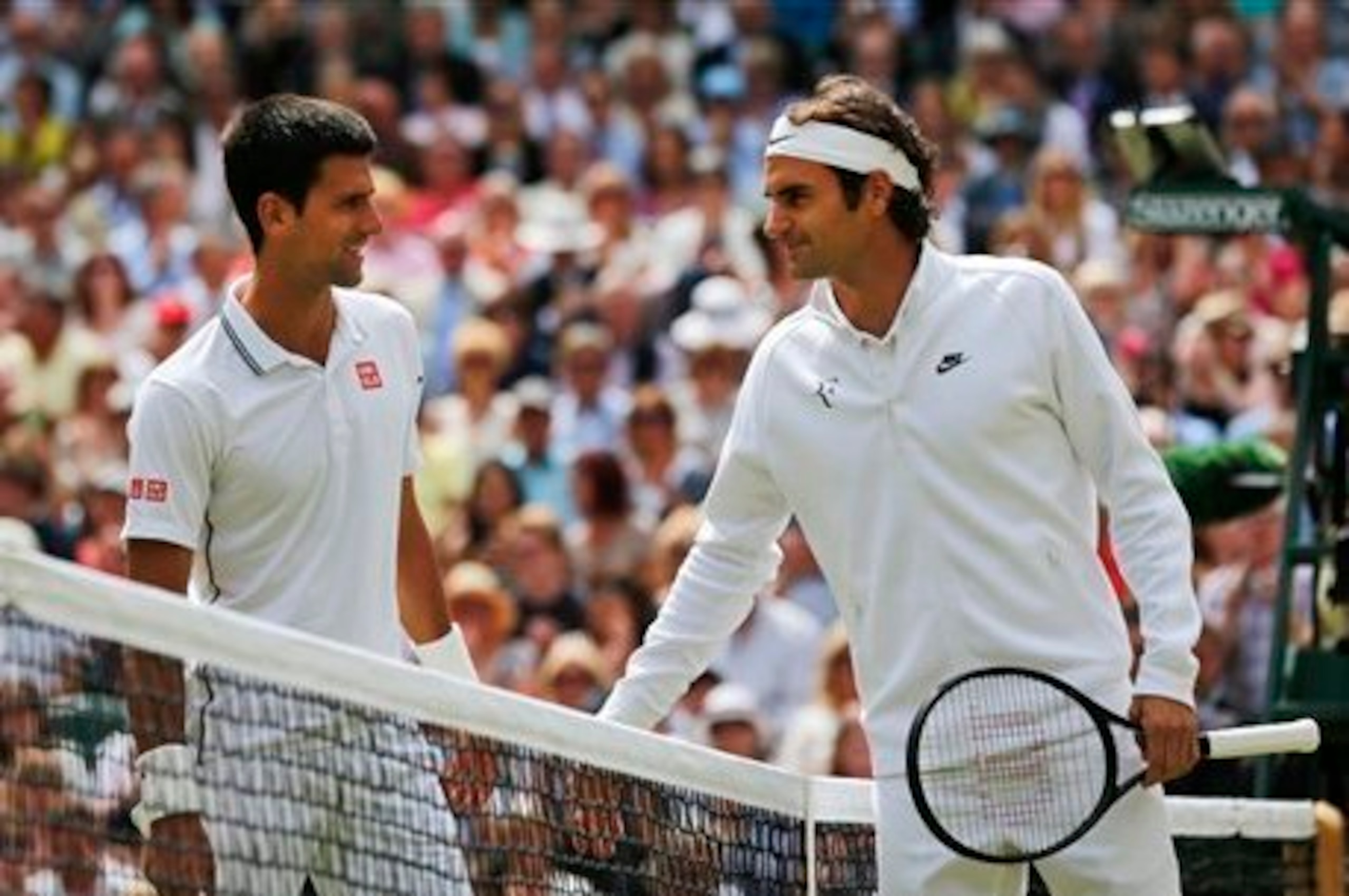
Djokovic might be the ultimate example of a star who learned from losing to Federer and Nadal while adapting his own ball-striking talents and learning to play with the kind of mental toughness that is seemingly more common in players now.
The Serbian champion had to adapt and overcome great champions the way young Lendl did to overcome Borg, Connors and John McEnroe. They had to batter through their implacable opponents and evolved conditions even while they changed the way to play and win at the highest level.
Superstar players hasten new changes as they win and succeed. They force the sport to get better, not necessarily because they are better than the players who preceded them, but because they have pushed into a slightly new and more successful direction for the moment. (The question of whether one player is better than another player is a different argument, but also filled with fallacies and framing depending on the evaluator.)
Most tennis observers easily credit the Federer-Nadal era as something greater than the past, but there are also plenty of hairs that get split about when this started and what portions of the era are weak or strong. Furthermore, some fans may wonder if the setting of the Federer-Nadal era will somehow cause a dark ages or future weak era.
While there might be certain truths to grasp and frame, it’s reasonable to expect that tennis will keep evolving into a bigger, faster, fitter and more competitive sport. Suppose new champions like Kei Nishikori or Grigor Dimitrov win majors in 2015. It might signal the end of some past champions winning majors, but it doesn’t mean that tennis has suddenly become weak.
At the moment, the Federer-Nadal era has already become the foundation for even bigger things ahead, notwithstanding which champions will come forth to win, or if we approve of how they win. Tennis keeps evolving.





.jpg?w=2560 "LaFleur's Fumbling Warning ⚠️")