Rakeem Christmas, Sterling Gibbs and Phil Forte III headline our list of players who are likely to cool off after a red-hot start to the 2014-15 college basketball season.
Players have hot streaks at various points in the year, but the ones who do so in the first three weeks tend to get the most attention. After all, it's pretty easy right now to just look at national leaderboards to figure out who has been playing well.
However, a lot of early hot streaks come to an abrupt end.
This isn't simply a list of leading scorers. In fact, UNC Asheville's Andrew Rowsey is leading the nation in scoring at 26.7 points per game, but he didn't even remotely make the cut after putting up more than 20.0 PPG as a freshman.
Rather, it's a list of players who can't possibly sustain for 32 games what they have done for the first half-dozen or so. For each one, we'll explain why we feel this way.
Statistics on the following slides courtesy of ESPN.com, NCAA.com and Sports-Reference.com.
Phil Forte III, Oklahoma State
1 of 10
By the Numbers
19.3 points per game, 3.4 steals per game
How He's Caught Fire
There was an awful lot going on in college basketball on Wednesday night. We had Duke vs. Wisconsin in a Final Four preview, Utah ending Wichita State's regular-season winning streak at 35 games, North Carolina getting upset by Iowa, Tom Izzo getting upset with the refs and a partridge in a pear tree.
So much happened, in fact, that it was easy to overlook Phil Forte's pièce de résistance against North Texas. Forte set a new career high in the 87-61 shellacking, scoring 32 points on just 13 field-goal attempts.
It isn't his Big 12-leading scoring average that we're most impressed with, though.
Forte was a defensive liability last season, creating just 1.2 steals per 40 minutes. This year, however, he has at least two steals in every game and has nearly quadrupled his steal percentage.
Why He'll Cool Off
Eventually, Oklahoma State has to play a real team—and a lot of them.
The neutral-court game against Tulsa was a moderate challenge, but aside from that, the Cowboys have already played the six easiest opponents they will face this season.
He'll still score a ton, as he's one of the two primary scoring options after all that Oklahoma State lost this offseason. However, if Forte is still averaging 3.4 steals per game five weeks from now, it would warrant its own 30 for 30 documentary.
D.J. Newbill, Penn State
2 of 10
By the Numbers
24.1 points per game, 5.4 rebounds per game, 2.9 assists per game, 1.4 steals per game
How He's Caught Fire
"Caught fire" is a very generous description of Newbill's start to the season. He's shooting pretty well from three-point range (47.2 percent), but he's nowhere near the top of the national leaderboard in that category. His overall field-goal percentage of 48.5 doesn't even rank in the top 150 among qualified players.
Rather, Newbill is playing and shooting a ton.
Entering play on Thursday, Newbill was fifth in the nation in minutes per game, tied for eighth in free-throw attempts and first in field-goal attempts.
To not be one of the country's leading scorers with those numbers would be pathetic.
Still, Newbill has scored at least 17 points in each of Penn State's eight games, so there's clearly a reason he's getting so many opportunities.
Why He'll Cool Off
As was the case with Phil Forte III, Newbill has benefited from a cupcake schedule that quickly turns into a gauntlet once conference play begins.
His scoring won't drop by much. When you play as many minutes and attempt as many shots as Newbill has, you're going to get some points. Plus, we're talking about a guy who averaged 17.8 PPG last season that is indisputably the No. 1 option on offense now that Tim Frazier has graduated.
However, 24.1 PPG simply doesn't happen in the Big Ten, and his average is inflated by a 50-minute, 33-point game against Charlotte.
Newbill will likely lead the conference in scoring, but we don't expect him to come all that close to leading the nation.
Zeek Woodley, Northwestern State
3 of 10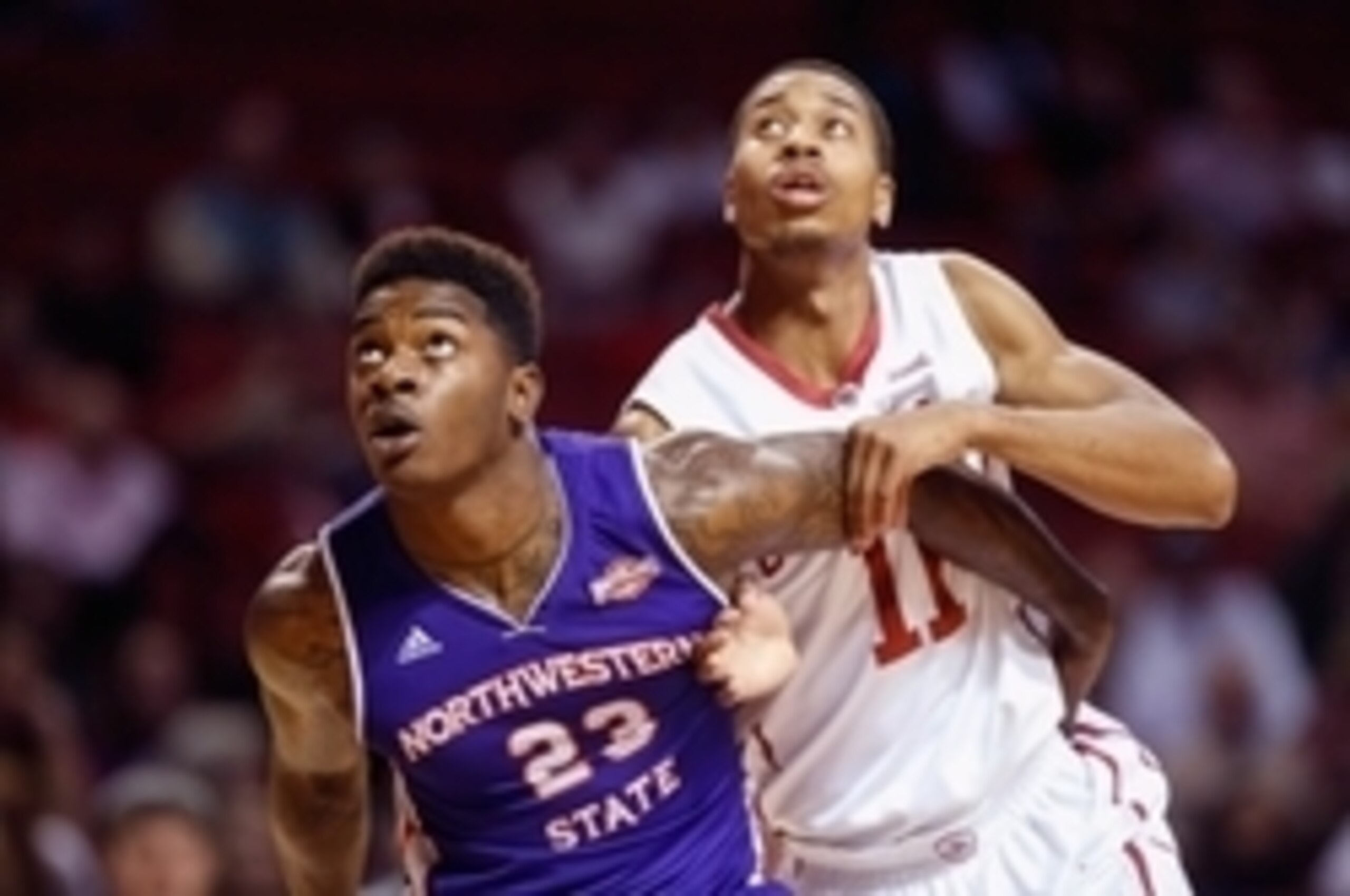
By the Numbers
22.5 points per game, 64.5 field-goal percentage
How He's Caught Fire
Per usual, Northwestern State has been playing at a ridiculous pace this season. According to KenPom.com (subscription required), the Demons' adjusted tempo is the third-fastest in the country. As such, per-game numbers aren't that impressive.
But shooting 64.5 percent from the field while averaging 22.5 points per game?
Now that's impressive.
Woodley and Saint Mary's big man Brad Waldow (65.7 percent) are the only players in the country averaging at least 21.0 points per game while shooting 57.0 percent from the field or better.
And unlike Waldow, Woodley actually attempts a few three-pointers per game, connecting on 42.1 percent of his 23 attempts to date.
Woodley has scored at least 25 points in five consecutive games, but most impressive was the loss to Texas Tech in which he was 11-of-12 from the field with 27 points.
Why He'll Cool Off
This one is three-fold.
For starters, nobody who regularly attempts three-pointers stays this accurate. Woodley did shoot 61.7 percent from the field last season, but he only attempted 24 three-pointers all season while playing fewer minutes and taking fewer shots than he has this season.
Second, Woodley has had the luxury of playing three of his seven games against D-II opponents.
Lastly, but perhaps most importantly, teammate Jalan West is starting to impose his will on offense. Early in the season, it seemed West was content with battling for position on the national leaderboard for assists and steals while sacrificing his scoring, but he put up 28 points on Tuesday night against Louisiana Tech.
It's certainly not impossible to have two players average better than 20 PPG—just ask Georgia State—but the combination of those three things makes it seem like Woodley is headed for some regression.


Bryce Alford, UCLA
4 of 10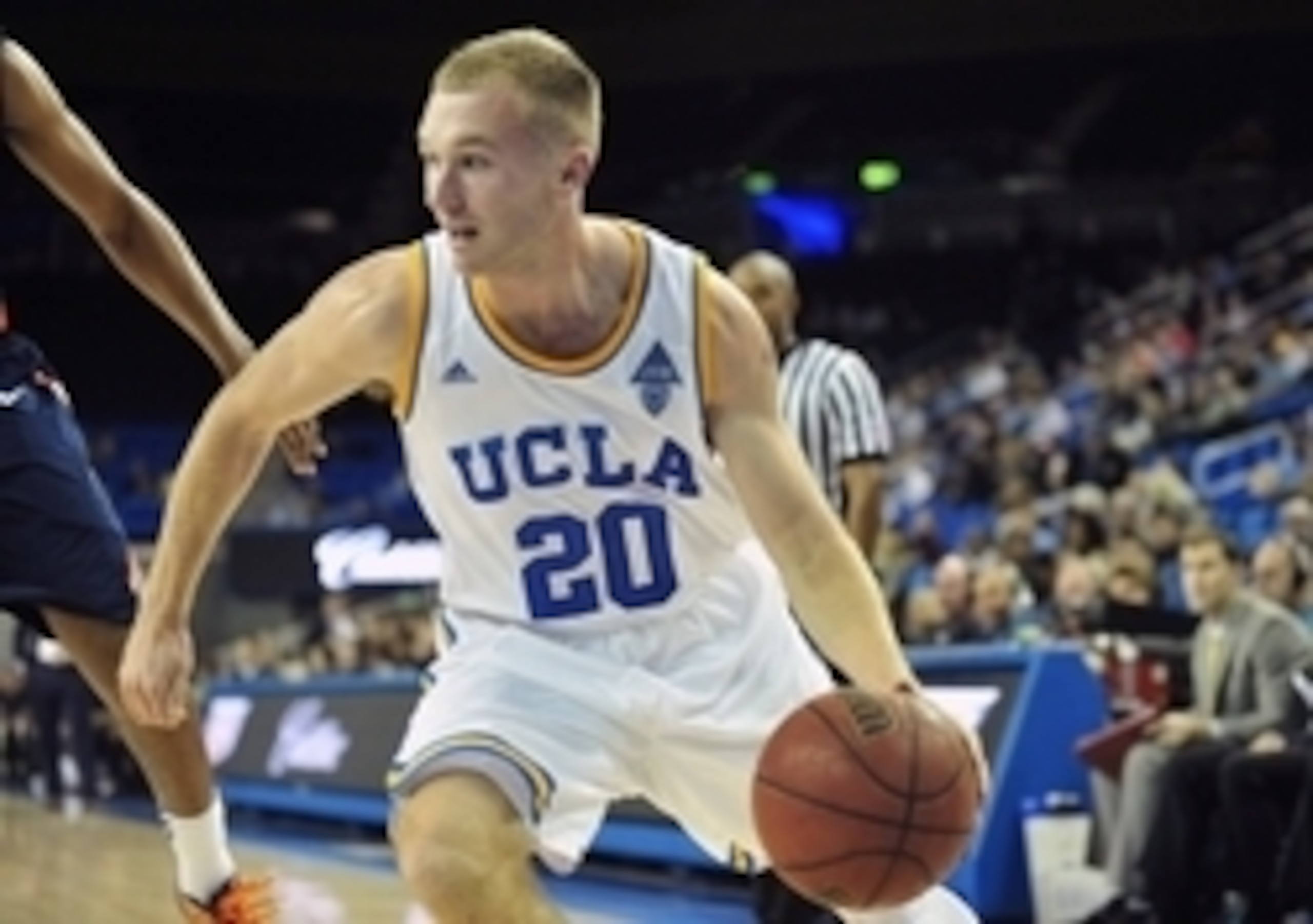
By the Numbers
17.1 points per game, 7.1 assists per game
How He's Caught Fire
Bryce Alford has already cooled off a good bit, but he was incredible through the first three games of the season for a team that averaged 101.3 points per game.
Against the likes of Nicholls State, Montana State and Coastal Carolina, Alford was putting up 10.7 assists and 21.0 points per night while shooting 50.0 percent from three-point range.
It was only one week, but he was putting up numbers that only J.J. Barea can claim to have nearly matched over the course of a full season in the past two decades.
Why He'll Cool Off
Maybe he just didn't like playing in a ballroom, but Alford's weaknesses certainly seemed to be exposed in the Battle 4 Atlantis. In the three games against Oklahoma, North Carolina and UAB, Alford had just 43 points on 36 field-goal attempts (1.19 points per FGA) and had 11 assists against 10 turnovers.
In his other five games, he has 46 assists and 10 turnovers and has averaged 1.54 points per field-goal attempt.
Which is the real Alford?
The talent of the competition clearly has a big effect on his play, and unfortunately the vast majority of UCLA's easy games are behind him.
He's still just a sophomore with plenty of room for growth, but we're expecting him to settle into something in the vicinity of 13.2 PPG and 4.8 APG once nonconference games against Gonzaga and Kentucky and Pac-12 play take their toll.
Rakeem Christmas, Syracuse
5 of 10
By the Numbers
17.1 points per game, 9.0 rebounds per game, 2.4 blocks per game
How He's Caught Fire
Somebody needed to step up for Syracuse—especially with Trevor Cooney actually averaging less points per game than last season—and Rakeem Christmas has been rising to the occasion since the start of the year.
He had a 21-point and nine-rebound effort in the opener against Kennesaw State and followed it up two days later with 15 points and 16 rebounds against Hampton.
Christmas only has that one double-double on the year, but he has been consistently effective—save for a foul-induced eight points and six rebounds against California.
He and freshman Chris McCullough (14.6 PPG, 8.9 RPG) have combined to give Syracuse an even better post game than it had last year.
Now if only the Orange could start shooting better than 22.6 percent from three-point range...
Why He'll Cool Off
There's nothing about this game that I love more than a four-year player who explodes as a senior, but even this is a bit ridiculous.
Brendan Quinn of MLive.com wrote a preview of the ACC/B1G Challenge game between Syracuse and Michigan, saying of Christmas, "(He) is one of the most experienced big men in the country and has exploded as a senior, posting scoring numbers he's never before sniffed."
Christmas averaged 5.8 points and 3.6 field-goal attempts per game last season, but those numbers have each roughly tripled this season to 17.1 and 11.0, respectively.
Where did this come from?
He started 109 games in his first three seasons without once attempting 10 shots in a game or scoring so much as 12 points in consecutive games.
We certainly like what we see, but we're also skeptical about its staying power.
Ameen Tanksley, Hofstra
6 of 10
By the Numbers
18.4 points per game, 64.9 three-point percentage
How He's Caught Fire
Sometimes transfers take a while to get going at their new school.
Not Ameen Tanksley.
To be fair, though, he's playing for the same coach. Joe Mihalich was at Niagara for 15 years before taking the job at Hofstra before the 2013-14 season. After sitting out last season, Tanksley is finally back on the court for his old coach.
He started a bit slow, scoring "just" 13.7 PPG in the first three games, but he has been unstoppable since then. Over his last four games, Tanksley has averaged 22.0 PPG while making 20 of his 25 three-pointers—five in each game.
On Tuesday against Norfolk State, he scored 30 points while attempting just nine field goals.
Why He'll Cool Off
Tanksley shot just 33.3 percent from three-point range at Niagara but has been nearly twice that good at Hofstra, currently shooting 64.9 percent.
Even if Stephen Curry was shooting 64.9 percent from three-point range, we'd be expecting a significant amount of regression. And Tanksley isn't exactly Curry.
He and Juan'Ya Green should continue to lead the Pride in scoring, but there's simply no way he can continue to be this efficient for an entire year.
Cinmeon Bowers, Auburn
7 of 10
By the Numbers
13.3 points per game, 12.2 rebounds per game
How He's Caught Fire
The last two games (14 points and 16 rebounds combined) haven't been very impressive for Cinmeon Bowers, but he got out to a great start.
Through four games, Bowers was averaging 16.5 points and 14.3 rebounds per game. Of those 57 rebounds, 23 were of the offensive variety.
He posted a double-double in each of those four games—even though Auburn was destroyed in two of them.
When he isn't dealing with foul trouble, Bowers has been nearly unstoppable.
Why He'll Cool Off
Auburn has only played six games, but Bowers already has more than triple the number of rebounds of any other Tiger. He has been great in the paint, but until Trayvon Reed becomes eligible in the second semester, he's all Auburn has in the post.
Eventually, he's going to wear down, and he's eventually going to play against some very tough SEC frontcourts in Kentucky, Arkansas and LSU.
Also, there's little doubt that Antoine Mason will be a big part of the offense once he's healthy, taking scoring opportunities away from Bowers.
Shavon Shields, Nebraska
8 of 10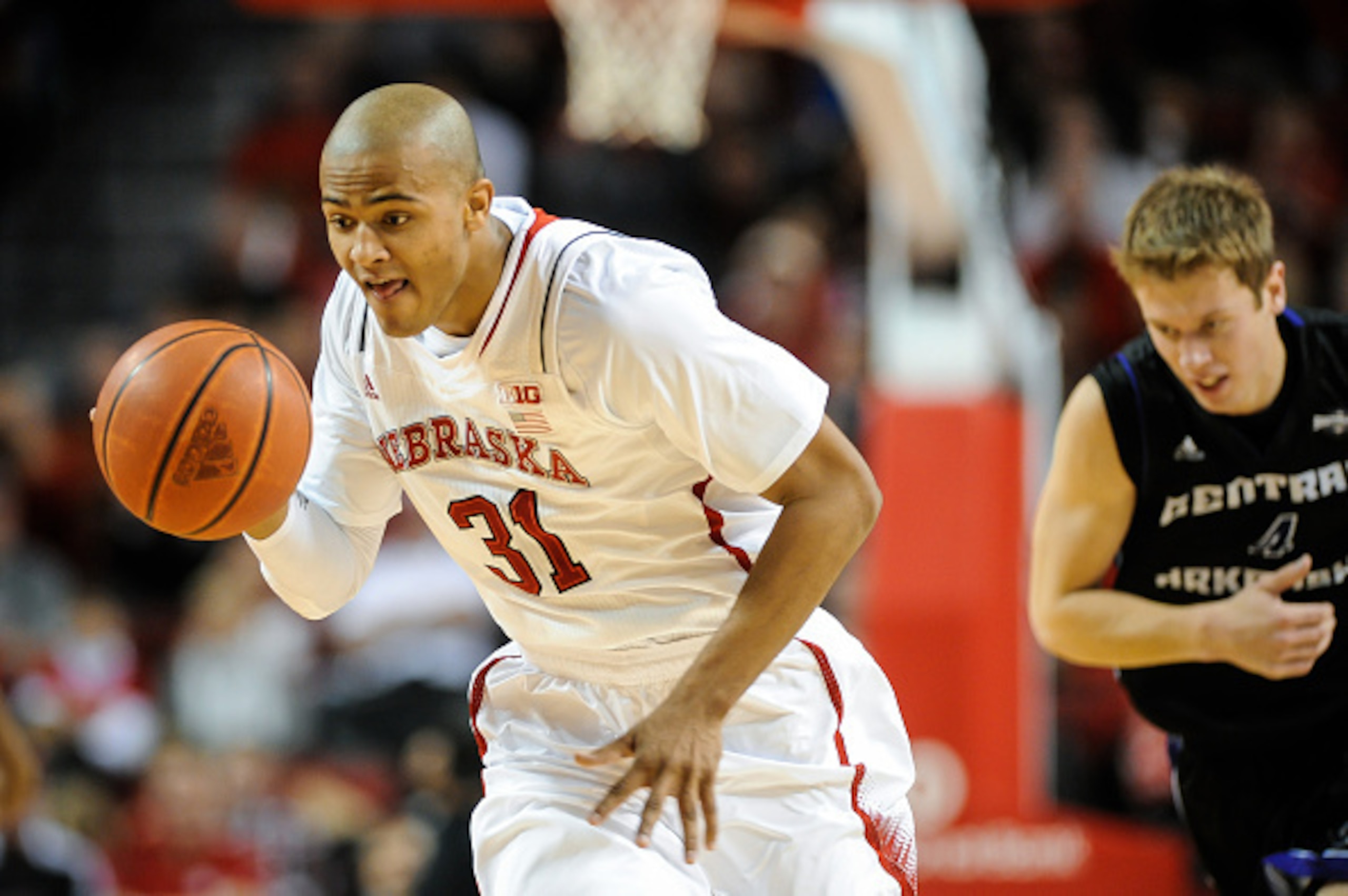
By the Numbers
20.0 points per game, 7.3 rebounds per game
How He's Caught Fire
Thus far this season, Nebraska has been a two-trick pony. Only two Cornhuskers are putting up so much as 7.0 points per game.
Terran Petteway averaging 21.0 PPG isn't much of a surprise after he posted 18.1 PPG last season.
Shavon Shields at 20.0 PPG, on the other hand, is a bit shocking.
The 6'7" guard/forward hybrid has scored at least 21 points in three of Nebraska's last four games, including an incredible 35-point outing against Nebraska-Omaha last Tuesday.
He's done it from everywhere on the court, too, shooting 43.8 percent from behind the arc, 66.0 percent inside it and 86.8 percent from the free-throw line. Were it not for Petteway taking 16 shots per game, Shields could be averaging at least 25 points per night.
Why He'll Cool Off
Wake me up when Nebraska faces a team that can actually defend the paint.
Shields' two best games of the season came against Nebraska-Omaha and Rhode Island. Between the two rosters, UNO's 6'9" freshman Daniel Meyer is the only player taller than 6'8", and he played just four minutes in the game.
Even against weak competition, Shields' 60.6 field-goal percentage seems pretty unsustainable after he shot just 45.4 percent from the field in his first two seasons.
Austin Lewis, McNeese State
9 of 10
By the Numbers
5.3 blocks per game, 10.1 blocks per 40 minutes
How He's Caught Fire
Austin Lewis is merely a 6'8" forward, but he has been a shot-blocking machine this season.
He already has one points-blocks double-double with 10 points and 11 blocks against Louisiana College. Lewis also came relatively close to a triple-double a few days later against Jarvis Christian, tallying eight points, eight rebounds and seven blocked shots.
Lewis has 21 blocks on the season, while the rest of the Cowboys have just 17 combined.
Why He'll Cool Off
I'm a sucker for ridiculous block percentages—hence my infatuation with Washington's Robert Upshaw—but Lewis' 23.9 block percentage is extremely hollow, as 18 of his 21 blocks have come against D-II opponents.
Thanks to those two games, he has a block percentage nearly triple what he posted last season (8.7 percent).
He is leading the nation in blocked shots per game right now, but it won't last. Even conference competition in the Southland is drastically better than the D-II teams against which he has done his damage.
Sterling Gibbs, Seton Hall
10 of 10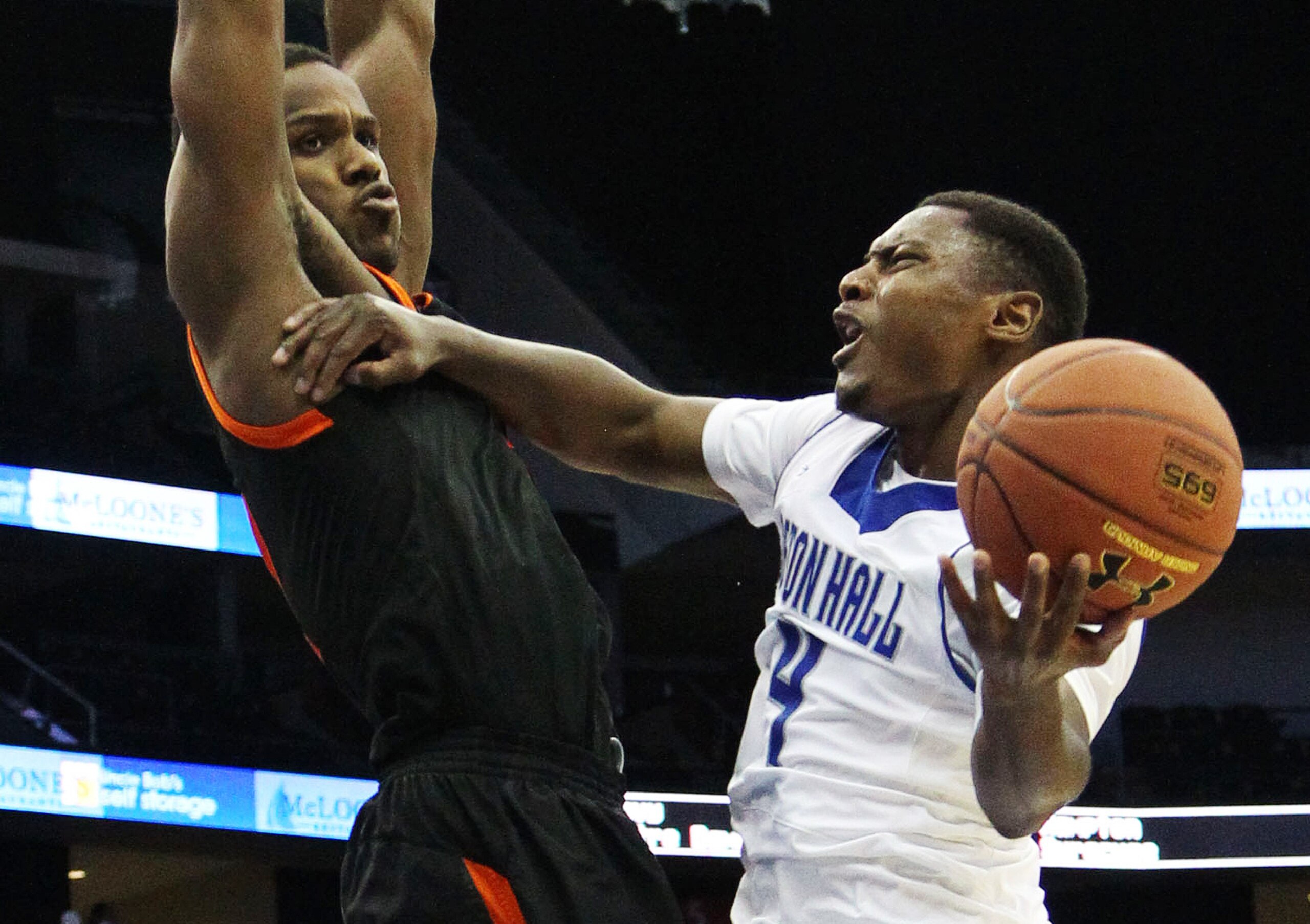
By the Numbers
18.3 points per game, 58.3 three-point percentage
How He's Caught Fire
Gibbs has been an extremely efficient scorer, averaging 1.8 points per field-goal attempt.
However, it's the 40-point game against Illinois State that is padding his numbers and putting him and Seton Hall on the national radar.
In that game, he sank his first four three-point attempts. He finished the night 7-of-9 from behind the line and 13-of-13 from the free-throw line. Seton Hall needed every last one of those points, too, as the Pirates only won the game by four points.
Raphielle Johnson of NBCSports.com wrote about Gibbs as a potential 50-40-90 player on Wednesday afternoon, concluding, "As Seton Hall’s underclassmen find their way in Willard’s system, the play of the 'elder statesman' Gibbs is a big reason why the Pirates are currently on the edge of the Top 25."
Why He'll Cool Off
The fun thing about small sample sizes is that Gibbs has only eclipsed his scoring average once this season. He has five games with 11-17 points and one monster performance.
Since that 40-point game, though, Gibbs has taken a backseat to the freshman duo of Isaiah Whitehead and Angel Delgado—a ratio that may only continue to swing in favor of the young guys as they become more polished.
Moreover, Gibbs' current shooting percentages are drastically higher than last season, particularly from three-point range where he's shooting 58.3 percent after hitting just 34.4 percent in 2013-14.
Once Gibbs comes back to earth and Whitehead starts fulfilling his potential, Gibbs will be the second fiddle in Seton Hall's offense.
Kerry Miller covers college basketball for Bleacher Report. You can follow him on Twitter @kerrancejames.
.jpg?w=2560 "NBA Gambling Charges")
.jpg?w=2560 "Aikman Blasts Cowboys WR 🫣")

.jpg?w=2560 "Jonathan Taylor Landing Spots")