Every NBA team has specific needs. And we've made it easy on each one by separating the top projected 2015 prospects by position.
At first glance, it's pretty clear which positions are the deepest. We could be looking a draft loaded with talented big men and high-upside wings.
However, teams looking for backcourt help might want to turn their attention to free agency this summer.
We ranked the top-five point guards, shooting guards, small forwards, power forwards and centers projected to enter this year's draft based on their NBA potential.
Point Guard No. 5: Andrew Harrison, Kentucky, 6'6", Sophomore
1 of 25
Core Strengths: Mismatch Tools, Attacking
Andrew Harrison has had NBA eyes on him for years now. There's no mystery as to where he excels versus where he struggles.
You have to love his 6'6" size and strong frame for a ball-handler. He's at his best attacking off ball screens, where he uses that hesitation dribble to penetrate and his height to make plays over the defense.
Harrison also does a nice job of finding his shooters and finishers on the move as a passer.
But once he's gotten within the defense, particularly around traffic, he lacks the explosiveness to rise up and finish over defenders. Harrison shot a dreadful 40.5 percent at the rim last season, per DraftExpress' Mike Schmitz.
He was also inconsistent all last year as a shooter, while his decision-making, shot selection and body language didn't do him any favors in the likability department.
Harrison's perceived ceiling has probably plummeted from potential starting NBA point guard to hopeful backup, but between his physical tools and ball skills, he'll still get looks from suitors in need of backcourt assistance.
Point Guard No. 4: Terry Rozier, Louisville, 6'2", Sophomore
2 of 25
Core Strengths: Athleticism, Defense
Terry Rozier didn't get many playmaking opportunities behind Russ Smith last year, but he's currently locked into a full-time role, where scouts will finally get the chance to see him manage an offense at the point.
He's one of the most athletic guards in the country, from his quickness off the bounce and dexterity in the air to his above-the-rim explosiveness. That athleticism also translates at the defensive end, where he can harass opposing ball-handlers with his length and quickness.
Rozier is off to a shaky start this year as a shooter, but he did hit 36 threes last season at a respectable 37.1 percent clip. His pull-up jumper isn't particularly accurate, though—he shot just 26 percent off the dribble in 2013-14, per DraftExpress' Jonathan Givony—which might explain his ugly shooting numbers early on in 2014-15, considering he's spending a lot more time handling the ball.
He also hasn't looked natural as a facilitator, having totaled just 11 assists through his first five games so far.
Rozier has some serious NBA-caliber burst, and that's going to drive his potential and draft buzz. But he's got adjustments to make if he wants to solidify himself as a legitimate first-round prospect.
Point Guard No. 3: Isaiah Taylor, Texas, 6'2", Sophomore
3 of 25
Core Strengths: Facilitating, Playmaking
Isaiah Taylor surprised a lot of people last year with his poise and balanced offensive attack. His 12.7 points and four assists per game were nothing to write home about, but Taylor flashed some impressive playmaking ability and room for growth in areas he struggled.
The main area he struggled: shooting. He hit just five three-pointers all year and didn't show much of a pull-up game either.
Other than that, he's quick off the dribble and crafty in the lane, where he can finish acrobatically or with touch over the defense. And he's also a natural facilitator out there—a guy who knows how to set the table and hit the right buttons as an orchestrator.
Taylor ultimately caught an unlucky break with a wrist injury that's likely to cost him the entire month of December, but assuming he returns to full strength for conference play, he'll have a good shot to draw major attention to himself with Texas looking like potential Final Four contender.
.jpg?w=2560 "NBA Gambling Charges")

Point Guard No. 2: Delon Wright, Utah, 6'5", Senior
4 of 25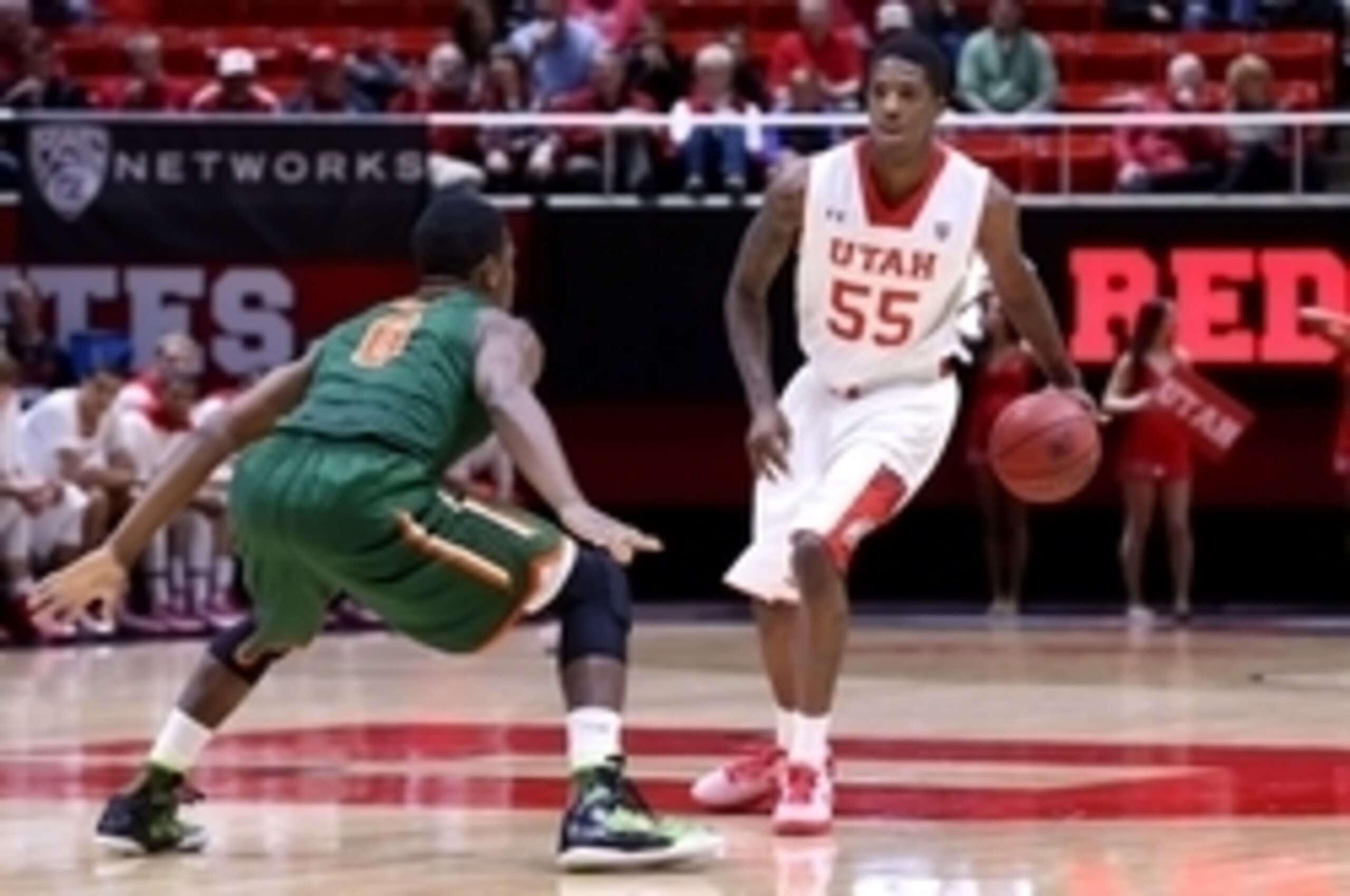
Core Strengths: Playmaking, Defense
The bar has been set pretty high for Delon Wright following his out-of-nowhere breakout in 2013-14.
Wright, a junior college transfer from San Francisco, put up some wild numbers in his first year at Utah, where he finished fifth in the entire country in win shares, per Sports-Reference.com, while consistently filling up box scores.
At 6'5", he's got excellent size for the position along with an unteachable feel for the game. Wright isn't your traditional lightning-quick breakdown point guard, but he takes the right steps at the right times and finds ways to penetrate or weave by changing speed and direction.
The big knock on Wright, other than the fact that's he's already 22 years old, has been his jumper, which only connected on 12 three-pointers all season.
But this year, he's off to a much better start, having hit six of his first 11 three-point attempts through six games.
At the end of the day, Wright is a pesky defender (2.5 steals per game last year), capable table setter and a crafty scorer inside the arc (63.3 percent on two-point field goals last year).
I wouldn't draft him with the hopes of him becoming my starter, but as a role player or backup, Wright should have something to offer.
Point Guard No. 1: Emmanuel Mudiay, China, 6'5", 1996
5 of 25
Core Strengths: Playmaking, Scoring, Offensive Upside
There might be some debate as to who the top center is or even the best 2-guard, wing or power forward.
Emmanuel Mudiay is the No. 1 point guard prospect on the planet, and it isn't even close.
At 6'5", Mudiay blends mismatch physical tools and athleticism with a balanced yet polished offensive attack.
It's working for him in China, where he's been averaging 18.8 points and 6.3 assists as an 18-year-old among men.
And most importantly, he's been leading Guangdong Southern to wins early on.
Mudiay has a ridiculous handle and lightning-quick change-of-direction ability. And though his scoring skill set is currently ahead of his floor game as a facilitator, there's no questioning his willingness to get his teammates involved.
Unfortunately, Mudiay recently went down with an ankle injury, but there doesn't appear to be too much concern.
Assuming he continues to fit in and make an impact upon his return, he'll remain in the No. 1 overall conversation from now until June. Think John Wall meets Jrue Holiday.
Shooting Guard No. 5: R.J. Hunter, Georgia State, 6'5", Junior
6 of 25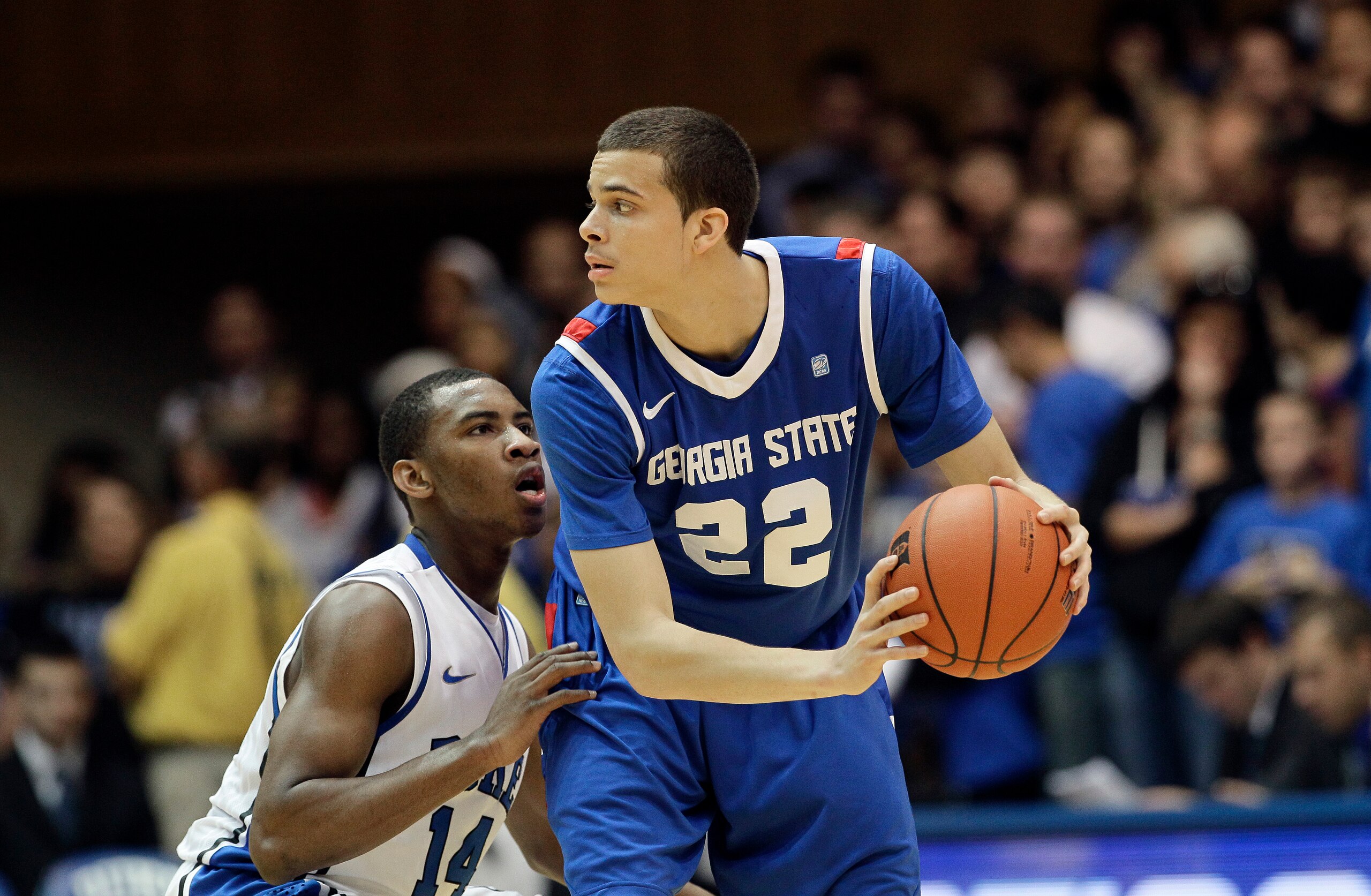
Core Strengths: Shooting, Perimeter Scoring
One of the nation's most prolific perimeter scorers, R.J. Hunter's lethal jumper could carry him all the way to the 2015 first round.
But it's not just spot-up shooting—Hunter moves really well off screens which are constantly being set for him in Georgia State's offense. He's at his best losing his defender without the ball before curling around a pick, catching, gathering and firing.
He drained 100 three-pointers last year, and he's on pace to do it again, having hit 22 total through his first seven games.
So far this year, he's even showcased a little playmaking ability, given his 3.7-assist average early on. The son of a coach (at Georgia State), Hunter is a high-IQ guy, which isn't always easy to pick up on, considering the sometimes wild shot selection he's forced into as a go-to option.
Hunter weighs in around 190 pounds, and he's not the most explosive 2-guard you'll see. But the NBA loves guys who can make shots, and that's Hunter's specialty.
Shooting Guard No. 4: Norman Powell, UCLA, 6'4", Senior
7 of 25
Core Strengths: Athleticism, Defense
Norman Powell has turned a corner in his career, and it's put him on the first-round map just in time.
Always known for his pestering defense and explosive athleticism, Powell's offensive game has taken off.
He's already hit the 20-point mark three times after reaching it twice all of last season. Powell's improved jumper deserves much of the credit, as he's making 1.7 three-pointers a game through seven.
The rest of his offensive game revolves around line-drive attacking and getting out in the open floor, where he's an electric finisher in transition.
Powell is somewhat undersized for an NBA 2-guard, but his elite-level athleticism, hounding defense and newfound shooting touch should hold enough weight. Look for Powell's stock to steadily rise once conference play starts up.
Shooting Guard No. 3: Caris LeVert, Michigan, 6'7", Junior
8 of 25
Core Strengths: Offensive Versatility, Shooting
After playing behind Trey Burke and Tim Hardaway Jr. as a freshman and behind Nik Stauskas and Glenn Robinson III in Michigan's pecking order last season, Caris LeVert finally has the freedom to fully showcase his versatility.
While it's his 6'7" size, athleticism and jumper that tend to get the most attention, LeVert's ability to create and facilitate for teammates ultimately differentiates him from other 2-guards.
Unlike most scorers, an off shooting night won't quiet LeVert, who's averaging 4.7 assists to go with his 17.5 points through six games. He's a solid ball-handler and excellent passer for a wing.
And yes, the jumper is a big deal. He's already hit 13 of his first 26 three-point attempts.
LeVert's biggest weakness comes in the mid-range, where he struggles as a stop-and-pop shooter off the dribble. But he just brings too many other things to the table.
Shooting Guard No. 2: D'Angelo Russell, Ohio State, 6'5", Freshman
9 of 25
Core Strengths: Offensive Versatility, Shooting
There's a reason Ohio State has used D'Angelo Russell in a whopping 30 percent of its possessions early on.
He's been a machine—a combo guard capable of generating offense at will, whether he's creating with the ball or scoring off the catch.
Through five games he's averaging 18 points and 5.4 assists on 48.3 percent shooting from downtown—numbers that reflect the threat he poses as a playmaker and shooter. While he's a threat attacking off the dribble, Russell has a confident lefty stroke he's able to connect with under pressure.
Between his 6'5" size, deadly jumper and point guard's bounce and vision, Russell packs a potent punch of firepower and versatility. He's arguably the biggest riser on our board roughly two to three weeks in.
Shooting Guard No. 1: Mario Hezonja, Croatia, 6'8", 1995
10 of 25
Core Strengths: Offensive Upside, Shooting
Mario Hezonja's stock took off in 2011 and 2012 during the European Championships and FIBA World Championships, and it's held strong ever since despite his lack of production.
He's been cooling on Barcelona's bench in the competitive Spanish ACB. Hezonja only played 9.7 minutes last year as an 18-year-old, and he's getting just 10.8 per game in 2014-15.
But nothing has changed with regard to Hezonja's can't-miss upside, which is fueled by 6'8" size for a 2-guard (or wing), spectacular athleticism and a dangerous scoring arsenal.
With the ball in his hands, he's capable of separating one-on-one into jumpers or slicing through the lane from the wing. Without it, he's a dynamite threat in transition or cutting off down screens for lobs or spot-ups.
In the six games he's played at least 12 minutes so far, he's a combined 12-of-21 from the floor.
Even if his role remains limited, don't expect Hezonja to leave the lottery conversation. The occasional flashes of brilliance should be enough to keep the buzz alive.
Small Forward No. 5: Rondae Hollis-Jefferson, Arizona, 6'7", Sophomore
11 of 25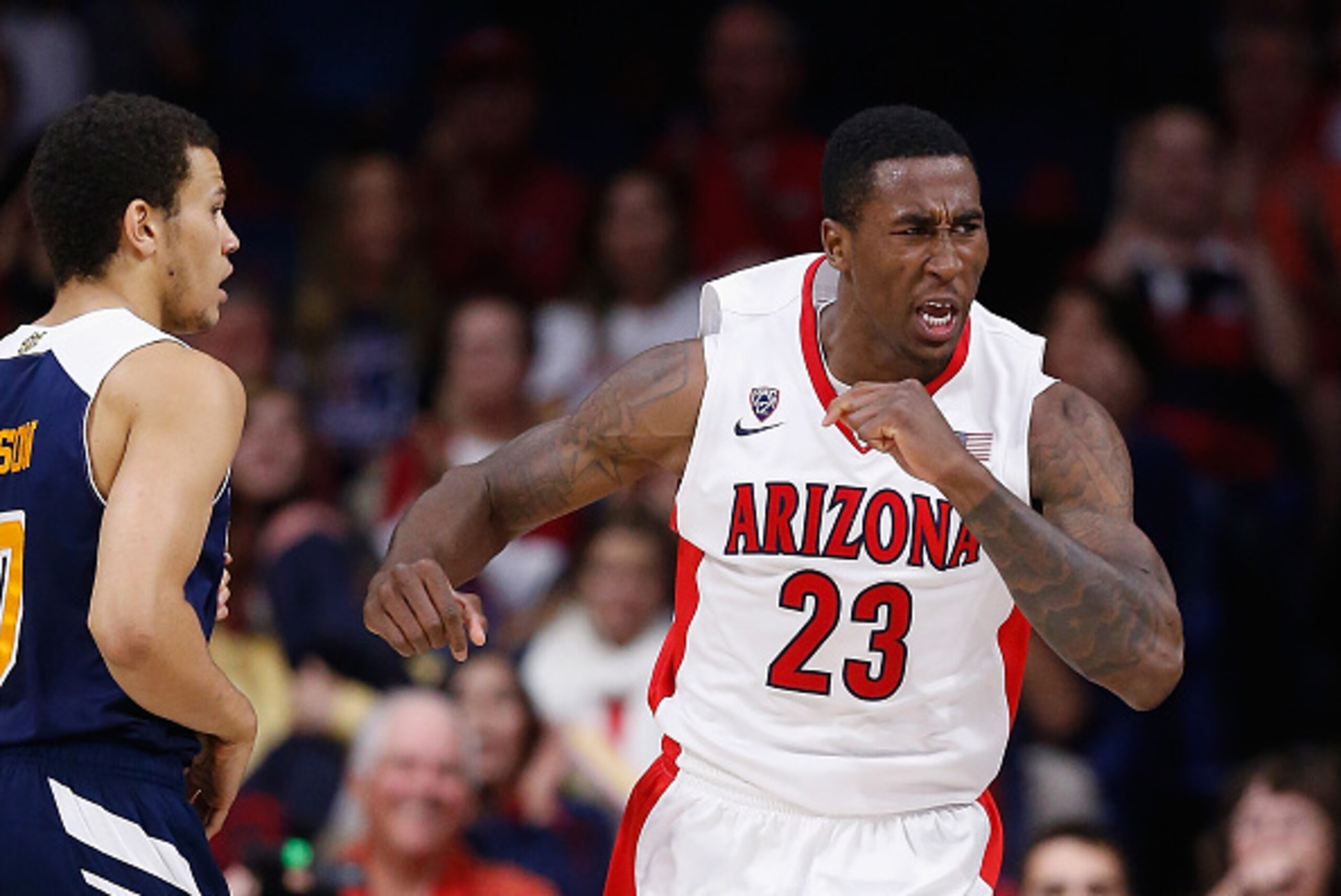
Core Strengths: Defensive Versatility
Rondae Hollis-Jefferson's strengths lie within his athleticism and defensively versatility. At 6'7" with a 7'0.5" wingspan and lightning-quick feet, he's got some pretty ideal tools for locking down opposing wings and guards.
Offensively, he's at his best catching and finishing from foul line to baseline, where he can elevate off the ground and score off one foot.
But that jumper remains a concern—he hit just two three-pointers last season and shot 68.2 percent from the line. And you just don't typically see many successful NBA wings who can't shoot the rock.
Still, between his slashing ability and defensive potential, Hollis-Jefferson might be able to carve out a role for himself as a two-way energizer specialist. That's ultimately the role I see him playing off an NBA bench if he can't fix the jumper.
Small Forward No. 4: Daniel Hamilton, Connecticut, 6'7", Freshman
12 of 25
Core Strengths: Scoring, Shooting
One of the more under-the-radar freshmen studs in the country, Daniel Hamilton has been impressive early on for Connecticut, where his 6'7" size, ball skills and jumper have stood out under the NBA lens.
Hamilton gets sent running off tons of screens in coach Kevin Ollie's offense, and he's looked good catching, gathering and releasing with balance and rhythm. He's hit 10 of his first 20 three-pointers on the year.
We've also seen Hamilton attack from the wing, where he's got a floater in the repertoire, along with the athleticism to finish at tougher angles in traffic.
He's averaging 13.2 points, 6.6 rebounds and two assists on 50 percent shooting through his first five games.
At 190 pounds, adding muscle is a must, but Hamilton has flashed some eye-opening two-way skills and tools for a 19-year-old small forward.
Small Forward No. 3: Kelly Oubre, Kansas, 6'7", Freshman
13 of 25
Core Strengths: Athleticism, Shooting, Scoring Instincts
Kelly Oubre hasn't quite earned the trust of coach Bill Self, who's played his prized recruit just 47 minutes through six games.
It doesn't change the potential reward tied to Oubre's blend of athleticism, shooting touch and scoring instincts for a 6'7" wing. Maybe it changes his developmental timetable, but not his long-term NBA ceiling.
In the meantime, he's fallen to No. 3 of our small forwards while warming Kansas' bench. He started the season at No. 1, a testament to the upside he flashed out of high school and the buzz he generated this summer at the LeBron James Nike Skills Academy.
In the time Oubre has received, he's been fairly passive on offense and uninspiring on D.
Until he finds a way to crack Self's rotation, Oubre will sit behind Justise Winslow and Stanley Johnson, who've been pretty darn impressive early on.
Small Forward No. 2: Stanley Johnson, Arizona, 6'7", Freshman
14 of 25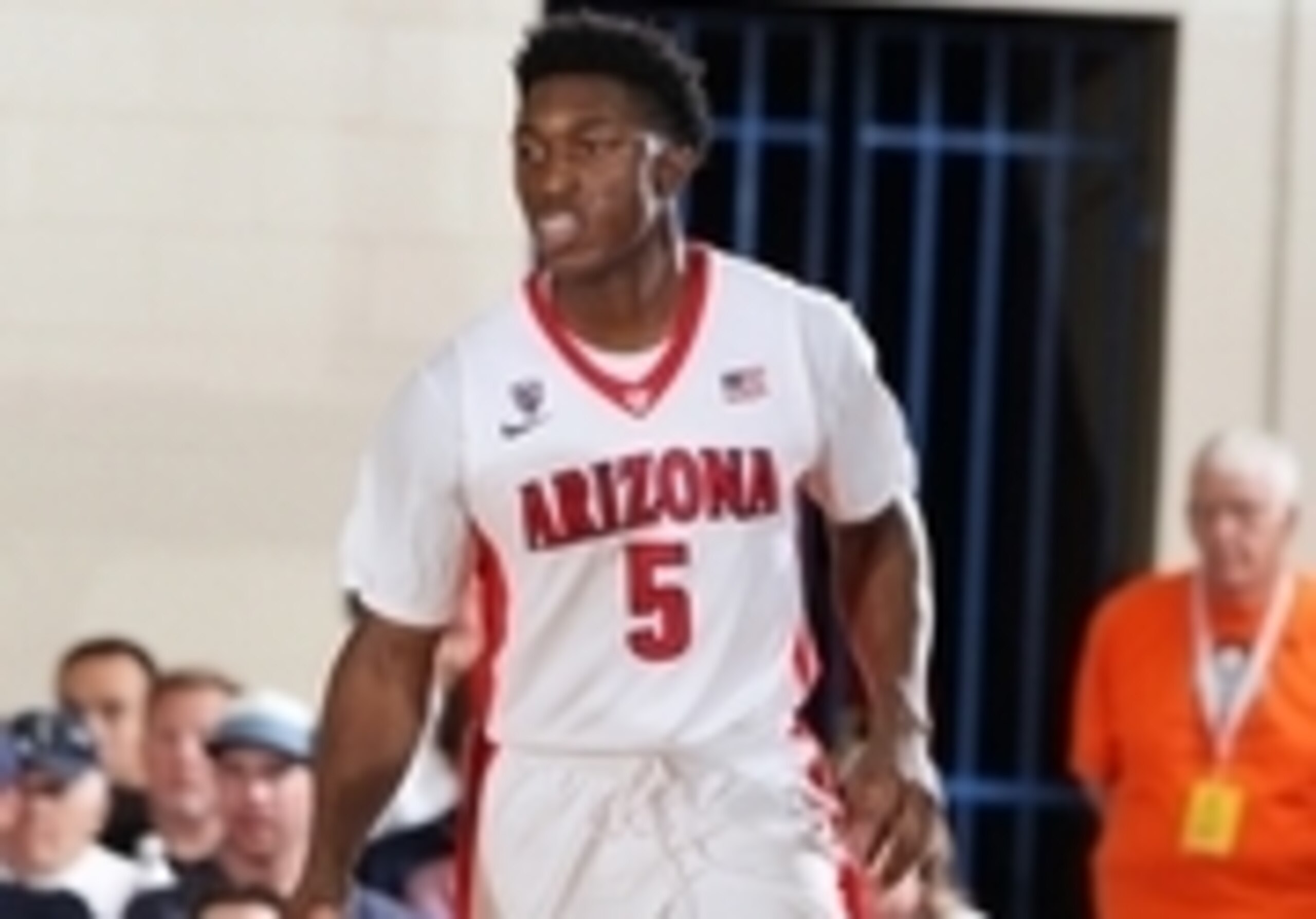
Core Strengths: Attacking, Defense
You just knew Stanley Johnson would be an immediate impact player.
He was terrific in a win over San Diego State on November 26 in the finals of the Maui Invitational, having gone for 18 points and nine rebounds.
The Associated Press said it best (via ESPN): "Johnson was seemingly everywhere, grabbing steals, swatting shots into the stands, pogo-sticking for offensive rebounds."
His activity level is tremendous. Johnson is a constant presence around the ball, a quality fueled by intensity and competitiveness, although his athletic ability doesn't hurt either.
He's also an overwhelming defender right now, and that's how he projects at the NBA level. And at 6'7", 245 pounds with excellent foot speed, he's got the tools to guard positions 1 through 3 on the floor.
Johnson isn't the most polished offensively in terms of creating his own shot, but his ability to play through contact leads to buckets in the paint and points at the stripe.
It's no surprise he's at his best attacking the rim and getting out in the open floor.
In the half court, Johnson can handle the ball, and he's got a capable yet inconsistent jumper to go with an adequate floater before traffic.
I like the Ron Artest and Kawhi Leonard comparisons myself—at least in terms of the type of two-way player he could be.
Johnson entered the year top 10 on our board, and it's tough to imagine that changing over the next few months.
Small Forward No. 1: Justise Winslow, Duke, 6'6" Freshman
15 of 25
Core Strengths: Athleticism, Defense, Two-Way Upside
You already get the impression that Justise Winslow is one of the better bets in the field. There's just something comforting about a strong, world-class athlete who hustles and defends.
But we knew about his physical tools and motor out of high school. It's Winslow's ball skills and jumper that have been better than advertised.
He's got the look and feel of Michael Kidd-Gilchrist only with a more refined offensive attack almost similar to Victor Oladipo's.
While chances are Winslow will always be at his best making plays off the ball, from slashing and cutting to getting out on the break, he has shown the ability to attack off the dribble (5.7 free-throw attempts, two assists per game) and connect from outside. It's early, but he's actually hit nine of his first 23 three-point attempts (39.1 percent) on the year.
He still has a ways to go offensively, but Winslow ultimately excels in areas of the game you can't teach and shows promise where there's room for growth. I wouldn't argue if you said he's the top prospect not named Jahlil Okafor, Emmanuel Mudiay or Karl-Anthony Towns.
Power Forward No. 5: Chris McCullough, Syracuse, 6'10", Freshman
16 of 25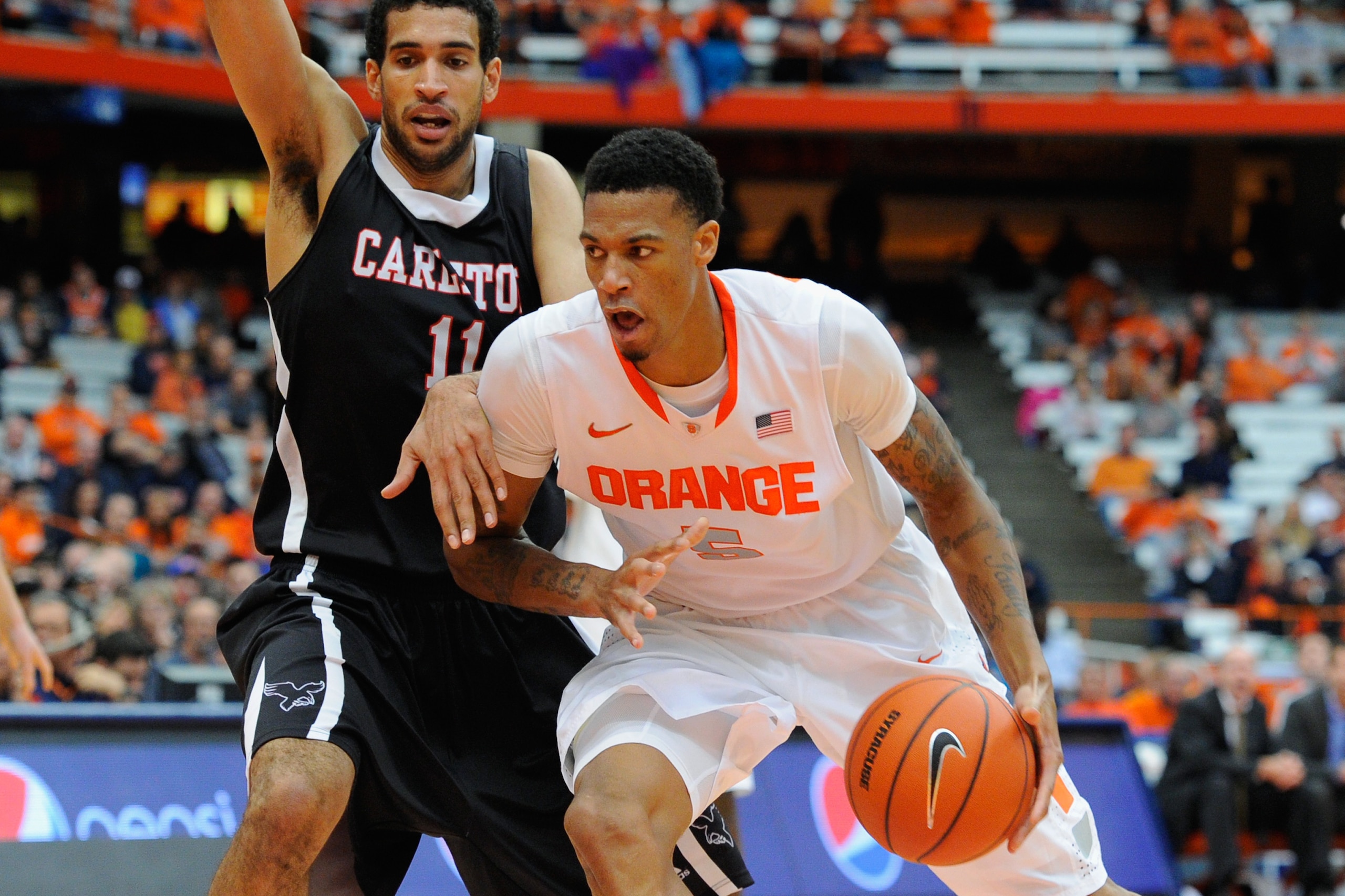
Core Strengths: Physical Tools, Shooting Potential
Chris McCullough has been a bright spot early on for what looks like a bleak Syracuse offense. And it hasn't taken long for his NBA upside to shine.
At 6'10" with a monster 7'3" wingspan, he's got an awfully appealing blend of size, length and athleticism.
But he's also fairly skilled, with the ability to finish around traffic inside despite lacking strength on his 220-pound frame.
He's even looked comfortable and confident in the mid-range, where McCullough has already knocked down a number of catch-and-shoot jumpers.
Through six games, he's averaging 15.5 points, 8.5 rebounds and 2.5 blocks. And he's just barely touching the surface of his potential.
Power Forward No. 4: Cliff Alexander, Kansas, 6'8", Freshman
17 of 25
Core Strengths: Athleticism, Motor
Even through just six games, Cliff Alexander's strengths and weaknesses have been well-defined.
Finishes, rebounding, shot blocking—that's Alexander's bread and butter at the moment. He's a monster athlete who runs the floor, plays hard and cleans up around the rim.
And that's why Alexander should enter the draft with a high basement floor. If worst comes to worst, he's a frontcourt motor and energizer who can make things happen without needing touches.
However, to reach higher levels of upside, he's got a lot of work to do on his offensive game. Alexander's ball skills are raw, from his post moves, which are limited, to his shooting touch.
He's also a bit undersized for a power forward. “He’s not tall enough, and it was very evident tonight, to score over that length,” Coach Self said to the Chicago Sun Times' Steve Greenberg following the beating Kansas received from Kentucky.
There's still plenty of valued tied to athletic big men who rebound and defend, but those strengths alone won't keep him locked into the top-10 conversation.
Power Forward No. 3 : Kevon Looney, UCLA, 6'9", PF, Freshman
18 of 25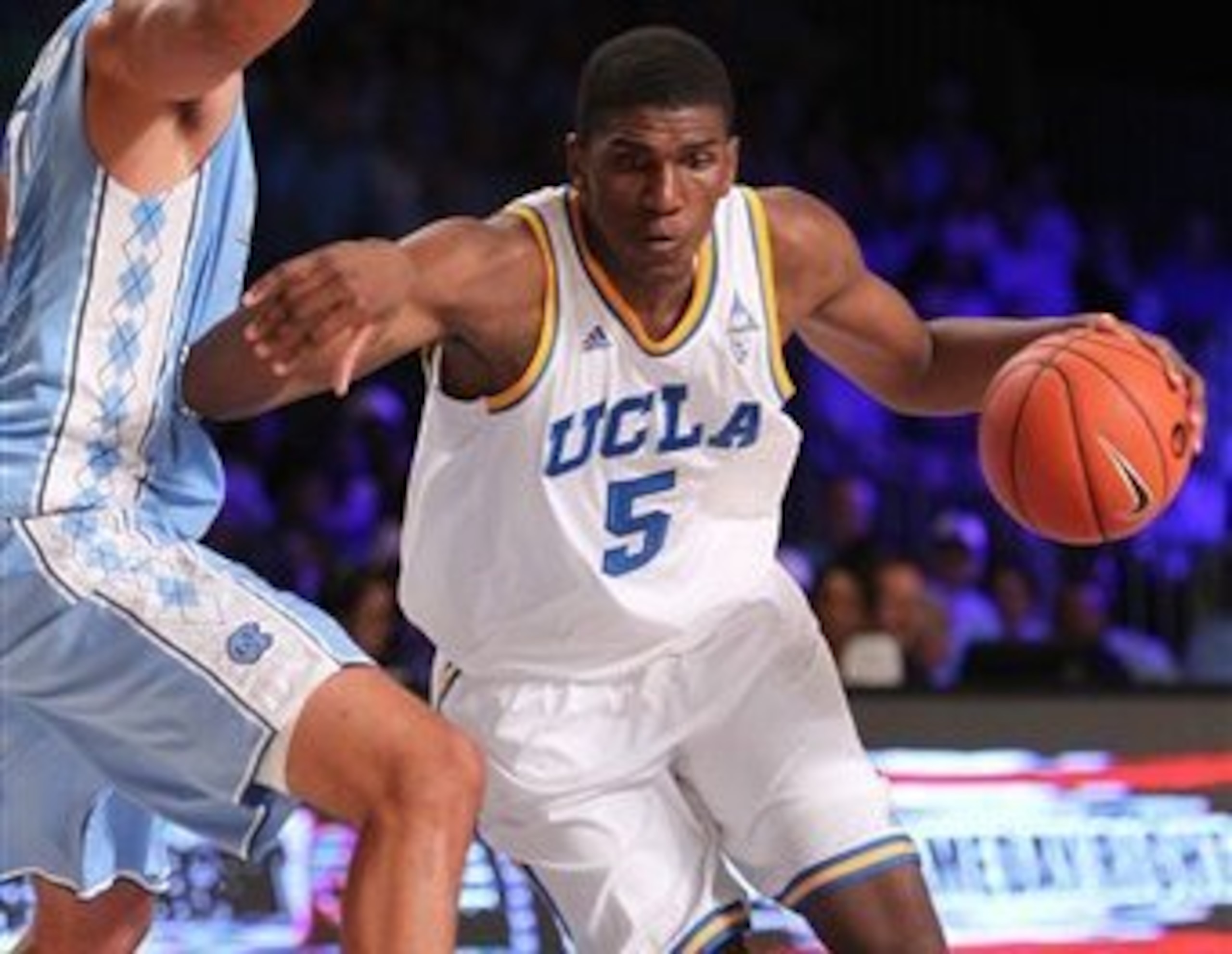
Core Strengths: Offensive Versatility
Kevon Looney has come on strong right out of the gates with four double-doubles through his first seven games.
His size and length (7'3" wingspan) immediately stand out from an NBA perspective, as does his ball-handling and shooting touch for a guy this big.
Still, Looney is at his best around the rim, particularly under the boards, where his aggression and instincts have translated to an average of 11 rebounds a night.
Offensively, he's not quite fluid yet, but Looney has perimeter ball skills for a 4 that drive some big-time mismatch potential.
Power Forward No. 2: Montrezl Harrell, Louisville, 6'8", Junior
19 of 25
Core Strengths: Athleticism, Interior Scoring
It's tough to argue with what Montrezl Harrell did last season—14 points a game, 8.4 rebounds, 60.9 percent shooting. But the footwork and touch didn't match the physical tools and explosive athleticism.
So Harrell returned as a junior in order to polish his skills and boost his stock up even further. And then he dropped 30 points on Minnesota in Louisville's 2014-15 opener.
It felt like a statement from Harrell, who was knocking down threes and free throws like a legitimate inside-out forward.
At 6'8", he's a tad undersized for an NBA 4 these days, which is why it's so important that his jumper eventually comes around.
Harrell has cooled off a bit since his opening-night eruption, but over the next few months, if he can convince scouts he's made strides as a shooter and post scorer, the top-10 door should be open to him.
Power Forward No. 1: Kristaps Porzingis, Latvia, 7'0", 1995
20 of 25
Core Strengths: Offensive Versatility, Shooting, Upside
After passing on a chance at the lottery by withdrawing from the 2014 draft, Kristaps Porzingis naturally entered the season as a potential 2015 top-10 candidate.
And that hasn't changed through his first 16 games.
His minutes and role have increased in the Spanish ACB and Eurocup, as has his production and activity. Porzingis' rebounding and block percentages are both up, which is fairly significant considering the questions that surround his slender 220-pound frame for a big.
But what differentiates Porzingis from other 7-footers and ultimately diminishes some of the concern over his lack of strength are his unique perimeter ball skills.
Porzingis can put it on the floor and attack, create jumpers in the mid-range or stretch the floor as a shooter.
So far this season, he's been on fire from downtown, having hit 13 of his first 32 three-point attempts (40.6 percent).
You've heard it before, and you'll hear it again—the NBA guys love athletic big men who can face up and shoot. And this one also has the ability to protect the rim as weak-side help.
If Porzingis is able to put on some muscle over the next few years, he'll have mismatch written all over him.
Center No. 5: Frank Kaminsky, Wisconsin, 7'0", Senior
21 of 25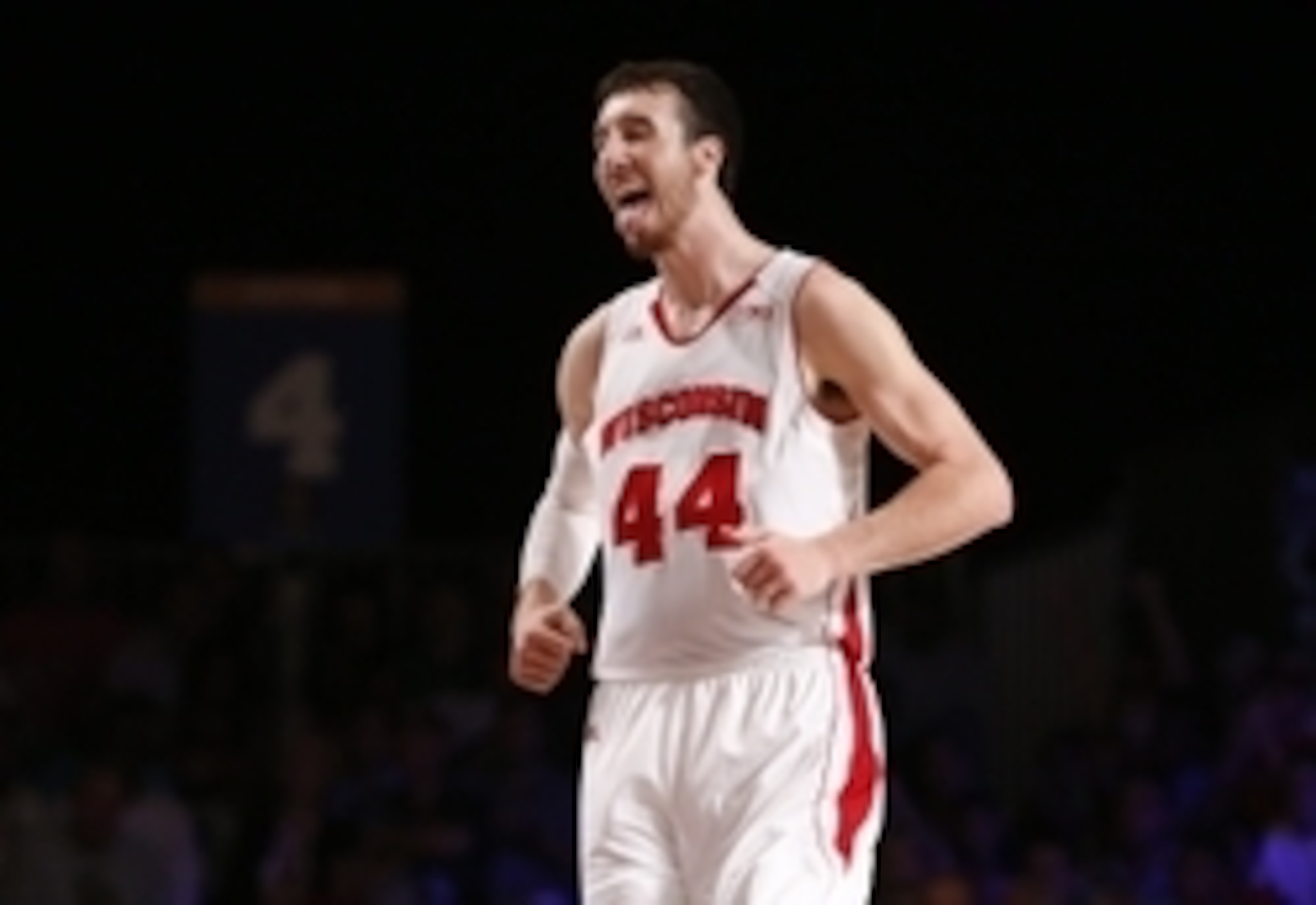
Core Strengths: Offensive Polish/Versatility
Frank Kaminsky generated buzz last year by unleashing a newly improved offensive game consisting of post moves and three-point touch.
And his execution has been even better early on this season—Kaminsky is averaging 16.6 points on 56.3 percent shooting and 40.7 percent from downtown through seven games.
He's really developed a good-looking jumper, which gives him appealing stretch potential at the next level. Kaminsky has also showcased impressive footwork in the paint, with the ability to separate into high-percentage looks from the low and high post.
Defensively, he's no Dikembe Mutombo, but he's a reliable shot-blocker if the opportunity is there.
Given the NBA's love for big men who can shoot, Kaminsky should have plenty of first-round suitors if not a few in the lottery looking for offense up front.
Center No. 4: Willie Cauley-Stein, Kentucky, 7'0", Junior
22 of 25
Core Strengths: Shot Blocking, Finishing
Now in his third year at Kentucky, nothing has changed regarding Willie Cauley-Stein's game or outlook. Whether his ball skills improve or not, he projects as an interior specialist capable of impacting a game without needing many touches.
Finishing, shot blocking, rebounding—that's Cauley-Stein's bread and butter thanks to that 7'0" size and wide receiver-like athleticism.
Offensively, it's all about easy above-the-rim buckets off dump passes, lobs, pick-and-rolls and putbacks. He's shot at least 59 percent from the floor in each of his first two years.
For what it's worth, he has looked like a bigger threat to score from the block early this season. Against Providence, three of his five field goals came on actual post moves down low.
And as long as he remains active at the defensive end, his physical tools should translate to heavy rim protection.
Think Tyson Chandler as a best-case-scenario type of big man.
Center No. 3: Myles Turner, Texas, 6'11", Freshman
23 of 25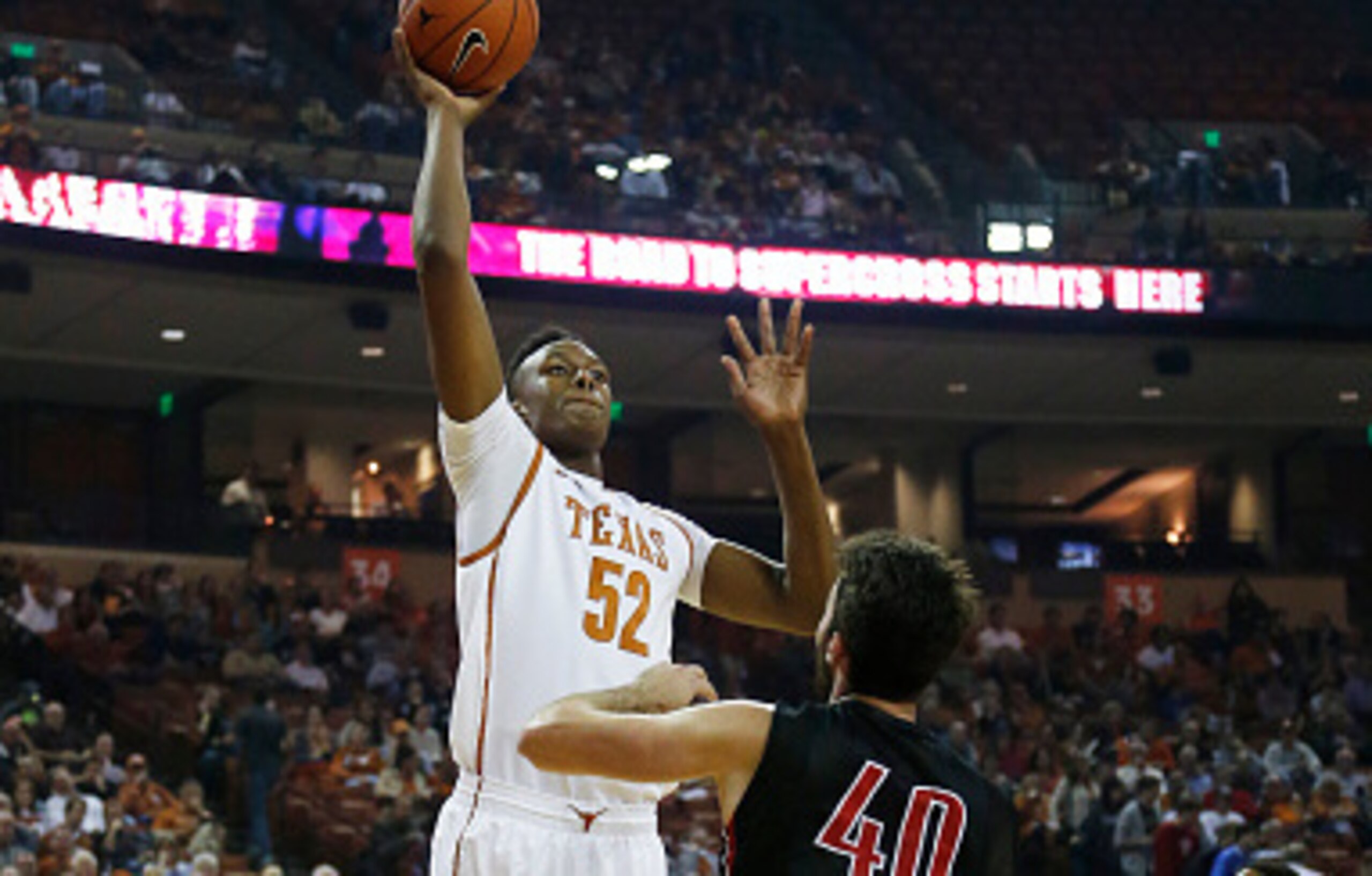
Core Strengths: Offensive Versatility, Shot Blocking, Two-Way Upside
A late bloomer in high school, Myles Turner has looked like a quick learner at Texas, where he's turned heads right away thanks to his two-way skills and tools.
You just don't typically see stretch big men who also protect the rim. Normally, you either get one or the other.
But at 6'11", Turner has a pure shooting stroke and the ability to separate into it using jab steps, fadeaways and ripthroughs. He's also a versatile pick-and-roll target, given his size and athleticism as a roll man and jumper as a pop option.
Defensively, he's a natural shot-blocker—Turner averaged 3.4 blocks a game for Team USA at this summer's FIBA World Championships, and he's averaging three a game through five for Texas. He recently swatted five shots in 19 minutes in a one-point win over Connecticut.
The NBA guys are just bound to fall for his inside-out versatility, while his defensive potential only sweetens the package. If it hasn't happened already, look for Turner to quickly enter the lottery or even top-five conversation.
Center No. 2: Karl-Anthony Towns, Kentucky, 6'11", Freshman
24 of 25
Core Strengths: Offensive Versatility, Defensive Potential, Rebounding, Passing, Upside
Karl-Anthony Towns offers some offensive versatility and defensive potential that drive his ceiling up higher than anyone else's in the field.
Towns has the body of an NBA center with the inside-out game of a power forward.
Down low, he can play with his back to the basket or face his man up and attack. Towns has to improve his fluidity, but he's flashed some impressive post moves, from slippery baseline spins to running jump hooks in the lane.
He's also shown some promising shooting touch in the mid-to-long range, which plays to stretch potential as a big man.
On top of what could be an extremely diverse scoring repertoire, Towns is also an effective passer, particularly out of double-teams.
Defensively, he's looked like a man possessed early on, even if his physical tools are ahead of his awareness. Through five games, he's averaging three blocks in only 18.6 minutes, which translates to a ludicrous 18.6 percent block percentage if you're keeping track.
He's also rebounding like a machine, pulling in around the same amount of boards (7.4) as Jahlil Okafor (7.9) is while playing roughly nine minutes less per game.
Towns isn't as polished as Okafor, but his skill set covers more ground when you consider his comfort level on the perimeter and rim protection inside.
Though the consistent production won't to be there in Kentucky's loaded frontcourt, the flashes of All-Star upside will be.
Center No. 1: Jahlil Okafor, Duke, 6'11", Freshman
25 of 25
Core Strengths: Post Offense, Basketball IQ
Easily the most polished, skilled big man in the country, Jahlil Okafor has looked as dominant early on as the hype said he would.
He's averaging 17.7 points and 7.9 rebounds on 63.6 percent shooting through his first seven games.
Weighing in at 270 pounds with a massive 7'5" wingspan, Okafor has the size to gain position, the footwork to separate and the touch to convert in the paint. Nobody does a better job of sealing off his defender and creating angles or easy scoring changes right around the rim.
With go-to moves and others to counter with, you get the impression Okafor could step into an NBA game tomorrow and hold his own as a post scorer.
There isn't a safer option at No. 1 overall based on his immaculate physical tools and sharp offensive skills. Think Al Jefferson meets Jared Sullinger.



.jpg?w=2560 "Aikman Blasts Cowboys WR 🫣")
.jpg?w=2560 "Jonathan Taylor Landing Spots")