What's Behind Chris Bosh's Struggles in Newfound No. 1 Role?
Chris Bosh got rave reviews after his debut as the Miami Heat’s No. 1 option.
After watching the center eviscerate the Washington Wizards to the tune of 26 points, 15 rebounds and a quartet of assists in the Heat’s season-opening 107-95 win, SB Nation’s Mike Prada—among other analysts—gushed. The possibilities for the multiskilled big man were endless:
"Bosh was already too skilled in the post for smaller defenders, too quick for slower ones and too accurate from the perimeter for traditional big men… Now, he's all that empowered in a Heat setup that actually requires him to use his many gifts.
"
TOP NEWS
Jaylen Brown Calls Out Tatum 🧢
LeBron on President Trump's Criticism
Report: Knicks to Sign Knecht
But though Bosh went on to average 25.7 points, 11.7 rebounds and four assists in Miami’s first three games—all Heat wins—the center’s production has dipped since then, as has optimism about the 2014-15 Heat.
Everyone, Bosh included, has recognized that there’s room for improvement.
“With [Dwyane Wade] out, I have to play a better game if we expect to win,” Bosh admitted to the Palm Beach Post’s Jason Lieser while in the throes of a recent shooting slump.
Through 14 outings, Bosh is averaging 21.5 points, 8.7 rebounds and 2.6 assists per night—all highs since he joined the Heat in the summer of 2010—but these counting numbers mask some slippage in other areas of his game.
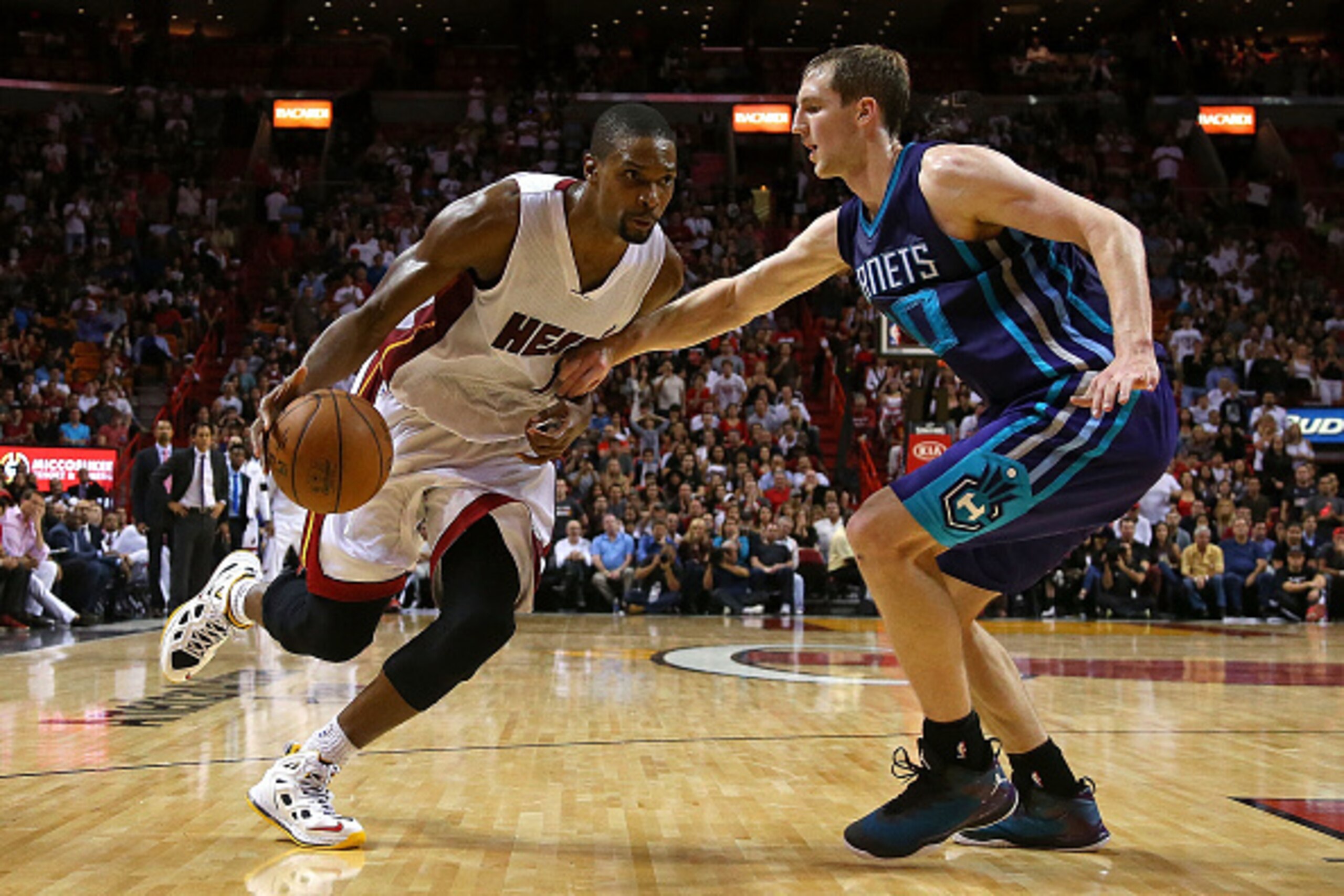
While Bosh is scoring more frequently this season, it’s come at the expense of efficiency. His 56.2 true shooting percentage, per Basketball-Reference.com, is 3.5 percentage points below last season’s 59.7 figure and, if it persists, would be the second-lowest mark he’s posted since 2004-05—his second season in the NBA.
For a player who’s assumed the mantle of lead scorer, this kind of a dip is problematic. It’s also easily explainable: Bosh simply takes a lot of really difficult shots.
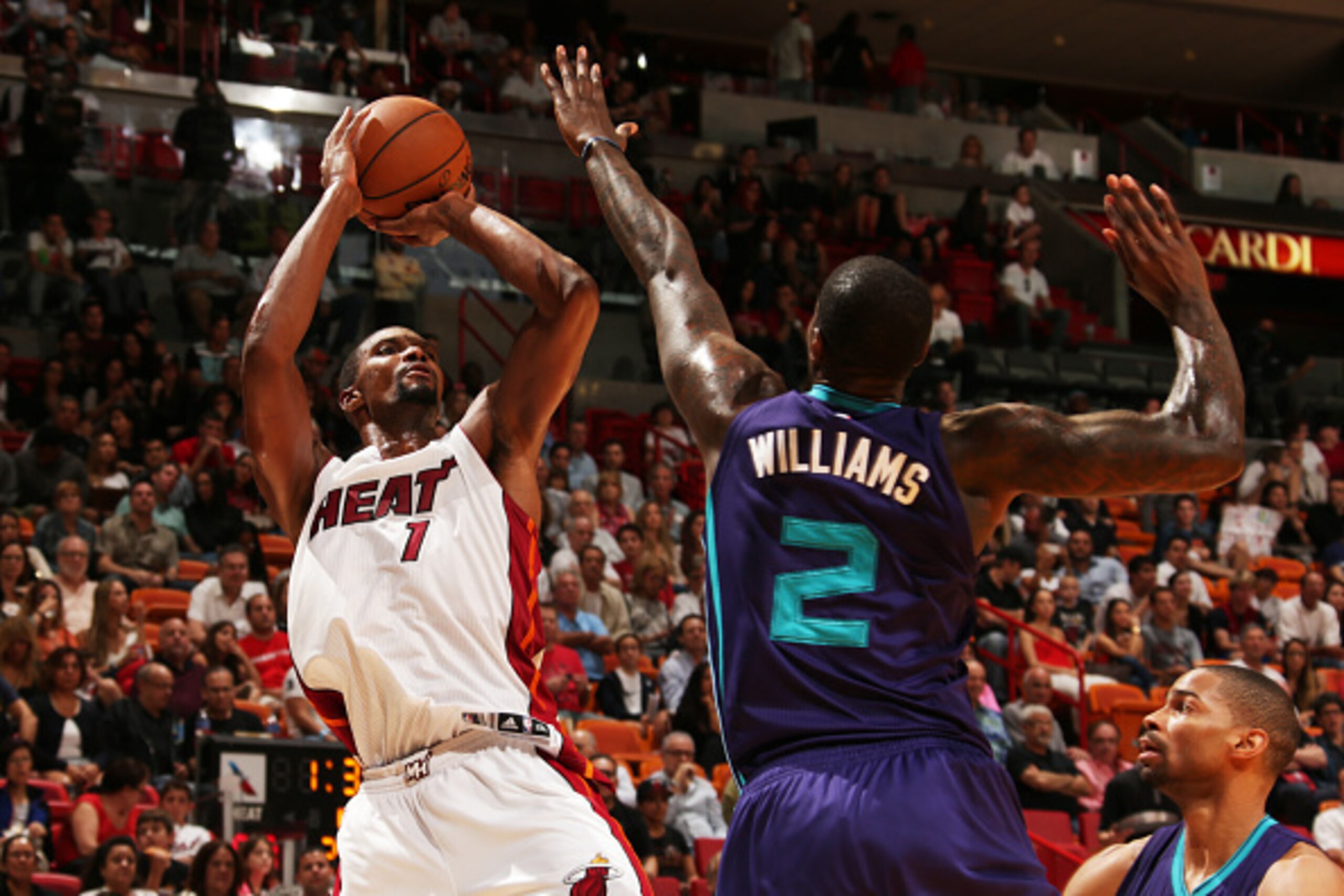
Bosh is a really excellent interior scorer—in 2013-14, he finished fourth in the league in field-goal percentage from within five feet of the basket, per NBA.com—but he’s been passing on those looks this season. According to Basketball-Reference.com, Bosh is taking just 20.2 percent of his shots from within three feet so far this year.
Not only would this be the lowest mark of his career by an enormous margin—in his 12 seasons, he’s taken 31.7 percent of his attempts from this range—but it ranks just 13th on the Heat. For a center, that’s weird.
Bosh’s rebounding is another area of at least mild concern. The good news is that his 8.7 rebounds per night are his most since he left the Toronto Raptors, as is his 15.5 percent total rebound percentage. The bad news is that this still isn’t very good.
According to Boxscore Geeks, the average center pulls down 13 rebounds per 48 minutes. Bosh, even with improvement in that area, is 1.1 boards below the mean.
This isn’t a case either where Bosh helps create conditions wherein teammates can grab boards rather than selfishly snatch them himself so that he's a (statistically) anonymous cog in an effective system. The Heat, again, are at the bottom of the NBA in total rebounding rate.
According to ESPN.com, Miami has grabbed just 47.6 percent of available rebounds this season—good for 28th in the Association. Bosh has a lot to do with this deficiency.
The catch-all metrics also reflect Bosh’s failure to make a major difference in 2014-15. While he leads the Heat with 1.6 win shares, according to Basketball-Reference.com, his .169 win shares per 48 minutes isn’t anything to write home about. Among players who have logged more than 100 minutes in 2014-15, Bosh ranks No. 52 in that category.
And win shares isn’t the metric that takes the most pessimistic view of the center. According to wins produced—a formulation that puts a lot of stock in rebounding—Bosh is not only failing to produce at an elite level, but he’s overall actually been 17 percentage points below league average.
It’s easy to chalk these problems up to the absence of LeBron James, but ironically they’re more directly attributable to James’ presence. It’s where his bad habits came from.
Bosh, with LeBron in tow, developed the playing style of a tertiary threat: He eschewed easy scoring opportunities from the low post in order to stretch the defense and create more efficient chances for James and Dwyane Wade.
For that particular offense it worked because it wasn’t about Bosh. He was a decoy, not a No. 1 option. Last season, he only averaged 12.1 field-goals attempts a night. Decreased efficiency on a dozen attempts is a fair price to pay for better looks on the rest of them.
But that dynamic has changed this season. The offense revolves around Bosh now. He leads Miami in field goal attempts, but he hasn’t changed his game accordingly. He’s still taking too many mid-range shots, still acting like a facilitator rather than a leading man.
That, at the most fundamental level, is the problem with both the center and his team. The reason Bosh has struggled to prove that he can be more than a complementary piece is that he’s still playing like one. If the Heat are going to exceed expectations in 2014-15, that has to change.
Bosh has said time and again, including in an interview with ESPN.com, that CB4, the low-post predator from his Raptors days, is gone and not returning.
That player averaged double-digit rebounds three times in seven seasons and took nearly 35 percent of his shots from within three feet of the basket. And Bosh emphasizes that his game has matured beyond that simple style of play. But for the Heat to move forward, the center might have to go back.


.jpg?w=2560 "Reported Details of Seahawks-K9 Split ⛓️💥")
.jpg?w=2560 "Buzz: Bears TE Likely Out for Season")