How Offseason's Best Under-the-Radar Moves Are Paying Dividends for NBA Teams
NBA teams don't need to break the bank or dominate headlines to change their fortunes.
Some of the league's most impactful transactions don't grab front-page coverage. While superstar shifts deserve the attention they receive, the right under-the-radar pickups can help turn mediocre teams into good ones or a good club into something better.
These seven players, none of whom are collecting a salary of even $5 million, have all added something their current employers were missing. From creativity on the perimeter to craftiness on the low block to defensive tenacity all over the floor, each player has already carved his niche as a key rotation piece.
The basketball world may have slept on these moves over the summer, but that's no longer an option. Not with the returns these players are providing on the savvy investments made in their talents.
Al-Farouq Aminu, SF, Dallas Mavericks
1 of 7
On paper, there was plenty to like about the marriage between the Dallas Mavericks and the long, lanky, defensive-minded Al-Farouq Aminu.
"The Mavs don't view Aminu as a reclamation project," ESPN Dallas' Tim MacMahon wrote in late July. "... They expect the 6'9" Aminu, a phenomenal athlete with limited offensive skills, to be a key rotation player right away at both forward positions."
Still, there were reasons the acquisition didn't cause much of a stir.
For one, it cost Dallas nothing more than a veteran's minimum contract. And considering Aminu was the eighth overall pick in 2010, the rate spoke volumes about his public perception.
Plus, like MacMahon noted, Aminu isn't a needle-mover at the offensive end. He entered the 2014-15 campaign with a career 12.1 player efficiency rating—well below the league-average 15.0 mark.
But the Mavs and their top-rated offense didn't need Aminu to score. Rather, they wanted him to provide a strong presence on the glass and the defensive end, two areas in which he has dominated out of the gate.
His 100 defensive rating is the team's lowest. He also has its second-highest rebounding percentage at 15.3, trailing only starting center Tyson Chandler's 22.1.
Two-way balance is a critical component of any championship recipe. The Mavs still slant toward the offensive end—they rank 11th in defensive efficiency—but Aminu has provided a much-needed lift on the opposite side.
As an added bonus, he's also holding a personal best 14.9 PER and easily outperforming his career 44.3 field-goal percentage with a 47.1 success rate.
Leandro Barbosa, SG, Golden State Warriors
2 of 7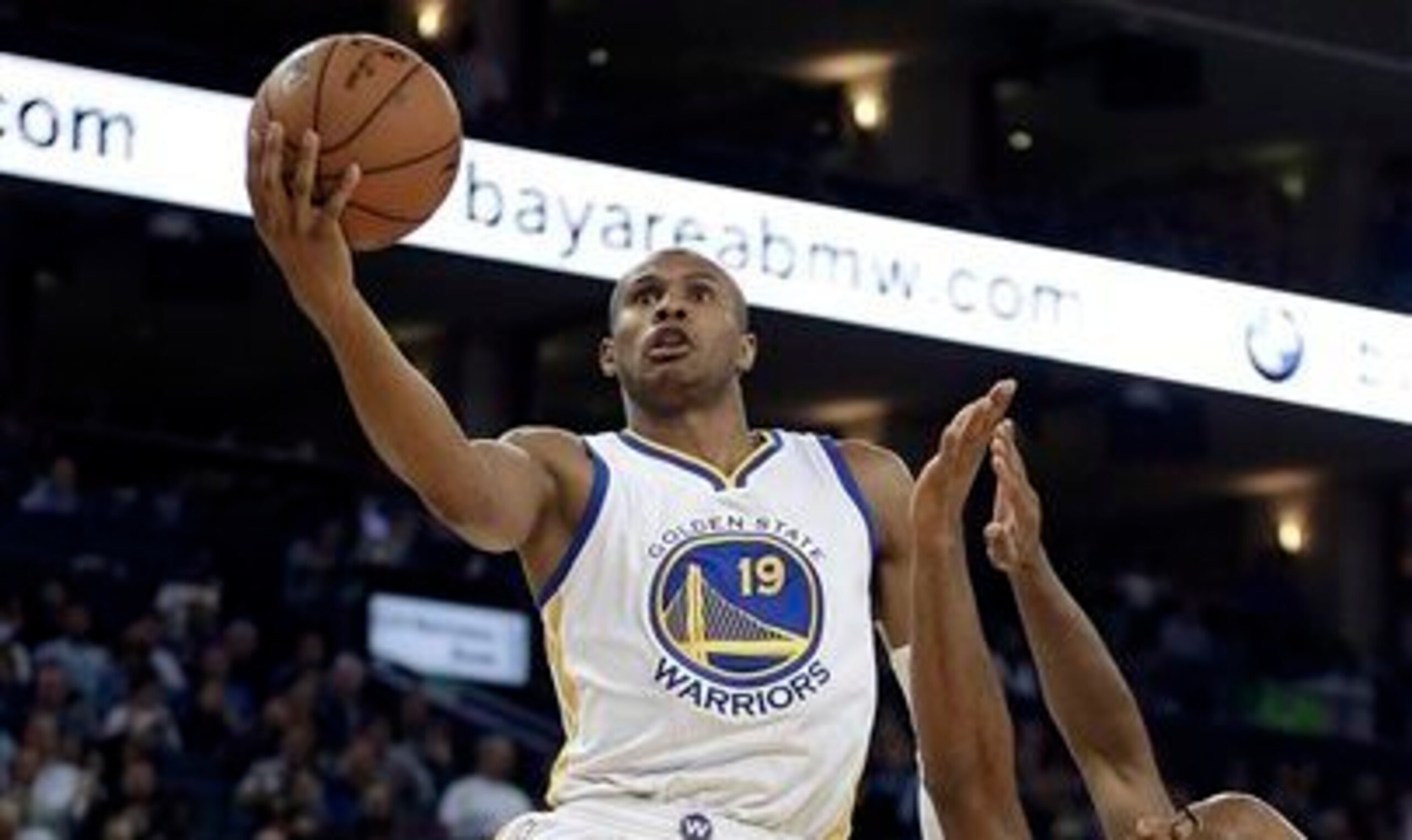
The Golden State Warriors have a lethal array of offensive weapons, but this attack loses a lot of its punch when coach Steve Kerr turns to his second team. Golden State's reserves have averaged only 28.5 points a night, per HoopsStats.com, which ranks 20th in the NBA.
The Warriors aren't hurting for creators off their bench, with top-shelf setup men like Andre Iguodala and Shaun Livingston providing steady hands on the ball. But finding finishers has been a different issue, as both Iguodala (39.7) and Livingston (40.0) are on pace to have the worst shooting seasons of their careers.
Fortunately, 12-year veteran Leandro Barbosa has been an exception to the rule. The Brazilian Blur has poured in 15.6 points per 36 minutes on a career-high 49.2 percent shooting.
Even more importantly, he has proved himself capable of converting the opportunities his teammates create. Over 82 percent of his two-point field goals have come off assists, the highest such rate of any Warriors regular. With Kerr's emphasis on moving the ball, Barbosa's ability to turn those passes into scores has been invaluable.
At 31 years old, Barbosa still has the quickness and agility to force his way into the heart of a defense. Over 38 percent of his field-goal attempts have come from within three feet of the basket, which is a higher rate than every Warrior not named Andrew Bogut.
The Warriors have (not surprisingly) experienced a massive decline in offensive production when their top guns come off the floor. Barbosa's crafty scoring skills have helped the team avoid becoming completely stagnant once Kerr turns to his bench.
Aaron Brooks, PG, Chicago Bulls
3 of 7
In some respects, it seems a bit off to label Aaron Brooks as an under-the-radar signing.
And that has less to do with his game—though his NBA past includes both a Most Improved Player award and a single-season scoring average of 19.6 points—than it does with the team he joined.
Under head coach Tom Thibodeau, the Chicago Bulls have seemingly always struck it rich with diminutive, reserve scoring guards. From C.J. Watson to Nate Robinson to D.J. Augustin, Thibodeau has shown he has a gift for maximizing the production of players cut from a similar cloth as Brooks.
That being said, Brooks was a not a game-changing free agent. At least, he wasn't billed as such.
But his impact as both a scorer and distributor has been hard to miss. His per-36-minute averages of 19.1 points and 6.2 assists are staggering, as is his 48.5 field-goal percentage—a full seven points higher than his 41.5 career success rate.
Brooks, who shot just 40.1 percent last season with the Houston Rockets and Denver Nuggets, has looked like a different player in the Windy City. And he credits a lot of that success to the guidance of his new coach.
"I came in here lacking confidence," he told ESPN Chicago's Nick Friedell. "Even when I doubted myself, he was there to tell me, 'You know what? I've watched you play, you've done well' and just to keep working hard. It's been a breath of fresh air for me."
The Bulls have a better offensive rating with Brooks on the floor (107.9) than they do when former MVP Derrick Rose runs the show (107.7). Brooks seemed like a sneaky-good signing at the time, and his value has only increased since.

Omri Casspi, SF, Sacramento Kings
4 of 7
Even to the well-trained eye, Omri Casspi looked like a forgettable addition for the Sacramento Kings.
He had gone four straight seasons failing to match the mediocre 13.0 PER he posted during his rookie year in 2009-10. His offensive rating had never checked in above his defensive rating. And his career 42.1 field-goal percentage left plenty to be desired.
Yet, something has seemed to click for the 26-year-old during his second stint with Sacramento.
He's scoring (16.4 points per 36 minutes) and shooting (55.6 field-goal percentage) better than he ever has. His 126 offensive rating is worlds removed from his 108 efficiency rating at the other end.
And his greatest quality isn't easily measured by statistics. While his production has still impressed, his unwavering commitment to do whatever it takes to help the 7-5 Kings has been the biggest takeaway from his performance.
"I want to be the guy that creates, runs the floor, rebounds, plays aggressive defense and makes the extra pass," he told Ailene Voisin of The Sacramento Bee. "I have so much more confidence in my game now. Maybe it's because I'm older and wiser, but all I care about is winning and about helping and being part of rebuilding the Kings."
Ed Davis, PF, Los Angeles Lakers
5 of 7
When Ed Davis inked his two-year, $2 million deal (player option for the second season) with the Los Angeles Lakers this summer, there was a decent amount of intrigue around the signing.
The springy 25-year-old had been a lottery pick in 2010, and his first four seasons seemed to show a lack of opportunity, not a lack of ability. He averaged fewer than 21 minutes a night those first four years, which he split between the Toronto Raptors and Memphis Grizzlies.
When he did play, he produced. His per-36-minute averages sat at 11.9 points, 10.2 rebounds and 1.6 blocks.
Still, there had to be a reason why the Raptors traded him away and the Grizzlies let him walk. And his market couldn't have been that high if this was the contract he could find.
But it seems the market got it wrong. Davis is an even better per-36-minute force—13.5 points, 11.0 boards and 2.3 blocks—and a wildly efficient 62.7 percent shooter.
His playing time still isn't great (23.1 minutes), but there are some, like ESPN.coms' Ramona Shelburne, who hope to see that change in the near future:
"He reminds me of Jordan Hill last season: really good as an energizer off the bench and you always shook your head and thought, 'If he's this good in 20 minutes, what could he do in 35 minutes?' Well, Hill is showing what he can do as a starter this season and I think Davis would have the same impact if he moved into that role.
"
Davis is only as valuable as the Lakers allow him to be. But he's young enough to be a piece for the future and productive enough to play a key role in the present. If head coach Bryon Scott sees things that way, Davis could have the chance to prove he was the summer's biggest steal.
James Johnson, PF, Toronto Raptors
6 of 7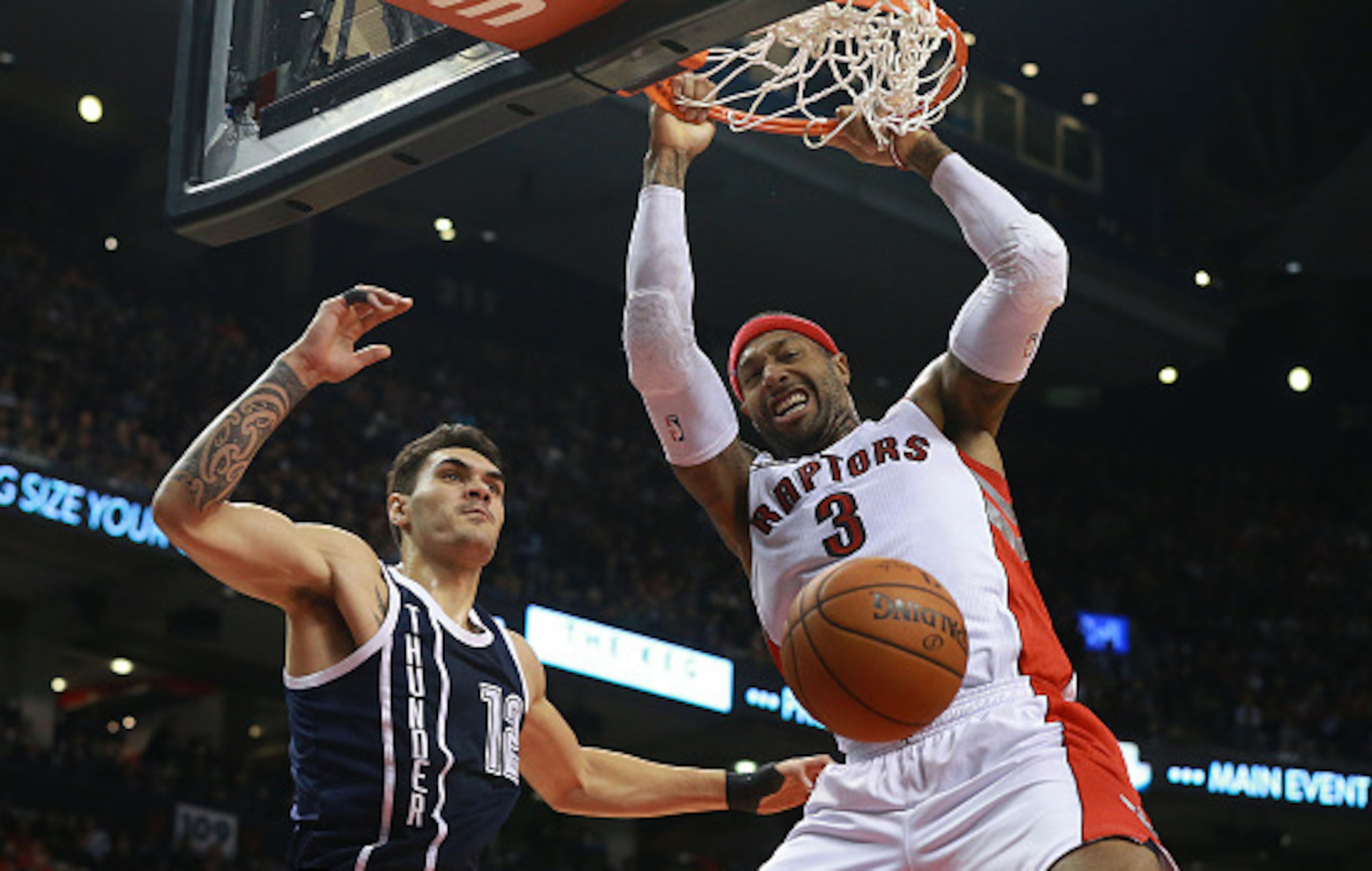
Like Casspi, versatile forward James Johnson found his way back to a familiar place this offseason. The 27-year-old returned to the Toronto Raptors on a two-year, $5 million contract.
And, again like Casspi, Johnson has breathed new life into his new/old team by doing a little bit of everything. He's long (7'0.75" wingspan, per DraftExpress), supremely athletic, incredibly confident and the good kind of crazy.
"You need someone crazy in the locker room," Raptors point guard Greivis Vasquez said, per Eric Koreen of the National Post. "He's not afraid to fight you or anything like that. He'll die for the whole team."
Johnson has the strength to play in the post and the quickness to defend on the wing.
The Raptors, a decent defensive club judging by the 100.7 points they allow per 100 possessions, become a stone wall once Johnson hits the floor. When his number has been called, Toronto's defensive rating plummets to 89.6, which would easily be the league's best.
He is one of only 12 players currently averaging at least one block and one steal per contest. He's also the only player on that list logging fewer than 20 minutes a night. Opposing power forwards have managed a mere 12.2 PER against him this season, according to 82games.com.
However, he's more than a defensive specialist. He is shooting a career-high 57.4 percent from the field, while averaging 14.1 points, 7.1 rebounds and 3.5 assists per 36 minutes.
He missed the team's last game and has no timetable to return from a severe ankle sprain. That's about the only thing that has gone wrong during his time back in Toronto.
Chris Kaman, C, Portland
7 of 7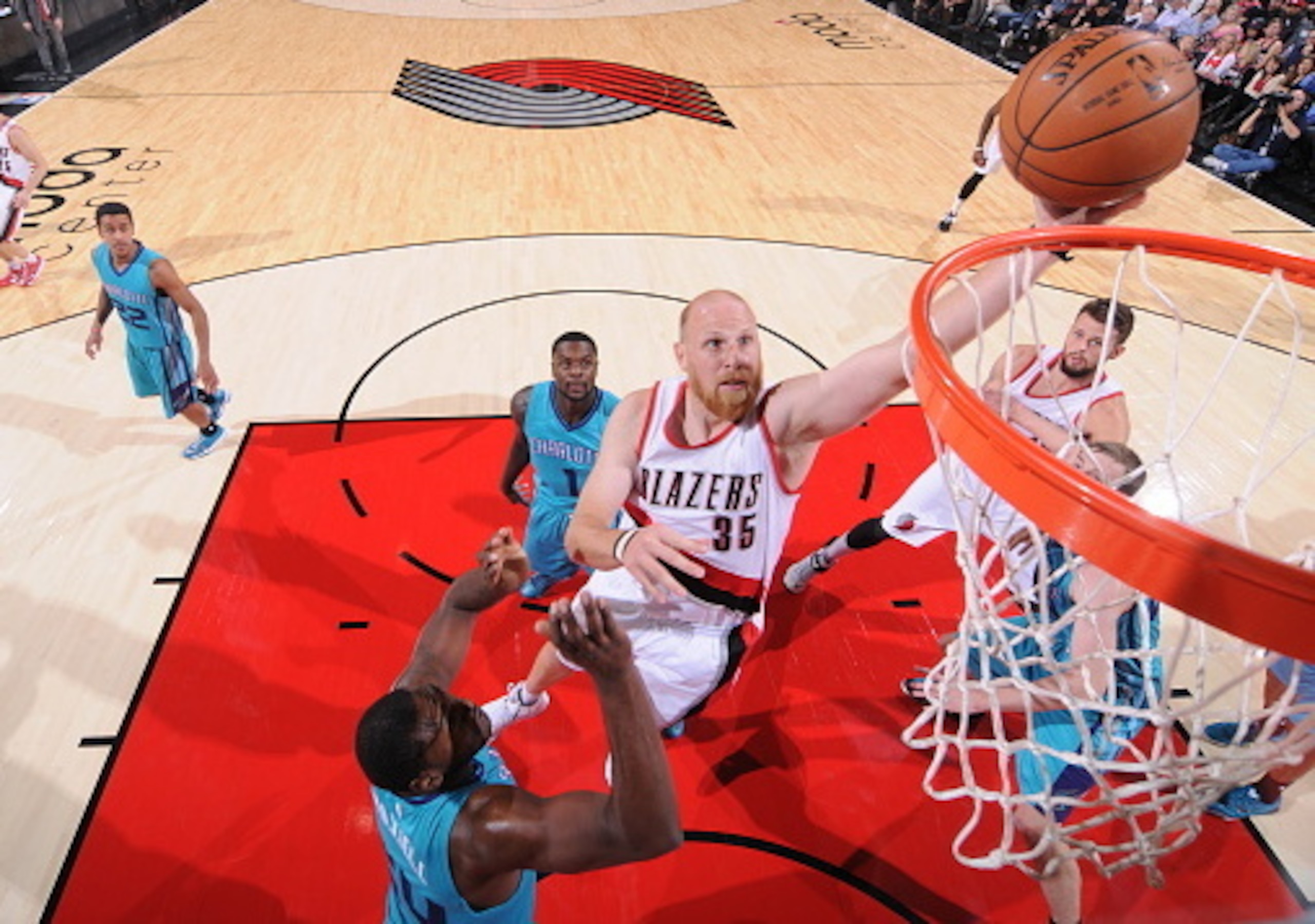
Believe it or not, Chris Kaman is the highest-paid player on this list. The Portland Trail Blazers gave the 7-footer a two-year, $9.8 million contract to help address their bench woes.
Portland's reserves, who averaged a league-worst 23.6 points last season, haven't seen a ton of improvement this time around. The Blazers now rank tied for 23rd in second-team scoring with 27.4 points a night.
But the strides this group has made can be tied almost exclusively to the addition of Kaman. He's been good for 10.7 points on 58.0 percent shooting, 6.9 rebounds and 1.3 blocks in only 19.5 minutes a night. With Steve Blake (37.5 field-goal percentage), Allen Crabbe (37.5), Will Barton (30.3) and the now-injured C.J. McCollum (37.2) all struggling with their shots, Kaman has been a welcome source of consistency.
Kaman hasn't simply been the Blazers' top reserve, he's been one of their best players.
He has their second-lowest defensive rating at 98. He ranks third on the team in PER (21.1), trailing only All-Stars Damian Lillard (23.5) and LaMarcus Aldridge (22.1).
With Kaman on the floor, the Blazers have outscored opponents by 16.8 points per 100 possessions. Without him, that number falls to just 2.8. That 14.0-point net differential is second only to McCollum (21.8).
The Blazers, winners of five straight, are looking to cement themselves as full-fledged contenders. Thanks in no small part to Kaman, that no longer means relying on their five starters to get the job done.
Unless otherwise noted, statistics used courtesy of Basketball-Reference.com and NBA.com.
.jpg?w=2560 "Every Trade's Best Trade Asset 🔁")
.jpg?w=2560 "Insiders: Cowboys Overpaid for Porter")
.jpg?w=2560 "MHJ's Potential Trade Value 📉")