Dolphins vs. Broncos: Breaking Down Miami's Game Plan
The Miami Dolphins will be on the road this Sunday afternoon to play the Denver Broncos. Unlike Miami’s game in Week 11, there isn’t much pressure on the Dolphins to win. Vegas has Miami as eight-point underdogs, according to Odds Shark, but a victory would be a major statement to the rest of the league.
After looking at four key individual matchups in the game previously, it’s time to saddle up and look at two focal points for the offense and defense. The Dolphins coaching staff has done well to exploit each opponent’s weaknesses and play to the strengths of the team’s personnel.
TOP NEWS
Bears' Santos Wanted to Kick 58-Yarder
Picking Each NFL Division Winner 🔮
.jpg?w=2560)
B/R's Expert Week 7 NFL Picks 🔮
For the Dolphins to win against a solid team like Denver, it’s going to take great coaching and execution by players, but it is possible. The Broncos’ latest loss against the St. Louis Rams proves as much.
Through film study, we’ve found four areas that Miami must emphasize and play especially well in to come away with a win. Don’t forget to leave your thoughts on how the game will play out in the comments section below.
Keep It Short and Sweet
In order to accentuate the available receivers and the quarterback’s strengths, offensive coordinator Bill Lazor has done an excellent job of getting the ball out of Ryan Tannehill’s right hand quickly. Lazor has designed an offense that features constant motion to reveal defensive coverages and make opponents adjust right before the snap.
Tannehill has never looked better, as his receivers are running shorter routes and hence getting open quicker. The offensive line play is somewhat shaky still, as all the personnel haven't been settled, but with Tannehill’s confidence at an all-time high, he’s a playmaker able to overcome early pressure.
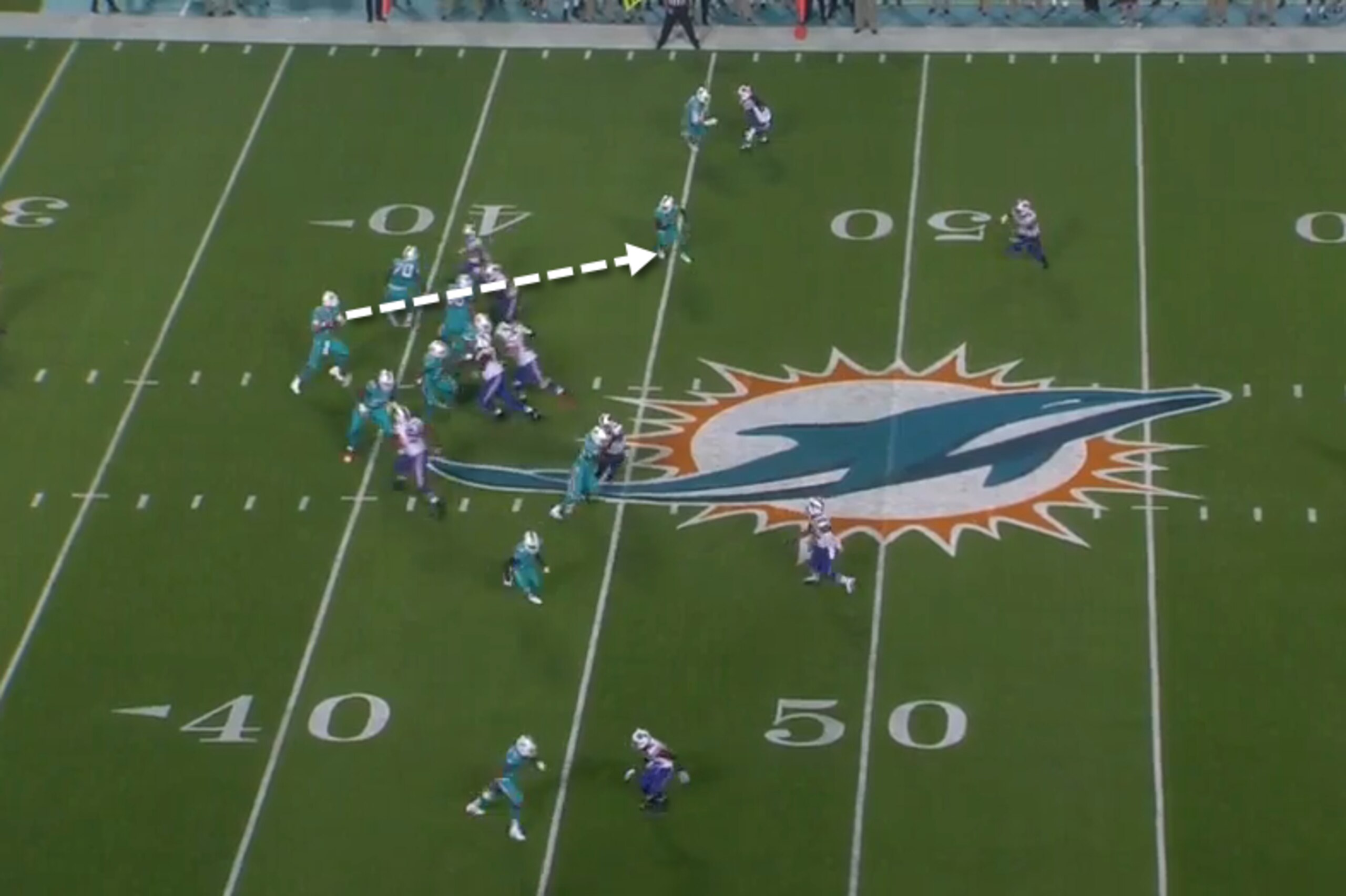
The Dolphins introduced a new play against the Buffalo Bills last week that had great success. Before the snap, receiver Brian Hartline motioned from his outside position to the slot and continued to run a shallow cross when the ball was snapped. Miami ran this twice with great success, with the second time allowing Hartline to create over 20 yards after the catch.
Motioning the receiver before the snap gives the defense nearly no time to react, which means there is a higher chance of a busted coverage and bigger plays. Lazor’s personal growth as a coach is evident in this regard. After abandoning the pre-snap motion in the second half of games earlier in the season, his offensive sets feature it routinely throughout the game.
The spacing between receivers is also improved, and Tannehill works well with that space. According to ESPN, Tannehill was 25-of-28 for 223 yards and two touchdowns when throwing the ball less than 10 yards in the air. He’s hitting his receivers with great ball placement and allowing them to be the playmakers in space.
This trend must continue against the Broncos, who have a lot of talent on every level of the defense. Pass-rushers Von Miller and DeMarcus Ware are still elite players, and linebacker Brandon Marshall has tallied 90 tackles in his first year as a starter.
Denver also has a lot of talent in the secondary. Cornerbacks Chris Harris, Aqib Talib and Bradley Roby are dangerous to target with their athleticism. Safety T.J. Ward is an excellent in-the-box safety, and Rahim Moore cleans up plays over the middle well.
To combat this, Miami needs to give Tannehill options at every level of the defense. The deep presence of Mike Wallace helps clear out room underneath, and teams will continue to respect his abilities because Miami has shown that it's willing to go deep in situations.
Convert Red-Zone Opportunities
The Dolphins offense has improved at moving the ball between the 20s this year with Lazor’s guidance, but the red zone has been a much more troublesome area in 2014. Last year, Miami scored a touchdown on 56.5 percent of all red-zone trips as compared to just 44.9 percent this year, which is 30th in the NFL, per Team Rankings.
Multiple factors are on the table as legitimate reasons for these struggles. The first is that Miami is a finesse football team, and when the field shrinks, it’s harder to space the defense out. With all 11 defenders within 20 yards of the offense and no room behind them for the offense to attack, it’s much easier to defend.
Miami also lacks a punishing inside running game despite ranking as the sixth-best rushing attack in the league for total yards. With an interior line made up of Daryn Colledge, Samson Satele and Mike Pouncey, Miami doesn’t have the beef to shove bigger defensive tackles aside. This is a bigger issue than lacking a big running back.
Finally, none of Miami’s receivers has the size or skill set to go up and get the ball at its highest point. The Dolphins offense relies on passes in tight windows far too often because it cannot trust its receivers to win in single coverage.

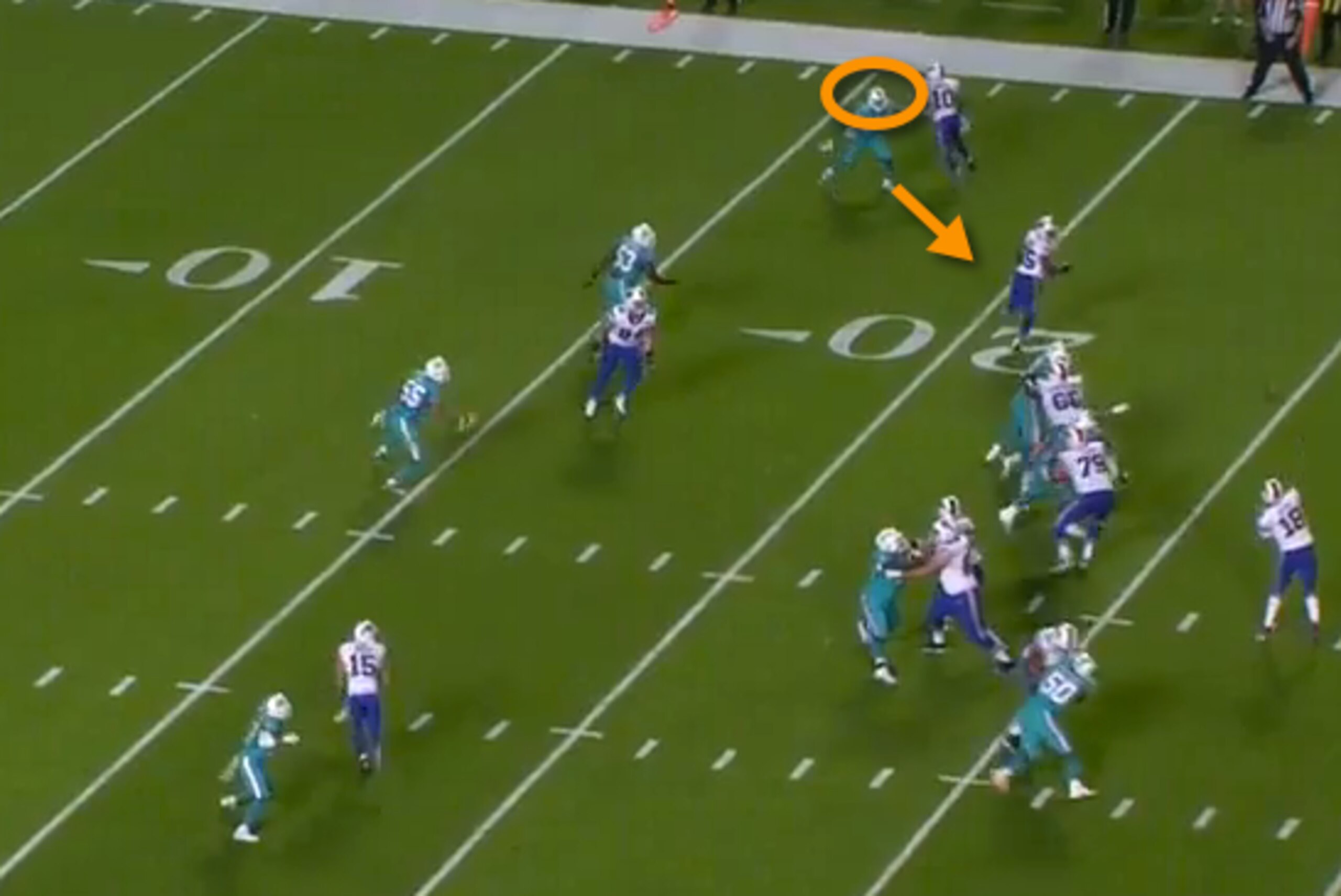
Lazor schemed the perfect play in the red zone to combat an aggressive defense and get an open receiver for a touchdown. Miami faked the pitch outside, even having Mike Wallace block for a second while Brandon Gibson slipped into the end zone unnoticed. There aren’t many easier scores in football than that.
Own Third Down
The Broncos offense converts 43.85 percent of all third downs faced, which ranks as the 10th best in the league. But looking at the games where it's struggled the most, which is the last three, Denver has converted on 36.84 percent of third downs. That’s 10th worst of all NFL teams.
It seems as though there is a loose correlation between third-down effectiveness and winning games. Miami’s defense must be stellar against Denver in these situations.
So far in 2014, the Dolphins defense has been above average at getting off the field on third down, forcing a stop 61.1 percent of all situations faced, placing it at 10th best.
Miami might get some unexpected assistance due to key Denver Broncos injuries, as Lindsay Jones from USA Today reported that Emmanuel Sanders and Julius Thomas did not practice on Wednesday.
"No sign of Emmanuel Sanders at start of Broncos practice. Julius Thomas (ankle) is stretching w/ team but no helmet or jersey.
— Lindsay Jones (@bylindsayhjones) November 19, 2014"
Both have been tremendous as Peyton Manning’s weapons this year, enjoying a pace that would allow career-high statistics. If Miami can avoid playing the superb tandem, it only increases the likelihood of a victory.
Eyes on the Ball
Captain Obvious is here to tell you that Peyton Manning is pretty good as the Broncos’ quarterback, giving the Dolphins yet another top-tier quarterback to face this season. Manning differs from Tom Brady, Aaron Rodgers and Matthew Stafford because he’s the premier quarterback when it comes to throwing the ball before the pass rush can affect him.
According to Pro Football Focus (subscription required), Manning takes an average of just 2.28 seconds to throw the ball, which is easily the fastest trigger among all quarterbacks. With receivers like Demaryius Thomas, Sanders, Julian Thomas and Wes Welker, it’s understandable as to why Denver would want to protect Manning and allow the receivers to do the brunt work.
Since Manning dumps the ball off so quickly, Miami’s cornerbacks must get their heads turned and locate the ball within 2.5 seconds. Manning has one of the weakest arms presently in the NFL, but he’s able to overcome that limitation because of his tremendous anticipation and field vision.

It’s unlikely the Dolphins pass rush will be able to be very productive in this game because of Denver’s ability to advance the ball, so the secondary needs to force tight windows and potentially force a turnover or two. Brent Grimes will have his hands full with Demaryius Thomas, and Jamar Taylor needs a strong follow-up to his excellent performance against the Bills.
Cornerback Cortland Finnegan missed practice on Wednesday with his ankle injury still nagging, according to James Walker of ESPN.com. If he cannot play Sunday, Taylor will likely guard Andre Caldwell and rookie Cody Latimer throughout the game.
Although the Broncos boast a star-studded roster, they haven’t been playing as well as they did in 2013. Sitting at 7-3 and with two losses in three weeks, Miami is not that much behind the 2013 Super Bowl participant based off its play in the last six weeks.
Winning on the road in a difficult environment would be a major step for the Dolphins. It’s attainable if Miami can follow the game plan laid out above.
That’s why we’re picking the Dolphins to pull the upset, 27-24.
All stats used are from Sports-Reference.com unless otherwise noted.
Ian Wharton is a Miami Dolphins Featured Columnist for Bleacher Report, contributor for Optimum Scouting and analyst for eDraft.