How Vikings Head Coach Mike Zimmer Can Schematically Stop the Packers Offense
The 2014 season has come to a crossroads for the Minnesota Vikings, and the next opponent is a freight train ready to wipe out those who fail to take the perfect direction forward. In order to stop the Green Bay Packers offense on Sunday, head coach Mike Zimmer must tweak his defense from a schematic standpoint.
Zimmer’s unit was run off of the field by the Chicago Bears in Week 11, providing little confidence going forward against an offense as potent as Green Bay’s.
The Aaron Rodgers-led offense has racked up an incredible 108 points over its last two games. Green Bay has averaged 39.4 points over its last seven, only dropping a single result over that period. The Packers overran Zimmer’s defense for 42 points in three quarters when these two teams faced off earlier in the season.
TOP NEWS
Bears' Santos Wanted to Kick 58-Yarder
.jpg?w=2560 "Chargers Chiefs Football")
Reported Details of Seahawks-K9 Split ⛓️💥
Picking Each NFL Division Winner 🔮
While it only spans three games, Zimmer’s history with Rodgers and the Packers offense might shine a sliver of light into the darkness that is the Vikings defense after its poor display last week in Chicago.
One striking characteristic of Zimmer’s defensive scheme from his Cincinnati days, the spitting image of the scheme he has implemented in Minnesota, was its effectiveness on the two occasions it came up against the Packers, those occurring in 2009 and 2013.
Even accounting for his tremendous statistics against Zimmer’s defense earlier this season (12-17, 156 YDS, 3 TDs, 0 INTs), Rodgers' averages against the defensive coach fall well short of his career marks in all other games.
| Comp. % | YPA | TD:INT | |
| Zimmer | 59.6% | 6.7 | 2.5:1 |
| Other | 66.1% | 8.3 | 4.0:1 |
Trying to reproduce the same type of effort that lifted the Bengals over Green Bay by a score of 34-30 last season makes sense for the Vikings. It is also something they failed to do earlier this season in the first matchup with the Packers.
A couple of figures stand out from Rodgers’ poor game against Zimmer in 2013. Cincinnati failed to stop Green Bay on the ground, allowing 182 rushing yards on 6.1 yards per carry. Even so, the Packers scored only 23 offensive points, hardly their greatest output in the Rodgers era.
That defense was successful because it restricted Rodgers’ downfield passing (5.7 yards per attempt) and intercepted him twice. Ultimately, it’s slowing down Rodgers that gives defenses a fighting chance against Green Bay.
Early rigidity in run defense is very helpful, though. In the Packers’ Thursday-night victory over the Vikings, Eddie Lacy ran wild in the opening period. His first four carries went for five, 18, 29 and six yards, respectively. Those early successes pried Zimmer and the Vikings out of their plan in pass defense.
Optimally, the Vikings want to tread water in run defense without fully committing a safety into the box, which would sacrifice coverage over the top.
Going back to Zimmer’s 2013 matchup with the Packers, you find two deep safeties over and over. That may have sacrificed some effectiveness against the run but ultimately restricted Rodgers and the Green Bay passing attack.
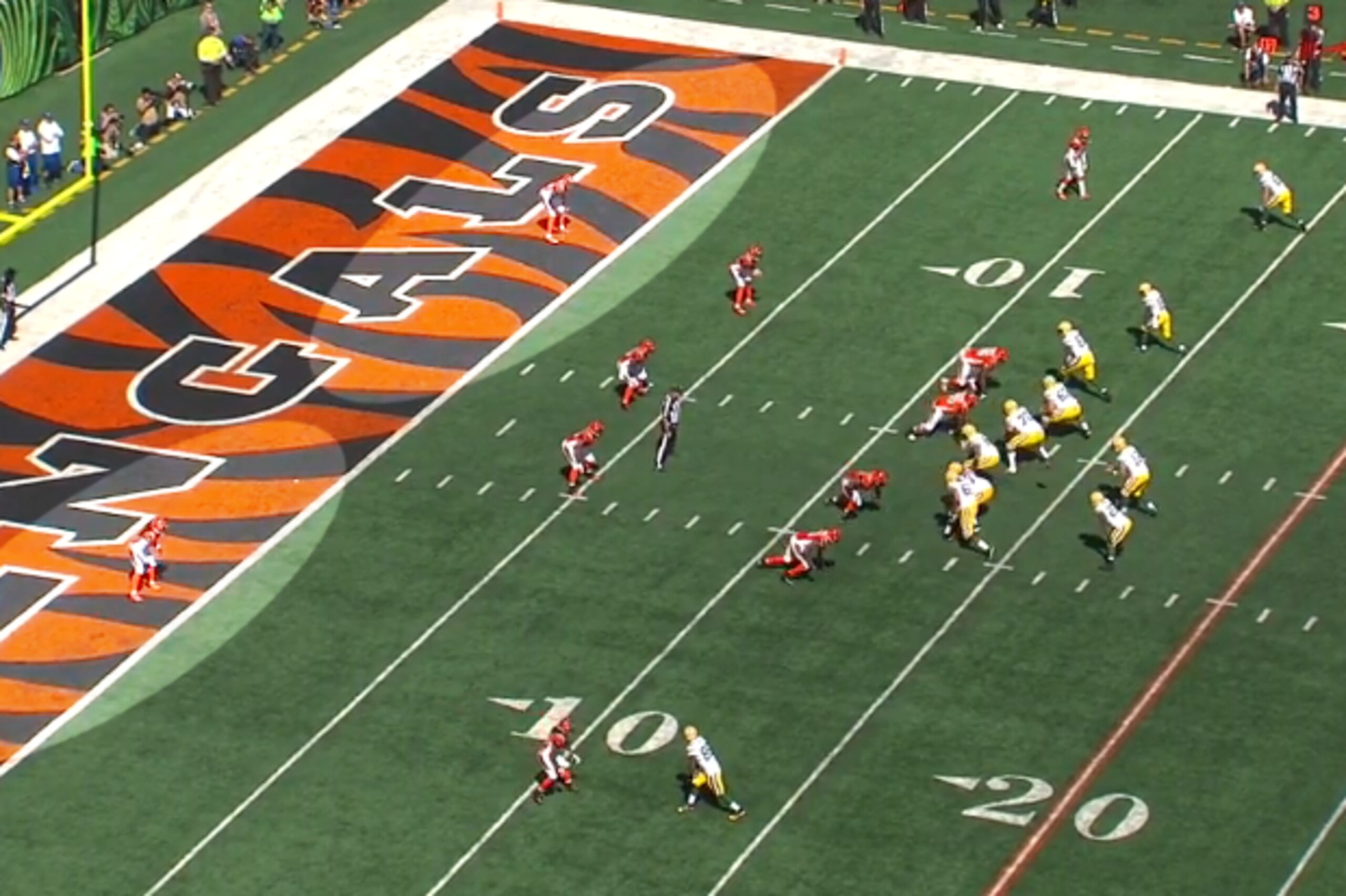
This play was 3rd-and-12 in the red zone. With Cincinnati able to sink off in a longer down-and-distance situation, Rodgers threw underneath the first layer of coverage and had to settle for a field goal.
Back in October, the Vikings were forced to slide Robert Blanton down into the box periodically after being gashed by Eddie Lacy early in the game.
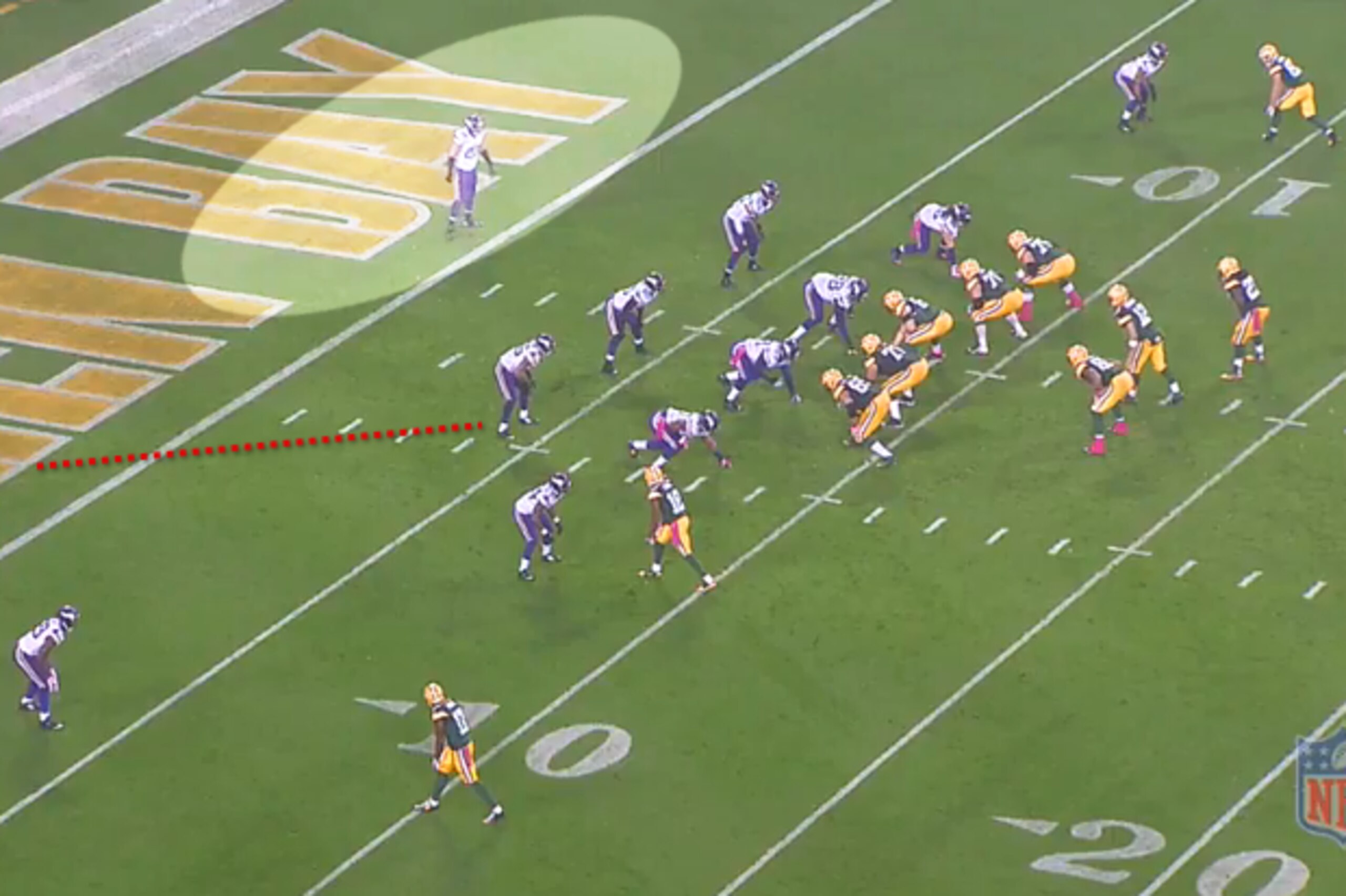
This led to the touchdown throw from Rodgers to Randall Cobb after the receiver dusted Captain Munnerlyn on a corner route. The lack of any safety help on that side of the field gave Rodgers an automatic throw to his most elusive receiver.
Without the aid of a deep safety, Rodgers’ eyes light up knowing he has receivers like Cobb and Jordy Nelson. Few cornerbacks in the NFL can consistently stick with these receivers for longer than a few seconds. Even when well-covered, Rodgers will thread needles well down the field to these talented receivers.
As soon as the Vikings are forced to slide a safety forward on a consistent basis, Green Bay will dial up the deep ball. Chris B. Brown of Smart Football draws up a play where the Eagles paid for their aggression last week against Rodgers:
"Can someone explain why Eagles thought singling up Jordy Nelson and Cobb was good idea vs GB? This was a 64 yd bomb pic.twitter.com/T5DeroWBgM
— Chris B. Brown (@smartfootball) November 18, 2014"
Rodgers is as opportunistic as quarterbacks come. The Vikings can bet he will take stabs over the top when he gets one-on-one looks on the outside.
When Zimmer’s defense is at its best, it forces quarterbacks to make quick throws underneath that look like advantageous plays initially, only to be closed up before too many yards are gained after the catch.
This play from October’s game showcases that perfectly:
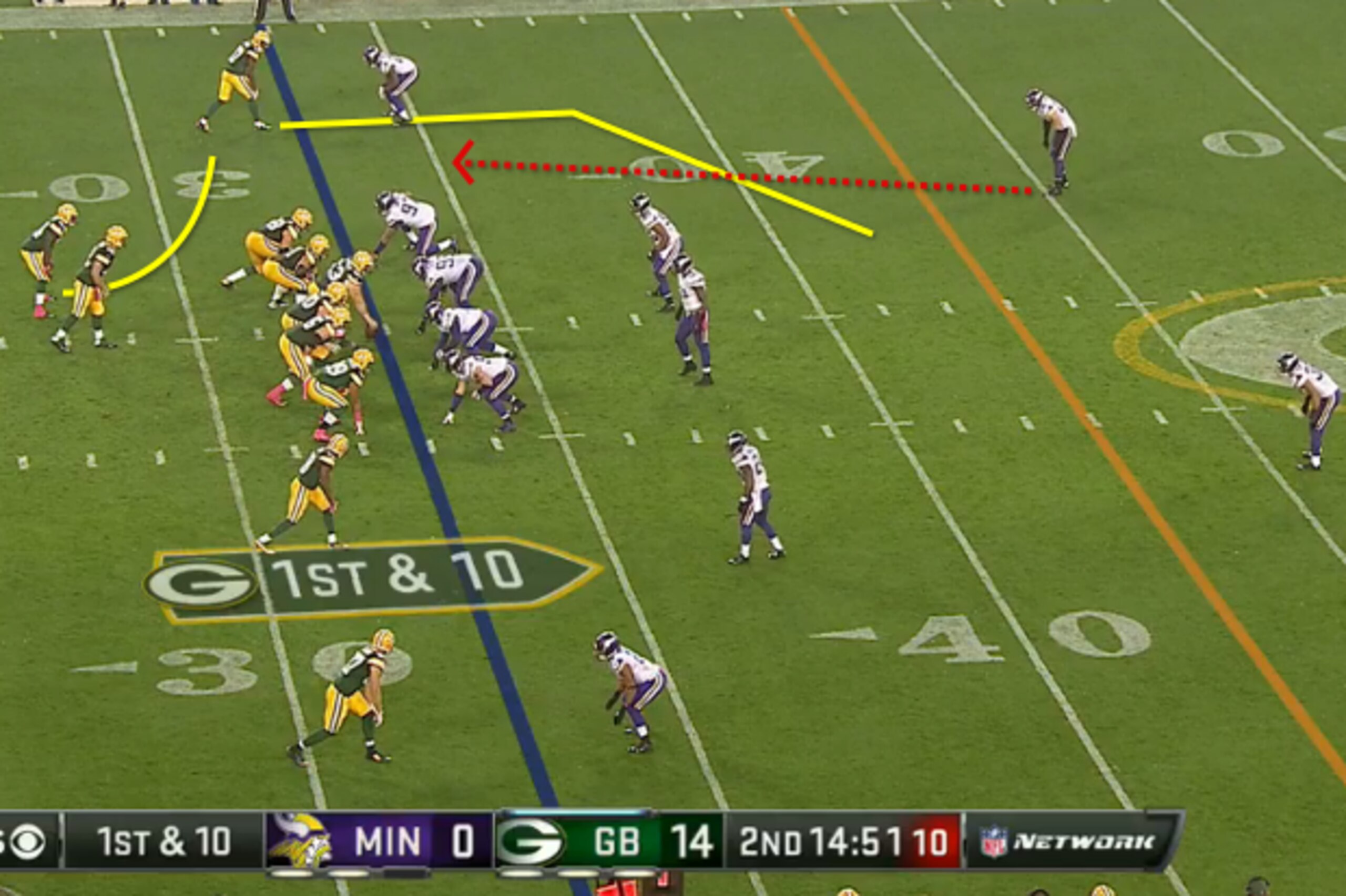
Two safeties over the top is what makes this possible. The initial coverage look is ambiguous, so Rodgers is not given automatic throws to routes he knows can beat man coverage.
That leads him to throw to James Starks in the flat. He does that without really letting downfield routes develop, thinking Starks would have acres of space to run into. Harrison Smith changes that by flying forward at the snap, something Rodgers misses because the Vikings have effectively disguised coverage.

Even though the Vikings have a two-safety shell before the snap, they can stay aggressive coming forward and restrict yardage after the catch.
That’s where the basis of the game plan needs to come from. With moderate effectiveness stopping the run, the Vikings must rely on both Smith and Blanton to patrol over the top. This enables the defense to utilize a number of different coverage techniques on a given play, which slows down Rodgers’ processing in the pocket just a little bit.
If Rodgers camps out in the pocket by sliding from pressure and working to his third or fourth reads throughout the game before delivering strikes, then the Vikings will have to live with it. No defense has consistent answers when Rodgers is on that level. Death by 1,000 paper cuts is more acceptable than it sounds.
What won’t stand for the Vikings is allowing Rodgers to make immediate determinations and throw in rhythm to some of the league’s best receivers. That is death by decapitation, swift but not necessarily painless.
The limitations stopping the run restricted the playbook for Minnesota in Week 5. Optimally, Zimmer would break the two-safety tendency by reverting to his double-A-gap alignments where he moves Smith all over the formation.
When Zimmer was the puppeteer to the Packers offense in their 2013 showdown, his tweaks forced Rodgers to audible from one play that wouldn’t work to another that eventually didn’t.
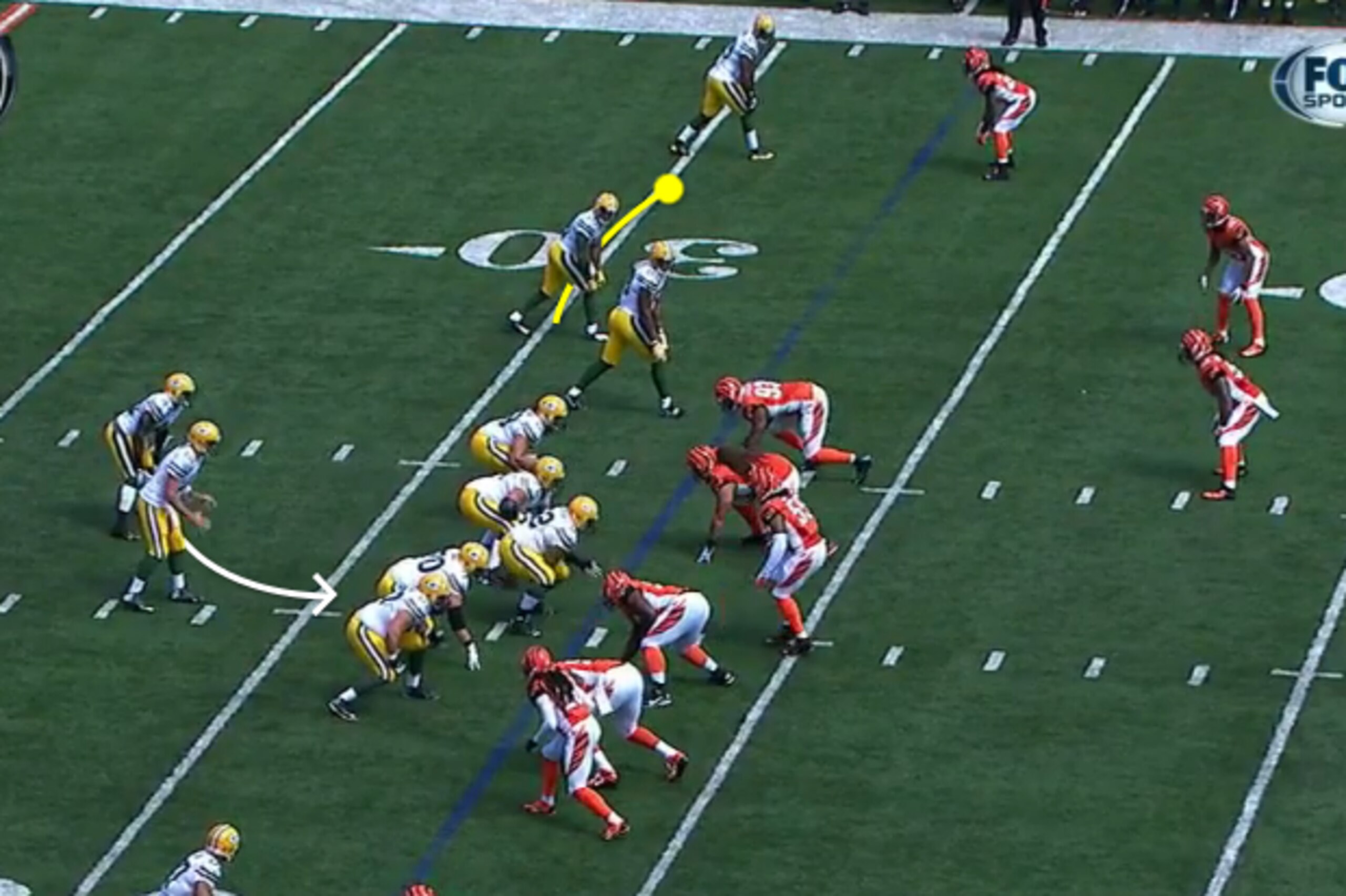
By design, this is a run play from Green Bay. With the Bengals breaking tendency with one variation of Zimmer’s aggressive looks, the Packers have lost their numbers advantage in the box. They only have five blockers to the Bengals’ six defenders.
That leads Rodgers to throw immediately to the outside, hoping Cobb can make a man miss and find yardage of his own.
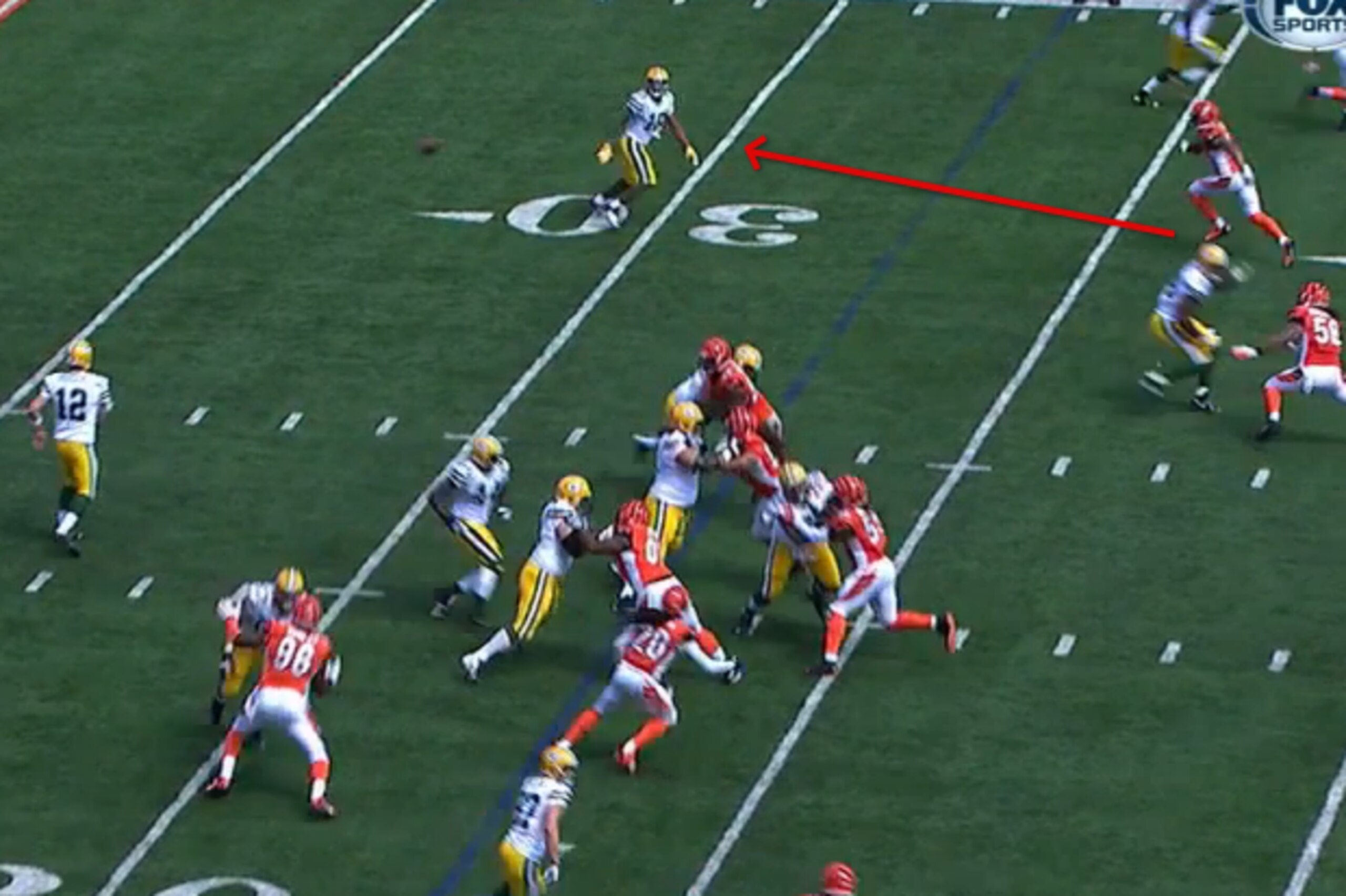
The slot CB gets an immediate beat on the quick throw and lays a heavy hit on Cobb as soon as the ball arrives. It turns into a wasted play for the Packers.
Plays like these are the second step in order for the Vikings to have success against Rodgers. Varying defensive looks to steer Rodgers off what he really wants to do gives Minnesota’s defense a chance to create negative plays and get the Packers off schedule offensively.
These looks leave cornerbacks exposed on the perimeter, but Zimmer and the Vikings must place their trust in Munnerlyn, Xavier Rhodes and Josh Robinson periodically. Staying out of patterns that leave Nelson and Cobb in single coverage should slow down Rodgers’ decision-making in such situations, giving the rush a chance to affect plays.
Because the Vikings do not match up well in terms of individuals on the outside, Zimmer is forced to piece together a puzzle that can be successful against the league’s best QB.
The coverage plan begins with respecting Rodgers’ ability to throw the ball over the top. Keeping a pair of safeties deep more often than not should give the Vikings a fighter’s chance. If able to slow down the big plays through the air, Zimmer can then toy with the Packers with his wide variety of defensive looks before the snap.
It’s all an elaborate plan to mask that the Vikings match up poorly with the sheer talent at the Packers’ disposal. Almost every team in the league has the same problem.
Rodgers is a rattlesnake waiting in the weeds. The mouse is always overmatched and can never truly win, but a little cunning and a little luck lets the mouse escape with its life. This week, the Vikings are a mouse that needs a much better plan than it had last week.
Statistics accumulated via ESPN.com unless noted otherwise.
.jpg?w=2560)
.jpg?w=2560 "Texans Jaguars Football")