Mike Trout Finally Crowned with AL MVP Award He's Deserved Since 2012
Mike Trout is the most valuable player in the American League.
Like, for real this time. Trout has been the class of the Junior Circuit since his call-up in 2012, but now he has an award that says so. With his name on it and everything.
That's Thursday's big news. After finishing second in the American League Most Valuable Player voting in 2012 and 2013, Trout finished first on 2014's ballot. It was unanimous, too, as the 23-year-old Los Angeles Angels superstar center fielder took home all 30 of the first-place votes.
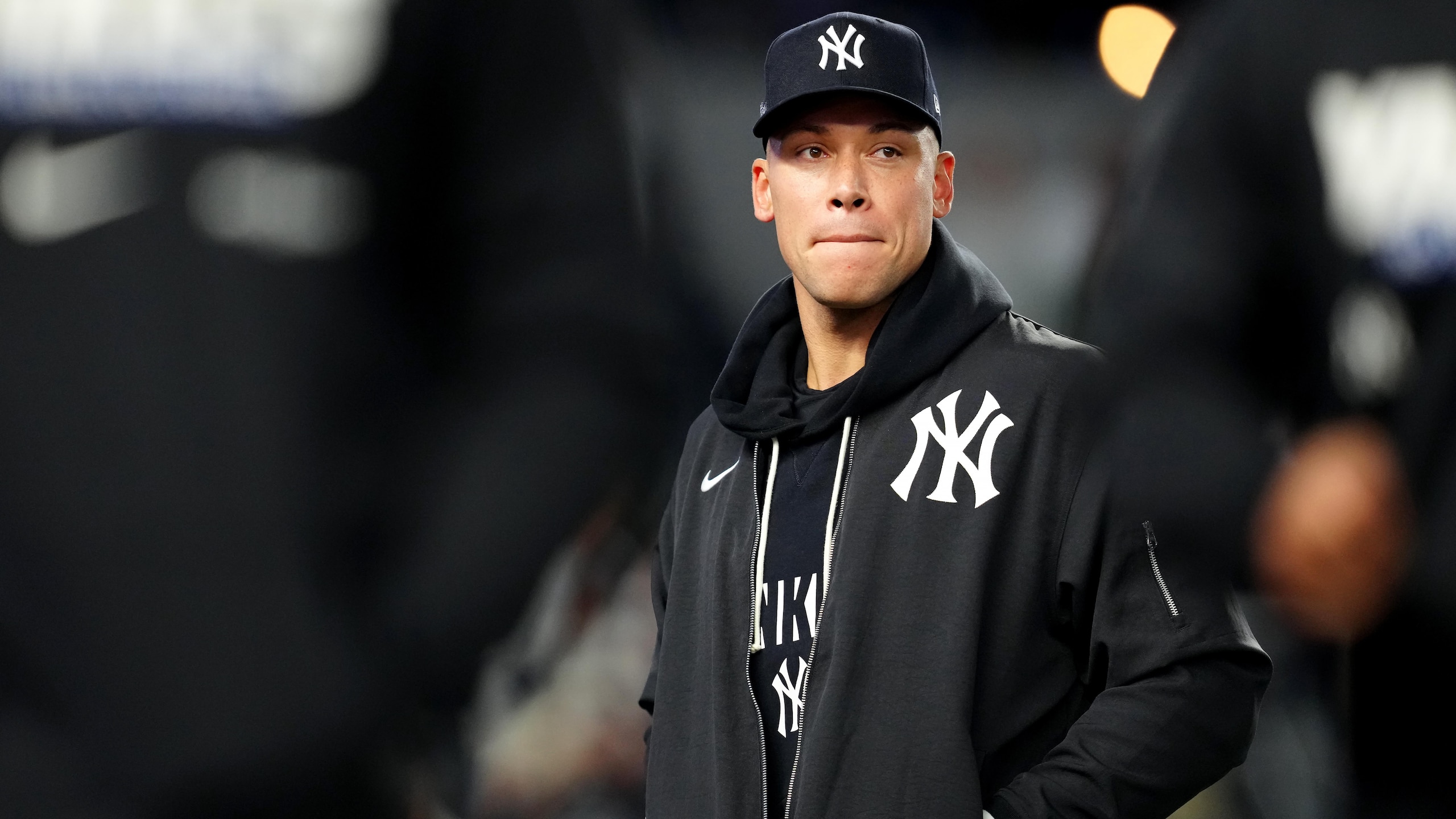
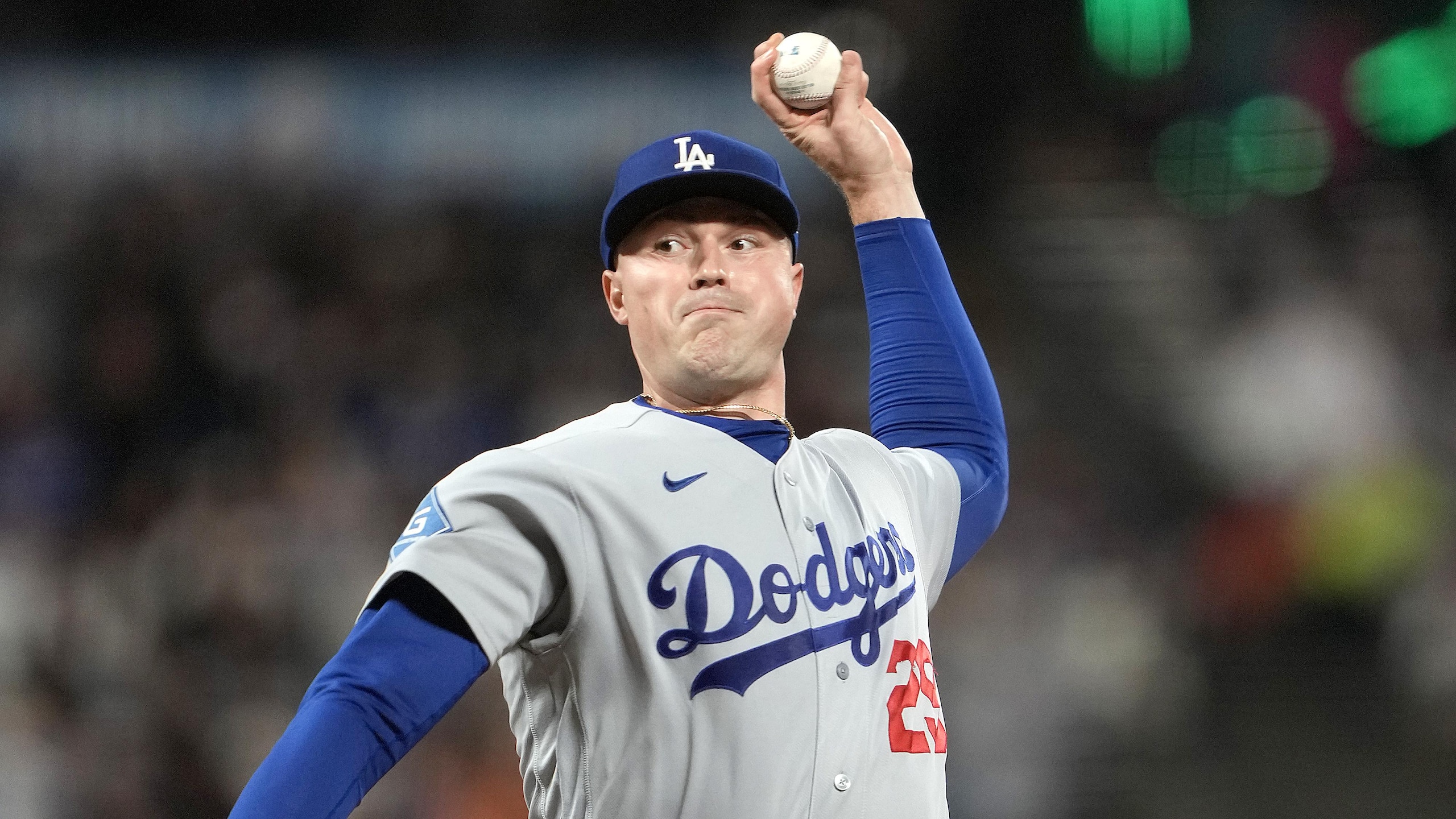
There's an argument to be had about whether Trout deserved to be a unanimous winner, but there's no arguing that he sure looked the part of an MVP in 2014.
Trout's .377 on-base percentage tied for seventh in the AL. He was third in slugging (.561) and home runs (36). His .939 OPS was also third, but by one measure—that being the kinda-sorta complicated Weighted Runs Created Plus—he was the American League's best hitter, according to FanGraphs.
Oh, and Trout also fulfilled the oh-so-important category of racking up a lot of RBI, totaling an AL-high 111. He was also clutch, posting the second-best OPS in the AL in high-leverage situations (1.240).
Then there's how he played on a winning team for a change, as his Angels won the AL West title with an MLB-best 98-64 record. Trout had a hand in putting the finishing touches on that, posting a .969 OPS in the season's final month.
"There is no doubt, in talking to other managers, that Mike is not only the MVP of our league but the best player," Angels manager Mike Scioscia told Mike DiGiovanna of the Los Angeles Times in September. "I think he's gone out and captured that award."
Evidently, the 30 Baseball Writers Association of America members who voted for the AL MVP this year all looked at Trout did and agreed. I like to think there was a "Yup, that's an MVP" involved.
Which, you know, is something they could have said the last two seasons.
I'm guessing that last sentence will send a few people straight to the comments section for some Rabble! Rabble! Rabble! For those who remain, you might actually be surprised where we're headed with this thing.
But first, let's go for a brief trip down memory lane.
The 2012 season was Trout's big huge ginormous breakthrough. He hit .326 with the second-best OPS in the league at .963. He also hit 30 home runs and led the league with 49 stolen bases and 129 runs, and he rated as the seventh-best defender in the American League, per FanGraphs. He was, without even a shred of doubt, the league's best all-around player.
In 2013, Trout basically did it all over again. He hit .323 with a .988 OPS that was third in the AL, adding 27 homers, 33 stolen bases and an AL-high 109 runs. Though he didn't rate as highly on defense, he still managed to rate as above average. In all, the league's best all-around player remained, well, the league's best all-around player.
You see? You can gather enough items to support that claim without even using Wins Above Replacement.
...But just in case anyone's curious, here's how FanGraphs saw things:
| 2012 | 10.1 | 7.7 | 2.4 |
| 2013 | 10.5 | 7.7 | 2.8 |
In both seasons, Trout was more than two wins more valuable than the next-best player in the AL. For perspective, the difference between Trout and the AL's No. 2 player was a Melky Cabrera-sized gap.
And yet Trout didn't win the AL MVP either year. He was very much deserving of the MVP. No question about it. But things got in the way.
Namely, Trout not playing on postseason teams in either 2012 or 2013 and having the misfortune of playing in the same league where Miguel Cabrera was terrorizing opposing pitchers.
A .330 average, 44 homers and 139 RBI won Cabrera the heretofore fabled Triple Crown in 2012, and he hit another 44 homers while leading the league in average, OBP and slugging and finishing second in RBI in 2013. And of course, his Detroit Tigers went to the postseason both years.
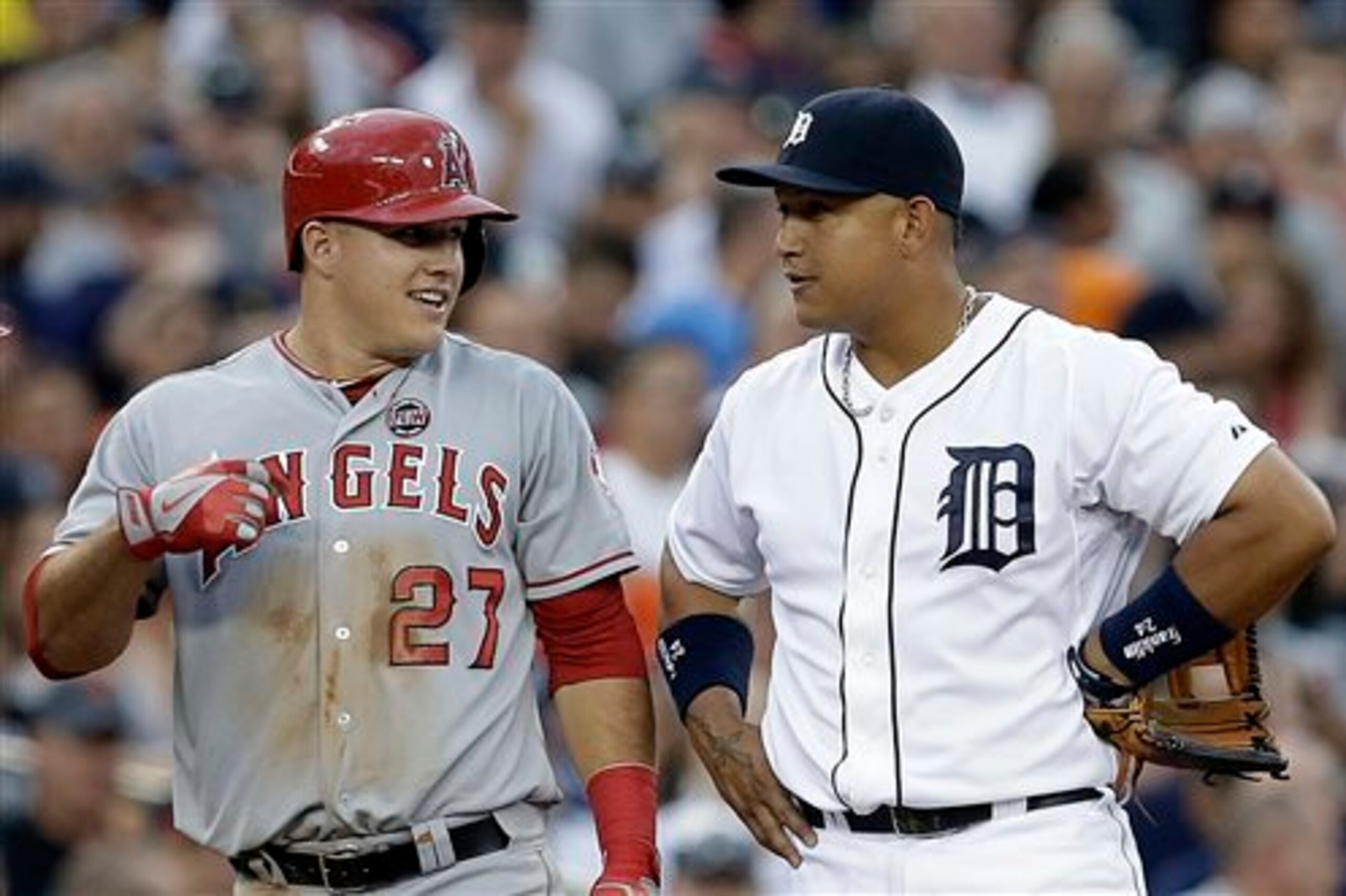
It's not like Trout was invisible either season. If he was, we would have been wondering where the hell all those awesome numbers in Anaheim were coming from, much less just who the heck was finishing second in the MVP voting.
But the voters sent a clear message both years: The BBWAA's MVP voting guidelines may be vague, but we've long since translated them to mean that huge baseball card numbers and team success matter above all else.
Trout could have been the one to change things. Had the voters gone for him in 2012 and 2013, they would have signaled to the world that they finally understood:
- That there are other, more enlightening things in life than conventional baseball card stats.
- That really, really good players shouldn't be punished for being surrounded by lesser talent.
It could have happened. Oh, it could have happened. And oh, that would have been just swell.
But now that Trout has won the MVP, things have changed, right? In finally recognizing his greatness, this year's voters have taken a hammer to the MVP voting conventions, right?
See, that's the funny part.
In 2014, Trout succeeded in doing all the things that MVP voters traditionally go for. He hit for a ton of power and racked up a ton of RBI, and he was the centerpiece on a winning team. But there were also plenty of cracks in the parts of his game that made him such a huge WAR star in 2012 and 2013.
Trout's .377 OBP was very good but a step down from the .416 mark he posted across 2012 and 2013. This was largely a function of a hole in his swing, as it became increasingly clear as 2014 went along that Trout was suddenly vulnerable against high pitches (see Brooks Baseball).
Also:
Elsewhere, Trout only stole 16 bases and failed to rate well on defense. In fact, it's ironic that he barely rated better than Cabrera. Just as the knock on Cabrera in 2012 and 2013 was that he was a flawed player, well, that was Trout in 2014—very good but flawed.
And this flawed Trout could only manage a 7.8 WAR. That was still the best in the American League but only by 0.3 points over Felix Hernandez. Given the imperfection—not to be confused with the uselessness—of WAR, there might as well have been no difference between the two.
Remember when I said that there was an argument to be had about whether Trout should have been a unanimous selection for the MVP? Well, this is it. Hypothetically, the 2014 AL MVP vote really shouldn't have ended in a landslide.
This is not to say that Trout winning the AL MVP should not be celebrated. Heck, he would have had my vote. And my colleague Scott Miller is right: the MVP has gone to a true gem of a ballplayer, and he should have more MVP seasons left in him before his career is over.
But if nothing else, we can help ourselves to a chuckle at the inherent irony of Trout's triumph: Already an MVP-caliber player, he had to become an MVP to win the MVP.
Note: Stats courtesy of Baseball-Reference.com unless otherwise noted/linked.
If you want to talk baseball, hit me up on Twitter.


.jpg?w=2560 "Every Trade's Best Trade Asset 🔁")
.jpg?w=2560 "Insiders: Cowboys Overpaid for Porter")

.jpg?w=2560 "Top NFL Trade Targets")