Los Angeles Kings Masking Porous Defense with Potent Offense
Over the past few games, Los Angeles’ defense hasn’t been as stout as the numbers suggest. Sloppy coverage, an inept breakout and missing players have conspired to throw a wrench in the Kings’ typically stingy brand of hockey.
In a strange turn, however, Darryl Sutter’s tight-checking squad has stayed afloat with a surge of quick-strike offense.
It’s scored 14 goals in the past four outings (3.5 goals per game) and amassed six of a possible eight points in that span. According to Hockey-Reference.com, L.A. had only scored 28 times (2.33 GPG) in the previous 12 contests.
TOP NEWS
NHL Star Booed Amid Trade Request
Mark Scheifele Landing Spots 📍

Every Team's Odds to Win the Cup 🏆
Through a mix of good fortune and long-overdue lineup decisions, the Kings have found a way to outscore their serious defensive problems.
Kopitar-Gaborik Chemistry Rekindled

Marian Gaborik didn’t look right at the start of the campaign. He sure does now.
After recovering from his latest injury, the sniper has registered three points and a plus-three rating in his last two games. He’s skating more fluidly and appearing more creative on attack.
This is of particular benefit to two-way stalwart Anze Kopitar, who had been weighed down by ill-fitting wingers earlier in the season. Just like it did following the 2013-14 trade deadline, the presence of a fleet-footed—and healthy—shooter has unlocked the big man’s offense:
| Games | Points | Plus/Minus | |
| Without Gaborik | 5 | 2 | Even |
| Since Gaborik's Return | 5 | 4 | +2 |
The hulking Slovenian is visibly more confident with Gaborik flying to his left. He enters the dirty areas more frequently and plays at a quicker tempo, tilting the ice so heavily in L.A.’s favor that opponents can barely keep their footing.
The top line has found its groove, thriving in the puck-possession game and generating numerous chances per game.
When Gaborik and Kopitar play together for an extended stretch, their rapport becomes evident. They understand where each player will move on the ice and can work off that knowledge in all three zones to launch breakouts, trigger rush opportunities and extend cycles.
Justin Williams, meanwhile, complements the unit as a bulldog who hounds the puck and looks to feed his more talented partners.
With a clinical finisher like Gaborik around, it only takes one shot to capitalize on a mistake:
Health permitting, this trio will soak up the opposition’s attention and consequently free up That ‘70s Line to face lesser competition.
The second line of Jeff Carter, Tyler Toffoli and Tanner Pearson has been woefully quiet since clubs have game-planned to stop it. Deployment is the key to its success. A rolling first line would afford it easier matchups to feast on.
Kopitar is the engine of the forward corps, and it runs so much smoother when he and Gaborik can set the tone right out of the gate.
Bottom-Line Pieces in Their Right Place
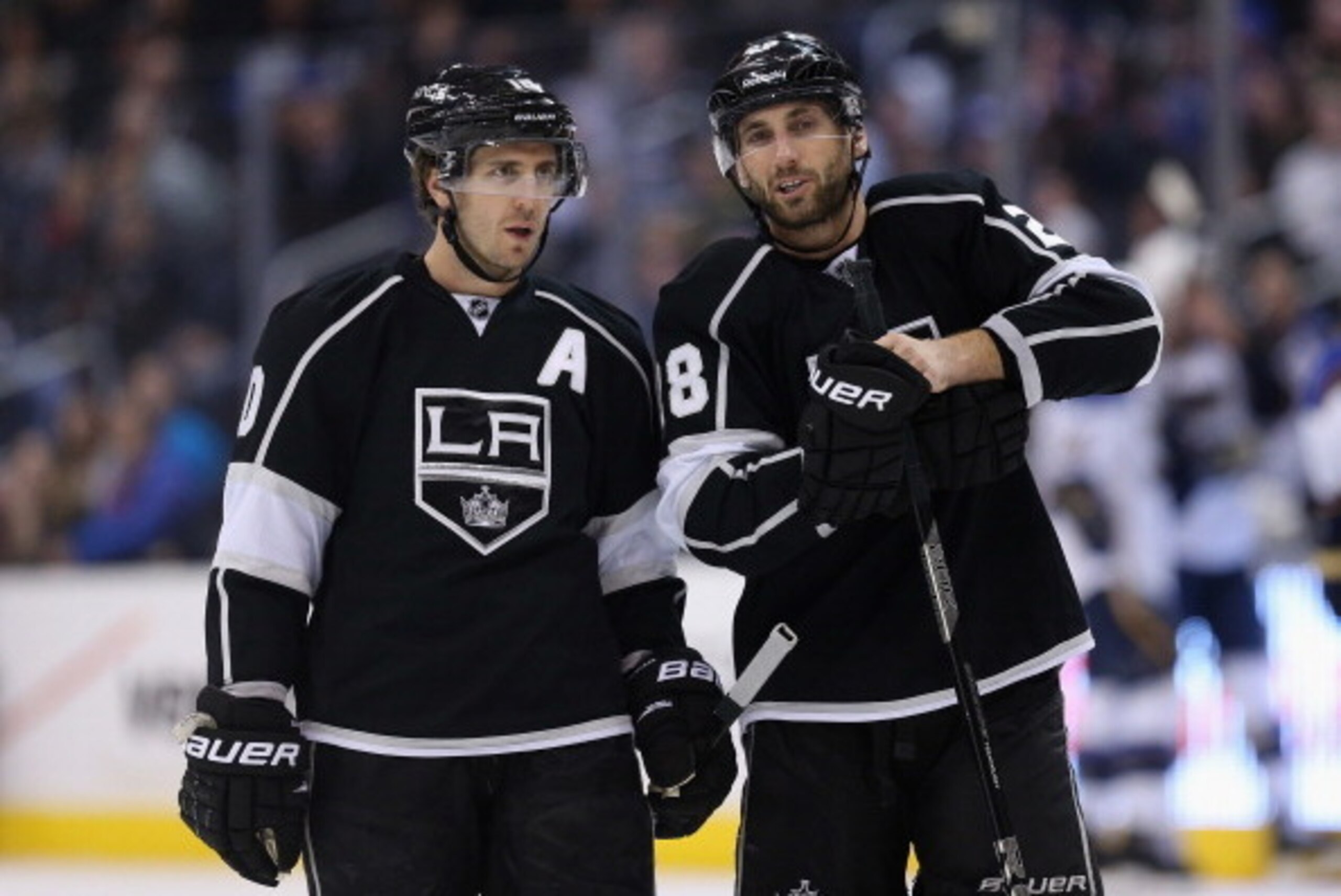
The Kings’ usage issue in the bottom six has also been corrected.
Richards has finally been bumped up to the third line and has instantly produced. With previously slumping wingers Dwight King and Dustin Brown, the unit has manufactured solid offensive-zone time and a pair of crucial goals in the process.
Simply put, it feels dangerous:
When Jarret Stoll occupied that slot, the group was a hot mess. Now relegated to the fourth line, the 32-year-old has strictly focused on delivering a jolt of energy.
He hasn’t been particularly good, but that’s still considerably better than where he was about a week ago.
The center swap has created a much more potent forward corps, as even when That ‘70s Line disappears—which occurred against the Anaheim Ducks on Wednesday—Kopitar’s unit now has support from Richards and company.
At the moment, the Kings can attack opponents with a variety of styles.
The top line drives possession like none other, the second unit offers electrifying run-and-gun transition and the third group features crafty veterans who will pay the price to swarm the net.
Even from a two-way perspective, the move will prove savvy going forward. Ryan Kesler trounced the Kings on Wednesday night with three points and a plus-three rating, but he was a complete ghost anytime Richards was around. That type of reliability will grant Sutter more flexibility with his matchups.
Thus far in 2014-15, Richards has comprehensively outplayed Stoll despite tougher competition and zone starts:
| Points | CF% | GF% | Off Zone Start | Off Zone Finish | |
| Mike Richards | 7 | 49.9 | 45.5 | 45.4% | 53.0% |
| Jarret Stoll | 1 | 44.4 | 33.3 | 49.6% | 47.5% |
From offense to defense, production to possession, Richards has earned more important minutes. Sutter has obliged at long last.
This isn’t to suggest the new third line will tear up the score sheet every night, but it should provide a more consistent scoring threat in relief of the top two units.
Depth at center is the Kings’ foremost strength, and though it took a while, they’re finally playing to it.
Outlook
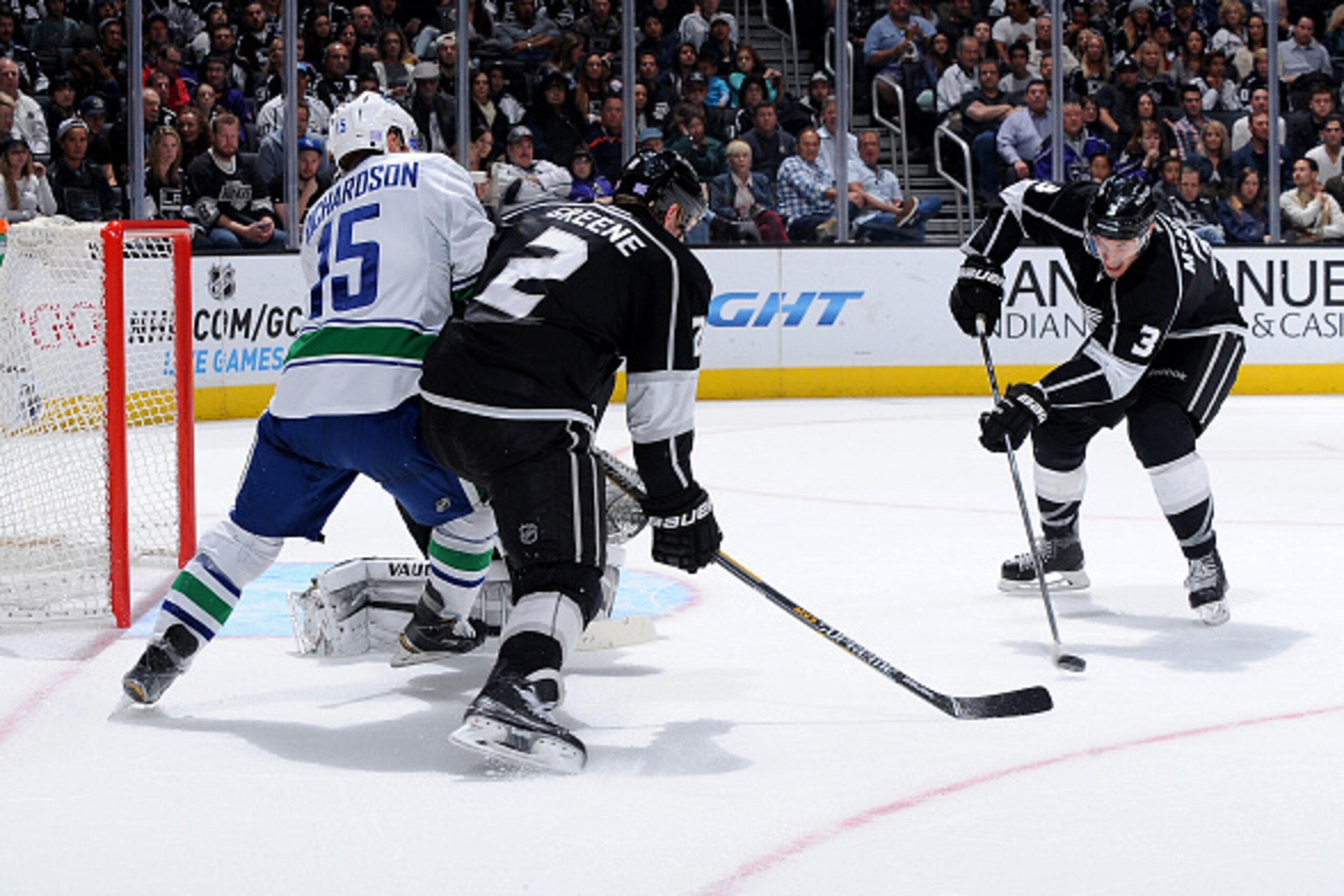
Earlier in the year, Jonathan Quick and Drew Doughty were downright carrying the team. Now that they appear human, the defense looks awfully suspect.
Jake Muzzin seems out of sorts, Brayden McNabb has disappointed, Jamie McBain was understandably poor in his first Kings game, Matt Greene is playing too significant a role, Robyn Regehr is missing in action and Slava Voynov remains suspended.
Thankfully, the offense has picked up the slack.
A re-energized top line has been a true blessing with That ‘70s Line in a rut. Furthermore, the third line has come alive with Richards’ promotion.
Since there’s no telling when the blue line will tighten up, the Kings need as many sources of legitimate production as possible to survive in the meantime.
Advanced statistics courtesy of Behind the Net and Stats.HockeyAnalysis.com.

.jpg?w=2560 "Every Trade's Best Trade Asset 🔁")
.jpg?w=2560 "Insiders: Cowboys Overpaid for Porter")
.jpg?w=2560 "Top NFL Trade Targets")