Which NBA Teams Are Getting Most Bang for Their Buck Early in 2014-15?
For every franchise like the Indiana Pacers, who staunchly refuse to go over the luxury-tax threshold, even if it means losing a player of Lance Stephenson's caliber, there's a Mikhail Prokhorov-owned Brooklyn Nets squad. Money is no object to a handful of owners who won't hesitate to pay steep penalties for taking advantage of the collective bargaining agreement as best they can.
But which teams seem to have invested most wisely and efficiently in 2014-15? Anyone can throw dollars at random players in willy-nilly fashion, so long as they have the financial means necessary to do so, but not everyone can create a productive collection of players without breaking the bank.
TOP NEWS
Giannis' Warning to NBA ⚠️

NBA Power Rankings Entering Preseason 🔢
Wizards Guard Admits Tanking 😨
Defensive Spending
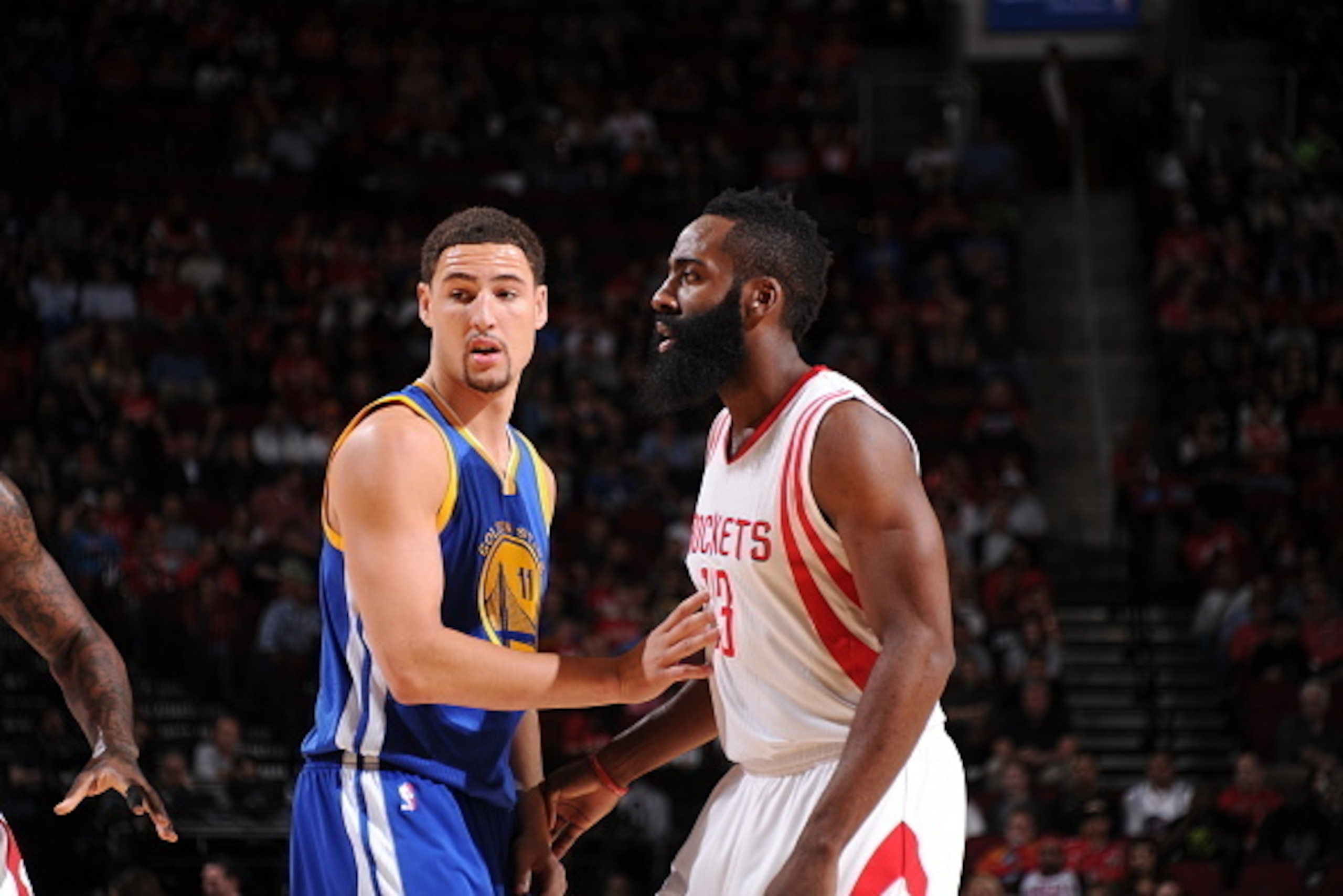
The best way to measure a team's defensive prowess in just one number comes from defensive rating.
Rather than looking at points allowed per game, defensive rating shows how many points a team allows over the course of an estimated 100 possessions. It's a pace-neutral statistic, which makes it easier to show the quality of a team's defensive skills because it eliminates the confounding factor that is pace.
With that in mind, let's look at the salaries and defensive ratings of the Association's 30 teams during the early portion of the 2014-15 campaign:
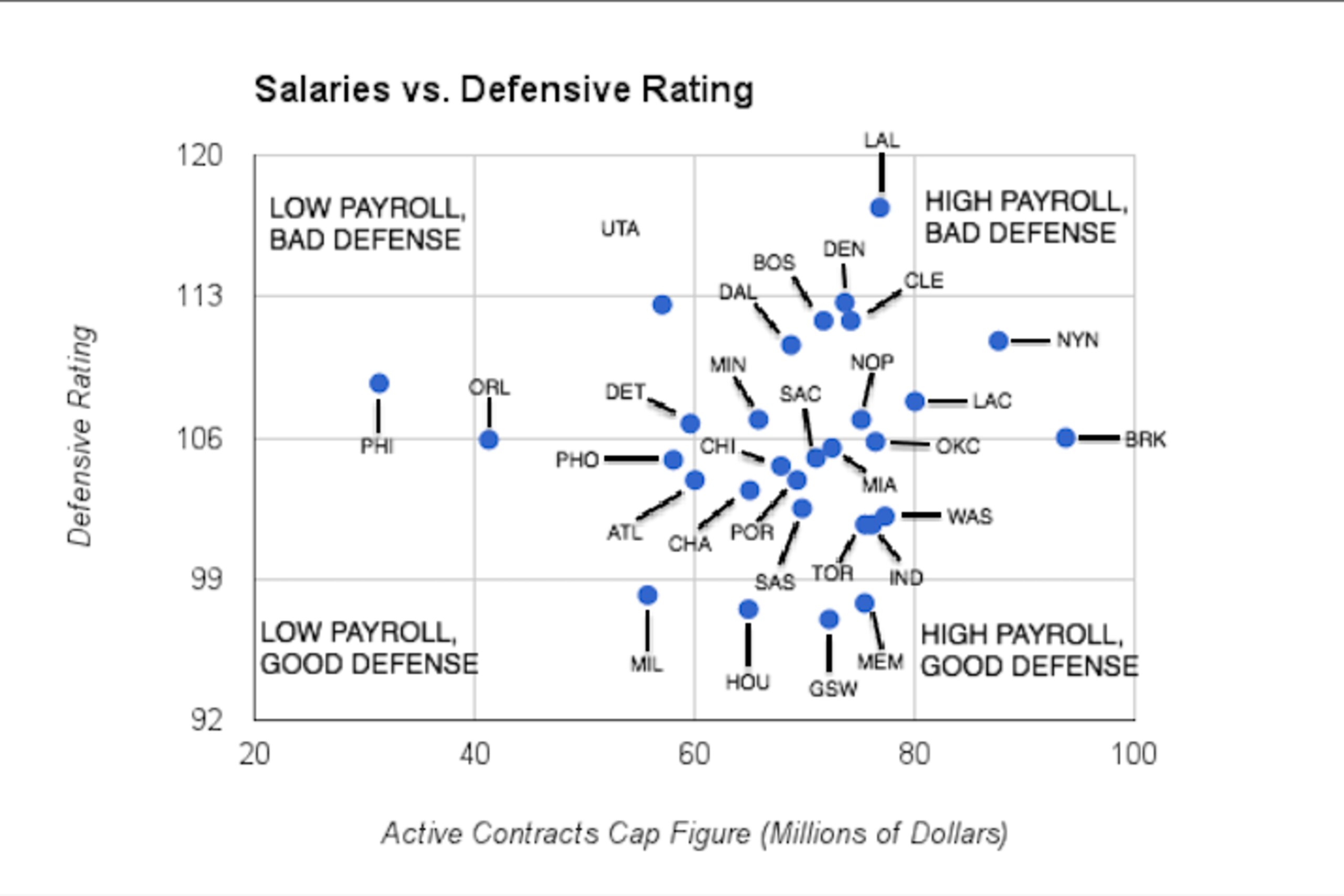
If spending money were directly correlated with defensive success, you'd see a trend that goes down and to the right. After all, a lower defensive rating is better, so you'd expect to see the teams spending the most money, like those Nets, with the best defenses.
Instead, it's just a massive cluster. If anything, it appears that there's a subtle upward trend in defensive rating as teams get less frugal, and that's not exactly ideal. But even without a strong correlation, we can point out the teams that are doing the best and worst jobs of spending money on defense.
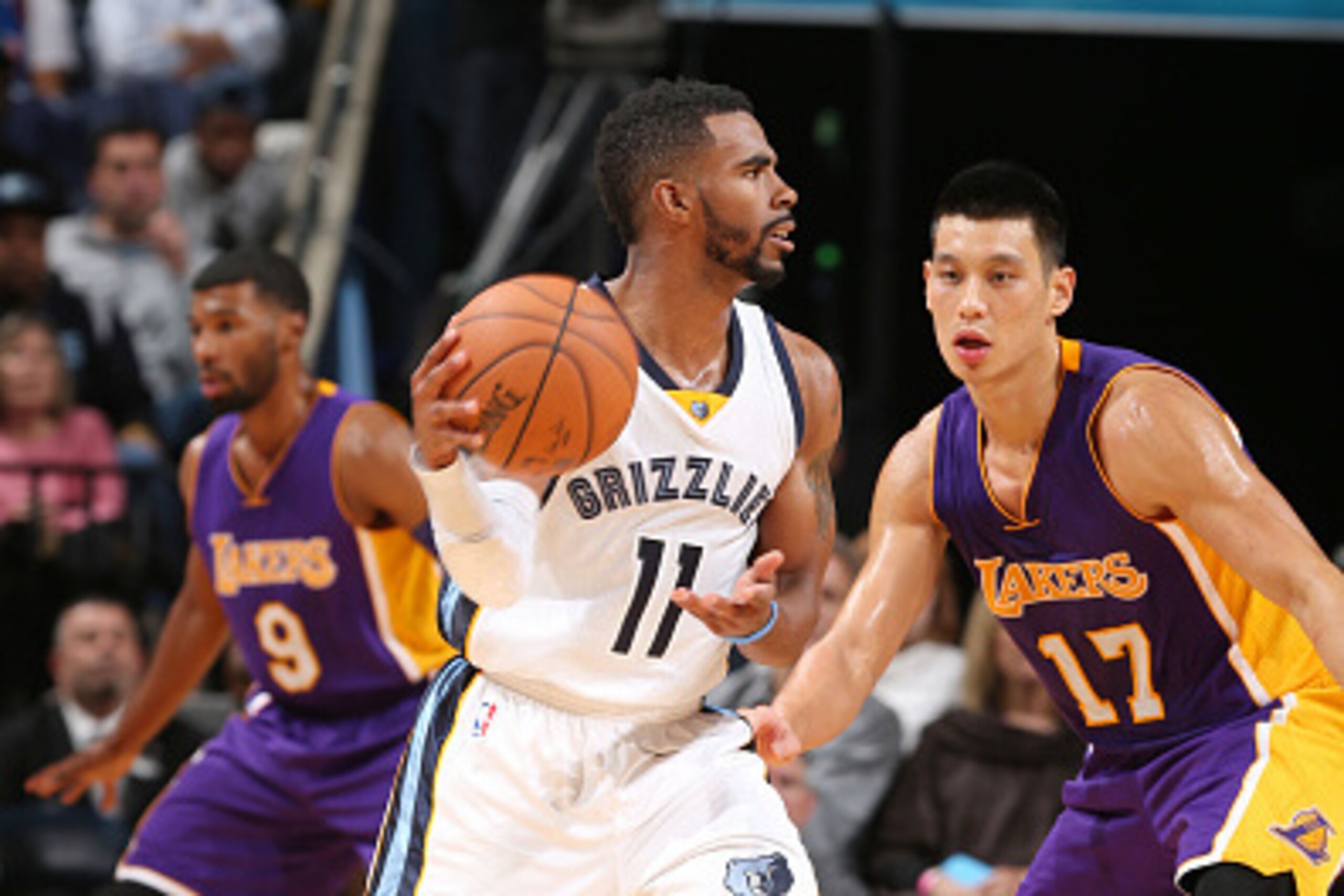
At this young stage of the season, it's the Los Angeles Lakers who are the clear-cut negative outliers. Granted, their salary is misleadingly high, as it factors in Julius Randle (played one game before fracturing his leg), Steve Nash (out for the year) and Nick Young (yet to make his season debut), but the defensive rating is still a league-worst 117.4, and no other team is close to that mark.
On the flip side, there are four teams emerging as strong contenders for best defensive spenders.
The surprising Milwaukee Bucks have a low payroll but have still held opponents to just 98.2 points per 100 possessions. The Houston Rockets and Memphis Grizzlies are right up (or down, as you have it) there as well.
But it's the Golden State Warriors, led by Klay Thompson, Andre Iguodala, Andrew Bogut, Draymond Green and a shockingly effective Stephen Curry, who have earned the league's top defensive rating (97) while paying their players less than 13 other squads.
Offensive Spending

Offensive rating is the sister stat of defensive rating, showing how many points a team scores per 100 possessions. It has value for the same reason, namely that it's a pace-neutral look at offensive prowess.
With no further ado, let's take a peek at how salaries and offensive rating are juxtaposed through the first few weeks of the 2014-15 season:

Now there's a much stronger correlation.
As teams spend more, they tend to get better offensive results. Does that mean defense is still undervalued on the market, as general managers focus more on landing offensive contributors, whose skills are easier to quantify? Maybe, but that's a topic for another time.
In this category, there's no clear-cut loser from a purely statistical perspective. Three squads stand out as falling far below the imaginary trend line: the Indiana Pacers, Oklahoma City Thunder and New York Knicks.
But the Pacers and Thunder have excuses. Indiana is still paying George, though he's out for the season as he recovers from the brutal leg injury he suffered while playing for Team USA, and the offense has stagnated even more so than normal without him. Oklahoma City is still waiting to get Russell Westbrook and Kevin Durant on the court, despite their salaries still counting in this analysis.
Statistically, the Knicks might not emerge as the clear-cut favorites to be called the worst offensive spenders, but subjectively, they certainly do. The triangle offense has looked good at times, but it's very much a work in progress and has led to some remarkably ugly outings.
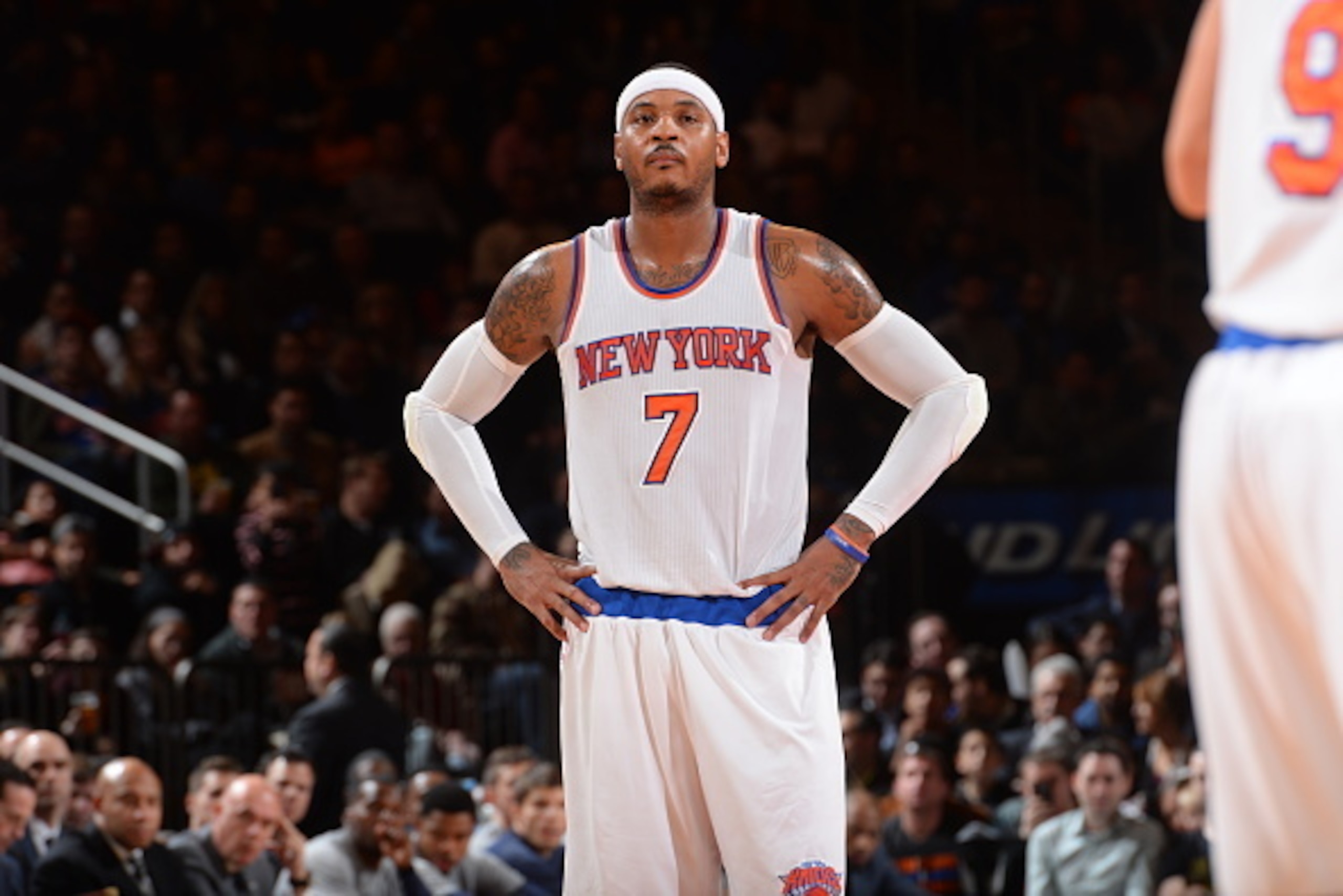
With a payroll nearing $90 million and a decidedly offensive theme to the roster (see: Carmelo Anthony, Jose Calderon, Amar'e Stoudemire and more), the Knicks shouldn't be floundering away with a below-average 103.3 offensive rating.
Shifting to the other side of the spectrum, it's the Dallas Mavericks who dominate the conversation.
While the Toronto Raptors and Portland Trail Blazers both deserve mentions, Dallas has posted a league-best 114.4 offensive rating, and it's doing so despite not having an exorbitant amount of financial expenditures. A lot of that is thanks to Dirk Nowitzki, as the pay cut he voluntarily took—one that leaves him as the fourth-highest-paid player on the roster—allowed the team to sign Chandler Parsons and add yet another weapon.
Just imagine what happens when Parsons firmly works his way out of his early-season slump. Dallas' payroll won't change, and it'll still have a collection of salaries that requires less money than all but 11 other teams, but the offensive rating might soar even higher still.
Spending for Success
What good is an offense without a defense? How much success can you have with a dominant defense that's coupled with an offense that can't score to save its life?
While each side of the ball is important and deserving of the analysis given up above, it's really all about success. The money these organizations spend isn't about racking up offensive or defensive statistics; it's about winning games and emerging as the best squad in the NBA.
Though there's a big caveat in place here, namely that teams often rebound from slow starts or cool off after hot ones, you can see each team's salary versus its early win percentage below:
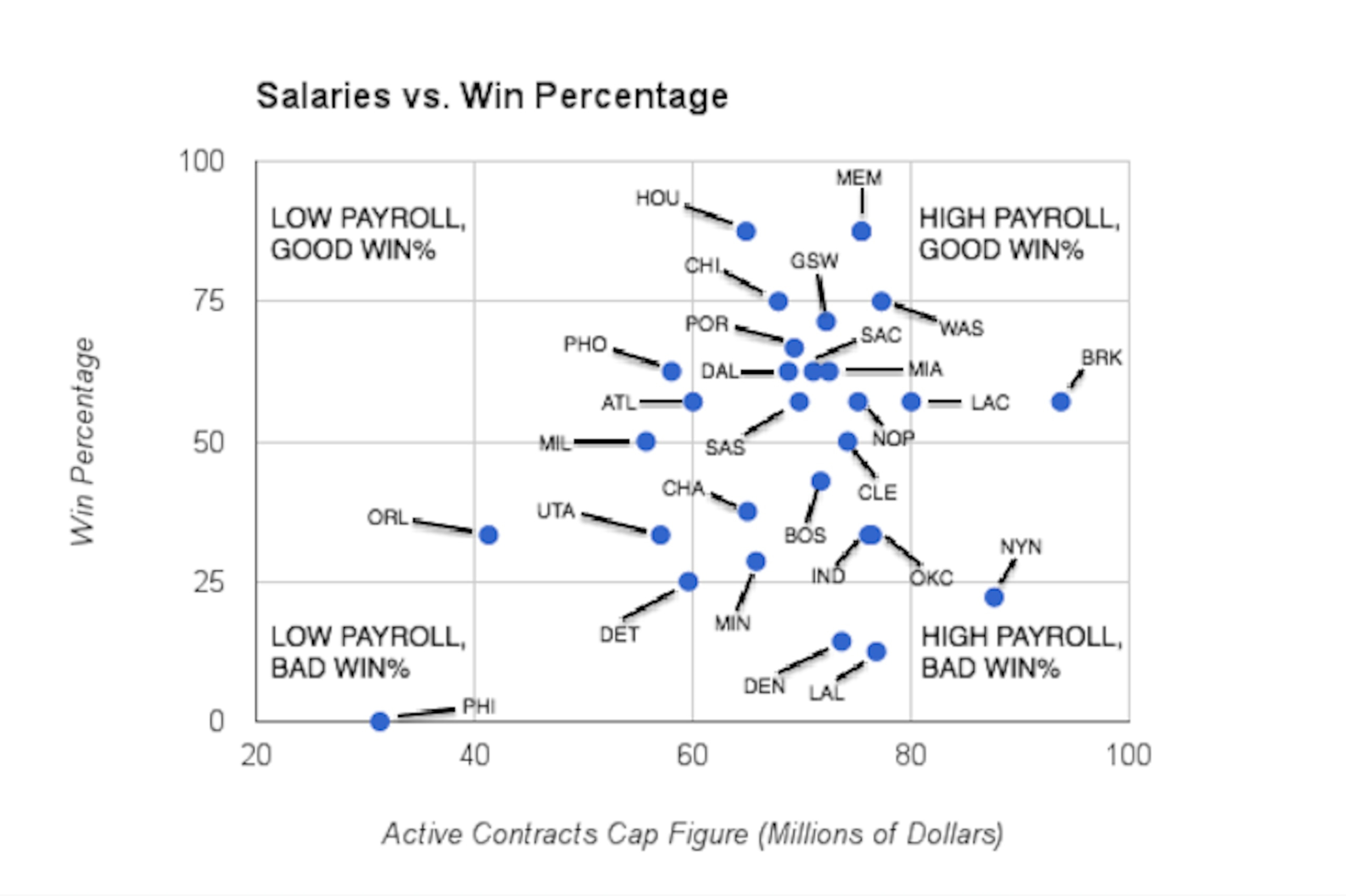
Kudos to the Grizzlies and Rockets here, as each has managed to emerge as a positive outlier from a graph that does have a fairly decent positive correlation. Meanwhile, the Lakers, Denver Nuggets and Knicks aren't doing too well.
However, there's actually an even better way to look at success.
Not all wins are created equally, even though each one counts the same in the win-loss column. If you're truly trying to measure the strength of a team, simple rating system (SRS) is a better tool, because it factors in strength of schedule and margin of victory.
Beating the Philadelphia 76ers by a single point and taking down the Grizzlies by 30 might both result in just one win, but the latter indicates a team is far more impressive. SRS takes that into account, while win percentage does not.
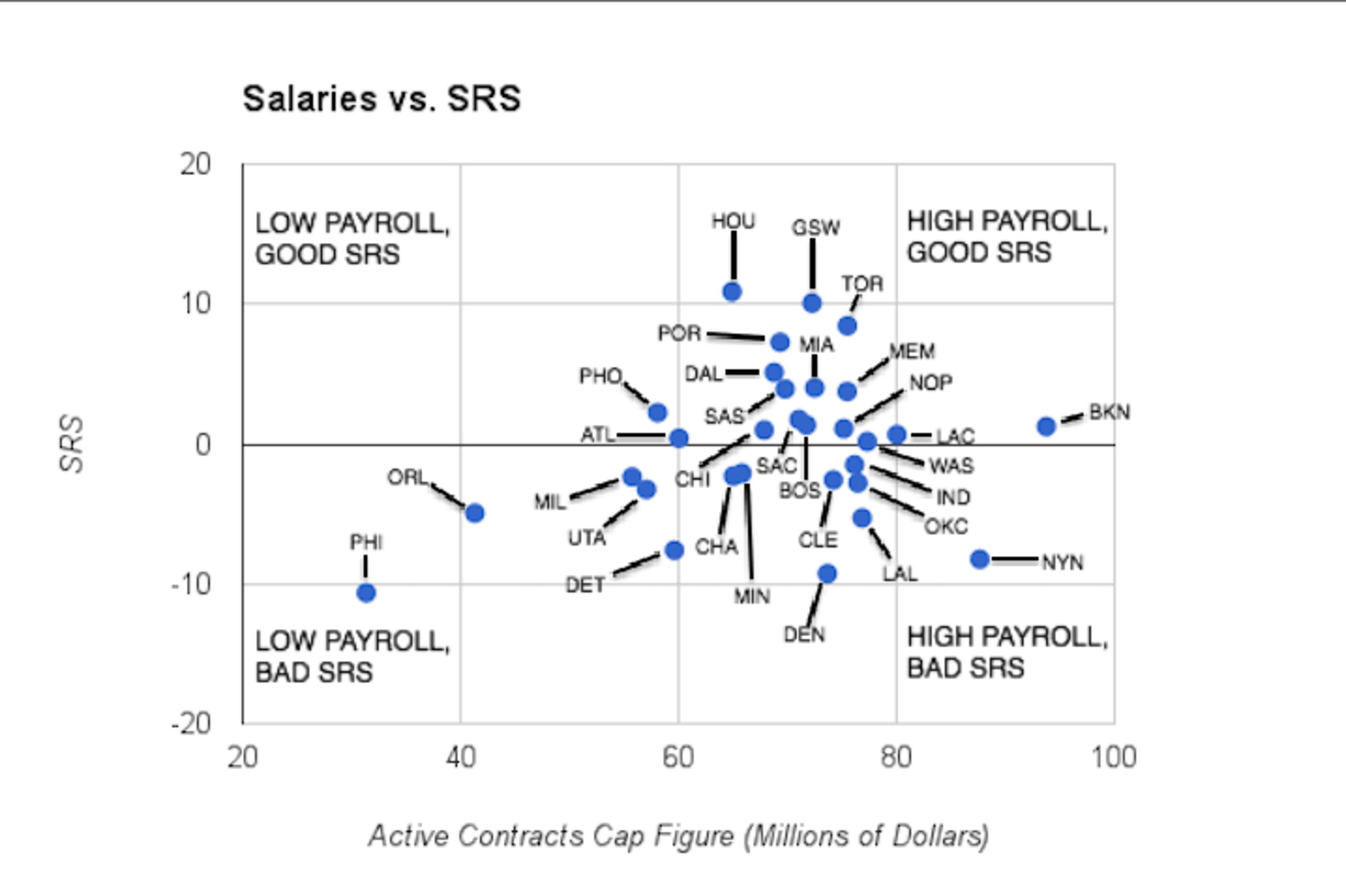
Based on SRS, the Nuggets and Knicks have stood out as the worst spenders in the NBA. Denver has gotten off to a horrific start despite having a talented and deep roster, even allowing 84 first-half points to Portland in a home game after two days of rest, while the Knicks can't play defense and have struggled to shoot the ball effectively.
Philadelphia may have the league's worst SRS, but with its tiny payroll, that's to be expected. The Sixers actually fit right in with the trend.
Now, for the league's best spenders.
No disrespect to the Raptors, Blazers and Warriors, but it's Houston that emerges as the clear-cut favorite. General manager Daryl Morey deserves plenty of credit for assembling a team full of bench players exceeding the expectations and replacing Parsons with Trevor Ariza.

Not only do the Rockets have the league's best SRS (10.89) during this early stage of the 2014-15 season, but they've done so with a remarkably small payroll. With $64.9 million in active salaries, the Rockets are paying their current players more than only seven teams throughout the league.
If you're looking for a crash course in responsible spending this season, just hit Morey up on Twitter. He's usually a pretty active user.
Note: All stats, unless otherwise indicated, come from Basketball-Reference.com and are current as of Nov. 13. The salary figures throughout the article come from Spotrac.com and represent the team's active salaries contributing to the cap. You'll find different numbers virtually anywhere you go, and that's because some databases factor in cap holds and dead money or don't count the full portion of a non-guaranteed salary. For our purposes, only the salaries of players actually on the roster (even if injured, like Steve Nash or Paul George) and actively contributing toward the cap come into play.
.jpg?w=2560 "Every Trade's Best Trade Asset 🔁")
.jpg?w=2560 "Insiders: Cowboys Overpaid for Porter")
.jpg?w=2560 "Top NFL Trade Targets")