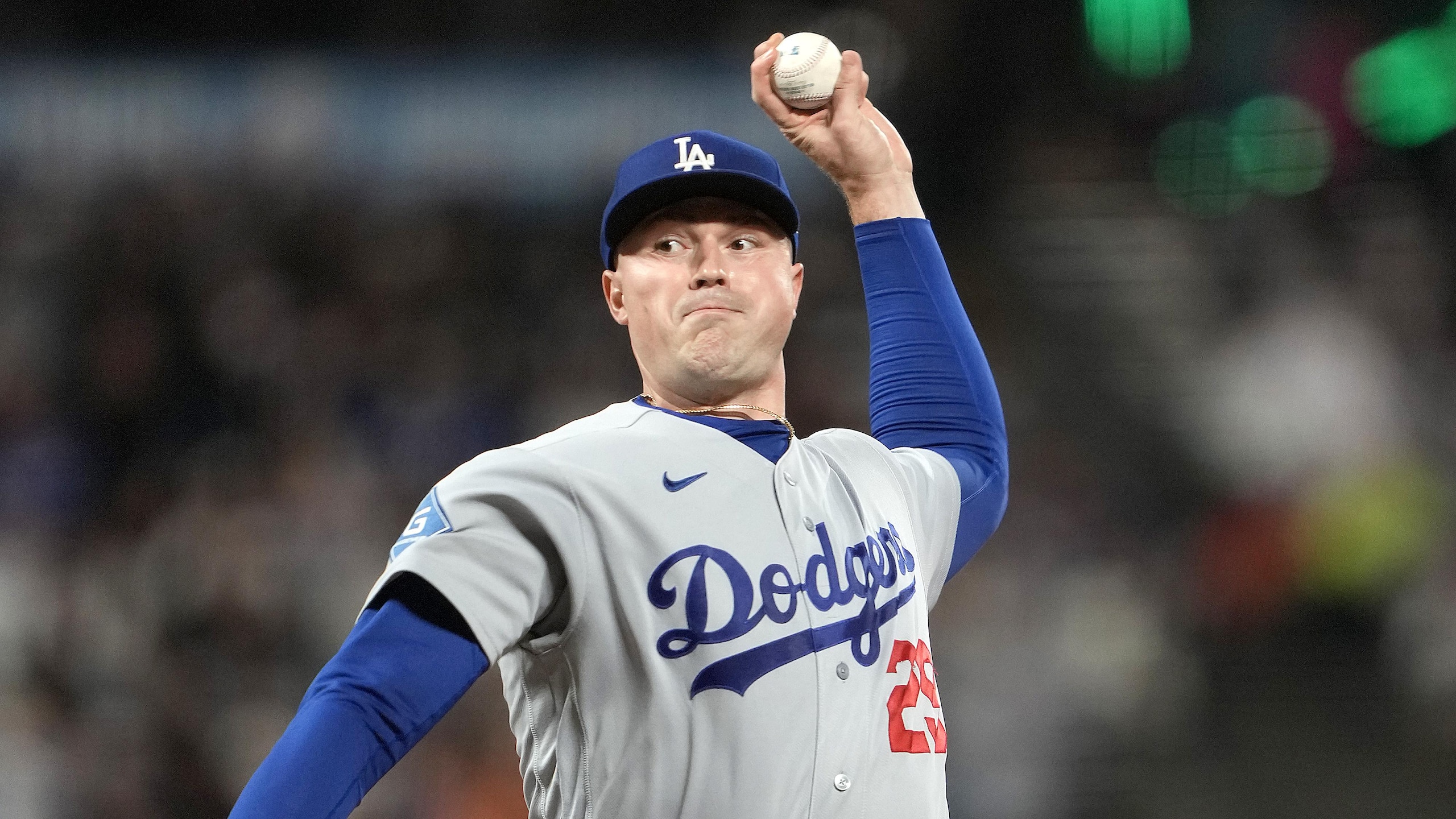
What Do Miami Heat Need from Dwyane Wade in the Post-LeBron James Era?
Dwyane Wade’s days as a member of the NBA’s creme de la creme are almost certainly long behind him.
His doesn’t have the burst he once did. His defense has slipped. His numbers, across the board, have fallen from “superstar” territory to something in the neighborhood of mere All-Star level. Before the season, ESPN’s panel of experts ranked him as the 36th-best player in basketball. Not bad, but it marks a precipitous fall for a player who was voted No. 6 a year ago and was as high as third in 2011.
And without LeBron James, Wade’s decline figured to accelerate. It was LeBron after all, so the conventional wisdom went, who created the floor space that allowed Wade to set a career high in field-goal percentage in 2013-14 even as his athleticism dipped. What would Wade’s game be reduced to without this powerful advantage?
TOP NEWS
Giannis' Warning to NBA ⚠️

NBA Power Rankings Entering Preseason 🔢
Wizards Guard Admits Tanking 😨
And there's also an increased workload that The Washington Post’s Rick Maese described thusly: "Wade’s being tasked with carrying a heavier load at a point in his career when he’s perhaps least capable. He’s tasked with doing more and doing it more often."
It turns out that we may have underestimated the 32-year-old.
In the early going of 2014-15, Wade has been very good. He’s halted and in some cases even reversed the statistical decline that’s characterized his game in recent seasons.
Wade is averaging a career-high 11.2 assists per 100 possessions, according to Basketball-Reference.com, and recording 19.7 points a night while posting his highest usage rate since 2011-12. His true shooting percentage, while down a few ticks from last season, is a respectable 56.5—right in line with his career average.

While Wade isn’t getting to the rim as often as he once did—31.5 percent of his attempts are coming from within three feet of the basket, relative to his career average of 37.5 percent, and he’s only making 64.7 percent of such shots, 5.6 percentage points off his mark from a year ago—he’s largely offset this issue with more effective outside shooting.
Though the sample size is still very small at this point in the young season, Wade has been aces from outside. He’s shooting 65 percent from between three and 10 feet and 50 percent from 10-16, per Basketball-Reference. Both figures dwarf his career averages.
Even better is that Wade has accomplished this while actually suiting up for the Heat. Though he’s playing a career-low 32.1 minutes a night, through Nov. 10 Wade was in uniform for all seven of Miami’s games—including a grueling four-games-in-five-nights stretch.
Dwyane Wade's Production Per 100 Possessions
| Pts | Rebounds | Assts | Steals | TS% | WS/48 | O Rating | D Rating | |
| 2013-14 | 30.5 | 7.1 | 7.5 | 2.3 | .588 | .149 | 110 | 106 |
| 2014-15 | 32 | 5,6 | 11.1 | 2.1 | .565 | .169 | 111 | 108 |
And he looks no worse for the wear. In fact, there’s actually evidence he’s heating up. In the five games following his 4-of-18 dud against the Philadelphia 76ers, Wade is averaging 21.6 points on 58.1 percent shooting to go along with seven assists and five rebounds.
Wade told Fox Sports South Florida’s Surya Fernandez that his recent success is a function of finding a comfort level with his new look team:
"Early on, I was just trying to figure out what's the strengths of my guys. Now I kind of understand the guys I'm playing with and what's their strengths. It's my job as the guy who has the ball a lot to make sure that I put them in the position to succeed. And their job is to make sure that I can have opportunities and have space to be able to create for them and also for myself.
"
To return to the question the headline posed, this is the sort of performance and leadership the Heat need Wade to maintain if they have any hope of making noise in the Eastern Conference this season.
Along with Chris Bosh, the Heat need at minimum a pair of superstars—or players who can roughly approximate superstar-level production—if they’re to keep pace. That’s the entry fee for contention: two top-shelf players and an able supporting cast. At this point, Bosh and Wade are the only players on the Miami roster capable of playing at that level—which both, to varying extents, have.

The question now becomes whether Wade can keep it up. And while there are certainly some strong reasons to doubt that proposition, it isn’t impossible that the veteran guard has a comeback season in him. Ironically, it might be the absence of James that allows him to thrive.
Consider this: According to NBAwowy.com, in the regular and postseason since January 2012, Wade has recorded a true shooting percentage of 56.8 with James at his side and 55.8 without him.
That’s not much of a difference, but here’s where things get really interesting.
In the regular and postseason since January 2012, Wade has posted a usage rate of 36.5 percent without LeBron, per NBAwowy.com, and 25.5 percent with him. That’s a monster increase in usage without a meaningful dip in efficiency.
While it’s hard to believe that Wade will actually be better without LeBron, the numbers suggest there’s a chance he could be just as good. And for an ostensibly fading star in his age-33 season, that’s plenty good enough.
.jpg?w=2560 "Every Trade's Best Trade Asset 🔁")
.jpg?w=2560 "Insiders: Cowboys Overpaid for Porter")
.jpg?w=2560 "MHJ's Potential Trade Value 📉")