

Brace yourselves. NBA restricted free agency is going to get weird this summer.
Flying the coop isn't typical of restricted free agency. High-profile players usually sign extensions leading up and into their fourth season. If they don't, they hit the semi-open market, where their respective teams have the ability to match any offer sheet rival suitors dangle.
Retention becomes a formality in most cases (see: Kyrie Irving, Kenneth Faried, Klay Thompson). Even allegedly and potentially disgruntled talents have re-upped with incumbent squads in the past (see: LeBron James, Kevin Love, Eric Gordon). Rare is the restricted free agent of note who spreads his wings and flies away.
This upcoming summer isn't most summers, though.
New precedents have been set in the wake of Chandler Parsons' ambitiously priced and structured contract with the Dallas Mavericks. An impending cap boom in 2016 threatens to warp—which is to say, jack up—individual market values. And, as always, some players just don't fit into their current franchise's long-term vision.
Compiling a list of these legitimate flight risks demands we consider the eventual free-agent market. Possible price matters. Fit matters. Future plans matter.
Subjective interpretations of a player's standing matter too. We need to identify the most promising talents about to enter restricted free agency. While we're all (obviously) wondering whether Joe Ingles is tracking toward a max contract, or if a 30-team bidding war will commence over Derrick Williams, they don't fit the bill.
Household or almost-household names are the targets. They are the most imposing wing-wielders—many of whom may be months away from liftoff.
Brandon Knight, Milwaukee Bucks
1 of 6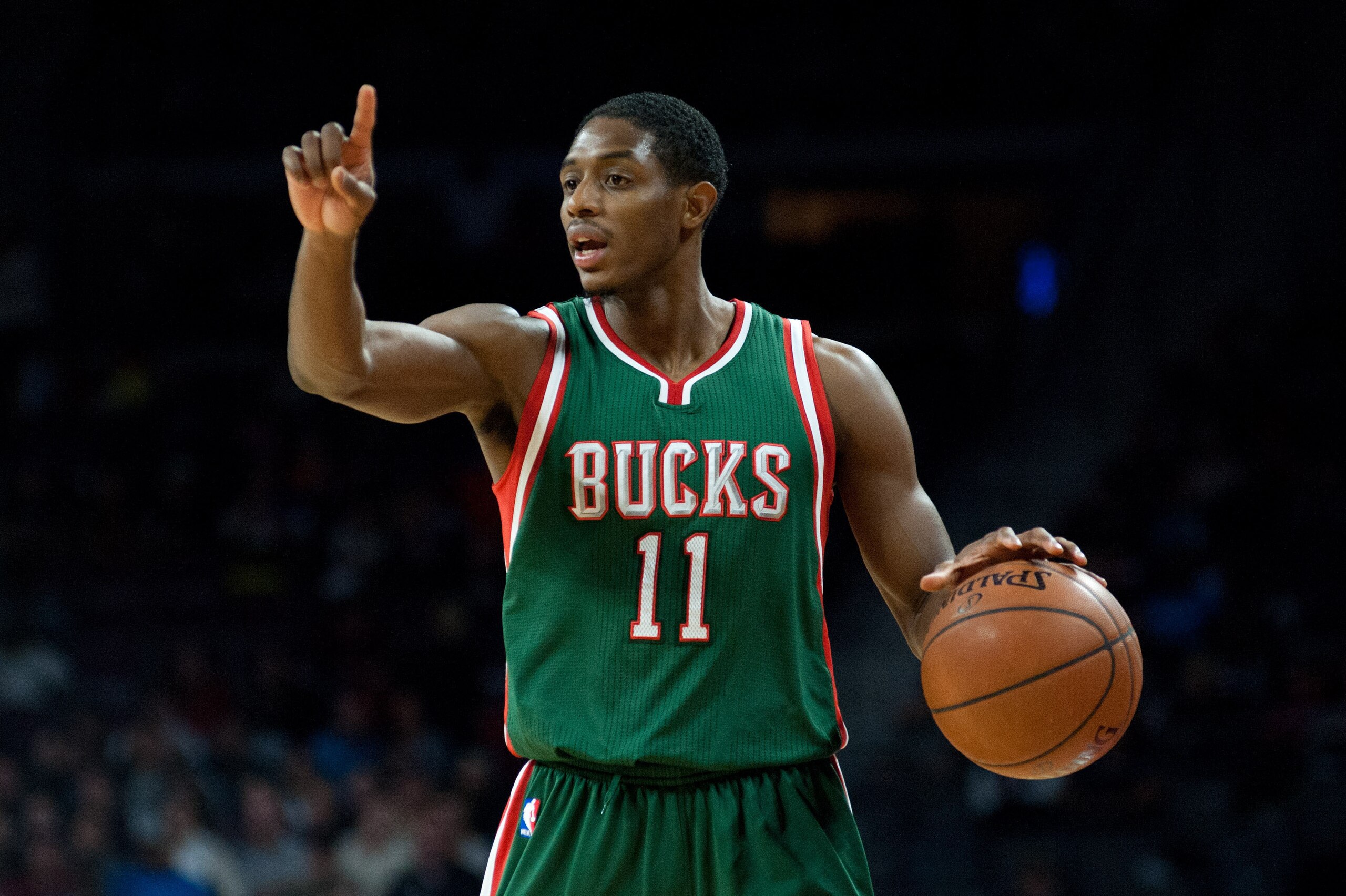
If Brandon Knight's future with the Milwaukee Bucks had its own Facebook page, its relationship status would read: It's complicated.
Upon first glance, the 22-year-old Knight appears to be someone the Bucks should keep. He leads the team in scoring, and his 17.6 points, 6.4 rebounds, 7.3 assists and 1.4 steals per game render him a stat-sheet-stuffing Goliath. But it's still difficult to call him "franchise point guard" material.
"We just have no evidence that Knight can be the undisputed lead guard on a good team," Grantland's Zach Lowe wrote in September. "Context hasn’t helped. He shared ball-handling duties for two bad Detroit teams, and last season he logged just 350 total minutes in 19 games alongside the duo of Larry Sanders and Ersan Ilyasova—a front-line pair that offers a nice combination of spacing and pick-and-roll danger."
Think of Knight as Isaiah Thomas, who the Sacramento Kings signed and traded to the Phoenix Suns this past summer: He has the numbers, but all told, he's piloting a bottom-seven offense speeding toward the draft lottery. Matching a big-money contract—one bigger than Thomas' four-year deal with Phoenix—will be tough for Milwaukee if it isn't accompanied by established progress.
The Bucks also have oodles of talent on the roster. Nate Wolters has proved serviceable, Kendall Marshall's contract is so reasonable he's being paid in pennies, and head coach Jason Kidd has shown he's unafraid to play the I-can-touch-the-moon-without-leaving-my-feet Giannis Antetokounmpo at point guard.
All this rotational versatility means the Bucks have options when it comes to Knight. And while deciding on his future is a good problem have, it's still a problem—one that could end with him suiting up elsewhere next season.
Enes Kanter, Utah Jazz
2 of 6
Look, just because the Utah Jazz have already committed big money to Derrick Favors, Gordon Hayward and Alec Burks doesn't mean the extension-less Enes Kanter will be the odd man out...though he totally could. And just because Rudy Gobert hails from advanced solar systems unknown doesn't mean Kanter's value in Utah is on the verge of plummeting...though it totally might.
OK, fine. Kanter's future with the Jazz is in jeopardy.
There's danger in keeping him beyond this season. Paying Kanter is the equivalent of the Jazz admitting they're cool with investing tens of millions of dollars in a core that (probably) hasn't made the playoffs. Even if they're confident in their internal growth, it's difficult to make serious strides when footing bills for mediocre results.
Kanter also doesn't fit Quin Snyder's space-oriented offense. The team is trying to make him a three-point shooter, but it's not going well; he's shooting 22.2 percent from deep. Utah's eighth-ranked offense is scoring more points per 100 possessions with him on the bench as well, according to NBA.com (subscription required).
"And if Kanter cannot add a steady three-point shot to his game, he suddenly becomes an ill-fitting piece in what is otherwise a passing machine (the Jazz rank first in passes per game)," Bobby Karalla wrote for BBallBreakdown.com. "That level of passing needs a certain level of floor spacing, and yet with Kanter as the stretch 4, the Jazz are not meeting it."
Keeping Kanter isn't a necessity if the Jazz are looking to run small lineups. Both Hayward and Favors can play the 4, while Trevor Booker also looks like a basketball player these days. And knowing this, there's a strong chance Kanter plays and prices himself out of Utah.
Tobias Harris, Orlando Magic
3 of 6
It took getting traded from the Bucks to ignite Tobias Harris' career. Now it could take leaving the Orlando Magic for Harris to get paid.
According to the Orlando Sentinel's Brian Schmitz—though disputed by Harris himself—the Magic were unwilling to meet the asking price of their high-scoring and -rebounding wingman. With Harris averaging 16.7 points, 8.3 rebounds and 1.1 steals per game on the season, it looks like that decision will cost them—in the form of either money or his departure.
At least one team will throw Harris serious coin if his averages hold. His deficient three-point stroke will preclude him from earning Chandler Parsons money, but he does figure to net eight figures annually.
Having already paid Nikola Vucevic—and knowing their backcourt of Victor Oladipo and Elfrid Payton will demand paydays of their own in a few years—the Magic might not be inclined to match top-dollar offers for Harris. They also have two cheaper options to man the 3 in Maurice Harkless and Evan Fournier, the latter of whom is tearing it up offensively—16 points on 50 percent shooting—while starting in place of Oladipo.
"We weren't able to get a deal done," Harris said, per the Orlando Sentinel's Josh Robbins. "The Magic never negotiated, so that's that."
There will be plenty of opportunities to negotiate this summer, at which point another team will be prepared to do what the Magic may not: make Harris a very, very (very) rich man.

Iman Shumpert, New York Knicks
4 of 6
Iman Shumpert has moved out of Mike Woodson's doghouse and into Derek Fisher's penthouse loft just in time to watch his stock skyrocket.
After three turbulent seasons in which his shooting splits and defensive impact seesawed between promising and hapless, Shumpert has been one of the New York Knicks' lone bright spots to start 2014-15. He's the team's second-leading scorer behind Carmelo Anthony (13.7 points per game), is shooting a blistering 58.3 percent from beyond the arc and remains one of the only players who doesn't view defensive sets as terse vacations.
Not surprisingly, his play—along with the absence of extension talks prior to the Oct. 31 deadline—has complicated his future in New York. Prevailing wisdom has him leaving at season's end, since the Knicks are hell-bent on landing a star free agent in one or both of the next two summers, according ESPN New York's Ian Begley.
Spending on Shumpert could cost them the opportunity to pair Anthony with two more world-beaters, even with a rising cap. Avery Bradley negotiated a four-year, $32 million deal with the Boston Celtics this past July; Shumpert, who is emerging as a valuable three-and-D guy, will cost just as much, if not more, should his current numbers hold strong.
Much of his internal value is also tied to J.R. Smith and Tim Hardaway. The latter is under contract through next year, while the former holds a player option, per ShamSports. If the Knicks plan on both returning, they'll have even less money to invest in a crowded 2-guard rotation.
That puts Shumpert's future in the hands of his play and, more importantly, the Knicks' still-developing direction.
Jimmy Butler, Chicago Bulls
5 of 6
Fall frugality has never been so expensive.
Leading up to the extension deadline, Jimmy Butler's agent, Happy Walters, told Yahoo Sports' Adrian Wojnarowski that the Chicago Bulls were looking for a "hometown discount." That didn't work out so well, and not just because Walters almost assuredly pointed out Butler hails from Texas.
Rather than bend to Chicago's discount-demanding negotiating tactics, Butler has opted to bet on himself—a wager that's fated to pay off.
Since returning from injury, he's been a statistical workhorse, averaging 19.6 points, 6.2 rebounds, 3.8 assists and 1.8 steals per game on 50 percent shooting. Though this is small-sample stage practice at its finest, Stephen Curry and James are the only other players who are averaging at least 19 points, six rebounds, 3.5 assists and 1.5 steals per game.
Butler also stands to benefit from a dearth of two-way talent at his position. If he establishes himself as a consistent producer on the offensive end—especially as a passer—he enters Klay Thompson, max-money—though-not-really—territory.
“Yeah, [the deadline is] over with, but this is still home, these are still my guys,’’ Butler said, via the Chicago Sun Times' Joe Cowley. “This is the team I want to be on, this is the city I want to represent. So I’m happy, and I’ll be happy for a long time.’’
Are the discount-seeking Bulls willing to enter that $70-plus million range for someone who, until now, has only been recognized as a specialist?
The answer to that question could decide how much longer Butler plans on being happy in Chicago.
Reggie Jackson, Oklahoma City Thunder
6 of 6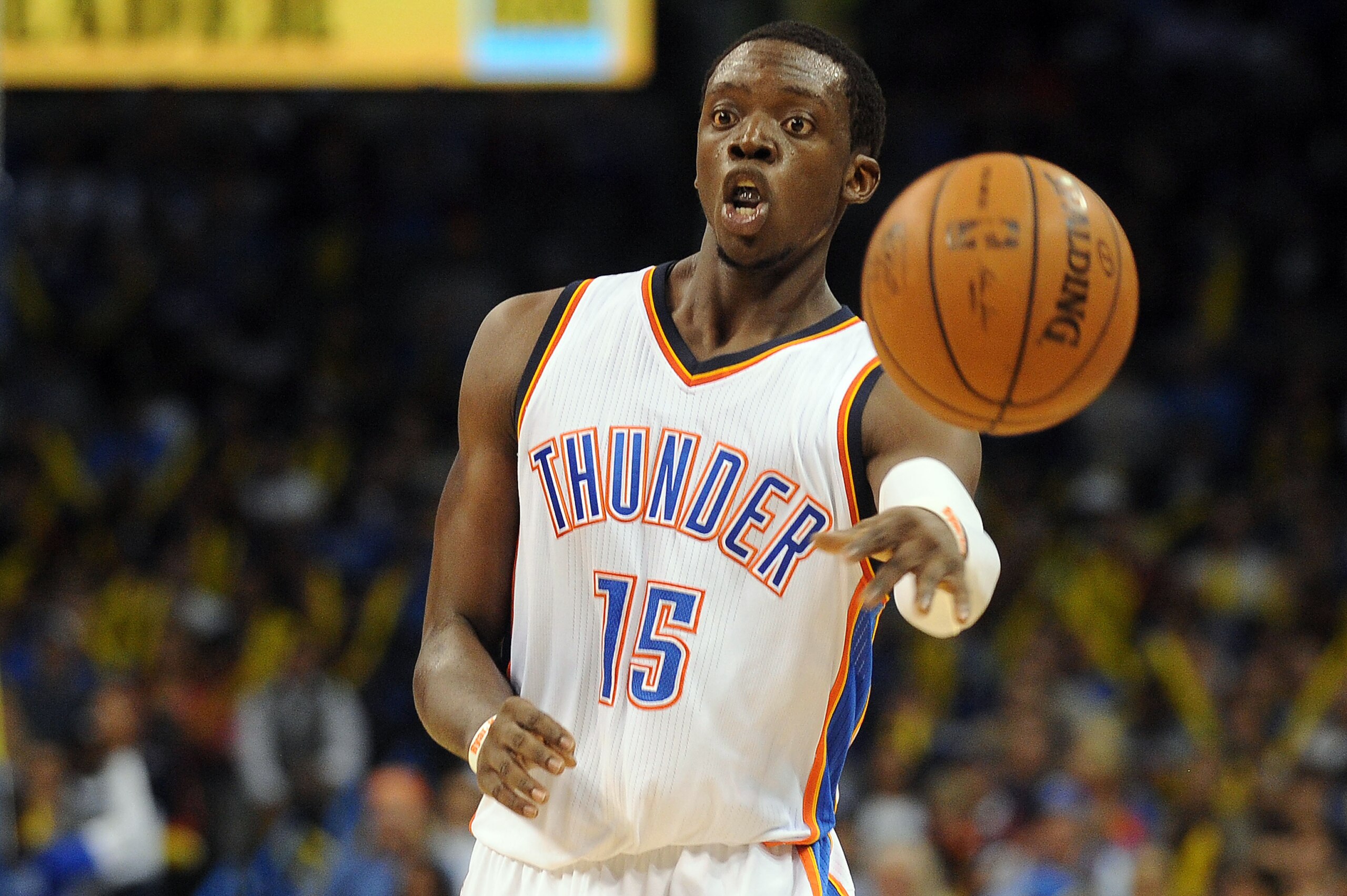
In an attempt to avoid sounding overly presumptuous, we cannot tell Oklahoma City Thunder fans to bid Reggie Jackson farewell now. We can—and should—implore them to have their goodbye and c'est la vies speeches at the ready, though.
Failing to extend Jackson paves way for his departure. He's a starting point guard who the Thunder, at full strength, value as a No. 4 offensive option behind Kevin Durant, Russell Westbrook and Serge Ibaka. His value outside Oklahoma City was always going to reach lucrative proportions. As he continues to rattle off 20-point, eight-assist performances in Durant's and Westbrook's absences, it's only going to climb higher—so high that NBC Sports' Brett Pollakoff argues he's good as gone:
"At some point, the Thunder are going to need to step up, but it may not be now with Jackson. He should command an offer sheet that’s too steep for the team to even consider matching, especially with Durant having the ability to pursue free agency in 2016, and Westbrook and Serge Ibaka becoming eligible the year after that. And, OKC’s three core players are already on the books for more than $50 million next season, which limits their ability to go too far in trying to retain Jackson’s services.
"
A lot can change between now and this summer. The Thunder could realize how important he is to their success. Facing the prospect of losing Durant in 2016 and Westbrook in 2017, they could spend like they've never spent before in hopes of keeping them happy. They could bring Jackson back. It could happen.
But Jackson could also leave. The Thunder can only ask players to sacrifice status and salary for so long. One or the other has to give. James Harden had his breaking point. Jackson, without question, has his own.
And this time next year, playing a different role in a different jersey for a different team, he may be months removed from having reached it.
*Stats courtesy of Basketball-Reference and NBA.com unless otherwise cited.

.jpg?w=2560 "Chiefs, Steelers Eye WR Trades")