
Denver Broncos vs. Oakland Raiders: Full Report-Card Grades for Oakland
The Oakland Raiders knew they were heavy underdogs in their matchup against the Denver Broncos, and for good reason: the visitors were clearly the better team. It was going to take a special effort to win, and the Raiders provided just that for most of the first half. But all of that good work was negated by halftime, and Denver never looked back.
Sunday's game was a tale of two halves. For most of the first half, the Raiders were the better team. They held a lead late in the second quarter, and it was well-deserved. But that all changed in a matter of minutes. With less than three minutes to go in the half, Oakland was up 10-6. By halftime, Denver was up by 10.
Of the three phases of the game, the one unit for Oakland that hasn't done its part is the offense, and the rest of the team has suffered because of it. Marquette King is on the field too often, Sebastian Janikowski isn't out there nearly enough, and the defense is constantly on the field and in bad field position. These problems all trace back to the offense's ineptitude.
Before proceeding, a disclaimer: Defense and special teams received special consideration in their grades. It's difficult to overstate how bad the offense was or the detrimental effect it had on the other units, but it has to be accounted for. That's how bad the offense was Sunday.
Here are the grades for each position group after Sunday's game.
Quarterback
1 of 11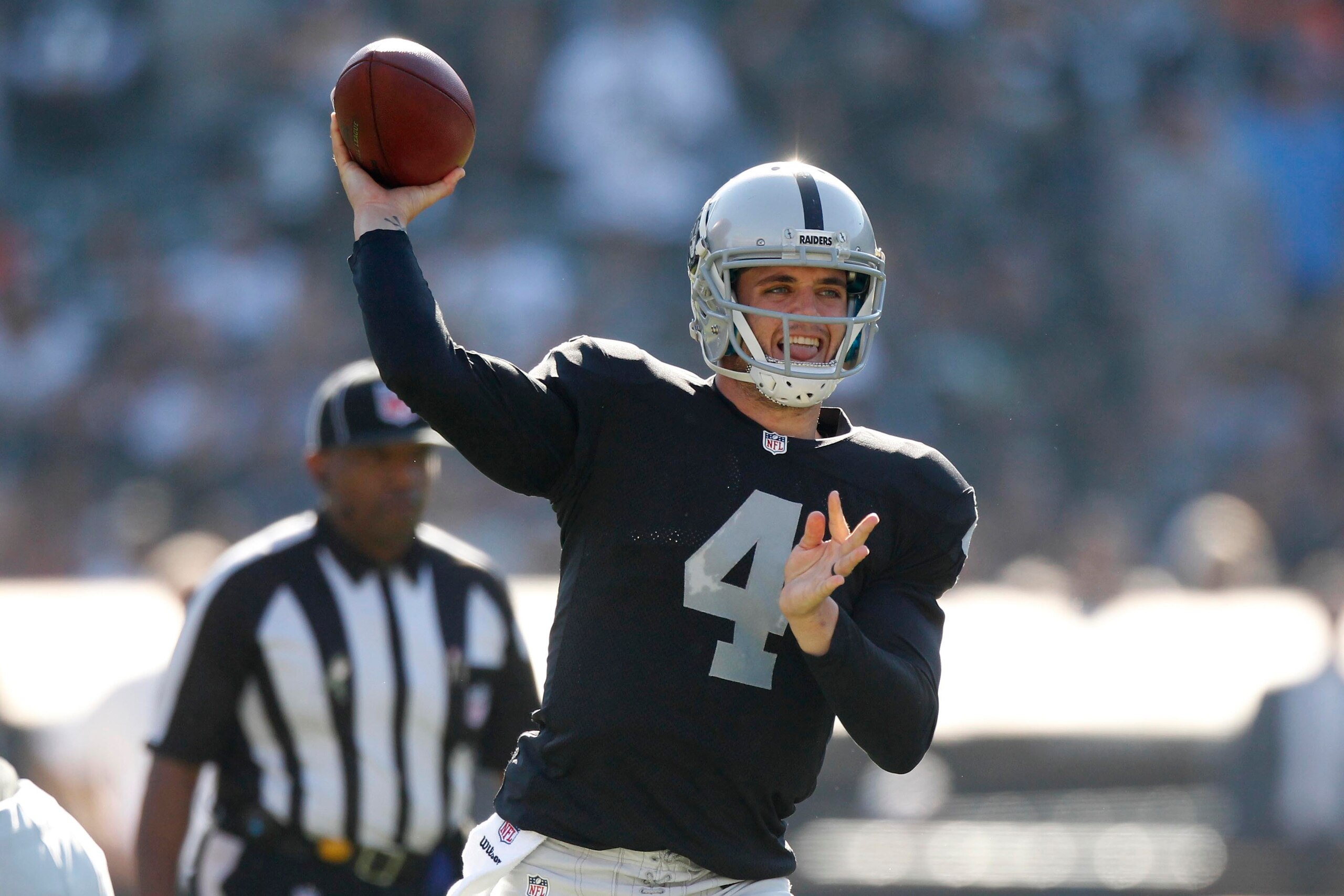
On Sunday, Derek Carr had the worst game of his rookie season.
To start the season, Carr looked like a quarterback playing beyond his years. He was playing calm and confident, and it seemed as if he would be able to effectively lead this offense all season. But over the last few games, and especially this week, he's looked like a rookie.
Carr made bad decisions that led to two interceptions, and he was unable to keep the offense on the field. Too many incompletions and not enough first downs gave Manning too many possessions, and the score shows it. If not for a couple of drives in which the offense had a short field thanks to the defense, the Raiders might not have scored.
The only reason Carr doesn't get a failing grade is that he received absolutely no help: no running game, the receivers can't get open consistently, and the offensive line has severely regressed. He's out there with no help. No quarterback is going to succeed under those conditions.
Grade: D-
Running Back
2 of 11
Stop me if you've heard this before: The running backs were unproductive on Sunday, they had no impact on the game and they once again did nothing to help the offense.
Sound familiar?
Darren McFadden had another terrible day, finishing with 14 yards on seven carries. He did have some minor success receiving (four catches, 22 yards), but he needs to be effective on the ground. Once again, he didn't get nearly enough carries. And once again, Oakland turned into a predictable, one-dimensional offense with no running game.
Maurice Jones-Drew has completely fallen out of the offense's game plan. He had only three carries, and he was never featured, even for a series.
The one positive in the blowout could've been that the coaches gave other players a chance, but that didn't happen. Latavius Murray saw some time in the fourth quarter, but he only got two carries. Marcel Reece, who's shown in the past that he can be a very good ball-carrier, had only one.
Nine games into the season, it's now undeniable that Oakland's running game is a lost cause. Even if they manage to have a good game here or there between now and the end of the season, it's not going to be enough to stop this unit from being a failure, which is what it was against Denver.
Grade: F
Tight End
3 of 11
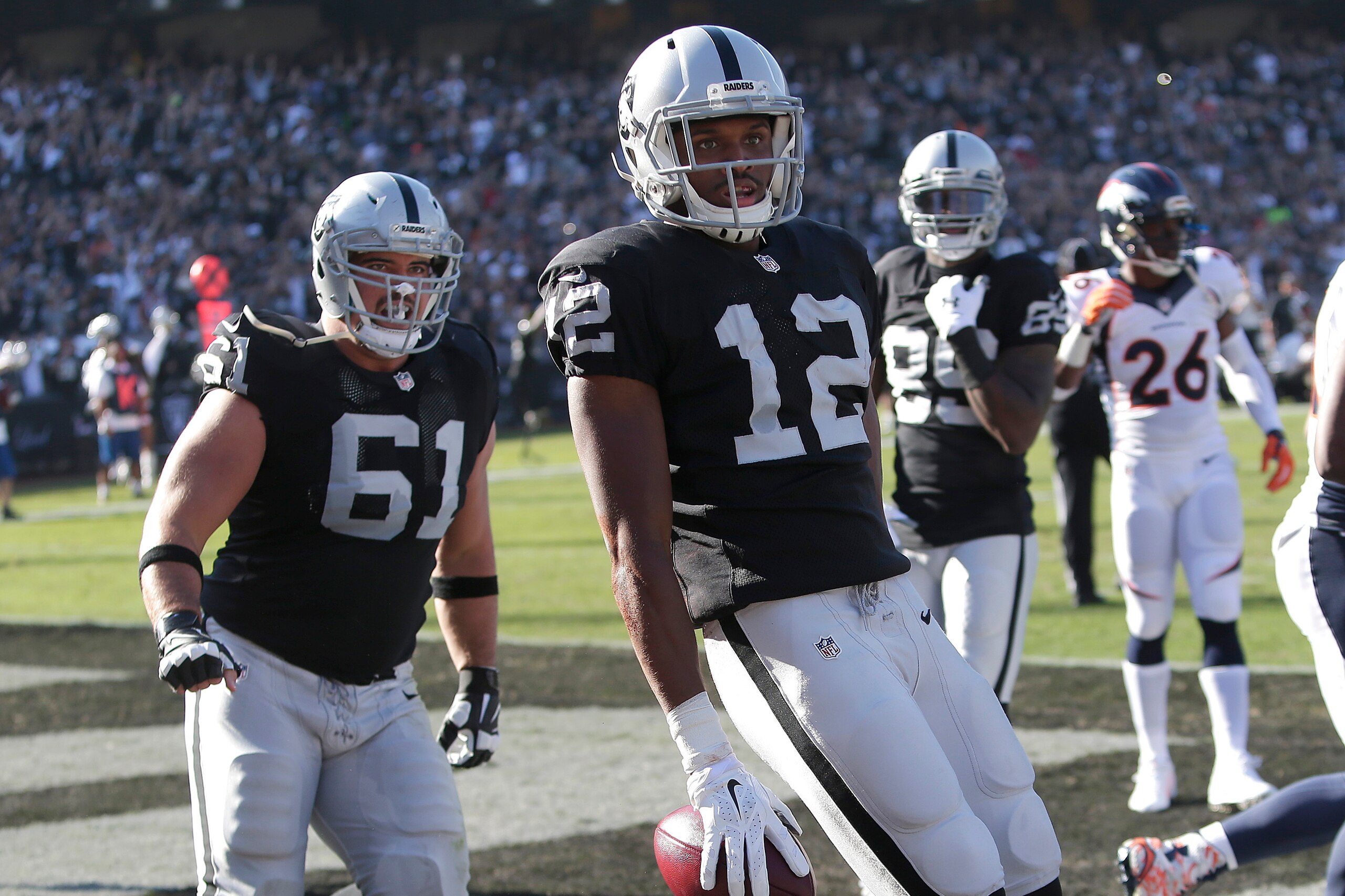
Mychal Rivera continues to be the one bright spot on the Oakland offense. Of all the pass-catchers, he's the only one that ended the game with a respectable stat line: six catches for 64 yards and a touchdown. The score came in the last minute, by which point the game had long since been over, but it was a good route and catch nonetheless.
After struggling to start the season, Rivera has come alive over the last three games and played like the tight end the Raiders were hoping he was after an impressive rookie campaign. Throughout the game, he was able to beat his coverage, make a play on the ball and maintain possession, even in traffic.
The one area Rivera still has trouble in is blocking. He's always been looked at as a pass-catching tight end. But he still needs to be efficient, and there were some plays where he just got beat. He needs to improve and be consistent in this part of his game.
Although the offense was once again ineffective, Rivera's performance shouldn't be lost in that. The times that he did have a chance to make a play, he did. Unfortunately, there just weren't enough opportunities.
Grade: C+
.jpg?w=2560 "Chargers Mack")
.jpg?w=2560 "Green Bay Steelers Football")
.jpg?w=2560 "Giants Football")
Wide Receiver
4 of 11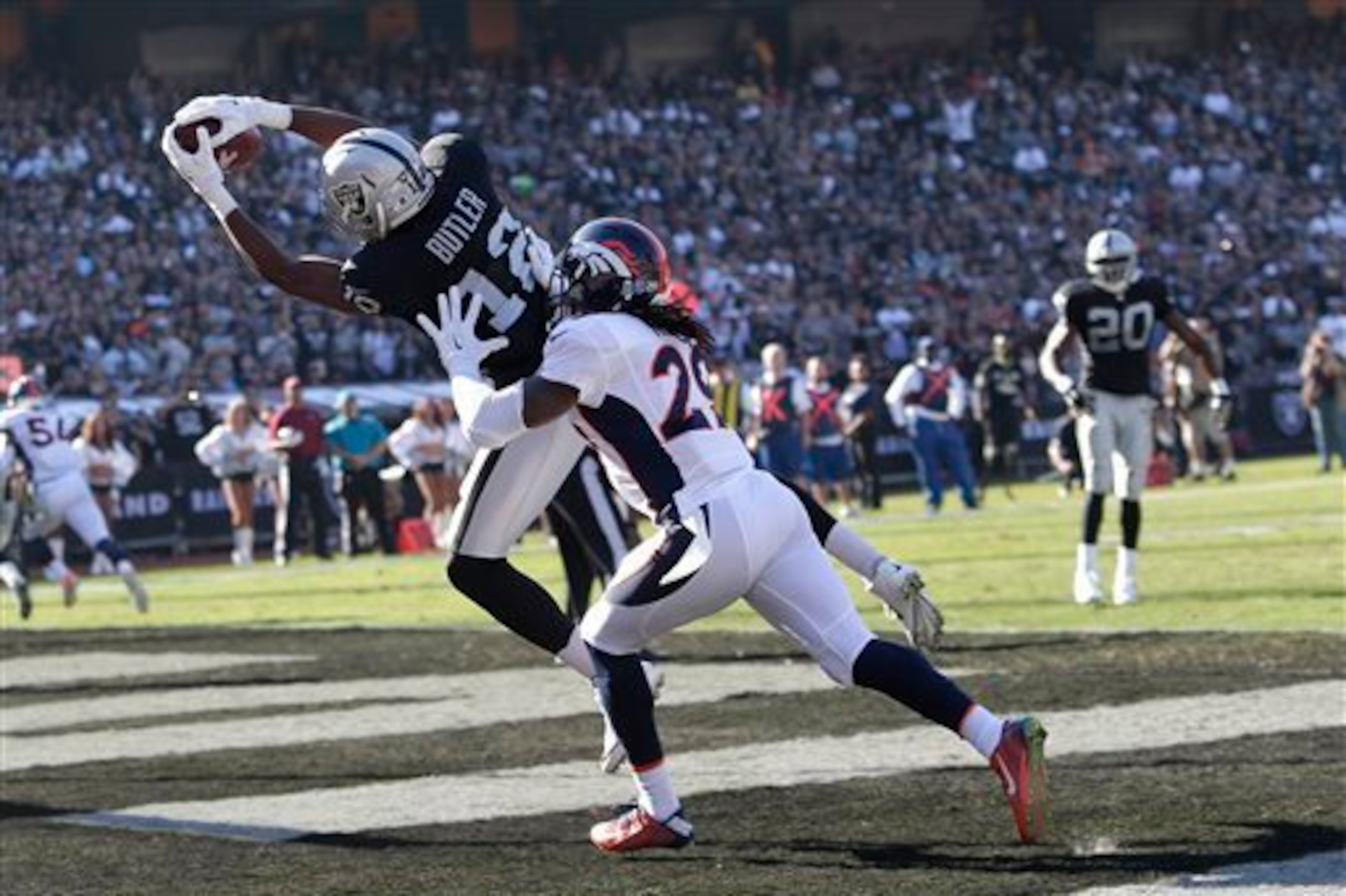
James Jones was Oakland's top wide receiver on Sunday. He had eight catches, but those resulted in only 20 yards, and 10 of those came on one reception. That means his other seven receptions went for an average of 1.4 yards.
There are a lot of ways to describe the performance of the receivers, but this stat line says it all. The unit was inefficient and a complete non-factor on Sunday.
The play-calling had a lot to do with it. Despite the offense not getting anything done, there was screen pass after screen pass to the receivers, none of which went anywhere.
But the fact remains that there's no receiver on the Oakland roster who is able to consistently get open downfield and make plays. Carr desperately needed help, and no receiver stepped up. Oakland's top receivers—Jones, Andre Holmes and Brice Butler—combined for only 32 receiving yards on 10 receptions.
Butler did have a touchdown catch in the second quarter, but it was from only five yards out. He had one catch for seven yards the rest of the game. Holmes ended the game without a catch on one target.
At this point, it has become obvious that the play-calling has done nothing to help the offense succeed. But this was a terrible game no matter how you look at it.
Grade: D-
Offensive Line
5 of 11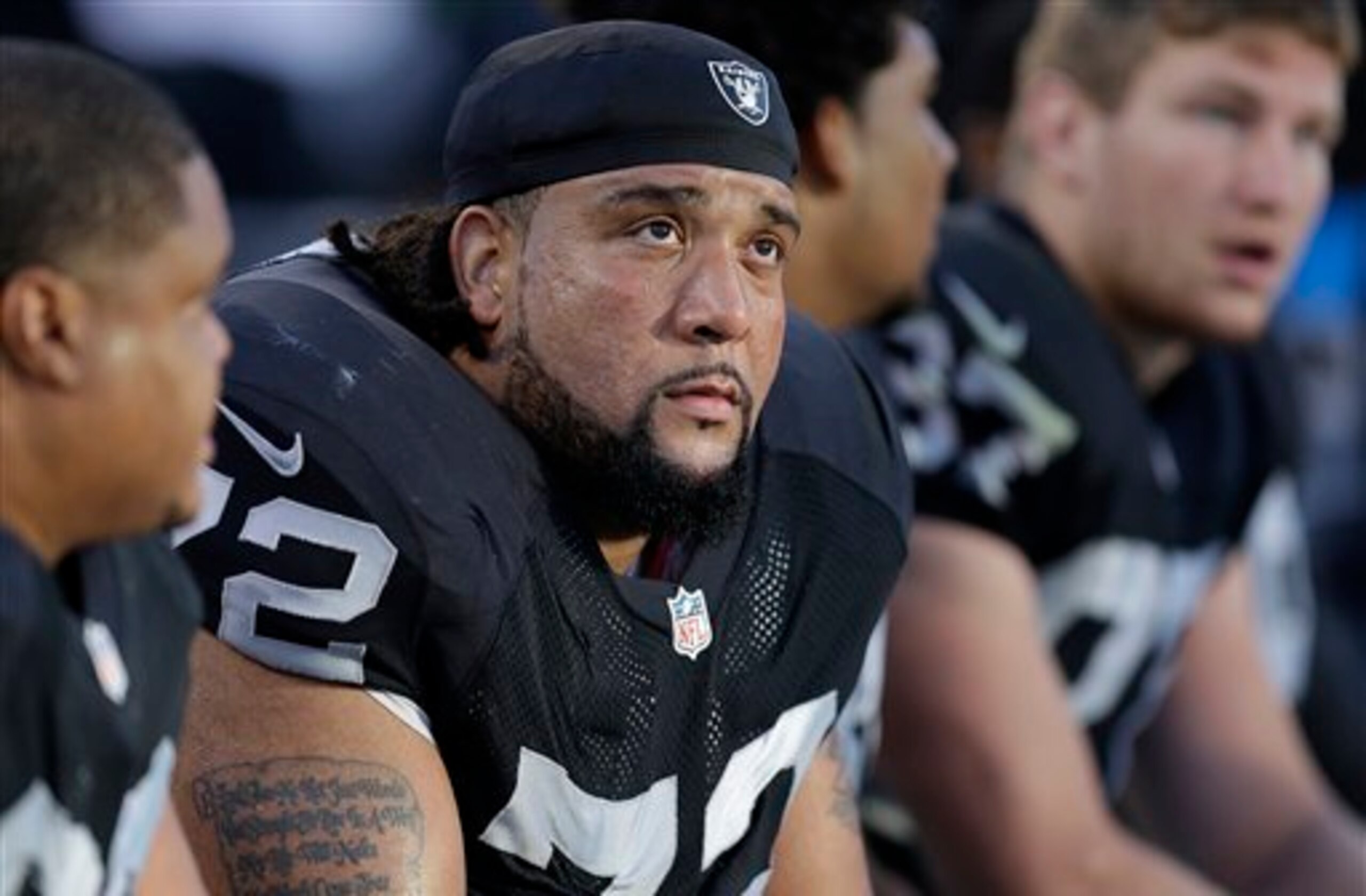
The offensive line had been one of the Raiders' most consistent and reliable units. But the group's performance has suffered a big drop-off as of late, including against the Broncos, and injuries haven't helped. The injury to Gabe Jackson forced Khalif Barnes to play left guard, leaving Menelik Watson to single-handedly hold down the right tackle spot. This has broken up the line's rhythm.
This was always going to be a big test against the Denver pass rush, which is one of the league's best. To account for this, the Raiders opened up with an obvious plan to get the ball out of Carr's hands quickly to reduce the pressure on the offensive line.
But this plan backfired as the offense was unable to get anything done. Once the team fell behind and Carr needed more time to look downfield, the offensive line really began to fall apart. Carr took some big hits, and he rarely had enough time to plant his feet and survey the field.
Somehow, the line didn't give up a sack, but that doesn't tell the real story. Carr was under pressure all game, and this had a huge impact on the Oakland passing game.
The running game continues to struggle, and the offensive line continues to be a part of it. It's difficult to pinpoint exactly why the rushing attack has been so bad, but a lack of running lanes is certainly a major factor.
Even on bad days, this group has still found some success. But on Sunday, all it did was try to survive, and it walked off the field with nothing to be happy about in its performance.
Grade: D
Defensive Line
6 of 11
For most of the first half, the defensive line was having its best game of the season. It was getting to the quarterback and disrupting the passing game. Manning operates with machine-like efficiency, and this production is based on rhythm.
The defensive line was able to disrupt this, and Justin Tuck was even able to come away with a tip-drill interception that set up Oakland's first touchdown. The Raiders were batting down passes and getting into the backfield. Manning was legitimately flustered early on.
But all of that good work went out the window with only a few minutes left in the second quarter when the defense gave up a 51-yard touchdown to C.J. Anderson. This swung the momentum in Denver's favor, and once that happened, it got ugly.
Manning had 11 incompletions prior to that play. He had two the rest of the game, and it was because the defensive line could no longer generate pressure. This drop in effectiveness also showed up in the run defense. the running lanes got bigger for Denver, and they finished with 118 yards on 27 carries.
The unit put up a good fight early, but it was eventually overwhelmed by an efficient offense and too much time on the field.
Grade: C-
Linebacker
7 of 11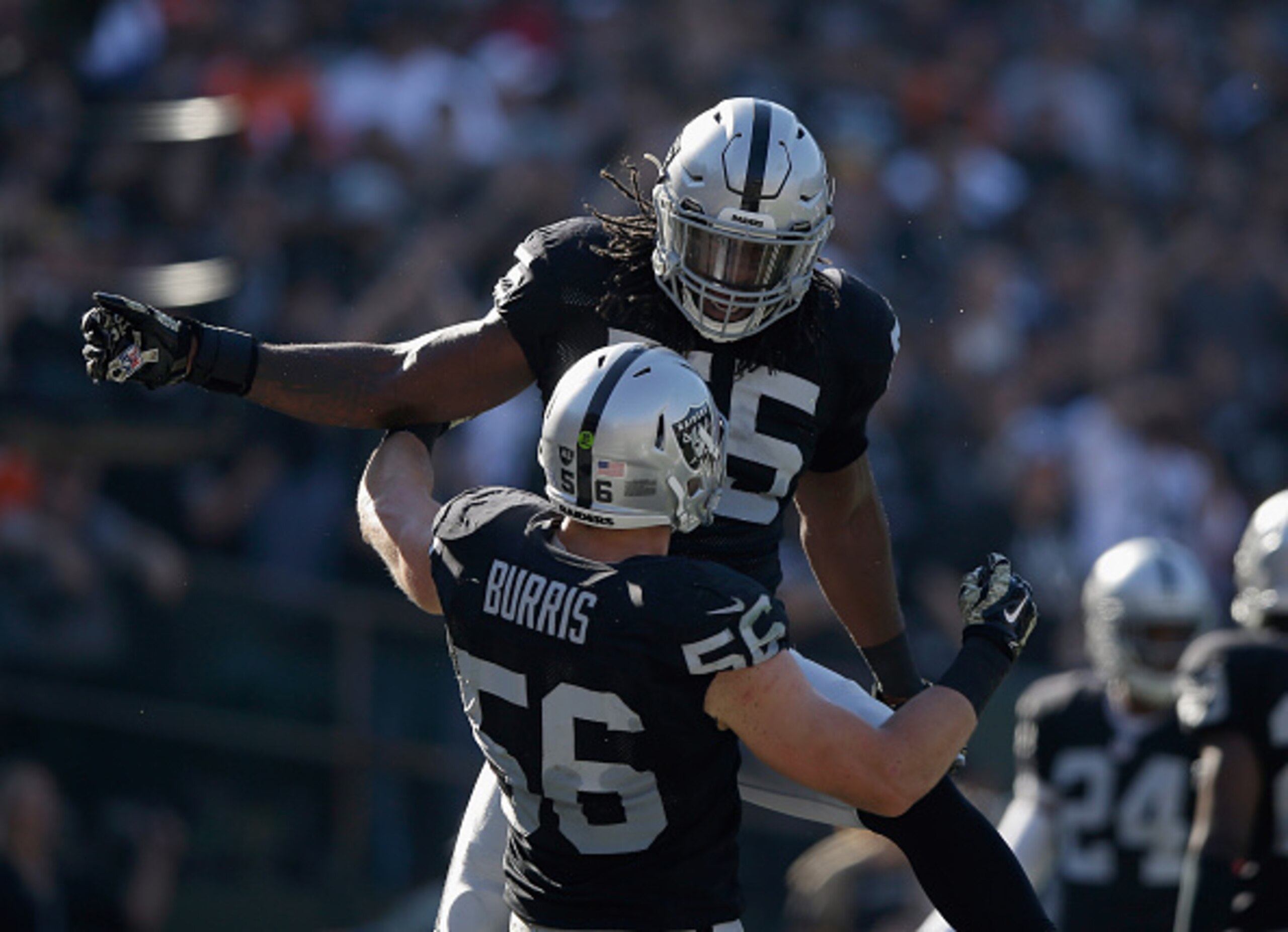
The linebackers had been Oakland's best unit this season, but they were mostly ineffective on Sunday.
Khalil Mack had the most unproductive game of his rookie year, finishing with only one tackle. He didn't play poorly, but he also didn't make an impact.
Sio Moore had seven tackles, and Miles Burris finished with six. Both provided the type of play that we've come to expect. Moore was active as usual, constantly finding himself near the ball. Burris, on the other hand, had the same type of enigmatic, unreliable performance he's had all season. On some plays, he's an aggressive, sound tackler. On others, he's missing seemingly easy tackles that lead to big plays.
No defensive group had as quiet a day as the linebackers, and their lack of experience was evident against Manning. They never seemed to figure out how to make an impact, and they eventually broke under the efficiency of the Denver offense.
Grade: D+
Secondary
8 of 11
The secondary is short on talent. Despite that, it has fought all season, and early on against the Broncos, it seemed like it might finally have a good game. But late in the first half, it succumbed to the swing in momentum just like the rest of the defense.
Undermanned even at full strength, the secondary had to deal with injuries to Carlos Rogers and T.J. Carrie, two of the team's top three corners. While it took almost a half for Manning to figure it out, he eventually did. He then spent the rest of the afternoon picking the secondary apart.
To make matters worse, D.J. Hayden left the game with an injury. He was having a very good game in coverage, coming up with an interception and almost adding another one. But now the team is left to wonder how long he'll be out.
The Oakland secondary is one of the weakest in the NFL, and it was always going to be a long day against Manning. The group should be given credit for the valiant fight it put up, but the eventual result was what most expected.
Grade: D+
Special Teams
9 of 11
Marquette King continues to be Oakland's MVP of 2014. In a season full of busy days, King had his busiest, finishing with nine punts. He didn't have a great day, but he was effective enough, averaging 43.2 yards per attempt. He didn't drop any inside the 20, but he kicked most often from deep in his own territory.
Sebastian Janikowski had another uneventful day. He was good on a field goal and an extra point in the first half, then he didn't see the field again until there was less than a minute to go in the game.
King's activity and Janikowski's lack of opportunities are a testament to just how ineffective the Oakland offense has been.
Coverage teams gave up some extra yards that the Raiders couldn't afford. Denver had only one kick return, but it went for 30 yards. On four punt returns, Denver averaged 13 yards.
Overall, it was a quiet day for Oakland's special teams. No big plays, no major mistakes.
Grade: C
Coaching
10 of 11
Just like this was a tale of two halves for Oakland, it was also a tale of two coaches. Defensive coordinator Jason Tarver has gotten this defense to play better than the talent would suggest it's capable of. Offensive coordinator Greg Olson, on the other hand, sometimes seems as if he's never watched football.
That might be a bit harsh, but it's hard to defend Olson when you look at the numbers. The offense has struggled all season, and it's getting worse as the season progresses. Any success it has seems to be in spite of him. How many times can an offensive coordinator call the same plays that don't work? I don't know the answer, but it seems Olson is determined to show us.
Tarver, on the other hand, needs to be given credit for the job he's done. Not only has the talent not improved on defense, it's actually been reduced because of injuries. Yet the defense has steadily improved all season.
It's the defense that's kept Oakland in games, including last week, and it's the reason Oakland had an early lead. The problems come from the fact that the offense has done nothing to help the cause. Once again, Oakland lost the time-of-possession battle. The defense can only hold on for so long.
Until the offense does something, we're going to keep seeing the same pattern: The defense will be strong early, but it'll eventually be overwhelmed. It's happened all season, and it happened again against Denver.
This isn't to say that the Raiders defense is great. On its best days, it manages to be effective. But it's certainly been the better of the two groups, and it's not even close.
It falls on Tony Sparano to bridge this gap in performance. He himself has said that for the Raiders to get their first win, all three phases of the team have to play well at the same time. Since he took over as interim head coach, special teams and the defense have improved, but the offense has to regress.
This grade is an average of the underrated job Tarver is doing, the mess that Olson has created and Sparano's inability to get the the team to improve across the board.
Grade: D+
Final Grades
11 of 11
| Positional Unit | Overall Grade |
| QB | D- |
| RB | F |
| TE | C+ |
| WR | D- |
| OL | D |
| DL | C- |
| LB | D+ |
| Secondary | D+ |
| Special Teams | C |
| Coaches | D+ |
| Cumulative Grade | D |
As I mentioned at the beginning, defensive groups and special teams got a bit of a bump in their grade. Even good defenses would struggle under these conditions, and this isn't a good defense. On its best days, it's okay. It's too under-talented across the board to sustain success over four quarters. Add too much time on the field due to an inept offense, and it's going to break every time.
The final score of 41-17 suggests a failing grade, but there has to be some allowance for how well the defense played in the first half.
No one expected Oakland to win this game. It was a stretch to think that Oakland would keep it close. The game turned out as was expected, but that didn't make it any easier to watch, nor does it help the team.
Special teams have been solid, and the defense has really improved. The one unit holding the team back and keeping it from its first victory of the season is the offense.
The offense can't get first downs and stay on field, much less score enough points to win. It simply doesn't work. Until this unit gets a lot better, the losses are going to keep piling up.
Sparano and Olson have until next Sunday to try to figure something out.
Unless otherwise noted, all stats taken from ESPN.com.
Share your thoughts and opinions on Twitter @BrianJ_Flores.
.jpg?w=2560 "Seahawks Cardinals Football")
.jpg?w=2560 "Commanders Cowboys Football")