Michael Vick Flashes Talent in Win, but Won't Be Enough to Save Jets' Season
New York Jets starting quarterback Michael Vick played a key role in his team's surprise victory over the Pittsburgh Steelers this weekend.
Vick completed just 10 of 18 passes for 132 yards, two touchdowns and zero interceptions. He also added eight rushing attempts for 39 yards. While his offensive output wasn't huge, Vick was able to make enough key plays to help the Jets to a 20-13 victory.
The Jets scored 17 of their 20 points in the first half, as offensive coordinator Marty Mornhinweg was able to keep the Steelers defense off balance with his inventive play-calling. Mornhinweg established a run-heavy offense that relied on misdirection while creating easy throws for Vick.
.jpg?w=2560 "Chargers Mack")
.jpg?w=2560 "Green Bay Steelers Football")
.jpg?w=2560 "Giants Football")
Percy Harvin and Chris Ivory played important roles, giving the offense an outside threat and inside bruiser to constantly pull the defense in different directions.
On their first possession, the Jets sustained a long drive by managing situations and incrementally moving the football down the field. Ivory and Harvin combined to set the offense up in the red zone, but then Vick was asked to finish it off:
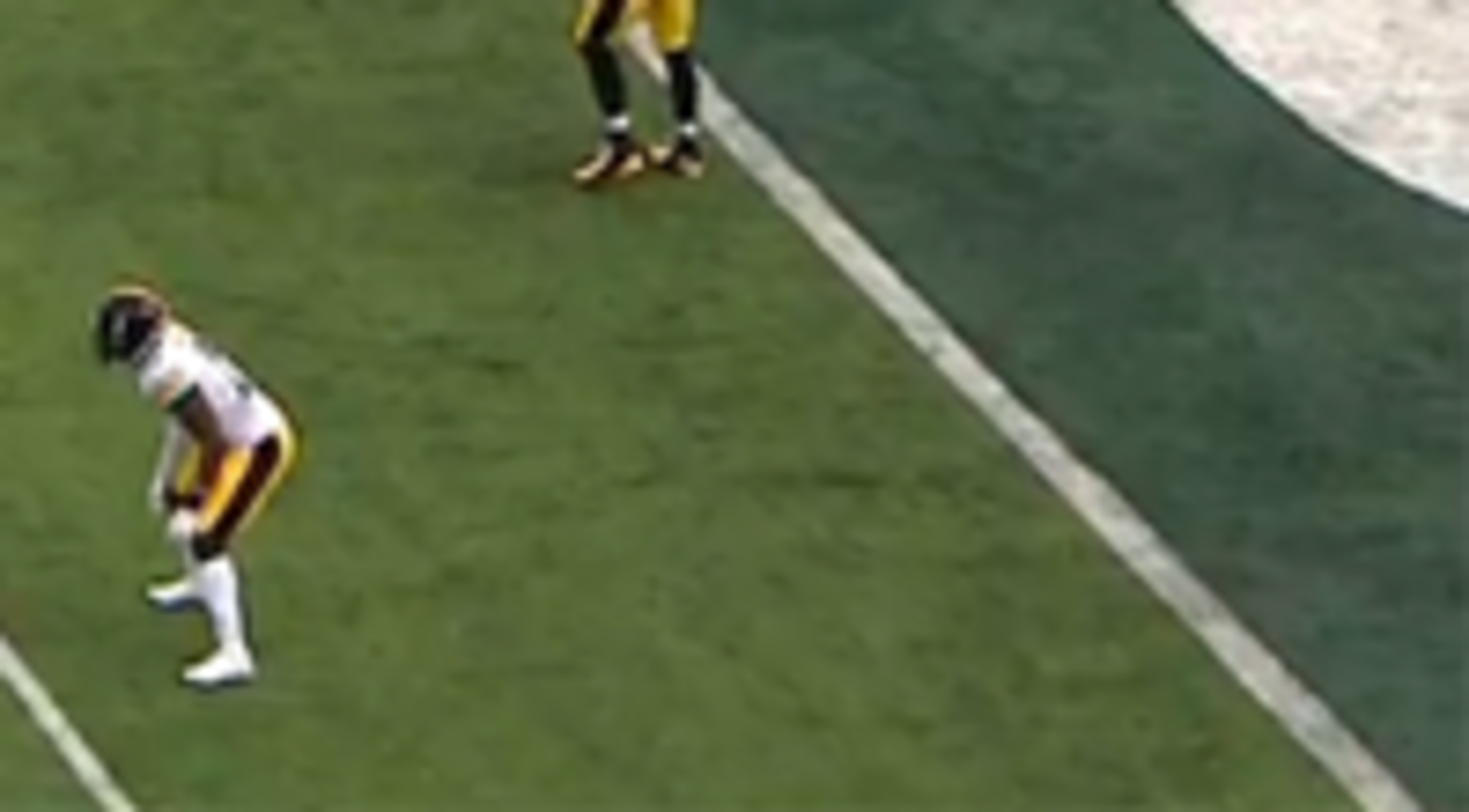
On 2nd-and-goal at the 5-yard line, the Jets put Vick in the pistol formation with Chris Ivory behind him and defensive tackle Sheldon Richardson alongside him. With Harvin motioning inward at the top of the screen, all the hints of this play suggest a run.
Harvin had run a fake end around on the play before—and also opened the drive with an end around—so his movement was important to note:
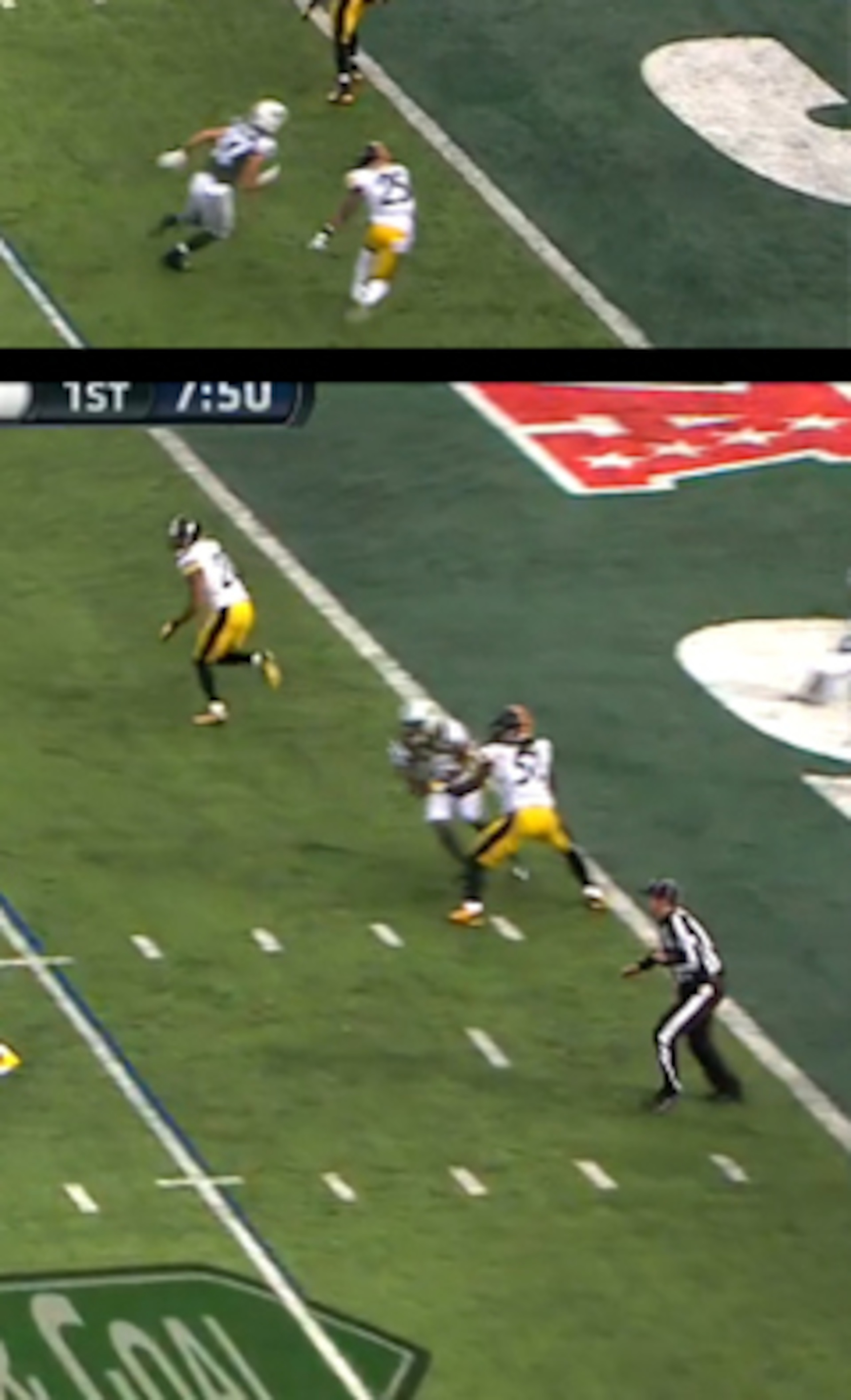
Despite the indications before the snap, the Jets are actually running a play fake, and the Steelers defend it well. Vick is faced with James Harrison in his face as soon as he turns around. He uses his athleticism to escape outside, but he is met with another defender there.
Vick skips past that defender, but he never had a chance to find a receiver down the field; he wasn't helped by the fact that Sheldon Richardson was one of those receivers.
Ultimately, Vick had no choice but to run the ball and he was held to no gain on the play. The Steelers defended this play very well and Vick was able to avoid a sack on two occasions, so even though he didn't score, it shouldn't be considered a negative play.
The negative play would come on third down:
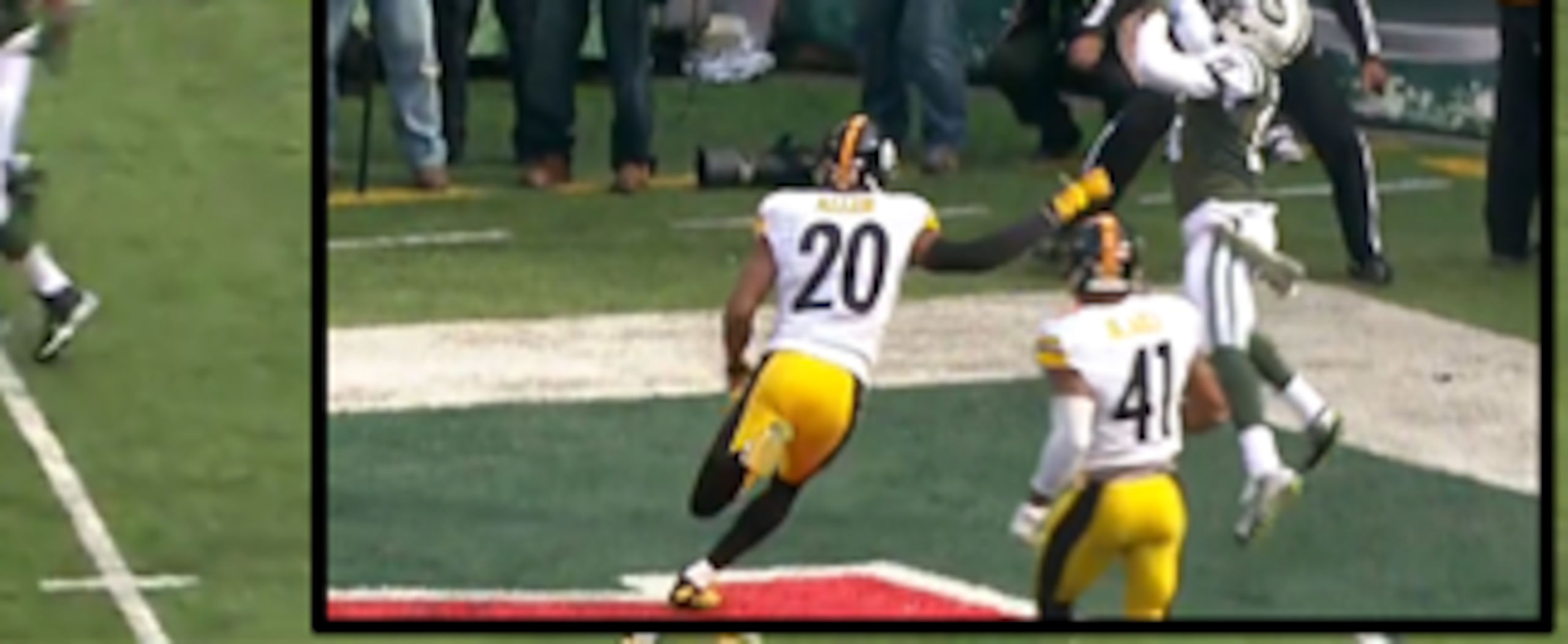
On third down, the Jets rolled the pocket to the left, giving Vick a comfortable amount of space to survey the coverage and throw the ball. The Jets kept three receivers together on that side of the field, which led to Jeremy Kerley coming free at the back pylon.
While Kerley was open and Vick located him, his pass was slightly too far out of his receiver's reach.
This missed connection could be chalked up to Kerley being too small or Vick simply being slightly off target because he was throwing on the move, but realistically, Vick threw the ball too hard. He didn't need to force the ball into a tight window. He simply needed to not throw a floater that would give the defense time to recover.
Although Vick failed to control the velocity of his pass on this occasion, his next one was inch-perfect:

The Jets defense forced the Steelers to punt after a relatively short drive. That set up the offense on their own 33-yard line. Having already run the ball down the defense's throat for much of the first drive, the Jets came out in a run-heavy formation with just one wide receiver.
Importantly, that receiver was speedster T.J. Graham rather than Harvin or Eric Decker:

Like they did on second down in the red zone on the previous drive, the Jets run play action from this run-inclined look. This time the play action works perfectly, as free safety Mike Mitchell completely evacuates his assignment in the middle of the field.
This allows Graham to run past the cornerback's inside shoulder and toward space down the middle of the field.
Vick perfectly drops the pass over the defender and into the lap of his receiver. From there, Graham breaks free as defenders collide with him at the catch point before running the ball into the end zone for the touchdown.
Throughout his career, Vick has always had outstanding arm talent. At times he shows an inability to control the strength and trajectory of the ball, but when he does get it right, he can throw perfect passes such as this one.
At such an early stage of the game, this was a crucial play. It gave the Jets a 10-point lead over a team that didn't really match up well against the Jets defense.
Despite Ben Roethlisberger's recent explosion, he was constantly under pressure from the Jets defense. That is because the Jets had a matchup advantage on the line of scrimmage, as well as Rex Ryan's intelligent use of the three-man rush to dupe Roethlisberger into poor decisions at times.
Before the end of the first quarter, Vick would find the end zone again.
Most of the tough work was done for him by the Jets defense on this occasion, as an Antonio Brown fumble gave the Jets offense the ball at the Steelers 21-yard line. After showing off his arm talent on the previous drive, Vick showed off his lower body athleticism on this play with an 18-yard scramble.
That 18-yard scramble ultimately led to a five-yard touchdown pass:
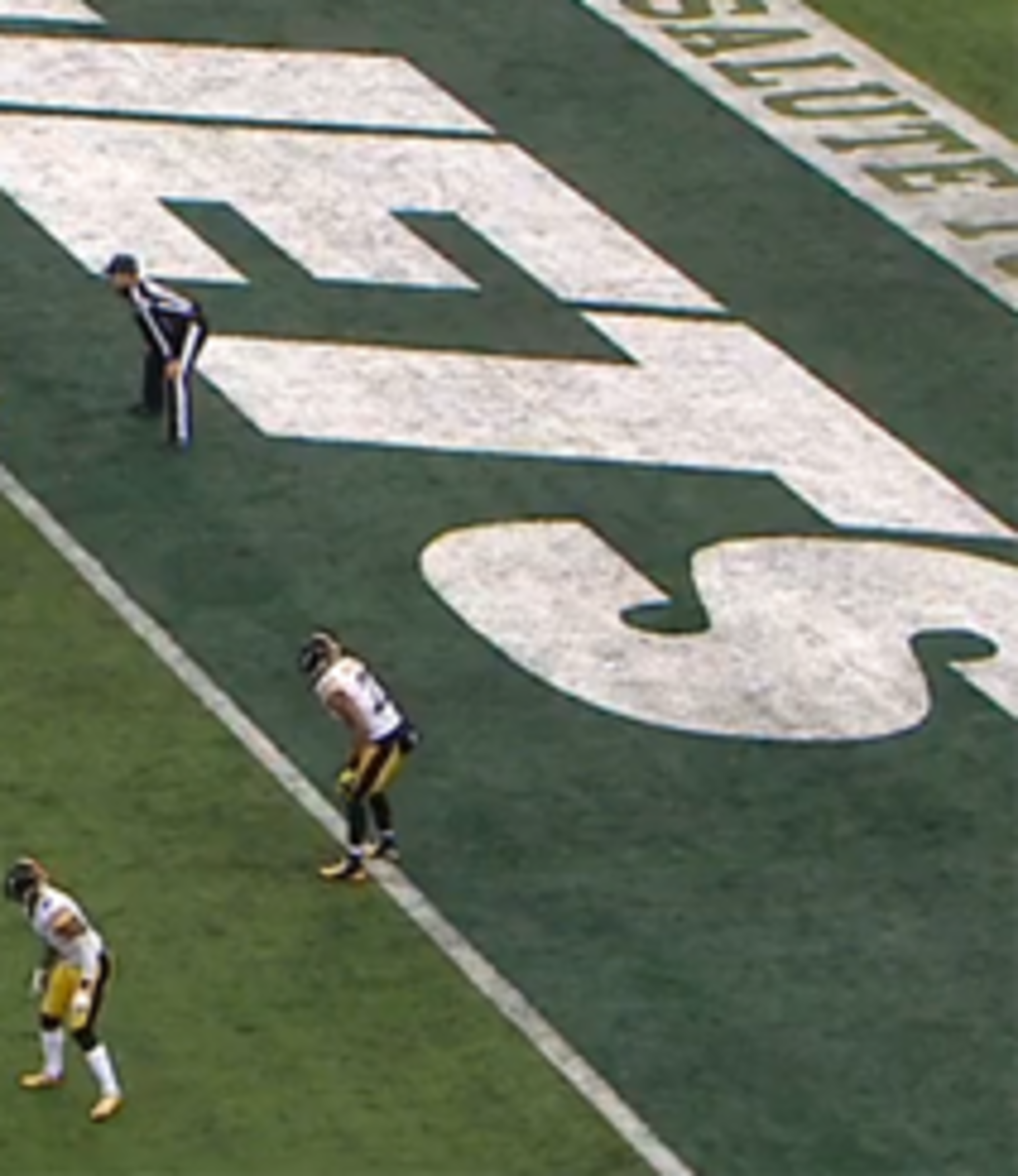
On this occasion, the Jets didn't run a play fake or even come out in a run-heavy formation. Instead, they did the opposite, spreading the field with Vick alone in the shotgun. Vick's presence, of course, is a rushing threat on its own, so the Steelers would likely still be accounting for a designed run:
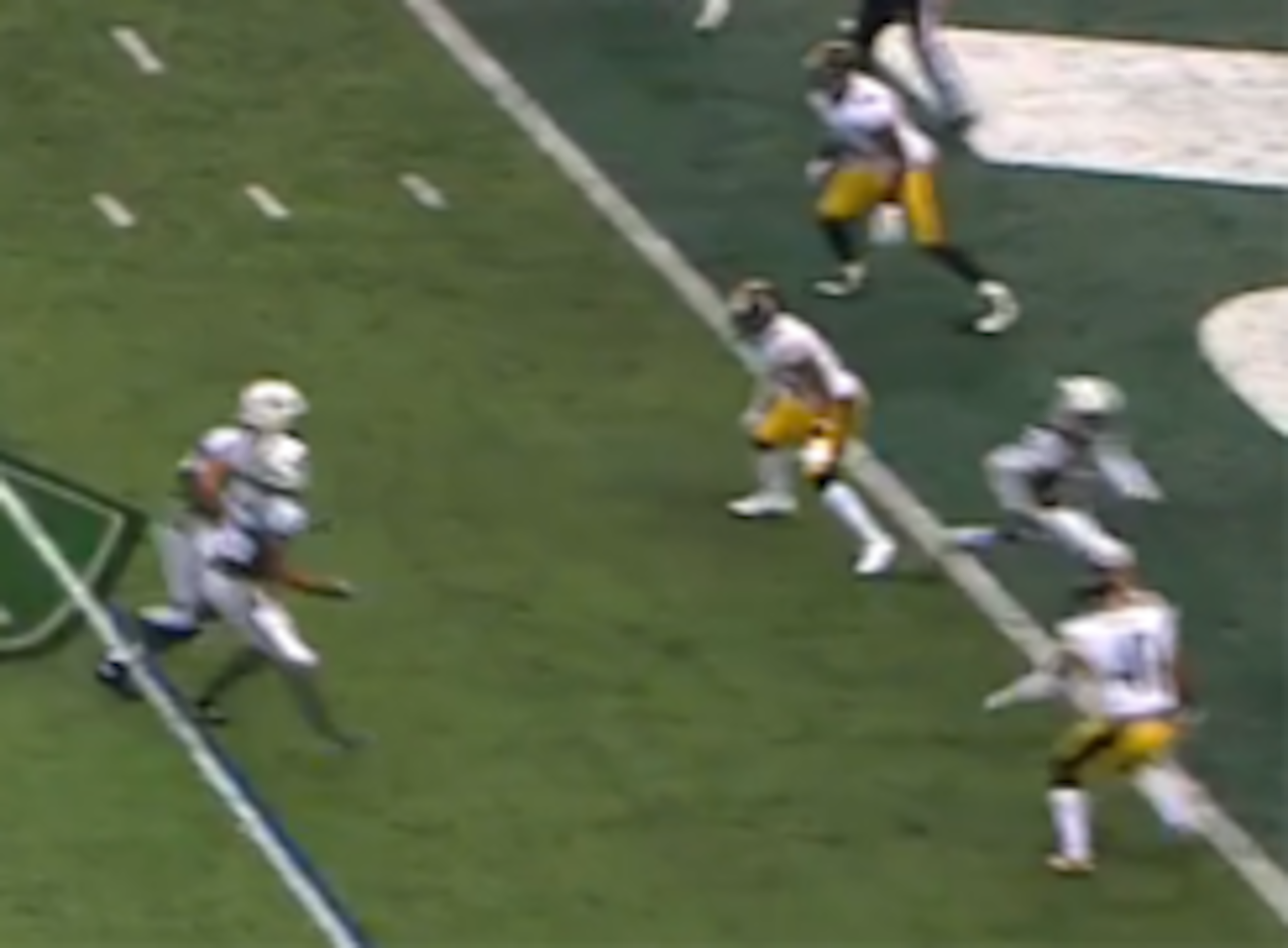
A trend in the NFL has developed this year that sees red-zone defenses rush just three defensive linemen while playing zone coverage behind. On this play, the Steelers rush three, but they initially start with just two as Brett Keisel chips a receiver before turning toward the pocket.
To counter this type of play, the quarterback needs to hold onto the ball to give his receivers time to find space:
That is what Vick did. He set himself in the pocket once, before resetting himself while keeping his eyes downfield. This is the type of play that Vick hasn't made consistently throughout his career, but on this occasion he worked the coverage perfectly to find tight end Jace Amaro in the back of the end zone.
Vick's pass on this occasion was accurate.
By the end of the first quarter, the Jets had scored 17 points and Vick had accumulated 113 of his 171 total yards. Most of those yards came on a handful of plays as well, meaning that for much of the game Vick was simply a complementary piece of an offense that struggled after a hot start.
If the Jets hadn't held onto this victory, Vick would likely be receiving a lot of criticism for his inability to move the offense down the field on a consistent basis. He was also very fortunate not to lose a fumble in the second quarter that would have set the Steelers up deep in Jets territory.
The officials appeared to decide it wasn't a fumble because the Steelers didn't immediately recover it after the whistle.
As a whole, the Jets offense was effective enough to win Sunday, and that's all that really matters for this game in a vacuum. However, the improved play of the unit wasn't a result of Vick's presence on the field. Instead, it was a combination of Mornhinweg's usage of his weapons and the quality of the Steelers defense.
Vick is coming to the end of his career. While he still has his physical talent, his ability to lead an offense moving forward should still be questioned.
Even though Geno Smith struggled significantly at times this season, it still makes little sense for the Jets, at 2-8, to be playing Vick ahead of him. Despite Smith's strong finish to his rookie season and his very impressive play in the preseason, it appears that the Jets simply don't trust the young quarterback.
While his interception numbers would suggest they are right to do that, the offense around Smith consistently gave him no help, which is something that can't be said for Vick in this game.
Furthermore, NFL Network's Ian Rapoport reported that the Jets were managing Smith in such a way that is both bizarre and disconcerting, directing his progressions and even telling him to force the ball to a specific receiver at times.
No quarterback would be effective in that kind of role, but especially not a pocket passer such as Smith. It's a better strategy for a limited passer who is an excellent athlete such as Vick, but on the whole it's a losing strategy.
Because of their record, there is no short-term gain to starting Vick over Smith. Because of Vick's age, there is no long-term gain either. Based on information provided by Rapoport, it appears that the Jets' current staff are guaranteed to return if they avoid embarrassing themselves over the coming weeks.
Maybe Vick can help them do that, but it doesn't seem like a smart decision by any normal measure.
.jpg?w=2560 "Seahawks Cardinals Football")
.jpg?w=2560 "Commanders Cowboys Football")