
Texas Football: The 5 Most Telling Stats for the Longhorns This Season
Despite their 4-5 record, the Texas Longhorns remain a team ripe with potential. But as the stats show, it's tough to expect much more down the stretch thanks to their mistake-prone ways.
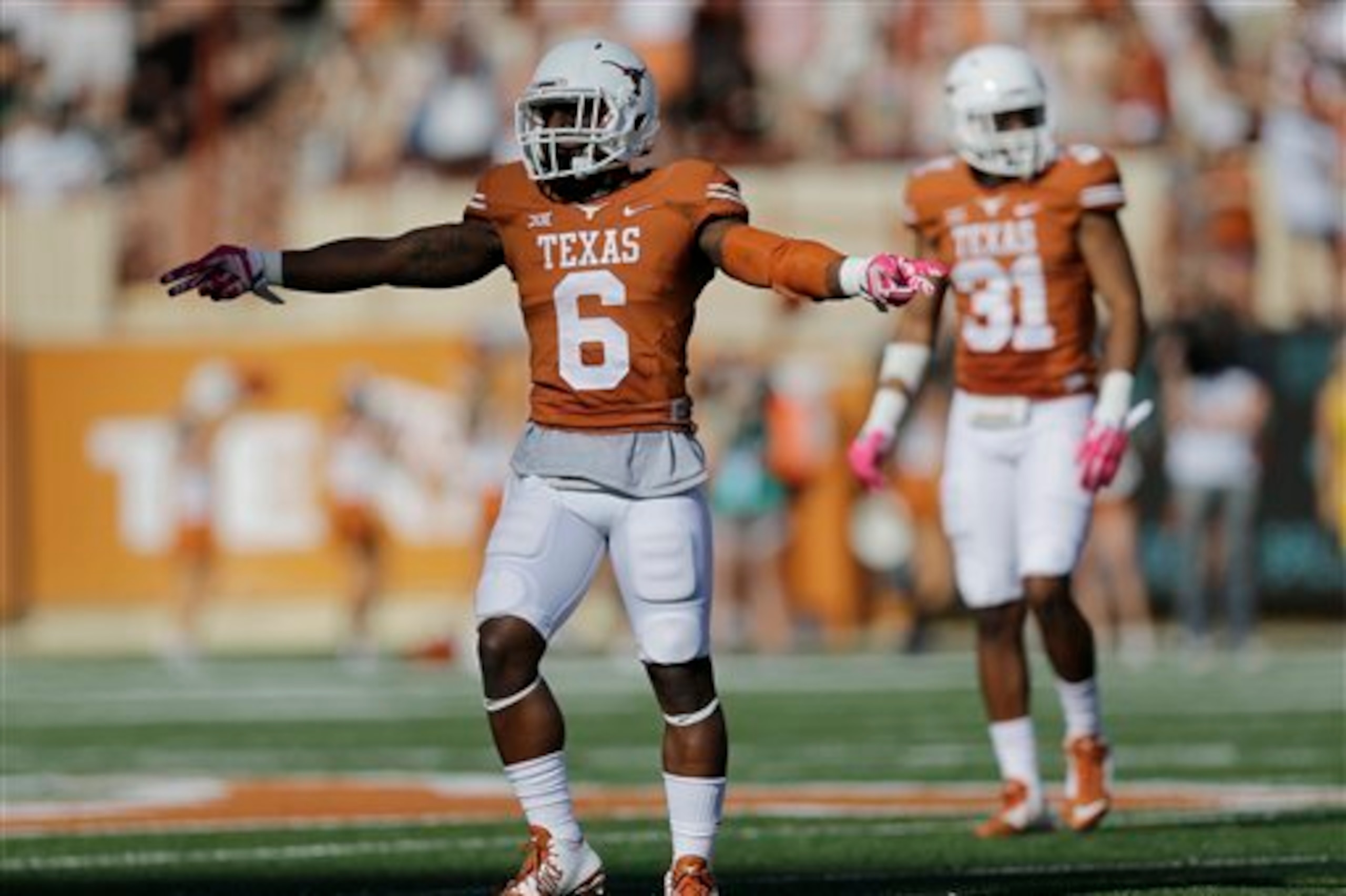
The fact is that the Longhorn defense has gotten it done all season, especially against the pass. This unit's yards-per-attempt figure ranks among the best in the nation, which is amazing given the talent level of the Big 12 passing attacks.
Unfortunately, the offense remains stuck in the mud because of too many mistakes with the ball, poor conversion rates and a passing attack that remains overly focused on two playmakers.
5.6
1 of 4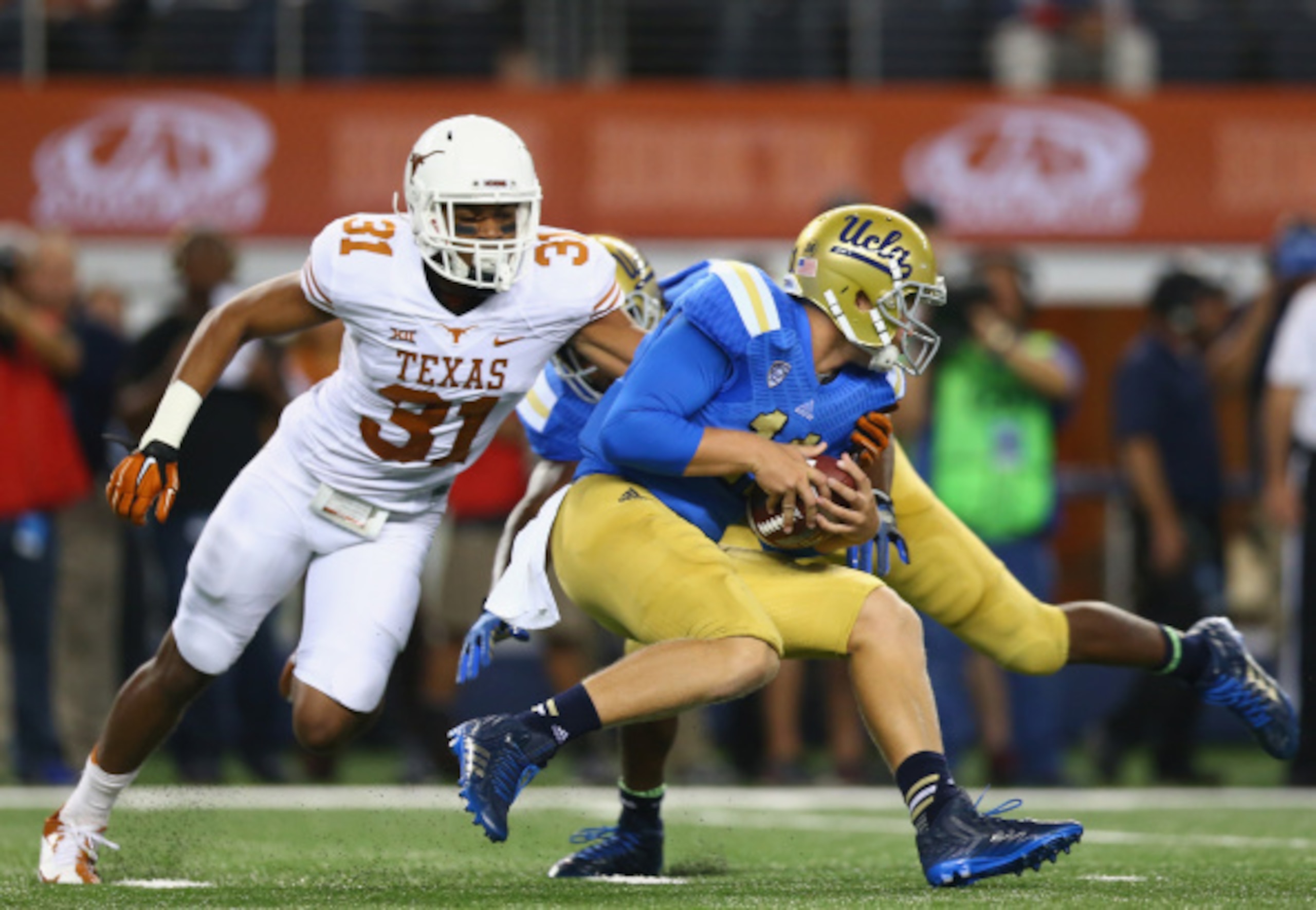
We'll start this off with a stat that tells us just how good the Horns would be with more consistent offensive play, because when you allow just 5.6 yards per pass in the Big 12, you're doing a lot right.
Even with matchups against Baylor and Oklahoma already in the books, Texas is allowing a Big 12-best 5.6 yards per attempt, which is also good for fourth in the nation according to CFBStats.com.
The pass rush deserves a lot of credit in recording 27 sacks, but it's Chris Vaughn's secondary that has truly exceeded expectations. The first-year defensive backs coach has led this team to 12 interceptions and 32 pass breakups while starting former walk-on Dylan Haines and true freshman Jason Hall, who barely ranked among the top 1,000 recruits in 2014 per 247Sports.
And that's with Quandre Diggs only contributing two picks and three broken passes to the cause, although your eyes should tell you that teams are avoiding him like the plague.
Don't wait around for this group to buckle on Saturday against West Virginia, and we should all hope we get to see Diggs and All-American candidate Kevin White do battle on the outside.
11 (16)
2 of 4
From here the numbers are less pretty, starting with Texas' absurdly high number of lost fumbles on the season.
Through nine games, the Horns have lost a ridiculous 11 of their 16 fumbles, which is tied with six other teams for 115th in the nation.
The issue isn't so much ball security as it is mental errors. There have been bad snaps at the goal line, others that went over the quarterback's head, bad handoffs and whatever it was Tyrone Swoopes did near Texas' own end zone against Texas Tech.
"Swoopes tries to avoid sack and throw, fumbles. Texas Tech recovers for a touchdown.
"
It's one thing to make a mistake. It's another to make mistakes that result in the other team getting the ball, and those are the ones Texas has made all year.
33% and 76%
3 of 4
We grouped third-down and red-zone conversions because they're pretty strong indicators of how well a team is executing. You're either picking up meaningful yards on the early downs or struggling to sustain drives. You're finishing inside the 20 or stalling on the shortened field.
In both cases, Texas falls into the latter category, which is unfortunate because the defense has done its part. The Longhorns convert just 33 percent of their third downs, "good" for No. 108 in the nation, and score on just 77 percent of their red-zone trips, which also ranks in the bottom 25 nationally.
For reference, No. 2 Florida State, No. 3 Auburn and No. 9 Kansas State are all above 47 and 91 percent in these respective categories.
On the bright side, the Longhorns have been better than horrible at turning red-zone opportunities into touchdowns, hitting pay dirt over 66 percent of the time according to CFBStats.com. It's a middling number, but far better than what you would expect from the overall scoring figure.
This tells us that the Longhorns aren't settling for field goals but rather are ruining quality drives with ill-timed errors. Go figure.
.jpg?w=2560)

.jpg?w=2560 "Election 2024 Julie Pace Column")
69%
4 of 4
As much credit as quarterbacks coach Shawn Watson deserves for bringing along Tyrone Swoopes, he still has some work to do when it comes to diversifying Swoopes' offensive attack.
Texas has been pretty predictable on offense, and the numbers show it. The Horns have kept with a steady diet of Malcolm Brown and Johnathan Gray, with Swoopes contributing on the ground as well, but Texas' passing attack is almost strictly limited to two players.
Thus far, John Harris and Jaxon Shipley have accounted for 69 percent of Texas' receiving yardage, with only Marcus Johnson sitting within 250 yards of either. You stop these two, which Kansas State did in a 23-0 blowout, and the offense goes haywire.
The fact is that this offensive line, which still doesn't have a single regular starter from 2013, is never going to dominate the line of scrimmage. That means the offense has to manufacture touches for its weapons and get more from its third, fourth and even fifth options in the passing game.
When you have Daje Johnson and Armanti Foreman on the roster, that shouldn't be a difficult thing to do.
Unless otherwise noted, all stats and info courtesy of TexasSports.com and NCAA Football Statistics.