Which Minnesota Timberwolves Youngster Has Steepest NBA Learning Curve?

It's not about the Ws for the Minnesota Timberwolves in 2014-15. Not after trading Kevin Love for a teenager and a sophomore who stunk as a rookie.
This season, it's all about the youngsters on the squad, and the Wolves have a bunch who could eventually be pretty good.
But they're each looking at different learning curves based on specific strengths, weaknesses and qualities such as skill level, basketball IQ and youth.
TOP NEWS
Jaylen Brown Calls Out Tatum 🧢
LeBron on President Trump's Criticism
Knicks Staff Didn't Get Rings 🤔
Let's take a look at the Wolves' four most promising prospects and break down where they're at in their development, as well as how long it could take for each of them to eventually hit their NBA stride.
Zach LaVine, Shooting Guard, 19 years old
LaVine is probably the furthest away from being able to impact an NBA game. Just 19 years old, LaVine came off the bench last year for UCLA, where he played just 24.4 minutes and was used in only 20.1 percent of his team's possessions.
In other words, he's got very few playmaking reps under his belt.
LaVine projects as a microwave-type scorer—a guy who can heat up fast and put up points in bunches, a spark who can generate offense on demand when he's found his offensive zone, whether he's knocking down shots off the ball or in isolation.
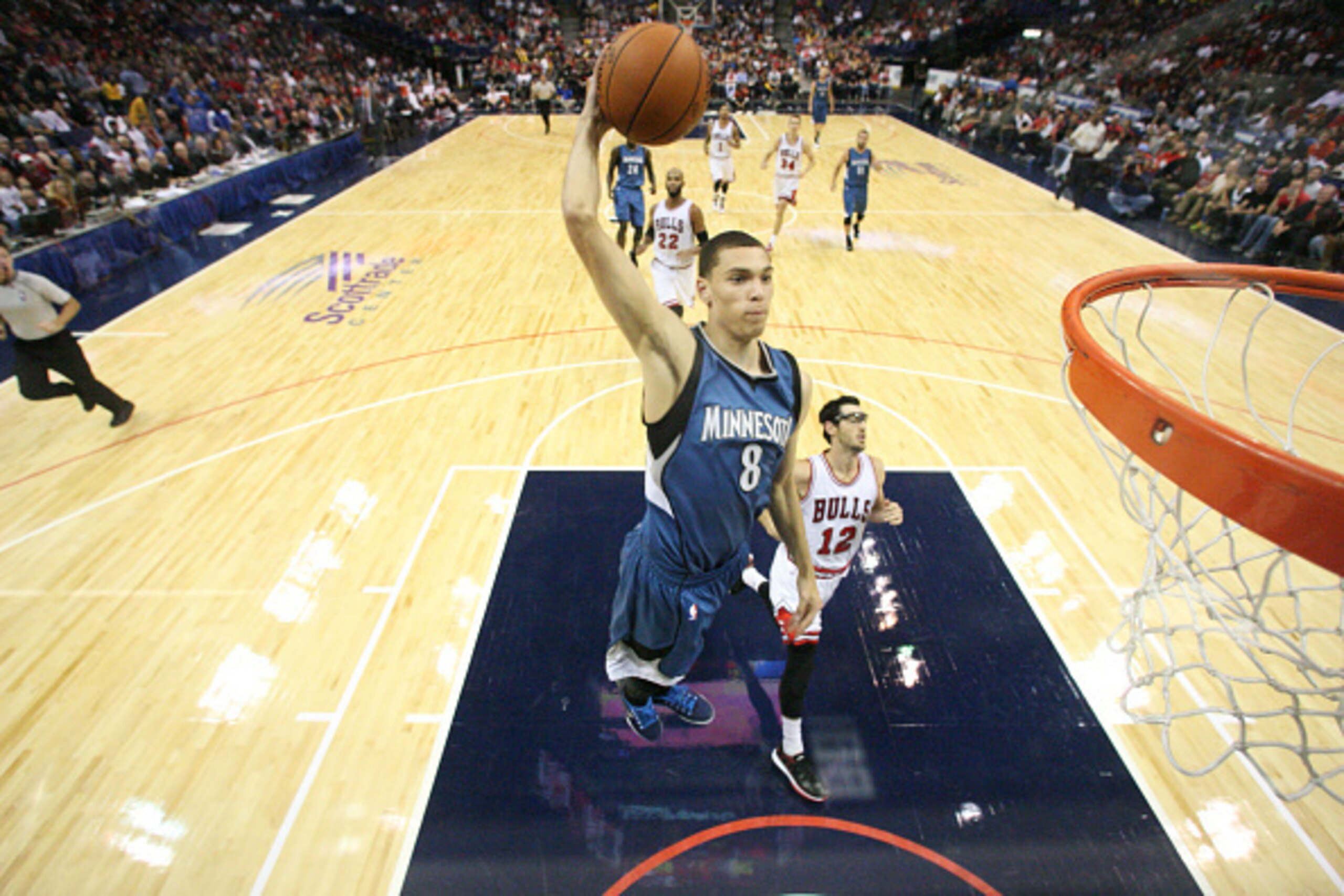
But his particular style of play almost always results in inefficiency, given the difficult shot selection that comes with a reliance on athleticism.
LaVine rarely gets to and finishes at the rim off a drive. He made just 17 shots total there in the half court in 37 college games last year, per DraftExpress' Jonathan Givony. And he doesn't turn those drives into free throws either—he averaged less than two attempts at the line per game as well.
Weighing in around 180 pounds, LaVine's trouble with contact in the attack game aren't likely to go away anytime soon now that he's in the pros.
And for the time being, it's probably going to limit him to low-percentage shots—off balance ones in traffic around the rim and step-back or pull-up jumpers on the perimeter.
At this point, LaVine is capable from outside, but not really accurate or consistent enough for a coach to rely on him for routine shot-making off the ball.
And you can forget about any dreams of LaVine running the point in the near or distant future. His seven assists to 17 turnovers in preseason should have been a reminder that his decision-making skills with the ball can get ugly.
Early on, LaVine doesn't exactly project favorably at the defensive end either, where he was more of a liability than an asset last year against Pac-12 competition.
Many would have expected LaVine to be entering his sophomore year in college right now. Instead, having taken the one-and-done route, he'll likely spend most of this season on the bench or in the D-League. And that's fine. He might even be better off developing in the NBA than he would be in college.
But this is gonna take a while. LaVine has a lot to improve on and tweak before showing coach Flip Saunders he's ready to contribute.
| NBA Ceiling | First Impact Year | Big Breakout Year | Chances of Big Breakout | |
| Starter/Sixth Man | 2017-18 | 2019-2020 | 50 Percent |
Andrew Wiggins, Shooting Guard/Small Forward, 19 years old
At 19 years old around 200 pounds, Wiggins' No. 1 overall label won't mean much in 2014-15.
Most of the magic we're going to see from Wiggins will likely happen in sporadic spurts and flashes. And most of those flashes will be powered by his spectacular athletic ability, specifically that lightning first step, explosive last step and quick second jump.
Transition, slashes, offensive putbacks, backdoor lobs—Wiggins is at his best when he can make a play that doesn't require him to create or put it on the deck.
He gave us a perfect example the other night—Wiggins received the ball on the wing, and within a blink of an eye, he had exploded off the floor and up toward the rim for an and-one finish.
Wiggins should be able to pick up some easy points just off blow-by line drives alone. He doesn't need much of a handle for those—just the jets and an aggressive mentality.
While playing off the ball, he's also proven to be a capable spot-up shooter. Don't expect much consistency just yet, but Wiggins has legitimate shot-making range and the ability to convert in bunches.
One-on-one, he's got all the speciality shots in the arsenal—spot-ups, pull-ups, turnaround jumpers, floaters off spins. The goal for Wiggins is to one day be able to create and make these specialty shots as a go-to option on an every-game basis.
At this point in his development, it doesn't appear coach Saunders trusts Wiggins enough to call his number as a top option in the offense. Chances are Wiggins continues operating in an off-ball complementary role that allows him to play to his strengths as a catch-and-slasher and set shooter.
But just wait until later this year when the Timberwolves have 35 games left and no shot at the playoffs. I'd expect Wiggins' role and ultimately his confidence to increase as the season progresses, with year No. 2 likely to be much bigger for him offensively.
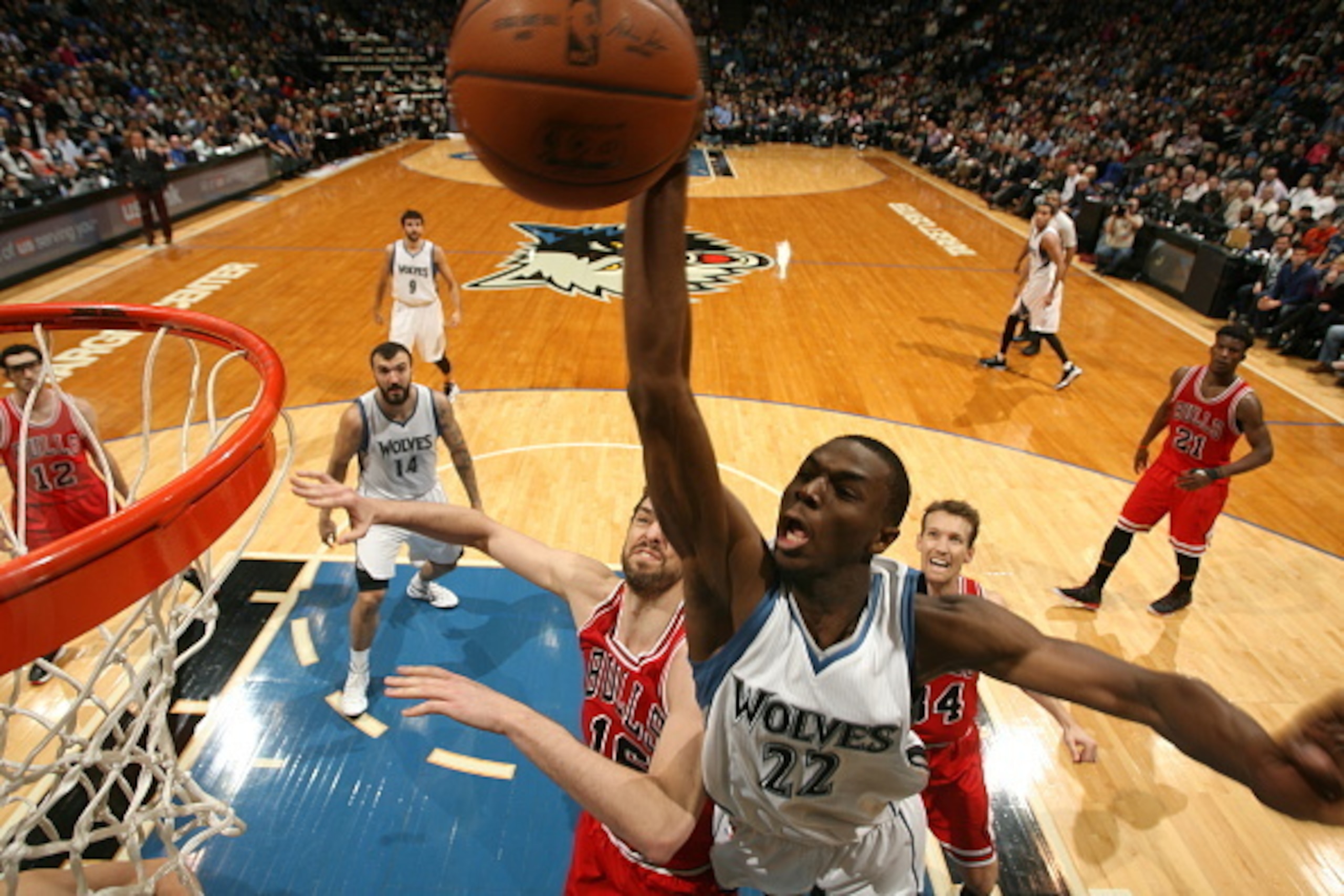
On the other side, he's flashed all the tools one needs to become a premier perimeter defender. Wiggins has the quickness and length to potentially lock down positions 1-3 on the floor right now, while his leaping ability and wingspan translate to highlight blocks and steals.
Defensively, he just has to pick up on the nuances of the game—adjusting to touch fouls on the perimeter, when to switch on screens, when to anticipate them, when to rotate, how to challenge straight up. He's already been called for a foul on a few jumpers this year, one of which might have cost his team a game on a final possession.
Wiggins clearly has the chance to be a special two-way player, but the big breakout All-Star season isn't happening this year or even the next.
He's going to need a good 10-15 pounds of muscle before he starts taking it to opposing wings. That, and a more polished handle and reliable jumper. But these are both areas of the game that can improve with time and reps.
I'm expecting a slow-but-steady ascent—similar to the one DeMar DeRozan experienced—toward his monster NBA ceiling.
| NBA Ceiling | First Impact Year | Big Breakout Year | Chances of Big Breakout |
| Star | 2015-16 | 2017-18 | 75 Percent |
Anthony Bennett, Small Forward/Power Forward, 21 years old
Blame it on the shoulder surgery that kept him out the offseason prior to his rookie year. Or the crowding in Cleveland's frontcourt. Or former Cavaliers' general manager Chris Grant for inexplicably picking him No. 1 overall.
But Bennett was pretty bad last year, looking more like at tweener than the versatile combo forward he was advertised as out of UNLV.
The good news is he's off to a better start with the Wolves after the Cavaliers traded him to Minnesota in the deal for Kevin Love.
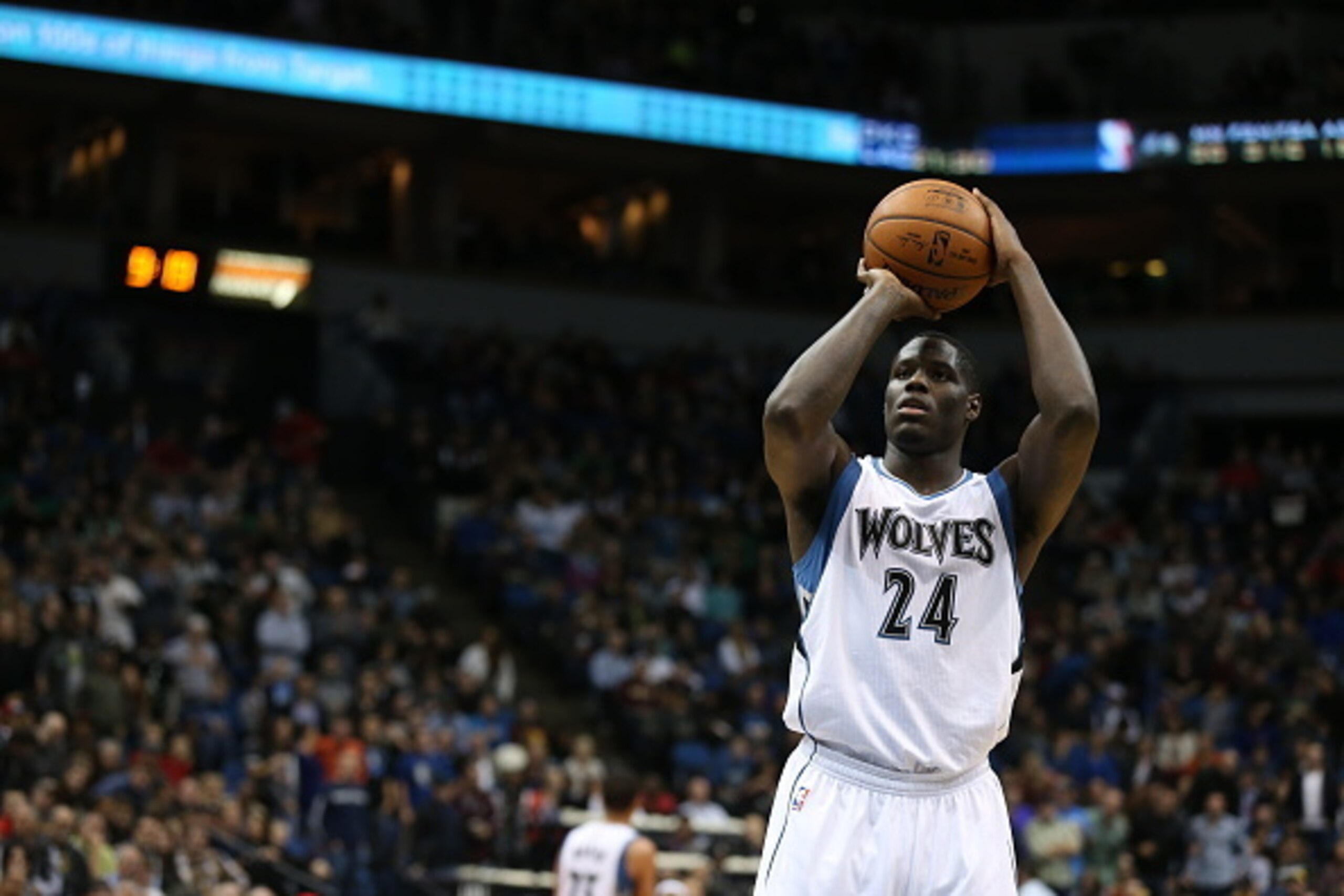
Though the sample size is tiny, Bennett has at least appeared to have found himself within Minnesota's offense. Playing with visible confidence in a more defined role, he's shooting 63.2 percent through three games in 2014-15.
The only cause for concern is the particular identity he seems to have embraced.
So far, Bennett appears more comfortable taking jumpers than he does fighting for buckets in the paint or exploiting his agility off the dribble.
Thirteen of Bennett's first 19 shots have come from at least 19 feet out or deeper, per NBA.com. Ironically none of them have been three-pointers, leaving his wheelhouse in that long two-point range—a range that typically results in offensive inconsistency and inefficiency.
On a positive note, his shooting mechanics look good, and there's certainly hope he can one day evolve into a reliable target off drive-and-kicks and pick-and-pops, which is where most of his shots have come from.
But after shooting just 27.5 percent on 80 shots in the mid-range last season with the Cavaliers, it's a little unrealistic to expect much consistency from Bennett one season later.
I'd imagine we'll see plenty of ups and downs from him over the next twos years—especially if his game remains this perimeter-oriented.
Unfortunately with Bennett, the unspoken areas of the game are actually worth mentioning as well. Setting screens, defensive rotations, getting caught flat-footed—there's a lot more than just offense that Bennett has to clean up.
Still, offense is where he'll ultimately be judged as a former top draft pick. Expect him to give the Wolves doses of it off the bench until he's sticking outside jumpers with relative consistency.
| NBA Ceiling | First Impact Year | Big Breakout Year | Chances of Big Breakout |
| Starter | 2015-16 | 2018-19 | 38 Percent |
Gorgui Dieng, Center, 24 years old
Dieng showed flashes as a rookie and then went off during the summer's FIBA Basketball World Cup, where he looked awesome for Senegal as one of the focal points of its team.
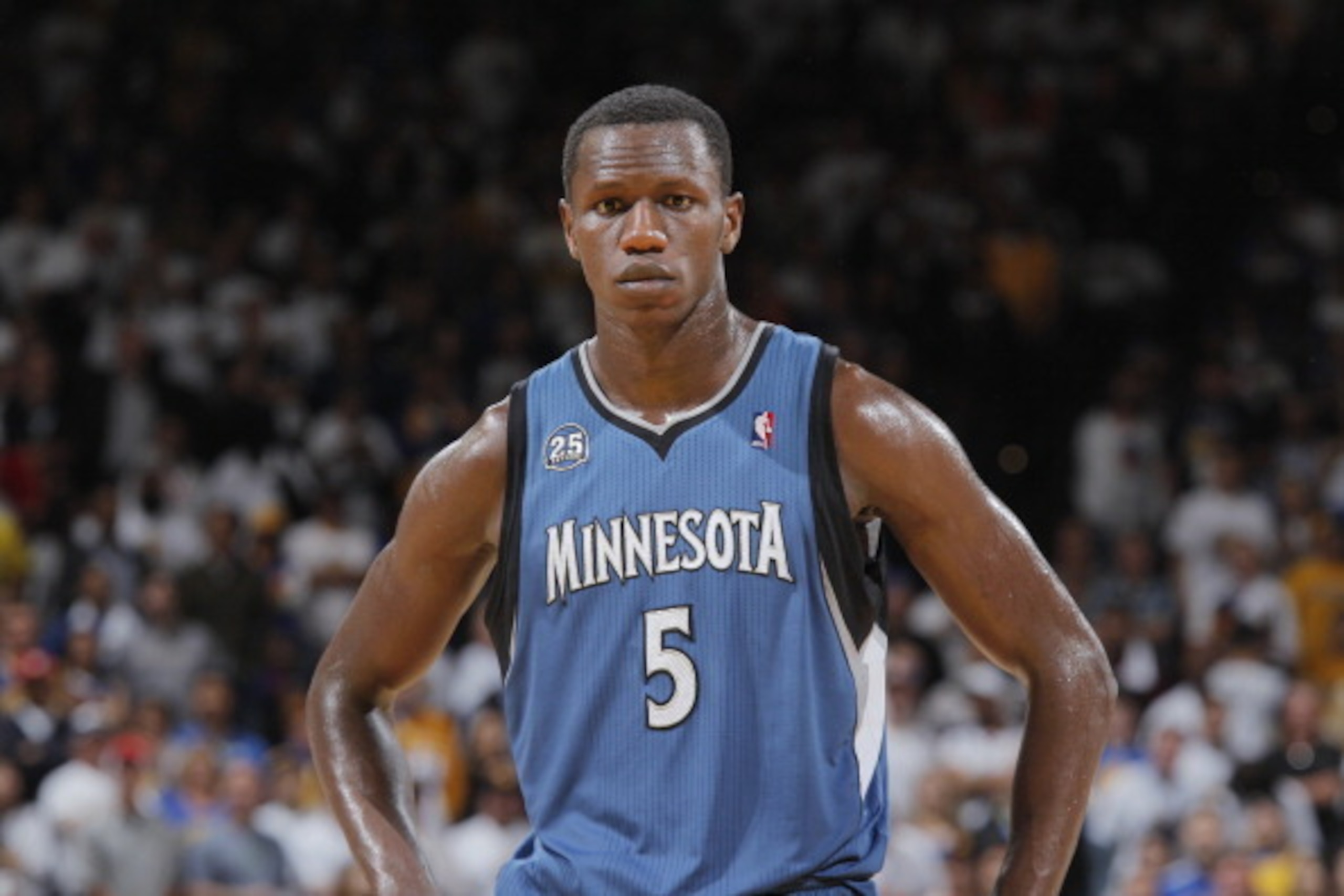
He made a name for himself in college as a rim protector, and that's likely to remain his bread-and-butter throughout his pro career. Dieng sports a big 7'3.5" wingspan and strong defensive instincts.
But on those good days, we've also seen Dieng break through as an opportunistic offensive threat, whether he's knocking down an elbow jumper (hit a decent 16-of-43 shots in the mid-range last year) or finishing with touch on a hook shot inside.
Still, Dieng struggled last season as a shot-creator in the post. He registered a whopping 15 travels with limited touches, per Nyloncalculus.com's Matt Femrite, who noted Dieng's offensive footwork as a weakness.
However, based on everything we've seen since the summer, along with his 26.76 Player Efficiency Rating early on, Dieng has appeared to have made strides worthy of a role increase in 2014-15.
"He's more confident in what he's doing," coach Saunders told CBS Sports' Michael Hurcomb. "He's a little more assertive offensively. He's just going to look more comfortable when he's out there. The leap [from the first season to the second season] is astronomical."
I like to think Dieng's ceiling reaches the height of Samuel Dalembert's, who's made a successful career for himself as a sturdy low-end starting center.
He could probably help this team right now as a defender and rebounder, but look for his offensive game to take off once he finally get a full-time opportunity.
| NBA Ceiling | First Impact Year | Big Breakout Year | Chances of Breakout |
| Starter | 2015-16 | 2016-17 | 65 Percent |