Todd Haley's Influence a Big Reason for Ben Roethlisberger's Career Resurgence
It's been a long time since the Pittsburgh Steelers have seen this Ben Roethlisberger.
The veteran quarterback has attempted 86 passes over the past two weeks, completing 65 for 862 yards and 12 touchdowns without an interception. Roethlisberger became the first quarterback in NFL history to throw for over 500 yards in a game twice in his career last week before becoming the only quarterback to throw for 12 touchdowns over a two-game span this week.
His numbers are staggering, but passed those, his performance has been even more impressive and, in truth, unexpected.
TOP NEWS
.jpg?w=2560 "Chargers Mack")
Every Trade's Best Trade Asset 🔁
.jpg?w=2560 "Green Bay Steelers Football")
Insiders: Cowboys Overpaid for Porter
.jpg?w=2560 "Seahawks Cardinals Football")
MHJ's Potential Trade Value 📉
At 32 years of age, Roethlisberger has shown signs of decline over the past two seasons. Before his most recent stretch, he had been one of the Steelers' bigger problems on the offensive side because of his inability to throw the ball accurately down the field. He played a huge role in the team's inconsistent scoring ability.
Before throwing for 12 touchdowns and zero interceptions over the past two weeks, Roethlisberger had thrown for just 10 touchdowns in seven games, with three interceptions. The production of the Steelers' passing game wasn't awful, but it was limited.
Offensive coordinator Todd Haley was taking the brunt of the blame, but the biggest issue was Roethlisberger's accuracy.
Haley hasn't made a dramatic alteration to the offense in recent weeks. The only notable change that is even worth highlighting is the introduction of Martavis Bryant, a rookie receiver who has five touchdowns on 10 receptions in three games. Bryant has been very impressive but largely because of the service his quarterback has provided him with.
Bryant announced himself with a long touchdown reception in Week 7.
Roethlisberger's timing with his receivers was still inconsistent at this stage of the season. On the very first drive of this game, Bryant had beaten a defensive back deep down the left sideline, but Roethlisberger's throw landed out of bounds as he overthrew the receiver.
For his touchdown reception, that wasn't the case.
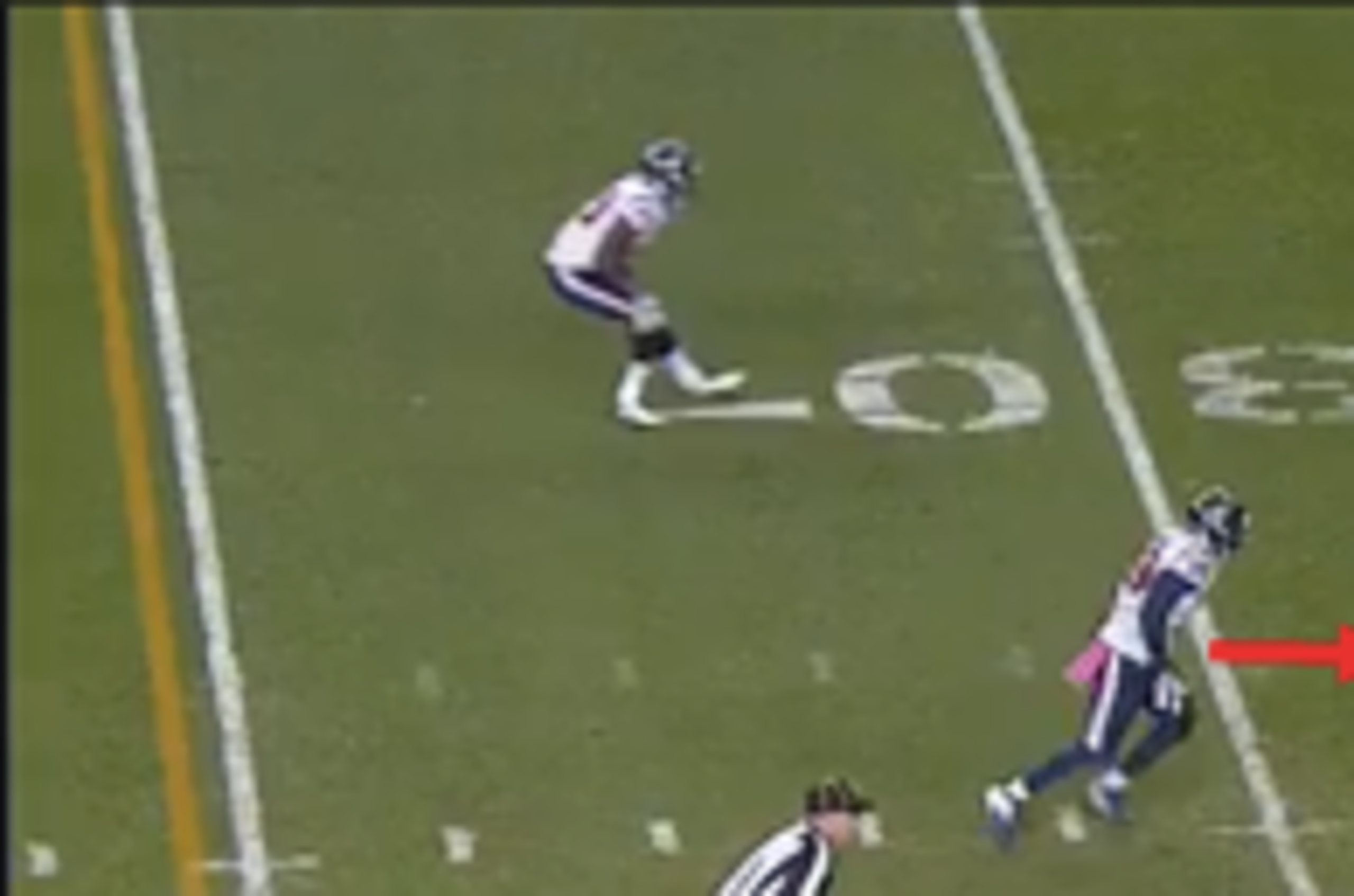
The Steelers came out in the pistol formation with Bryant wide to the right of the offense. Roethlisberger carries out a play fake to Le'Veon Bell in the backfield at the start of the play. This draws multiple second-level defenders for the Houston Texans forward.
When Roethlisberger gets to the top of his drop, he quickly locates where the deep safety is.

That safety is shaded to Antonio Brown's side of the field, leaving Bryant alone working against single coverage on the other side of the field. Bryant begins his route by running directly at the defender before working past his outside shoulder.

Bryant needs time to run his route, but Roethlisberger isn't given that time by his offensive line. Instead, the quarterback creates it by stepping up in the pocket and sliding to the side in order to throw the ball from the cleanest area available to him.
Although he doesn't show perfect mechanics as his momentum pulls him in the wrong direction at the start of his throwing motion, Roethlisberger has the arm strength to overcome it.

Critically, Roethlisberger releases the football at a point when Bryant hasn't created any separation behind the defensive back. He is letting the ball go to throw it to a spot where his receiver can go and get it. That sounds simple and receiver-reliant, but Roethlisberger needs to place the ball effectively and time it right.
In previous games, this is an area where Roethlisberger has really struggled. His timing has often forced unnecessary adjustments on the ball for his receivers, while his placement has often made the ball uncatchable.

On this occasion, Roethlisberger's pass hangs slightly but not enough to make it a poor throw. Bryant comfortably catches it at the back of the end zone as he arrives at the perfect time.
It's possible that Roethlisberger may have a mental comfort throwing to bigger receivers, but the physical actions of this play had nothing to do with Bryant's size. The receiver created separation behind the defense, and the pass was perfectly timed and well-placed to take advantage of that.
That was one of four deep shots Roethlisberger took to Bryant in that game. The other three were all overthrown, with two of those landing out of bounds to be completely uncatchable. The final one required Bryant's jumping over a defender and fully extending to just get his fingertips on the ball.
Over the past two weeks, Roethlisberger has taken five deep shots (18-plus yards) to Bryant and connected on four of them.
The one missed pass was an underthrown ball on a deep comeback where the duo appeared to be confused as to where the ball was supposed to go. Bryant may also have been distracted by another receiver who was undercutting the play. The most significant play between the two was also the longest play between the two.
Against the Indianapolis Colts, Roethlisberger found Bryant with another perfectly timed and perfectly placed deep ball down the field. This time Bryant didn't create as much separation as he did on his touchdown to the Texans, but Roethlisberger flighted the ball perfectly for him to read it and run underneath it.
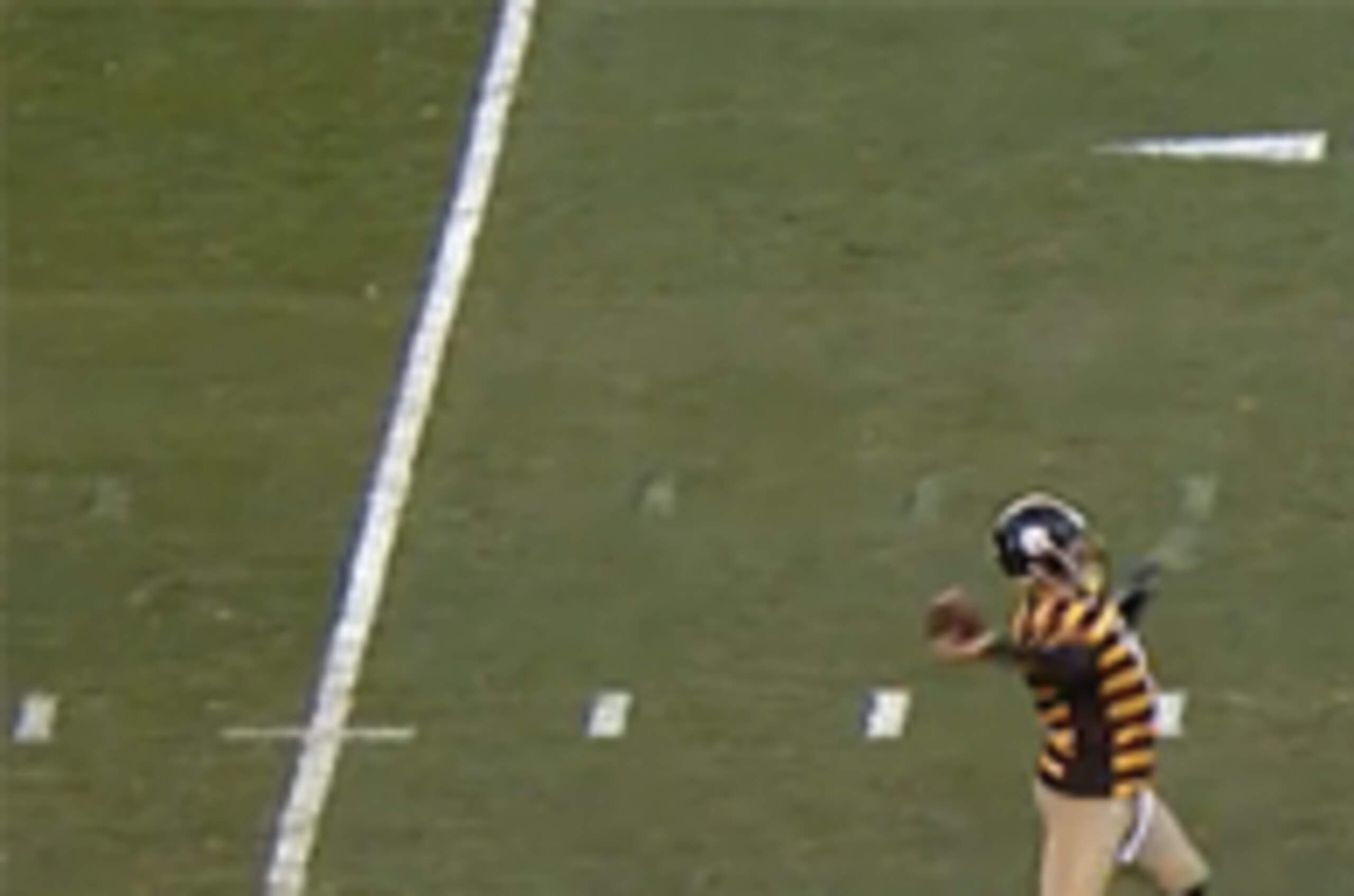
Roethlisberger let the ball go early and put it on the outside shoulder of his receiver, meaning that the underneath cornerback never had a chance of touching it, and the deep-lying safety was completely taken out of the play.
Bryant isn't solely a deep-ball receiver, but his success in this area with Roethlisberger has played a key role in the offense's recent revival.
Not only has Roethlisberger's timing with Bryant improved over a short span, but with similar haste his relationship with second-year receiver Markus Wheaton has improved. Wheaton isn't as big as Bryant, but they are similar players in how they win on the field.
Wheaton was the team's primary deep threat before Bryant was activated, but Roethlisberger consistently missed him when he was open down the field. That was no more evident than during the Week 6 matchup against the Cleveland Browns.
In that game the duo combined for just three connections on 10 attempts. Roethlisberger consistently put the ball just out of his receiver's reach, which suggested that the timing simply wasn't down. Wheaton had only been inserted into the starting lineup at the beginning of this season, so that wasn't really a surprise. But the lack of understanding between the two at that time was severe.
Over the past two weeks, their connection hasn't been spectacular, but it has been effective.
Wheaton and Roethlisberger have connected on seven of nine targets, with the wide receiver making some nice adjustments to inaccurate passes at times and Wheaton also leaving a play or two on the field that his quarterback would have expected him to make.
The most encouraging aspect of Wheaton's play is how he has been used. Wheaton is running a variety of routes from different areas of the field, catching the ball underneath on shallow crossers, deep comebacks outs and curl routes.
Roethlisberger and Wheaton's two failed connections came on one seam pass that appeared underthrown, but it also appeared that Wheaton maybe faded away on the route when he should have worked inside and an out route when the timing was way off.
Like with Bryant, the most significant change for Wheaton and Roethlisberger is the quarterback's timing and accuracy on his deep ball.
Wheaton has scored two long touchdowns over the past two weeks, one in each game. The longest came against the Baltimore Ravens, when he roasted the fading Lardarius Webb in coverage for a 47-yard touchdown down the sideline.
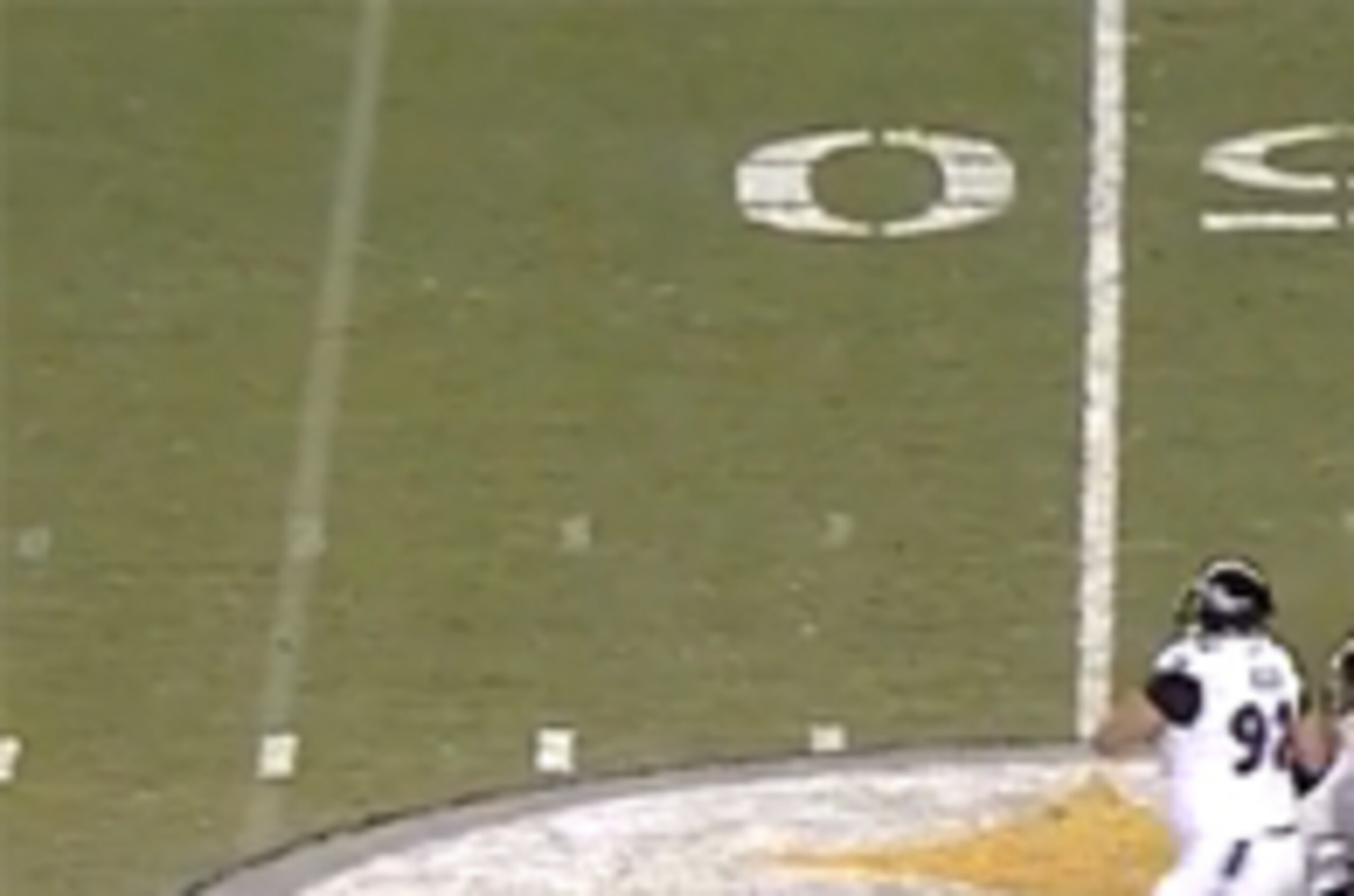
This wasn't the first time this year that Wheaton had found himself open in a situation like this, but it was the first time Roethlisberger had so comfortably laid the ball out for him to go and get. Once again, the ball was placed on the outside shoulder and arrived at the precise moment Wheaton would have wanted it to arrive.
Roethlisberger's relationship with Antonio Brown has been established for a long time.
Brown may be the best receiver in the NFL, so there is no real basis to point to any particular reason for his production because his production has been constant for a very long time. It should be noted that Brown has scored three touchdowns over the past two weeks, and one did come on a perfectly executed timing route down the field.
The 26-year-old receiver would make any quarterback throwing him the ball look better; Roethlisberger doesn't need to be spectacular when throwing the ball to him.
If you have paid close attention to Roethlisberger's play over the past two weeks, you will understand the impact of offensive coordinator Todd Haley and offensive line coach Mike Munchak. Haley's impact has been to keep Roethlisberger in the pocket, while Munchak's has been to get the offensive line to an acceptable level to keep that pocket clean.
Only one of Roethlisberger's big plays really came when he extended a play outside of the pocket unnaturally—that was one of Brown's against the Colts.
Roethlisberger has played some of his worst football since Haley took over as offensive coordinator. That is because Haley was installing a more structured offense that was designed to mask the deficiencies of the offensive line and turn Roethlisberger into a more efficient pocket passer rather than a big-play creator.
For the totality of his career, Roethlisberger hasn't been a turnover machine despite his style of play, but he has taken a significant beating.
In Haley's offense, Roethlisberger has been asked to throw more timing passes from the pocket and read through his progressions more rigidly while working against pressure subtly instead of elaborately. That change significantly affected Roethlisberger's ability to make throws down the field at the beginning of last season.
Once the Steelers hit their bye last year, Haley appeared to radically change their approach because of Roethlisberger's inability to throw the ball downfield. They focused on running more and getting rid of the ball more quickly underneath. Shots down the field were timely rather than prominent in the offense.
After struggling for so long within the structure of this offense, it appears that Roethlisberger is finally adapting to this style of play—a style of play that will make him a better quarterback and allow him to avoid turnovers while still maintaining the big plays of the past.
Roethlisberger has thrown just three interceptions all season within this offense. Arguably the most significant aspect of his recent play isn't the gaudy numbers—they will almost certainly regress—but rather the protection of the football.
Not only has Roethlisberger not thrown an interception, but he hasn't taken any significant risks with the ball. That is something that can be sustained because of the quarterback's understanding of his role within the offense as a whole.
While Roethlisberger deserves all the credit for the turnaround in his play, it should be acknowledged that this is the vision Haley has worked toward over the past year and a half. Haley appears set to play a significant role in Roethlisberger having the most productive season of his career.
If his performances continue as they have in recent times, it will also be the quarterback's most impressive season of his career.
.jpg?w=2560 "Giants Football")