West Virginia Showing Flashes, Still Not Back to Elite Status of Rich Rod Days
West Virginia blew a 27-14 lead against TCU on Saturday, losing to the Horned Frogs, 31-30, on a last-second field goal by Jaden Oberkrom. (A taste of its own medicine, if you will.)
The Mountaineers dropped to 6-3 on the season, losing for the third time to a team then-ranked in the Top 10. They hung tough with Alabama in the season-opener and Oklahoma in September but never flat-out blew a game the way they did against TCU.
The loss served as a reminder that West Virginia, while easily one of the most improved teams and biggest surprises in the country, is still not back to the apex it reached in the mid-2000s under former head coach Rich Rodriguez—or even the level of its Orange Bowl season three years ago under current head coach Dana Holgorsen.
.jpg?w=2560)

.jpg?w=2560 "Election 2024 Julie Pace Column")
Pre-Big 12 West Virginia found a way to win these games.
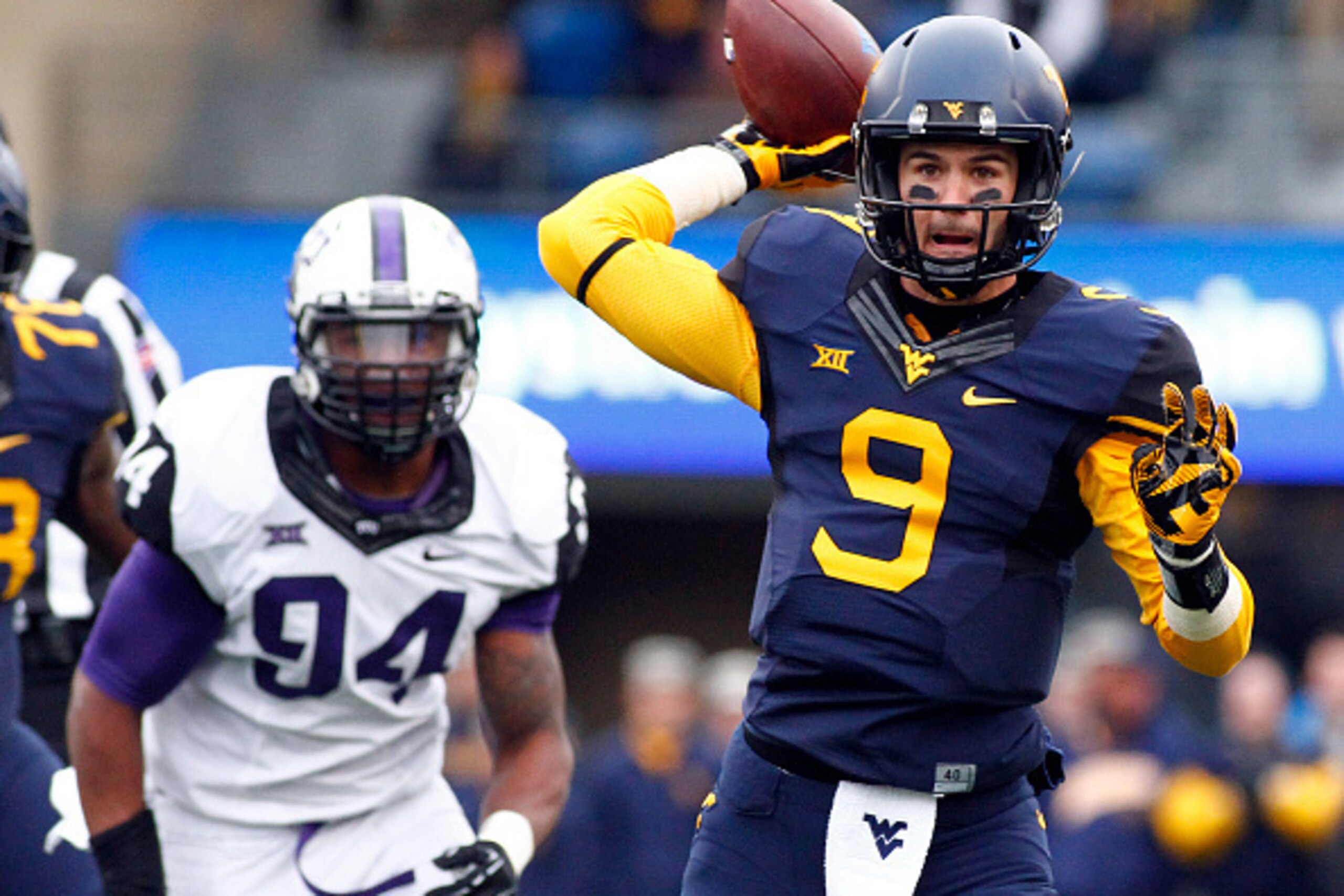
The most alarming development from Saturday's loss—and the biggest reason West Virginia didn't win the game—was sloppiness.
Five Mountaineers possessions ended in turnovers, including three in a four-possession span during the first half when they otherwise had TCU on the ropes. Quarterback Clint Trickett had an expert first drive before regressing into his worst game of the season, averaging just 6.2 yards per attempt, fumbling away a mishandled snap and throwing a pair of equally ill-advised interceptions.
The first (alluded to below by Rotoworld's Josh Norris) was a telegraph that safety Chris Hackett leaped in front of, and the second (alluded to below by Sporting News' Matt Hayes) was a lazy attempt at a throwaway that linebacker Paul Dawson clawed out of the air:
Holgorsen will be questioned for his conservative game plan on WVU's final three possessions, during which he called seven rushing plays and two passing plays for a grand total of minus-seven yards.
But one of those two passing plays was a sack that Trickett fumbled and West Virginia was lucky to recover. It's hard not to empathize with Holgorsen's reluctance on a day in which his offense had five turnovers and easily could have had seven or eight.
The problem was not that Holgorsen didn't trust his offense.
The problem was that he couldn't.
And therein lies the difference between the West Virginia teams that routinely played in BCS bowls and the West Virginia team that routinely loses close games against Top 10 opponents. The former was a dogged offensive machine that kept its foot on the pedal and turned small leads into big leads and big leads into huge ones.
The latter only plays that well on occasion.
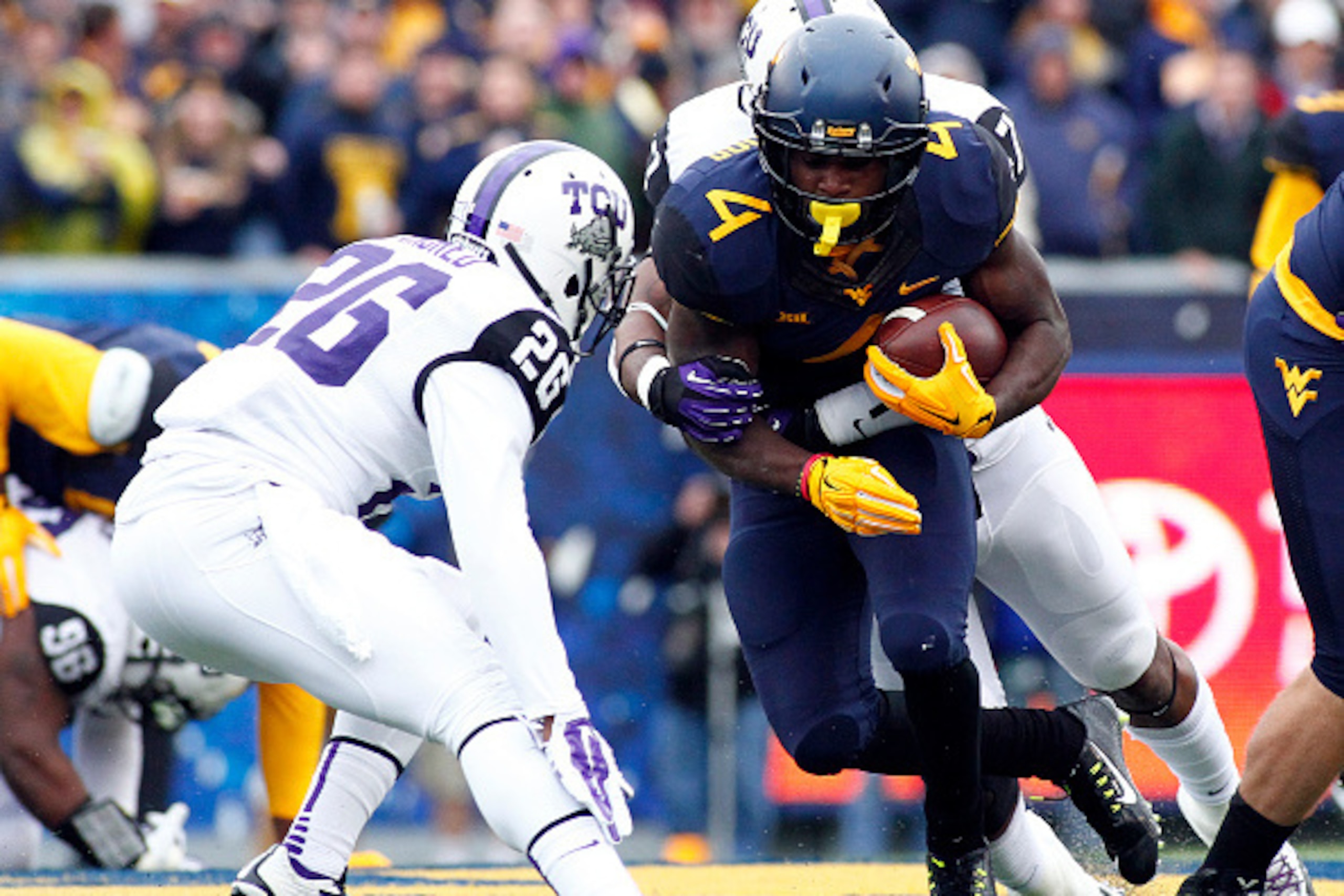
"I take responsibility for what happened out there offensively," said Holgorsen after the game. "It was bad. It was not acceptable, and it's not gonna win football games. To turn the ball over five times and average what we averaged per play is completely unacceptable.
"We'll get back to work on that tomorrow."
When they do, however, the Mountaineers will no longer be working toward a Big 12 championship or a pipe-dream shot of making the College Football Playoff. Instead, they'll be working toward a nine-win regular season and a shot of ruining Kansas State's CFP hopes.
There is no shame in working toward those goals on the heels of a 4-8 season, especially for a team that entered 2014 with deflated expectations. Making a bowl game of any sort is a small step in the right direction. Flirting with a 10-win season is a huge one.
It's just not the step this team has shown flashes of having taken. It's not the step that allowed the 'Eers to upset Baylor in Week 8. It's not the step that lured College GameDay to Morgantown, West Virginia, for the first time since the Orange Bowl season of 2011.
That next step is learning how to finish.
Follow Brian Leigh on Twitter: @BLeighDAT

.jpg?w=2560)


.jpg?w=2560 "Reported Details of Seahawks-K9 Split ⛓️💥")