Which of Europe's Top 5 Leagues Is the Best?
There’s constant debate among football fans and pundits regarding which of Europe’s top leagues is the best, but the argument usually results in each set of fans backing their favourite league as the best league—shocker.
Rarely does the argument get an in-depth discussion, and when it does, it’s usually not comprehensive enough to warrant real closure, nor does it specify what being the best actually entails.
For instance, when La Liga is compared to any other league, one is quick to point out that Spain has virtually no competition beyond Barcelona and Real Madrid. Barca and Real’s dominance has been evidenced by their 11 combined league titles in the last 15 seasons, with Atletico's triumph being the first to break up the duopoly since Valencia won in 2003/04.

.jpg?w=2560 "Patriots 49ers Football")
.jpg?w=2560)
In fact, since La Liga was founded in 1929, Barcelona and Real Madrid have combined for 54 league titles, which translates to a staggering 66 percent—this takes into account the three years that La Liga was called off due to the Spanish Civil War
La Liga’s lack of competition is not equaled, historically, by any of Europe’s other top leagues, though Serie A comes the closest with Juventus, AC Milan and Inter accounting for 57 percent of Serie A’s champions with 66 League titles between them since its founding in 1898.
While La Liga isn’t the most competitive domestically by any means, it does boast an impressive record in European competition.
Spanish teams have combined for 22 European trophies, with 14 won from Champions League and eight won from Europa League. If you want to include Super Cups, then that tally rises to 33.
Serie A comes the closest to matching La Liga’s European success with 30 European trophies—12 from the Champions League, nine from Europa League and nine from the Super Cup.
If you want to base this argument purely on major European competition, then Real Madrid is the strongest team in the world and La Liga the best league in the world.
Again this is solely based on the amount of European competitions they’ve won and the regularity with which their top clubs reach the quarter-finals or better in these competitions.
AC Milan is widely regarded as the most successful club in Europe based on their haul of trophies, but for this argument’s sake, I’m inclined not to include their Intercontinental Cups/Club World Cup or Cup Winners’ Cup victories because the Cup Winners’ Cup was abolished and the International Cup/Club World Cup isn’t an exclusively European competition. Sorry, Milan fans.
But La Liga’s European success comes at a price. Their domestic league, as aforementioned, is extremely uncompetitive.
Aside from Real and Barca, there have only been seven other league winners. This number pales in comparison to the Premier League, which boasts 23 titleholders, Serie A with 16, Ligue 1 with 29 and Bundesliga with 29.
If you’re a fan of La Liga, you know this is because Barca and Real have a stranglehold on La Liga’s TV rights. The two clubs rake in nearly $200 million per season, while Atletico earns less than half that amount, and that figure dwindles dramatically for the smaller clubs.
Their financial dominance allows them to buy the best players in the world, throwing around cash like it’s nobody’s business but in a way that severely hurts the league.
Smaller teams simply cannot compete with the Spanish giants, as they mainly rely on homegrown talent, and when they do have an exciting prospect or player who’s overperforming, they don’t have the resources to keep said player—a problem that more and more clubs in Europe’s top flights are dealing with as of late.
So we’ve established that, historically, La Liga is the best in terms of producing European champions, but does that necessarily make it the best league in the world?
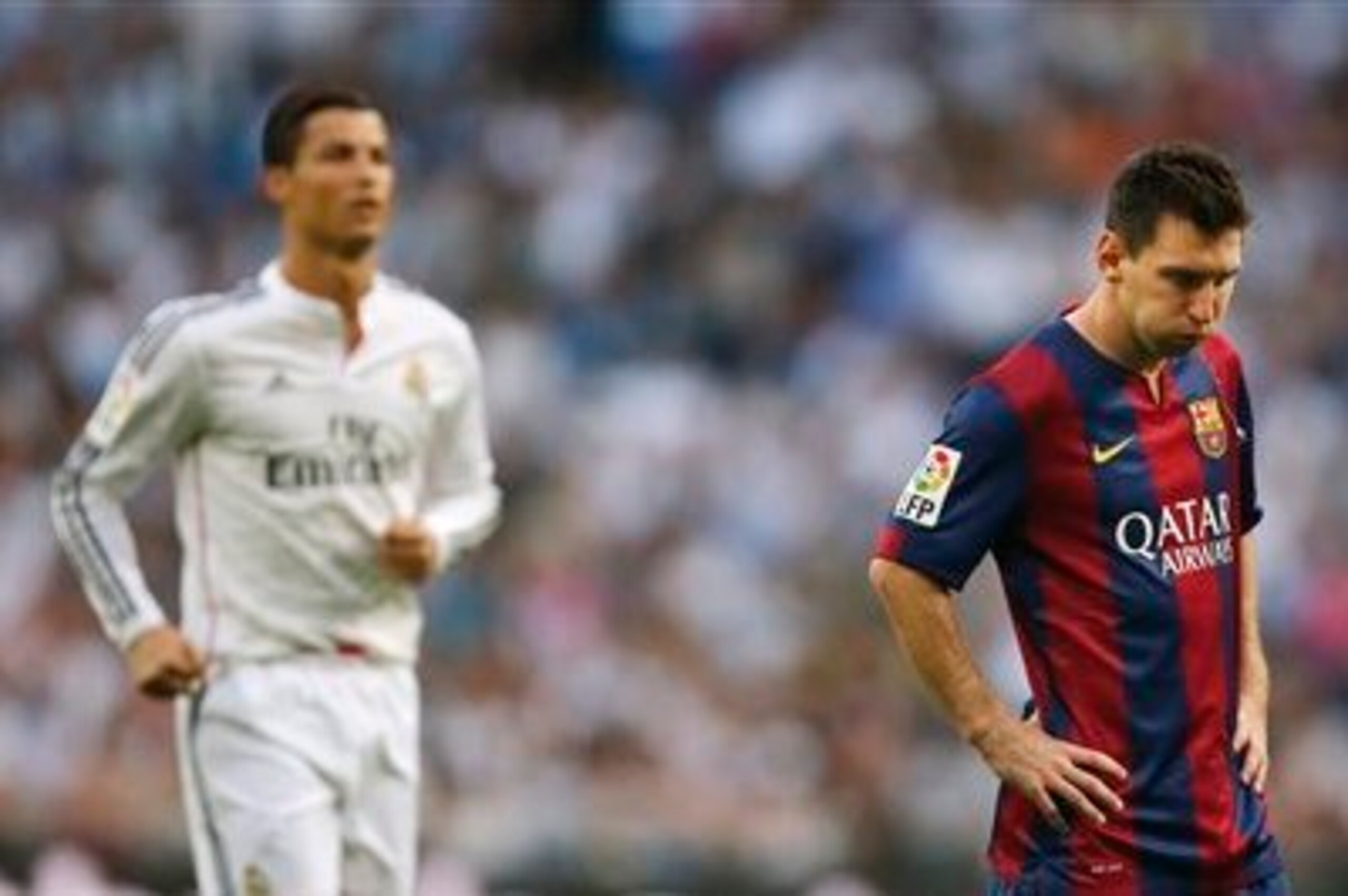
Don’t get me wrong, European titles are great and seeing your team win the UCL is amazing, but when you only have one game to look forward to during the domestic season, can you really call your league “the best” or even exciting for that matter?
Now, to La Liga’s credit, a handful of teams have also dominated the other major leagues in the last 15 years. Since the 1999/2000 season, the Premier League has been won eight times by Manchester United, Serie A saw Inter win the league five years in a row, Lyon won Ligue 1 seven years in a row and Bayern Munich won the Bundesliga nine times.
If every league seems to be drifting towards complete dominance by financially empowered teams, can we truly pass judgment on which league is the best?
To do so, we have to dig even deeper than past winners, European conquests and financial backing. So, first, let’s look at the average amount of goals scored in the league and by the leagues’ top scorers in an attempt to gauge how difficult each competition is.
To make things a bit more current, we’ll only focus on the last 20 years; this will also help keep the study a bit more concise.
Before you look at this breakdown, keep in mind whatever connotations you have of every league so that when you look at the results, you can see if they met your expectations.
For instance, the Premier League is considered to be one of the most difficult leagues to play in because of its tempo and physicality—so would that make it a tougher league to score in than, say, Ligue 1? Let’s take a look at the results.
League | Top Scorer Average | Average League Goals Scored |
| Bundesliga | 20.3 | 927 |
| Ligue1 | 24.45 | 848 |
| Serie A | 25.4 | 896 |
| EPL | 25.8 | 1015 |
| La Liga | 30.1 | 1041 |
As you might have guessed, especially from the last few years, La Liga’s Pichichi winners find the back of the net considerably more than other European top scorers. And, yes, even players not named Messi or Ronaldo (both Ronaldos) have scored 30-plus goals in La Liga, so while their 40-plus goal performances are abnormal, they didn’t really change the average all that much.
If you thought that the EPL would be the hardest league to score in, you’d be incorrect, as their Golden Boot winners' average tally is only second to that of La Liga, and the league scoring average is very close to La Liga’s.
Interestingly enough, the Bundesliga’s top scorers average the least amount of goals, but their average league tally isn’t terribly far off from La Liga and the EPL.
So it’s clearly harder to be a top scorer in the Bundesliga, as the spoils are generally shared throughout the team. In fact, Bayern Munich had six players score 10-plus league goals last season—the most of any top European club.
So what have we learned from these goal tallies? Well, the Premier League and La Liga average more goals than any of Europe’s other top leagues and their respective top scorers find the back of the net more often.
Ligue 1 averages the least amount of goals, but its top scorers are pretty successful. Serie A is smack in the middle and the Bundesliga averages a good amount of goals, but their team play is more important than a lone front man bagging all the goals.

If you’re looking for a league in which plenty of goals are scored, then you could say the Premier League or La Liga are the best, but keep in mind that their top teams score a lot more than the other teams in the league.
Last year no other side in La Liga exceeded 77 goals, while Barca and Real scored 100-plus. Liverpool and Manchester City were the only two Premier League sides to reach the century mark last season, while the next highest tally was 68 goals.
Ligue 1 and Bundesliga’s top clubs also share this goal disparity, while Serie A shows the most parity in goal scoring. Last year’s Scudetto winners, Juventus, scored a league-leading 80 goals, but the mean goal tally of the teams that placed 2nd-10th was 63 goals. Being 17 shy of the league leaders is hardly something to scoff at, especially considering the aforementioned disparities.
There’s a scoring breakdown, but now we want to find out which league is the most competitive. As I mentioned before, the last 15 years have been littered with dominance in each league, but that doesn’t mean that the winning team is running away with the league...or does it?
I looked at the results from the last five years in each of Europe’s top five flights and the results speak for themselves.
| League | Difference Between Top 2 | Difference Between 1st and 4th |
| Serie A | 7.6 | 21.4 |
| Ligue 1 | 7.6 | 16.2 |
| Bundesliga | 12.8 | 22.8 |
| EPL | 4.6 | 14.4 |
| La Liga | 6.8 | 33.2 |
Without a shadow of a doubt, the Premier League is the most competitive. With fewer than five points on average separating the winner from the runner-up, and fewer than 15 points between first and fourth, there is no league that comes close, save for Ligue 1.
Once again La Liga shows its utter lack of competition with fourth-place teams being an average of 33.2 points behind the league leaders—more than double that of the EPL. If this doesn’t do it for you, then I have one more trick up my sleeve.
A recent study compiled by CEIS Football Observatory focused on which clubs from Europe’s top five leagues have produced the most footballers currently playing in the big five.
Surprisingly, it’s Ligue 1 with the most footballers currently playing in Europe’s top flights (291) and, probably least surprising, La Liga comes in second with 227. Bundesliga and the EPL are tied with 120 and Serie A is in dead last with 85 players.
So there we have it. The best league as far as competitiveness goes is the Premier League, the hardest league to be a top scorer in is the Bundesliga, the best league as far as European conquests go is La Liga, and Ligue 1 isn’t as much of a joke as everyone makes it out to be.
Remember there are plenty of world-class players who have emerged from Ligue 1; for example, Zidane, Ribery, Benzema, Ronaldinho, Hazard and Henry to name a few.
But which is the "best" league in general? That’s a debate that will continue to rage on despite numbers and statistics—like the Messi vs. Ronaldo, debate—but at least you now have some facts to support your claim, whatever that might be.



.jpg?w=2560 "Report: Eagles to Sign Cowboys QB")

.jpg?w=2560 "Caleb Reposts Hype Video 🥶")