The Kentucky Wildcats enter the 2014-15 college basketball season with one of the most physically imposing lineups in history, but there's certainly no shortage of big men on the nation's top teams.
Last week, we looked at the best "small ball" lineups for the upcoming season. There were plenty of talented teams but not a single one that we would endorse as a favorite to reach the Final Four.
At the other end of the height spectrum, though, title contenders such as Arizona, North Carolina, Florida and Wisconsin are among those closest to matching Kentucky's size, talent and depth.
In ranking these top 10 physically imposing lineups, we put together our best guess at their projected starting lineups and then subjectively graded them in both the "best" and "biggest" categories.
To meet the size requirements, teams need to have either three starters who are 6'8" or taller or four starters who are 6'7" or taller, with heights listed on ESPN's rosters serving as the source for that data. All others were immediately removed from consideration, though a few did receive honorable mentions.
All advanced stats via KenPom.com (subscription required) and Sports-Reference.com.
Honorable Mentions
1 of 11
UC Irvine Anteaters
Alex Young (6'1"), Luke Nelson (6'3"), Travis Souza (6'5"), Will Davis II (6'8"), Mamadou Ndiaye (7'6")
We almost broke the rules solely to allow Mamadou Ndiaye to make the cut, but if we start making exceptions for the Anteaters, it opens up a slippery slope to allow anyone to get on the list.
Whether the Anteaters are a top 10 team or not, it'll be fun to see if Ndiaye can reach 150 blocked shots in a season.
UTEP Miners
C.J. Cooper (6'0"), Earvin Morris (6'4"), Julian Washburn (6'8"), Vince Hunter (6'8"), Cedrick Lang (6'10")
This is not Spinal Tap, but if it was, UTEP would have been team No. 11.
In addition to the three big men listed above, the Miners also have a 7'1" sophomore by the name of Matt Willms who averaged 17 minutes per game last season.
However, we're far from convinced that UTEP is better than the borderline Top 25 teams at the back end of this list. Plus, for a team with so many big men, the Miners sure were painfully average in both the rebounding and blocking departments last season.
Providence Friars
Kris Dunn (6'3"), LaDontae Henton (6'6"), Tyler Harris (6'9"), Ben Bentil (6'8"), Carson Desrosiers (7'0")
A difficult exclusion—especially with 7'2" freshman Paschal Chukwu on the bench—but Ben Bentil's spot in the starting lineup could go to any number of other players. Jalen Lindsey, Rodney Bullock and Junior Lomomba are all candidates for that fifth starting job, and all three would make the Friars too small to be officially considered.
Also, it's debatable at best whether they're better than the team we ranked at No. 10.
LSU Tigers
Josh Gray (6'1"), Tim Quarterman (6'6"), Jordan Mickey (6'8"), Jarell Martin (6'10"), Elbert Robinson (7'1")
The Tigers are gigantic, but will they be any good?
After losing Johnny O'Bryant III, Andre Stringer, Shavon Coleman and Anthony Hickey, LSU strikes us as a bubble team that doesn't even have the second-most physically imposing lineup in the SEC. If Robinson proves to be a monster in the paint as a freshman, though, LSU could sneak into the top 10.
If Jordan Mickey, Jarell Martin and Robinson all come back next season to join forces with Ben Simmons, the Tigers will likely be No. 1 on next year's list.
Duke Blue Devils
Tyus Jones (6'1"), Rasheed Sulaimon (6'5"), Justise Winslow (6'6"), Amile Jefferson (6'9"), Jahlil Okafor (6'11")
Kansas Jayhawks
Devonte Graham (6'2"), Wayne Selden Jr. (6'5"), Kelly Oubre (6'7"), Cliff Alexander (6'8"), Perry Ellis (6'8")
In theory, both the Blue Devils and Jayhawks could go with a sparingly used returning player ahead of a promising freshman. Semi Ojeleye has a good enough three-point range to make Justise Winslow a sixth man, and Jamari Traylor in a frontcourt with Cliff Alexander and Perry Ellis would be disgustingly good.
Barring an injury, though, neither of those starting lineups will happen, leaving Duke and Kansas as potential Final Four teams who don't technically qualify for the list.
10. Memphis Tigers
2 of 11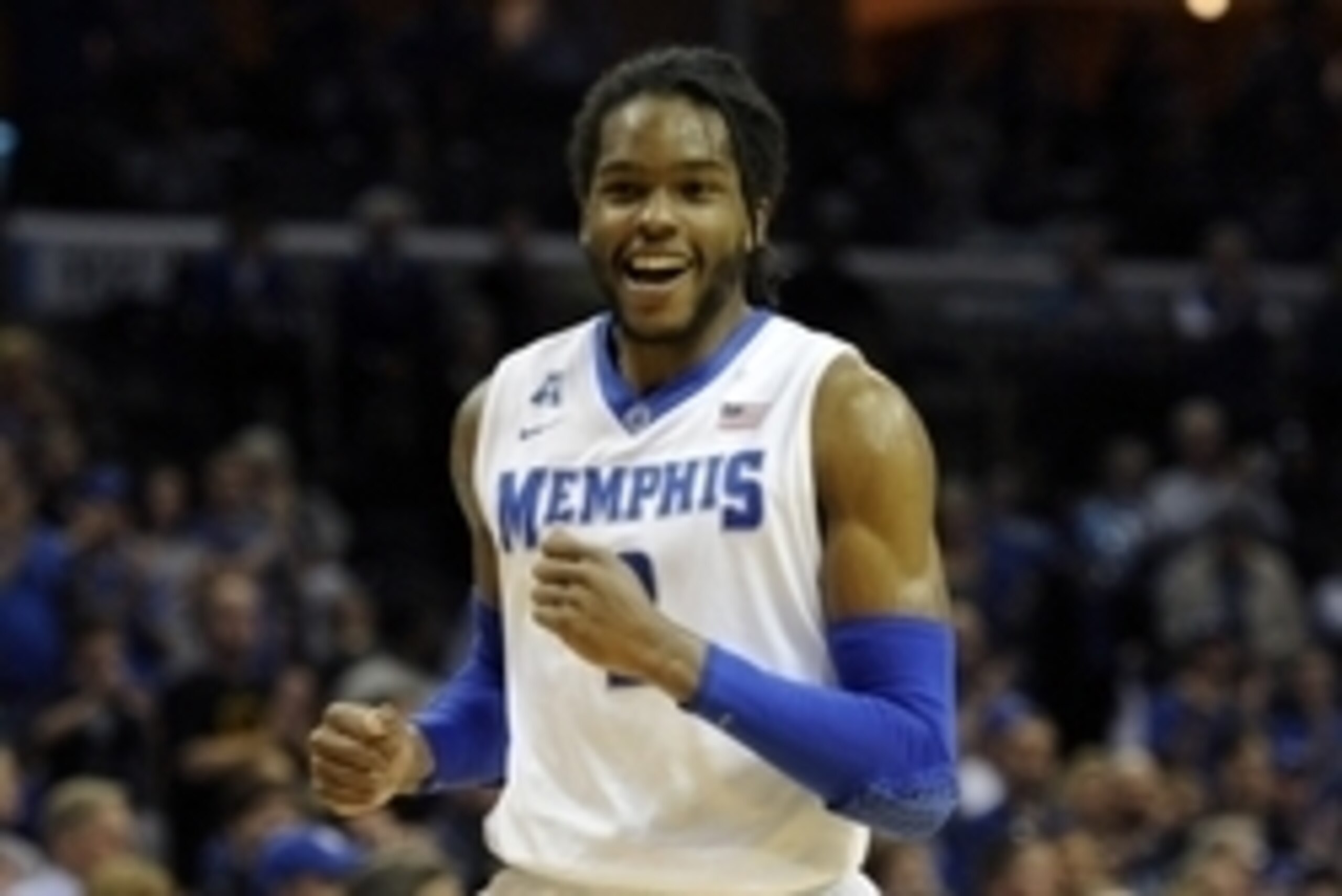
PG: Pookie Powell (6'1")
SG: Kedren Johnson (6'4")
SF: Kuran Iverson (6'9")
PF: Austin Nichols (6'8")
C: Shaq Goodwin (6'9")
Bigs on the Bench: Calvin Godfrey (6'8"), Nick King (6'7")
Quite the overnight transformation for the Tigers.
Last season, four of their six leaders in minutes played were 6'4" or shorter. However, all four of those guards ran out of eligibility this summer, opening the door for a drastic increase in playing time for their highly rated small forwards in the class of 2013, Kuran Iverson and Nick King.
The Tigers also added a crucial transfer in Calvin Godfrey. He averaged 19.5 points and 13.1 rebounds per 40 minutes last season for Southern University and will play an important role off the bench in keeping both Austin Nichols and Shaq Goodwin from having to play 40 minutes per game.
We're totally guessing at their starting backcourt. Dominic Magee, Avery Woodson and Markel Crawford could just as easily be primary guards for the Tigers. The fact that none of those guards played a minute for them last season, though, just goes to further reiterate Memphis' need to rely on its big men.
9. Iowa Hawkeyes
3 of 11
PG: Mike Gesell (6'1")
SG: Josh Oglesby (6'5")
SF: Jarrod Uthoff (6'8")
PF: Aaron White (6'9")
C: Adam Woodbury (7'1")
Bigs on the Bench: Gabriel Olaseni (6'10"), Dominique Uhl (6'9")
The Hawkeyes weren't quite the best rebounding or shot-blocking team last season, but they were certainly well above average. While they lose a crucial scorer and leader in Roy Devyn Marble, he didn't do much of anything to contribute to either of those categories.
All of the big men are back, and they'll have a bigger role in the offensive game plan without Marble around to attempt 13.2 shots per game.
Of particular interest will be how much Jarrod Uthoff explodes this season. While essentially platooning with then-senior Melsahn Basabe, Uthoff averaged just 18.2 minutes per game. Per 40 minutes, though, he was good for 16.8 points, 10.1 rebounds and 2.3 blocks.
The big man has some range, too, as Uthoff made 17 of his 40 three-point attempts last season.
With Gabriel Olaseni and Adam Woodbury taking turns grabbing offensive rebounds and Aaron White potentially becoming one of the most valuable players in the Big Ten, a strong season from Uthoff could really propel the Hawkeyes toward the top of the Big Ten standings.
8. Syracuse Orange
4 of 11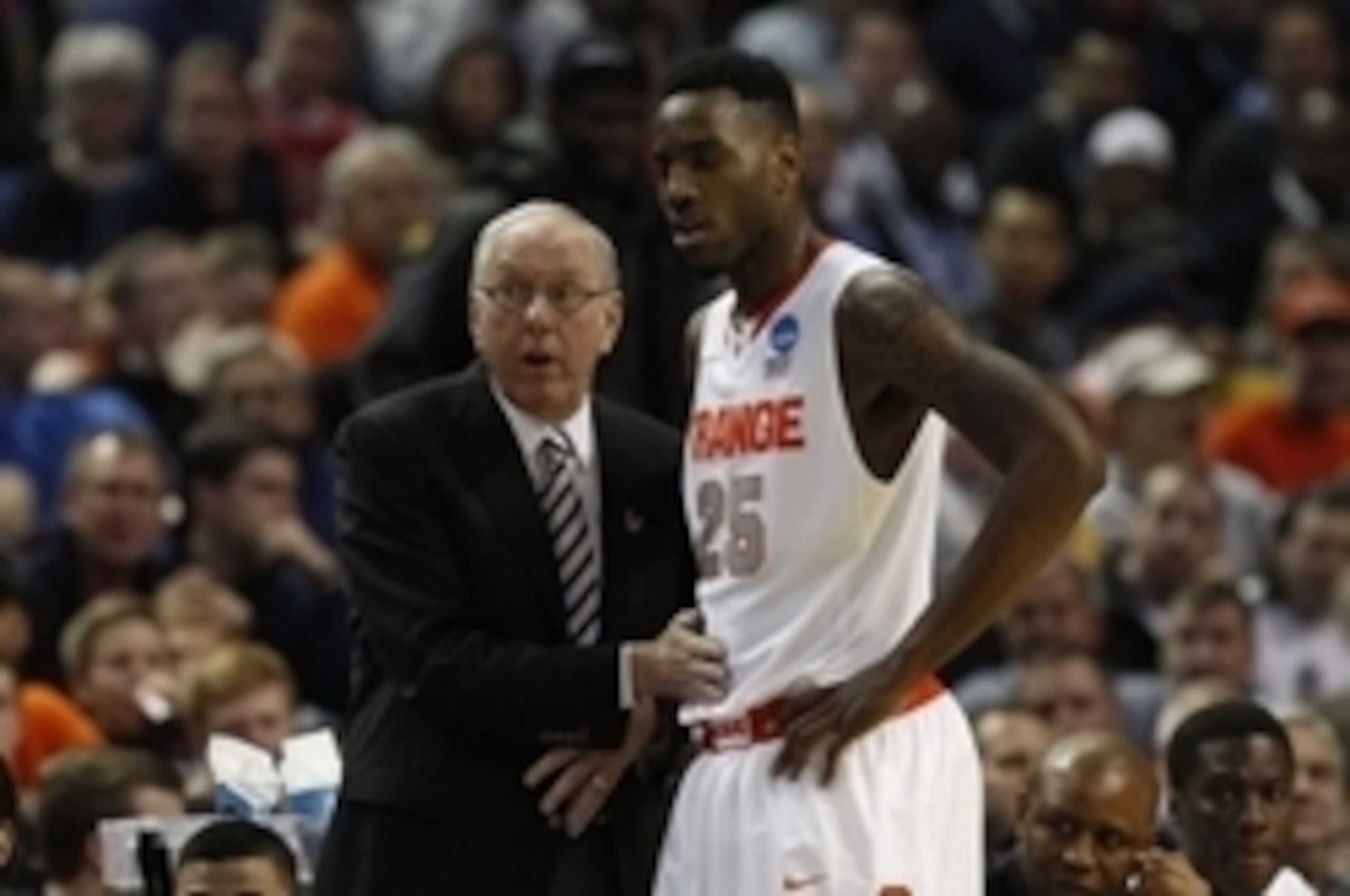
PG: Kaleb Joseph (6'3")
SG: Trevor Cooney (6'4")
SF: Tyler Roberson (6'8")
PF: Chris McCullough (6'10")
C: Rakeem Christmas (6'9")
Bigs on the Bench: Chinonso Obokoh (6'10"), DaJuan Coleman? (6'9"), Michael Gbinije (6'7")
For a team that lost C.J. Fair (6'8"), Jerami Grant (6'8") and Baye-Moussa Keita (6'10"), Syracuse remains surprisingly massive.
There are two X-factors at work here—one that makes the Orange even bigger and one that makes them smaller.
The bigger one—both in terms of physical size and importance—is DaJuan Coleman.
Coleman is a huge dude. Even after a juice diet that helped him lose 24 pounds in two weeks, he's still tipping the scales at about 260 pounds. But apparently that girth has been trouble on his knees, because he has missed much of the past two seasons with multiple leg injuries.
According to Jim Boeheim through CBS Sports' Jon Rothstein, "If (Coleman) plays this year, it's a bonus."
That doesn't sound too promising, but this is still a large team even without him. If Coleman is unable to be a reserve center, at least Syracuse still has Chinonso Obokoh to fill that role.
The second X-factor, however, is the starting small forward job. If Coleman is in fact unable to play, that increases the likelihood that Michael Gbinije becomes a starter so Tyler Roberson can serve as Chris McCullough's primary reserve. And Gbinije is much more of a point guard than he is a power forward.
Considering all that the Orange lost this offseason, it's no surprise that their projected lineups are a bit fluid at this point in time. But they'll eventually figure it out and be one of the best offensive rebounding and shot-blocking teams in the country as usual.
7. San Diego State Aztecs
5 of 11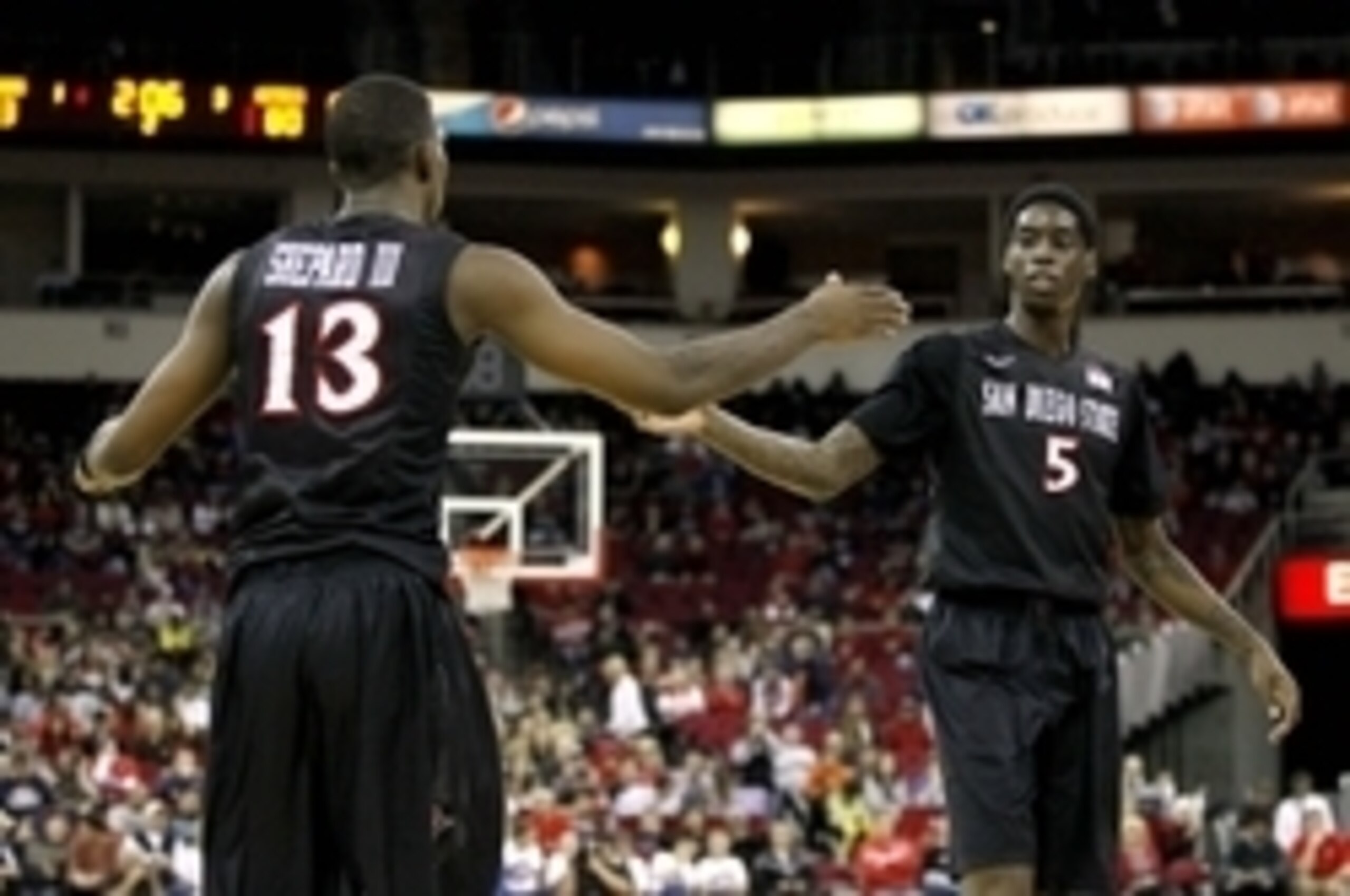
PG: Aqeel Quinn (6'1")
SG: Dwayne Polee II (6'7")
SF: J.J. O'Brien (6'7")
PF: Winston Shepard III (6'8")
C: Skylar Spencer (6'10")
Bigs on the Bench: Malik Pope (6'8"), Angelo Chol (6'9"), Zylan Cheatham (6'7")
According to 247Sports, the Aztecs are adding the 12th-best small forward (Malik Pope) and 13th-best power forward (Zylan Cheatham) in this year's recruiting class.
Without even starting either of those freshmen, they'll still have one of the biggest and baddest lineups in the country.
Translation: They'll get by just fine without last year's do-it-all point guard, Xavier Thames.
Thanks to a woeful 45.1 two-point field-goal percentage, the Aztecs didn't exactly boast the nation's premier interior attack last year. Let's keep in mind, though, that J.J. O'Brien played most of last season with a broken hand and that we're still waiting on Winston Shepard III to be the elite player we were promised by high school scouts.
Also, it wasn't until late in the season that Dwayne Polee II really started to become a stud.
With a full season of Polee and a presumed increased role in the offense for Skylar Spencer, the Aztecs could be an even better version of the 2009-10 team that ranked top 25 in the nation in offensive rebounding percentage, block percentage and two-point field-goal percentage on both ends of the court.
6. Wisconsin Badgers
6 of 11
PG: Traevon Jackson (6'2")
SG: Josh Gasser (6'3")
SF: Sam Dekker (6'9")
PF: Duje Dukan (6'9")
C: Frank Kaminsky (7'0")
Bigs on the Bench: Nigel Hayes (6'7"), Aaron Moesch (6'8"), Vitto Brown (6'8"), Ethan Happ (6'8")
No, I don't actually think Duje Dukan will start ahead of Nigel Hayes. But because Hayes is an inch shorter than the minimum requirement, I had to cheat the system a little bit to include a team with seven legitimate big men.
(Because of that minor fudging, the Badgers were excluded from consideration for a spot in the top five. They likely would have maxed out at No. 4 or No. 5 anyway.)
The thing with the Badgers, though, is that they've never really been a "punch you in the mouth" type of physically imposing team. They don't grab many offensive rebounds. They don't block many shots. They shoot a lot of threes and focus on never turning the ball over or committing fouls.
How much will that change now that Bo Ryan actually has some great big men?
With all due respect to the likes of Jared Berggren, Jon Leuer and Brian Butch, the 1-2-3 punch of Hayes, Sam Dekker and Frank Kaminsky is unlike anything Wisconsin has had in the past decade.
While adjusting to life without three-point assassin Ben Brust in a conference where many teams barely even have one option in the paint, the Badgers can capitalize on their size advantage on a regular basis.
5. Florida Gators
7 of 11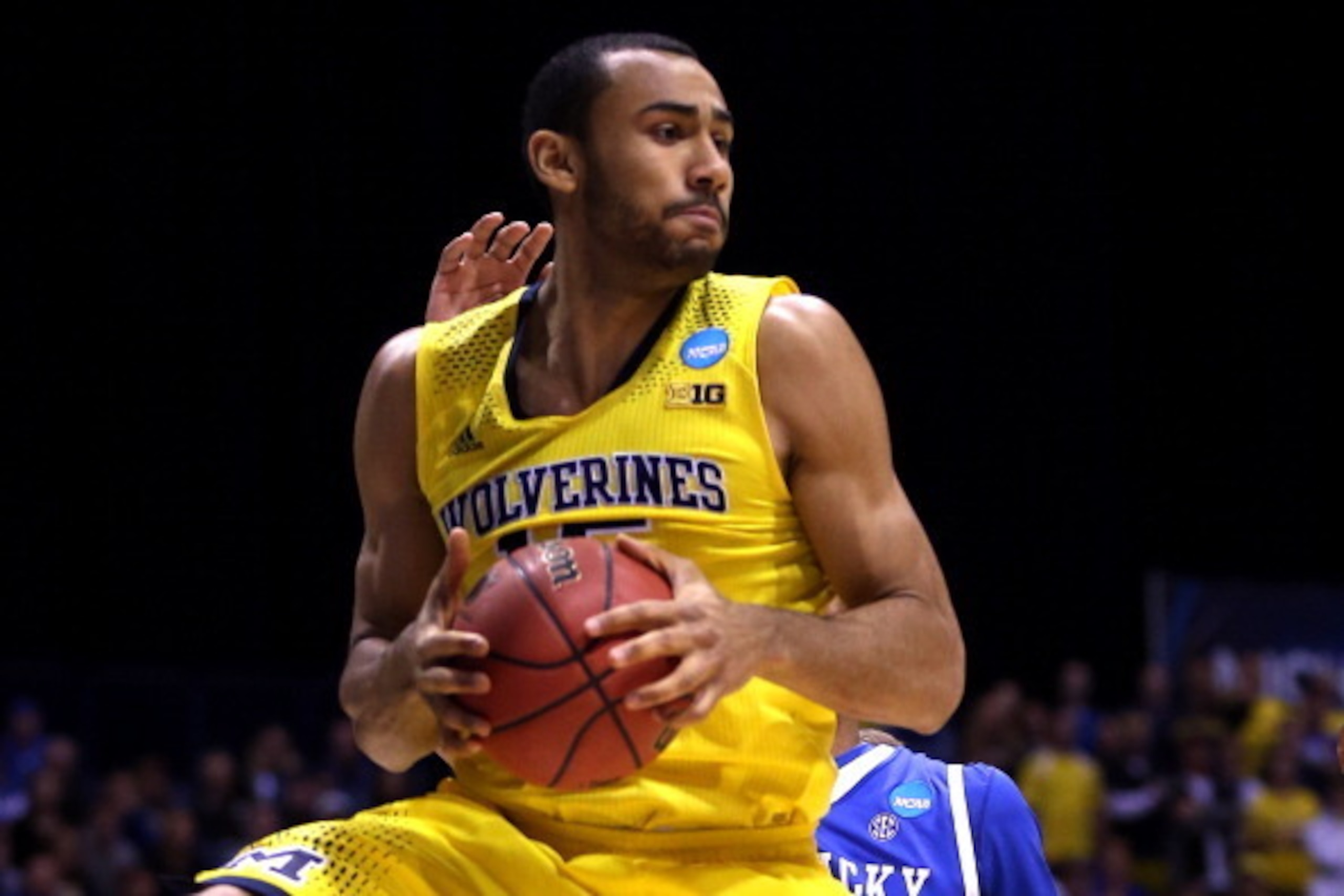
PG: Kasey Hill (6'1")
SG: Michael Frazier II (6'4")
SF: Dorian Finney-Smith (6'8")
PF: Jon Horford (6'10")
C: Chris Walker (6'10")
Bigs on the Bench: Devin Robinson (6'8"), Alex Murphy (6'10"), John Egbunu? (6'11")
Let's clear up any potential confusion right away by noting that the photo is of Michigan transfer Jon Horford. The big man played sparingly over the past three seasons with the Wolverines, but he should slide effortlessly into the type of role that Will Yeguete (4.9 PPG, 5.2 RPG) filled for the Gators last season.
Horford is far from the only noteworthy transfer in Billy Donovan's frontcourt.
Dorian Finney-Smith started his college career at Virginia Tech before sitting out the 2012-13 season and playing an important part for Florida last year.
Alex Murphy is also a former ACC guy, having spent his first few years at Duke. He redshirted in 2011-12, played sparingly in 2012-13 and decided in December to transfer to a school where he might actually play. He will presumably be eligible after the end of the fall semester.
The big wild card is John Egbunu. The mountain of a man played his freshman year at South Florida last season before deciding to transfer to Florida. According to Kevin Brockway of The Gainesville Sun, Donovan confirmed that Egbunu is petitioning to play this year. But it's highly unlikely he'll be granted that waiver. If he does, though, this is one heck of a big roster.
And, oh yeah, the Gators also have Chris Walker, who is merely the most talked-about sophomore in the country.
4. North Carolina Tar Heels
8 of 11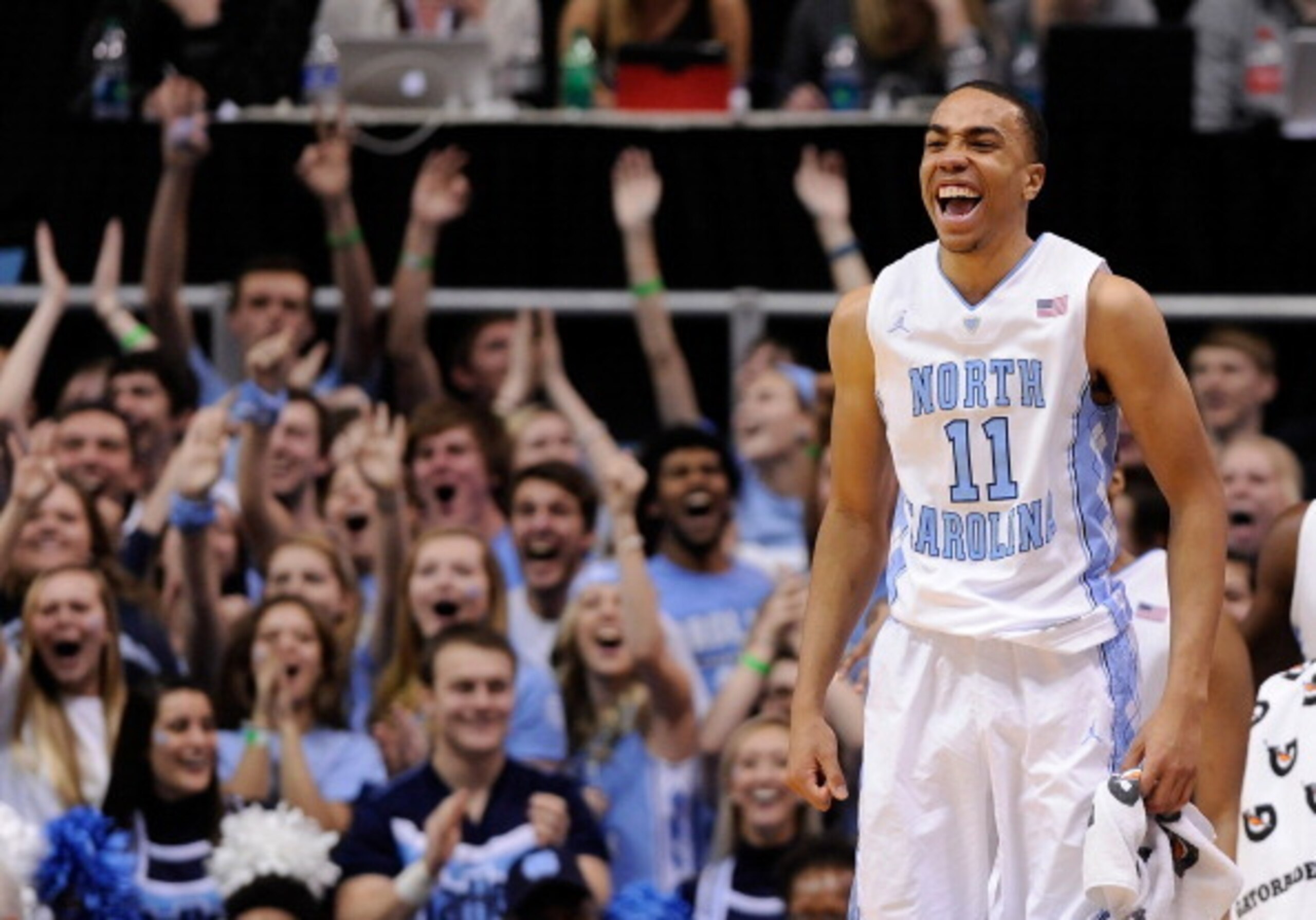
PG: Marcus Paige (6'1")
SG: J.P. Tokoto (6'5")
SF: Justin Jackson (6'8")
PF: Brice Johnson (6'9")
C: Kennedy Meeks (6'9")
Bigs on the Bench: Isaiah Hicks (6'8"), Joel James (6'10")
Outside of a somewhat lackluster 2012-13 season, you have to go back more than a decade to find the last time North Carolina didn't have one of the best frontcourts in the nation.
Being bigger and stronger than the opposition has simply become the norm in Chapel Hill, and Brice Johnson and Kennedy Meeks are more than capable of becoming the next names on the ever-growing list of big, talented Tar Heels.
Though they each received fewer than 20 minutes per game last season, Johnson and Meeks have numbers per 40 minutes that indicate they could comfortably average a double-double this season.
Let's not forget about Isaiah Hicks, either. 247Sports rated the 5-star recruit ahead of Bobby Portis, Marcus Lee and Jordan Mickey in last year's class of power forwards, but he played sparingly behind both Johnson and James Michael McAdoo.
Hicks probably won't start, but he could average upwards of 20 minutes per game in relief of both Johnson and Meeks.
Last, but not least, Justin Jackson projects as more of a shooting guard than a power forward, but his range at that height will make him a nightmare of a defensive matchup for most teams.
3. Arizona Wildcats
9 of 11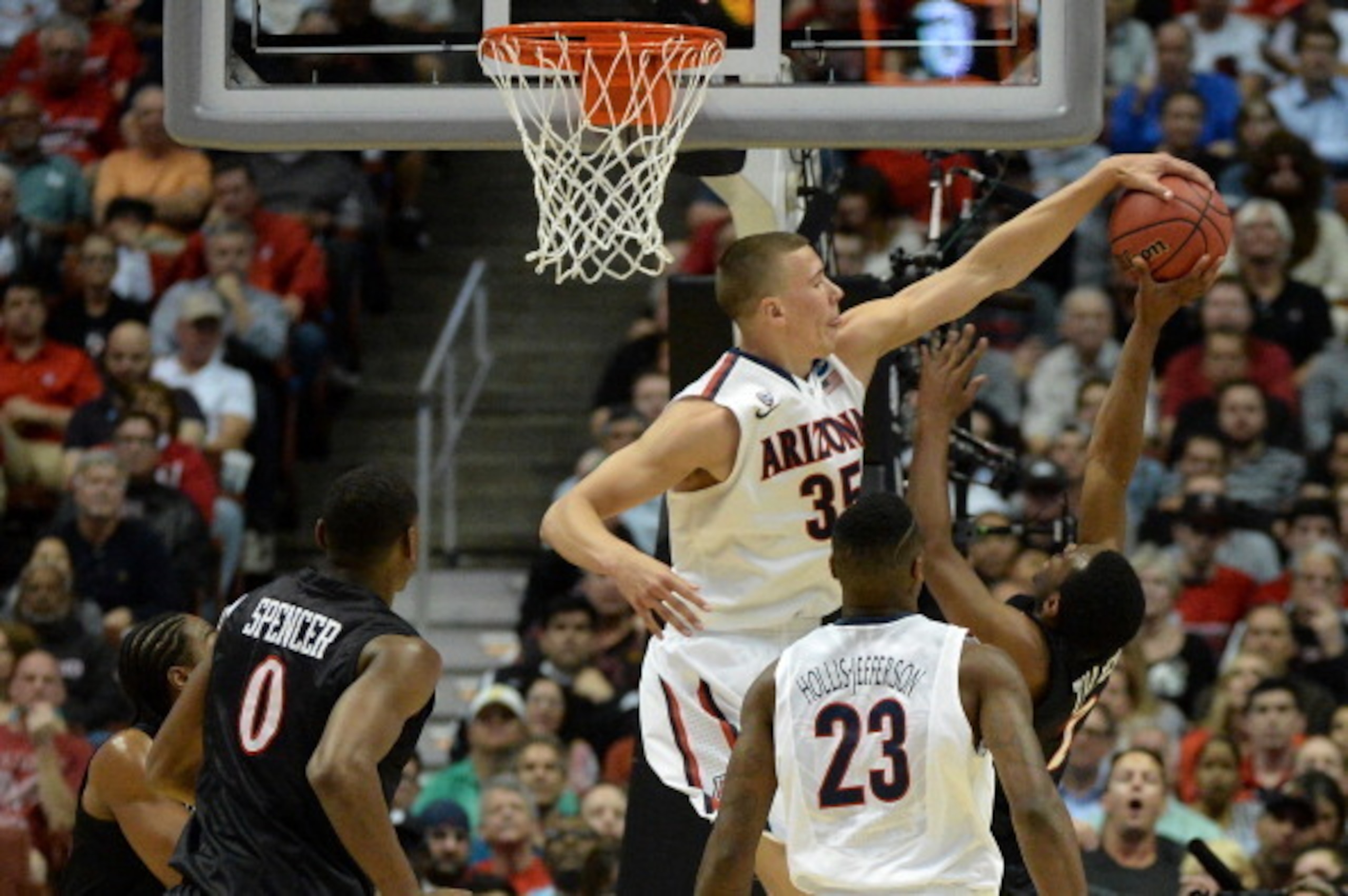
PG: T.J. McConnell (6'1")
SG: Stanley Johnson (6'7")
SF: Rondae Hollis-Jefferson (6'7")
PF: Brandon Ashley (6'9")
C: Kaleb Tarczewski (7'0")
Bigs on the Bench: Craig Victor (6'9"), Matt Korcheck (6'10"), Dusan Ristic (7'0")
Now we're getting into the teams who have so many quality big men that they're going to end up giving maybe 10 minutes per game to guys who would absolutely start for more than 70 percent of D-I teams.
In most seasons, this Arizona roster would be ranked No. 1 by a landslide, but this is pretty clearly the year of the big man in college hoops.
Still, No. 3 is pretty respectable and more than enough to give the West Coast Wildcats a size advantage over every team they play. They do have games against honorable mentions UTEP and UC Irvine, but unless they play San Diego State in the Maui Invitational championship, they'll get to avoid every other top 10 team until the NCAA tournament.
A healthy Brandon Ashley will be crucial to Arizona's cause.
Kaleb Tarczewski is what he is in the paint. He won't be a double-double or shot-blocking machine, but he's a quality defender and a capable scorer. Rondae Hollis-Jefferson should be a much-improved shooter and contributor at small forward, and while Stanley Johnson is quite a change of pace from Nick Johnson, he's probably the most physically terrifying "shooting guard" in the country.
Thus bringing us to Ashley. If he picks up where he left off in early February by averaging 11.5 PPG and 5.8 RPG, Arizona will be just about unstoppable.
2. Texas Longhorns
10 of 11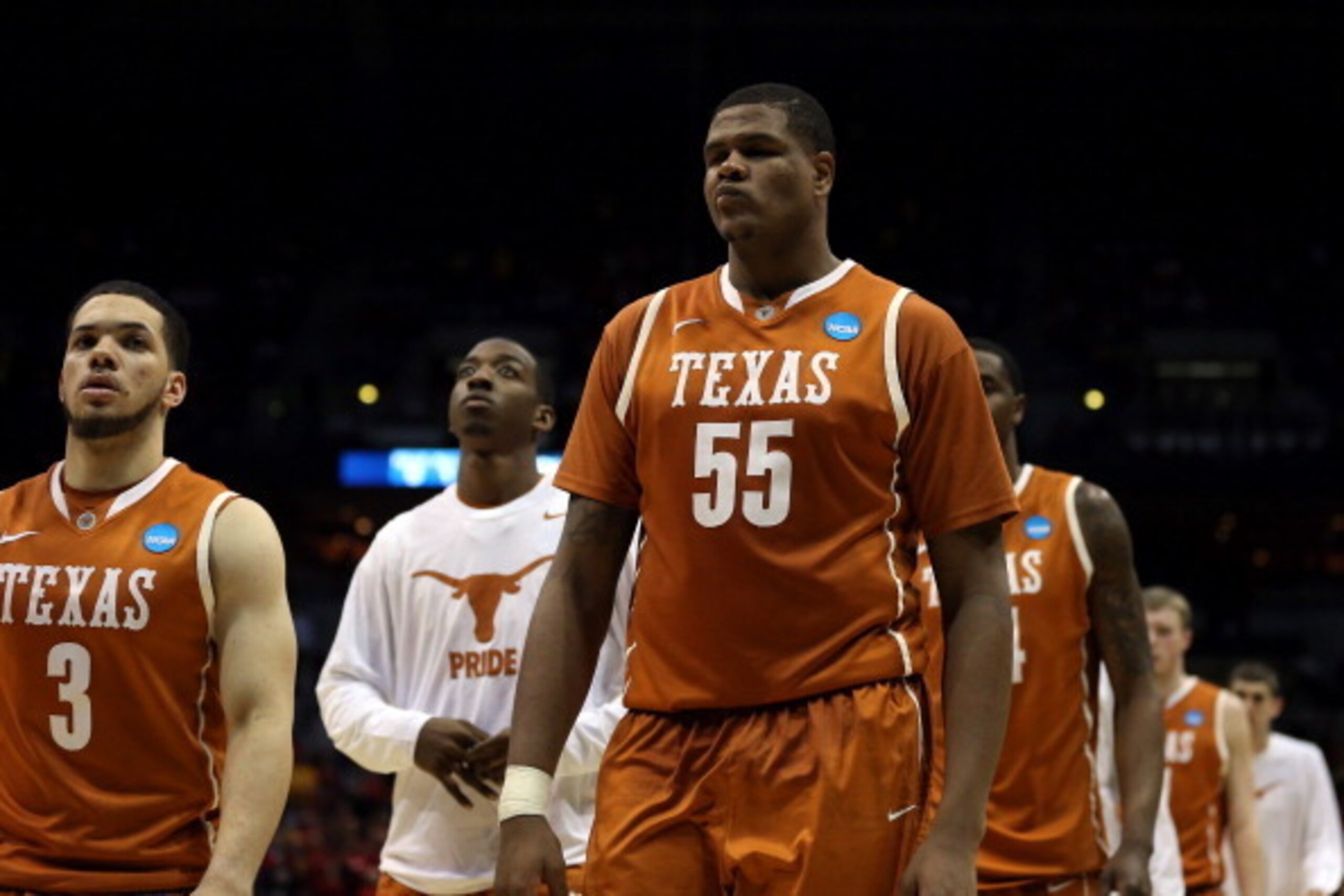
PG: Isaiah Taylor (6'1")
SG: Demarcus Holland (6'2")
SF: Jonathan Holmes (6'8")
PF: Cameron Ridley (6'9")
C: Myles Turner (6'11")
Bigs on the Bench: Connor Lammert (6'9"), Prince Ibeh (6'10")
Between Cameron Ridley, Prince Ibeh, Jonathan Holmes and Connor Lammert, the 2013-14 Longhorns ranked sixth in the nation in offensive rebounding percentage and ninth in block percentage.
As you'll notice, all four of those players are back, and Rick Barnes has even added one of the four best frontcourt freshmen in the nation in Myles Turner.
To get enough playing time for all five of those big men, the Longhorns could employ a "jumbo lineup" in which some combination of Holmes, Lammert and Turner floats out to the perimeter where each is a capable long-range shooter. At any rate, they're better three-point shooters than Isaiah Taylor (26.3 percent) or Demarcus Holland (29.2 percent).
There are dozens of potential combinations in play here, but one thing is for certain: Texas will be bigger than at least 95 percent of the teams it plays this season.
1. Kentucky Wildcats
11 of 11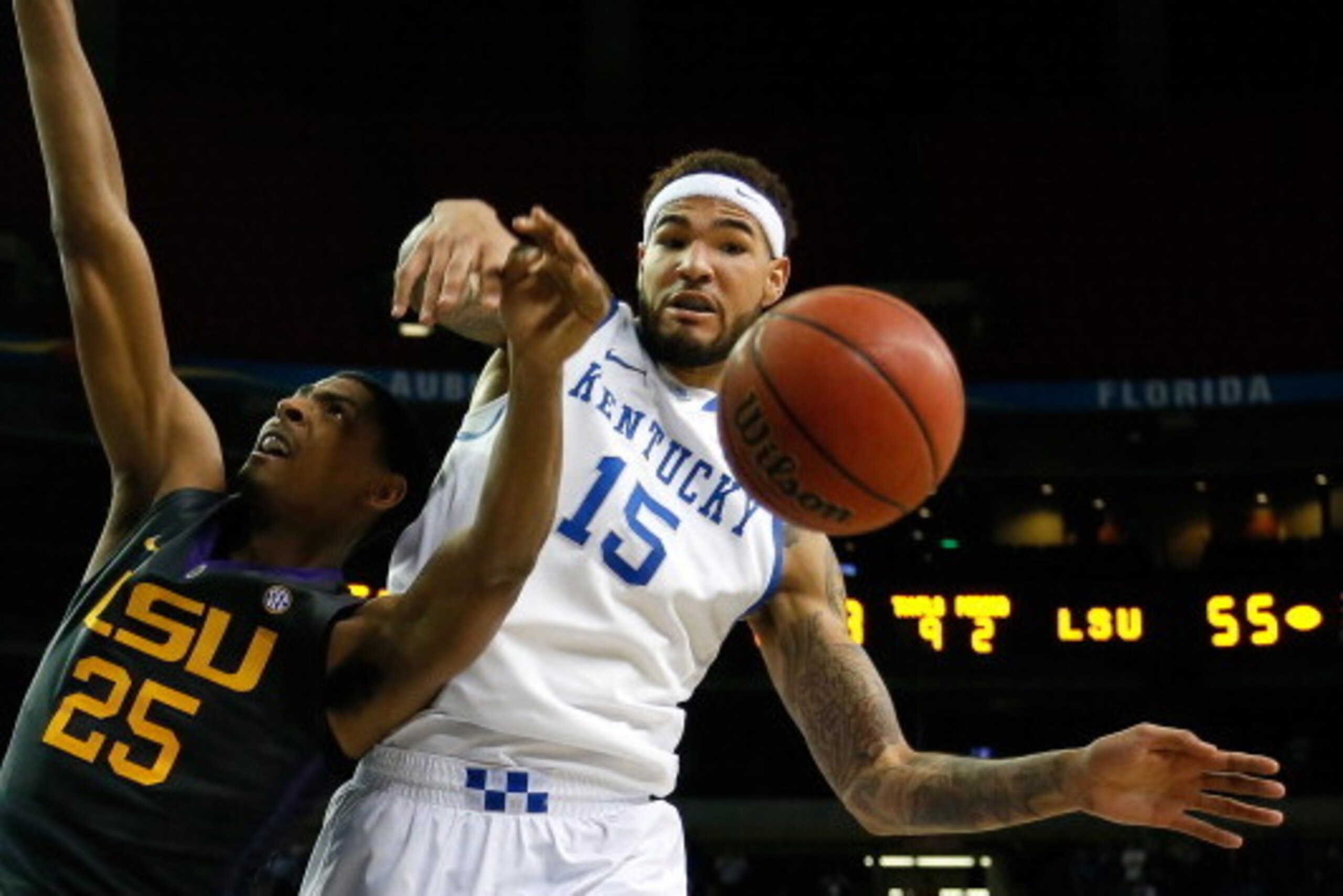
PG: Andrew Harrison (6'6")
SG: Aaron Harrison (6'6")
SF: Alex Poythress (6'8")
PF: Karl Towns Jr. (6'11")
C: Willie Cauley-Stein (7'0")
Bigs on the Bench: Dakari Johnson (7'0"), Trey Lyles (6'10"), Marcus Lee (6'9"), Derek Willis (6'9")
In a word: duh.
We've spent this entire offseason obsessing over Kentucky's outrageous depth in the frontcourt.
You can continue arguing over who actually belongs in the starting lineup, but there's no denying that John Calipari has an embarrassment of big man riches.
Trey Lyles is one of the best incoming players in the entire country, and he is an underdog to start, at best. Marcus Lee could be a first-round draft pick, and he's probably the fifth player off the bench for Kentucky.
For goodness sake, Derek Willis might play fewer total minutes this season than he would average per game at most schools.
Despite all that talent going to waste, the product that the Wildcats actually put on the court will be bigger and better than any other team in the country.
Kerry Miller covers college basketball for Bleacher Report. You can follow him on Twitter: @kerrancejames.
.jpg?w=2560 "NFL Paris Football")

.jpg?w=2560 "Trevon Diggs Cut by Seahawks")