Stephen Curry not only tops our list of the 10 greatest college basketball scorers of the 2000s but was one of the best scorers in the history of the game.
It was a pretty horrendous decade for music, but the 2000s produced quite a few college basketball players who made us wonder where they rank in the all-time list of scorers.
J.J. Redick made more career three-pointers than any other player had to that point in time. Tyler Hansbrough made more two-point field goals and free throws on a nightly basis than the vast majority of players even had the opportunity to attempt. And Taylor Coppenrath polished off an outstanding four-year career at Vermont by ensuring that he's never welcome in Syracuse, NY, again.
That's not even half of the memorable names on this list.
In compiling this list of the greatest scorers of the 2000s, we looked at more than just total points or points per game. Minutes played, tempo, shooting percentages and even strength of schedule were taken into consideration.
It's impossible to retroactively take the scorer out of the system he played in, but if you needed one bucket in a game of pickup basketball, which player from the 2000s would you most want with the ball in his hand?
Honorable Mentions
1 of 11
Lester Hudson, Tennessee-Martin (1,727 points, 26.6 PPG)
Rodney Stuckey, Eastern Washington (1,438 points, 24.4 PPG)
Hudson has the highest career PPG average of the past 17 seasons, and Stuckey isn't far behind him in fourth place.
However, both guys played just two years of D-I ball.
Hudson's two seasons with the Skyhawks were absolutely ridiculous. During those two years (2007-08 and 2008-09), he finished top four in the nation in points scored, and the team went 39-26. In Tennessee-Martin's other 20 years of D-I basketball, it has a record of 181-388.
Hudson at least had the benefit of playing two seasons of JUCO ball before transferring to Tennessee-Martin. Stuckey's two seasons at Eastern Washington were his only collegiate seasons before declaring for the draft.
Michael Watson, UMKC (2,488 points, 21.3 PPG)
Watson did a lot of scoring, but he only averaged 1.09 points per field-goal attempt.
He finished his career with 662 fewer points than Doug McDermott despite attempting 199 more field goals. But when you shoot 39.0 percent from two-point range and 35.6 percent from three-point range, it's kind of tough to be efficient.
David Holston, Chicago State (2,331 points, 19.6 PPG)
Holston was also an honorable mention on our list of the 10 best three-point shooters of all time earlier this summer.
He still ranks third behind Travis Bader and J.J. Redick in the record books for career three-point field goals, but it's hard to take him too seriously as a great scorer when he averaged fewer than 20.0 PPG against an annual strength of schedule that was downright laughable.
10. Bo McCalebb, New Orleans
2 of 11
Seasons Played: 2003-08 (128 games)
Scoring Totals: 2,679 points, 20.9 PPG
Shooting: 862-1,706 2PT (.476), 115-345 3PT (.333), 610-915 FT (.667)
Of the thousands of players who stepped on a court in the 2000s, Bo McCalebb finished his career with the fourth-highest scoring total.
Yet, his name is probably the most anonymous on this list.
The amazing thing about McCalebb is that he amassed more than 20 points per game with the New Orleans Privateers despite being a 6'0" guard who made fewer than one three-pointer per game.
His closest current-day comparison is probably Green Bay's Keifer Sykes. The 5'11" point guard has averaged 15.8 PPG in his career while attempting 4.5 times as many two-point field goals as three-point field goals.
The only real difference is that Sykes actually sets up teammates every now and then, while McCalebb ranked second in the nation in percentage of shots taken in two of his seasons.
9. Henry Domercant, Eastern Illinois
3 of 11
Seasons Played: 1999-2003 (120 games)
Scoring Totals: 2,602 points, 21.7 PPG
Shooting: 576-1,198 2PT (.481), 285-704 3PT (.405), 595-697 FT (.854)
It's a shame it took a full season for Rick Daniels to realize what he had in Henry Domercant.
Domercant played somewhat sparingly as a freshman, averaging just 9.3 PPG with career-low shooting percentages from both two-point and three-point range.
But he absolutely exploded in his final three seasons at Eastern Illinois. He averaged 25.6 PPG and shot 41.3 percent from three-point range while attempting 7.1 triples per game.
Had he also put up those numbers as a freshman, he would have finished his career with more than 3,000 points.
The Panthers averaged 78.7 PPG during Domercant's four seasons.
They haven't even reached 68.7 PPG in any of the 11 seasons since his graduation.
8. Taylor Coppenrath, Vermont
4 of 11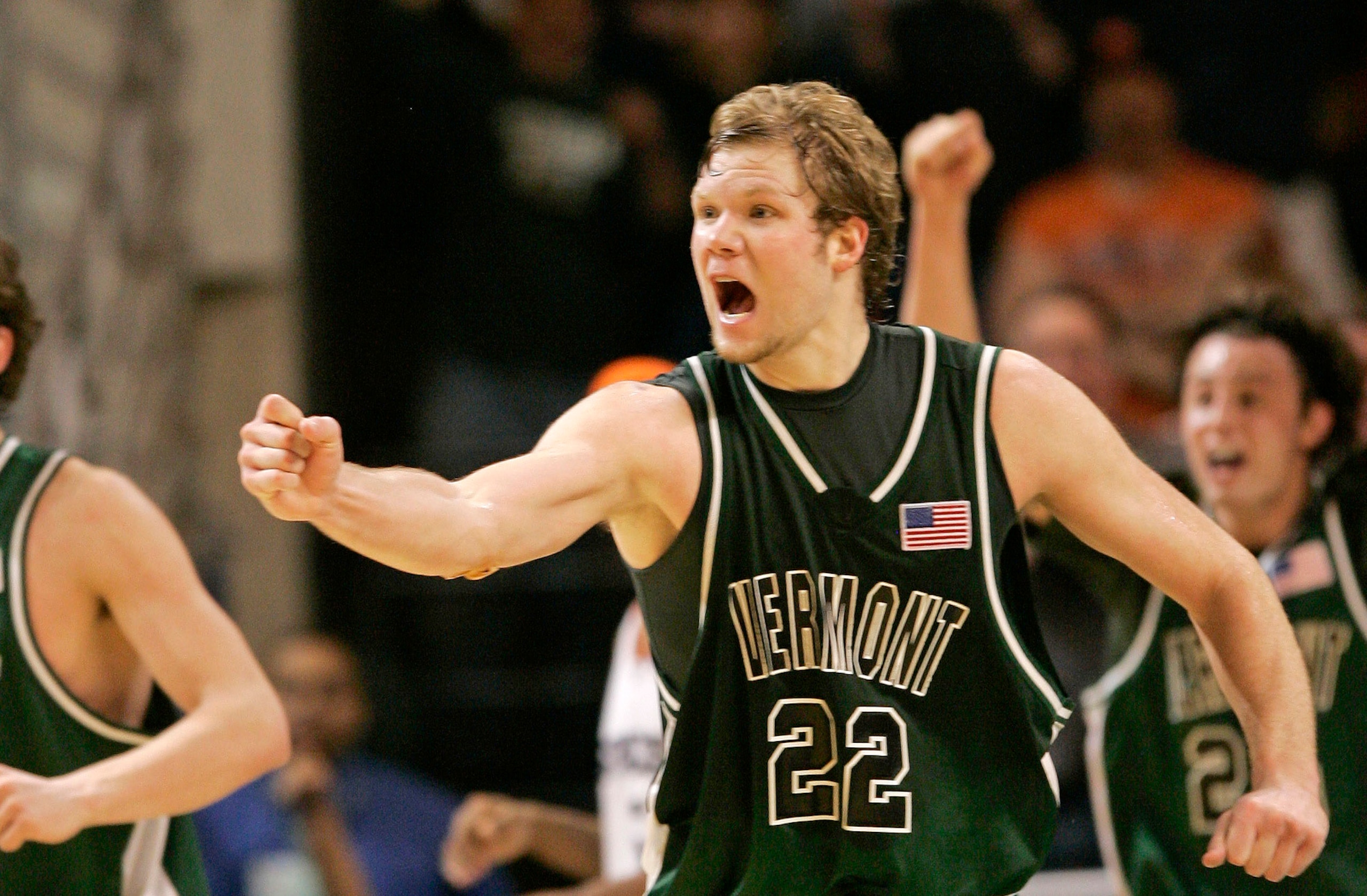
Seasons Played: 2001-05 (114 games)
Scoring Totals: 2,442 points, 21.4 PPG
Shooting: 781-1,510 2PT (.517), 70-203 3PT (.345), 670-876 FT (.765)
Taylor Coppenrath was the minor-conference precursor to Tyler Hansbrough.
No matter how much abuse he took in the paint, Coppenrath just got better and stronger with each passing year.
In his final season with the Catamounts, he registered 8.82 win shares—the 24th-highest single-season total since 1997-98. Just about every other player in the top 29 on that list went on to make a lot of money in the NBA.
However, Coppenrath graduated from Vermont and dropped off the face of the earth.
OK, that isn't entirely true. He has been playing in Europe for the past decade. But it's not too surprising that he never made it to the NBA, because Coppenrath had a much easier path to his points and win shares than most of the players considered for this list.
According to the strength-of-schedule record books at CBS Sports, Vermont consistently played (and still plays) a very weak schedule. While playing in what has been one of the worst conferences over the past 15 seasons and rarely challenging itself during the nonconference portion of the season, Vermont ranked outside the top 200 in SOS in each of Coppenrath's four seasons.
In his sophomore season, the Catamounts had the second-easiest schedule in the entire country.
Regardless of whom they played, though, Coppenrath was a beast, and we will always remember his 16-point game in Vermont's shocking overtime win over Syracuse in the 2005 NCAA tournament.
7. Keydren Clark, St. Peter's
5 of 11
Seasons Played: 2002-06 (118 games)
Scoring Totals: 3,058 points, 25.9 PPG
Shooting: 532-1,215 2PT (.438), 435-1,192 3PT (.365), 689-806 FT (.855)
And now for the curious case of Keydren Clark.
Clark ranks seventh on the all-time scoring list. He led the nation in scoring average in his sophomore and junior seasons. He ranked third in that category his senior year and sixth as a freshman. Clark is one of two players in the past 20 years to reach 2,900 career points.
The other was some dude named Doug McDermott.
But, really, how good was he?
Clark averaged better than 38.0 minutes per game in each of his four seasons while playing for a defenseless, uptempo team in a high-scoring conference. He attempted more than 20 field goals per game, nearly half of which came from three-point range.
Durable? Absolutely.
Well-conditioned? Without a doubt.
But was Clark one of the greatest scorers of this generation, or was he just some guy who happened to have an injury-free career in a system where he was encouraged to play and shoot as much as possible?
Let's put it this way: Based on his career shooting percentages, McDermott would have graduated with 1,435 more points if he had attempted the same number and type of shots per game as Clark.
6. Troy Bell, Boston College
6 of 11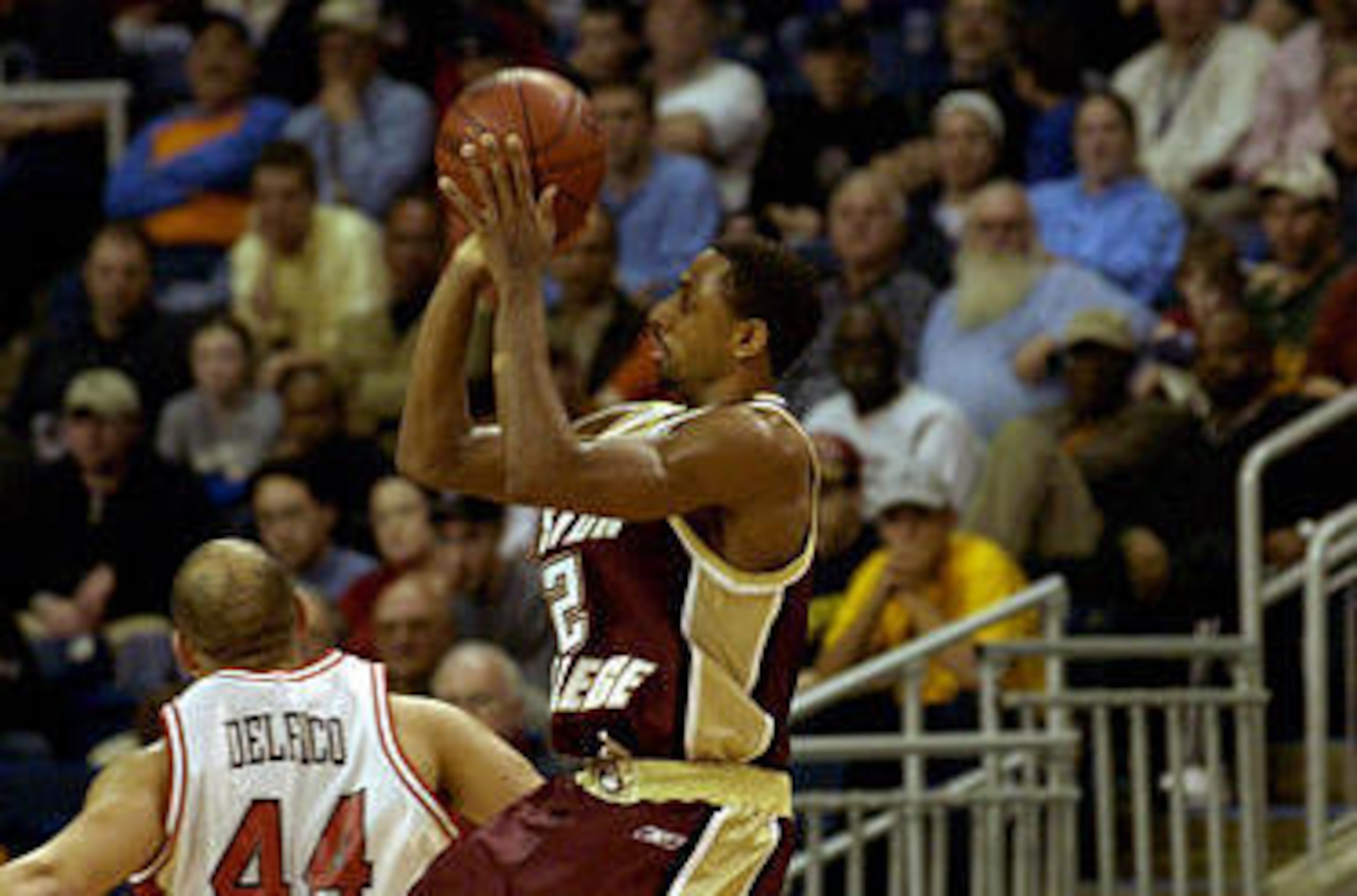
Seasons Played: 1999-2003 (122 games)
Scoring Totals: 2,632 points, 21.6 PPG
Shooting: 461-987 2PT (.467), 300-807 3PT (.372), 810-933 FT (.868)
It might be hard to recall in light of recent disappointing seasons, but Boston College was a pretty good team in the 2000s.
Troy Bell was a big reason why.
Bell led the Eagles in scoring in each of his four seasons, and he did so by no small margin.
One thing he did extremely well was get to the free-throw line and convert. Bell finished his career with 810 made free throws—the third-highest number since the start of the 1997-98 season. In each season, he shot at least 84.7 percent from the line and made at least 161 free throws.
He played in only three NCAA tournament games in his career, but he averaged 25.7 PPG in those contests.
If only he'd had a better running mate at some point in his career, perhaps Boston College would have a Final Four appearance in its history.
5. Jaycee Carroll, Utah State
7 of 11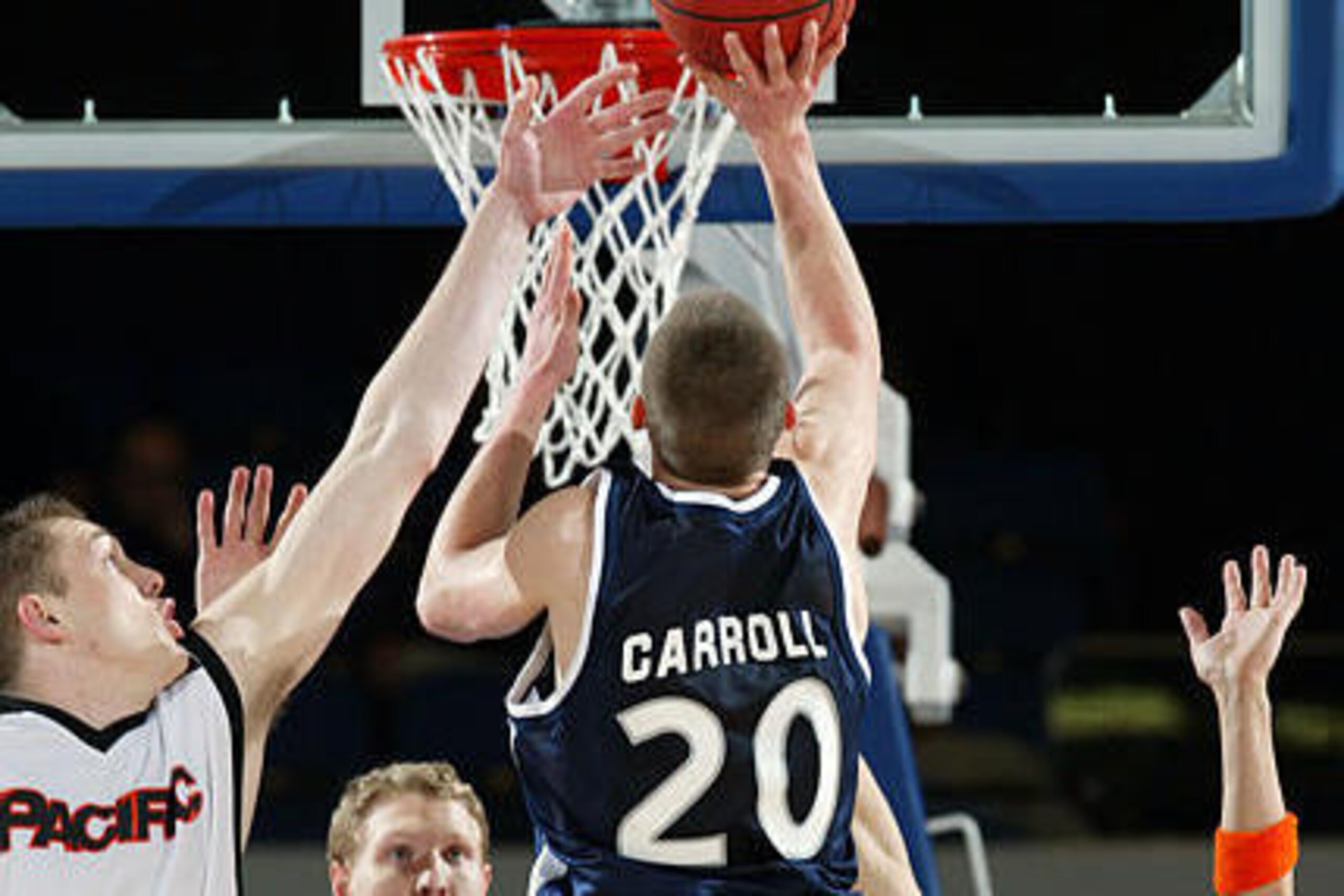
Seasons Played: 2004-08 (134 games)
Scoring Totals: 2,522 points, 18.9 PPG
Shooting: 511-928 2PT (.551), 369-793 3PT (.465), 393-456 FT (.862)
While others played a ton of minutes for uptempo teams, Jaycee Carroll was an extremely efficient scorer for what has been one of the slowest-paced teams in the country for a long time.
Carroll finished his career at Utah State with the fourth-highest three-point percentage in college basketball history, and he made more three-pointers than any other player in the top 17 on that list.
Unlike prolific shooters like Stephen Sir and Steve Novak who made a ton of three-pointers and did virtually nothing else to help the team, Carroll did just as much damage inside the arc as he did outside it. And despite standing just 6'2", he logged 680 rebounds during his four seasons at Utah State.
It wasn't just against WAC opponents that he was capable of scoring, either. Carroll played in two NCAA tournament games in his career—one as a freshman and one as a sophomore—and averaged 19.5 PPG against two very good Pac 10 teams.
Shame the Aggies couldn't make the dance during the senior season in which he shot 49.8 percent from downtown and averaged 22.4 PPG.
4. Ike Diogu, Arizona State
8 of 11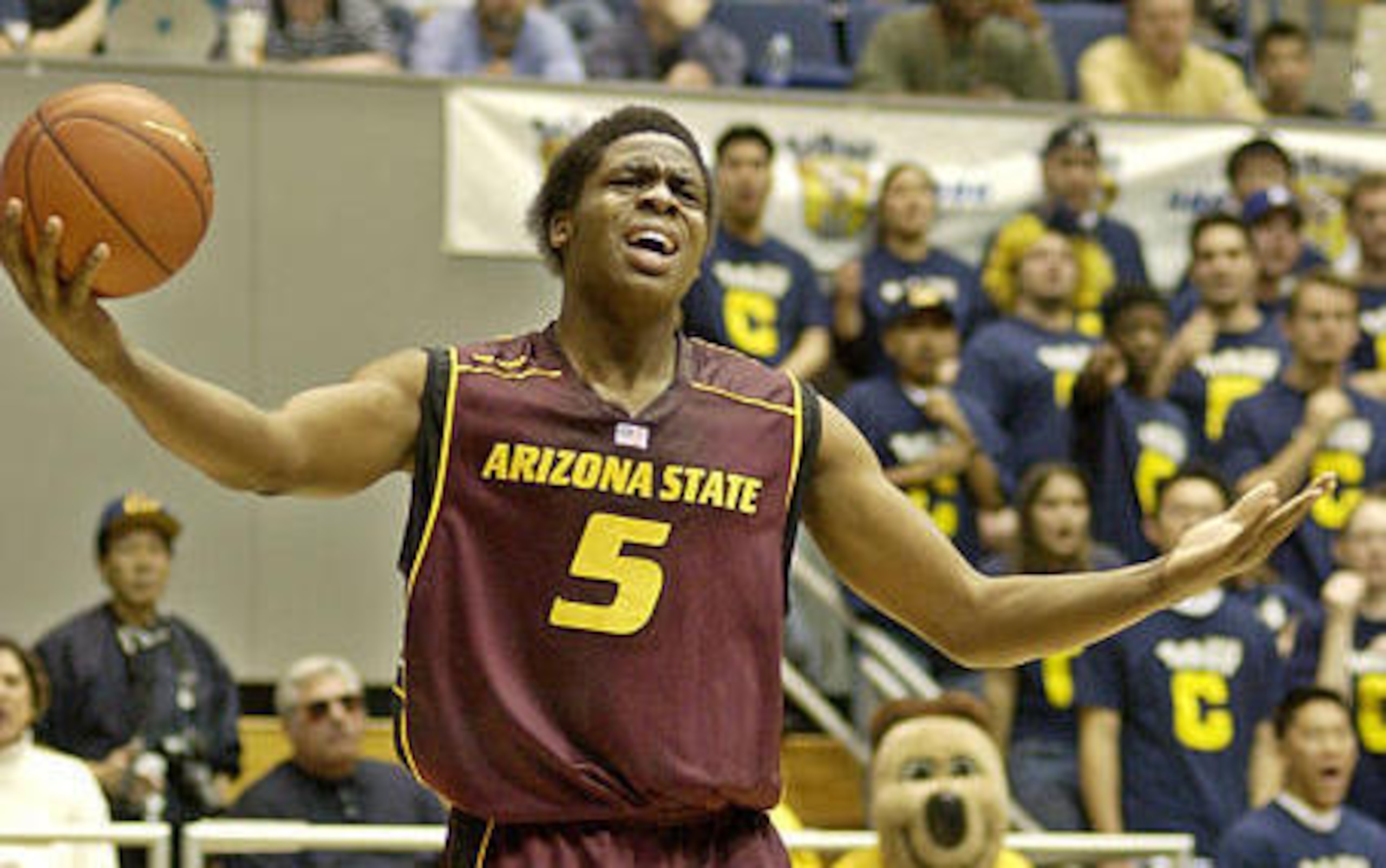
Seasons Played: 2002-05 (91 games)
Scoring Totals: 1,946 points, 21.4 PPG
Shooting: 576-974 2PT (.591), 41-106 3PT (.387), 671-854 FT (.786)
One of just two players in the top 10 who played in fewer than four collegiate seasons, Ike Diogu was one of the most unstoppable interior forces in college history.
Like Troy Bell, Diogu was a professional free-throw shooter. In his final two seasons at Arizona State, he made enough free throws to rank 12th and 16th on the list of most free throws converted in a single season since 1997-98.
And while Tyler Hansbrough has three seasons in the top 17 on that list, he had the benefit of playing for a team that made deep tournament runs. In Hansbrough's best season at the charity stripe, he made 7.8 per game. In Diogu's best season, he averaged 9.0.
What's more, Diogu shot nearly 60 percent inside the arc during his three-year career. That's hardly a record-setting percentage compared to players like Kenny George who spent most of their career dunking, but it's substantially better than that of any other player on this list.
Between the high shooting percentage and high free-throw rate, Diogu averaged 1.80 points per field-goal attempt in his career. Hansbrough (1.64) is the only other player on this list with a ratio better than 1.47.
Too bad he didn't play a full four seasons for an above-average team. Diogu could have made a serious run at 3,000 career points.
3. J.J. Redick, Duke
9 of 11
Seasons Played: 2002-06 (139 games)
Scoring Totals: 2,769 points, 19.9 PPG
Shooting: 368-780 2PT (.472), 457-1,126 3PT (.406), 662-726 FT (.912)
J.J. Redick is one of the greatest shooters in the history of college basketball.
Travis Bader surpassed him this season, but Redick finished his career with more made three-pointers than any other player ever.
He's the only player in history to make at least 450 free throws while shooting better than 90.0 percent in the process.
Had he shot more aggressively in his first two seasons, he would have reached 3,000 career points with room to spare. He averaged 11.0 field-goal attempts per game as a freshman and sophomore but increased that number by 50 percent to 16.5 as a junior and senior—an incredible feat, given that he had to run around roughly 17 screens just to get six inches of space to attempt a shot.
Too bad all that running took its toll on him by the end of each season. In 14 career NCAA tournament games, Redick averaged 15.9 PPG and shot 33.9 percent from three-point range.
2. Tyler Hansbrough, North Carolina
10 of 11
Seasons Played: 2005-09 (142 games)
Scoring Totals: 2,872 points, 20.2 PPG
Shooting: 927-1,714 2PT (.541), 12-38 3PT (.316), 982-1,241 FT (.791)
To the chagrin of the fans of every other ACC team, Tyler Hansbrough was a wrecking ball in the paint for North Carolina.
Hansbrough has made more two-point field goals and more free throws than any other player in the past 17 years.
Now, some of that is due to the fact that he played 142 games for a team that has ranked in the top 27 in adjusted tempo in each of the past 11 seasons. Even though he didn't play the minutes or take the percentage of shots that a player like Keydren Clark did, Hansbrough had no shortage of opportunities with the Tar Heels.
But everyone knew for four seasons that he was North Carolina's best scoring option, and it didn't matter. He still averaged at least 18.4 PPG in each season in what was debatably the best conference in the country.
Perhaps most notable of all, though, is that he did all his scoring without even being a great shooter. The man perfected the art of flailing in midair, searching for contact and somehow shot-putting the ball into the hoop.
1. Stephen Curry, Davidson
11 of 11
Seasons Played: 2006-09 (104 games)
Scoring Totals: 2,635 points, 25.3 PPG
Shooting: 457-862 2PT (.530), 414-1,004 3PT (.412), 479-547 FT (.876)
We obsessed over Doug McDermott to no end last season, but he wouldn't have even sniffed the career scoring mark that Stephen Curry would have set if he had come back for a fourth season.
Even if he merely duplicated his 974-point junior season, he would have graduated with 3,609 points. Aside from Pete Maravich (3,667), that's 360 more points than any college player has ever scored.
So, yeah, Curry was the best scorer of the 2000s.
He was the best scorer we've seen in more than four decades.
Only seven players have reached 930 points in a season in the past 17 years.
Curry did it twice.
Given the way he exploded in the 2008 NCAA tournament and the manner in which he has excelled in the NBA, it wouldn't seem to matter whether he played for a small fry like Davidson or a Goliath like Kentucky. Curry would have been a stud no matter what.
All advanced stats via KenPom.com (subscription required) and Sports-Reference.com.
Kerry Miller covers college basketball for Bleacher Report. You can follow him on Twitter @kerrancejames.
.jpg?w=2560 "NFL Paris Football")

.jpg?w=2560 "Trevon Diggs Cut by Seahawks")