
The Most Intriguing Player on Each CBB Team in the 2014 Preseason Coaches Poll
The only things more intriguing than college basketball's 2014-15 preseason coaches poll are the most intriguing players on those 25 teams.
We're not necessarily talking about the best players, but rather the ones upon which a team's entire season might hinge.
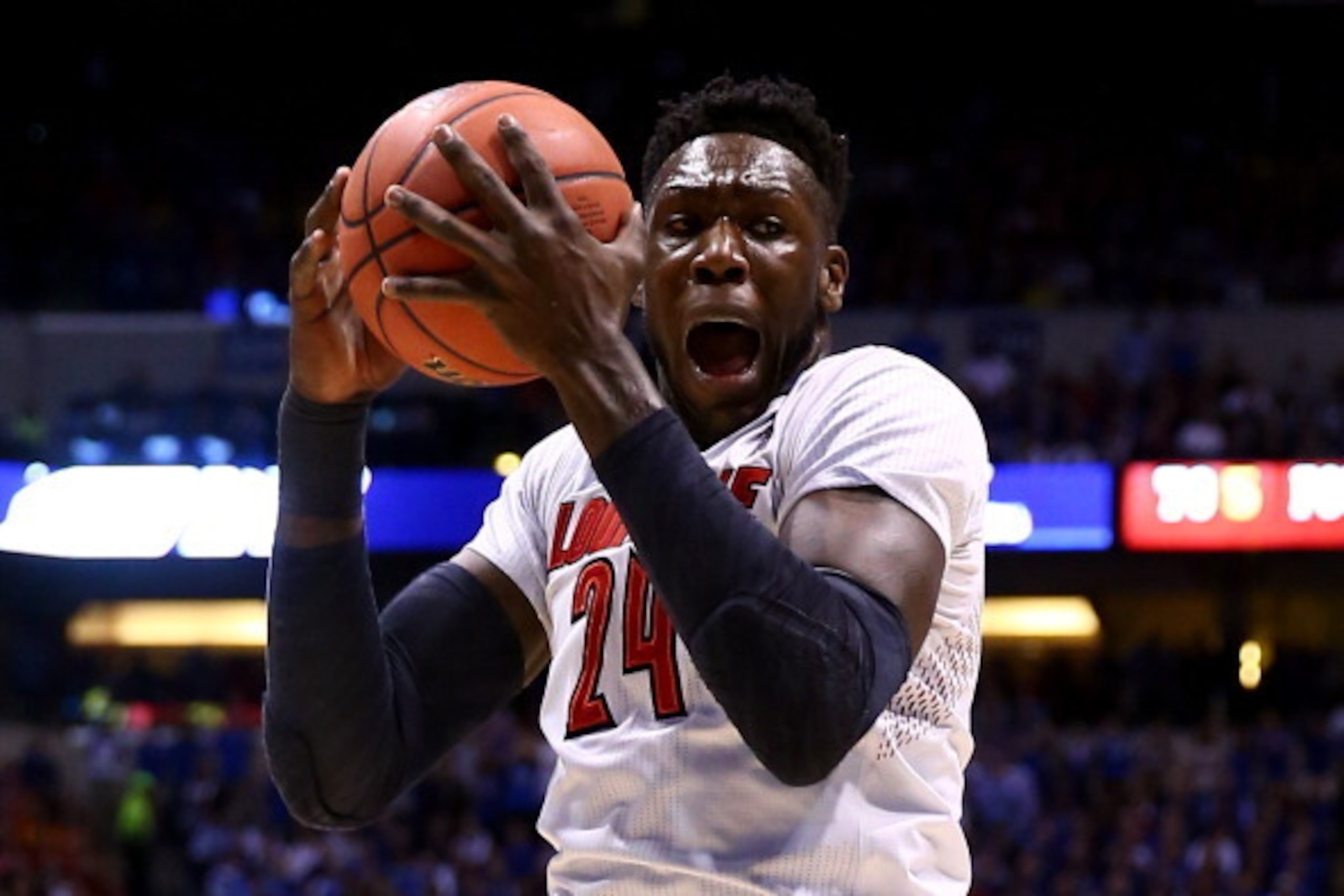
Take Louisville, for example. Montrezl Harrell is clearly the best player for the Cardinals. They'll rely on him more heavily than anyone. But he's just plain and simple a monster in the post. The most intriguing thing about him might be his utter inability to make a free throw.
When it comes to the intrigue factor at Louisville, Wayne Blackshear takes the cake.
Read on for our explanation of that selection, as well as our pick for the most intriguing player on each of the other 24 teams in the first coaches poll of the season.
All advanced stats via KenPom.com (subscription required), NCAA.com and Sports-Reference.com.
25. Iowa Hawkeyes: Adam Woodbury and Gabriel Olaseni
1 of 25
2013-14 Stats: 33.6 MPG, 12.2 PPG, 8.8 RPG, 1.2 APG, 1.9 BPG
In the Big 12, you need to have a competent big man or two in order to compete, otherwise every other team in the conference will destroy you in the paint.
In the Big Ten, however, having a quality center isn't so much a prerequisite as it is a bonus.
A few of the teams have solid big men. Wisconsin has Frank Kaminsky. Purdue has A.J. Hammons. And as we'll get to in a few slides, Nebraska has a criminally underrated big man in Walter Pitchford.
But more noteworthy than which teams have paint presences to brag about are the ones that don't.
Matt Costello and Gavin Schilling are Michigan State's only players taller than 6'7", and you won't find either of them on any preseason all-conference teams. Michigan fans have seemingly convinced themselves that Mark Donnal is the second coming of Robert Traylor, but the fact remains that he's a redshirt freshman with a lot to prove. Indiana's best option at center is a 6'7" small forward.
Enter Adam Woodbury (7'1") and Gabriel Olaseni (6'10").
We couldn't possibly separate the two because they played almost the exact same number of minutes last season in mutual relief of each other, so we combined their stat lines above.
Even after combining their numbers, Iowa's big men didn't exactly put up Shaquille O'Neal numbers, but two giants is better than zero. The Hawkeyes may struggle to replace Roy Devyn Marble, but they might also pull off some surprising upsets in the Big Ten thanks in large part to rebounding margin and shot blocking.
24. Syracuse Orange: Michael Gbinije
2 of 25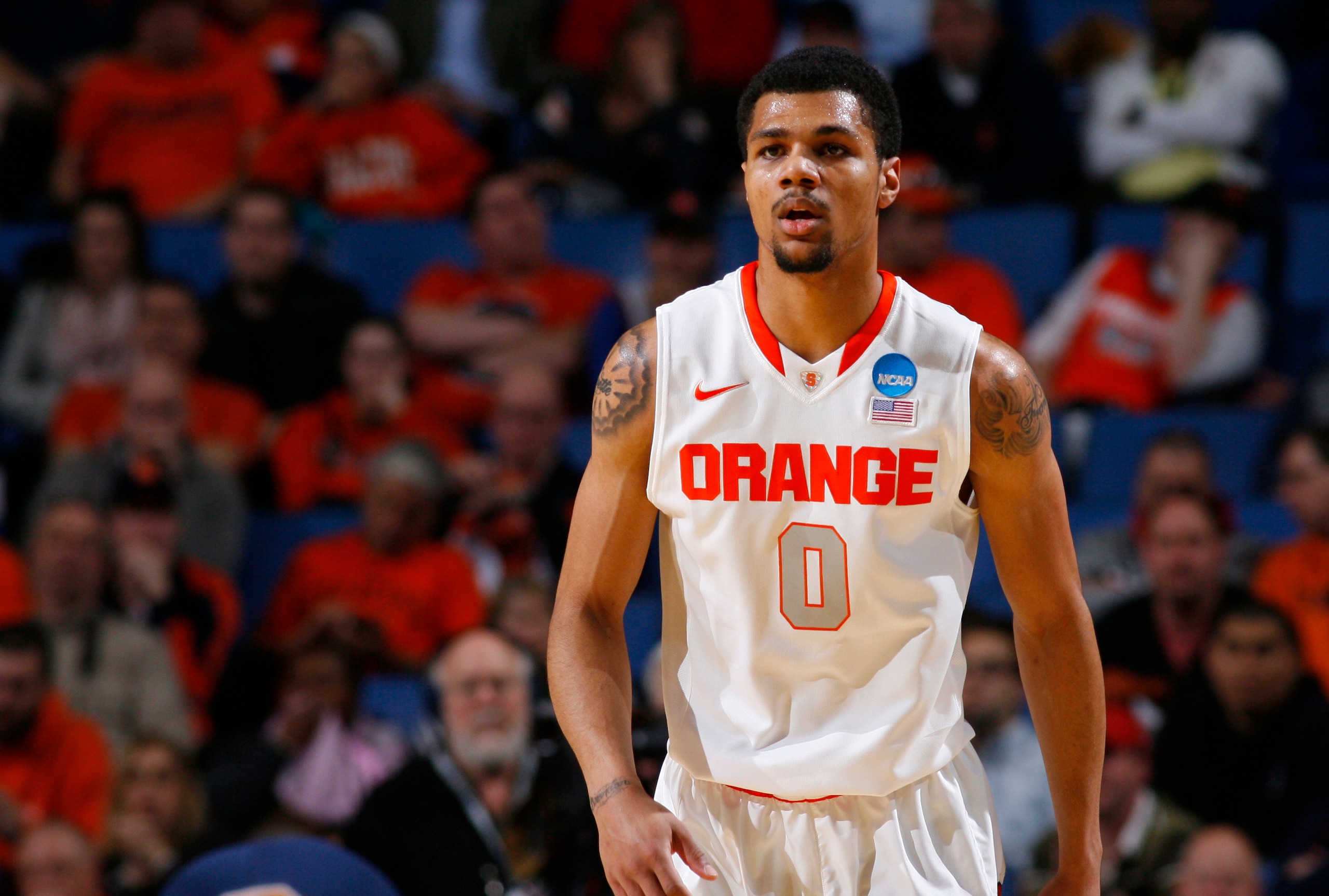
2013-14 Stats: 14.6 MPG, 3.4 PPG, 1.8 RPG, 1.2 APG, 0.7 SPG
After barely getting any playing time as a freshman at Duke, Michael Gbinije transferred to Syracuse and nearly found himself in the exact same situation.
Gbinije was somewhat of a regular during the nonconference portion of the season, but he averaged just 8.2 minutes per game during a nine-game stretch from January into February.
Kind of odd that his playing time decreased right when the Orange were having to adjust to playing without DaJuan Coleman, but an early February injury to Baye Moussa Keita left Jim Boeheim with little choice other than to give Gbinije another extended audition.
After losing Tyler Ennis, Jerami Grant, C.J. Fair and Keita this summer, Syracuse will need more than just a handful of minutes per game out of Gbinije.
He probably won't start, but when has that mattered at Syracuse? Grant came off the bench more often than not in his two years with the Orange before getting drafted early in the second round in June. Dion Waiters never started a game for Syracuse, and he was the fourth overall pick in 2012.
Gbinije will be Boeheim's personal Swiss Army knife, serving as the primary backup to Tyler Roberson at the 3 and a potential backup for any position 1 through 4.
I projected Desmond Lee as the ACC 6th Man of the Year earlier this summer, but that honor could just as easily go to Gbinije if he's a key factor in leading the Orange back to the tournament.
23. Michigan Wolverines: Mark Donnal
3 of 25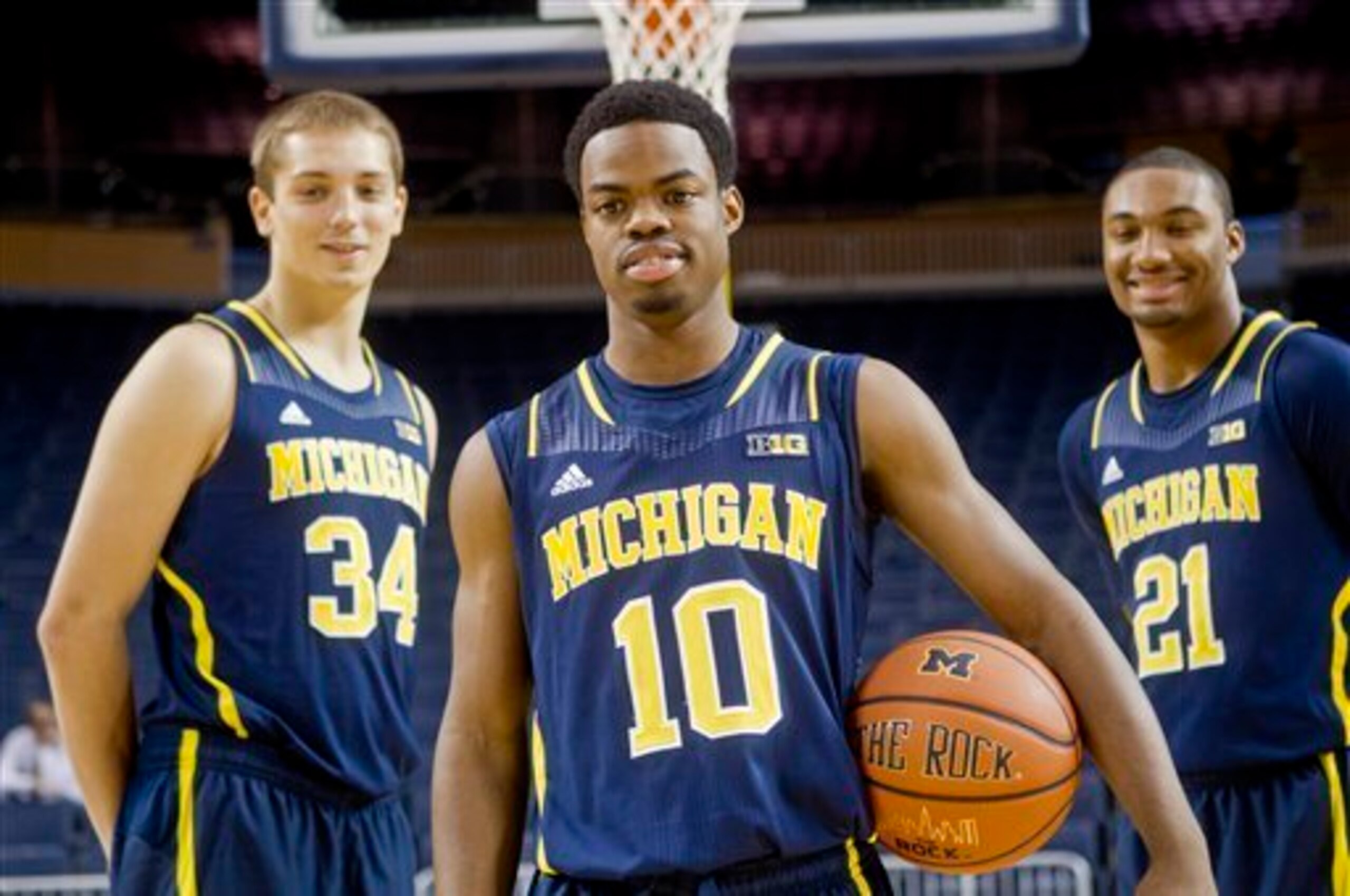
2013-14 Stats: N/A (incoming freshman)
Remember all that talk on Iowa's slide about the importance of a good big man in the Big Ten?
Michigan has some of the best guards and small forwards in the country. Between Derrick Walton Jr., Zak Irvin, Caris LeVert, Kameron Chatman and Spike Albrecht, the Wolverines are going to be lethal.
If Mitch McGary had just said no to both drugs and the NBA, the Wolverines might be ranked No. 2 or No. 3 in the country.
Instead, they're ranked No. 23 and in desperate need of some help from big-bodied freshmen.
Maybe Ricky Doyle or D.J. Wilson fills that void in the post, but the early favorite to start at center for Michigan is Mark Donnal.
A redshirt freshman who spent last season bulking up and practicing against the likes of McGary, Jordan Morgan and Jon Horford, Donnal at least has the benefit of one season of tutelage from John Beilein under his belt.
At least Donnal and the Wolverines will get to play a few D-I games before really getting tested in the paint. Bucknell, Detroit and Oregon have some of the most undersized rosters in the country.
22. SMU Mustangs: Markus Kennedy
4 of 25
2013-14 Stats: 25.0 MPG, 12.4 PPG, 7.1 RPG, 1.6 APG, 1.5 SPG, 1.2 BPG
I'm a sucker for players who stuff the stat sheets, and Markus Kennedy is even more valuable on defense than he is on offense.
He had the fourth-best defensive rating in the entire country last season and finished 19th in defensive win shares despite playing just 25 minutes per game.
When he wasn't busy leading the Mustangs in both steals and blocks, he was by far their best interior presence with 94 more two-point field goals and 122 more rebounds than any other player. In every facet of the game, he was practically unstoppable.
Hard to believe this is the same guy who transferred away from Villanova after one ineffective and out of shape season. Because of Kennedy, SMU is still in great shape to win the AAC despite missing out on a season of Emmanuel Mudiay.
21. Nebraska Cornhuskers: Walter Pitchford
5 of 25
2013-14 Stats: 23.2 MPG, 9.3 PPG, 4.7 RPG, 0.6 BPG
Only one Cornhusker had an O-rating of 106.0 or better last season.
No, it wasn't Terran Petteway. At 102.4, the preseason Big Ten all-conference stud was actually pretty pedestrian.
It was Walter Pitchford. Nebraska's version of Adreian Payne not only had the best O-rating on the team, but at 121.1 it was 15.4 points better than anyone else.
Let's talk about that Payne comparison, though. Pitchford made 41.0 percent of his 117 attempts from three-point range last season. He and Payne (44-of-104) were the only players in the Big Ten taller than 6'6" to display that kind of willingness and ability.
Frank Kaminsky is lauded for his three-point range, but he made "only" 37.8 percent of his 98 attempts while playing in six more games than Pitchford and seven more than Payne.
While his range is great, what Tim Miles needs is for Pitchford to use his 6'10" frame for good on the defensive end of the court. If he can evolve into more of a force on the glass and maybe add a blocked shot here and there, his playing time will increase substantially and Nebraska will be even better than last season.
20. Ohio State Buckeyes: D'Angelo Russell
6 of 25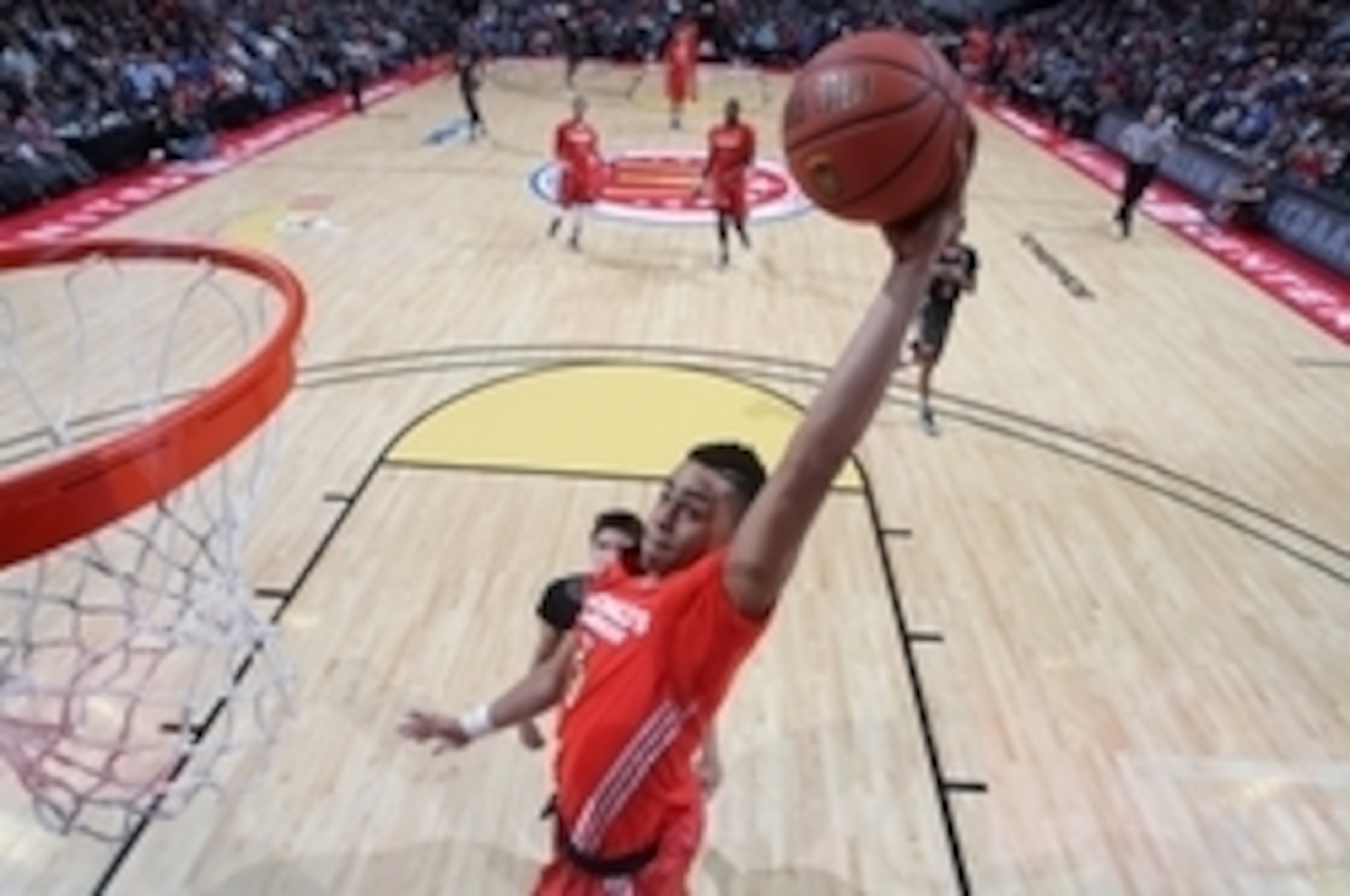
2013-14 Stats: N/A (incoming freshman)
What happens if D'Angelo Russell isn't as good as advertised?
I'm not doubting his talent, but there are a lot of people who have already decided that he's going to win the Big Ten Freshman of the Year award without much competition.
Rather than asking how great he might be, it puts more of an emphasis on his intrigue factor to wonder where the Buckeyes end up if he struggles at all.
Thad Matta does have Kam Williams waiting in the wings after sitting out last season, but this is an Ohio State team painfully devoid of depth at the guard positions.
In a pinch, I suppose either Jae'Sean Tate, Marc Loving or Sam Thompson could slide over from small forward to play shooting guard, but it sure does seem like Russell is going to get all the minutes he can handle as a freshman.
For his sake, here's hoping he's more Jon Diebler than Lenzelle Smith Jr.
19. Oklahoma Sooners: Ryan Spangler
7 of 25
2013-14 Stats: 29.2 MPG, 9.6 PPG, 9.3 RPG, 1.4 APG, 0.9 BPG
Oklahoma has no shortage of players who can sink a three-pointer, force a steal or find an open teammate for a bucket.
But in the rebounding department, it's Ryan Spangler or bust.
(We're assuming Houston transfer TaShawn Thomas is not ruled eligible, because at this point the Sooners have to proceed as if that's the case, as well.)
Spangler finished last season with more than twice as many rebounds as any returning Sooner. He grabbed 12.1 percent of potential offensive rebounds while on the court. That's a modest percentage compared with some of the national leaders, but it was by far the best percentage on Oklahoma's roster.
Because of those boards, he led the team in win shares and had an O-rating of 125.2 that was 11.5 points higher than any other Sooner.
Spangler isn't some 7'0" monster, though. He's just a 6'8" forward who couldn't get regular minutes as a freshman at Gonzaga during a 2011-12 season in which Kelly Olynyk didn't even play.
Spangler was such an unknown coming into last season that his name wasn't even mentioned in SB Nation's preview of Oklahoma's 2013-14 season. That isn't a slight against M. Hofeld's piece, but rather a testament to the fact that nobody saw Spangler coming.
Let's see if he has any further tricks up his sleeve for this season.
18. Michigan State Spartans: Denzel Valentine
8 of 25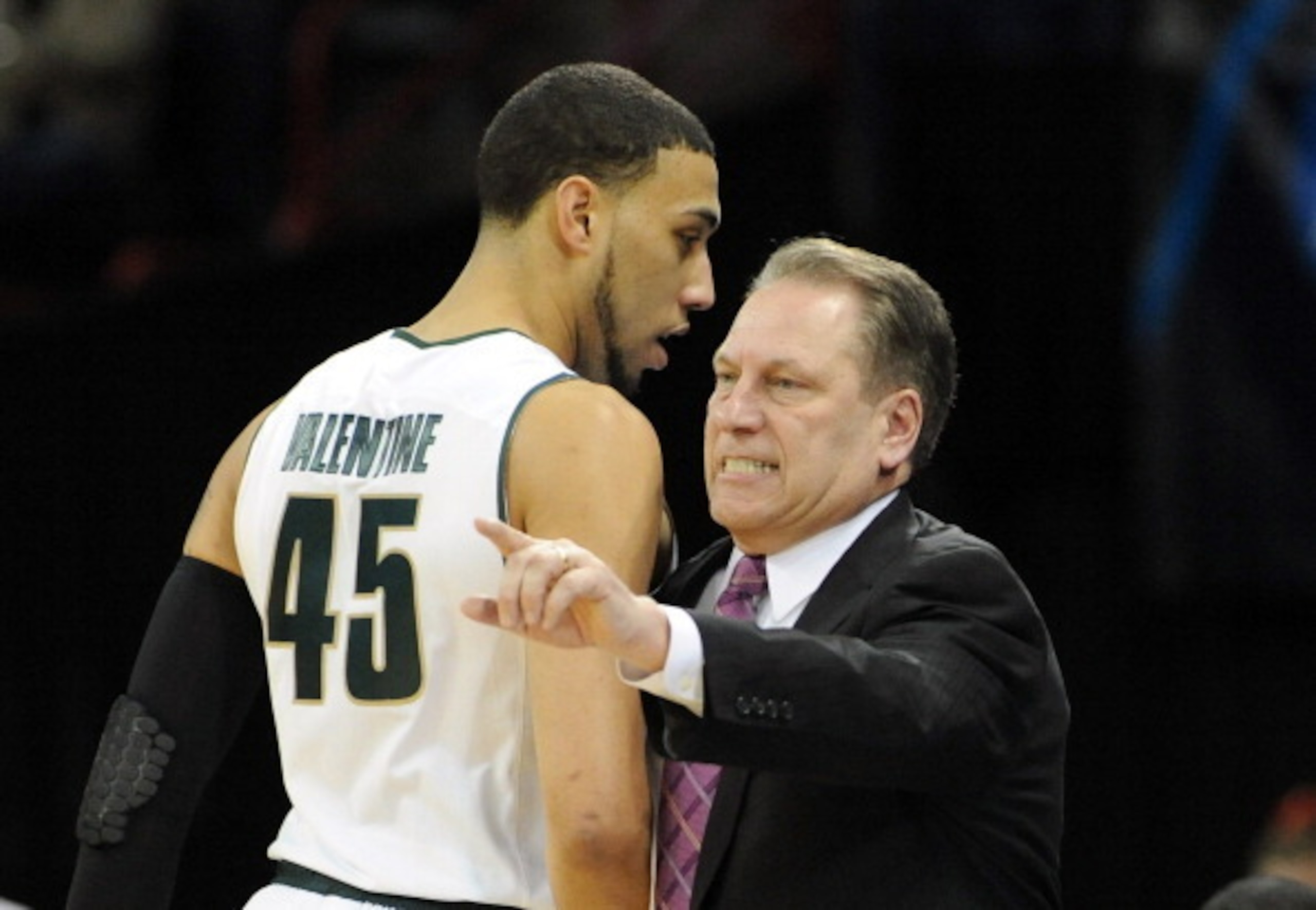
2013-14 Stats: 29.4 MPG, 8.0 PPG, 6.0 RPG, 3.8 APG, 1.0 SPG
Denzel Valentine was the unsung hero for the Spartans last season.
He was the only player to appear in all 38 games, and he did a little bit of everything.
Valentine shot 37.7 percent from three-point range. He finished five rebounds behind Branden Dawson and 12 assists behind Keith Appling for the team lead in each category. He finished in a tie with Gary Harris for the team lead in defensive win shares.
Take the improved three-point stroke out of the equation, and he was just as valuable as a freshman as he was as sophomore, so there's no good reason to expect him to become less of a factor in any of those categories this year.
The only real difference is that he won't be able to stay out of the national spotlight anymore. Dawson will probably be viewed as the team's best player, but without Appling, Harris or Adreian Payne, Valentine will finally be considered to be as important to this team as he already has been for two years.
17. San Diego State Aztecs: Dwayne Polee II
9 of 25
2013-14 Stats: 17.9 MPG, 8.5 PPG, 3.3 RPG, 1.1 SPG
Imagine how much better St. John's might have been over the past few seasons if Dwayne Polee II had stayed.
He was the only freshman who played for Steve Lavin's senior-laden roster during the 2010-11 season, but he decided to transfer to San Diego State to be closer to his family. He sat out a year before playing even fewer minutes than he did during his promising freshman season with the Red Storm.
Even this past season, it wasn't until early February that he became a consistent contributor.
But from that point forward, he was almost as important to San Diego State's success as Xavier Thames.
The Aztecs still have a few key contributors in Winston Shepard, Skylar Spencer and J.J. O'Brien, but this team only goes as far as Polee takes it.
16. VCU Rams: Melvin Johnson
10 of 25
2013-14 Stats: 22.4 MPG, 10.4 PPG, 2.2 RPG, 1.2 APG, 0.9 SPG
Of the 25 teams, VCU was the toughest from which to pick a most intriguing player.
Treveon Graham might be the best mid-major player in the country. Briante Weber might be the best defender in college basketball history.
But the Rams just didn't have the same flair at the end of the season without Melvin Johnson.
Johnson supplanted Jordan Burgess in the starting lineup just before the end of February. (What took so long? Burgess had an O-rating of 87.0 and shot 30.7 percent from the field.) The Rams lost three of Burgess' last four games as a starter but immediately won six straight games by an average of 15.3 PPG with Johnson on the court from the outset.
However, a knee injury in the A-10 semifinals prematurely ended Johnson's season. Without its third-leading scorer, VCU subsequently lost two straight games to St. Joseph's and Stephen F. Austin.
And with Rob Brandenberg out of the picture, Johnson will become even more important as the team's best and primary three-point shooter (39.5 percent on 167 attempts last season).
Great defense only goes so far without good offense, and Johnson will likely be VCU's second-best scorer this year.
15. Connecticut Huskies: Phillip Nolan
11 of 25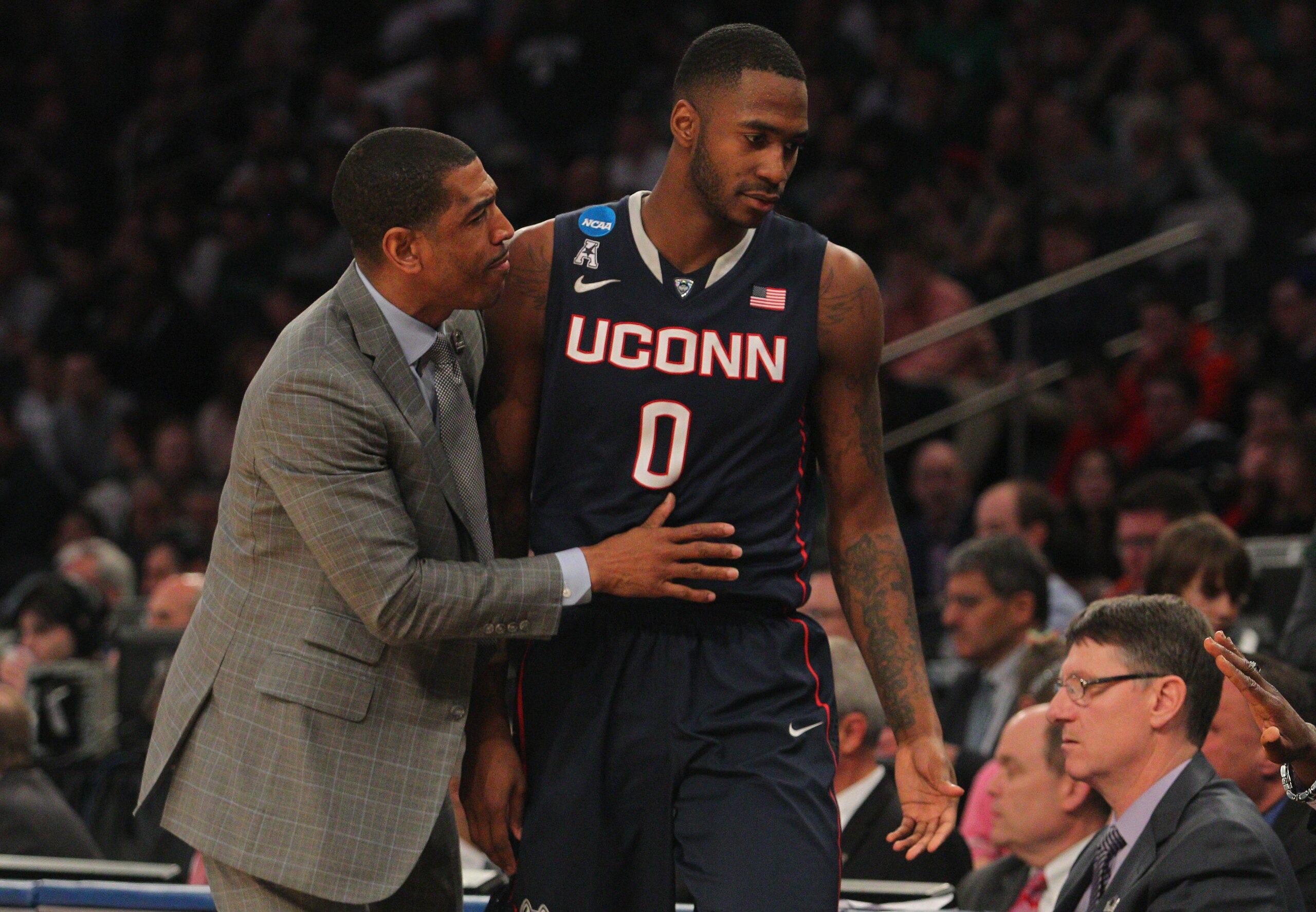
2013-14 Stats: 14.2 MPG, 3.3 PPG, 2.4 RPG
For as much as we fell in love with Shabazz Napier during the 2014 NCAA tournament, he was merely doing what he had been doing all season long. Save for a scoring dud here and there, Napier consistently scored close to 20 points per game for four straight months.
What really kicked the Huskies into a higher gear at the end of the season was DeAndre Daniels finally becoming a consistently dominant presence at power forward.
Kevin Ollie can't possibly replace Napier, but he has plenty of great options at shooting guard to help soften the blow of his departure. In the post, however, it will likely be Phillip Nolan trying to replace Daniels.
According to Ollie (through Jon Rothstein of CBS Sports), Nolan packed on 20 pounds this summer and should be more capable of banging bodies in the post than he was eight months ago.
That's crucial for the Huskies, because they don't have very many options in the post. Amida Brimah has the starting center job on lockdown, but he plays sparingly because of foul trouble and isn't exactly an offensive juggernaut.
A much-improved season for Nolan could determine whether or not the reigning champs remain in the Top 25 for very long.
14. Iowa State Cyclones: Monte Morris
12 of 25
2013-14 Stats: 28.1 MPG, 6.8 PPG, 3.7 APG, 2.6 RPG, 1.3 SPG
Over the past several seasons, Iowa State has had some great primary ball-handlers.
Three years ago, Royce White introduced "point forward" to the nation's vocabulary. Two years ago, Korie Lucious finished his career with the Cyclones after three largely disappointing seasons with Michigan State. Last year, DeAndre Kane transferred in from Marshall and suddenly discovered a three-point stroke to become one of the best players in the country.
Time to pass the torch to Monte Morris.
Morris has already shown an incredible ability to distribute. He was one of three Cyclones to record at least 120 assists last season and led the nation in assist-to-turnover ratio. Morris also led Iowa State in steals last season, meaning he caused substantially more turnovers than he committed.
But how will he fare as the primary orchestrator of the offense?
Morris was used on just 12.7 percent of possessions on the court last season as opposed to 27.0 percent for Kane and 27.8 percent for Niang. On the one hand, it's impressive that he recorded as many assists as he did with such a low usage rating. On the other, he's going to have the ball in hands at least twice as often as last season.
That means he's either going to average close to 8.0 assists per game, become a more assertive scorer or relinquish his reign as the team's most efficient player.
13. Gonzaga Bulldogs: Kyle Wiltjer
13 of 25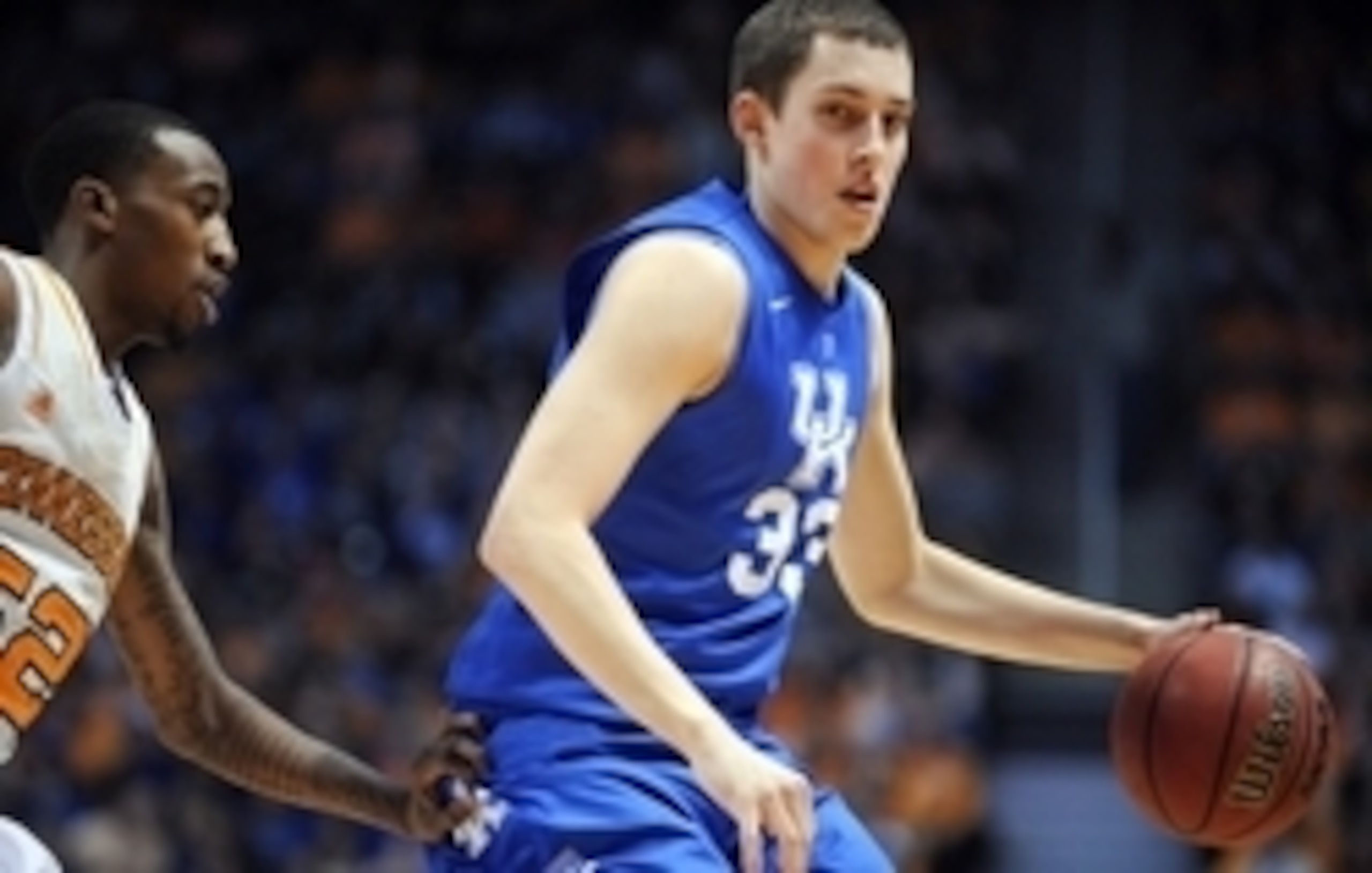
2013-14 Stats: N/A (Sat out year after transferring from Kentucky)
The West Coast Conference has not signed a single 5-star recruit in the past decade.
Heck, the conference is lucky if it even gets a 4-star guy in any given year.
Having Kyle Wiltjer—the No. 20 overall recruit in 2011—transfer to Gonzaga is the equivalent of David Beckham coming to play in the MLS—if it had happened when Beckham could actually still play.
Wiltjer is just a different class of athlete than what the conference is used to having.
Even if we ignore how highly he was rated three years ago, Wiltjer will be intriguing to watch simply because he might be the best stretch-4 in the entire country.
Really, is he a power forward who can drain 70 three-pointers in five minutes or a shooting guard who just so happens to be huge? Either way, he's going to kill it in the WCC.
12. Villanova Wildcats: Darrun Hilliard II
14 of 25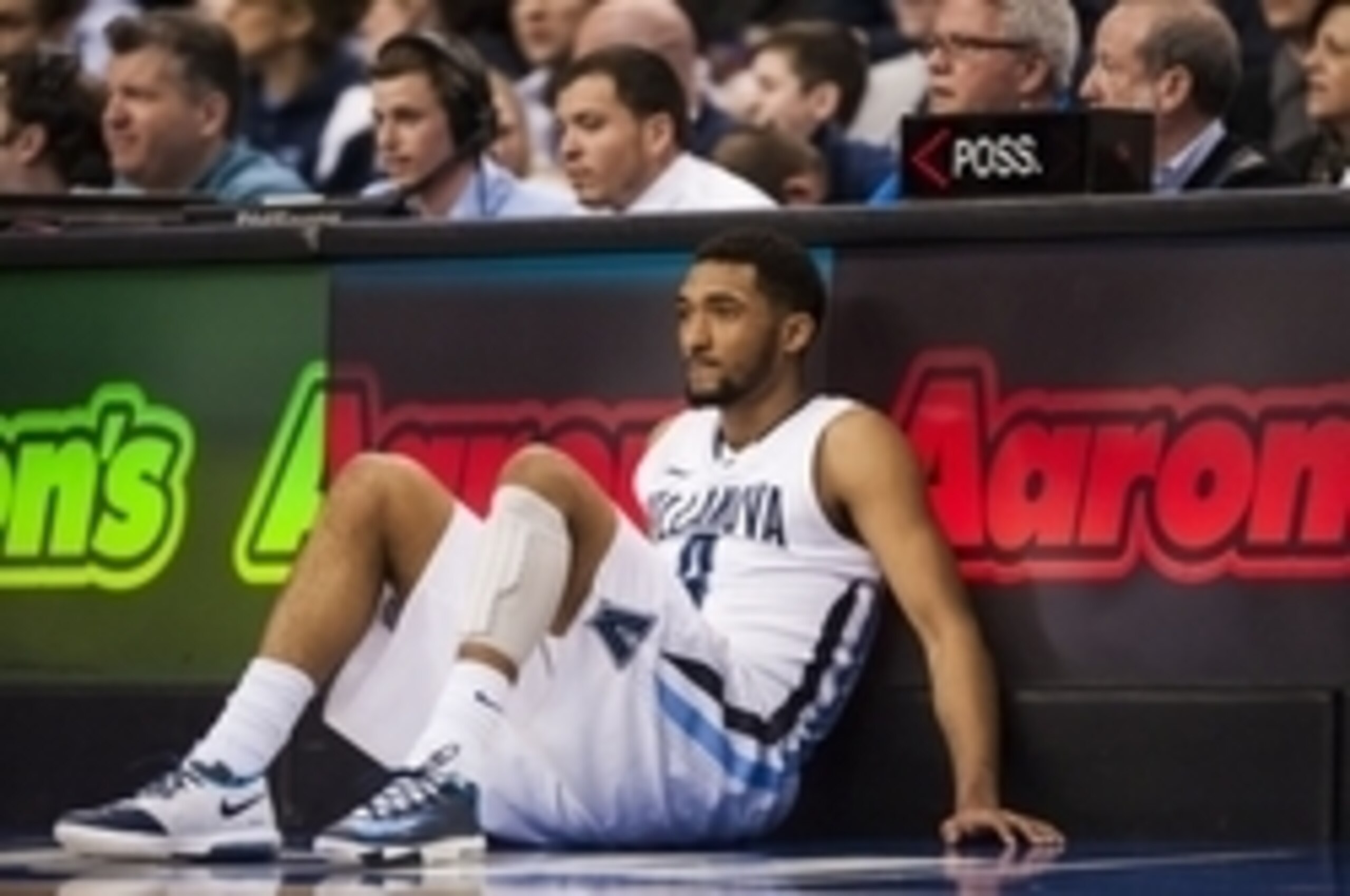
2013-14 Stats: 29.1 MPG, 14.3 PPG, 3.6 RPG, 2.6 APG, 1.3 SPG
Between his freshman and sophomore seasons, Darrun Hilliard became a much better defender. He more than doubled his steal percentage while decreasing his rate of fouls committed per 40 minutes.
However, he was still a below-average shooter until increasing his three-point percentage by 99 points as a junior. Two seasons ago, opposing teams practically begged Hilliard to shoot. Last year, he was the team's best shooter by no small margin.
So what sort of drastic improvement does he have in store for his senior season? Might he double his rebounding rate with James Bell out of the picture, or step up his assist game in Tony Chennault's absence?
We're looking forward to finding out, and we're expecting Hilliard to be one of the most valuable players in the Big East this season.
11. Wichita State Shockers: Ron Baker
15 of 25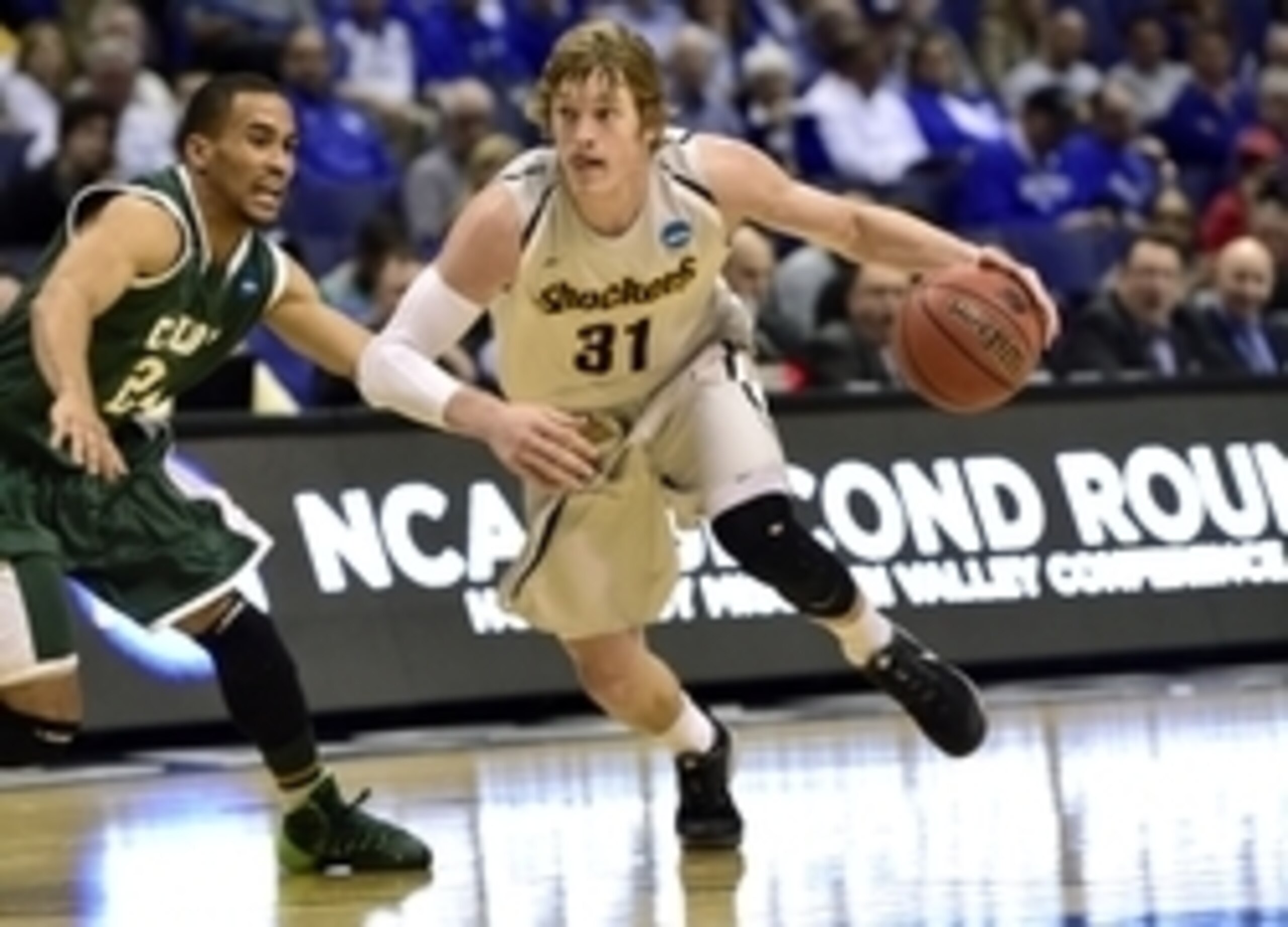
2013-14 Stats: 29.9 MPG, 13.1 PPG, 3.8 RPG, 3.1 APG, 1.4 SPG, 0.6 BPG
For someone who finished second in scoring, assists and steals for a 35-1 team, it sure felt like Ron Baker had some untapped potential, right?
Perhaps we over-romanticized his three-point shooting after he made nine out of 15 triples in the 2013 NCAA tournament against Gonzaga, La Salle and Louisville, but I can't be the only one who was expecting him to make more than 68 three-pointers this past season.
He shot relatively well at 38.0 percent, but the volume was a bit surprisingly low.
That should change this season after the graduations of Cleanthony Early (177 attempts) and Nick Wiggins (87 attempts). Obviously, not all 264 of those attempts will be added to Baker's total, but the Shockers can't get away with having him only attempting 5.0 triples per game this season.
Expect that average to be closer to 8.0 per game for a player who breaks out in a big way to average 18.0 PPG.
10. Texas Longhorns: Myles Turner
16 of 25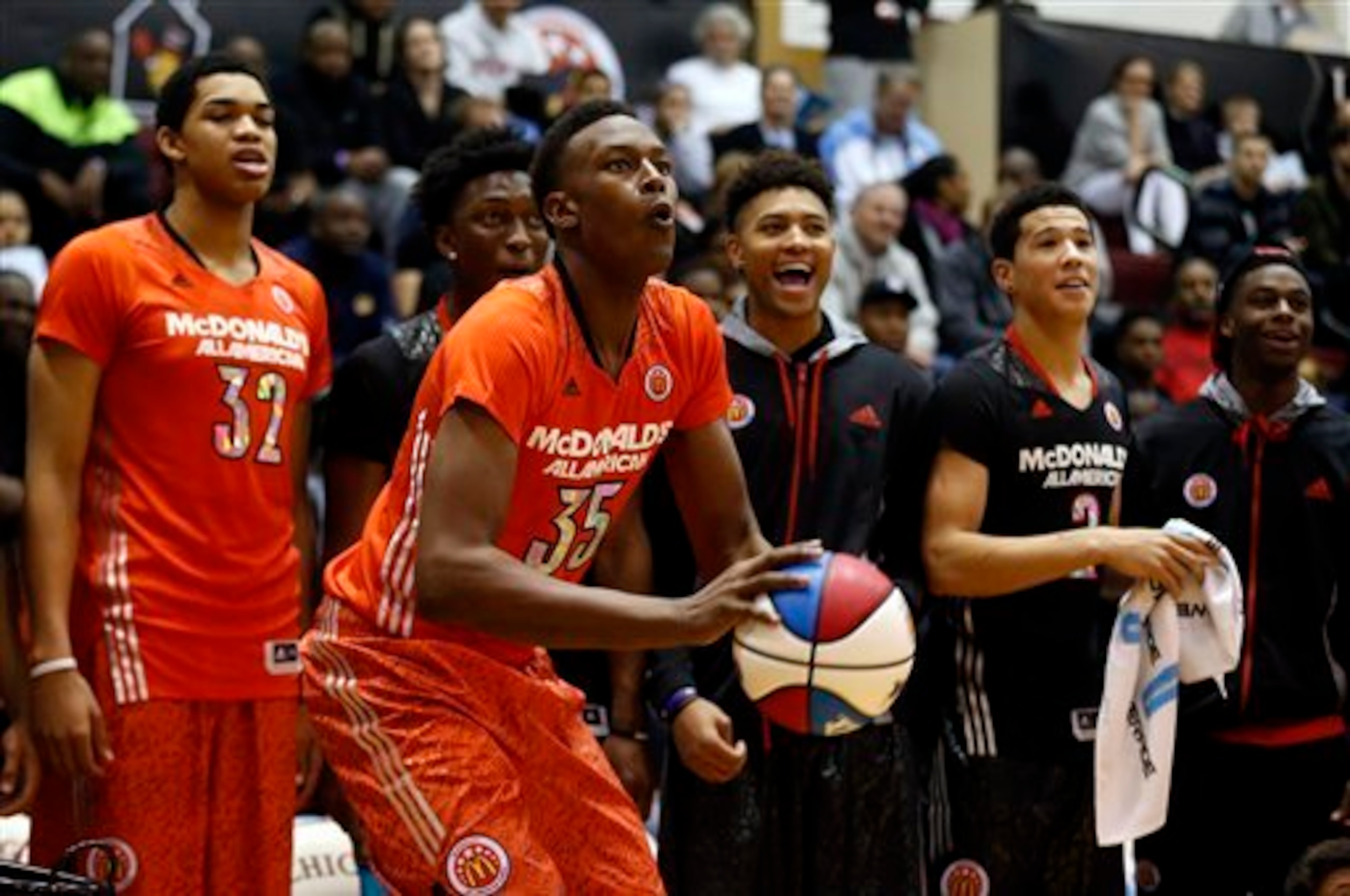
2013-14 Stats: N/A (incoming freshman)
If nothing else, it will be intriguing to see how Myles Turner (and, to a lesser degree, Jordan Barnett) impacts playing time at Texas.
The Longhorns already had 10 players who averaged at least 9.5 minutes per game last season. Aside from Martez Walker, they'll all be back this season.
So how does one of the top recruits in the entire country fit into that equation?
Suffice it to say, Turner didn't wait until late April to make his decision just to go to a school where he won't be a starter who averages at least 20 minutes per game.
Oddly enough, the arrival of the 6'11" center will likely boot a 5'11" combo guard to the bench.
Whether Turner and Cameron Ridley are officially the power forward and center or vice versa, there's no question they'll both start. Jonathan Holmes was the starting power forward last season, but he'll likely slide over to small forward because he's too valuable to be coming off the bench.
Isaiah Taylor is Texas' best option at point guard, leaving Javan Felix and Demarcus Holland (and Barnett?) battling for the last spot in the starting five.
Throw in Kendal Yancy and big men Connor Lammert and Prince Ibeh and Texas will have one of the deepest and most talented rotations in the country. Turner's ability to be a shot-blocker who stretches the floor on offense is just icing on the cake.
9. Louisville Cardinals: Wayne Blackshear
17 of 25
2013-14 Stats: 19.6 MPG, 8.2 PPG, 3.1 RPG, 0.7 APG, 0.9 SPG
"The only player I've had in the past four years that hasn't had substantial improvement is Wayne Blackshear." — Rick Pitino, March 31.
Blackshear was named co-captain of the team April 14.
"(Blackshear has) been working twice a day, every single day, since school ended. He's the biggest surprise and the biggest change. I don't want to get too excited because we're not in July yet, but he's everything I hoped would change." — Rick Pitino, June 20.
Well that escalated quickly.
Right when the 2013-14 season ended, it sounded like Blackshear might lose his starting job to highly touted freshman Shaqquan Aaron. But now it sounds like Blackshear will be right up there with Montrezl Harrell on the list of most important Cardinals.
Small forward really is the missing link for Louisville. Terry Rozier and Chris Jones will be studs in the backcourt. Harrell is a monster at power forward. Mangok Mathiang and Chinanu Onuaku will be a 1-2 punch at center similar to the one mentioned earlier at Iowa.
If Blackshear has improved as much as advertised and can effectively make Louisville fans forget all about Luke Hancock, the Cardinals could be the most dangerous team in the country.
8. Virginia Cavaliers: Anthony Gill
18 of 25
2013-14 Stats: 19.8 MPG, 8.6 PPG, 4.0 RPG
It took a while for Anthony Gill to find his niche with the Cavaliers.
He opened the season in the starting lineup but lasted just three games before being relegated to the bench. But he immediately excelled as the sixth man and was reinserted into the starting lineup four games later. He struggled once again and went back to the bench after just three games.
From mid-January onward, though, he was a consistently solid player off the bench.
He had a few hiccups—one of which unfortunately came in the NCAA tournament against Michigan State—but he was generally good for 20 minutes and 10 points per game. By season's end, he led the team in points per 40 minutes and trailed only Malcolm Brogdon for the team lead in win shares per 40 minutes.
Now for the $64,000 question: Will he finally be able to excel as a starter this season?
Akil Mitchell is out of the picture. Darion Atkins doesn't have the offensive skill to be Virginia's starting power forward. Evan Nolte doesn't play defense well enough for the job, either.
If the Cavaliers are to have any hope of repeating as ACC champs, Gill will need to play well in the post for at least 25 minutes per game. If it helps his psyche, go ahead and keep him on the bench for tip-off, but he needs to play a ton.
7. Florida Gators: Michael Frazier II
19 of 25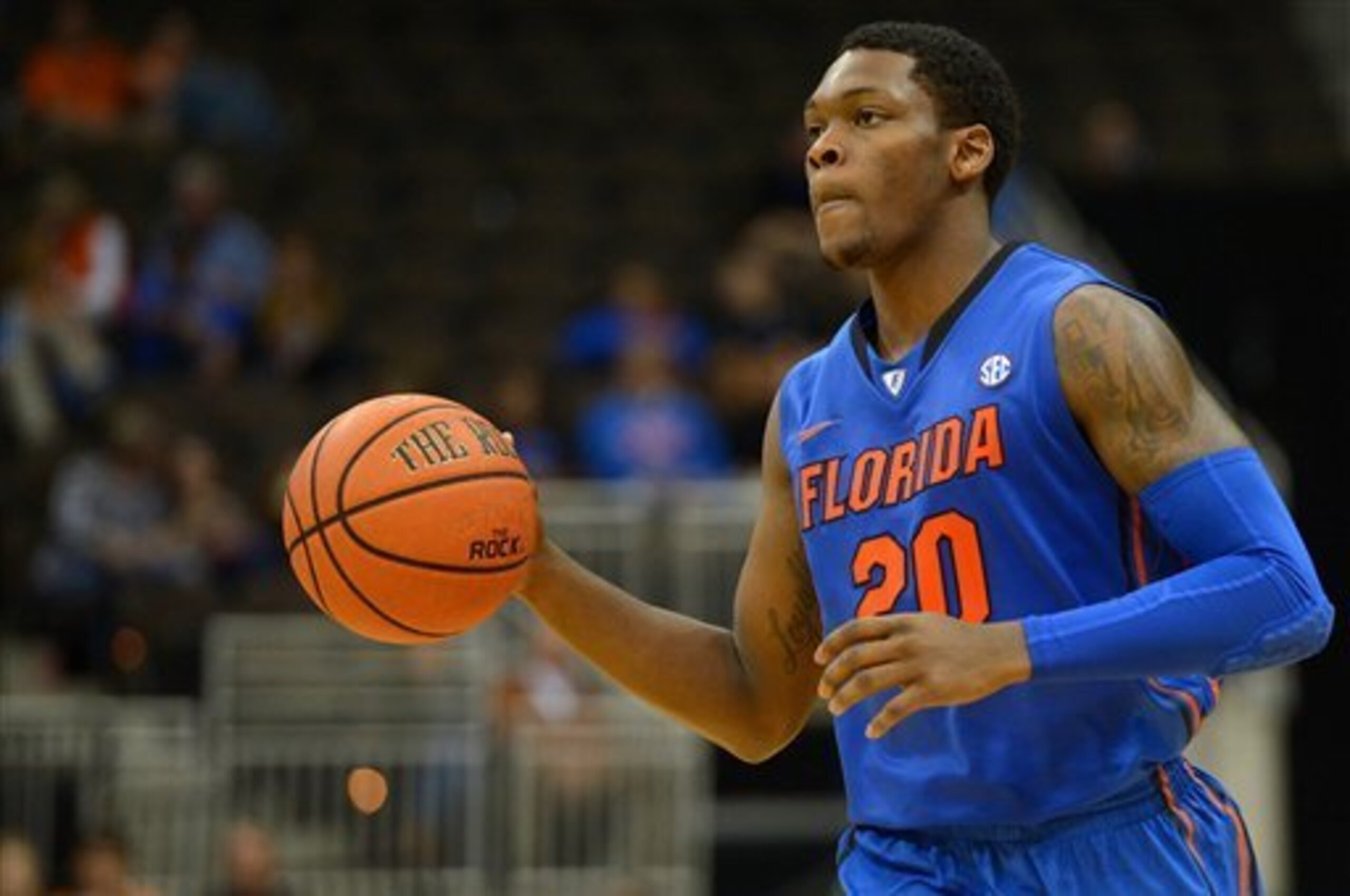
2013-14 Stats: 30.6 MPG, 12.4 PPG, 3.5 RPG, 1.1 APG, 1.1 SPG
What? You were expecting Chris Walker?
That's fair. Sky Walker might be the most exciting big man in the country.
But Michael Frazier II already is the best shooter in the country—a job that becomes even more serious after the news that Brandone Francis will not play this season.
Frazier is the only player on Billy Donovan's roster who shot better than 29.5 percent from three-point range last season—a mark that he bested by 150 points. Frazier made more three-pointers last season than any other returning player and he had the fifth-highest three-point percentage among non-seniors—even though he made 118 of them and none of the other four returning players made more than 80.
How could you not be intrigued by a guy who made 11 three-pointers in a single game last season?
Frazier isn't afraid to throw his hat into the ring in other aspects of the game, either.
Where other noted gunners like Travis Bader and Phil Forte reserved all of their energy for shooting the long ball, Frazier led the Gators in defensive win shares last season by forcing more steals and grabbing more defensive rebounds than your average set shooter.
Frazier is the only 2013-14 starter for Florida who didn't graduate. Not only will he lead the team in scoring, but he will be expected to be the team's leader in the locker room, as well.
6. North Carolina Tar Heels: Marcus Paige
20 of 25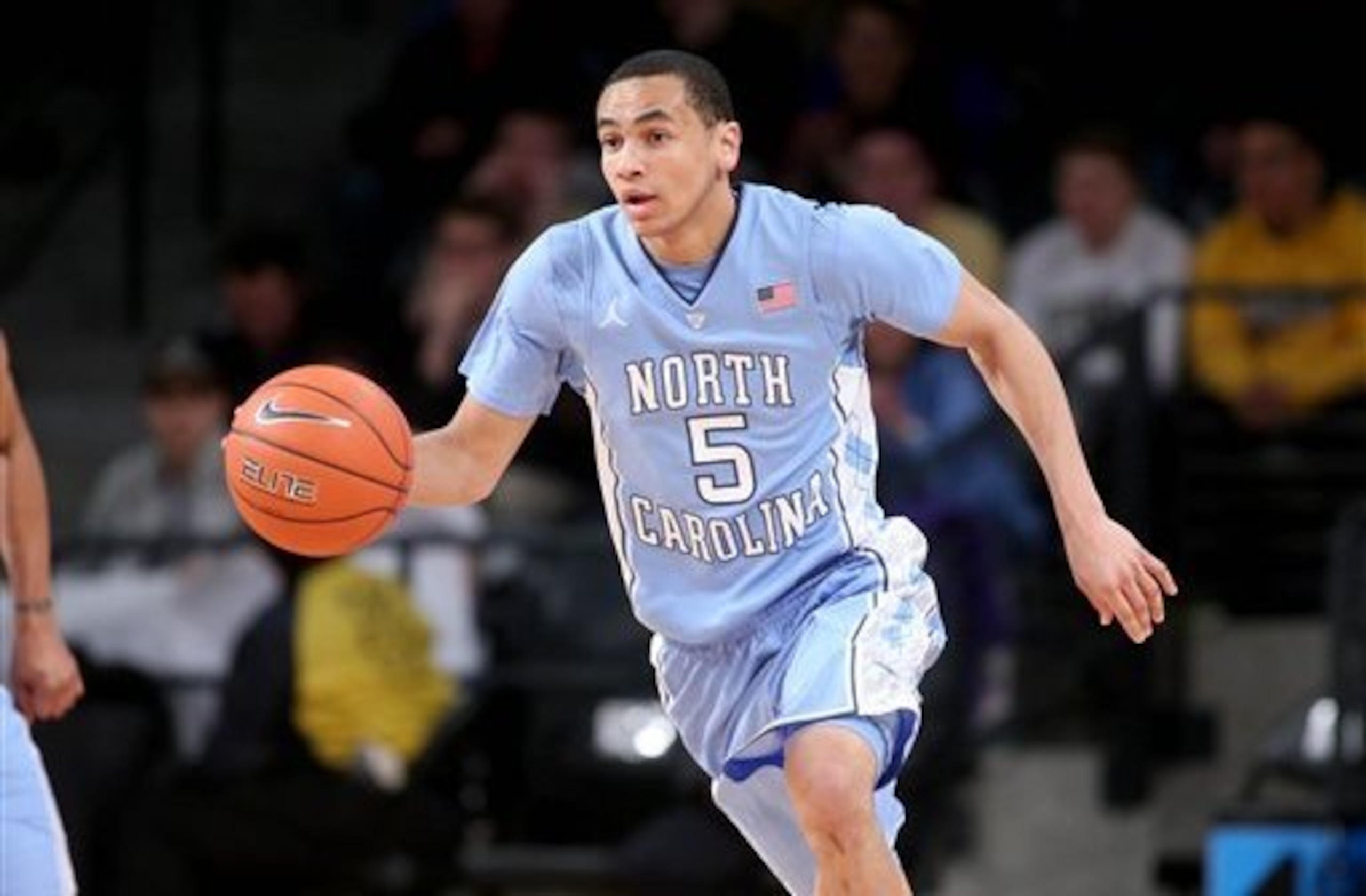
2013-14 Stats: 35.6 MPG, 17.5 PPG, 4.2 APG, 3.2 RPG, 1.5 SPG
For the majority of these teams, "most intriguing" did not equate to "best."
But we made an exception for Marcus Paige.
Two years ago—while sharing a backcourt with a pass-first guard in Dexter Strickland—Paige was a pass-first point guard capable of scoring, but he hardly committed to that cause. He averaged 7.6 field-goal attempts and 4.6 assists per game.
Last year—by necessity as much as anything else—he became an unstoppable scorer with drastically improved shooting percentages. He still averaged 4.2 assists per game, but his number of field-goal attempts more than tripled his number of assists.
So, is he a point guard or a shooting guard?
Could he serve as both the full-time point guard and full-time shooting guard, allowing Roy Williams to fill out the rest of the lineup with forwards and centers?
What if he fully committed himself to one position or the other and led the nation in either assists or three-point field goals?
It's almost like creating a character in a video game and trying to decide whether to assign more attribute points to scoring or passing. But with Paige, there are considerably more attribute points than your average guard.
5. Kansas Jayhawks: Wayne Selden Jr.
21 of 25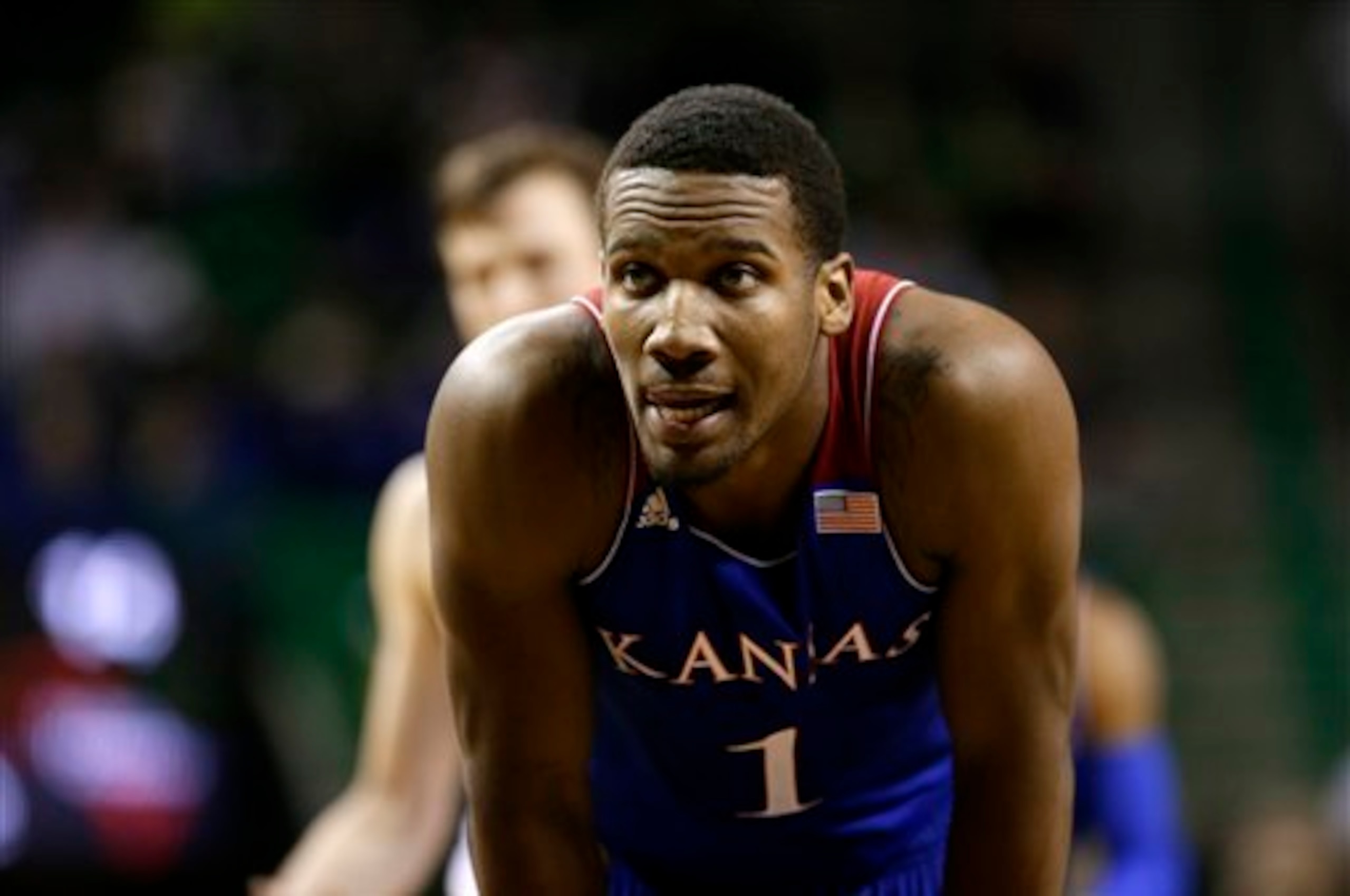
2013-14 Stats: 29.2 MPG, 9.7 PPG, 2.6 RPG, 2.5 APG, 0.7 SPG
We fell hopelessly in love with Andrew Wiggins and Joel Embiid last season, but Wayne Selden Jr. was a 5-star recruit, too.
But while we mourned the loss of Embiid to a stress fracture in his lower back, Selden suffered in silence through a left knee problem that necessitated arthroscopic surgery after the season.
That certainly explains why one of the highest-rated incoming shooting guards in the country only shot 32.8 percent from three-point range as a freshman.
It's pretty darn impressive, though, that he was able to average 11.3 points per game against Big 12 opponents while playing at less than 100 percent.
What does he have in store for us now that he's at closer to 100 percent health than he has been in years? And is the sophomore ready to be one of the "veteran" leaders on a team that figures to start three freshmen?
4. Wisconsin Badgers: Josh Gasser
22 of 25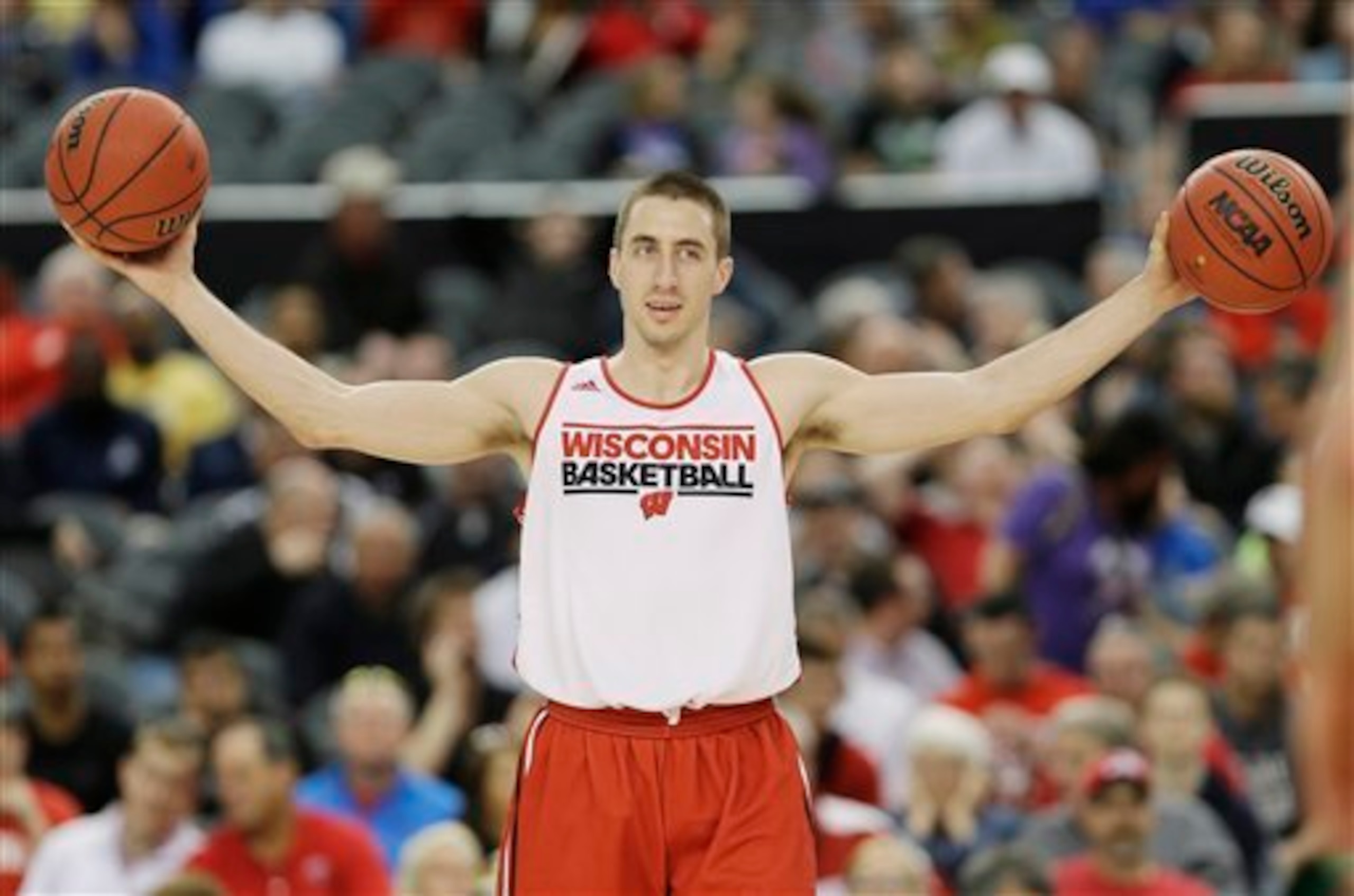
2013-14 Stats: 33.4 MPG, 8.8 PPG, 4.0 RPG, 1.9 APG, 0.7 SPG
Let's take a moment to discuss just how important Ben Brust was to this Wisconsin team, because a lot of people (myself included) are acting like the Badgers are going to be just as good, if not better than the team we saw in the 2014 NCAA tournament.
Brust led the team in minutes played and shot 39.3 percent from three-point range while making more than twice as many three-pointers as any other player on the team. He shot 90 percent from the free-throw line and was never the one responsible for putting opponents there, ranking third in the nation in fewest fouls committed per 40 minutes.
Brust didn't get the fanfare of Frank Kaminsky or Sam Dekker, but he will be impossible to replace, nonetheless.
Josh Gasser will be the player most responsible for filling that void.
Gasser already played a ton of minutes for the Badgers and was a great three-point shooter at 43.1 percent. He had the best O-rating on the team, but he attempted shots at a much lower rate than any other Badger.
With Brust out of the picture, though, Gasser becomes Wisconsin's primary shooting guard—assuming Nigel Hayes (PF) is the team's fifth starter rather than Bronson Koenig (SG).
We're all expecting great things from Dekker and Kaminsky, but Wisconsin's success might hinge on whether Gasser is able to nearly double his shooting volume while maintaining his efficiency.
3. Duke Blue Devils: Amile Jefferson
23 of 25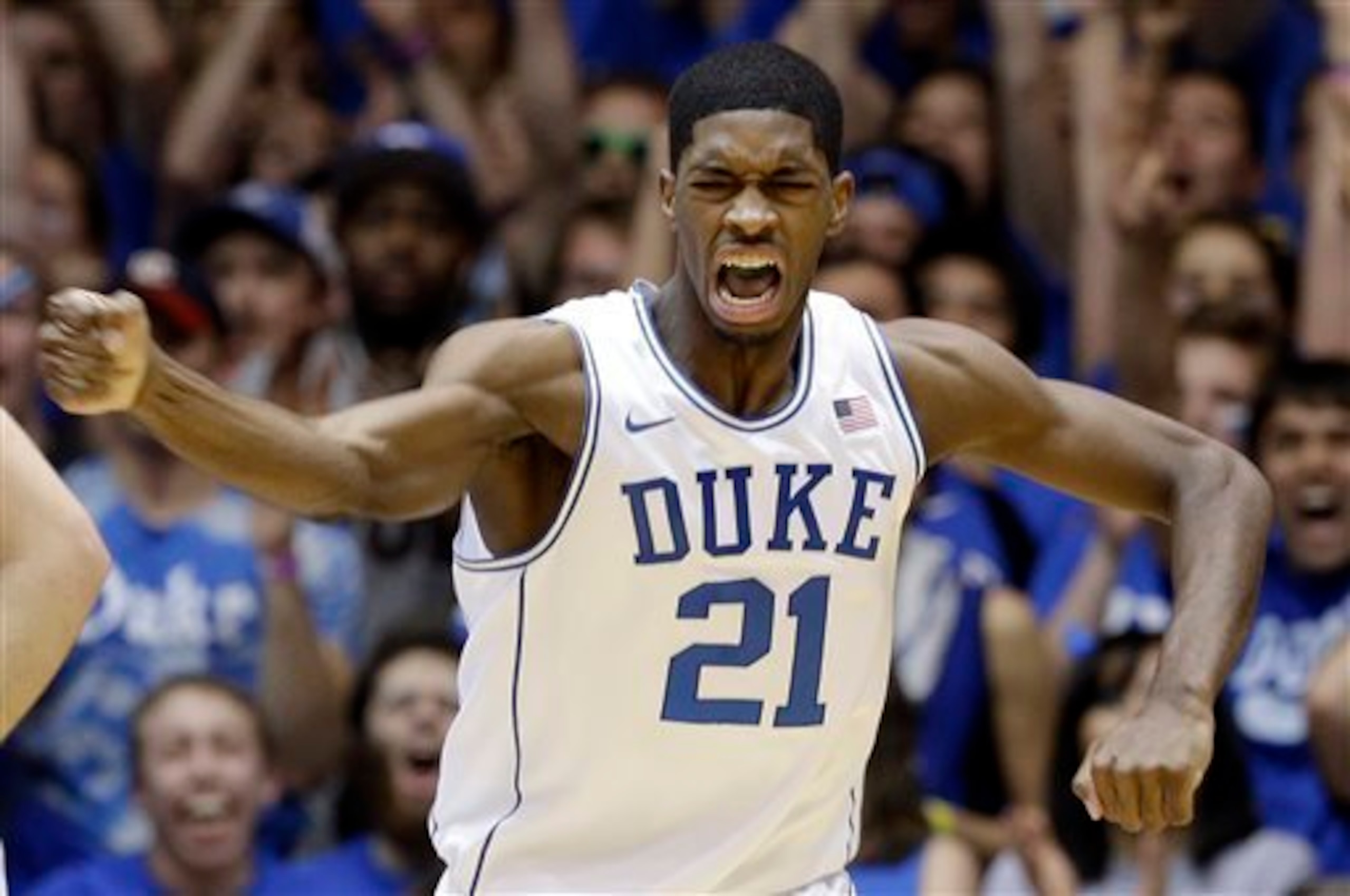
2013-14 Stats: 22.7 MPG, 6.5 PPG, 6.9 RPG, 1.0 APG, 0.7 SPG, 0.6 BPG
Amile Jefferson has to be the least talked-about starter for a Top 10 team.
When it comes to discussions about Duke, it's either how dominant Jahlil Okafor will be, how important Rasheed Sulaimon will be or an argument over whether Tyus Jones or Quinn Cook deserves to be the starting point guard.
Jefferson just gets taken for granted as the power forward who will support Okafor with the occasional double-double.
But ask yourself this: What happens to Duke if Jefferson struggles or gets injured?
The only other players on the roster taller than 6'5" who aren't already in the projected starting lineup are Marshall Plumlee and Semi Ojeleye.
Plumlee gives the team a spark off the bench with his hustle play for maybe 10 minutes per game, but he's not helping if he plays more than that. Ojeleye is a great change-of-pace stretch-4, but Okafor would get worn out in the paint if Ojeleye was his primary running mate.
Duke needs Jefferson in the lineup as often as possible, because he ranked in the top 20 in the nation in both O-rating and offensive rebounding percentage last season. As long as he's in there, the Blue Devils have a shot at winning it all.
2. Arizona Wildcats: Rondae Hollis-Jefferson
24 of 25
2013-14 Stats: 25.3 MPG, 9.1 PPG, 5.7 RPG, 1.4 APG, 1.1 BPG, 0.7 SPG
As was also the case with Aaron Gordon, I spent the vast majority of Arizona games wondering how much more incredible Rondae Hollis-Jefferson would be if he could actually shoot the ball.
In what looked like two of his most impressive games of the regular season, Hollis-Jefferson scored 14 and 16 in back-to-back home games against Oregon and Oregon State. He "shot" 12-of-25 from the field, but 11 of those made baskets were either dunks or lay-ups, according to ESPN's play-by-play logs. Only five of those field-goal attempts were jumpers, and he missed four of them.
In the NCAA tournament, Hollis-Jefferson averaged 14.0 PPG and shot 18-of-27 from the field. However, he was 14-of-15 on dunks and lay-ups and just 4-of-12 on jumpers.
He scores well at the rim and is an excellent defender, but adding a reliable jump shot to his arsenal would be the equivalent of a pitching prospect developing a nasty changeup to go along with his fastball and curveball.
So it didn't come as much of a surprise that Hollis-Jefferson spent the summer working on his jumper.
If his 15-foot shot is there during the regular season, best of luck to the entire country on figuring out how to defend him.
1. Kentucky Wildcats: Tyler Ulis
25 of 25
2013-14 Stats: N/A (incoming freshman)
Kentucky is basically just a roster full of intriguing players, but Tyler Ulis is the most intriguing player in the entire country.
Of the 11 Wildcats who figure to be in the mix for significant playing time, 10 are 6'6" or taller.
Then there's Ulis.
At 5'9"—which might be generous by an inch or two—not only is he nine inches shorter than any other regular in Kentucky's rotation, but there isn't a single player in the SEC shorter than him.
And yet, he's expected to contribute in a huge way as the first true point guard John Calipari has had since Antonio Burks' junior year at Memphis in 2002-03.
Ulis may get more time on the bench than he deserves with the Harrison twins still in town, but he is going to be a blast-and-a-half to watch for the next few years.
Kerry Miller covers college basketball for Bleacher Report. You can follow him on Twitter @kerrancejames.

.jpg?w=2560 "NFL Paris Football")
.jpg?w=2560 "Trevon Diggs Cut by Seahawks")