Sam Dekker and Kennedy Meeks are two of the most notable college basketball stars who are playing in the perfect system this season.
When good basketball players end up on the right team, it's a magical thing. Even average players can evolve into stars if the dominoes fall properly.
Just look at Marshall Henderson and Aaron Craft.
If those two guys had switched teams, no one would have ever heard of Craft, and Henderson would have been reviled for his antics and average shooting.
But Henderson thrived in Ole Miss, where he was free to take as many shots per game as he wanted. And Craft was a stud for the perennially defensive-minded Buckeyes.
Maybe these 10 players won't receive the unadulterated love of Dan Dakich, but they are in the perfect position to succeed in 2014-15.
All advanced stats via KenPom.com (subscription required) and Sports-Reference.com.
Cliff Alexander, Kansas
1 of 10
Cliff Alexander would probably excel anywhere, but he's definitely going to be a beast at Kansas.
After all, displaying complete dominance inside the three-point arc is just something that big men do for the Jayhawks.
In 12 of the past 13 seasons, Kansas has shot at least 52.0 percent from two-point range, ranking in the top 32 in the nation in each of those 12 seasons. And in all 13 of those seasons, the Jayhawks held their opponents to 44.5 percent or worse from inside the arc.
In fact, Kansas has been at least 10 percent better than its opponents at two-point field goals in 10 consecutive seasons.
It's hardly a fluke that Joel Embiid played as well as he did last season. He was just the latest in a lineage that dates back through Jeff Withey, Thomas Robinson, Cole Aldrich, the Morris brothers, Julian Wright, Drew Gooden and Nick Collison.
Good luck finding a season in which Kansas didn't have at least one dominant presence in the post.
Putting a top-rated big man at a program that has been churning out big men for more than a decade is hardly even fair. Alexander's one season at Kansas could draw parallels to that ridiculous first year that Randy Moss had with the Patriots.
Jalan West, Northwestern State
2 of 10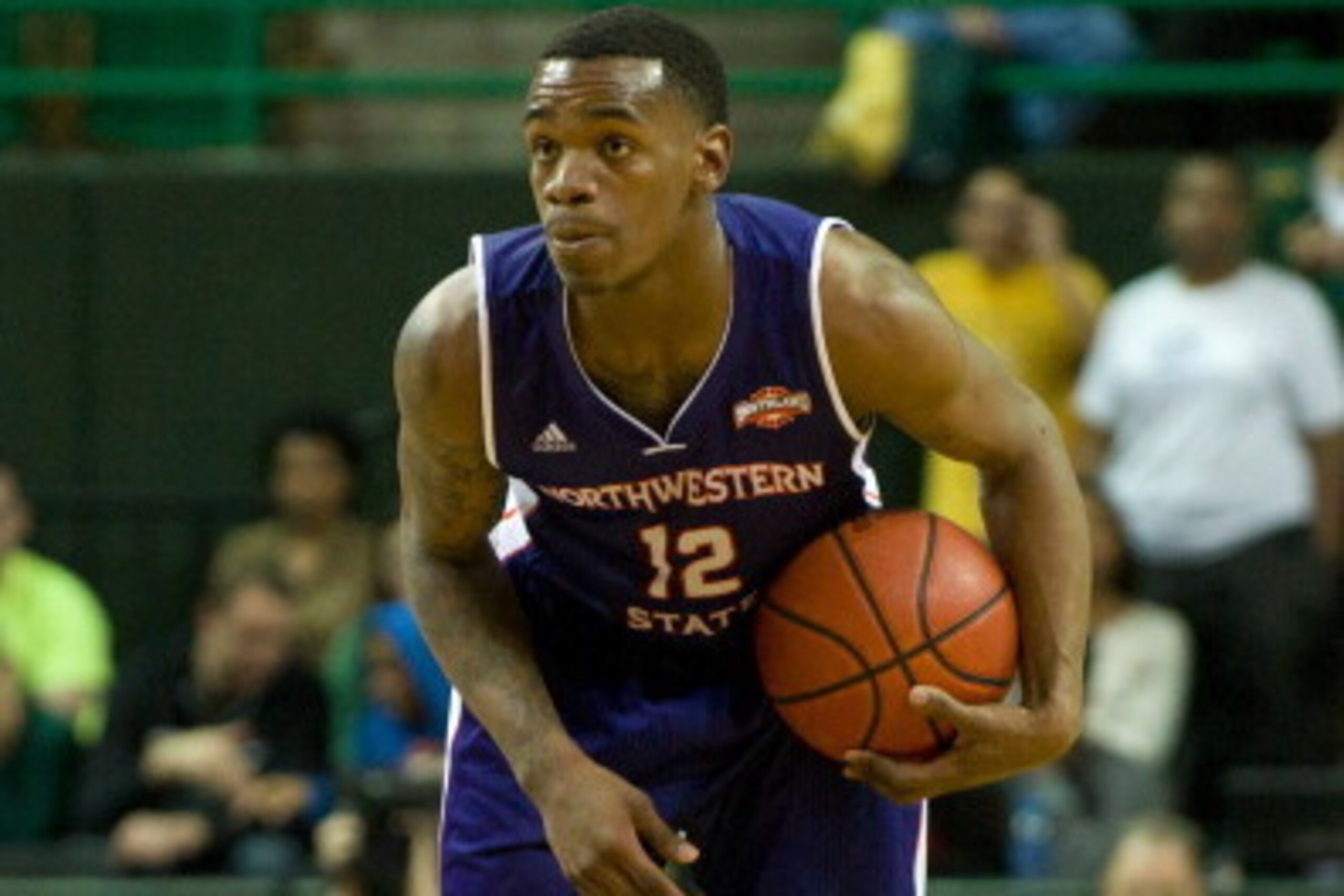
Funny how much of a difference that "State" makes.
Northwestern (located in Illinois) typically plays at one of the slowest paces in the country. Last year, the Wildcats had an adjusted tempo of 61.6 that ranked 341st out of 351 teams.
At the complete opposite end of the spectrum, Northwestern State (located in Louisiana) has ranked in the top 11 in adjusted tempo in seven of the past eight years. The Demons claimed the No. 1 spot this past season with an adjusted tempo of 75.6.
By playing at Northwestern State, Jalan West gets more bang for his buck, and he turned it into one of the most incredible stat lines in the country last year.
Playing 32.9 minutes per game as a sophomore, West averaged 19.4 PPG, 6.4 APG, 4.0 RPG and 2.5 SPG while shooting 40.9 percent from three-point range, 50.4 percent from two-point range and 87.6 percent from the free-throw line.
West is well on his way to a four-year career with 2,000 points, 750 assists and 300 steals.
Is there any chance this 5'10" point guard could put up numbers like those anywhere else?
Darius Carter, Wichita State
3 of 10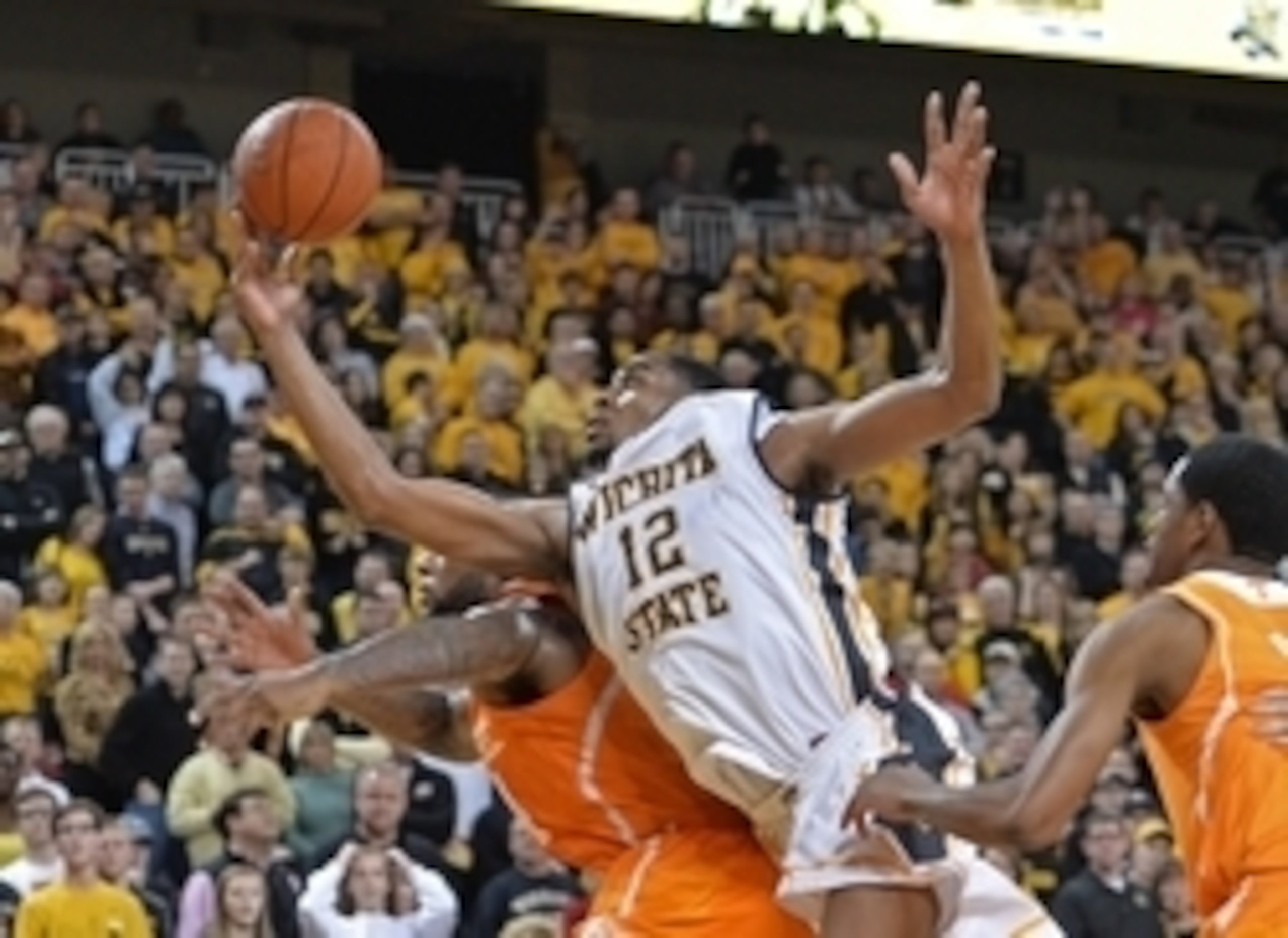
Make no mistake about it: Wichita State is going to miss Cleanthony Early.
However, don't go thinking that the Shockers are going to struggle in the paint just because they lost every player from last year's team that was 6'8" or taller.
What they'll miss about Early is his versatility and his ability to step out and drain three-pointers. But as far as rebounding and shot-blocking goes, Darius Carter has them covered.
In 10 of the past 11 seasons, Wichita State has ranked in the top 15 in the nation in defensive rebounding percentage.
Being that good in one category for that long has virtually nothing to do with the skill of the players involved. Even when they were 11-20 in 2007-08 without regularly playing a single guy taller than 6'7", the Shockers were one of the best rebounding teams in the country.
Limiting second-chance opportunities is just an ingrained mindset at Wichita State, and Carter was one of the best last season, grabbing 18.6 percent of possible defensive rebounds while on the court.
Little-known fact: Carter ranked third on Wichita State last season with 17.3 points per 40 minutes and ranked second in rebounding at 9.8 per 40 minutes. He only played 639 minutes behind Early and seniors Chadrack Lufile and Kadeem Coleby, but he was a pretty strong force during his time on the court.
This former JUCO transfer could break out in a huge way this year.
Sam Dekker, Wisconsin
4 of 10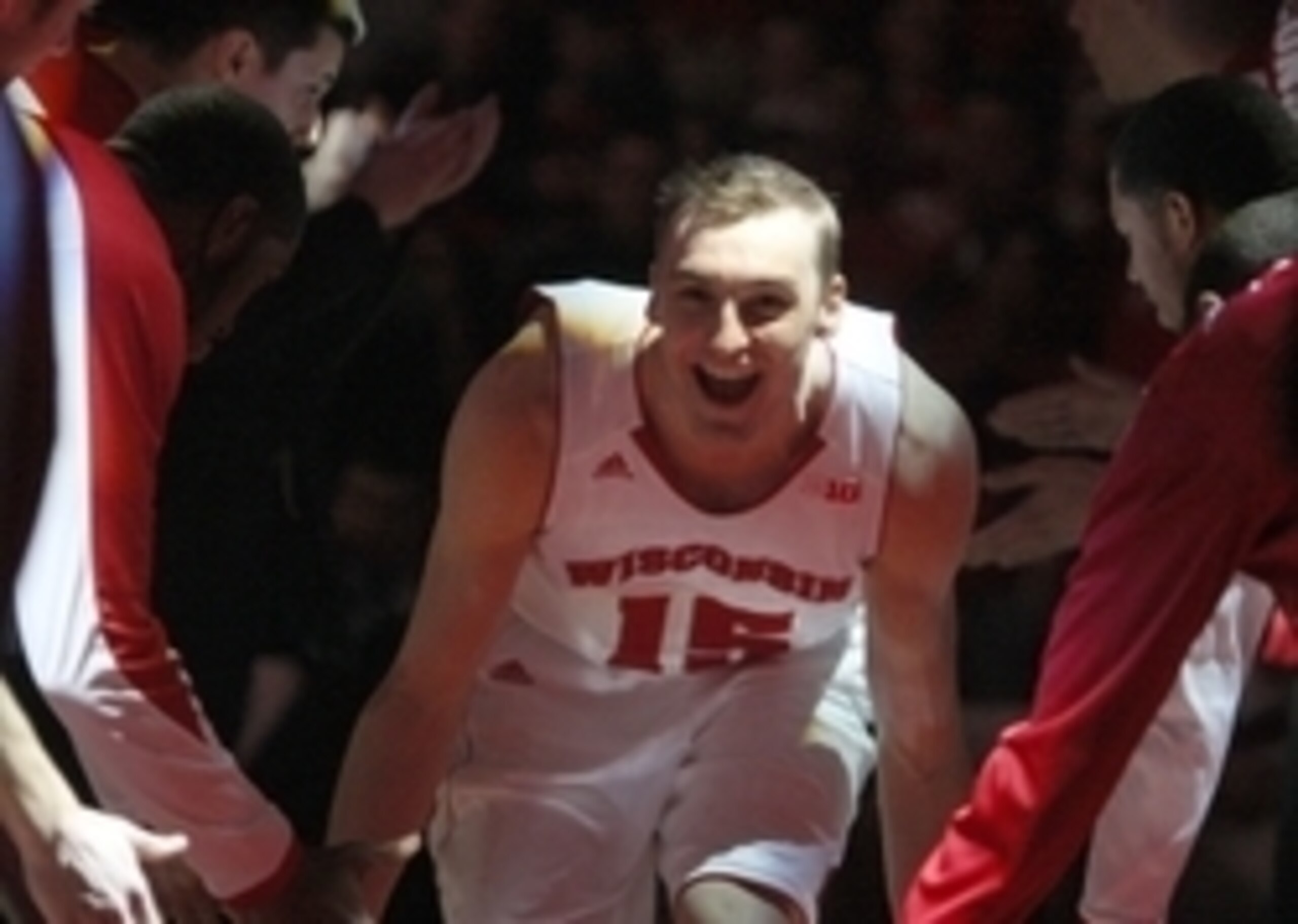
At its core, Bo Ryan basketball boils down to four main tenets: defend without fouling, grab defensive rebounds, don't commit turnovers and attempt a good number of three-pointers.
Given those criteria, you'd be hard-pressed to find a player better suited for Wisconsin than Sam Dekker.
Last season, Dekker averaged 1.8 fouls per 40 minutes, grabbed 17.5 percent of possible defensive rebounds and had a turnover rate of 8.8.
His three-point percentage dropped from 39.1 percent as a freshman to 32.6 percent as a sophomore, but he attempted better than 3.0 per game and is bound to improve this year.
Ben Brust was the ultimate Badger last season. He ranked third in the nation in fouls per 40 minutes, 11th in turnover rate and made 39.3 percent of his 6.4 three-point attempts per game.
Dekker's role on the team becomes even more critical in Brust's absence, but we believe he's up to the task.
Amida Brimah, Connecticut
5 of 10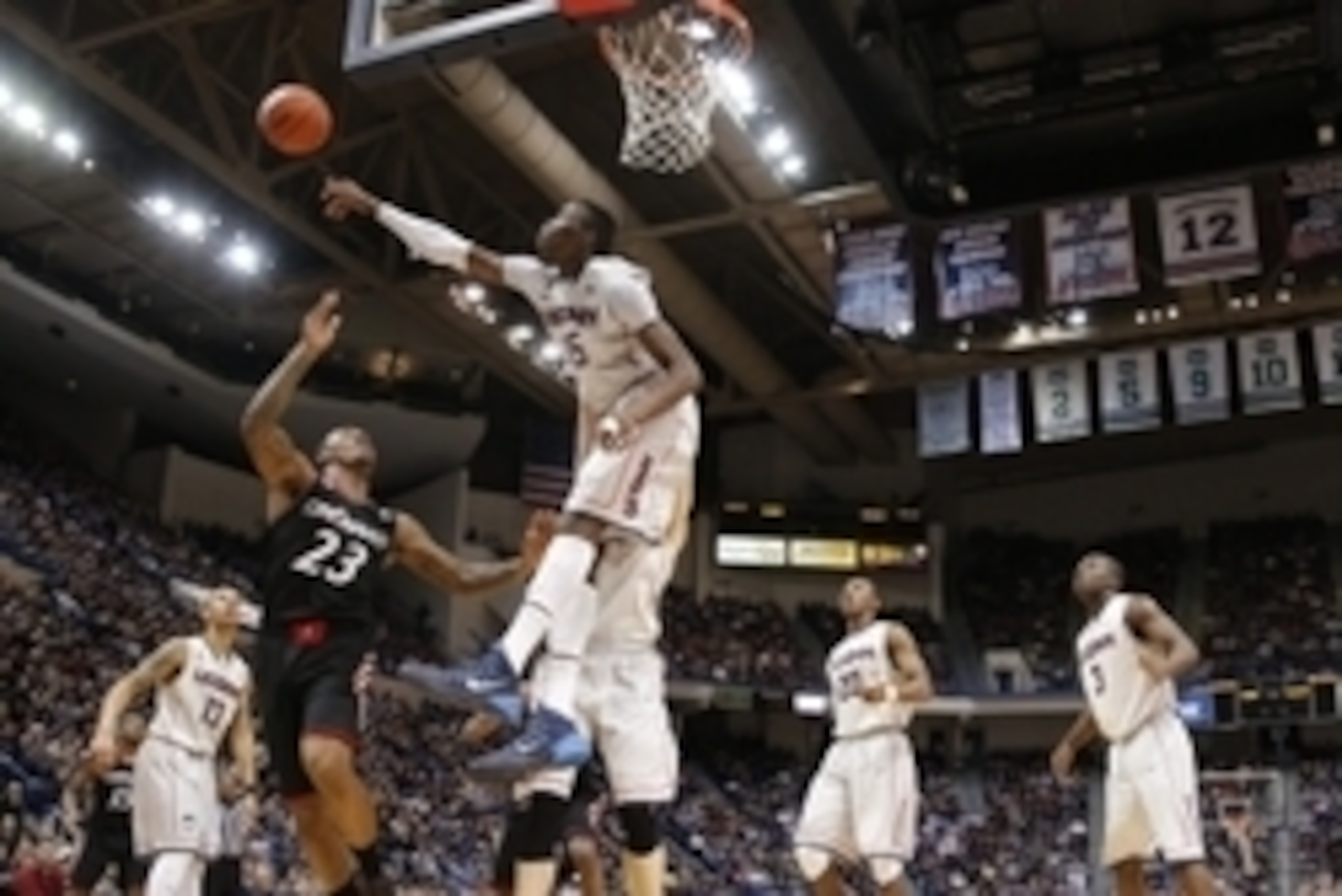
No school breeds shot-blockers quite like Connecticut.
In 11 of the past 13 seasons, Connecticut has had a block percentage of at least 15.0, ranking top 12 in the nation in each of those 11 seasons. More often than not, the Huskies have been in the top three.
From Emeka Okafor to Hilton Armstrong, Hasheem Thabeet and Andre Drummond, Connecticut has constantly had a giant in the paint ready to swat incoming shots into the fifth row.
And now that big man is Amida Brimah.
Thanks in large part to incessant foul trouble, Brimah had difficulty staying on the court as a freshman, but he did average a slightly absurd 5.7 blocks per 40 minutes. He was one of five players in the country to block at least 15 percent of the opposition's two-point field-goal attempts while on the court.
Whether he remains that dominant this season will depend on the ability of Phillip Nolan and/or Kentan Facey to become a respectable sidekick at power forward.
We remember the centers who blocked all the shots, but could Drummond have done what he did without Alex Oriakhi? Thabeet had Jeff Adrien and Armstrong had Josh Boone enabling them to contest as many shots as they did.
Brimah will block plenty of shots regardless of his power forward, but he could come to be known as the best defender in the country with a little help from Nolan and Facey.
Rakeem Christmas, Syracuse
6 of 10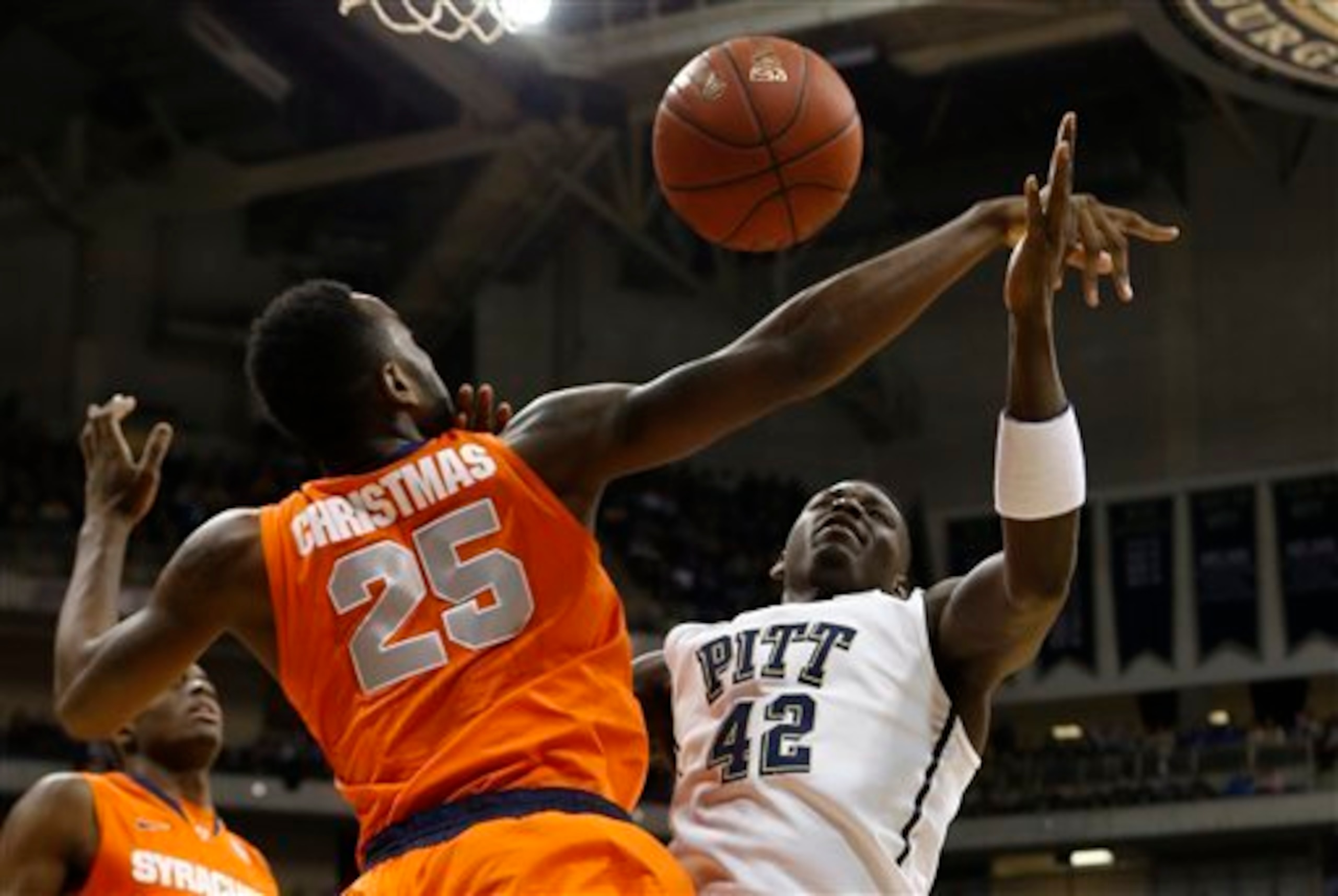
Like Connecticut, Syracuse has consistently been one of the best shot-blocking teams in the country for more than a decade.
To serve as the anchor of that vaunted Jim Boeheim 2-3 zone, the ability to defend the rim is a prerequisite.
Teams don't rely on two-point field goals against Syracuse anywhere near as much as they do against other teams in the country, but shot-blockers like Rakeem Christmas are the reason there's no such thing as an easy bucket against the Orange.
Per 40 minutes, Christmas' block rate is nothing special. In his three-year career, he has averaged a modest 3.3 blocks per 40 minutes. But that's very much due to Syracuse's slow pace of play in recent years and the lack of two-pointers that opponents attempt.
As far as block percentage goes, though, Christmas has ranked 21st in the nation in each of the last two seasons, rejecting roughly one out of every nine two-point attempts while he is in the game.
His fourth and final college season will be the biggest test of all. After losing C.J. Fair and Jerami Grant, Syracuse needs Christmas to be a force on both ends of the court. He has been efficient in his career, but in small doses.
If the Orange are to avoid a major setback this season, Christmas will be the reason why.
Briante Weber, VCU
7 of 10
Before Briante Weber, VCU had one of the better defenses in the country. In Shaka Smart's first two seasons with the Rams, they ranked 12th and 17th in steal percentage, tallying a steal on approximately 12.6 percent of opponents' possessions.
With Weber, VCU has been the best defense. Over the past three seasons, the Rams have recorded a steal on approximately 16.2 percent of opponents' possessions, ranking first in steal percentage each year.
Not only have the Rams been the best defense, but Weber has been the best individual defender. He has ranked first in steal percentage each season, recording a total of 296 steals to date.
John Linehan has the all-time steals record with 385 of them during his time at Providence. Desmond Cambridge has the record for steals in a single season, tallying 160 in 2001-02 for Alabama A&M.
Weber might not break the single-season record—he had 121 pilfers last year—but he would certainly annihilate the career record if he did.
Kennedy Meeks, North Carolina
8 of 10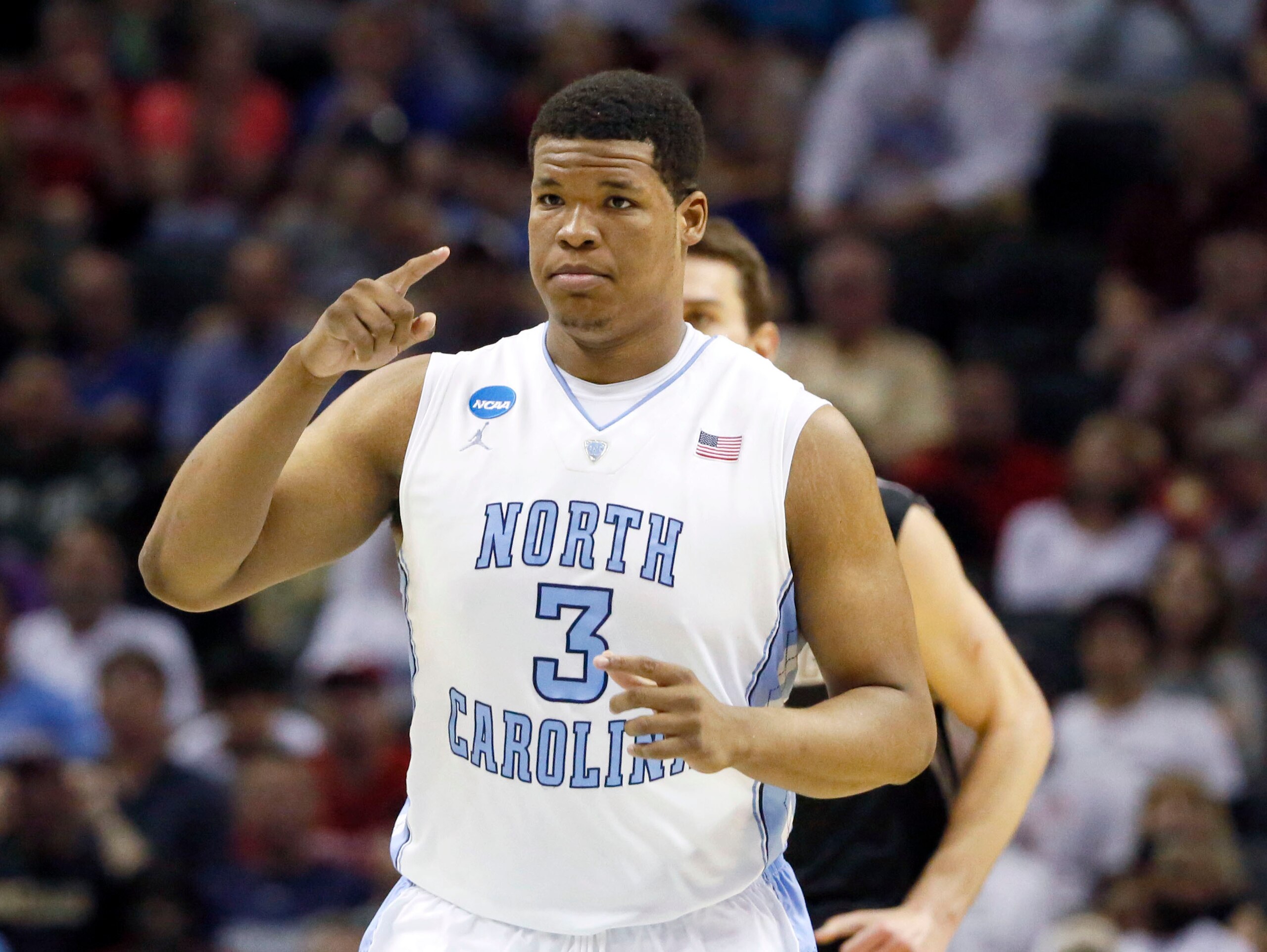
Last year's difference was even more pronounced than usual, but North Carolina has not been reliant on three-pointers under Roy Williams.
On average over the past eight seasons, North Carolina has taken 24.9 percent of its field-goal attempts from three-point range—a rate that would have ranked 337th in the nation last season.
Granted, a lot of that disparity had to do with the team's options in the post. Between Tyler Hansbrough, Brandan Wright, Deon Thompson, Tyler Zeller, John Henson and James Michael McAdoo, it's been a while since feeding the big men as often as possible wasn't an obvious strategy to practice.
However, that willingness to rely on post players is exactly why Kennedy Meeks is such a perfect fit in this offense.
Playing sparingly last season, Meeks averaged 18.6 points and 14.9 rebounds per 40 minutes. Chump change compared to the 24.9 points per 40 minutes that Hansbrough averaged as a freshman, but Meeks is in better shape than last year, and the next-best option at center is either Desmond Hubert or Joel James—neither of whom is exactly enticing.
If he's conditioned well enough to play 30 minutes per game, he'll benefit nicely from an uptempo offense that does most of its scoring in the paint.
Ryan Harrow, Georgia State
9 of 10
Unlike the rest of the players on this list, we've had the luxury of seeing how well Ryan Harrow can fit into other D-I offenses.
Before Georgia State, the verdict was "not well."
As a freshman at North Carolina State, he averaged 0.083 win shares per 40 minutes. Two years later at Kentucky, his ratio was 0.111.
But last year at Georgia State, he broke out in a big way, averaging 0.151 win shares per 40 minutes. Save for assists per 40 minutes, he was more efficient in every way, shape and form than his previous two seasons.
Tough to say whether it was the product of a major-conference talent transferring to a minor-conference team or just the fact that he was able to play looser with less pressure, but there's no denying that it has been a great symbiotic relationship for Harrow and Georgia State.
Georgia State has been much better at avoiding turnovers since Ron Hunter became the head coach. Last season, the Panthers ranked No. 1 in the nation in turnover percentage.
With Harrow at the helm, the Panthers enter the season as one of the most dangerous sleeper teams in the country.
Tyler Ulis, Kentucky
10 of 10
Three words: Dribble-drive motion.
Tyler Ulis is unlike any point guard John Calipari has had at his disposal in the past decade, but he couldn't be more perfect for this offense.
Dribble-drive motion is predicated on a point guard with the ability to penetrate. From there, it's similar to being the quarterback in a triple-option offense in football.
If the defense collapses, kick it out to a teammate for a wide-open three-pointer. If one interior big man slides over, dump it off to his man for an easy bucket. And if they ignore you entirely, take the layup.
Sounds easy enough, but every possession is like a game of speed chess in which the point guard needs the vision to see everything, the foresight to know what's coming next and the decision-making ability to immediately capitalize on any openings.
Ulis doesn't have the need to score of a John Wall or Derrick Rose. Rather, he has the vision, fearlessness and selflessness of a Rajon Rondo. He'll mix it up among the trees and see passes that don't even seem possible to the naked eye.
Call it a hunch, but Kentucky's best lineup this season might be its "small-ball" approach with Ulis at point guard, both 6'6" Harrison twins on the wings and your choice of two big men (give me Dakari Johnson and Karl Towns Jr.).
Kerry Miller covers college basketball for Bleacher Report. You can follow him on Twitter @kerrancejames.
.jpg?w=2560 "NFL Paris Football")

.jpg?w=2560 "Trevon Diggs Cut by Seahawks")