Key to Thriving in Big-Game Pressure Is in Not Caring at All
I still remember the day Rick Renteria called me into the tiny manager's office of the Lake Elsinore Storm to tell me that because of an injury to one of our starters, I would be leaving my role in the bullpen to bolster the rotation.
A spot start, it's called. Something I'd done many times before in my swingman-centric career. Starts are a chance to shine, a chance for what we aspiring minor leaguers refer to as priority innings.
I would have been comfortable at the prospect of it, excited even, if it wasn't for one key factor: The start in question would be Game 5 of the California League Championship Series, the game that would decide the value of the other 150 games my minor league brothers and I played that season, not to mention the biggest game of my career.
TOP NEWS

MLB Commissioner Defends Salary Cap

Miz Sets WS Record Already ⛽
Brewers Get 1st WS Win Since 1982 💪
No pressure.
When I was told, it was like an elephant instantly sat down on top of me. I tried to act strong, but color draining from my face betrayed my true feelings on the matter. Renty must have picked up on it, because he went on to tell me that since we were already up two games to none in a five-game series against the San Jose Giants, we'd probably win before the need for me to take the hill was even an issue.
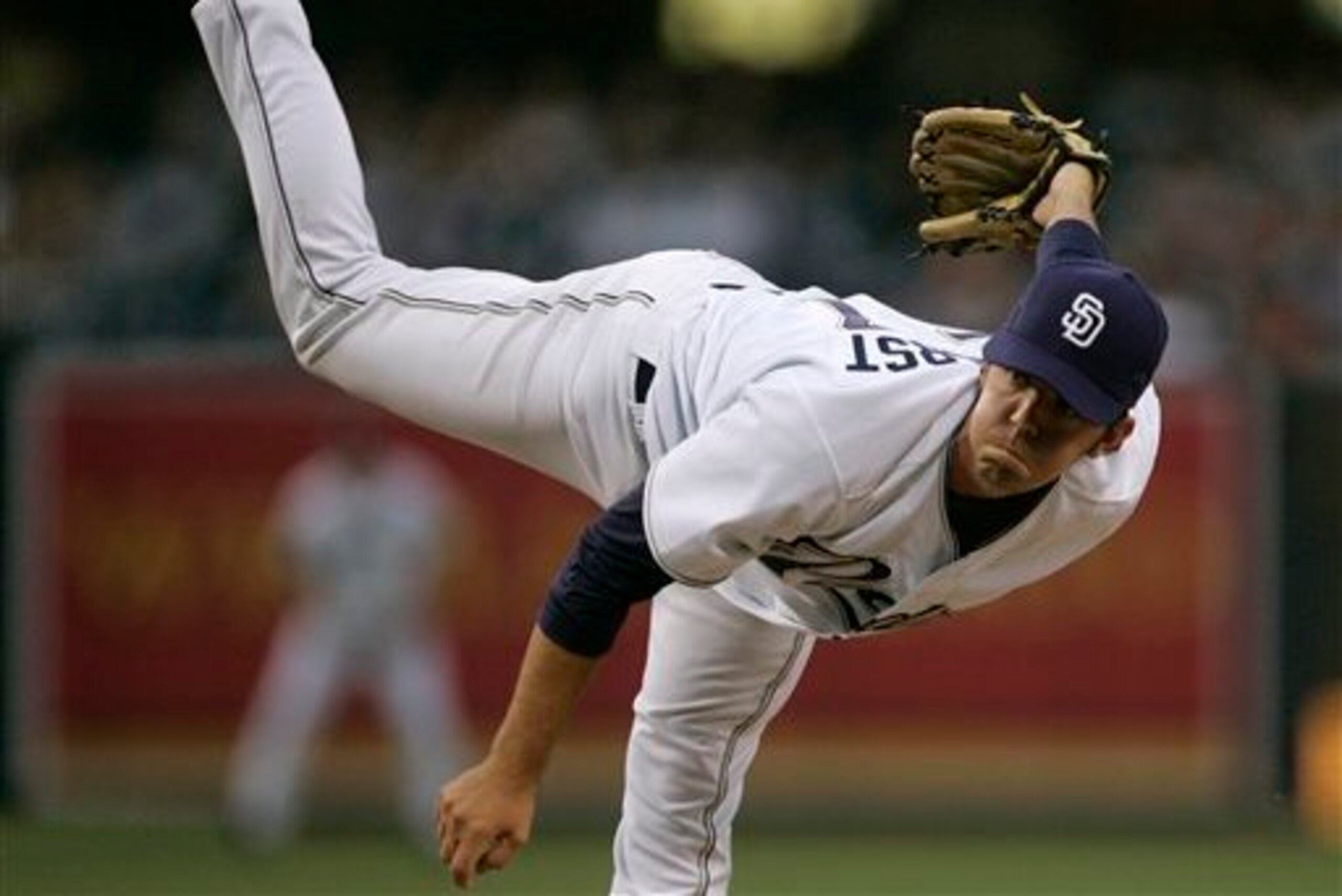
If you're a steady reader of my work, then I don't need to tell you that the baseball gods love to upend statements like it probably won't be an issue. Naturally, we lost the next two games, and that thing that wasn't supposed to happen was now going to happen, and there was nothing I could do to stop it.
People ask me what it's like to take the hill in pressure situations. What goes through a pitcher's mind? How do you focus when you're out there? How do you lock yourself in?
It varies from player to player, but the answer is always built on the same premise: Try as hard as you possibly can to not care about what can happen.
I've had times when I've been able to clear the mechanism, as Billy Chapel might say. I've had times I couldn't remember how to pitch. I've been both distracted and locked in and everything in between—it comes and goes with all the consistency of round bat on round ball. The best you can hope for is to become a pitching robot who feels nothing and focuses only on the process, not the result.
That said, pitching is the easiest part. Being out there on the mound, in the moment, doing what you know even if you don't know how you're doing it. It's the waiting that’s horrible. The tail-chasing over what could happen. It's psychological torture, with you playing the role of torturer and tortured. Measuring your past against your future and wondering if this will be when things improve or fall apart.
During that season, long before that spot start, long before that championship series, I'd voluntarily taken myself out of the starting rotation.
That involved another trip to the manager's office. One in which I had to fight back tears of embarrassment. I'd gotten my ass kicked time and time again in the role of starter, and I just wanted to hide in the bullpen so I could keep my job.
I didn't believe in myself, at least not as a starter, and I felt that if I could just escape to the back of the pen for a bit, I could work some things out, build my confidence back up and recover.
My request very nearly got me released. Telling your manager you're too soft to take a beating in a game that doles them out fairly regularly is a damning admission. When I left the office that day, I'm not sure Renty even wanted me on his team.

Fortunately, instead of a pink slip and a flight home, I got my wish and was moved to the pen. I don't think it's a stretch to say that most of the team, and probably a good bit of the organization, lost respect for me. The guy who replaced me in the rotation was thrilled, of course, but that's about it. Everyone else thought of me as a coward.
Fast-forward to the night before that Cal League Championship Game. I couldn't sleep. As I said, when you're on the mound, you can focus on the task at hand. You can wind up over your head, trust your body and physically do something about what you're feeling. But when you're trapped in a hotel room, you can do nothing but torture yourself over what's to come.
The meta of baseball is an awful thing. I can remember lying in the outfield grass the day of the game, tired, nervous, stretching and thinking about all the right things before I took that mound. I was angry at myself for being angry at myself, because all this meta analysis meant I was not locked in and I needed to be locked in. It was so important that I be locked in! Lock in, dammit!
Then I started thinking how if the coaches wanted me to be successful, they never should have told me! They should have called me into the office three hours ago, not three days!
I just wanted it to stop. I just wanted it to be over. I just wanted to not care. And then, just when I was about to reach critical mass, when the start had nearly morphed from a great opportunity into my appointed execution time, I distinctly remember making the decision to do just that—not care what happened.
The way I saw it, I had nothing to lose. I couldn't spend the rest of my life being afraid of the game I'd spent this much of my life trying to be a part of. I couldn't keep wondering what the fans and the organization and my teammates would think of me. I couldn't keep losing sleep over something that, once the ball left my hand, was out of my control. I'd rather go out there and be executed than slowly kill myself over what might happen.
The rest of the story played out like this, as written in my book, The Bullpen Gospels:
I can't explain what it's like to pitch an amazing game. I always wanted to be a superhero when I was a kid, and when I pitch well, it's as if I am, and everyone watching knows it. Still, it's something you need to feel to understand. Words can't tell you how fulfilling, empowering and relieving it is, all at the same time. How it makes you feel like some great champion, the master of the battlefield. How it justifies all the work you put in to capture it, even though you know it's something so wild and free it can't truly be contained. In the brief moments you hold on to it, it frees you from your bondage, each perfect pitch erasing a speck of self-doubt. It's a feeling you'll gladly endure a season of hell to experience. It's why you compete.
I was a champion that day. I was a king among men. I was all that and a bag of chips. I carried a one-hitter through six before talented pitchers came in to relieve me. In my last inning, I struck out the side for good measure. A whole season of treading water justified by one stellar performance. I felt as if a weight was lifted from my chest. The shackles were unlocked, and I was free to believe in myself again. All year I had been a failure, blasted in the media as a letdown and on his way out. But in that moment, I was the hero.
Then minutes after I exited, somewhere between congratulatory butt slaps and getting my arm in ice, my relievers handed the game away. A hit batsman, a walk, a single, a sacrifice....We lost the game three to one.
It's hard to let go. It's hard to not care. It's counterintuitive, in fact. Letting go of what could happen so you can focus on what is happening is the hardest thing any pitcher will go through. It's the hardest thing to articulate, confess and deal with, and it permeates every square inch of the craft. But it's absolutely essential to surviving the sport.
The postseason, when the stakes are high and the meta of the game is nearly impossible to tune out, it's that much worse.
That's what makes guys like Madison Bumgarner so special. For a 25-year old to have a 0.59 ERA and a 31-4 strikeout-to-walk ratio over his last four postseason starts is simply insane. It takes a special pitcher to consistently rise to the occasion, and Bumgarner appears to have that gene in him.
As I look back at my career, I've always admired the players who show how much they care by their ability to not care at all. To relax, tune out and simply let what will be, be—trusting they will be ready when it’s their time to carry the weight.
Bumgarner will look to do just that yet again in a crucial NLCS Game 5 performance Thursday night for the Giants, and it would be foolish to expect anything but the best from him.
.png?w=2560)

.jpg?w=2560 "NFL House in Paris Closes for Protests")

.jpg?w=2560 "Trevon Diggs Cut by Seahawks")