Mike Slive's SEC Legacy
Former United States president Teddy Roosevelt's foreign policy was best described by the phrase "speak softly, and carry a big stick."
SEC commissioner Mike Slive's style is governing the SEC in a similar fashion.
Slive, 74, announced Tuesday that he will retire July 31, 2015, after 13 years of service.

.jpg?w=2560)
"I have been blessed in more ways than I can count, and I will have as much passion for this job on my last day as I did on my first," said Slive in a statement. "I consider my health situation [recurrence of prostate cancer] a temporary detour in a remarkable road that has allowed me to meet amazing people, experience incredible events and celebrate historic victories. I will relish my final year in this position and look forward to being the biggest fan of the SEC for many years to come."
Once he hangs up the briefcase, Slive will leave a legacy of success, grace and prosperity that won't be easily matched in the world of college athletics.
Thoughtful and Deliberate
As a lawyer and judge by trade, Slive previously served as the commissioner of Conference USA (1995-2002) and the Great Midwest Conference (1991-1995). The soft-spoken man from Utica, New York, brought that experience in the legal world to the SEC which, prior to his arrival, was led by Roy Kramer.
Kramer, a former head coach at Central Michigan, is widely known as the "father of the BCS."
Slive's style was different, and when he first got introduced to people familiar with the SEC, he was met with some doubt, including from SEC Network analyst Tony Barnhart.
"Can this guy, with an Ivy League education, worked at the Pac-10, has been a lawyer and a district court judge—is he ready for the rough-and-tumble world in the SEC? That was my first thought about Mike Slive when I met him," Barnhart told B/R.
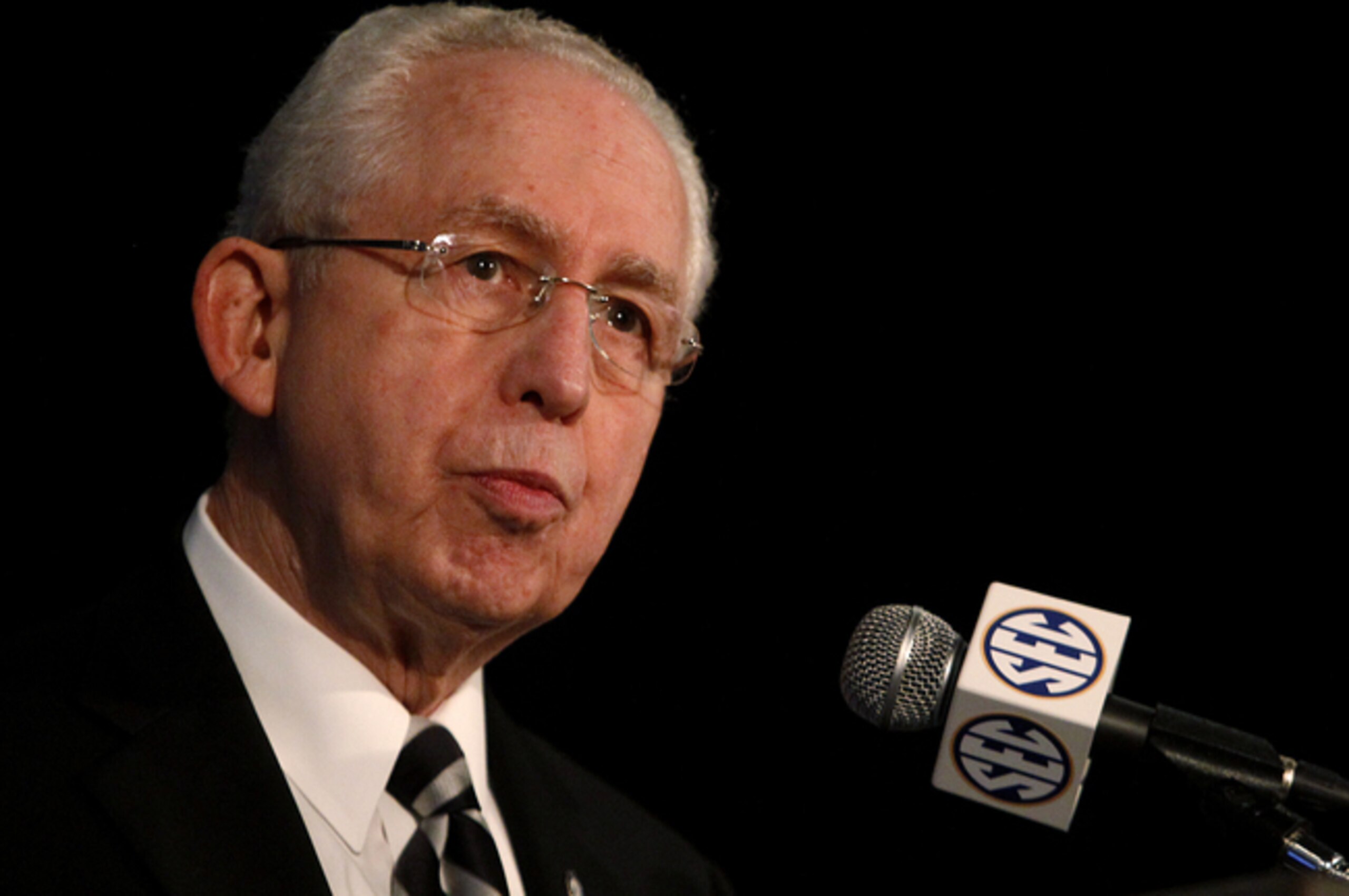
That changed in a hurry.
"After I talked with him for the first time," Barnhart noted, "I thought 'OK, this guy is persuasive.'"
Persuasive he is.
Slive's ability to rally the conference together, create peace behind the scenes and get the entire unit believing that a rising tide floats all boats is a big reason why the SEC is now regarded as the most successful conference in sports, and Slive is known as one of—if not the—most powerful figures in college sports.
It wasn't without challenges.
Slive famously sat former Florida head coach Urban Meyer and former Tennessee head coach Lane Kiffin down at SEC spring meetings in Destin, Florida, in 2009 after the two had engaged in an offseason of public sparring.
"I'll never forget, he brought them into the coaches' meeting room in Destin and basically read them the riot act," Barnhart said. "He told them, in so many words, that they need to quit yappin' in public because it was bad for the conference, and he wasn't going to put up with it."
That's not to say those things don't happen anymore. They do. Most recently, old-school and new-school coaches sparred publicly over the failed "10-second rule," which was something that popped up seemingly out of nowhere. That, though, is now the exception, not the rule.
"Those kind of things still happen," SEC Director of Communications Chuck Dunlap noted. "But they're not good for anybody to take place in a public forum. I think that those things, for the most part, don't happen in a public forum is another testament to Commissioner Slive and the respect that our coaches have for him."
A Visionary
Slive's 13 years as commissioner will be viewed as an unquestioned success, but his real impact will be felt long after he retires.
The four-team College Football Playoff exists largely due to Slive's push, long ago, for what then was termed as a "plus-one." According to the Sun-Sentinel's Shandel Richardson, Slive and ACC commissioner John Swofford proposed a four-team playoff at the BCS meetings in spring 2008, just two championships into the SEC's remarkable run of seven straight national titles.
"There was really no support for it back then," explained Dunlap. "And that was really early in our string of titles, so it wasn't like he was doing that as an SEC move. He's somebody who is good for college athletics, good for college football and somebody who listened to fans and certainly wasn't tone-deaf to their desires."
It was all part of the plan.
Slive didn't go into that meeting expecting a four-team playoff to be adopted. He was laying the groundwork, which, as we see in 2014—this first season of the playoff—paid off.
"He was the guy who wanted to put it on the table at the BCS meetings, knowing the first time he did, he knew full well that it was going to get shot down," Barnhart said. "Mike Slive never went into a room where there was going to be a vote where he didn't already know how the vote was already going to go, just like a great lawyer who never asks a question that he doesn't already know the answer to."
What's more, Slive has been instrumental in the push for player welfare reform from the outset.
His 2011 "state of the SEC" speech at SEC media days in Hoover, Alabama, became known as the "agenda for change." In it, Slive laid out four primary goals, via ASAP Sports:
- Redefine the benefits available to student-athletes.
- Strengthen academic-eligibility requirements for incoming freshmen and two-year transfers.
- Modernize the recruiting rules.
- Continue to support the NCAA's efforts to improve the enforcement process.
Fast-forward three-and-a-half years, and these goals are a big part of power-five conferences' push for legislative autonomy. Full cost-of-attendance stipends, enhanced medical coverage, a pared-down rule book and multiyear scholarships are all either available now or likely to become available through autonomy in the near future.
Slive deserves credit for that.
"There's a lot that he was a part of and did through the years that fans, not just part of the SEC, should be grateful for," Dunlap said.
Coaching Diversity
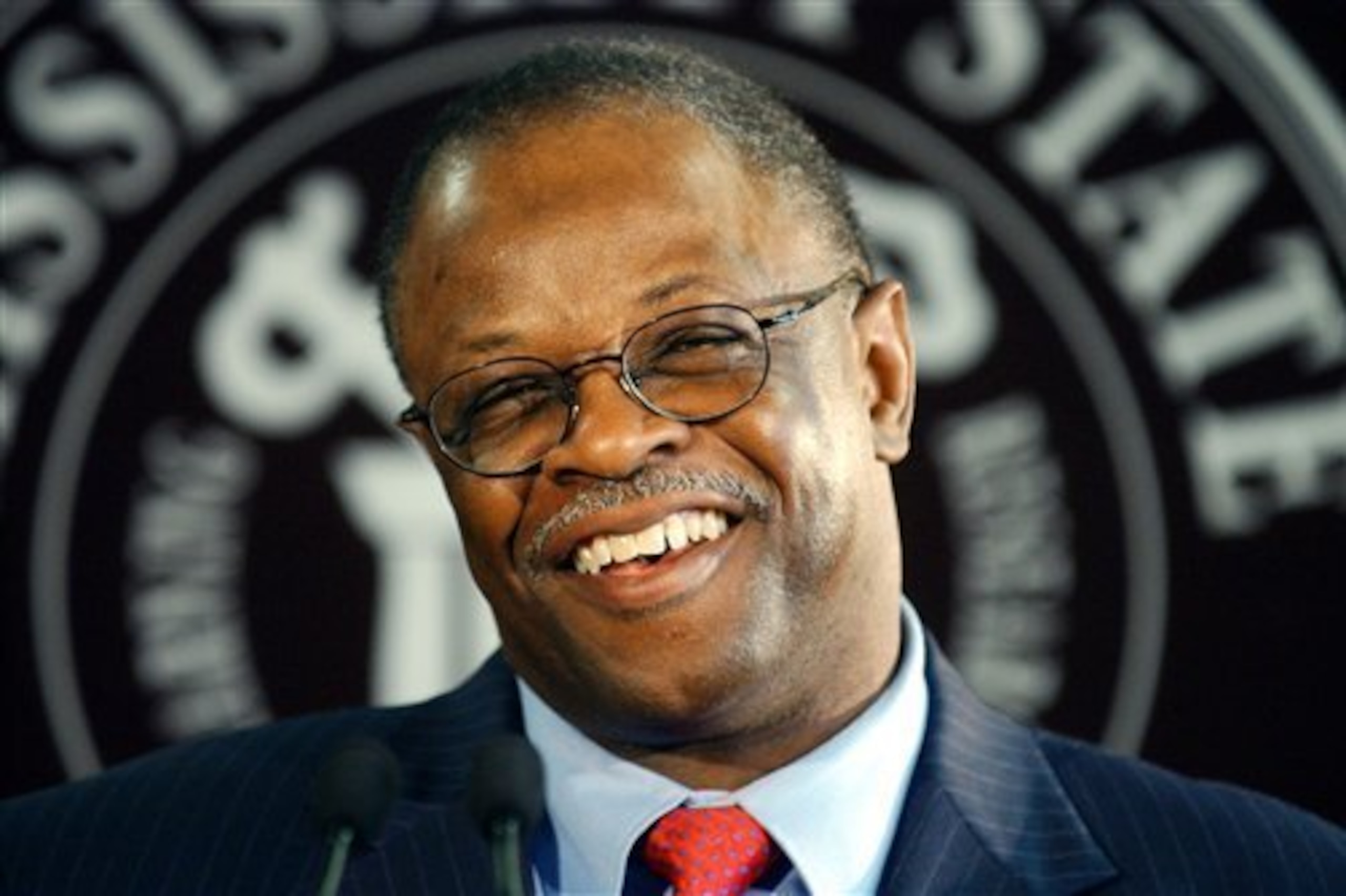
Mississippi State hired Sylvester Croom prior to the 2004 season to replace Jackie Sherrill as the head coach of the Bulldogs, marking a first in the SEC. Croom was the first African-American head coach in the SEC and blazed a trail for others to follow in his footsteps.
Croom's story was featured by ESPN Films' SEC Storied franchise, and Slive commented on just how important Croom's career was to his legacy in a press release from ESPN.
"It was a story not about sport, but it was story about us," Slive said in a statement in 2012. "It was a story about society. It was a story about the South. And I don’t believe there’ll be a more pivotal event that will occur in my tenure no matter how long I stay here."
Since 2004, Kentucky hired Joker Phillips, former Vanderbilt head coach James Franklin led the Commodores program to unprecedented success and Derek Mason was hired to replace Franklin after Franklin left for Penn State.
The fact that subsequent hires didn't receive as much attention speaks volumes to Slive's push for coaching diversity within the SEC.
"Dealing with compliance and the fact that, in 2014, a minority football coach being hired in the SEC is no longer news. Those are the two things that, if you pressed him, are the things he'd be most proud of," Dunlap noted.

A Windfall
College athletics is big business, and under Slive's leadership, the SEC has generated a windfall for its member institutions.
Since taking over for the 2002-2003 school year, Slive has been at the forefront as the conference has more than tripled its annual total payout to schools. The conference paid out a total of $101.9 million to its member institutions after his first year on the job, according to AL.com's Brandon Marcello, but the best was yet to come.
| 1980 | $4.1 million |
| 1985 | $9.34 million |
| 1990 | $16.3 million |
| 1995 | $40.3 million |
| 2000 | $73.2 million |
| 2003 | $101.9 million |
| 2005 | $110.7 million |
| 2010 | $209.0 million |
| 2014 | $309.6 million |
Groundbreaking television contracts, success on the football field and basketball court, the addition of Texas A&M, Missouri and its television markets and the development of the SEC Network—which he referred to as the "most successful launch of a new cable network in all of cable history," according to AL.com's Mike Herndon—helped the total conference payout jump to $309.6 million.
This, as FoxSports.com's Clay Travis noted in the spring, is without the benefit of money generated from the SEC Network, which launched Aug. 14, 2014.
Whoever steps in for Slive will undoubtedly credit him for what's coming because tripling revenue in just over decade will look like a baby step in a road paved with gold.
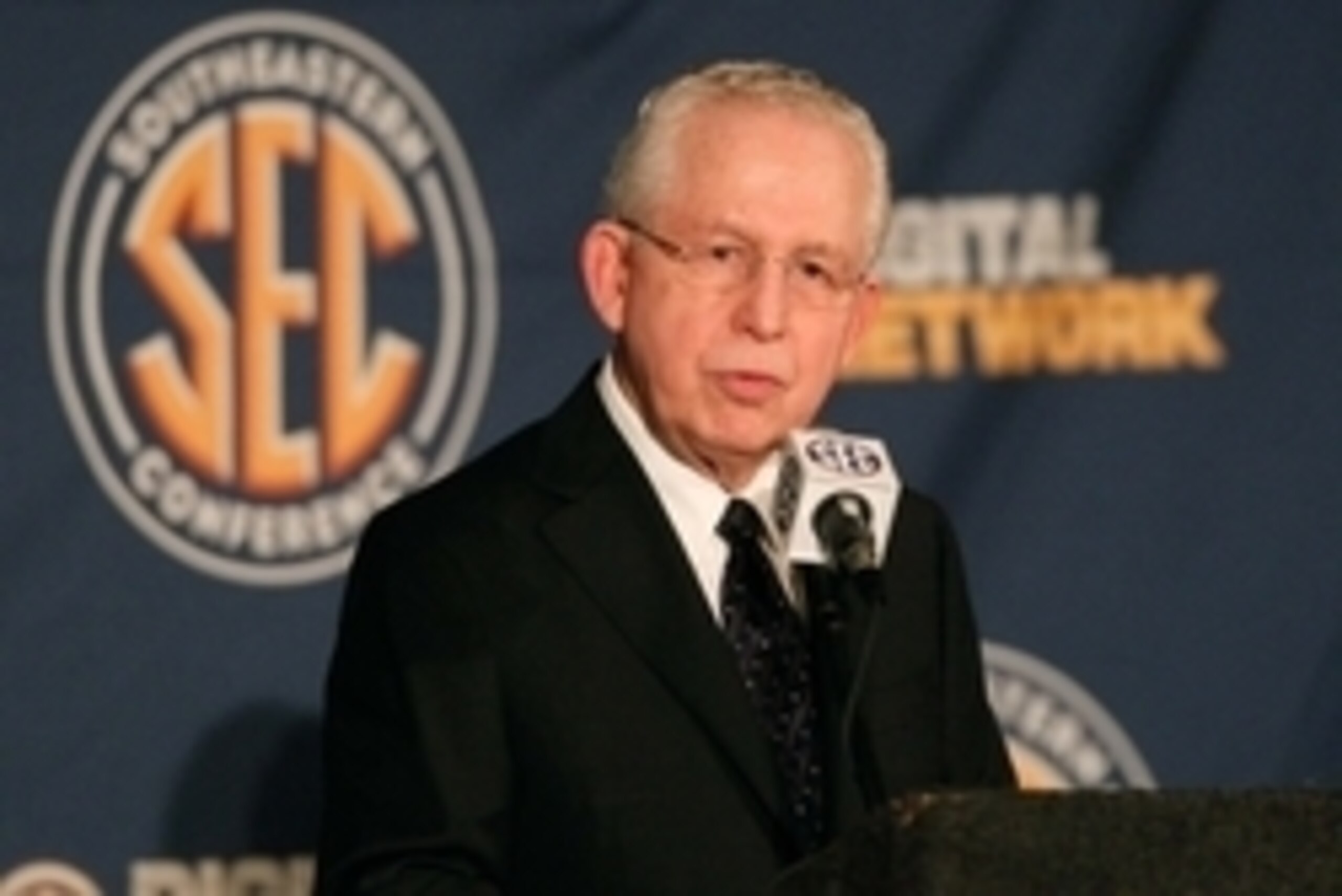
Slive will go down as one of the kindest, smartest and most transformative leaders in the history of college athletics.
"He's the most powerful man in intercollegiate athletics, but he's never acted like it," Barnhart said.
His grace, ability to keep the peace and foresight has ushered in a new era of SEC football, college football and college athletics, with the best yet to come.
Barrett Sallee is the lead SEC college football writer and video analyst for Bleacher Report, as well as a co-host of the CFB Hangover on Bleacher Report Radio (Sundays, 9-11 a.m. ET) on Sirius 93, XM 208.
Quotes were obtained firsthand unless otherwise noted. All stats are courtesy of cfbstats.com, and all recruiting information is courtesy of 247Sports. Follow Barrett on Twitter @BarrettSallee.

.jpg?w=2560 "NFL House in Paris Closes for Protests")

.jpg?w=2560 "Trevon Diggs Cut by Seahawks")