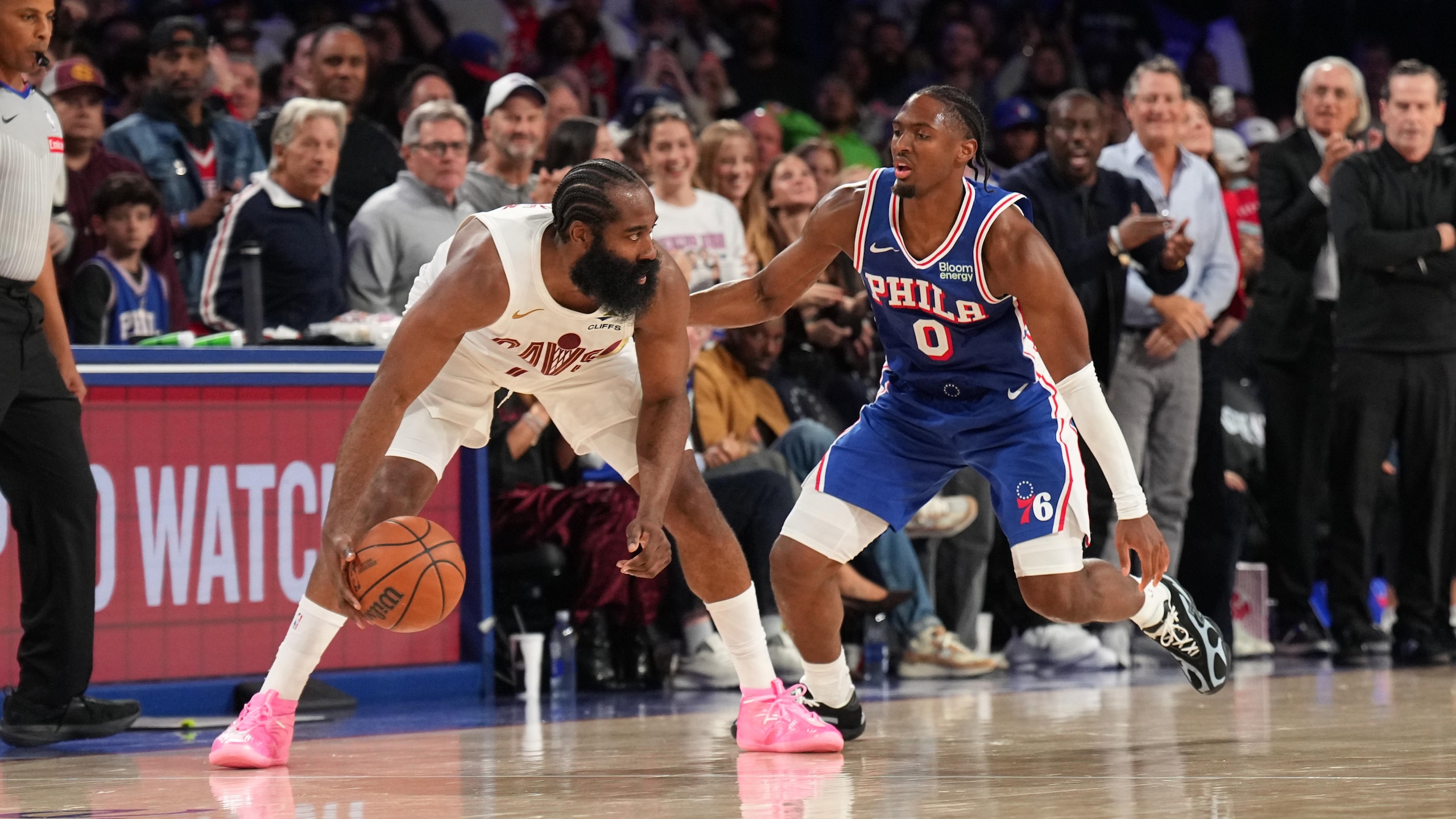
With Kentucky having seemingly every talented big man in the country, VCU, Wichita State and Michigan State headline what figures to be a long list of college basketball teams employing small-ball lineups during the 2014-15 season.
It's not the size of the dog in the fight, but the ability of the dog to make ample three-pointers and limit turnovers well enough to make up for an inevitably negative rebounding margin on a nightly basis.
In ranking these top 10 small-ball lineups, we put together our best guess at their projected starting lineups and then subjectively graded them in both the "best" and "small" categories.
As you'll see, it was a delicate balance.
Indiana ended up just two spots behind Michigan, even though we fully expect the Hoosiers to finish at least five places behind the Wolverines in the Big Ten standings. But because Indiana is so ridiculously small this year and because Michigan figures to start four guys who are 6'6" or taller, they ended up in close proximity to one another.
Any team projected to start two players 6'8" or taller was immediately removed from consideration. Beyond that, the smaller they are and the better they are, the higher they ranked on the list.
All advanced stats via KenPom.com (subscription required), NCAA.com and Sports-Reference.com.
Honorable Mentions
1 of 11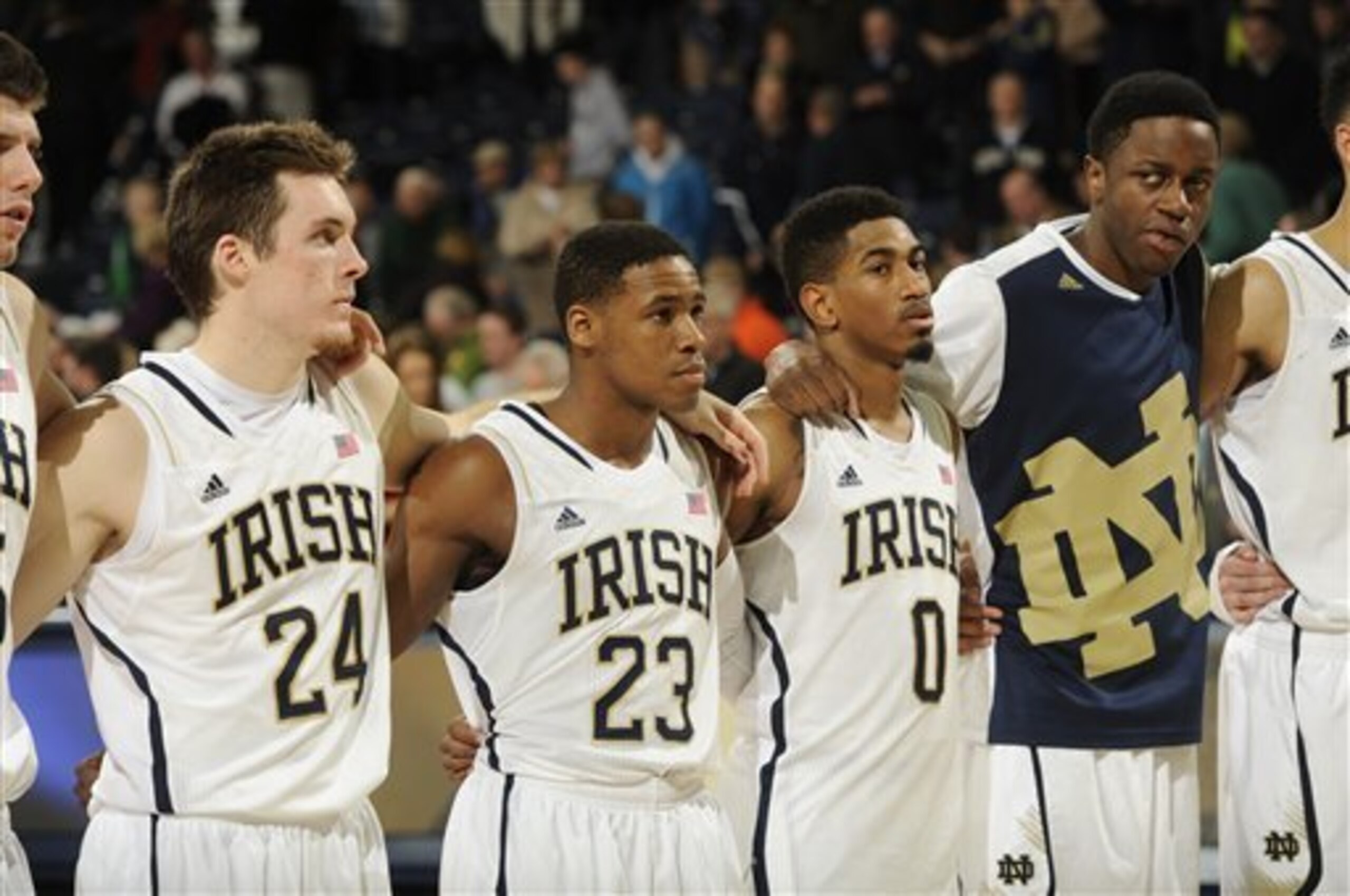
Lipscomb Bisons
J.C. Hampton (6'0"), Martin Smith (6'5"), Josh Williams (6'5"), Malcolm Smith (6'5"), Talbott Denny (6'6")
Last season only one player taller than 6'6" played a single minute for Lipscomb, and Charles Smith—a 6'9" freshman center—only played a total of 49 minutes.
The Bisons took small ball to a whole new level, but aside from a blowout win over Florida Gulf Coast that looks completely out of place against everything else they did, it didn't exactly result in anything impressive.
Perhaps things will be better this year, though, as they return all five of their leading scorers.
Notre Dame Fighting Irish
Demetrius Jackson (6'1"), Jerian Grant (6'5"), Steve Vasturia (6'5"), Pat Connaughton (6'5"), Zach Auguste (6'10")
Notre Dame does have one big man in Zach Auguste, but these aren't your daddy's Irish. They aren't even your older brother's Irish.
It wasn't that long ago that Notre Dame's lineup primarily consisted of 2-guards and three 6'8" power forwards with names like Luke Harangody, Tyrone Nash, Jack Cooley and Scott Martin. But now, it's looking like Mike Brey's best lineup will be four guards and a center.
Oregon Ducks
Theo Friedman (6'1"), Joseph Young (6'2"), Elgin Cook (6'6"), Dillon Brooks (6'7"), Dwayne Benjamin (6'7")
Michael Chandler is the only player on the roster taller than 6'7", and as Jon Rothstein notes, coach Dana Altman told CBSSports.com on Wednesday that he still isn't practicing because of a knee injury. JaQuan Lyle wouldn't much change the Ducks' height problem, but Oregon's top-rated recruit was denied admission to the school and is now playing at IMG Academy.
The Ducks definitely meet the small criteria, but we're worried their season might be a train wreck after losing 85 percent of last year's roster as well as a number of the pieces they were hoping could actually fill all those voids.
Stephen F. Austin Lumberjacks
Trey Pinkney (5'9"), Thomas Walkup (6'4"), Connor Brooks (6'4"), Jacob Parker (6'6"), Tanner Clayton (6'9")
The Lumberjacks might have been the best small-ball team in the country last season, but they lost three players who combined to attempt 507 three-pointers in 2013-14.
Walkup and Parker are small guys, but they play like power forwards in the way they rebound and take close to 90 percent of their shots from inside the arc.
Winthrop Eagles
Andre Smith (5'10"), Keon Johnson (5'7"), Keon Moore (6'5"), Larry Brown (6'6"), James Bourne (6'8")
The Eagles are tiny with a lowercase "t," but we can't very well classify them as good.
With essentially the exact same roster, they played just three games last season against KenPom top 150 teams, losing each game by an average of 20.3 points. They were also destroyed by a Virginia Tech team that nearly lost every ACC game it played last season.
10. Harvard Crimson
2 of 11
PG: Siyani Chambers (6'0")
SG: Wesley Saunders (6'5")
SF: Jonah Travis (6'6")
PF: Steve Moundou-Missi (6'7")
C: Kenyatta Smith (6'8")
6th Man: Evan Cummins (6'9")
This is more of a tribute to the recent past than a prediction of the immediate future.
Harvard plays great basketball. The Crimson have won three straight Ivy League titles almost exclusively on the backs of players who were undersized for their positions.
But they aren't so small anymore.
Travis and Moundou-Missi aren't exactly giants at the forward positions, but they are both excellent rebounders and interior scorers. Smith played all of three minutes last season between multiple injuries, but he averaged 5.8 blocked shots per 40 minutes two years ago as a freshman.
Compared to most major conference teams, Harvard's starting five is still a bit on the short side, but let's just say the rest of the Ivy League isn't churning out Shawn Bradleys and Gheorghe Muresans.
9. Boise State Broncos
3 of 11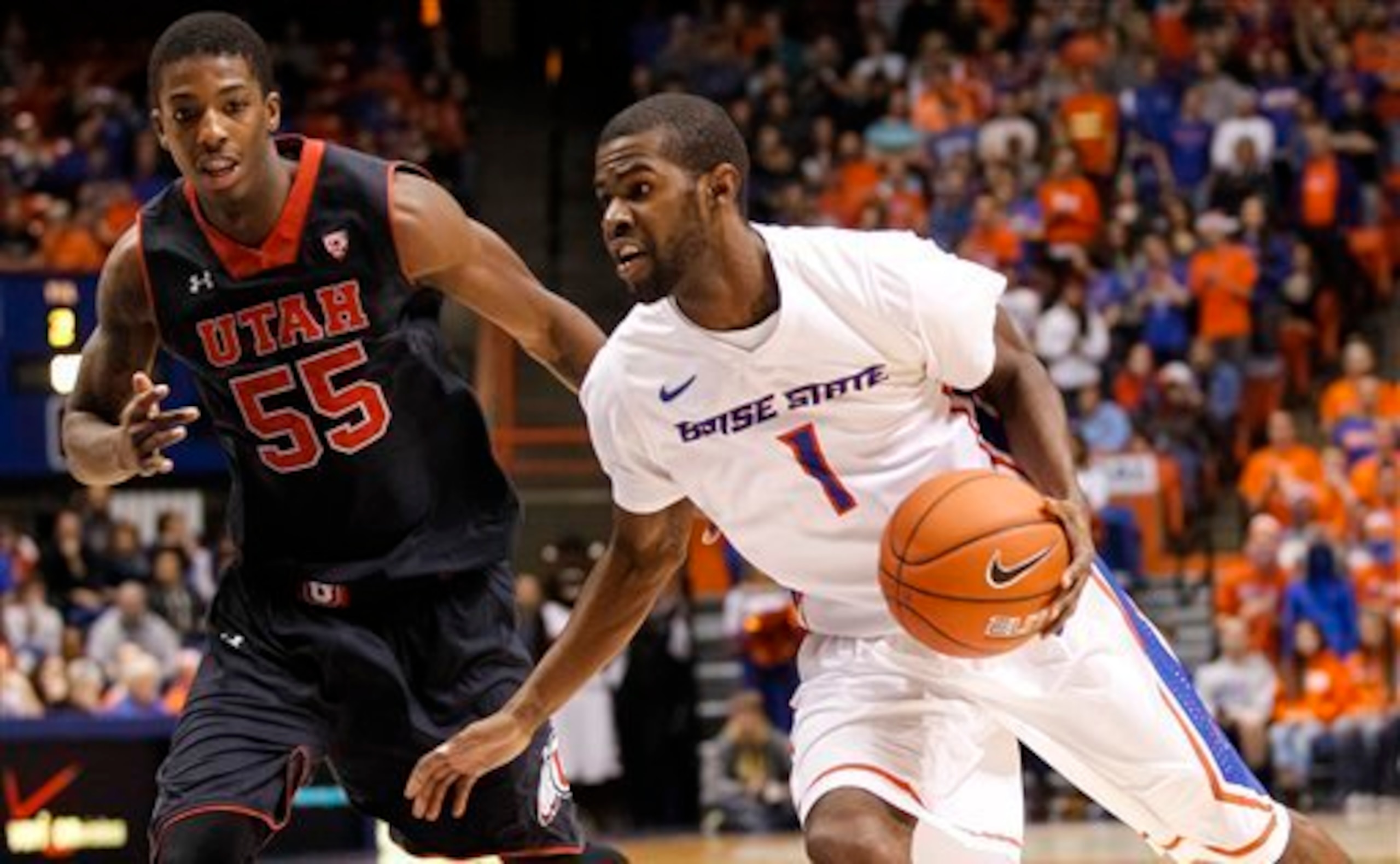
PG: Derrick Marks (6'3")
SG: Mikey Thompson (6'4")
SF: Anthony Drmic (6'6")
PF: Chandler Hutchison (6'7")
C: Nick Duncan (6'8")
6th Man: Igor Hadziomerovic (6'4")
Only one Boise State player had more than 144 rebounds or more than 10 blocked shots last season, and Ryan Watkins graduated this summer. Not only was Watkins Boise State's best big man, but he led the nation in offensive rebounding percentage.
Not so coincidentally, Watkins was also the only Bronco who didn't rely on the three-point shot with at least some degree of regularity.
Duncan may be 6'8", but 100 of his 130 field-goal attempts came from beyond the arc. Hutchison is 6'7", but he acts like more of a shooting guard than a power forward. Nearly half of Drmic's shots were of the three-point variety.
Oddly enough, Boise State's shortest players are the ones who do the least long-range shooting. Marks and Thompson combined to make just 31 triples last season.
Maybe incoming freshman David Wacker (6'9") or JUCO transfer Kevin Allen (6'10") becomes a reliable presence in the paint, but it certainly looks like the Broncos will be a team that averages at least 19.7 three-point attempts per game for a fifth consecutive season.
8. Creighton Bluejays
4 of 11
PG: Austin Chatman (6'0")
SG: Devin Brooks (6'2")
SF: Isaiah Zierden (6'2")
PF: Avery Dingman (6'6")
C: Will Artino (6'11")
6th Man: Ronnie Harrell (6'7")
For a team that lost four starters this summer, Creighton has a good number of options from which to choose its starting five.
Four of the spots are more or less set in stone. Chatman and Brooks will definitely start in the backcourt, and Artino is the starting center without question. Dingman seems like a lock to start at one of the forward positions. Whether that's small or power is up to the final starter.
Harrell is the team's top prospect this season and would fit in nicely at small forward. The Bluejays' other recruit (Leon Gilmore) is also a small forward. They also added Ricky Kreklow as a transfer from Cal.
They could also go big by starting Zach Hanson (6'9") at power forward. He didn't get much playing time last year as a freshman, but you try cracking into a lineup at the same position as Doug McDermott and Ethan Wragge and let us know how that works out for you.
But if his knee is healthy enough, I think Zierden gives them the best chance to win and one of the better small-ball lineups in the country.
From mid-January through the end of February, Zierden was averaging 14.5 MPG, becoming a regular fixture in the rotation. Per 40 minutes, he was putting up 11.8 points, 3.4 assists and 2.8 rebounds, even though McDermott and Wragge were constantly taking all of Creighton's shots.
Maybe Greg McDermott initially uses him as a backup to Brooks, but he should earn a starting job before long.
7. Utah Utes
5 of 11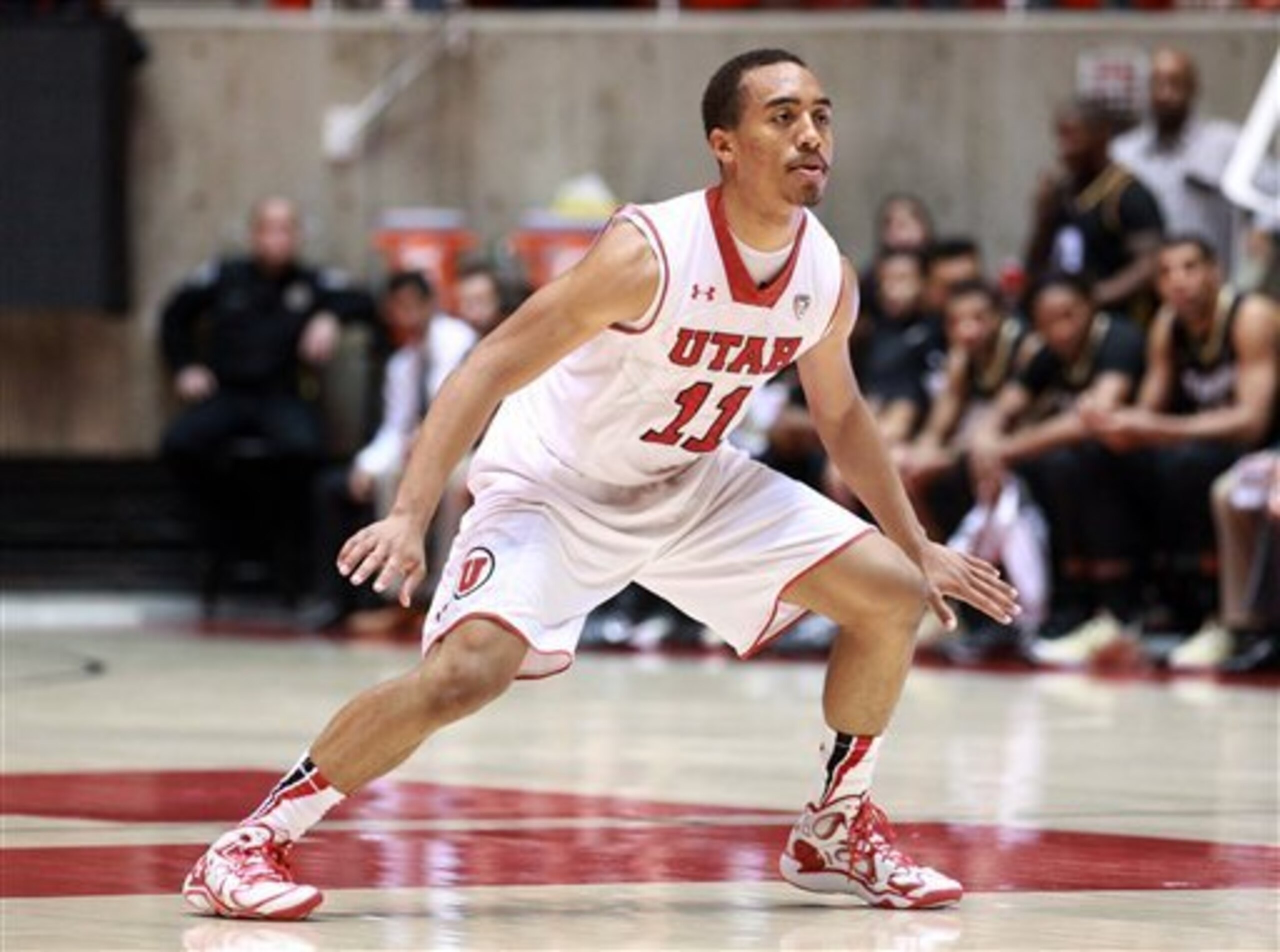
PG: Brandon Taylor (5'10")
SG: Dakarai Tucker (6'5")
SF: Delon Wright (6'5")
PF: Jordan Loveridge (6'6")
C: Dallin Bachynski (7'0")
6th Man: Brekkott Chapman (6'8")
While the Utes do have a giant in the post in the form of Bachynski, he only averaged 18.0 MPG last season as a junior and was responsible for fewer than 4.0 field-goal attempts per game. Save for his 1.8 offensive rebounds per game, he's basically a 7'0" decoy.
Instead, the heart of the offense runs through its four guards.
Loveridge may be listed as a forward, but 37 percent of his field-goal attempts come from three-point range. Sorry, but if your number of three-point attempts is almost 10 times your number of blocked shots, you're not a traditional forward.
Wright simultaneously plays like the biggest and smallest guy on the team. He led the Utes with 43 blocks last season and grabbed 6.8 rebounds per game, but he also had 60 more assists and 51 more steals than any other player on the team.
The X-factor here is Chapman. According to 247Sports, Chapman is the highest-rated recruit that Utah has had in at least a decade. If he immediately starts and kicks Tucker to the bench, then there's really nothing small about Utah other than its chances of missing the tournament again this season.
6. Indiana Hoosiers
6 of 11
PG: Yogi Ferrell (6'0")
SG: James Blackmon Jr. (6'4")
SF: Stanford Robinson (6'4")
PF: Devin Davis (6'7")
C: Troy Williams (6'7")
6th Man: Robert Johnson (6'3")
Like Lipscomb and Winthrop, Indiana comfortably meets the "small" criteria, but it would take some kind of quantum leap of faith to believe the Hoosiers are one of the best teams in the country.
However, we're pretty confident the Hoosiers would beat the pants off those other two teams at least nine out of 10 times, so they found their way into the top 10.
Indiana does have a couple of unproven big men on its roster—Hanner Mosquera-Perea, Tim Priller and Jeremiah April are each 6'9" or taller—but are those extra couple inches really worth the talent sacrifice of sending one of those five projected starters to the bench?
If nothing else, Indiana is going to be fun to watch. Ferrell and Blackmon might match what Reggie Hamilton and Travis Bader did three years ago for Oakland by each making more than 100 three-pointers in the same season.
5. Oklahoma Sooners
7 of 11
PG: Jordan Woodard (6'0")
SG: Buddy Hield (6'4")
SF: Isaiah Cousins (6'4")
PF: Dante Buford (6'7")
C: Ryan Spangler (6'8")
6th Man: Frank Booker (6'4")
Per usual, we're operating under the assumption that TaShawn Thomas will not be ruled eligible to play this season because it's almost November, and the committee in charge of making these rulings has apparently been on vacation for the past six months.
Without Thomas, this is a very small team.
Spangler is a fantastic rebounder and finisher at the rim, but he had more help last year than he will this season. The only noteworthy players who the Sooners lost this summer were Cameron Clark and Tyler Neal—a pair of 6'7" power forwards who ranked second and third on the team in defensive rebounding percentage.
In their absence, Lon Kruger is left to choose between incoming freshman Dante Buford and soon-to-be-outgoing senior D.J. Bennett for his starting power forward. Regardless of the selection, we're talking about a player who needs a sandwich or two just to be as big as John Henson was during his sophomore and junior seasons with North Carolina.
In lieu of a dominant post game, Oklahoma figures to rely heavily on the perimeter play of its guards. Hield, Cousins, Woodard and Booker combined to attempt 16.0 three-pointers per game last season—a number that is far more likely to increase than decrease.
4. Michigan Wolverines
8 of 11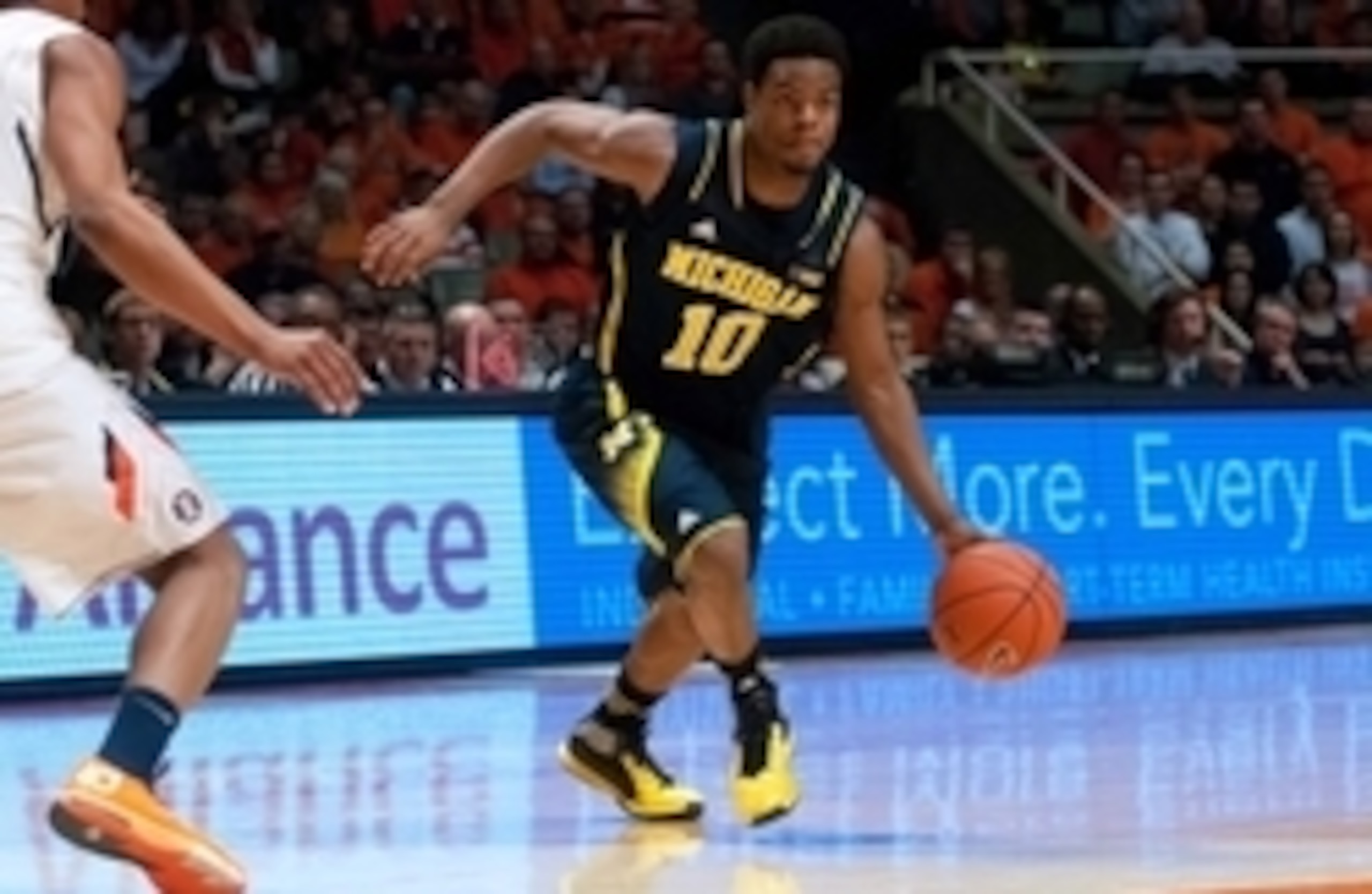
PG: Derrick Walton Jr. (6'0")
SG: Zak Irvin (6'6")
SF: Caris LeVert (6'7")
PF: Kameron Chatman (6'7")
C: Mark Donnal (6'9")
6th Man: Spike Albrecht (5'11")
Michigan is probably the best team on this list, but we couldn't rationalize putting the Wolverines in the top three with four starters who stand 6'6" or taller.
Between Irvin, LeVert and Walton, they might be one of the most three-point reliant teams in the country, but they're hardly going to look like the Looney Tunes facing the Monstars no matter how hard you squint.
Chatman is a bit undersized to be a traditional power forward, but Irvin is going to tower over most shooting guards in the Big Ten. Donnal is inexperienced, but he's built like a bull.
When Michigan will really be a small-ball team, though, is when Ricky Doyle subs in for Donnal. The two big men are equally sized, but Doyle prefers to do his damage on the perimeter.
With Doyle, the Wolverines will have an Iowa State vibe going in which any of the five players on the court can step out and hit a three-pointer. It should be fun to watch their ball movement in those sets.
3. Michigan State Spartans
9 of 11
PG: Lourawls Nairn Jr (5'10")
SG: Travis Trice (6'0")
SF: Denzel Valentine (6'5")
PF: Branden Dawson (6'6")
C: Matt Costello (6'9")
6th Man: Bryn Forbes (6'3")
Michigan State pretty much mastered the art of small ball last season.
Both Adreian Payne and Kenny Kaminski shot better than 40 percent from three-point range despite each standing 6'9" or taller. Dawson led the team in rebounding at 6'6", and 6'5" Valentine wasn't far behind him.
But with Payne and Kaminski both out of the picture, the Spartans figure to go with a more traditional offense this season.
Costello is a solid rebounder and well above-average shot-blocker who didn't attempt a single three-pointer last season. He isn't a 7-footer, but he's pretty much the dictionary definition of a traditional center.
What allows the Spartans to qualify for small-ball consideration, though, is that they're short at just about every other position. Valentine can certainly pass for a traditional small forward, but the other three guys could afford to grow a few inches.
Also, they don't really have a backup center for when Costello needs to come out of the game. Gavin Schilling is the only other player on the roster taller than 6'7", and he averaged 8.4 fouls and 3.4 turnovers per 40 minutes last season.
There will be stretches of games in which Dawson is effectively playing center with either Forbes or 6'4" Alvin Ellis serving as the first player off the bench.
2. Wichita State Shockers
10 of 11
PG: Fred VanVleet (5'11")
SG: Tekele Cotton (6'2")
SF: Ron Baker (6'3")
PF: Evan Wessel (6'5")
C: Darius Carter (6'7")
6th Man: Tom "Bush" Wamukota (7'0")
Were it not for that gigantic JUCO transfer, Wichita State would have been a lock for the top spot.
Though we're projecting Wessel to start at "power forward," it wouldn't be a surprise if Wamukota blocked and rebounded his way into a starting job. If and when that happens, the Shockers would have a starting lineup almost identical to the one Wisconsin had last season—as far as the height of the players is concerned, at any rate.
Until that point, though, Wichita State sure is small.
As we noted earlier this week, Carter was an excellent rebounder and a pretty capable scorer to boot, but he did a lot of that damage while sharing the court with 6'8" Cleanthony Early, 6'9" Kadeem Coleby and 6'9" Chadrack Lufile. Will he be that effective as the primary big man?
Wessel grabbed only 6.0 rebounds per 40 minutes last season and attempted just one field goal for every 10 minutes on the court. He basically played the same role for Wichita State that David McClure played for Duke in the late 2000s. If you're having trouble remembering that name, that's the point.
With Early out of the picture, this team only goes as far as its trio of guards can take it.
1. VCU Rams
11 of 11
PG: Briante Weber (6'2")
SG: Melvin Johnson (6'3")
SF: Jordan Burgess (6'5")
PF: Treveon Graham (6'6")
C: Mo Alie-Cox (6'6")
6th Man: Terry Larrier (6'8")
At this point, "VCU" and "small ball" are practically synonyms for one another.
In previous seasons at least the Rams had Larry Sanders, Jamie Skeen, D.J. Haley and Juvonte Reddic to serve as anchors in the paint.
Now, their two best options at center are players listed on their team roster as a 6'6", 250-pound forward or a 6'8", 175-pound guard/forward.
Basically, they're stuck between a small rock and a rail-thin freshman.
But when has size ever mattered for VCU? When the Rams made the Final Four in 2011, they ranked 230th in offensive rebounding percentage and 321st in defensive rebounding percentage.
What they've done well over the past several years is force substantially more turnovers than they commit while taking and making a good number of three-pointers.
Expect more of the same as they finally small-ball their way to an A-10 title.
Kerry Miller covers college basketball for Bleacher Report. You can follow him on Twitter @kerrancejames.
.jpg?w=2560 "NFL Paris Football")

.jpg?w=2560 "Trevon Diggs Cut by Seahawks")