

Will NBA's New TV Deal Impact Boston Celtics' Future Plans with Rajon Rondo?
Long-term team planning in the NBA has always been a challenge, but now you can use another adjective to describe it: ambiguous.
For the Boston Celtics, that uncertainty looms from the potential changes the NBA's new TV rights deal will have on the salary cap. Any shifts in those numbers could have a major effect on how the team plans on handling Rajon Rondo's future, for this season and beyond.
Richard Sandomir of The New York Times first reported last week about the new TV deal, noting that Turner Sports and ESPN will pay an average of $2.7 billion a year to the NBA for nine seasons (starting in 2016-17) in exchange for retaining exclusive broadcast rights for the league.


The new deal will send league revenues skyrocketing over the second half of the decade. The NBA salary cap rises and declines based on league revenues.
With the NBA expected to more than double its current average yearly intake for TV rights starting in 2016, the league's salary-cap number could make a dramatic jump from the latest estimate of $66.5 million.
NBA salary-cap expert Larry Coon reported the NBA was projecting that cap figure for the 2015-16 season back in April.
Zach Lowe of Grantland explored just how significant that increase could be in a column last week:
"The league right now projects a jump to $66.5 million for 2015-16, a modest rise pegged to the final year of that modest $930 million TV deal. If the new TV deal kicks in for the 2016-17 season just shy of $2 billion, the cap could exceed that same $14 million leap, all the way to around $80-plus million, in a single year.
"
Lowe also reported that the league is considering the option of smoothing, a process which would tie the new TV deal revenue partially to the 2015-16 season as well.
That scenario would lead to higher revenues—and a higher salary cap from the league's current $66.5 million projection—during the 2015-16 season, thus creating a more staggered rise to an $80-plus million salary-cap number in 2016.
The path the league elects to take in implementing any changes remains to be seen, but it is clear that many pending NBA free agents will be significantly impacted by this new TV deal when they hit the open market this summer.
Both teams and agents will be attempting to map out the value of each player in the midst of enormous shifts within the salary-cap landscape.
The most intriguing player to watch next summer, with these changes in mind, may very well be Rondo. In preparation for Rondo's looming free agency, I took a closer look at just how much of an impact, if any, the pending salary-cap changes might alter the Celtics’ plans with their star point guard.
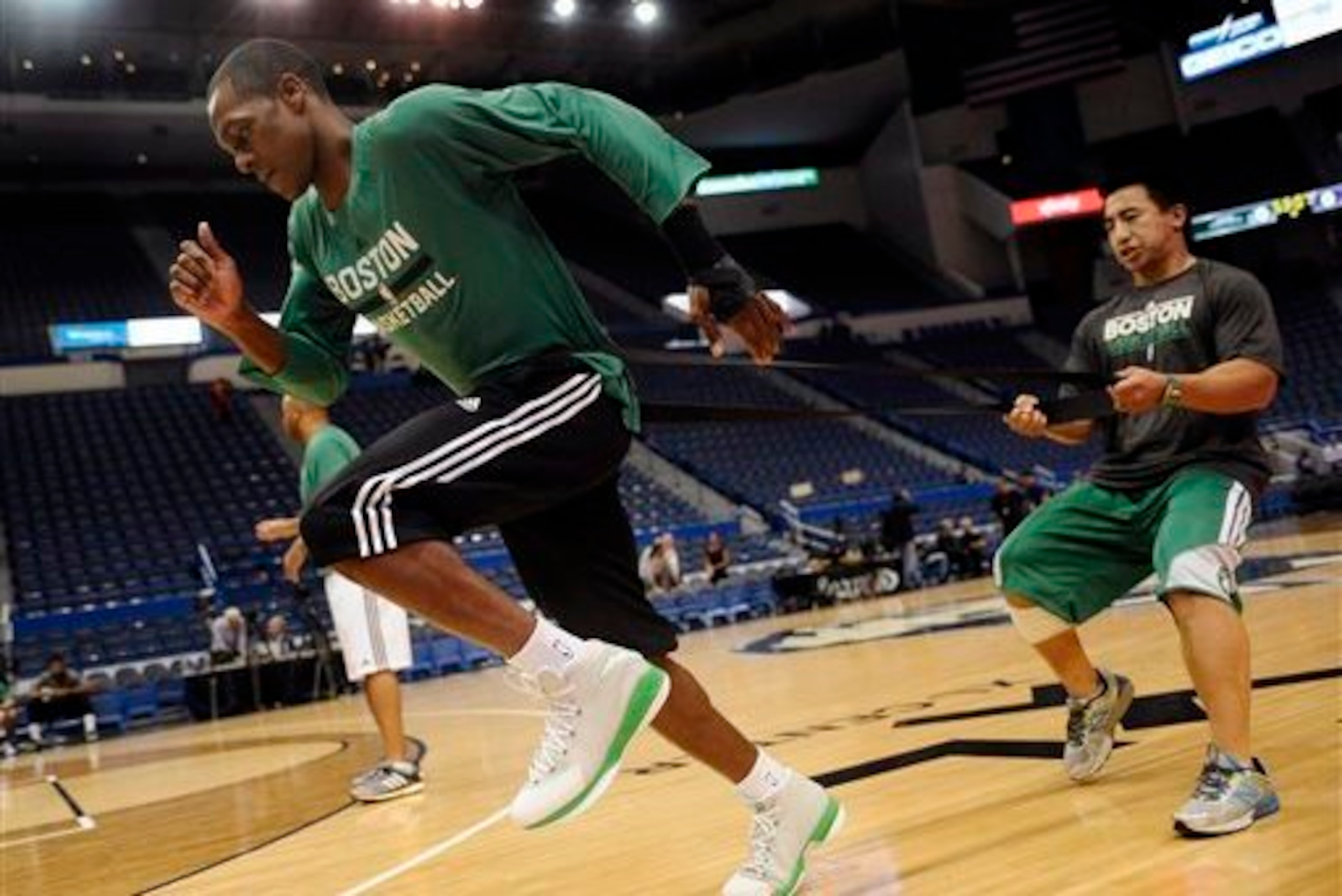
The value Rondo deserves in his next contract has always been a common topic of debate among league observers. The 28-year-old has amassed an impressive resume when healthy during his eight-year career, especially during the postseason when he helped carry the Celtics to deep playoff runs in 2010 to the NBA Finals and to the Eastern Conference Finals in 2012.
Those performances, combined with elite point guard numbers throughout his career, have made Rondo a four-time All-Star.
The Celtics captain said on the team’s media day last Monday that this kind of production has made him worthy of receiving a max contract in his next deal, a suggestion that Celtics president of basketball operations Danny Ainge didn’t exactly dispute:
"I think a four-time All-Star by the time he's [28] years old would qualify for max based on what we've seen in the marketplace," Ainge said. "If I were Rajon and I were Rajon's agent, I would definitely say that. But since I'm negotiating against him, I'll withhold."
Knowing the effects the NBA’s new TV deal is likely to have on player salaries, Rondo’s camp should be in a better position to secure a max-level contract from the Celtics or another team in the league next summer.
That stance is contingent on the point guard performing at an elite level on the floor upon returning from a broken left hand which will sideline him until November.

Assuming Rondo is able to return to his peak form, the Celtics will likely be more compelled to bring their captain back for the long haul due to a variety of factors influenced by the TV deal.
The first of those is a financial component. As I mentioned earlier, all NBA teams will be dealing with more salary-cap room than anticipated in future seasons, perhaps as early as 2015.
That means a potential max-level contract offered by Boston to Rondo, which would be worth a bit over $107 million over five years (based on next year’s $66.5 million salary-cap projection), won’t put as much of a dent in the team’s salary-cap room for future seasons as had been anticipated.
In fact, that kind of a contract for Rondo may be viewed as somewhat of a bargain later in the decade, when the salary cap jumps to over $80 million per season and max salaries for stars also see considerable jumps.
Crucial from a team-building perspective for the Celtics front office, however, is that the franchise would still have plenty of cap room to spend in free agency, even after potentially handing Rondo a $20-plus million annual salary.
They would have enough cash to try to lure another prominent player or two and have them team up with Rondo and other parts of the team’s young core to take the Celtics to the next level.
That line of thinking leads us to the other main reason the TV deal could increase the chances Boston keeps Rondo. The Celtics won’t be the only team benefiting from additional salary-cap space in future seasons; other teams will also have plenty to spend, and this fact will lead to increased competition for free agents on the open market.
That factor may also limit Boston’s trade market for Rondo if it explores moving him this season. Why would most teams give up assets for a player they can conceivably sign as a free agent with their added cap size?
The extra cap space will create a more aggressive marketplace overall in free agency, increasing the importance of appealing to any prized free agent with the lure of winning and a formidable supporting cast.

As the Celtics enter the next stage of their rebuild, landing top-flight free agents is the team's best hope of developing into a contender once again. If Rondo is not in the fold for future seasons, the challenge of landing these types of players becomes tougher for Ainge.
The painful truth is that the rest of the Celtics roster doesn't exactly inspire the kind of confidence in future success that someone like Rondo, with his strong postseason track record, would.
The other wild card in play here for Boston’s plan with Rondo is the possibility that he will want to explore a short-term contract as a result of the TV deal. LeBron James pursued this strategy last summer, signing a two-year contract with a player option that will guarantee he can become a free agent in 2016-17 when the biggest jump in salary is expected.
If Rondo wants to benefit from the raised max-salary levels (35 percent of the salary cap for players with 10-plus years of experience, according to the NBA's collective bargaining agreement), he could seek a short-term contract that would give him the opportunity to become a free agent in the summer of 2016.
That strategy would maximize Rondo’s potential earnings but may be considered somewhat risky for a player with a significant injury history in recent years.
The bottom line is, beyond all of these variables, Rondo’s play on the floor this season still remains the biggest factor in his next contract and if the Celtics will be willing to pay a high price in future seasons.
The new TV deal will provide an opportunity for Rondo to earn a bigger deal, but the truth is, Rondo still has to prove he is worthy of it.
The Celtics still have not seen their longtime starting point guard play minutes while healthy under Brad Stevens. Even though Rondo suited up for 30 games last season, there were plenty of telltale signs that he was not in peak form in his return to the hardwood in January 2013.
Sure, there were glimpses of strong play from Rondo, but reduced minutes, an inability to play both games in a back-to-back and a career-low mark in field-goal percentage (.403 percent) demonstrated that Rondo had still not fully recovered from ACL surgery.
Ainge admitted these realities when discussing Rondo’s preparation for this season:
“[Rondo] was motivated [this summer] because he didn’t play very well last year, to his standards coming off the knee injury,” Ainge said. “He doesn’t like not to be good. He doesn’t like not being considered one of the best point guards in the game. That’s what drove him to hard work this summer.”
Rondo already had plenty to play for over the next six months, but if the point guard can return to his All-Star ways this season, the NBA's new TV deal made the odds of the 28-year-old landing a lucrative deal with the Celtics just a bit better.
All quotes were obtained firsthand by the author at Celtics media sessions.

.jpg?w=2560 "NFL House in Paris Closes for Protests")
.jpg?w=2560 "Trevon Diggs Cut by Seahawks")


