
Midterm Grades for Every College Football Playoff Contender
The final grade is what matters most, but midterms serve their purpose too.
As we hit the halfway point of the 2014 college football season, it's a good time to evaluate how the game's highest-ranked teams have performed so far. The overall body of work will be looked at by the selection committee to determine who makes the first College Football Playoff, and with the first rankings set to be released on Oct. 28, this is a chance to grade what the top contenders have done well and what still needs improvement.
For the most part, everyone is doing pretty well. But there's always room for improvement, as you'll see in the grades we've given for the 12 most likely playoff contenders at this point in the season. These teams were chosen based on their current ranking in the Associated Press Top 25, their placement in the mock CFP standings compiled by Bleacher Report's Samuel Chi and their current record in conference play.
Ohio State Buckeyes
1 of 12
Grade: B+
What's worked
Ohio State (4-1) took a couple games to get into gear, but it has looked really good on both sides of the ball over the past three games. Redshirt freshman quarterback J.T. Barrett has come into his own since a horrible performance in the loss to Virginia Tech, throwing for 909 yards and 14 touchdowns while completing 75.2 percent of his passes in those games.
"Every week, every rep that he takes, the game slows down for him," offensive coordinator Tom Herman told Tim May of the Columbus Dispatch.
The Buckeyes' rushing game has improved on a game-by-game basis, and now ranks 18th at 247 yards per game. Ezekiel Elliott has developed into an every-down back, rushing for 321 yards on 52 carries in the past two games.
Areas for improvement
Ohio State's defense ranks 14th in yards allowed, at 314.4 per game, but that vaunted defensive line hasn't lived up to the hype yet. Noah Spence hasn't played because of suspension, while the rest of the group has contributed just seven sacks for a team that only has 12 on the year.
At 2.4 sacks per game, the Buckeyes rank 49th. They were tied for seventh last season with a lot of the same players.
Oklahoma Sooners
2 of 12
Grade: B-
What's worked
Oklahoma (5-1) has run the ball very well for most of the year, even with Keith Ford missing time because of a leg injury. Thanks to freshman Samaje Perine's hard running, the Sooners average 191 rushing yards per game.
The Sooners are nearly perfect in the red zone, converting 23 of 24 possessions with 19 touchdowns. That 79.2 percent TD efficiency is second in the country.
Individually, Alex Ross has returned two kickoffs for touchdown and is the FBS leader in return average at 45.67 yards, while defensive back Zack Sanchez's five interceptions are tied for second-most in the country.
Areas for improvement
Trevor Knight has a pair of 300-yard passing games, but he's been very uneven and hasn't had good accuracy. For the year, he's completed 55.1 percent of his passes and hasn't had more than two touchdowns in a game.
Despite intercepting 10 passes, Oklahoma ranks 110th in passing defense at 275.7 yards allowed per game. Texas was able to throw at will on the Sooners last week, not unlike West Virginia and TCU earlier.
Georgia Bulldogs
3 of 12
Grade: B
What's worked
Georgia (5-1) has been much improved on defense, allowing only 18 points (with two shutouts, including last week on the road against Missouri) and 303.7 yards per game. That ranks 11th in the country, compared to 45th a year ago.
Their run game is 12th best, at 275.67 yards per game, and, even with Todd Gurley in limbo because of an NCAA investigation into alleged improper benefits, the Bulldogs ran for 210 yards at Missouri. Injuries have eaten into the running back depth, but freshman Nick Chubb looks like a star.
Areas for improvement
Senior quarterback Hutson Mason has struggled to develop as the full-time starter. This year, he's completing 70.5 percent of his passes, but that's only for 843 yards and 6.54 yards per attempt. He's yet to top 200 yards in a game.

.jpg?w=2560)
Oregon Ducks
4 of 12
Grade: B
What's worked
Oregon (5-1) is once again one of the best offensive teams in the country, ranking 13th overall at 522.5 yards per game. Marcus Mariota is a big part of that, as he's doing his best to stay near the top of the Heisman race with 1,911 yards of total offense that he's getting from 9.37 yards per play, second-best in FBS.
The Ducks' run game is churning out 217.2 yards per game, with freshman Royce Freeman accounting for seven of the team's 16 rushing touchdowns.
Areas for improvement
Injuries have impacted Oregon's offensive line and, as a result, Mariota has been sacked 15 times this season after only being taken down 18 times in 13 games a year ago. The return of left tackle Jake Fisher last week was evident, for even though Mariota was sacked 12 times in the previous two contests, he wasn't sacked at all by UCLA.
Oregon has struggled at times on defense as well, and while it's never been a team to shut opponents down this season, there have been more breakdowns that have led to big plays. The Ducks have allowed 109 plays of 10 yards or more, which ranks tied for ninth-worst in the country.
Michigan State Spartans
5 of 12
Grade: B+
What's worked
Michigan State (5-1) remains a defense-driven team despite having to replace numerous starters from last season. The Spartans rank 12th in total yards allowed and fifth in rushing defense, though they're giving up 22.3 points per game.
The offense has been balanced, with 1,500 rushing yards and 1,524 through the air, to rank 17th overall.
Tony Lippett has emerged as one of the top receiving threats in the country. The 6'3" senior has 663 receiving yards and eight touchdowns, already surpassing last year's yardage total and doubling the number of TDs he'd collected in his first three seasons.
Areas for improvement
Despite outscoring opponents by an average of 23.2 points per game, MSU's fourth quarters have been far more stressful than you'd expect because the Spartans are struggling to hold big leads. Against Nebraska, they nearly blew a 27-3 lead, giving up 19 fourth-quarter points. Last week against Purdue, they needed a late pick-six to hold on for a 45-31 win.
MSU's lone loss at Oregon saw it squander a 27-18 second-half lead by giving up 28 unanswered points to end the game.
For the year, the Spartans are being outscored 54-28. Against power-conference opponents, that margin is 47-7.
Alabama Crimson Tide
6 of 12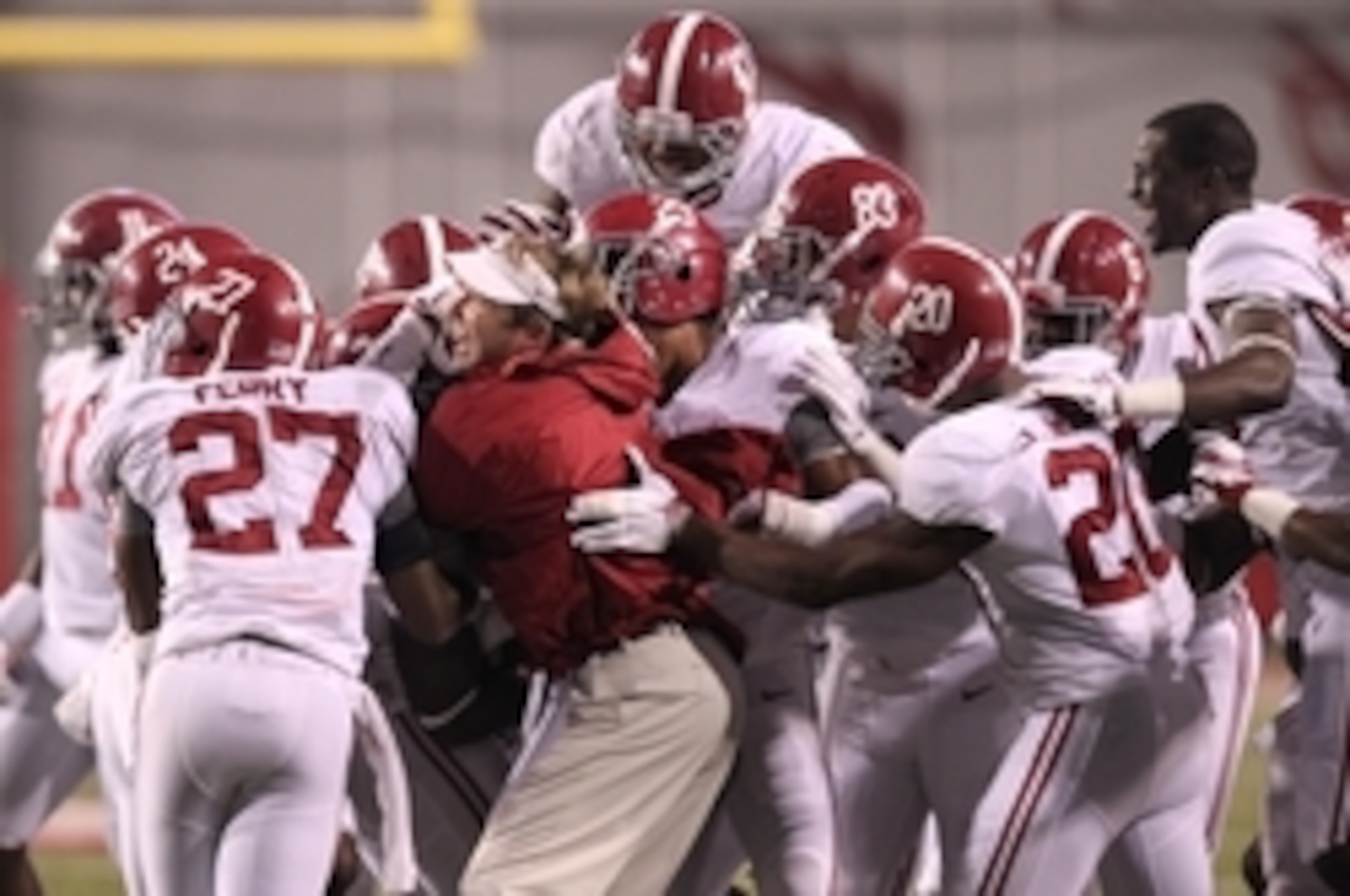
Grade: B-
What's worked
From an overall standpoint, Alabama (5-1) has had a very solid offense that currently ranks 19th overall at 500 yards per game. The Crimson Tide are more explosive than in past years, a credit to the system coordinator Lane Kiffin has installed and quarterback Blake Sims' ability to hit big-play receiver Amari Cooper.
Cooper is on pace for a record-setting season, sitting with 54 receptions and 768 yards. Last year he had 45 catches and 736 yards for the entire season.
And the Tide's defense remains as strong as ever, particularly against the run. They're third overall, allowing 277.2 yards per game, and third against the run at 68.8 yards per game, with only two touchdowns allowed on the ground.
Areas for improvement
Alabama is averaging 211.3 rushing yards per game, but the 4.91 yards per carry is the team's worst since 2008, according to Bleacher Report's Marc Torrence. Last week, the Tide only ran for 66 yards at Arkansas and T.J. Yeldon was held to 45 yards on 16 carries.
But where Bama has had the most issues has been on special teams (though it's not just in one area). Muffed punts, short kickoffs and questionable field-goal kicking are issues that have and will continue to affect the team's performance throughout the year if not fixed.
Auburn Tigers
7 of 12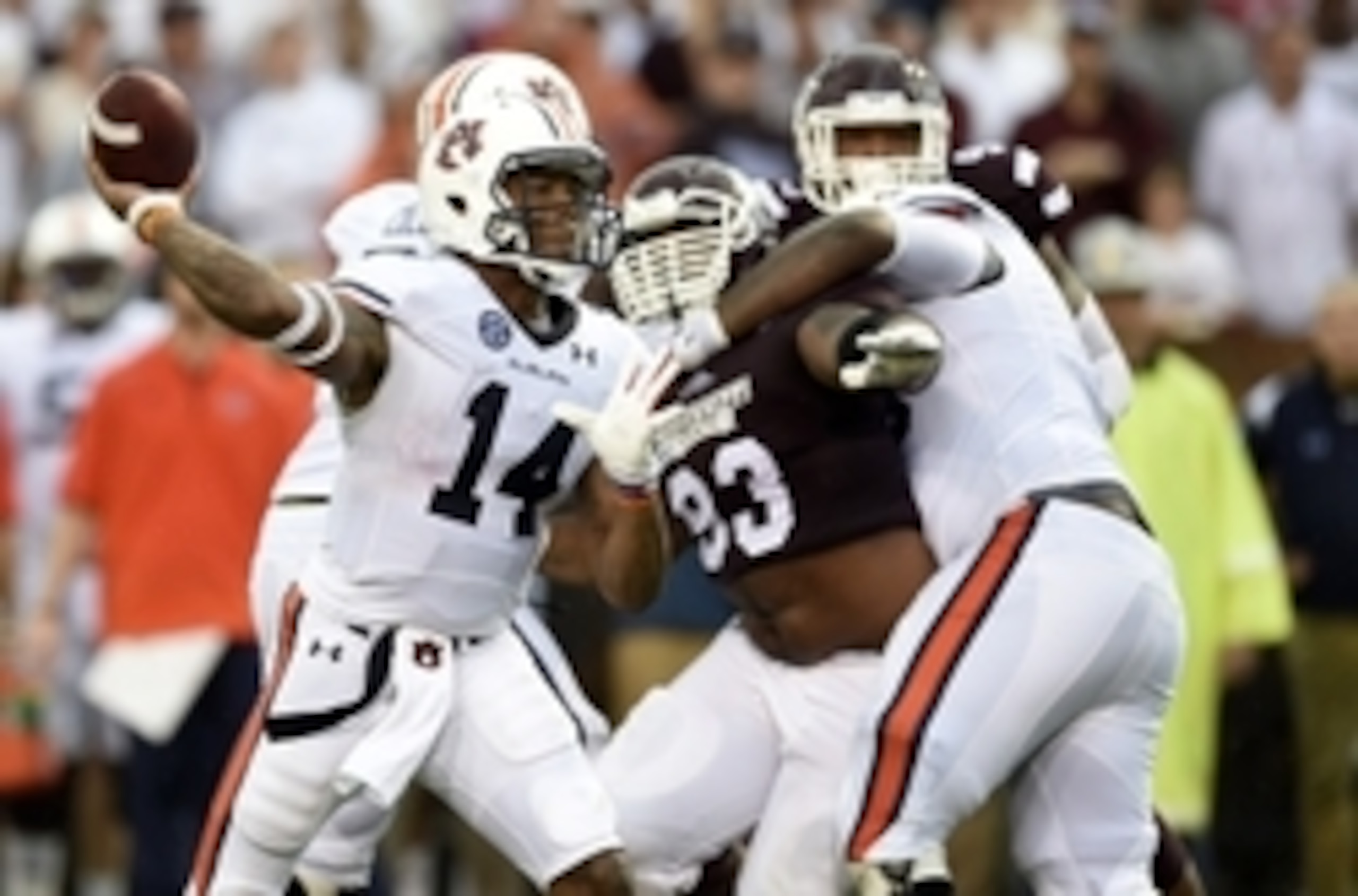
Grade: B+
What's worked
Auburn (5-1) has been good on offense, though not at the level it was in 2013. That's to be expected, with opponents having a year's worth of film to figure out how to stop the Tigers, yet they still average 262 rushing yards per game to rank 15th.
Cameron Artis-Payne hasn't been as explosive as Tre Mason, but he's done well all the same. He's run for 664 yards and five touchdowns, while Nick Marshall has 492 yards and averages 6.6 yards per carry. And junior college transfer D'haquille Williams has been as good as advertised, leading the team with 31 catches for 493 yards and five TDs.
The Tigers defense has been much improved, giving up only 18.3 points and 333.7 yards per game. Last season they gave up 24.7 points and 420.7.
Areas for improvement
Marshall hasn't shown the improvement as a passer that was projected, and in some ways, has gotten worse. He's completed 55.4 percent of his throws this season—down from 59.4—and, last week against Mississippi State, had two interceptions (including one on the first play of the game).
Notre Dame Fighting Irish
8 of 12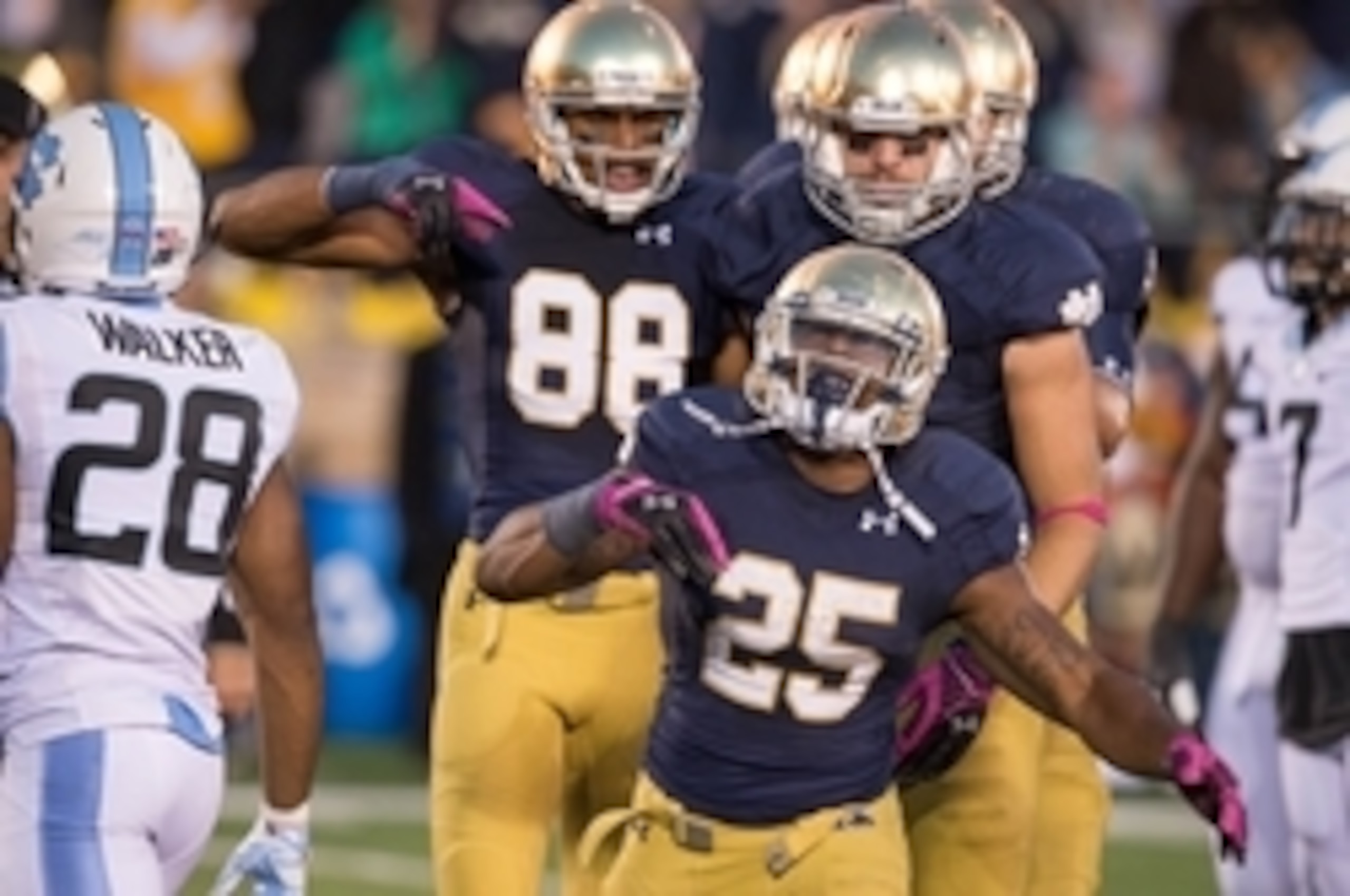
Grade: B
What's worked
Notre Dame (6-0) has showed it can win both high-scoring games and defensive struggles, as has been the case the last two weeks against Stanford and North Carolina. The offense has been able to move the ball pretty well all season, scoring 31 or more in every game except against Stanford, but even then their 17 marks the most any team has scored on the Cardinal defense.
When not giving the ball away, Everett Golson has shown a mastery of Mike Denbrock's offense. He's averaging 280.5 passing yards per game with 16 touchdowns, while he's also run for four touchdowns.
Areas for improvement
As mentioned above, Golson has looked great when he can hold onto the ball. But that's been a big problem of late, as he's had nine turnovers in the last three games.
Some of those miscues have been costly, leading to opponent scores either directly or indirectly.
"I come in here kind of every week for the last couple of weeks saying I have to do a better job," Golson told Eric Hansen of the South Bend Tribune after the 50-43 win over North Carolina, during which he had three turnovers. "Right now it's time for me to stop saying that and time for me to put my words into action and actually do that."
Golson may be trying to do too much, because Notre Dame's run game hasn't been there. He's second on the team with 209 yards, and the Irish are ranked 69th in rushing.
Baylor Bears
9 of 12
Grade: B+
What's worked
Baylor (6-0) remains the cream of the crop when it comes to offensive firepower, leading the country in points (52.7) and yards (622.5) per game. Bryce Petty missed the game against Northwestern State to injury, yet the Bears still had 70 points and 720 yards in that contest.
Injuries in the backfield and the receiving corps haven't slowed things down either; if anything, they've led to additional depth, as freshmen Johnny Jefferson, KD Cannon and Davion Hall are contributing alongside upperclassmen.
The Bears defense has also proven to be almost as strong—last game notwithstanding—as it ranks 10th overall, allowing 303.5 yards per game.
Areas for improvement
One of Baylor's biggest weaknesses, the kicking game, rose to the occasion in the 61-58 comeback win over TCU. Chris Callahan had made only 1-of-6 tries before last Saturday, yet he made all four attempts on the day, including the 28-yard game-winning field goal at the buzzer.
But all of Callahan's makes were from inside the red zone, prompting the question as to whether he can score from beyond 30 yards. At some point, the Bears offense is going to get stalled farther away from the goal line, and it'll need a big kick to get out of a jam.
Baylor is also fifth-worst in penalty yards per game, at 86.2.
Ole Miss Rebels
10 of 12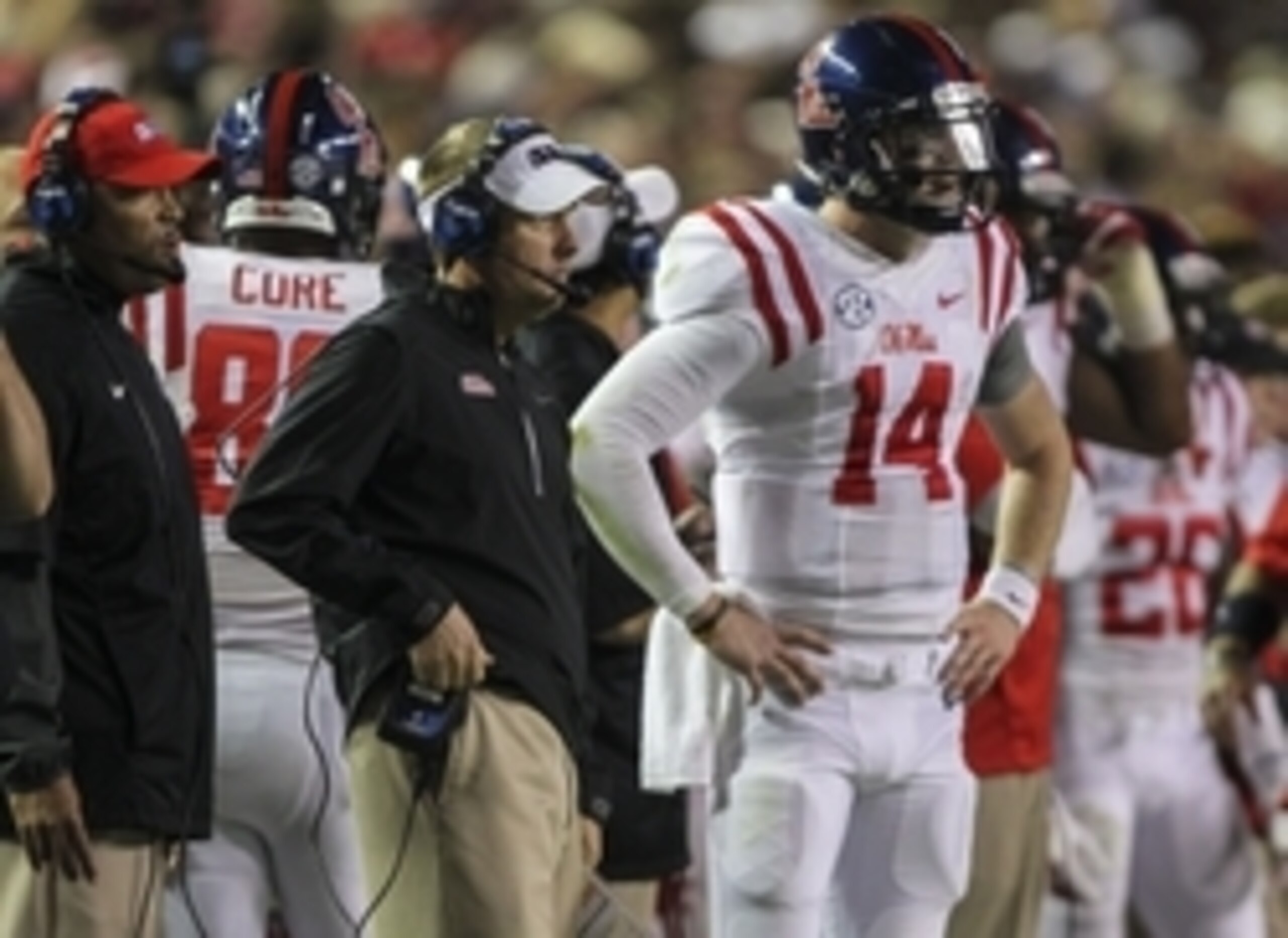
Grade: A-
What's worked
Other defenses have better statistics, but none has been more important to their team's success than the Land Sharks of Ole Miss (6-0). That unit is the reason the Rebels were able to come back and beat Alabama two weeks ago, and they've helped carry the team when quarterback Bo Wallace has an off game and the offense isn't clicking.
"The unit has a good mix of quality veterans and elite young talent that can beat teams in multiple ways," wrote Sam Khan Jr. of ESPN.com. There's the defensive line, anchored by sophomore Robert Nkemdiche, that is responsible for holding teams to 3.25 yards per carry, and there's the secondary that has 11 of the team's 12 interceptions (including five by senior Senquez Golson) and three of the Rebels' four defensive touchdowns.
Wallace has also been far better than his reputation would suggest. He is known for having some stretches of poor play, but those haven't materialized as much this season, especially since SEC play began. He has completed 68.5 percent of his passes, thrown 15 touchdowns and has yet to be intercepted in conference action.
Areas for improvement
Because of its defense, Ole Miss has been able to get by up to this point without a balanced offense. The run game hasn't materialized at all, ranking 88th with 146.5 yards per game. The Rebels average 3.56 yards per carry in the SEC, which won't cut it in the long run.
Florida State Seminoles
11 of 12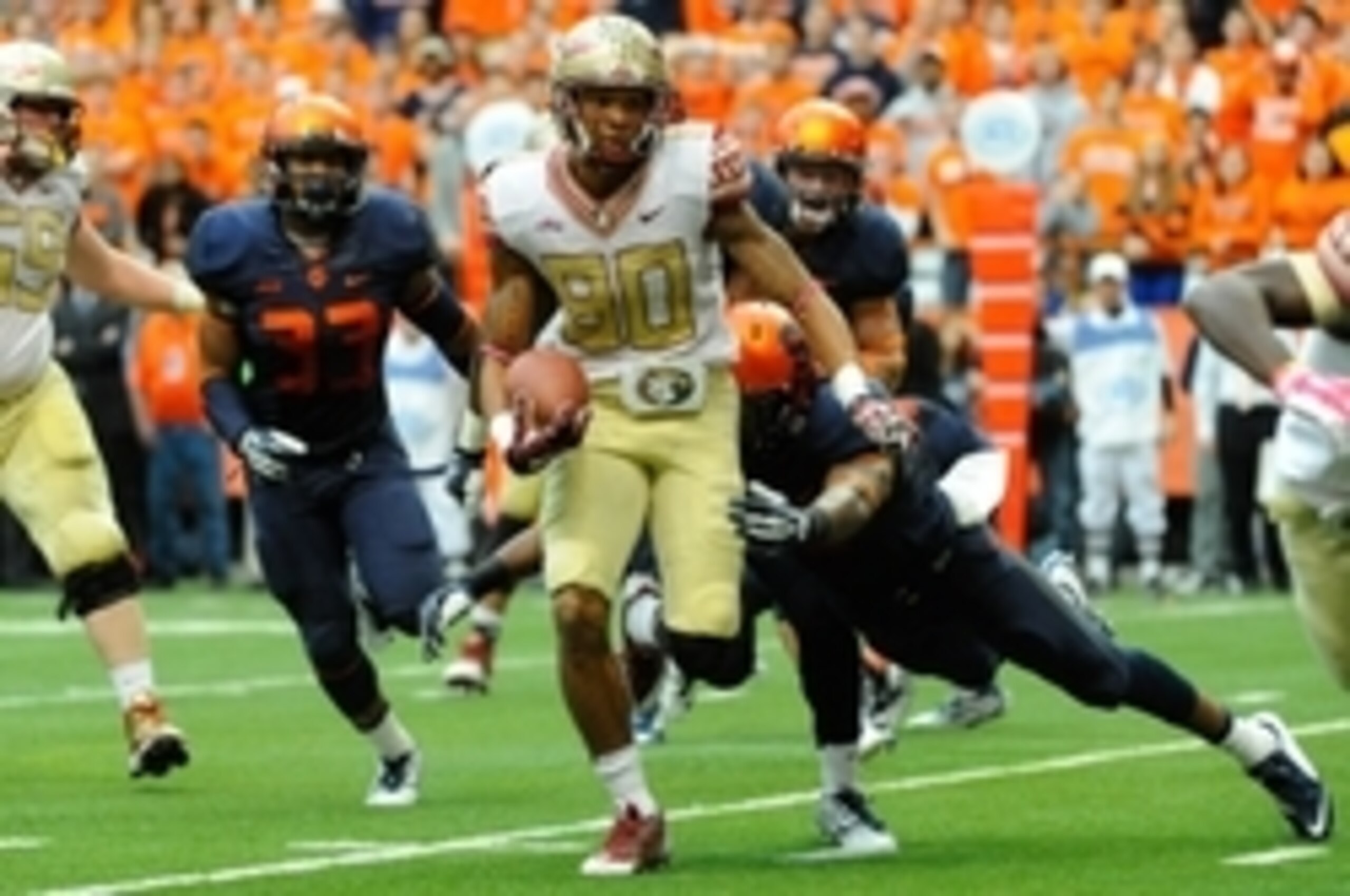
Grade: B-
What's worked
With 22 straight wins, it's hard really to complain about how Florida State (6-0) is playing. But because of that long win streak, as well as being defending champs, FSU gets graded on a different curve because of the higher expectations.
Quarterback Jameis Winston is on pace to beat the numbers he posted during his Heisman Trophy season in 2013. Despite missing a game because of suspension, Winston has thrown for 321 yards per game and is completing 70 percent of his passes. Last time out, he was 30-of-36, and he's focused more on being a passer than trying to scramble at the first sign of trouble.
The Seminoles defense has taken a while to get back into form, but since giving up 24 points in the first quarter at North Carolina State three weeks ago they allowed only 40 points over the next 11 quarters.
Areas for improvement
FSU's run game continues to be a major issue, as it currently ranks 98th at 138.5 yards per game. Compare that to 2013, when the Seminoles gained 203.1 yards per game on the ground behind pretty much the same offensive line. The departure of Devonta Freeman has been felt more than expected, while Karlos Williams hasn't been able to handle being the No. 1 back and missed last game with an ankle injury.
Freshman Dalvin Cook got his first major action last week against Syracuse and responded with 23 carries for 122 yards and a TD. Having Cook and Williams both run well is imperative for FSU to keep improving as the season goes on.
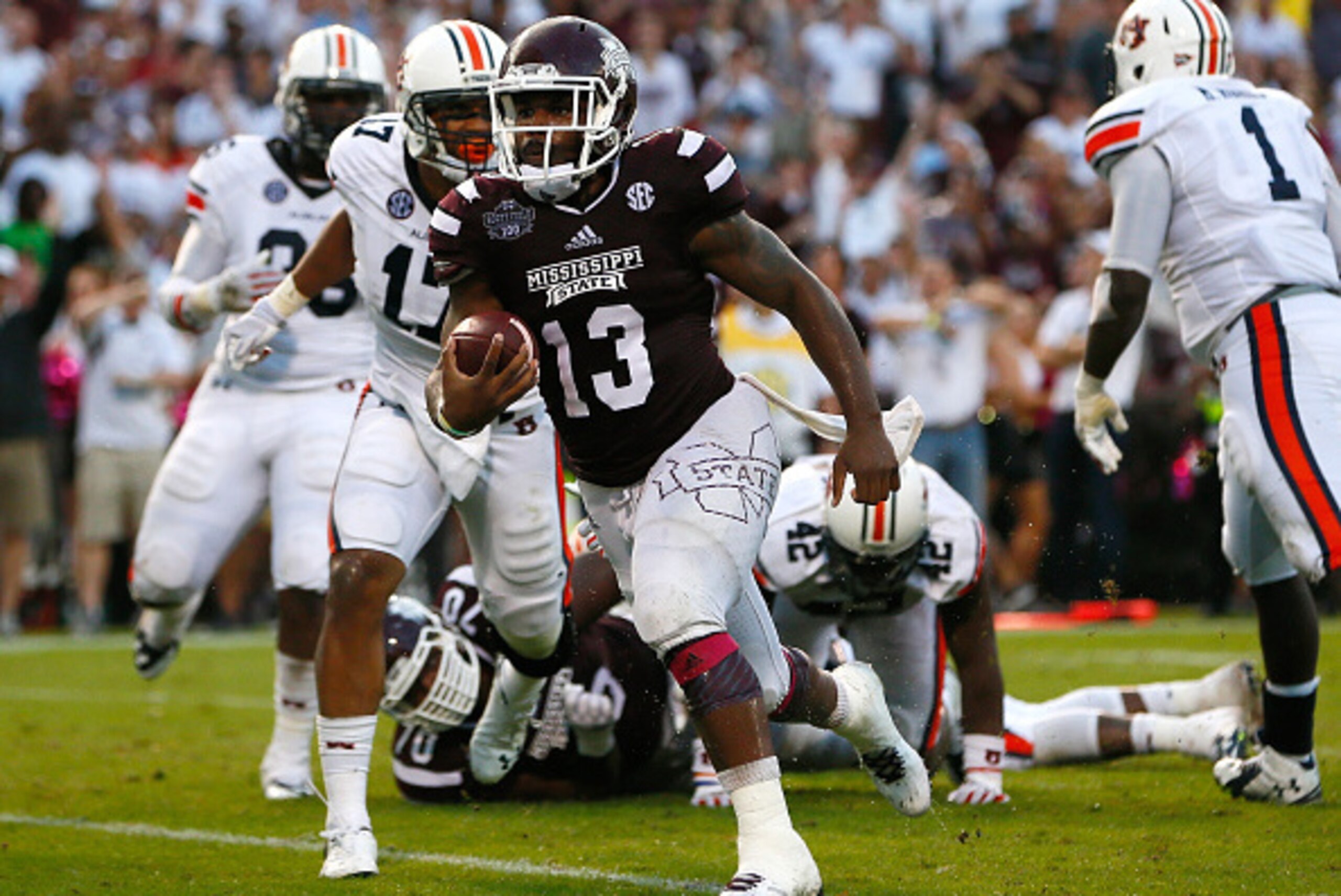
Mississippi State Bulldogs
12 of 12
Grade: A
What's worked
Mississippi State (6-0) has arguably the most dynamic quarterback in the country in Dak Prescott, a junior who is ninth in the country in total offense at 342.3 yards per game. His ability to throw the ball well and run with great efficiency—he's averaging 5.43 yards per carry and has four 100-yard games—has him at the top of many Heisman lists.
"If he continues on his current statistical pace and the Bulldogs win the rest of their games, Prescott is going to win the Heisman going away," wrote Chris Huston of HeismanPundit.com.
The Bulldogs haven't been a one-trick pony on offense, though, because 5'9", 215-pound junior running back Josh Robinson has lived up to his "Bowling Ball" nickname by blasting his way to 689 yards, eight touchdowns and a 7.03 yards-per-carry average.
MSU's defense has been pretty solid too, allowing only 20 points per game. Four players have at least two interceptions.
Areas for improvement
MSU needs to get better at keeping its foot on the pedal and stepping on the throats of opponents all game The Bulldogs' impressive string of three straight wins over top-10 teams has seen them give up a lot of points toward the end of games, making what should have been a trio of blowouts end up a lot closer.
It hasn't come back to bite them yet, but as the win at LSU showed, letting up can be dangerous. The Bulldogs led 34-10 early in the fourth quarter, yet as time expired they had to defend a Hail Mary pass that could have cost them a victory. The win over Auburn had similar issues, but more in the first half, when, after taking a quick 21-0 lead, MSU got fancy and started giving the ball away.
All statistical information courtesy of CFBStats.com.
Follow Brian J. Pedersen on Twitter at @realBJP.


.jpg?w=2560 "NFL House in Paris Closes for Protests")
.jpg?w=2560 "Trevon Diggs Cut by Seahawks")





