
College Basketball Players Whose Production Will Increase Drastically in 2014-15

There are dozens of college basketball players every season who come out of seemingly nowhere to more than double their scoring total from the previous year, and Michigan's Zak Irvin should headline this year's group of those players.
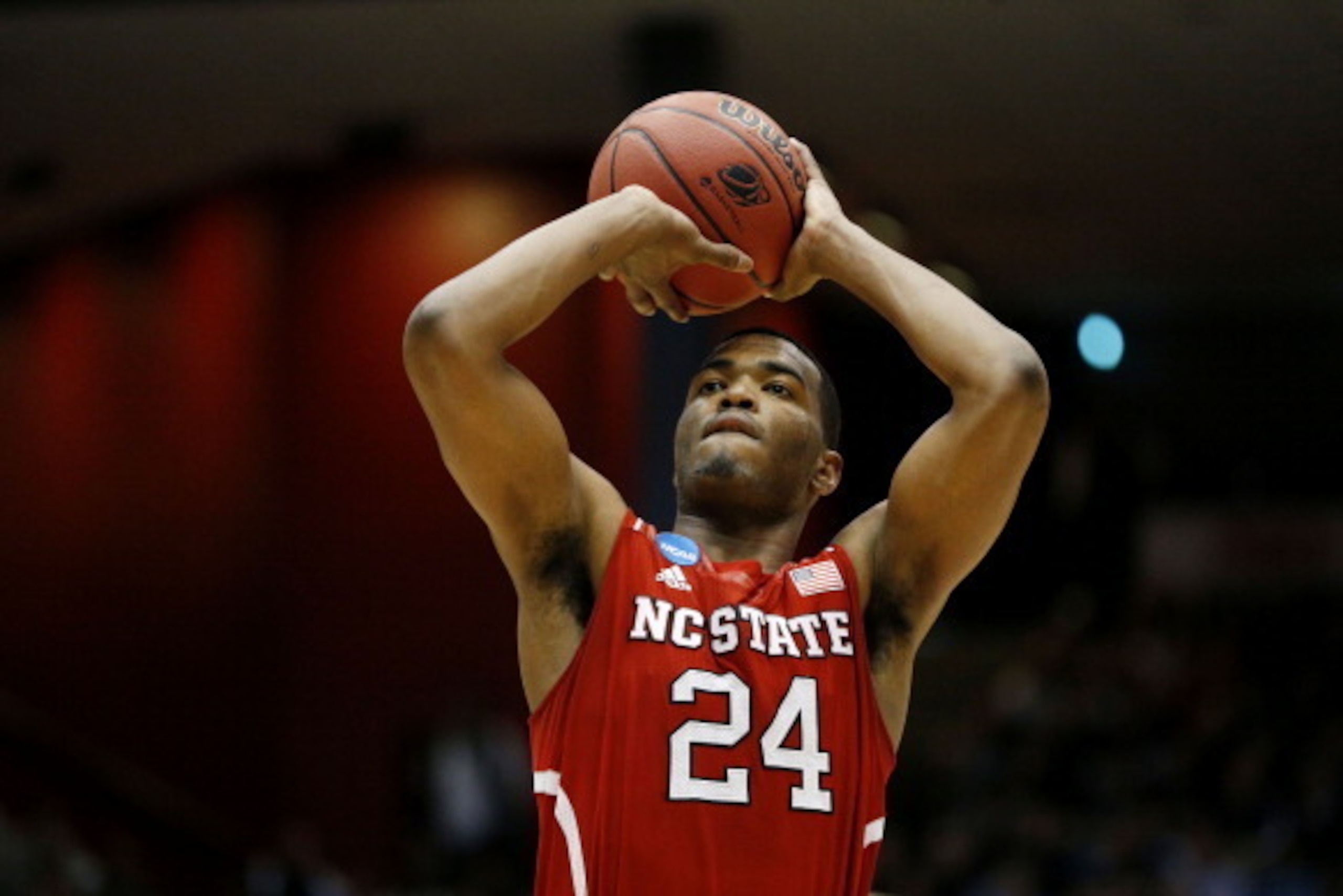
Being that he was the prime example from last season, we're affectionately referring to this year's top candidates as the T.J. Warren All-Stars.
Warren averaged 12.1 PPG as a freshman for North Carolina State and was the only returning player who put up at least 4.0 PPG in 2012-13.
Rationalizing that some member of the Wolfpack needed to score and he was the only apparent option, I had the foresight to name Warren a preseason All-American—but I had no clue he would be that good.
So how did we determine 2014-15 T.J. Warren All-Stars?
We went looking for players who averaged at least 5.5 PPG last season for teams that lost all sorts of scoring this summer but still have at least a snowball's chance of making the tournament. After all, the legend of Warren would have been incomplete without sneaking into the Big Dance.
Players on the following slides are ranked in ascending order of likelihood of more than doubling their scoring average from 2013-14.
All advanced stats via KenPom.com (subscription required) and Sports-Reference.com.
Honorable Mentions
1 of 11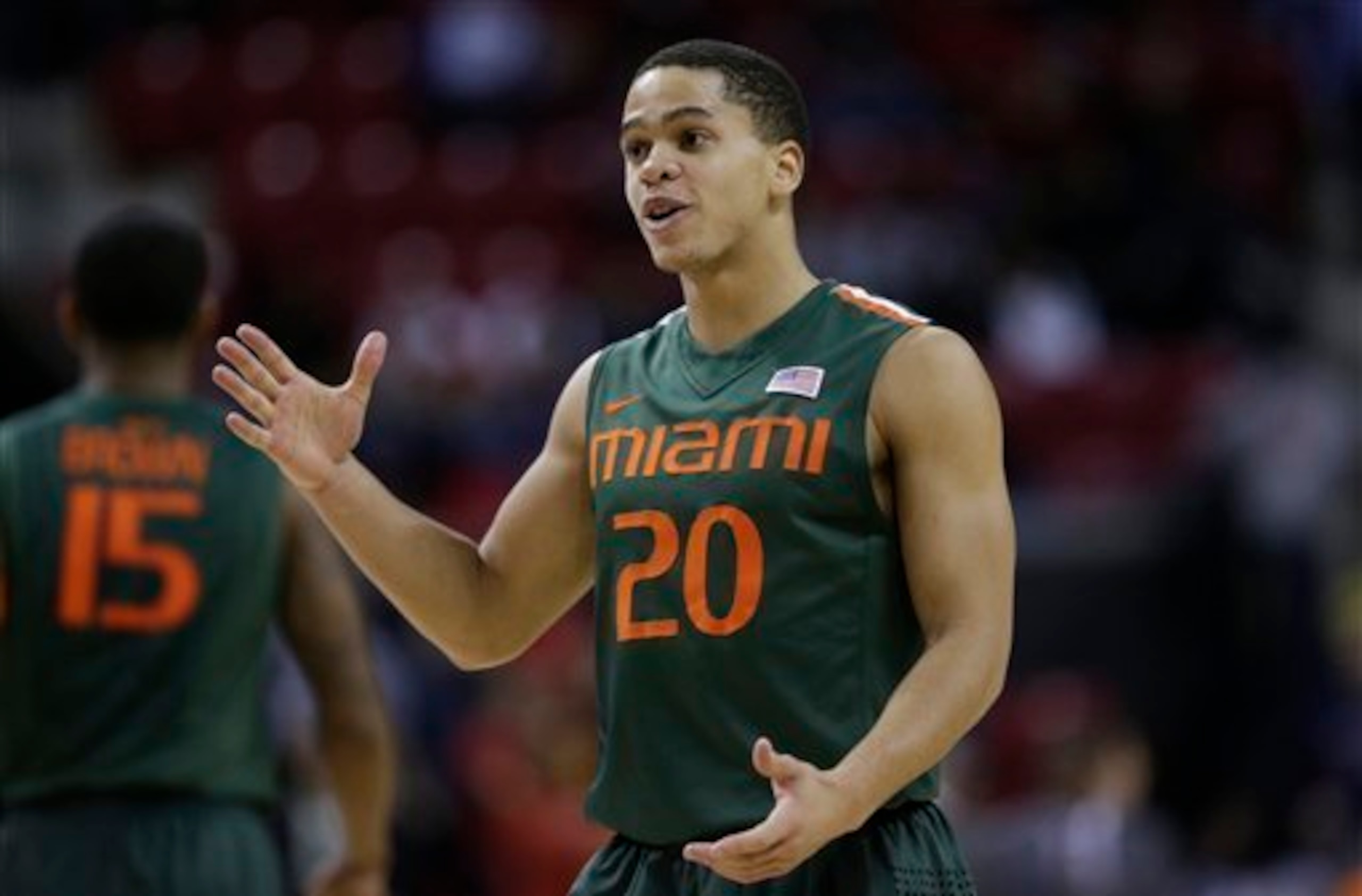
Dee Davis, Xavier
Between Semaj Christon, Justin Martin and Isaiah Philmore, the Musketeers lost 38.0 PPG. However, Dee Davis has always been more of a pass-first point guard than an individual creator.
Perhaps that changes as his usage rating skyrockets in the absence of Christon, but he should continue to be an orchestrator of the offense.
Danrad Knowles, Houston
The Cougars lost two crucial players in TaShawn Thomas and Danuel House, opening up the door for Danrad Knowles to shine in the paint as a junior. But they still have Jherrod Stiggers and L.J. Rose, and Kelvin Sampson is adding a ton of JUCO transfers who could keep Knowles from reaching his full scoring potential.
Manu Lecomte, Miami
The Hurricanes lost just about their entire roster for a second consecutive season, leaving Manu Lecomte (7.7 PPG) as the only returning player who averaged at least 5.0 PPG last season. He won't be the only scoring option, though, as they reload in a huge way with transfers.
Shaquielle McKissic, Arizona State
The Sun Devils barely made the tournament last season, and now they'll be trying to get there without the 45.2 PPG from Jahii Carson, Jordan Bachynski and Jermaine Marshall.
Shaq McKissic has been granted a sixth season of eligibility, but he comes across as more of a role player than a one-man wrecking crew.
Kendrick Nunn, Illinois
Kendrick Nunn could be headed for a big season, but Illinois is loaded with other scoring options on the perimeter. If Nunn comes back for a junior season, he should reap the benefits of Rayvonte Rice's graduation.
Josh Richardson, Tennessee
Josh Richardson is virtually all the Volunteers have coming back this season, but it's hard to see him doubling his output from last season to average better than 20.0 PPG.
It's more likely that Robert Hubbs III more than triples his output from last season to 16.0 PPG, but Hubbs didn't play or score enough to qualify for the list.
10. Austin Chatman, Creighton
2 of 11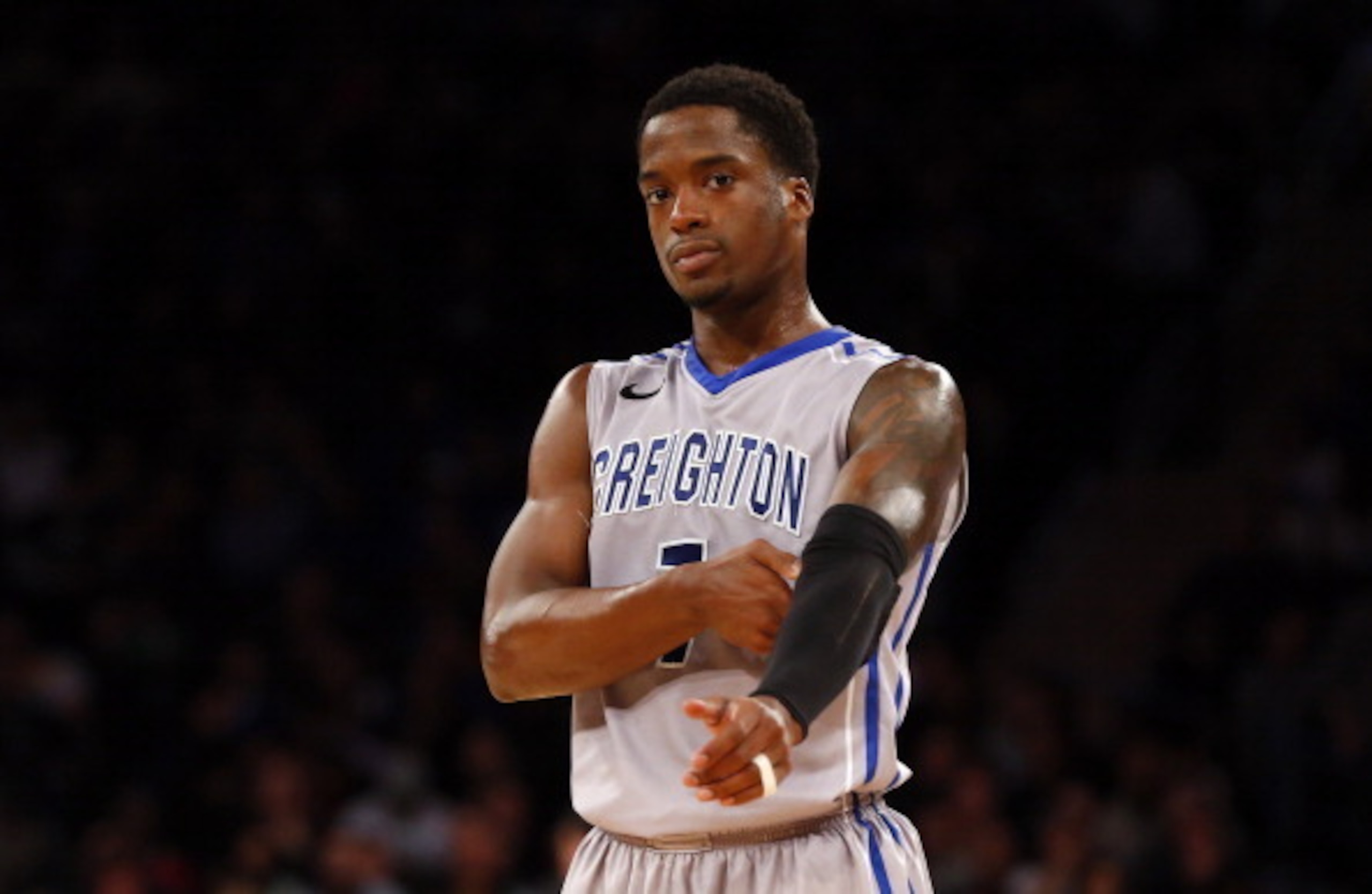
2013-14 Stats: 30.3 MPG, 8.1 PPG, 3.4 RPG, 4.4 APG
Departed teammates: Doug McDermott (26.7 PPG), Ethan Wragge (10.4 PPG), Grant Gibbs (7.2 PPG), Jahenns Manigat (7.0 PPG)
What did Creighton lose this summer?
Oh, nothing much. Just 51.3 points per game.
With McDermott taking 38.6 percent of the shots while he was on the court, it's not surprising that Austin Chatman did a minimal amount of scoring despite starting all 35 games last season for the Bluejays. Chatman averaged just one field-goal attempt for every five minutes played.
Compared to an average player on most other teams, he's a pretty good shooter. In his three-year career, Chatman has shot 40.2 percent from three-point range and 77.0 percent from the free-throw line.
However, his numbers look extremely pedestrian when compared to McDermott (44.9% 3PT last season), Wragge (47.0), Gibbs (43.2) and Manigat (40.5).
But now that all of those great options have graduated, letting Chatman take 15 shots per game doesn't seem like such a bad idea.
Was he a pass-first point guard (1.4 field-goal attempts per assist) for the past three seasons because that's what is in his DNA, or because you would have to be certifiably insane to not try to give McDermott the ball as often as possible?
Time to find out.
9. Johnathan Williams III, Missouri
3 of 11
2013-14 Stats: 26.3 MPG, 5.8 PPG, 6.5 RPG, 1.6 BPG
Departed teammates: Jabari Brown (19.9 PPG), Jordan Clarkson (17.5 PPG), Earnest Ross (14.0 PPG)
If Missouri had any hope of making the tournament this year, Johnathan Williams III might be at the top of this list.
As a freshman, the power forward ranked 33rd in the nation in offensive rebounding percentage and 95th in block percentage. He didn't score a ton, but that's largely due to the fact that Brown, Clarkson and Ross combined to attempt 69.0 percent of Missouri's field goals last season.
Williams' contributions on offense were often limited to putting offensive rebounds in the bucket.
But all three of those ball hogs are gone, leaving Williams as the closest thing Missouri has to an offensive juggernaut.
His 46.4 percentage on two-point field goals was quite below average for a big man, but that's bound to improve with repetition and the fact that plays will actually be drawn up for him to score.
If nothing else, we look forward to seeing Williams set a new career high in points scored in a game. The 14 points he put up against Northwestern last November hardly seem like a record that will even survive the first week of this season.
8. Troy Williams, Indiana
4 of 11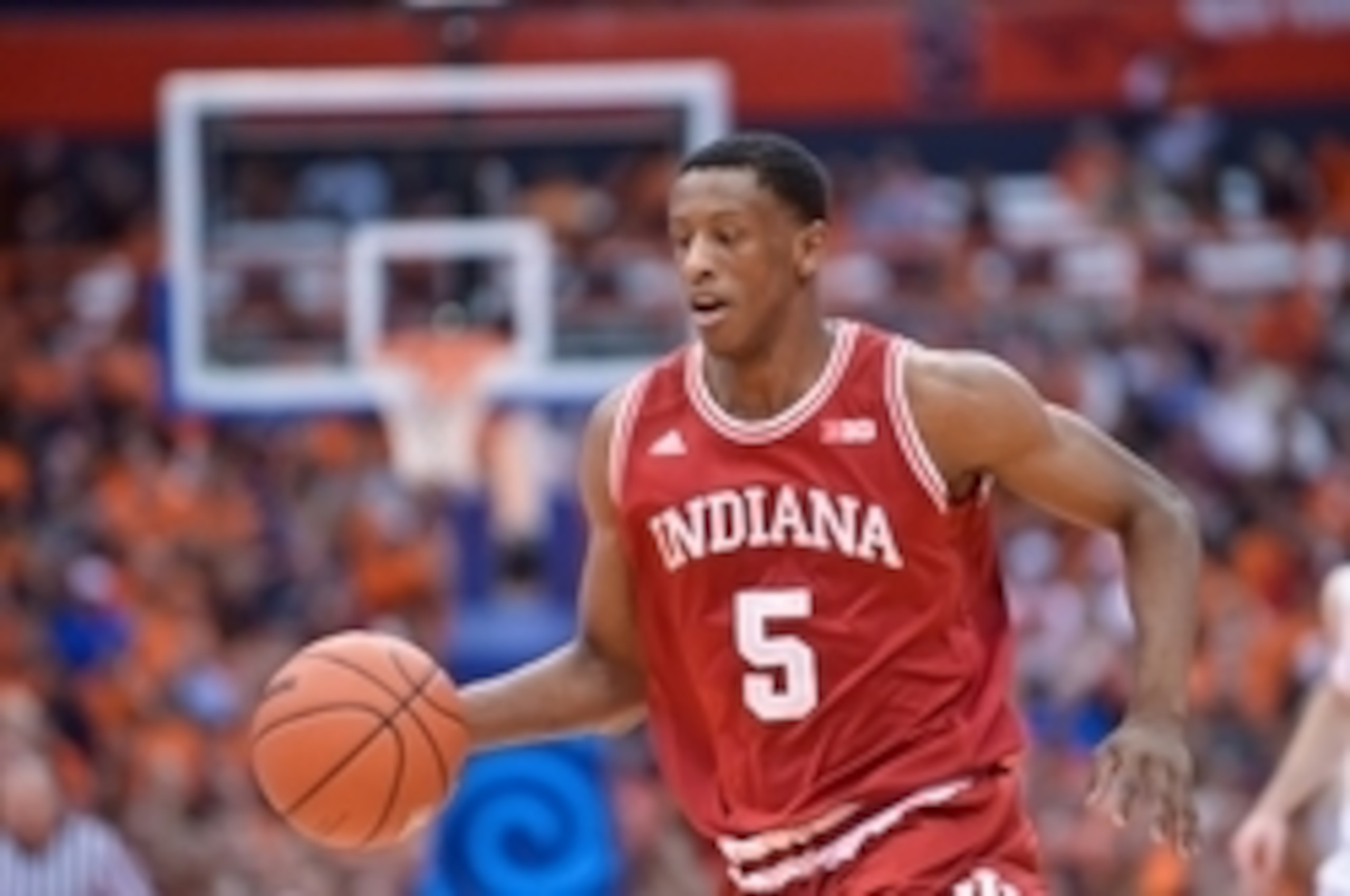
2013-14 Stats: 21.5 MPG, 7.3 PPG, 4.4 RPG
Departed teammates: Will Sheehey (11.4 PPG), Noah Vonleh (11.3 PPG), Jeremy Hollowell (5.7 PPG), Evan Gordon (5.5 PPG)
Troy Williams started all 32 games for Indiana last season, but he sure did spend a lot of time on the bench while Sheehey (30.3 MPG), Vonleh (26.5) and Hollowell (18.3) got minutes at the two forward positions.
With all three of those players no longer on the roster, Williams should get all the minutes he can physically handle in the paint for the undersized Hoosiers.
Despite being recruited as a shooting guard, Williams might open the season as Indiana's starting center. Considering he made just six three-pointers last season, the Hoosiers won't miss him on the perimeter anywhere near as much as they need him in the lane.
His situation will be very similar to the one Jabari Parker experienced last season for Duke. In an ideal world, he would be a small forward, but he has what it takes to succeed against the biggest players the Big Ten has to offer.
He'll probably wear down as the season progresses, but he should do enough damage over the first few months to more than double his 7.3 PPG from last year.
7. Royce O'Neale, Baylor
5 of 11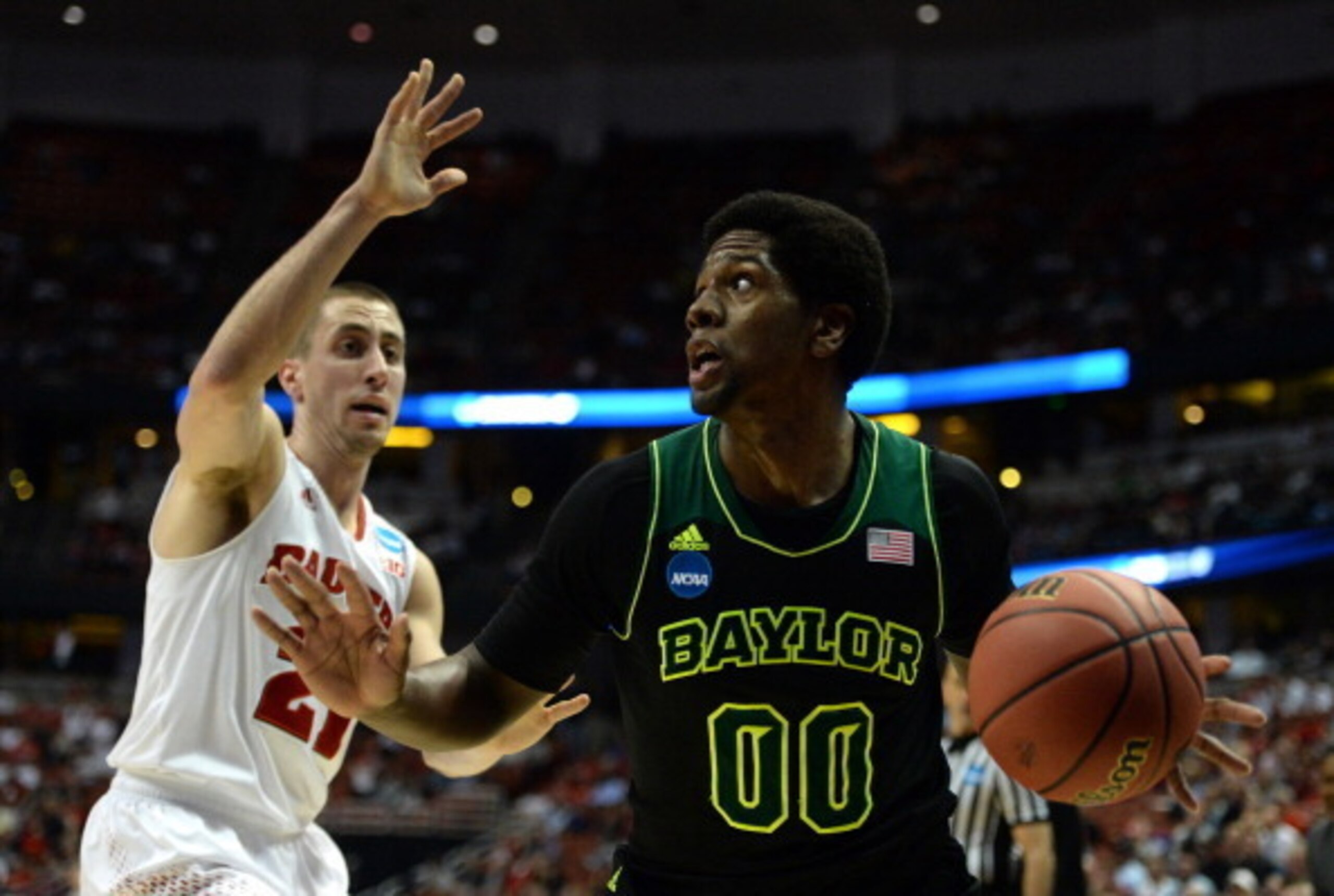
2013-14 Stats: 27.3 MPG, 7.1 PPG, 5.4 RPG, 2.9 APG
Departed teammates: Cory Jefferson (13.7 PPG), Brady Heslip (11.7 PPG), Isaiah Austin (11.2 PPG)
Royce O'Neale had great shooting percentages last season for Baylor. He shot 44.8 percent from three-point range and 54.1 percent from inside the arc.
But how much of that was due to the fact that he was almost always the fifth option in the offense?
O'Neale averaged just one field-goal attempt for every 5.9 minutes played. He was responsible for one out of every eight field goals the Bears attempted while he was on the court.
Tyler Thornton shot 45.0 percent from three-point range last season for Duke, but I wouldn't even consider projecting him for 15.0 PPG if he was suddenly expected to be the second-best scorer on the team.
However, during his two seasons with Denver, O'Neale was considerably more aggressive, averaging 9.1 field-goal attempts per 40 minutes as opposed to his 6.8 mark last year with Baylor. But his shooting percentages were also considerably lower back then.
Whether he's ready for the added workload or not, the Bears will need O'Neale to score in double figures if they are to have any hope of returning to the tournament.
6. Travis Trice, Michigan State
6 of 11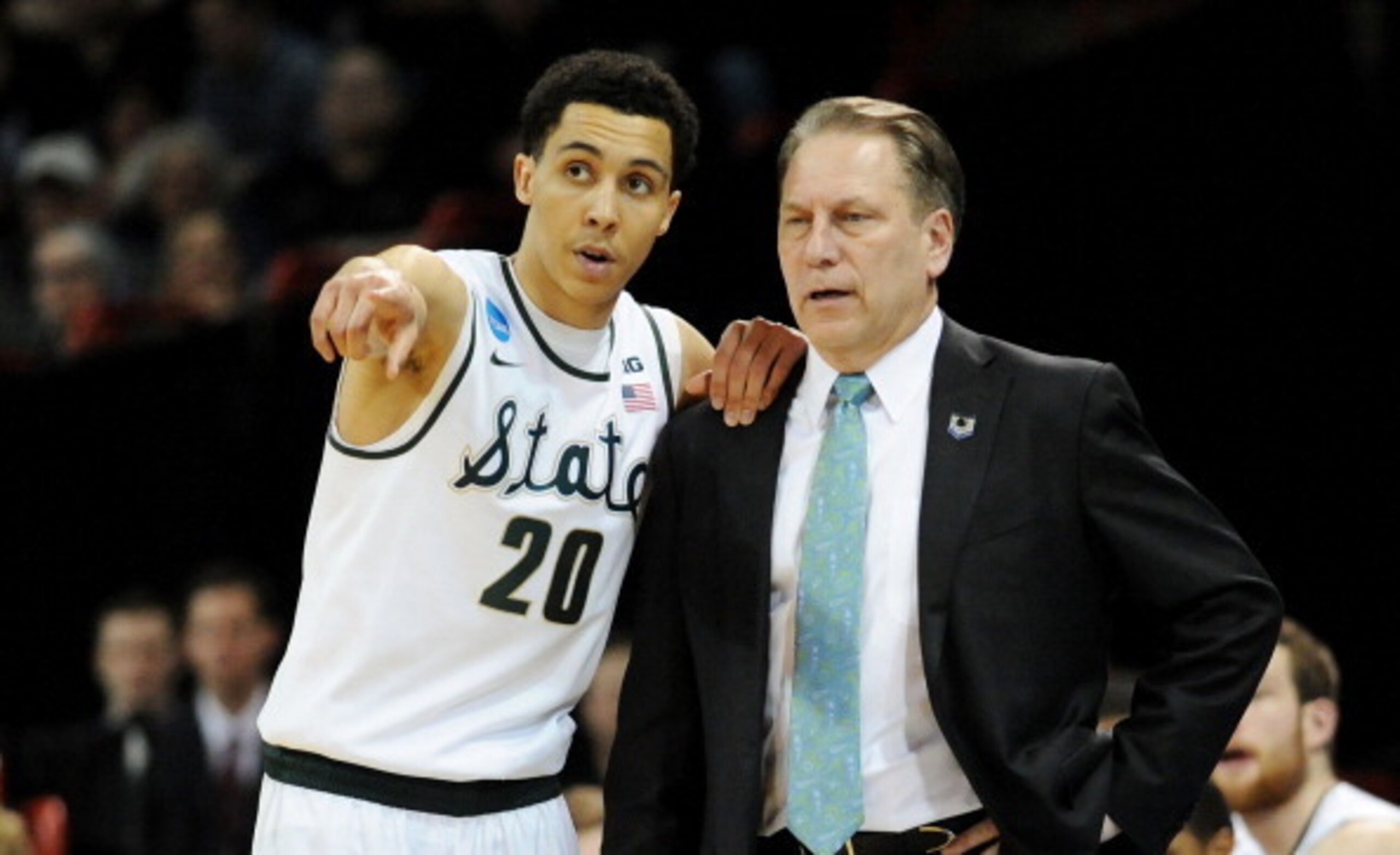
2013-14 Stats: 22.3 MPG, 7.3 PPG, 2.3 APG, 1.6 RPG
Departed teammates: Gary Harris (16.7 PPG), Adreian Payne (16.4 PPG), Keith Appling (11.2 PPG), Kenny Kaminski (4.9 PPG)
If the Spartans are going to carry on without any significant setbacks, Travis Trice will need to be one of the primary reasons for their success.
Trice is Tom Izzo's best returning shooter. He made 43.4 percent of his 122 three-point attempts last season and has shot 41.8 percent from beyond the arc in his three seasons with Michigan State.
Overall, his field-goal percentage was 100 points higher in 2013-14 than it was in 2012-13. Trice also reduced his turnover rate by 33 percent and did a substantially better job of defending without fouling than he did in prior seasons.
He put up strong numbers for a sixth man, but can he continue to improve while becoming the team's starting shooting guard?
We're not expecting or even asking him to make us forget about Harris, but Branden Dawson and Denzel Valentine can't carry this team alone. Trice needs to play more minutes and become assertive enough to routinely score 12-15 points per game.
5. Austin McBroom, Saint Louis
7 of 11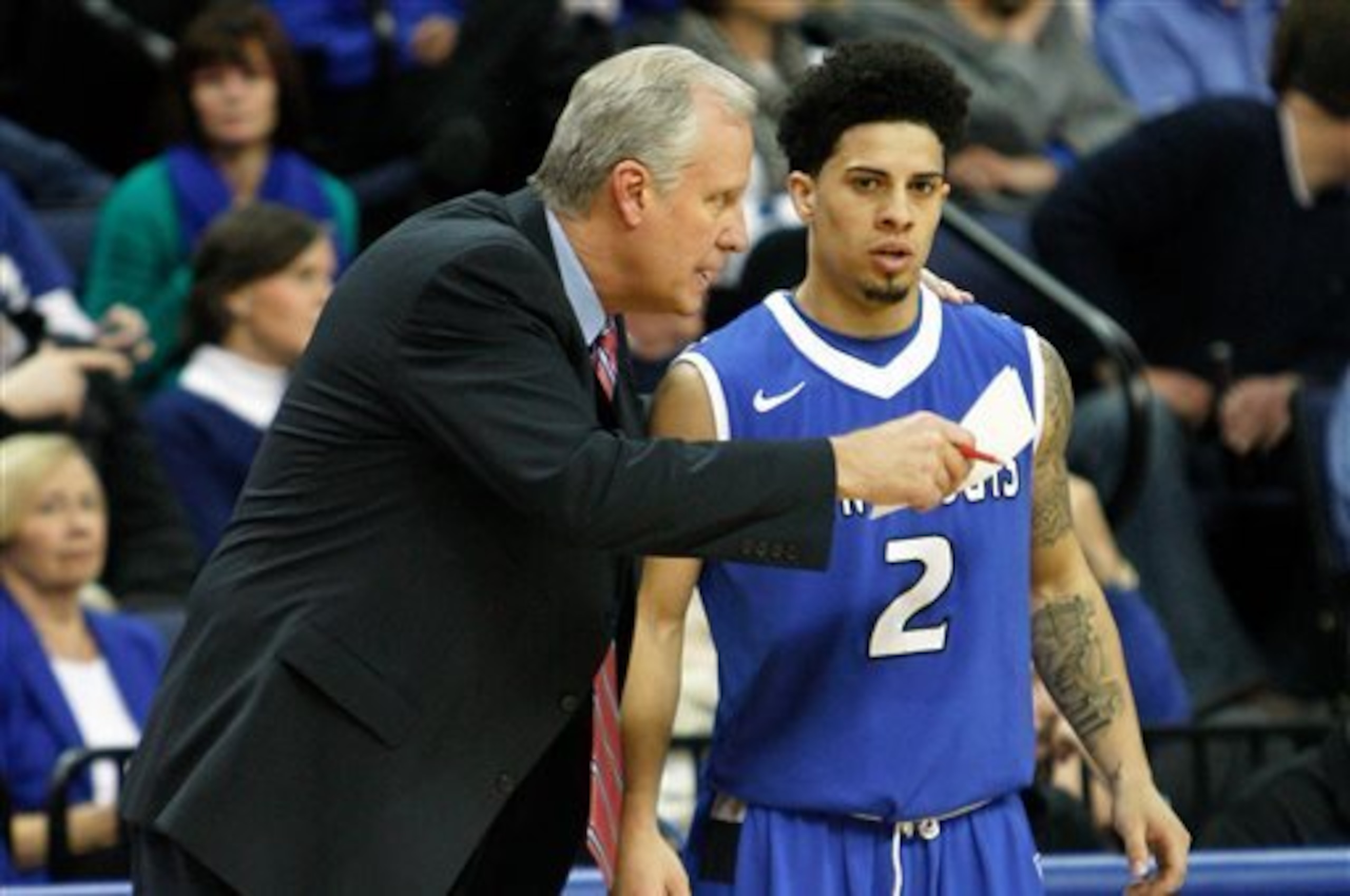
2013-14 Stats: 21.5 MPG, 7.3 PPG, 1.9 RPG, 1.6 APG
Departed teammates: Dwayne Evans (14.0 PPG), Jordair Jett (13.9 PPG), Rob Loe (10.3 PPG), Mike McCall (9.8 PPG), Jake Barnett (4.7 PPG)
Most of the teams represented on this list lost two or three crucial players, but Saint Louis' entire starting lineup graduated.
As a result, Austin McBroom is the only returning Billiken who averaged so much as 4.0 PPG last season. He was the team's best three-point shooter last season and shot better than 90.0 percent from the free-throw line.
The 5'9" combo guard will likely handle the bulk of the point guard duties for this very inexperienced squad.
It won't be the first time that McBroom is a key contributor for a D-I offense, either. As a freshman at Central Michigan during the 2011-12 season, McBroom started 29 games and averaged 15.1 points per 40 minutes despite being just the third-highest scorer on the team.
No one in their right mind is picking the Billikens to make the tournament this season, but McBroom should put up at least 15.0 points per game in an effort to get them there.
4. Norman Powell, UCLA
8 of 11
2013-14 Stats: 25.7 MPG, 11.4 PPG, 2.8 RPG, 1.7 APG
Departed teammates: Jordan Adams (17.4 PPG), Kyle Anderson (14.6 PPG), Zach LaVine (9.4 PPG), Travis Wear (7.2 PPG), David Wear (6.5 PPG)
Norman Powell is the only player in the top 10 who averaged more than 8.5 PPG last season, giving him the biggest hill to climb. Anything short of 22.8 PPG would mean he failed to double his scoring output, and that's a mark that only seven players in the country reached last season.
But if we're looking for T.J. Warren 2.0, doesn't Powell make a lot of sense?
Both Powell and 2012-13 Warren played less than 70 percent of their team's minutes, shot better than 60 percent on two-point field goals and—aside from a freshman point guard—served as the only noteworthy returning player from a team that ranked in the top 12 in the nation in points per game.
It might be crazy to request 23 points per game from a player who shot below 30.0 percent from three-point range in each of the last two seasons, but ask yourself this: Where else is UCLA going to get its points? And what other option does UCLA have at small forward other than to play Powell at least 34 minutes per night?
Even with Adams, Anderson and LaVine in the picture, Powell attempted 105 more field goals in 2013-14 than he did in 2012-13.
With all of those players now gone, his workload could double.
3. Dwayne Polee II, San Diego State
9 of 11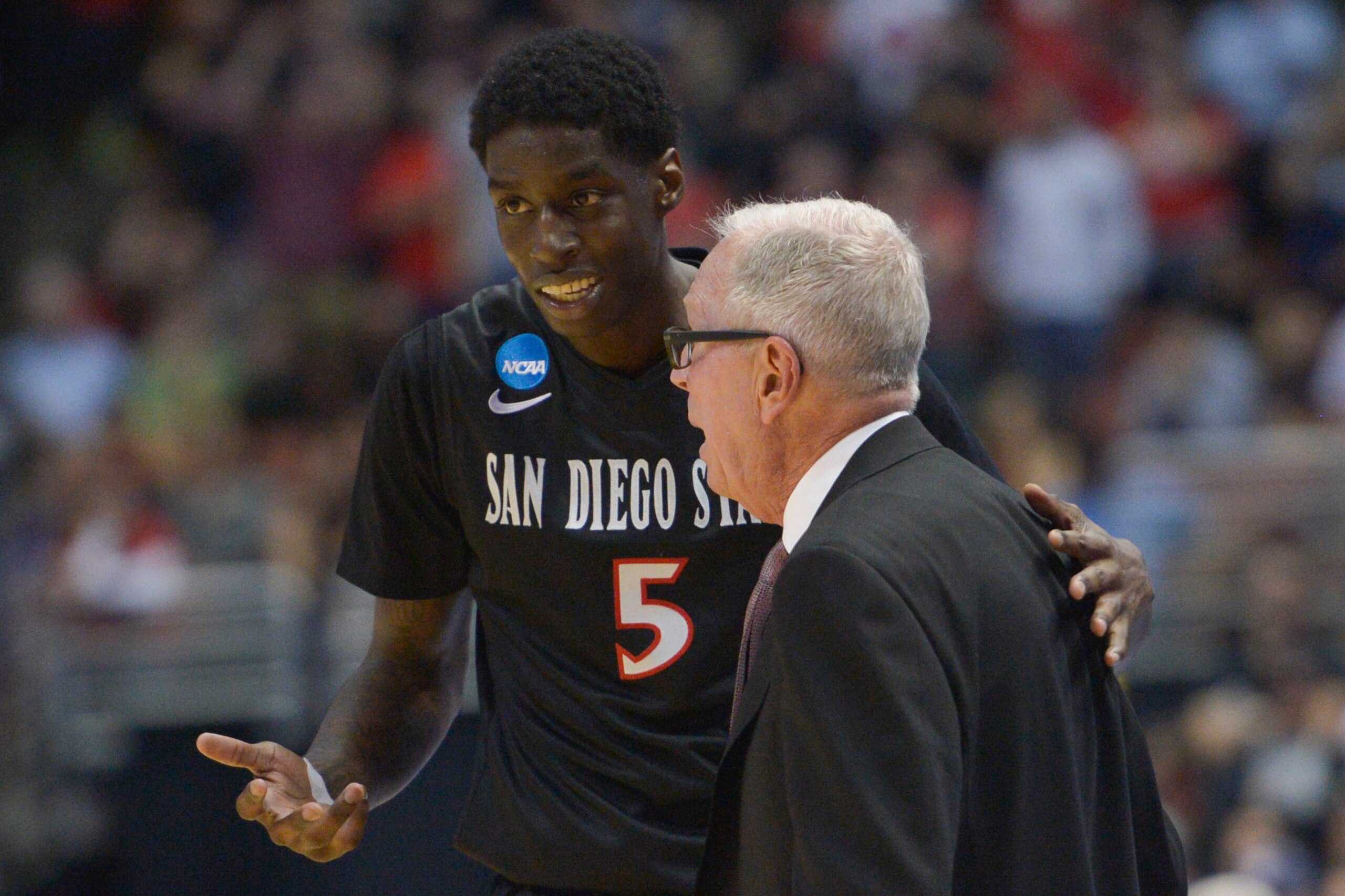
2013-14 Stats: 17.9 MPG, 7.5 PPG, 3.3 RPG
Departed teammates: Xavier Thames (17.6 PPG), Josh Davis (7.7 PPG)
For the first three months of the 2013-14 season, Dwayne Polee II barely even existed. He scored in double figures in just four of San Diego State's first 20 games, and his two highest outputs came against D-II schools.
From Feb. 5 through the end of the season, though, he averaged 10.8 PPG and 19.2 points per 40 minutes. He also added 3.9 rebounds and 1.4 steals per game. In those 16 games, he had an average O-rating of 122.9.
In SDSU's final five games of the season, Polee averaged 28.0 minutes and 15.0 points per game.
And that was all while Thames was still in town attempting 12.7 field goals per game.
As the Aztecs move on without their primary scorer and ball-handler, look for Polee to break out in a huge way. It won't be that big of a surprise if he averages 20 or more points per game.
2. Jermaine Sanders, Cincinnati
10 of 11
2013-14 Stats: 21.3 MPG, 5.7 PPG, 3.1 RPG
Departed teammates: Sean Kilpatrick (20.6 PPG), Justin Jackson (11.1 PPG), Titus Rubles (7.3 PPG)
Other teams actually lost more than Cincinnati, but it sure feels like the Bearcats are starting over from scratch.
Kilpatrick was one of the best scorers in the country, and Jackson might have been the nation's best two-way interior player. Rubles rarely got any national recognition, but he was an above-average rebounder and defender who could occasionally score.
Without those three players on the roster, Jermaine Sanders is the closest thing the Bearcats have to a team leader.
Sanders didn't take shots all that frequently—he was responsible for 15.9 percent of Cincinnati's field-goal attempts while he was on the court as opposed to 31.6 percent by Kilpatrick—but he led the team in O-rating.
Sanders shot 37.6 percent from three-point range, thus serving as Cincinnati's most reliable deep threat. We'll see if he can maintain that percentage while nearly tripling the number of shots he takes.
1. Zak Irvin, Michigan
11 of 11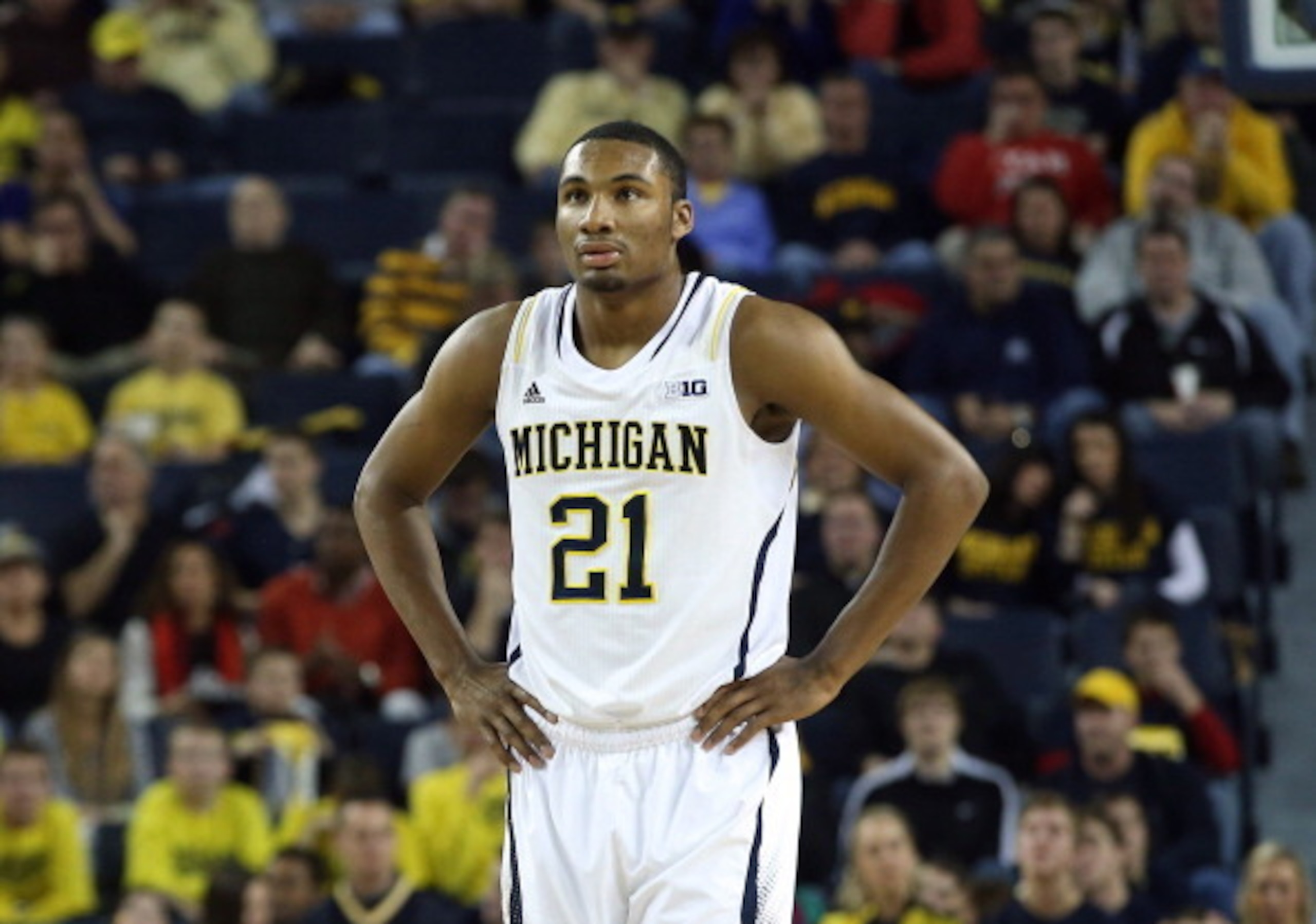
2013-14 Stats: 15.4 MPG, 6.7 PPG, 1.3 RPG
Departed teammates: Nik Stauskas (17.5 PPG), Glenn Robinson III (13.1 PPG), Mitch McGary (9.5 PPG), Jordan Morgan (6.4 PPG)
Zak Irvin is the only player on the list who has a realistic opportunity of doubling his scoring output simply by doubling his minutes played.
He only played 15.4 minutes per game last season, but he averaged 17.4 points per 40 minutes—second only to Stauskas. Irvin shot 42.5 percent from three-point range—again, second only to Stauskas.
And though he struggled to get playing time behind the three-headed monster of Stauskas, Robinson and Caris LeVert, Irvin will now be the starting shooting guard for a coach who has no issue with playing his best guys for 35 minutes per night.
If he's going to get those kind of minutes, you better believe he'll be scoring a lot, because Irvin doesn't do much else. He had a grand total of 49 rebounds, 13 assists and nine steals in 568 minutes played in 2013-14.
But we're not concerned with those secondary statistics in this article. Irvin should easily double his scoring total from last season en route to a spot on the Big Ten all-conference teams and another tournament bid for the Wolverines.
Kerry Miller covers college basketball for Bleacher Report. You can follow him on Twitter @kerrancejames.

.jpg?w=2560 "NFL Paris Football")
.jpg?w=2560 "Trevon Diggs Cut by Seahawks")