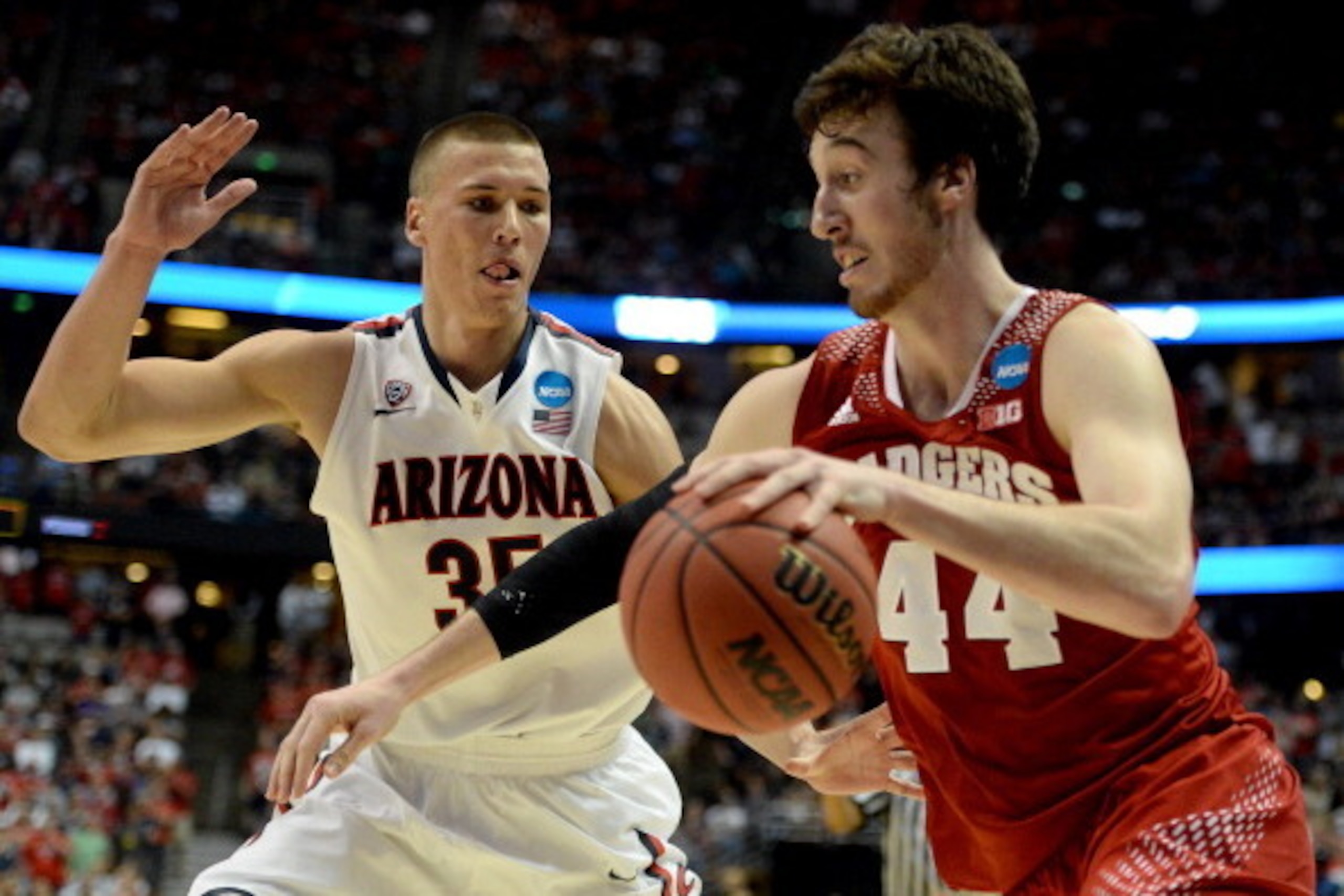

Of the 351 starting lineups in the country, sheer physicality and exceptional defense give Arizona the honor of best starting lineup for the 2014-15 college basketball season.
It certainly wasn't an easy conclusion to come to. Duke, Kentucky, North Carolina and Wisconsin each has an outstanding collection of players in its starting five.
Long story short: If you think there's a clear-cut favorite to win the national championship this year, it's time to take off the rose-colored glasses.
For the purpose of this article, we pretended that teams have no bench. Your best five against your opponent's best five.
Once we settled on the top 10, teams were ranked by how well they would do in a round-robin tournament against the other nine teams.
Statistics are courtesy of Sports-Reference.com and KenPom.com (subscription required). Recruiting ratings via 247Sports.com.
Honorable Mentions
1 of 11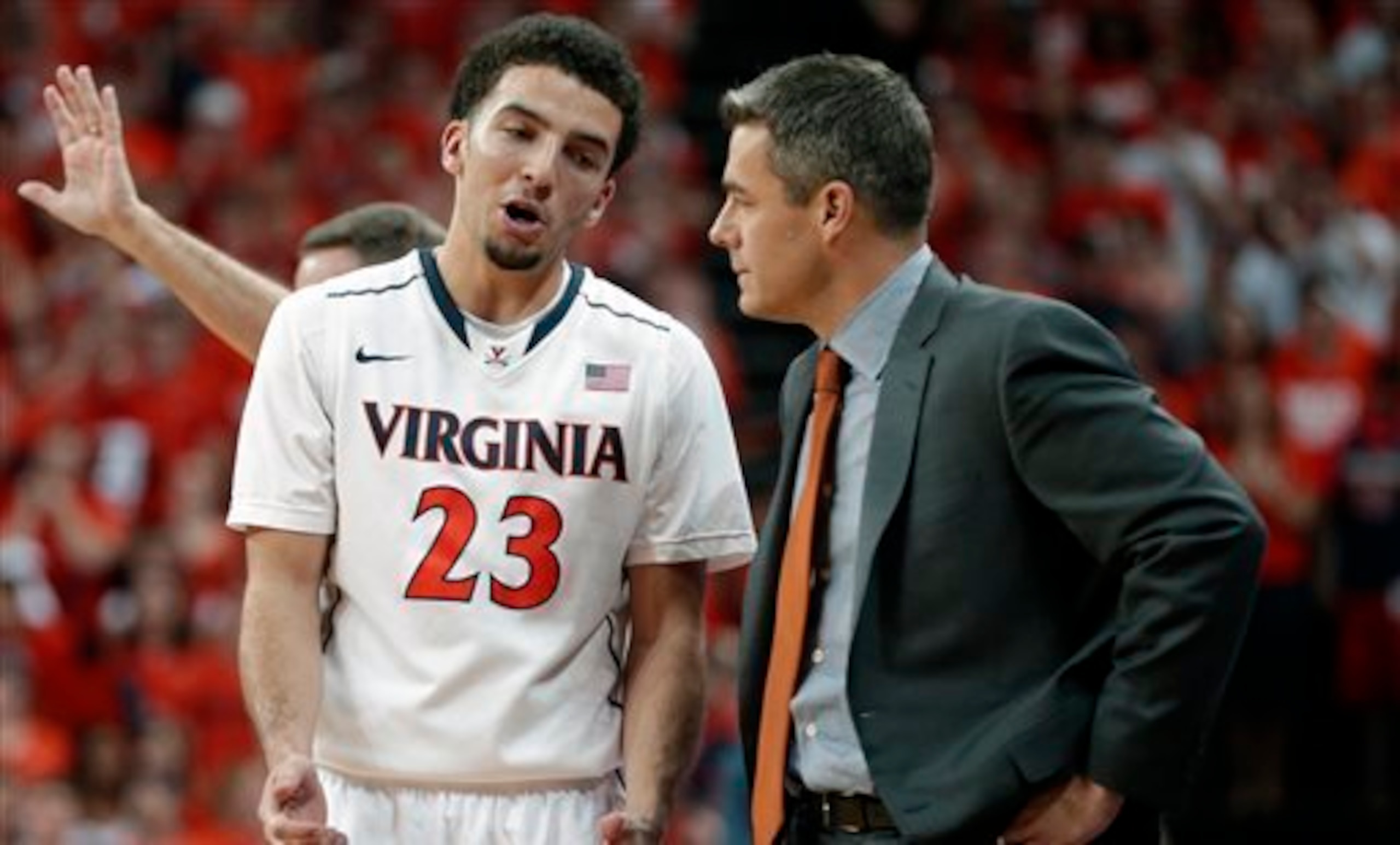
Texas Longhorns
Isaiah Taylor, Javan Felix, Jonathan Holmes, Myles Turner, Cameron Ridley
Texas is a Top 10 team, but that doesn't necessarily mean the Longhorns have one of the best starting fives in the country.
Rather, it's the Longhorns' absurd depth that makes us like them this year.
Rick Barnes' six through 10 would beat the top five bench players of pretty much any team in the country except for Kentucky. His starting five is considerably above average, but not quite top 10.
Villanova Wildcats
Ryan Arcidiacono, Darrun Hilliard II, Josh Hart, JayVaughn Pinkston, Daniel Ochefu
Love those middle three names, but you won't find Arcidiacono and Ochefu on any lists of the best PG-C combos in the country.
Also, Villanova is traditionally more of an eight- or nine-man gauntlet than a five-man wrecking crew. Arcidiacono played 83.5 percent of possible minutes as a freshman in 2012-13, but no one else has eclipsed 76.5 percent in the past three years.
Virginia Cavaliers
London Perrantes, Malcolm Brogdon, Justin Anderson, Anthony Gill, Mike Tobey
We have to mention Virginia after its excellent 2013-14 season.
We want to also mention that there is almost always one preseason top 10 team that drops like a rock. Last year it was Oklahoma State. The year before that was Kentucky's infamous season, and Pittsburgh went from preseason No. 10 to 17 losses in 2011-12.
Virginia is my candidate to fit that description this season.
Perrantes and Brogdon are excellent guards and Gill could be the breakout player of the year in the ACC, but Joe Harris and Akil Mitchell are not minor losses to overcome on either side of the court.
What's more, the Cavaliers had it way too easy last season. They played just five nonconference games against the KenPom top 90, resulting in four losses and a three-point, neutral-court win over SMU. In conference, their four home-and-away opponents all finished the season with at least 14 losses, and they never had to travel to UNC or Syracuse.
With a tougher schedule and without last year's two veteran leaders, it should be a rockier road.
10. Iowa State Cyclones
2 of 11
PG: Monte Morris (6.8 PPG, 3.7 APG, 1.3 SPG, 40.6 3P%)
SG: Bryce Dejean-Jones (13.6 PPG, 3.7 RPG, 3.0 APG with UNLV)
SF: Georges Niang (16.7 PPG, 4.5 RPG, 3.6 APG)
PF: Dustin Hogue (11.6 PPG, 8.4 RPG)
C: Jameel McKay (JUCO transfer)
Other options: Naz Long (SG)
The other Big 12 coaches may not smell what Fred Hoiberg is cooking, but we know a great lineup when we see it.
Monte Morris had the best assist-to-turnover ratio last season. We're not talking "best among freshman guards" or "best in Big 12." Morris had the best ratio in the entire country. Behind DeAndre Kane, Melvin Ejim, Georges Niang and Dustin Hogue, Morris didn't get much love last season on a national level. That doesn't mean he's incapable of deftly leading this team.
Hogue was solid all season, but he broke out in a big way in his final game of the 2013-14 season, scoring 34 points against Connecticut in the Sweet 16. For the year, he shot 64.6 percent from two-point range and just marginally finished behind Morris for the honor of most efficient Cyclone.
Niang was already a beast before simultaneously bulking up and slimming down this summer. He's all but a lock for Big 12 first team all-conference.
It's the two transfers who keep Iowa State from ranking even higher on this list—though, it certainly wouldn't be the first time Hoiberg struck gold on the transfer market.
Jameel McKay should be an anchor in the paint, but he won't be eligible to play until late December and has never played a D-I game after opening his career at Indian Hills CC.
Bryce Dejean-Jones led UNLV in scoring last season, but he was useless in the games that mattered. The Rebels played eight games against teams ranked in the KenPom top 50. They went 1-7 in those games largely due to the fact that Jones had an average O-rating of 88.1, shooting 34.3 percent from the field and 20.6 percent from three-point range.
Don't be surprised if Naz Long starts more games this season than Jones. Also, don't be surprised if Iowa State wins the Big 12.
9. Louisville Cardinals
3 of 11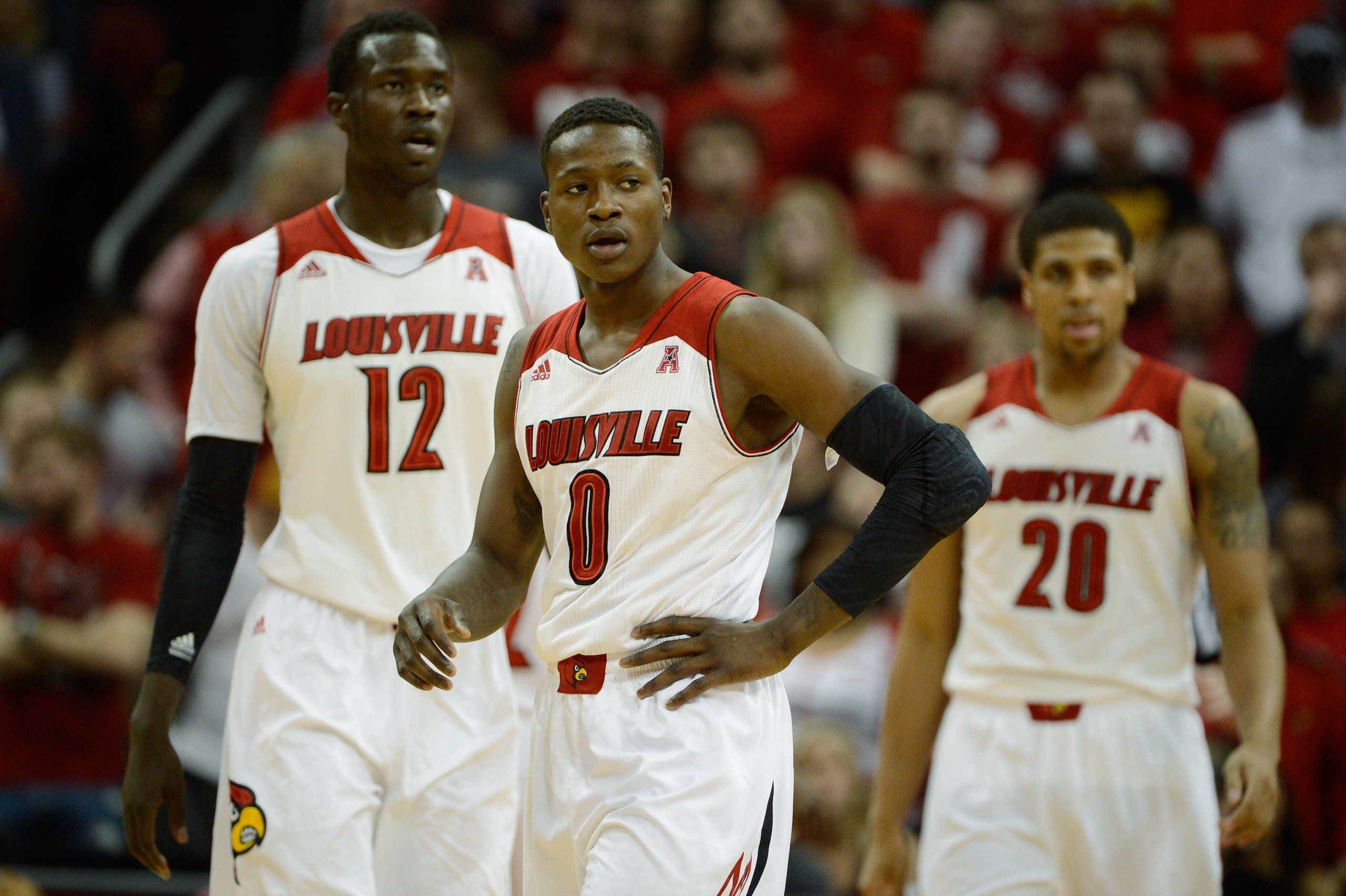
PG: Terry Rozier (7.0 PPG, 3.1 RPG, 1.8 APG, 37.1 3P%)
SG: Chris Jones (10.2 PPG, 2.9 APG, 2.2 SPG, 37.7 3P%)
SF: Wayne Blackshear (8.2 PPG, 3.1 RPG, 39.5 3P%)
PF: Montrezl Harrell (14.0 PPG, 8.4 RPG, 1.3 BPG)
C: Mangok Mathiang (3.6 PPG, 3.6 RPG, 1.4 BPG)
Other options: Shaqquan Aaron (SF), Chinanu Onuaku (C)
Louisville doesn't figure to start any freshmen, but that hardly means that Rick Pitino is getting back all of his best weapons from last season. There may be a learning curve as this roster figures out how to carry on without Russ Smith and Luke Hancock.
Though the Cardinals may initially lack a go-to scorer, they'll have no problem playing defense. All five of their projected starters had a D-rating of less than 90.0 in 2013-14. Had they each played enough minutes, they all would have ranked in the top 25 in the nation in that category.
Go ahead and name any other statistic in which any team can boast five of the 25 best players in the country.
The defense will be outstanding, and the points will come in due time.
Montrezl Harrell is one of the best two-way interior players out there. Terry Rozier and Wayne Blackshear combined to average 31.5 points per 40 minutes last season despite limited playing time and despite each being used on less than 19 percent of their possessions on the court. Both could explode on offense with Smith and Hancock gone.
The only weak link on offense is Mangok Mathiang, but Pitino literally has five other big men to choose from if Mathiang doesn't become more of a force as a sophomore.
Question for the audience: Has a team ever earned at least a share of a regular-season crown in three straight seasons with three different conferences?
Duke and North Carolina are the favorites in the ACC, but Louisville has the necessary players to win the ACC after winning the Big East in 2012-13 and the AAC in 2013-14.
8. Gonzaga Bulldogs
4 of 11
PG: Kevin Pangos (14.4 PPG, 3.6 APG, 3.3 RPG, 41.2 3P%)
SG: Gary Bell Jr. (11.0 PPG, 2.9 RPG, 1.7 APG, 42.7 3P%)
SF: Byron Wesley (17.8 PPG, 6.4 RPG, 2.3 APG)
PF: Kyle Wiltjer (10.2 PPG, 4.2 RPG, 36.7 3P% with Kentucky in 2012-13)
C: Przemek Karnowski (10.4 PPG, 7.1 RPG, 1.7 BPG)
Other options: Kyle Dranginis (SG)
It's funny how much one player can single-handedly alter a team's perception.
Before adding Byron Wesley, Gonzaga was a Top 20 team that should easily win the WCC, but hardly a contender for the national championship.
After getting USC's top scorer and rebounder from last season, we'll take Mark Few's starting five against just about any other in the country.
After all, the Bulldogs now have five starters who could each legitimately average 15.0 PPG.
Kyle Wiltjer is ready to set the West Coast world on fire. Kevin Pangos put up last year's great numbers despite being asked to play 35 minutes per night with turf toe and ankle injuries. Gary Bell broke his hand in the middle of last season and still had an O-rating of 120.7.
Accounting for transfers and health factors, this team should be better than last year's at every single position.
That's a terrifying proposition for a program that won 29 games in 2013-14. A No. 1 seed for the second time in three seasons isn't out of the question.
7. Kansas Jayhawks
5 of 11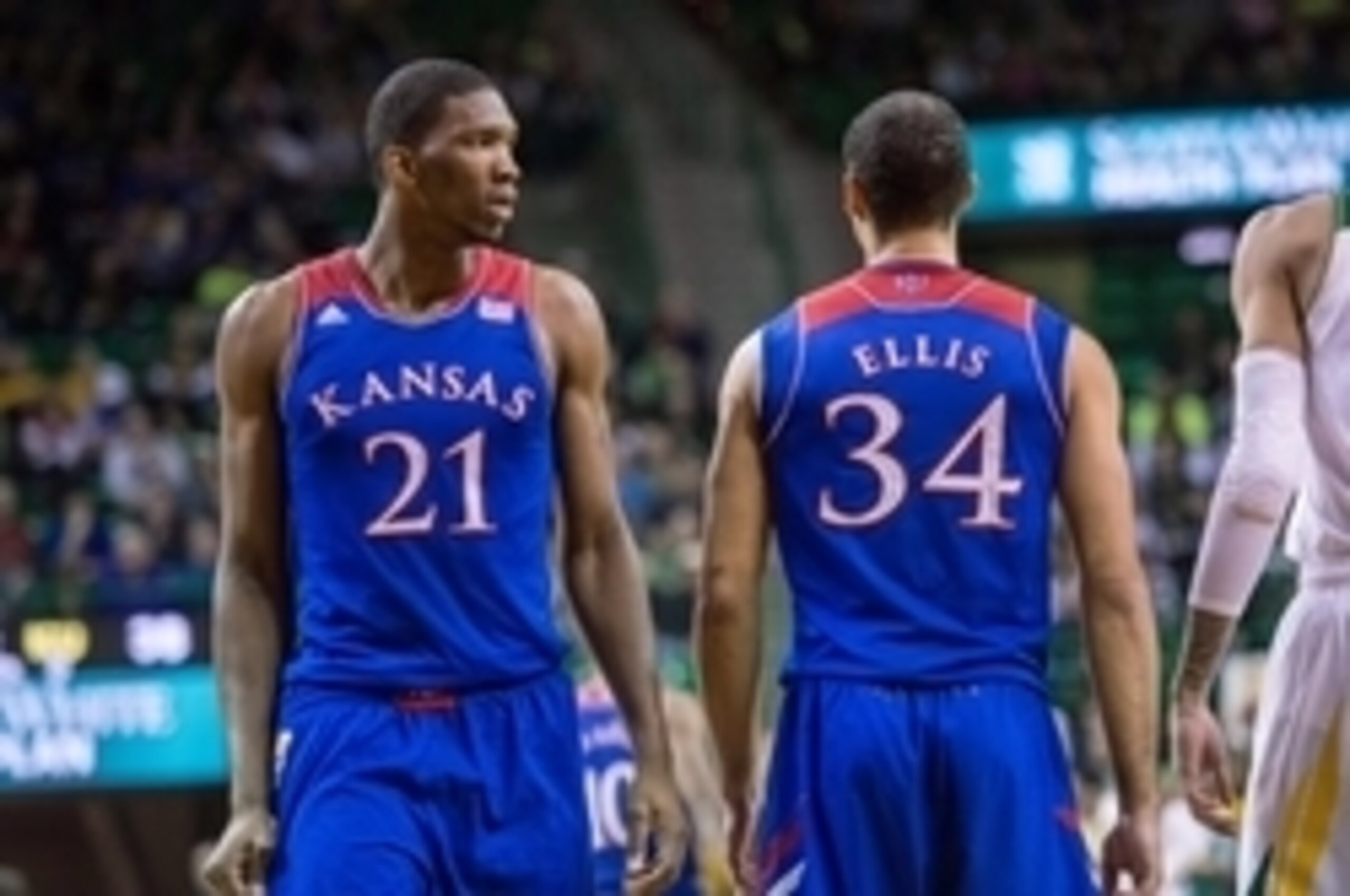
PG: Devonte Graham (Freshman)
SG: Wayne Selden Jr. (9.7 PPG, 2.6 RPG, 2.5 APG, 32.8 3P%)
SF: Kelly Oubre (Freshman)
PF: Cliff Alexander (Freshman)
C: Perry Ellis (13.5 PPG, 6.7 RPG)
Other options: Frank Mason (PG), Jamari Traylor (PF/C)
Kansas is the toughest team on the list to project.
Perry Ellis is an excellent interior player, and we're expecting Wayne Selden to have a huge sophomore season after suffering through knee pain for the entirety of last year.
But no matter how highly rated they may be, counting on three freshmen as starters is a gamble.
Kansas relied on three freshmen in the starting lineup for much of last season. Kentucky had four first-year players in its starting five. Both opened the season ranked in the Top 5 but were just barely hanging onto spots in the Top 20 a month later.
They both improved by the end of the season, but we're accounting for some sort of adjustment period by ranking Kansas' 2014-15 starting lineup at No. 7.
Perhaps by March the Jayhawks would be able to win two out of three against top teams like Arizona and Kentucky, but they would finish near the bottom of the standings if these 10 teams played a round-robin tournament in November.
6. Florida Gators
6 of 11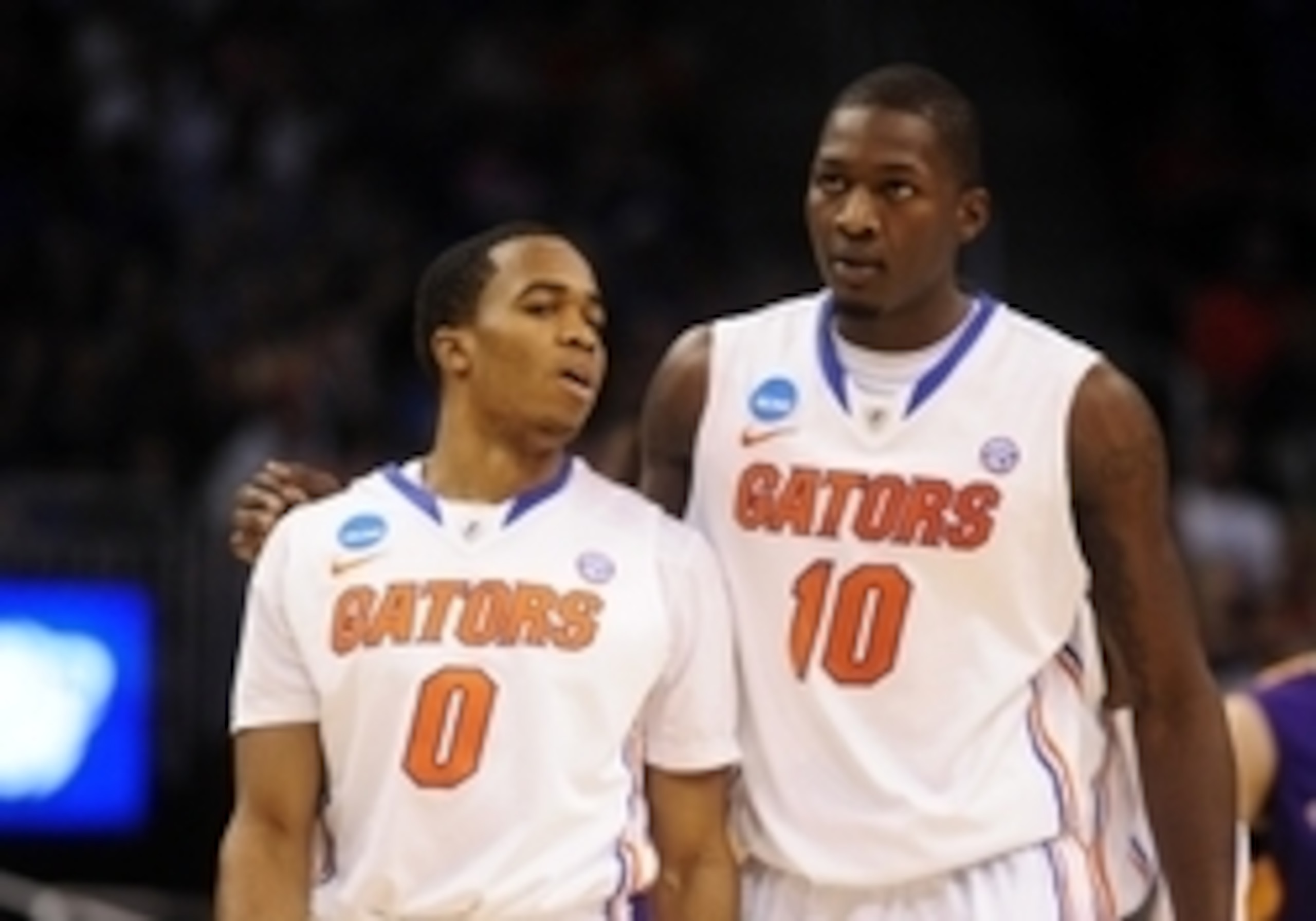
PG: Kasey Hill (5.5 PPG, 3.1 APG, 1.2 SPG)
SG: Michael Frazier II (12.4 PPG, 3.5 RPG, 44.5 3P%)
SF: Dorian Finney-Smith (8.7 PPG, 6.7 RPG, 2.1 APG)
PF: Jon Horford (3.8 PPG, 4.2 RPG with Michigan)
C: Chris Walker (1.9 PPG, 1.3 RPG)
Other options: Devin Robinson (SF), Alex Murphy (PF)
Aside from Michael Frazier's, go ahead and just ignore most of the numbers listed above.
Kasey Hill was Scottie Wilbekin's backup. His per-game numbers are fairly average, but he had 5.7 assists and 2.1 steals per 40 minutes. He led the Gators in both categories and should rival Texas A&M's Alex Caruso for the honor of best two-way point guard in the SEC.
Dorian Finney-Smith was the sixth man with woeful shooting percentages, but he still put up pretty solid numbers in his first year under Billy Donovan. Expect his efficiency to increase, if only because it's impossible to imagine him getting to take 3.6 three-pointers per game if he keeps making just 29.5 percent of them.
Chris Walker is the big one, though. Because of academic issues, Sky Walker played just 87 minutes last season after being rated as the seventh-best incoming freshman in the nation.
Despite missing out on the easy games in November and December, Walker averaged 15.6 points, 11.0 rebounds and 3.7 blocks per 40 minutes in his limited action against SEC and NCAA tournament foes. His 0.216 win shares per 40 minutes ranked second on the team to Casey Prather's mark of 0.219. Given a full season, he should play his way into a top-five draft slot in June.
Losing four starters in one offseason would be a disaster for most teams, but Florida will remain one of the best in the nation.
5. Duke Blue Devils
7 of 11
PG: Tyus Jones (Freshman)
SG: Rasheed Sulaimon (9.9 PPG, 2.4 APG, 41.0 3P%)
SF: Justise Winslow (Freshman)
PF: Amile Jefferson (6.5 PPG, 6.9 RPG)
C: Jahlil Okafor (Freshman)
Other options: Quinn Cook (PG), Grayson Allen (SG), Matt Jones (SG), Marshall Plumlee (C)
Like Kansas, Duke's ranking took a slight hit because three freshmen project to start for the Blue Devils.
However, the Devils are a couple spots ahead of Kansas because their freshmen are slightly better than Bill Self's, and because there's a better-than-slim chance that Quinn Cook provides some veteran leadership in the starting lineup at the outset of the season.
If Jahlil Okafor is as good as advertised, Duke will have a two-pronged interior presence the likes of which haven't been seen by the Cameron Crazies since the days of Carlos Boozer and Shane Battier.
But the biggest X-factor for Duke is whether Rasheed Sulaimon can start the 2014-15 season the way he finished in 2013-14.
Plenty has been written about Sulaimon's November no-show and subsequent benching, but he shot better than 43 percent from three-point range for the rest of the season after the DNP wake-up call against Michigan. When his head is screwed on straight, he's one of the best offensive weapons in the country. (Let's not talk about his defense, though.)
Sulaimon is also a great secondary—or even tertiary—option for ball distribution. Where some three-point shooters don't even understand the concept of passing the ball, Sulaimon averaged 3.7 assists per 40 minutes last season.
Mike Krzyzewski may not have his customary stretch-4—Amile Jefferson has yet to attempt a three-pointer in his college career—but a shooting guard who can play any position 1-3 is a pretty good consolation prize.
4. Wisconsin Badgers
8 of 11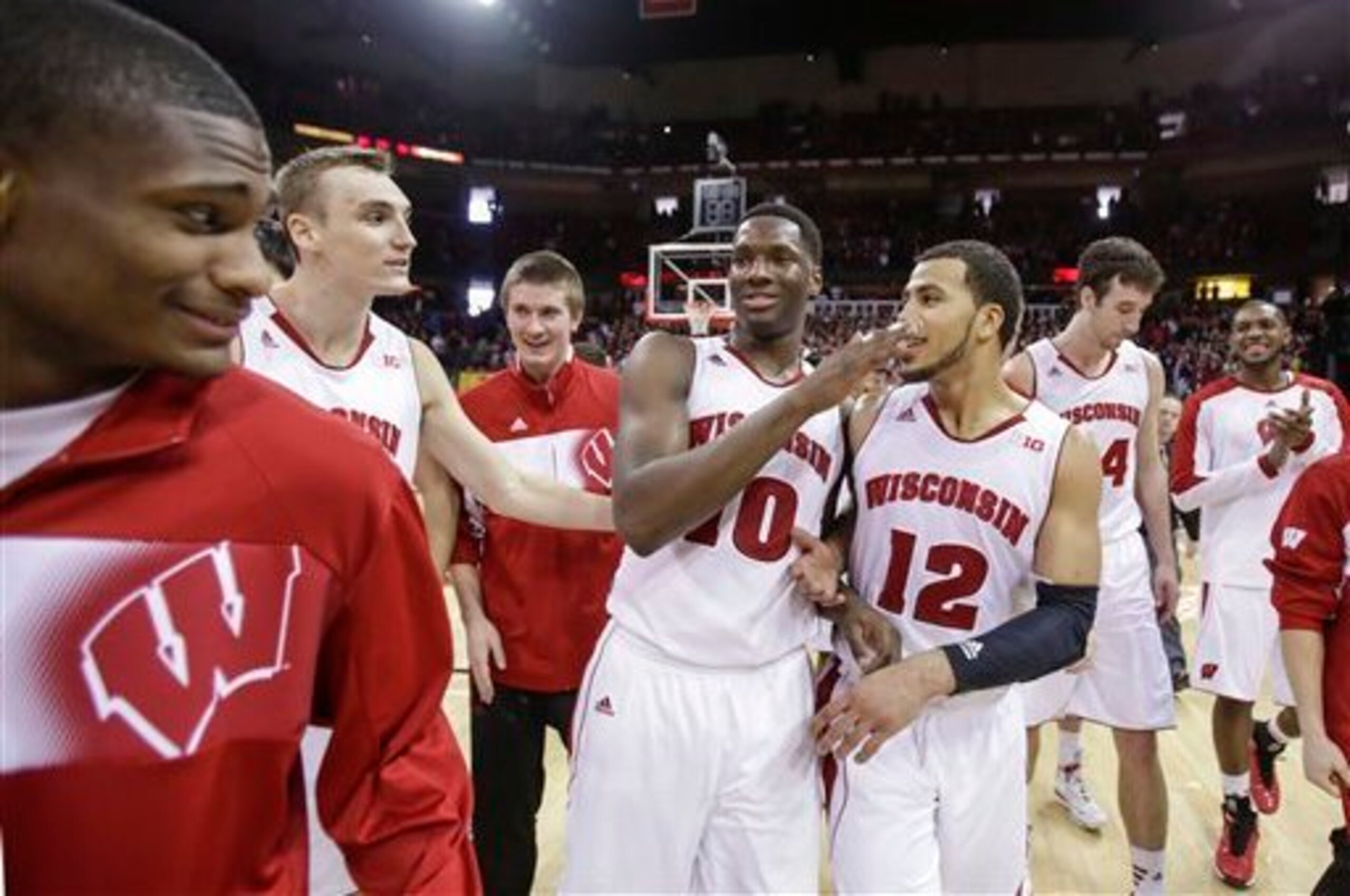
PG: Traevon Jackson (10.7 PPG, 4.0 APG, 3.8 RPG, 38.2 3P%)
SG: Josh Gasser (8.8 PPG, 4.0 RPG, 1.9 APG, 43.1 3P%)
SF: Sam Dekker (12.4 PPG, 6.1 RPG, 32.6 3P%)
PF: Nigel Hayes (7.7 PPG, 2.8 RPG)
C: Frank Kaminsky (13.9 PPG, 6.3 RPG, 1.7 BPG, 37.8 3P%)
Other options: Bronson Koenig (SG)
This all depends on Sam Dekker being as good as a junior as everyone thought he should be as a sophomore.
Take Dekker out of the equation and the Badgers are left with little more than the most versatile big man in the country.
Frank Kaminsky is excellent, but Traevon Jackson is far from beloved by his own fans, and Josh Gasser is a shooting guard who barely attempts (KenPom subscription required) one out of every nine shots taken while he is on the court.
Nigel Hayes and Bronson Koenig were great off the bench, but deciding which one deserves to be the fifth starter is hardly the equivalent of kvetching over all-star rosters.
But if Dekker is a stud, it inevitably elevates the perceived strength of the other players on a team destined for a return trip to the Final Four.
What Wisconsin's starting lineup definitely has working in its favor is experience. Jackson, Gasser and Kaminsky are all seniors, and Dekker is a junior who was a 5-star recruit two years ago.
If having three freshmen as projected starters is a minor detriment, then it stands to reason that four upperclassmen who have succeeded in recent years is a bonus.
3. North Carolina Tar Heels
9 of 11
PG: Marcus Paige (17.5 PPG, 4.2 APG, 3.2 RPG, 1.5 SPG, 38.9 3P%)
SG: Justin Jackson (Freshman)
SF: J.P. Tokoto (9.3 PPG, 5.8 RPG, 3.1 APG, 1.6 SPG)
PF: Brice Johnson (10.3 PPG, 6.1 RPG, 1.3 BPG)
C: Kennedy Meeks (7.6 PPG, 6.1 RPG)
Other options: Joel Berry (PG), Theo Pinson (SF), Isaiah Hicks (PF)
Brice Johnson and Kennedy Meeks each played less than 20 minutes per game last season. As such, it feels necessary to mention their numbers on a per-40-minutes basis.
Johnson: 21.2 points, 12.6 rebounds, 2.6 blocks
Meeks: 18.6 points, 14.9 rebounds, 1.9 blocks
Neither will play anything close to 40 minutes per game, but Meeks is in much better shape than last season, and Johnson stands to gain from James Michael McAdoo's early departure. Giving each big man 27-30 minutes per game seems like both a safe assumption and a scary proposition for the rest of the country.
If Johnson and Meeks were all that opponents had to worry about, that would be one thing. However, they can't even afford to occasionally double team either one without leaving some equally capable scorer unguarded.
J.P. Tokoto had his shooting troubles, but he was averaging better than 10.0 points per game over the final 12 games of the season. Justin Jackson is one of the 10 best incoming freshmen in the country. Marcus Paige is arguably the best guard in the nation.
Even if you figure out how to slow down any of those five guys, the first three players off the bench are a pair of 5-star recruits (Pinson and Hicks) and a top-10 point guard in this year's class (Berry).
Unless that whole Rashad McCants thing somehow impacts this year's on-court product, the Tar Heels will be frighteningly good.
2. Kentucky Wildcats
10 of 11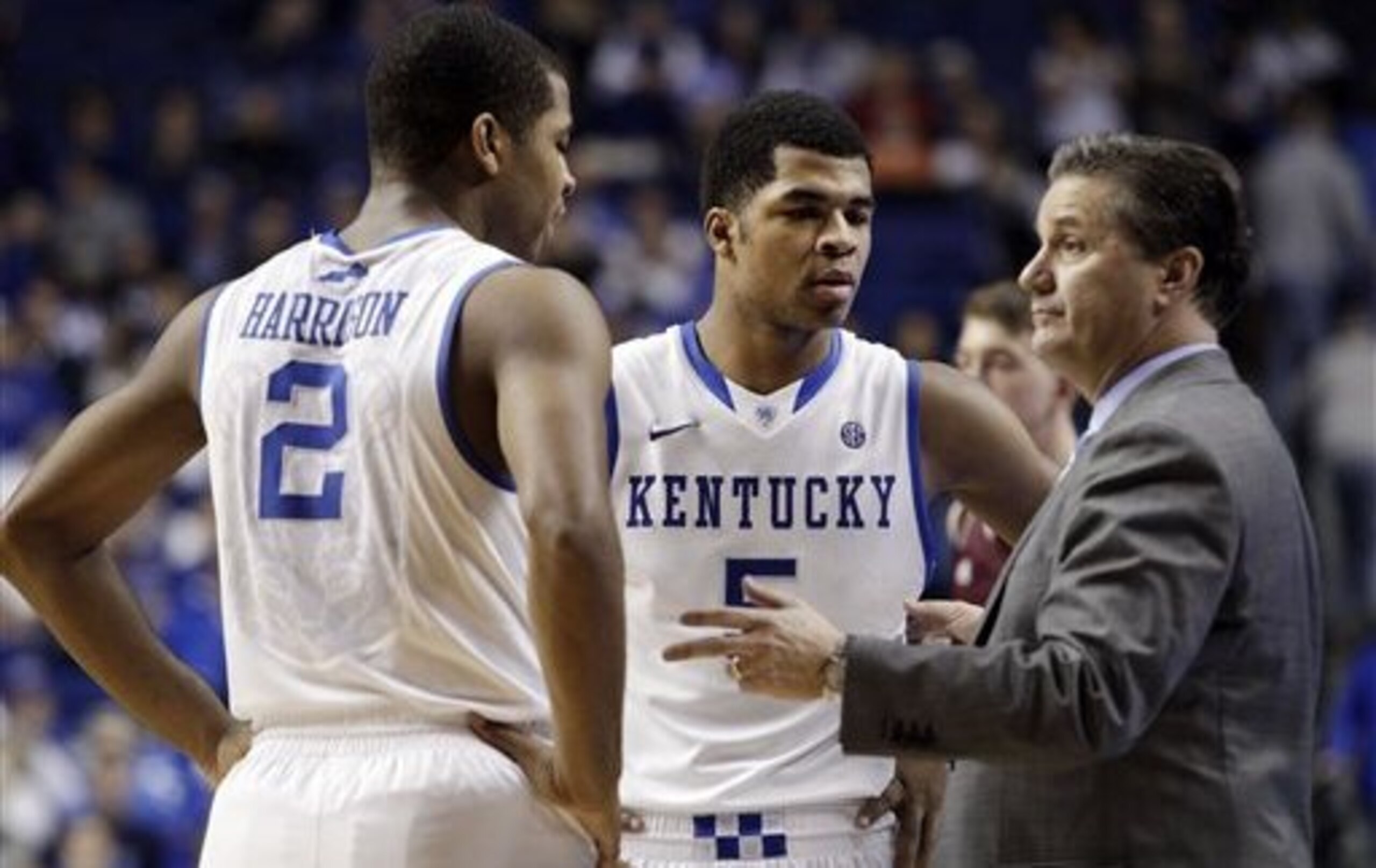
PG: Andrew Harrison (10.9 PPG, 4.0 APG, 3.2 RPG, 37.3 3P%)
SG: Aaron Harrison (13.7 PPG, 3.0 RPG, 1.9 APG, 35.6 3P%)
SF: Alex Poythress (5.9 PPG, 4.5 RPG)
PF: Karl Towns Jr. (Freshman)
C: Dakari Johnson (5.2 PPG, 3.9 RPG)
Other options: Tyler Ulis (PG), Devin Booker (SG), Marcus Lee (PF), Trey Lyles (PF), Willie Cauley-Stein (C)
Choosing between Arizona and Kentucky for the top spot was almost impossible.
Kentucky should open the season ranked No. 1 in the country because it has the best 10-man rotation in college basketball history. But if we ignore the entire bench and only focus on the starting five, Arizona takes the cake.
The Harrison brothers had plenty of struggles last season. Aaron entered the SEC tournament shooting just 30.6 percent from three-point range. Andrew finished the season with a woeful 0.101 win shares per 40 minutes. But both should be much improved in their sophomore season with other 5-star guards breathing down their necks for added motivation.
Beyond that, take your pick for who starts at which position and be ecstatic with the result.
You could 100 percent disagree with my picks for starting forwards and centers and there would still be no question that Kentucky belongs near the top of this list.
The only possible point of contention is that the Wildcats have too much depth to field a consistent starting lineup.
John Calipari is effectively in the same position as an owner in a six-team fantasy football league. It sounds like fun to have no shortage of top players, but it's much easier to have a short leash with players when the next-best option is just as promising.
1. Arizona Wildcats
11 of 11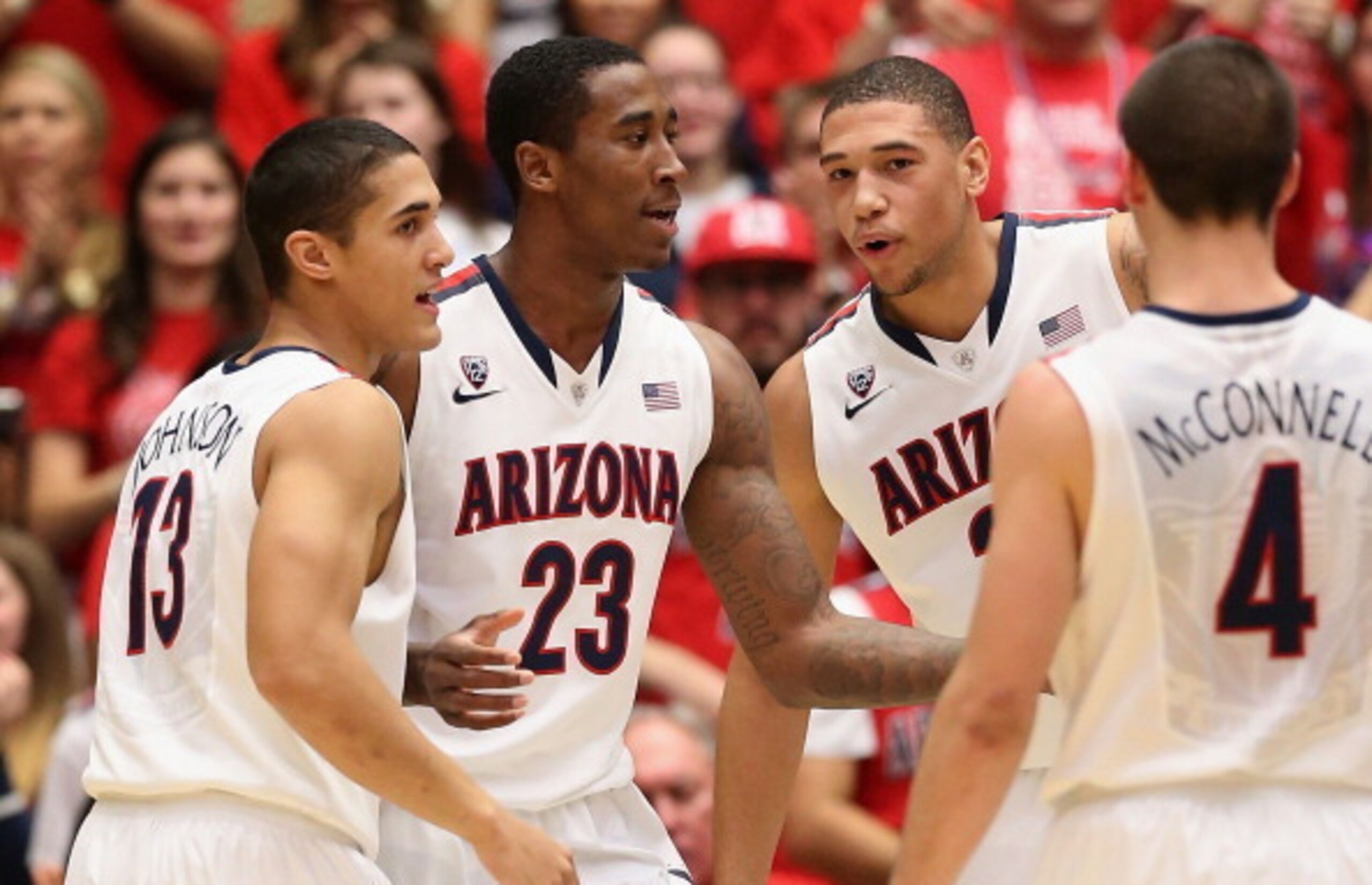
PG: T.J. McConnell (8.4 PPG, 5.3 APG, 3.6 RPG, 1.7 SPG)
SG: Stanley Johnson (Freshman)
SF: Rondae Hollis-Jefferson (9.1 PPG, 5.7 RPG, 1.1 BPG)
PF: Brandon Ashley (11.5 PPG, 5.8 RPG, 37.9 3P%)
C: Kaleb Tarczewski (9.9 PPG, 6.3 RPG, 1.0 BPG)
Other options: Kadeem Allen (SG), Gabe York (SG), Craig Victor (PF)
While Kentucky's starting five could probably score more points than Arizona's, these Wildcats will do a much better job of keeping opponents from scoring against them.
Despite losing the nation's leader in defensive win shares for 2013-14 (Aaron Gordon), Sean Miller's club is still more than equipped to shut down all comers.
T.J. McConnell doesn't do much in terms of scoring, but his on-ball defense and ability to distribute the ball on offense are second to none. Rondae Hollis-Jefferson isn't quite the physical specimen that Gordon is, but he and Kaleb Tarczewski were better shot-blockers than Gordon and every bit as capable of corralling rebounds.
And arguably their best defender has yet to be seen. Whether you prefer Stan the Man or Stanimal for his nickname, Stanley Johnson might be the most physically imposing "shooting guard" in the country. At 6'6" and 225 pounds with a motor that won't quit and a reputation for being a physical defender, he's going to destroy his opposition on a regular basis.
The Wildcats won't frequently score more than 80 points, but they won't be giving up more than 60 points all that often either.
If you had to pick one starting five to replace the Philadelphia 76ers in the NBA, Arizona would have the lineup most capable of winning a couple games.
Kerry Miller covers college basketball for Bleacher Report. You can follow him on Twitter @kerrancejames.
.jpg?w=2560 "NFL Paris Football")

.jpg?w=2560 "Trevon Diggs Cut by Seahawks")