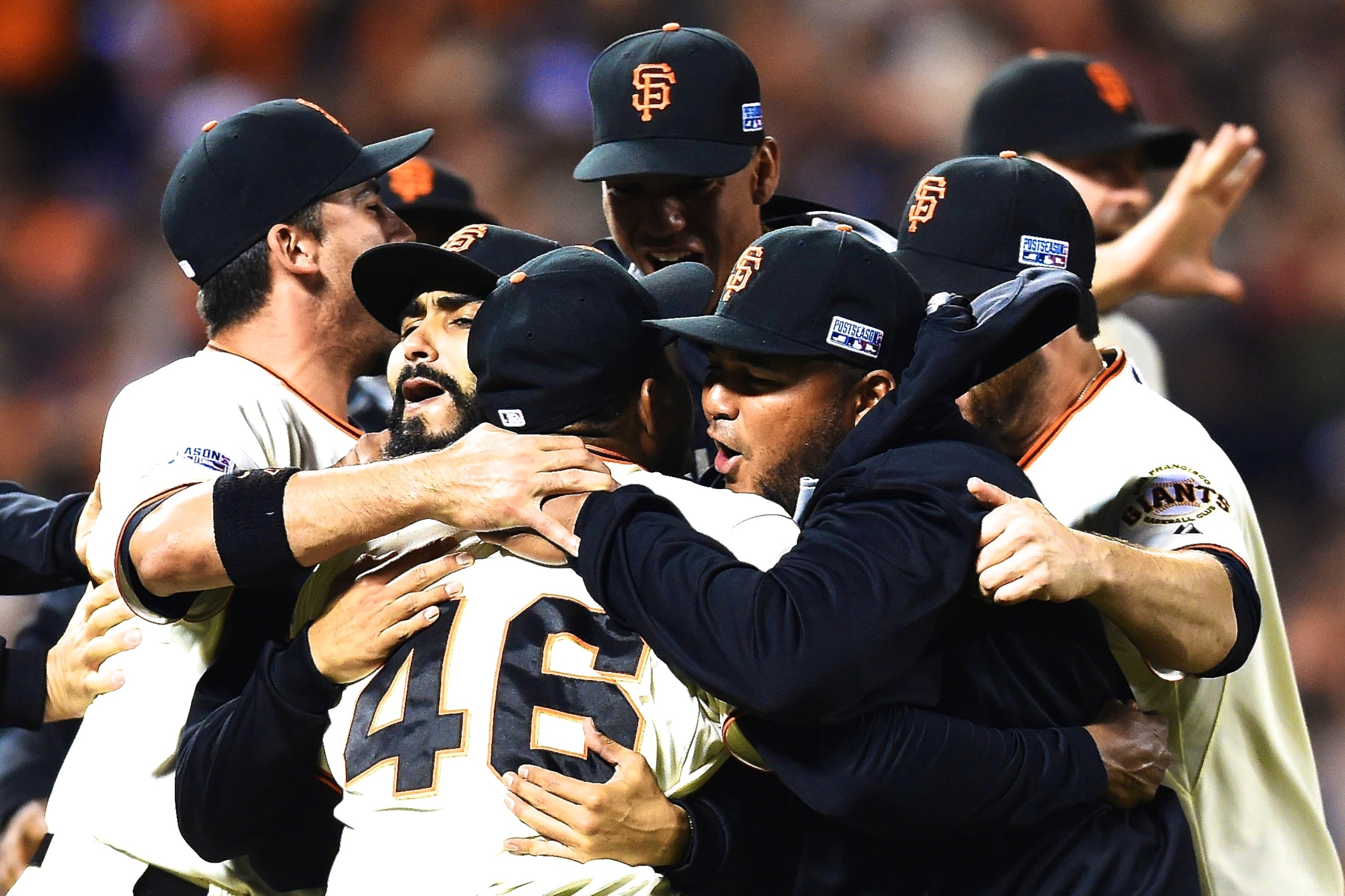


Take a look at the four teams that made it to the League Championship Series round. Take a good look.
Surprised by what you see? You shouldn't be.
Granted, I must confess that I myself struggled with a bout of befuddlement at the Final Four of the 2014 MLB postseason. My predictions for the division series round lay in utter ruin, and it just didn't seem to make sense.
TOP NEWS

MLB Commissioner Defends Salary Cap
Miz Sets WS Record Already ⛽
Brewers Get 1st WS Win Since 1982 💪
Sure, the Baltimore Orioles won 96 games, but they hardly lit the world on fire doing so. The San Francisco Giants, Kansas City Royals and St. Louis Cardinals, meanwhile, only won 88, 89 and 90 games, respectively. Just what in the heck are these clubs doing on the doorstep of the World Series?
But then one realizes what the diehard fans of these clubs already know: that this is a silly question. The Orioles, Royals, Giants and Cardinals are where they are because they're good enough to be there.
If we look at them with a fresh pair of eyes, we can see it.
Why the Baltimore Orioles Are Actually This Good

To a certain extent, it's simple: The Orioles' 96 wins tied the Washington Nationals for the second most in the league. It's hard to be a bad team and win that many games.
Of course, the Orioles really took off when they hit the second half and won an AL-best 44 games. This was largely thanks to one simply unparalleled strength: their bullpen.
Per FanGraphs, Baltimore's relievers turned in an MLB-best 2.66 ERA after the break. And rather than one or two guys doing all the work, it was actually six:
| Zach Britton | 30 | 28.0 | 7.7 | 2.9 | .167 | 2.25 |
| Brad Brach | 28 | 29.1 | 8.0 | 3.1 | .200 | 3.07 |
| Tommy Hunter | 28 | 29.0 | 6.8 | 1.2 | .204 | 1.86 |
| Darren O'Day | 28 | 28.0 | 10.0 | 2.9 | .113 | 2.57 |
| Andrew Miller | 23 | 20.0 | 15.3 | 1.8 | .119 | 1.35 |
| Brian Matusz | 23 | 19.0 | 12.3 | 1.9 | .186 | 1.42 |
That's a collection of relievers that would have been dangerous enough on its own, but then the Orioles added Kevin Gausman and his eye-popping stuff to the mix for October.
Hence one of the reasons why Baltimore's bullpen so thoroughly outclassed the Detroit Tigers bullpen in the ALDS by allowing only three earned runs in 12 innings. The other reason was Buck Showalter's ability to pull off an October rarity: flawless bullpen management.
"Whatever he does seems to be the right [move]," said Andrew Miller, via Todd Zolecki of MLB.com. "I've had a lot of great coaches, a lot of great managers, but I don't know that I've ever seen anybody as prepared as Buck Showalter. I think it pays off."
In light of what a huge threat Baltimore's bullpen poses for opponents, it borders on being unfair that the Orioles are pretty darn good in other areas too.
The Orioles may not have a sexy starting rotation, but nobody in it is below-average if you consult ERA+, which takes ERAs and adjusts them for ballparks and leagues. ERA+ rated Baltimore's foursome of Chris Tillman, Wei-Yin Chen, Bud Norris and Miguel Gonzalez as above-average starters.
Granted, none of the four is overpowering. But that's OK when you're backed by a strong defense. And according to Baseball Prospectus, Baltimore's was the fourth-most efficient defense in baseball.
To this end, injuries to Matt Wieters and Manny Machado and Chris Davis' suspension actually meant little. Thanks to the defensive talent of Caleb Joseph behind the plate, Ryan Flaherty at third base, Steve Pearce at first base and either Alejandro De Aza or David Lough in left field, the Orioles still have the defense to help their pitching keep runs hard to come by.
Which is good, because there is indeed something to the notion that Baltimore's run production capability isn't as strong without Wieters, Machado and Davis. Those three are dangerous hitters, after all.
But this is really a minor gripe. This is a team that led all of baseball in home runs, and it has at least five quality hitters in Adam Jones, Nelson Cruz, Pearce, Nick Markakis and J.J. Hardy. Opponents also have to be mindful of Jonathan Schoop's power, De Aza's and Kelly Johnson's ability to hit right-handers and Delmon Young's dangerous bat waiting on the bench.
Yes, the Orioles would be better with Wieters, Machado and Davis. And yes, they could use a true No. 1 starter.
But between their excellent bullpen, their solid starting rotation, their Venus flytrap defense, their dangerous lineup and their Yoda-like manager, there's plenty that says the Orioles are legit.
Why the Kansas City Royals Are Actually This Good
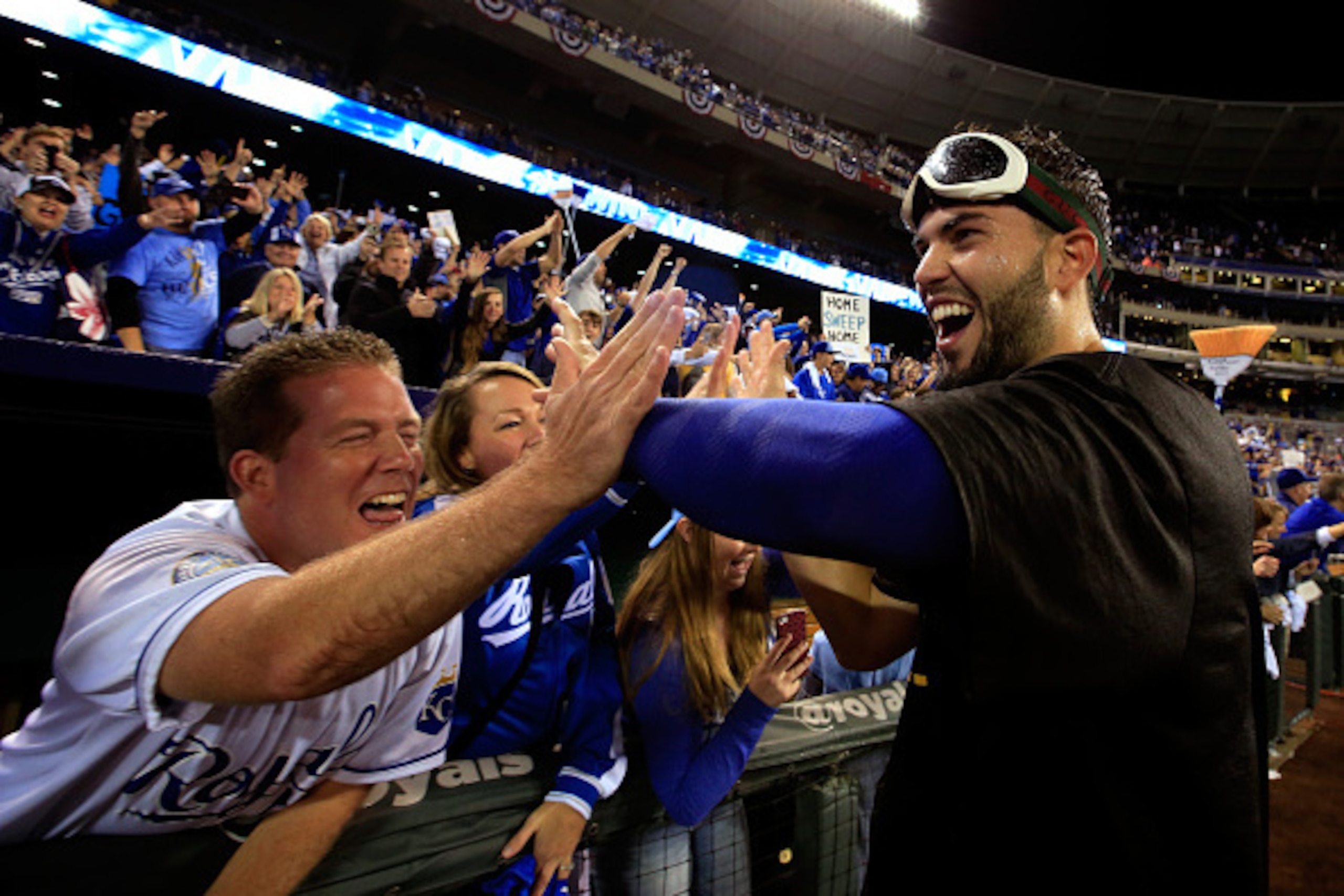
Even more so than the Orioles, it's the what-have-you-done-for-me-lately perspective that does the Royals better justice than their 89-73 record. Only the Nationals and Orioles won more games in the second half, and that was largely thanks to Kansas City's run prevention.
According to FanGraphs, Royals starters authored a 3.29 second-half ERA, while their relievers authored a 2.87 ERA. In the process, the club's top six pitchers primed themselves for a deep postseason run:
| James Shields | 14 | 96.1 | 6.5 | 1.6 | .233 | 2.62 |
| Yordano Ventura | 13 | 79.2 | 8.0 | 4.3 | .225 | 3.16 |
| Jason Vargas | 11 | 62.0 | 6.7 | 1.7 | .280 | 4.50 |
| Wade Davis | 34 | 32.1 | 13.1 | 2.0 | .195 | 0.84 |
| Kelvin Herrera | 30 | 31.0 | 7.8 | 2.9 | .182 | 0.58 |
| Greg Holland | 29 | 27.2 | 12.0 | 3.3 | .137 | 0.98 |
Jason Vargas' surface numbers don't look so great, but he had a 2.66 second-half ERA before a rough stretch in his final four starts. And overall, the 3.33 FIP (Fielding Independent Pitching) he posted down the stretch says he didn't pitch as poorly as his 4.50 ERA anyway.
Thus was it not surprising that Vargas joined James Shields, Yordano Ventura, Kelvin Herrera, Wade Davis and Greg Holland in completely shutting down the high-powered Los Angeles Angels in the ALDS, combining to allow six earned runs in 26.1 innings (a 2.07 ERA).
And yes, it's promising that it doesn't look like they're going to have to do all the work going forward.
Danny Duffy, he of the 2.53 regular-season ERA, looked fine in the one inning he got in the ALDS. And after following a show-stealing performance in the AL Wild Card Game with two scoreless appearances against the Angels, 2014 first-round draft pick Brandon Finnegan looks like yet another threat.
The other side of the Royals' run prevention equation, of course, is arguably baseball's best defense. They have quality defenders all over, but penetrating their outfield is particularly difficult.
The Royals' best alignment is Alex Gordon in left, Jarrod Dyson in center and Lorenzo Cain in right, but they showed in Game 2 of the ALDS that they're plenty good with Nori Aoki in right and Cain in center:
While Kansas City's pitching and defense easily make the grade, it's harder to rationalize an offense that only produced a league-average on-base percentage and an MLB-low 95 home runs.
We can, however, say that Kansas City's offense is more dangerous now than it's been all season.
Two advantages the Royals have is their ability to make contact and their ability to run the bases. They were baseball's best at avoiding strikeouts and stealing bases, and Terrance Gore's presence only makes the latter threat more imposing. That gives the Royals two avenues through which to give teams nightmares.
As for the power question, the Royals already had three solid power bats in Alex Gordon, Salvador Perez and Mike Moustakas. Now it looks like they have a fourth, as Eric Hosmer is following a powerful September with a powerful October.
So where there was already a terrific mix of pitching and defense, there is now a capable offense. Suddenly, the Royals are now a very well-balanced team.
And let's face it. To survive this long with Ned Yost as your manager, you must be good.
Why the San Francisco Giants Are Actually This Good
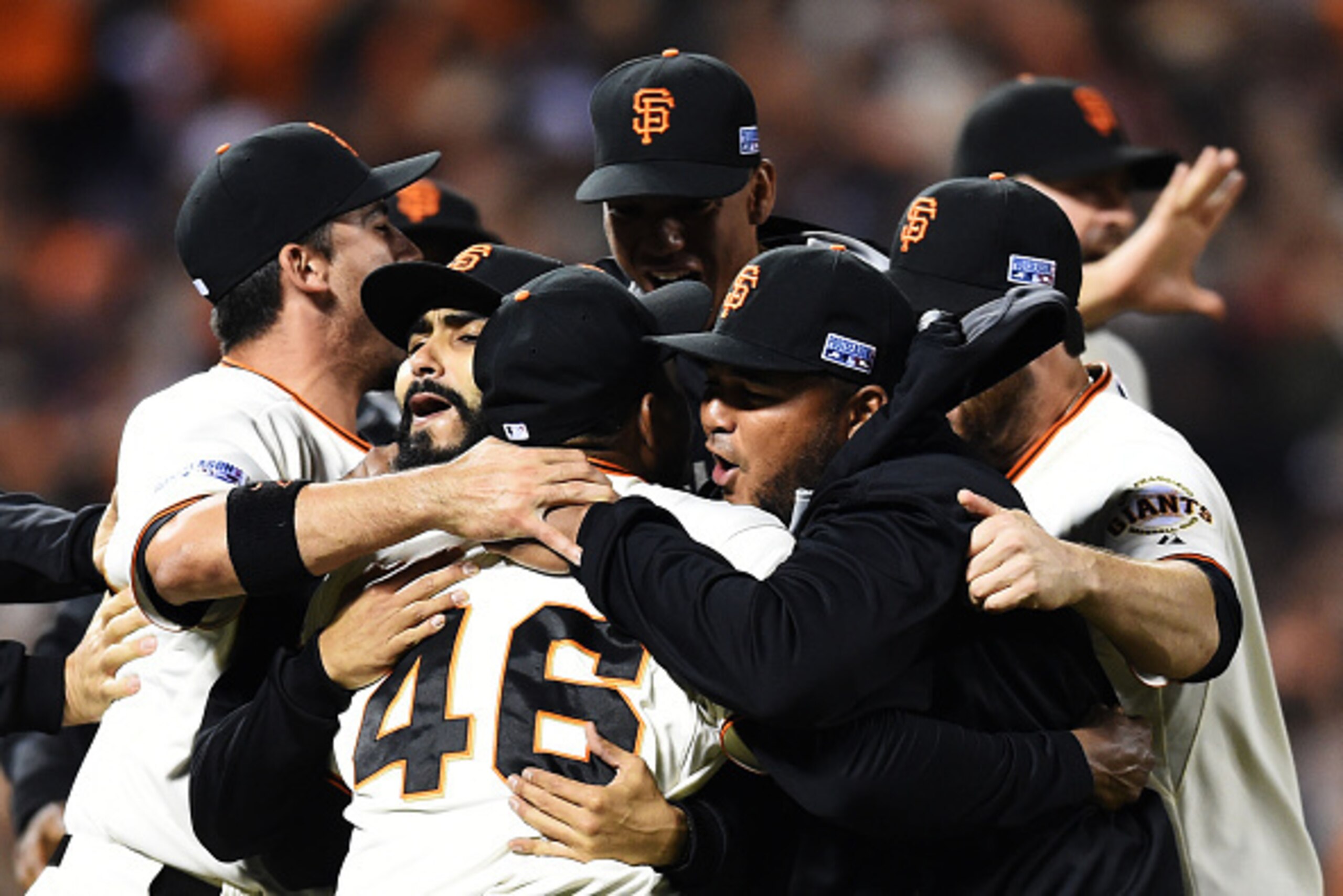
The Giants' regular season only looks good if you focus on their 43-21 start. After that, it became a symphony of inconsistency that lasted all the way to the end.
So how in the world did they dispatch the National League's winningest team in the NLDS? In particular, how did such a non-threatening offense take down arguably the game's most lethal pitching staff?
Well, it's like this: Their offense really isn't so non-threatening.
The OPS+ metric does the same thing for hitters that ERA+ does for pitchers, and it provides an interesting lens through which to view the current Giants lineup:
| RF | Hunter Pence | 708 | 121 |
| 3B | Pablo Sandoval | 638 | 111 |
| C | Buster Posey | 605 | 143 |
| SS | Brandon Crawford | 564 | 104 |
| OF | Gregor Blanco | 444 | 103 |
| 2B | Joe Panik | 287 | 104 |
| 1B | Brandon Belt | 235 | 114 |
| LF | Travis Ishikawa | 81 | 109 |
With OPS+, anything over 100 is above-average. So while Buster Posey and Hunter Pence clearly led the way, none of club's current regulars was a below-average hitter. Even if you toss out Travis Ishikawa and his small sample size, you're still looking at a lineup that doesn't do easy outs.
And in keeping with a theme here, good defense is another strength. Especially in the here and now.
The Giants finished fifth in defensive efficiency, and that was with Mike Morse and Angel Pagan and without Brandon Belt for much of the year. Belt's a very good defensive first baseman. Going from Morse to Ishikawa is addition by subtraction. Going from Pagan to Gregor Blanco in center field is a step up.
Pitching to this defense, meanwhile, is good...well, pitching.
On paper, the Giants starting rotation doesn't look as good as the rotations they had in 2010 or 2012. But in Madison Bumgarner and Jake Peavy, it at least features a duo that was beastly in the second half:
| Madison Bumgarner | 13 | 90.1 | 9.1 | 1.1 | .205 | 2.29 |
| Jake Peavy | 12 | 78.2 | 6.6 | 1.9 | .223 | 2.17 |
That Bumgarner put up numbers like those is no surprise. He's Bumgarner.
As for Peavy, his ERA falling 2.55 points from where it was in Boston isn't all thanks to swapping AL hitting for NL hitting. His peripherals also improved, and Brooks Baseball can vouch how going to his cutter more made a difference.
Elsewhere, Tim Hudson's rescuing of his ground-ball rate was a good way to get ready for October. And in light of a very strong run between late June and late August and his strong start in Game 4 of the NLDS, Ryan Vogelsong's lousy September now looks like a bump in the road.
Lastly, the Giants bullpen is better than it might look.
Santiago Casilla can be adventurous, but he's always been extremely tough to square up. Jeremy Affeldt is a terrific ground-ball pitcher. Sergio Romo found himself again in the second half. Javier Lopez is death on lefties. Hunter Strickland has a dangerous fastball. Jean Machi has a dangerous splitter. As he made clear in Game 2 of the NLDS, Yusmeiro Petit is the best long man in the postseason.
Then there's the guy running the show: Bruce Bochy. Unlike a lot of managers, he's not afraid to use his relievers according to need rather than according to roles. Grantland's Jonah Keri nailed it here:
"Bochy is intellectually flexible enough to recognize important moments as they come and adjust his moves accordingly. In the playoffs especially, that’s a really big deal.
"
It's easy to look at the Giants and chalk up their success to things like guts and chemistry, which can surely only be earned via a pair of World Series championships.
But let's be real. They weren't a consistent bunch in the regular season, but the Giants have talent all over, and they're run by one of the best baseball minds on the planet. That's a team made for October.
Why the St. Louis Cardinals Are Actually This Good
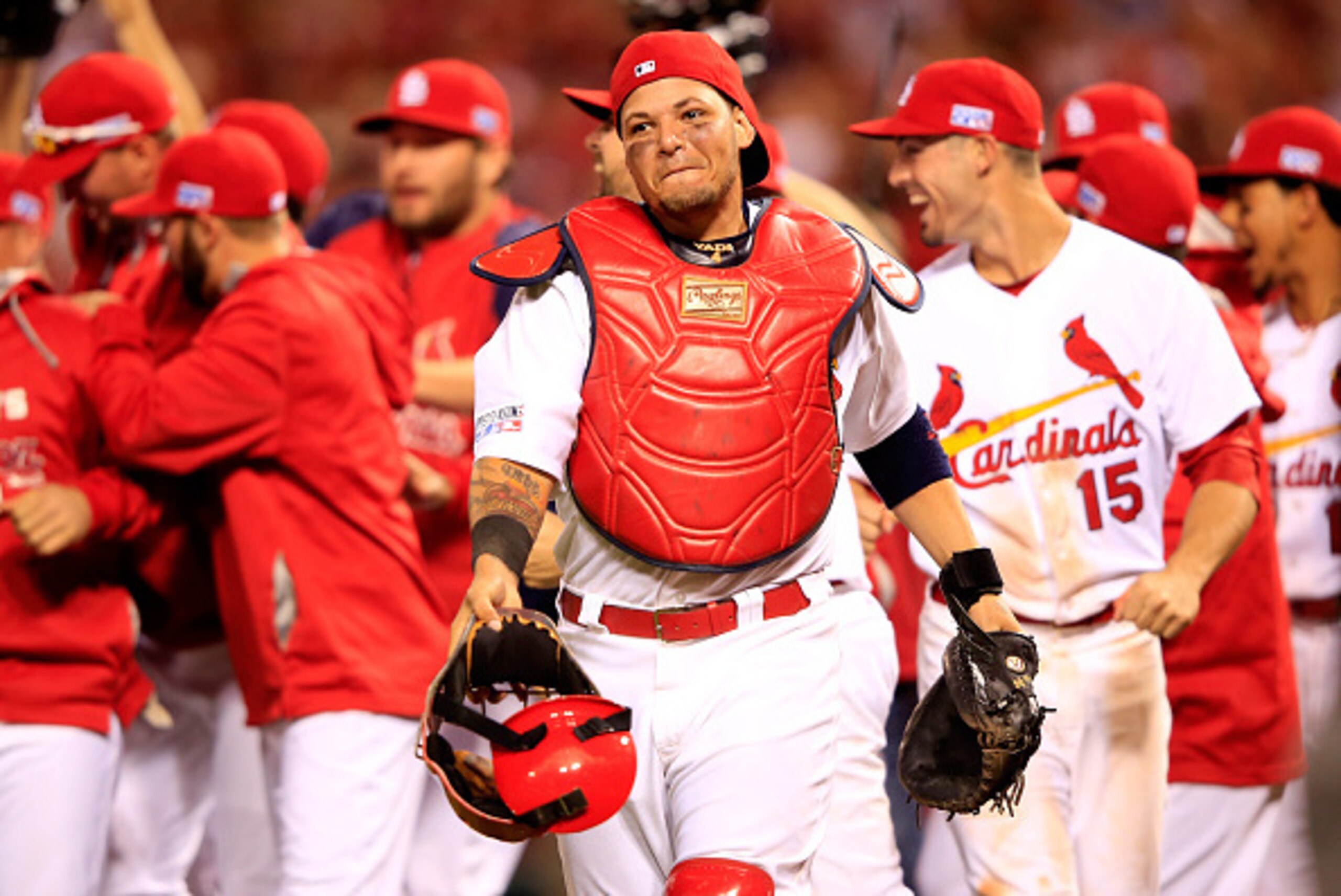
The Cardinals belong more in a boat with the Giants than with the Orioles or Royals. Whereas they were good teams that caught fire down the stretch, St. Louis' season was a series of ups and downs.
At least until September, anyway. That's when the Cardinals conveniently had their best month at 17-9. The easy narrative was that an experienced team was simply turning it on.
Or maybe it was Yadier Molina being back from a 40-game stay on the disabled list with a bad thumb.
That Molina makes the Cardinals a better defensive team is obvious. He's the best there is behind the dish. And if what ESPN's Buster Olney wrote about Molina being something of a defensive coordinator is more than fluff, he also had a hand in the Cardinals finishing seventh in defensive efficiency.
Then there's Molina's propensity for handling pitchers. That guides your eyes to how the Cardinals followed up a 4.48 August ERA with a 2.66 September ERA and also to the performances of the club's top four starters during and after his absence:
| Adam Wainwright | 4.42 | 1.38 |
| Lance Lynn | 1.98 | 2.54 |
| John Lackey | 4.50 | 4.08 |
| Shelby Miller | 4.54 | 1.69 |
Lance Lynn was good either way. Adam Wainwright, John Lackey and Shelby Miller, however, all improved with Molina back putting the fingers down. And with the exception of the possibly sore-armed Wainwright, all three pitched well with Molina catching in the NLDS against the Los Angeles Dodgers.
Mind you, the Cardinals' strong September pitching was also boosted by its bullpen posting (via FanGraphs) a 2.90 ERA. This was largely owed to the re-emergence of the fearsome late-innings duo that served the Cardinals well last October:
| Carlos Martinez | 14 | 14.1 | 10.1 | 3.1 | .208 | 0.63 |
| Trevor Rosenthal | 10 | 9.1 | 10.6 | 4.8 | .206 | 0.96 |
Carlos Martinez and Trevor Rosenthal were both on the wild side, but you can get away with that if you're overpowering. And with their stuff, they practically embody "overpowering."
And though the Cardinals bullpen isn't especially deep around these two, the weapons are there. Seth Maness had his best ground-ball rate all season in September, while Pat Neshek is a slayer of righties and Randy Choate is a slayer of lefties.
One thing the Cardinals didn't do in September was break out the big bats, as they posted just a .658 OPS for the month. But sort of like with the Giants, the quality of the Cardinals lineup is best reflected in the big picture.
What you see there is the same thing you see with the Giants: The Cardinals don't do easy outs.
Outside of the club's hole in right field, the only OPS+ below 100 among St. Louis' regulars belongs to second baseman Kolten Wong. But while he can be beat, he also posted a respectable .741 OPS in his final 68 games.
Take a hitter like that and put him next to the likes of Molina, Matt Holliday, Matt Carpenter, Jhonny Peralta, Matt Adams and Jon Jay, and you're looking at a pretty good lineup. To boot, said lineup provided a heck of a reminder in the NLDS that it's more powerful than its numbers make it look.
That leaves just Mike Matheny's managing to be skeptical about, but not to a degree that you worry about his tactics being what denies the Cardinals a shot at the World Series. In large part thanks to how things came together in the end, he's in charge of a team that looks strong all over.
And that, of course, goes for the guys running the Orioles, Royals and Giants too. There are four teams left standing, and they're still standing precisely because each is very, very good.
Note: Stats courtesy of Baseball-Reference.com unless otherwise noted/linked.
If you want to talk baseball, hit me up on Twitter.
.png?w=2560)

.jpg?w=2560 "NFL House in Paris Closes for Protests")

.jpg?w=2560 "Trevon Diggs Cut by Seahawks")