NFL Week 6 Injury Notebook
While Week 4 offered the NFL a relative break from injuries in terms of both quantity and severity, Week 5 regrettably picked up right where the league left off earlier in September.
Last Sunday saw 2014's first show-stopping, terrifying neck injury in the form of Buffalo Bills cornerback Ron Brooks. Those watching saw Brooks come down with all of his weight on the top of his head, a scary injury known as an axial load mechanism and one that places extreme stress on the cervical spine. Thankfully, according to ESPN.com's Mike Rodak, the defender "walked out of the hospital" earlier this week.
In Nashville, Tennessee Titans safety Bernard Pollard's season ended due to a torn right Achilles tendon. For my thoughts on the apparent sharp increase in the rate of Achilles tendon injuries in recent years—or, perhaps, the lack thereof—check out the opening slide of Week 4's injury notebook.
Elsewhere, several big fantasy football names suffered aggravations of previously existing injuries, including Detroit Lions wide receiver Calvin Johnson and Cincinnati Bengals wideout A.J. Green.
However, not all went poorly.
Houston Texans running back Arian Foster put lingering fears over his hamstring strain to rest with a 157-yard, two-touchdown performance. Kansas City running back Jamaal Charles continued his impressive return from a high-ankle sprain, rushing for 80 yards to follow up his excellent Week 4 performance.
What's in store this week, and which injuries will affect teams the most? To find out, let's sift through the available information and take a look—starting, as always, with the sports medicine topic of the week.
Please note that the original form of this slideshow is current through the mid-afternoon on Friday and will receive periodic updates throughout the weekend.
Sports Medicine Topic of the Week: What's Meant by a 'Mechanism of Injury'?
1 of 14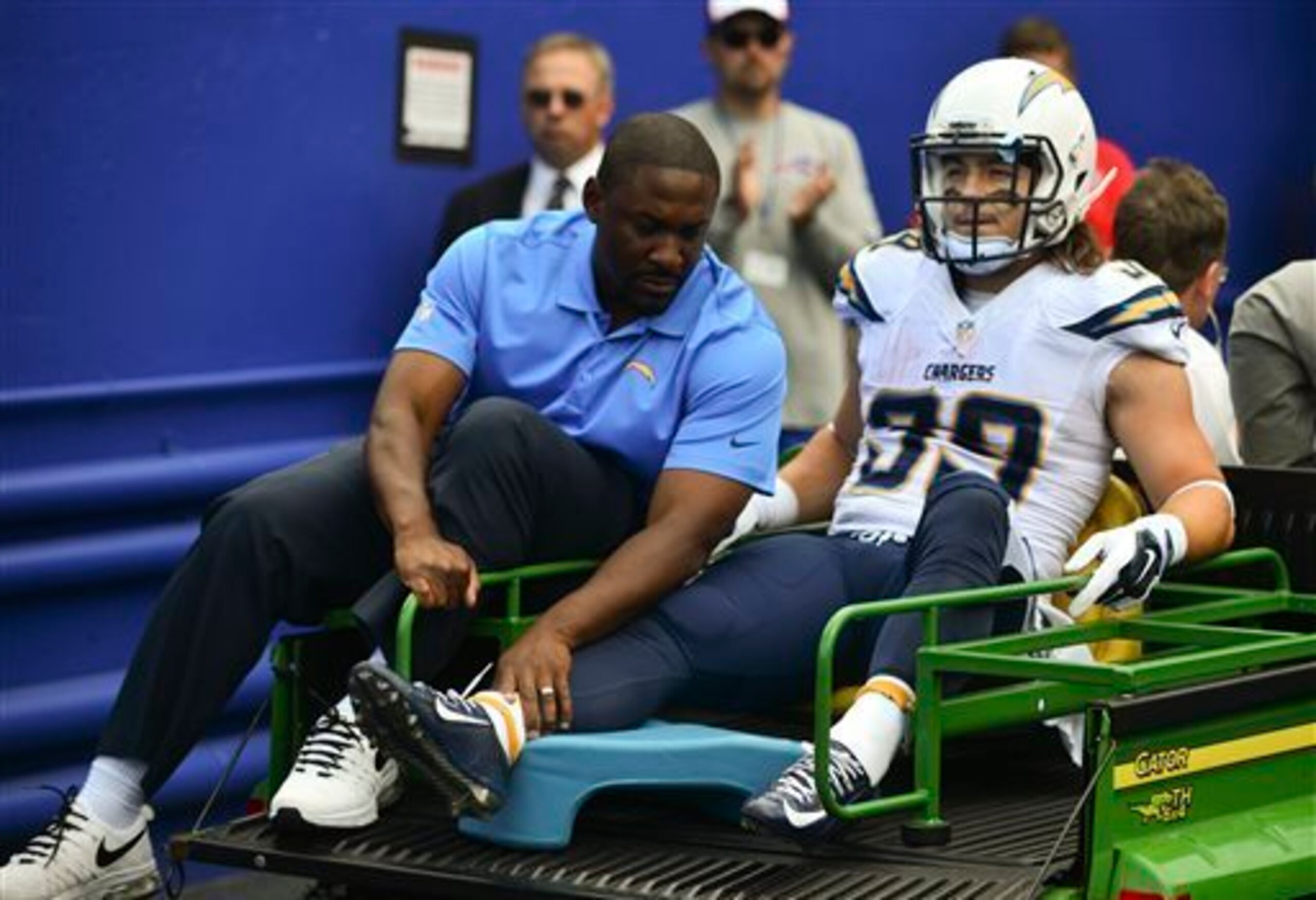
Every now and then, I comment on Twitter about so-called "mechanisms of injury" during NFL games. Yet what does that phrase actually mean? And how reliable is the power of observation?
In short: Not nearly perfect but also not bad at all.
An "injury mechanism" describes the circumstances and events that occur just before, during and immediately after a player's ligament, bone or muscle tendon gives way. Examples of important injury mechanism questions include but are not limited to:
- Was it a contact or non-contact injury?
- For joint injuries, in what plane or planes did the joint in question move?
- How was the player's weight distributed at the time of injury?
- For lower-body injuries, was the player's foot planted at the time of impact?
- For potential concussions, did the player receive head-on contact? Or did it come from the side and send him spiraling to the ground? Did it involve helmet contact at all?
- How did the player walk, or not, after an injury?
For better or for worse, NFL broadcasts frequently show up-close replays of injuries. By analyzing those replays and asking the above questions, one can often make, at the very least, a basic prediction of a given injury's severity.
For example, on his last play in 2014, San Diego Chargers running back Danny Woodhead's toes sharply turned outward as his weight collapsed inside and over his leg. This mechanism frequently causes a high-ankle sprain, which, on top of a fibula fracture, turned out to be Woodhead's eventual diagnosis (h/t Pro Football Talk.
In some cases—for example, a knee collapsing downward and inward without direct contact, which strongly hints at an ACL tear—one can all but make a part of the diagnosis.
Prior weeks' topics
Week 2: The spine board
Week 3: The air splint
Week 4: The hamstring strain
Week 5: High versus low-ankle sprains
Fantasy Football Injury Advice of the Week: Injuries and Player Attributes
2 of 14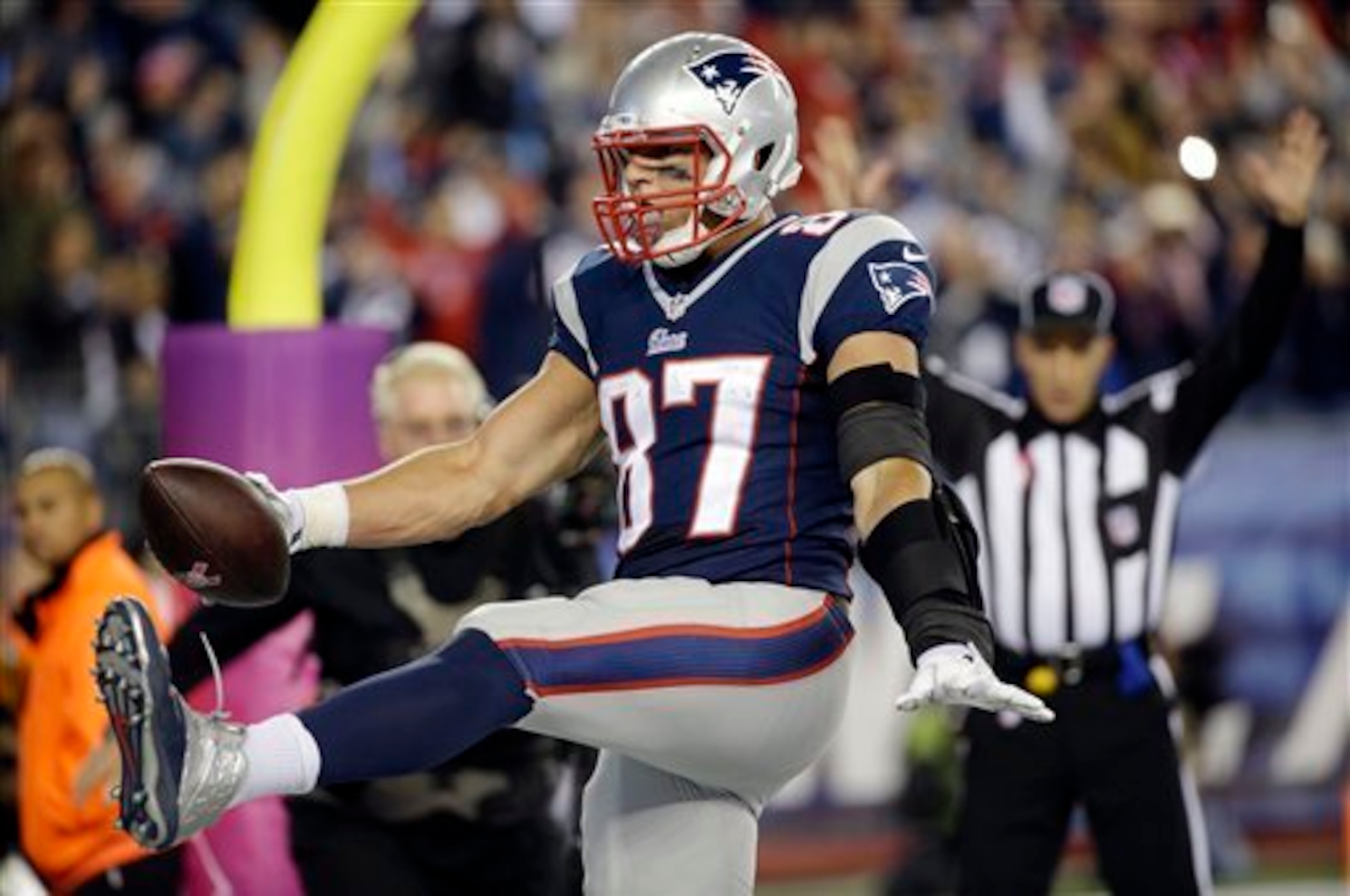
When it comes to fantasy value, a huge significance gap exists between an injury that dramatically affects a given player's most important attribute and an injury that does not.
For example, let's say, hypothetically, Washington Redskins wide receiver DeSean Jackson suffers a mild hamstring injury. Later that week, however, head coach Jay Gruden announces the wideout will play in his team's next game and feels pretty good.
Great, right?
Not necessarily.
Jackson, one of the fastest players in the NFL, makes his living on speeding past opposing secondaries. On the other hand, a hamstring strain can take away some of that speed—and also some agility, for that matter.
In contrast, a hamstring injury in a big, bruising running back—one who rarely escapes into the open field and rather scores fantasy points in the form of goal-line carries—is of less concern.
Somewhat similarly, New England Patriots tight end Rob Gronkowski continues to rehab his knee from last year's ACL and MCL tears, but his size allows him to remain a constant touchdown threat despite the likely ongoing rehab. He reached the end zone four times in his team's first five games.
Prior weeks' advice
Week 5: Analyzing practice status trends
Bye Week Recap
3 of 14
Make sure players from the following teams are out of your fantasy football lineups:
- Kansas City Chiefs: Running back Jamaal Charles rushed for 92 yards and 80 yards during Week 4 and Week 5, respectively, after returning from a re-aggravation of his high-ankle sprain. More importantly, he looked great in the process. An extra week off will only make him better.
- New Orleans Saints: The timing of the Saints bye week couldn't be better for superstar tight end Jimmy Graham. He suffered a shoulder injury Week 5 that, according to Pro Football Talk's Mike Florio, "isn't believed to be serious."
.jpg?w=2560 "NFL Paris Football")
.jpg?w=2560 "Seahawks Chiefs Football")
.jpg?w=2560)
Teddy Bridgewater, QB, Minnesota Vikings (Green)
4 of 14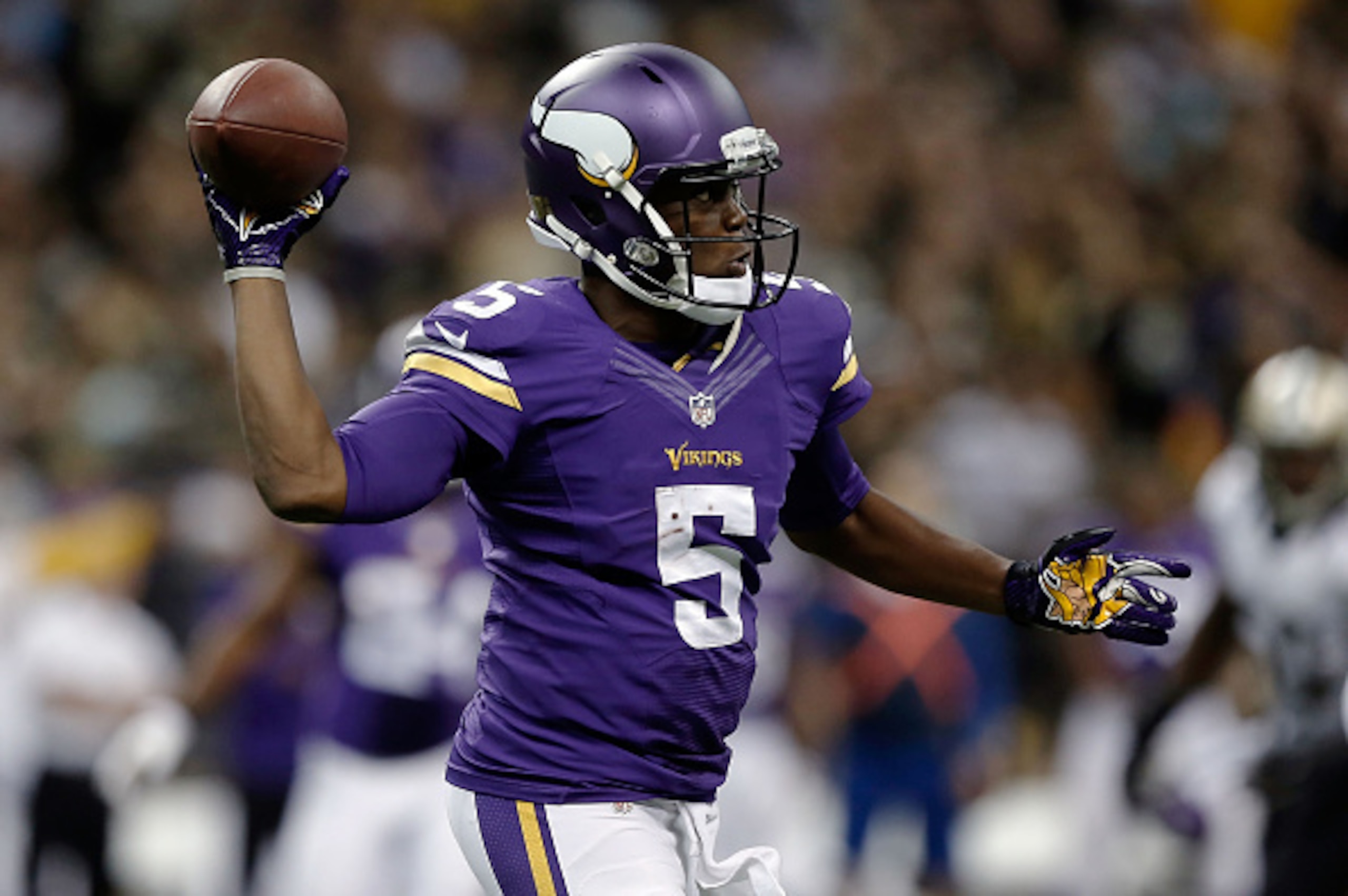
Player: Teddy Bridgewater, QB, Minnesota Vikings
Injury: Ankle sprain
Latest News: According to The Minneapolis Star Tribune's Matt Vensel, Bridgewater returned to practice on Tuesday after sitting out last week's matchup against the Green Bay Packers. The St. Paul Pioneer Press' Chris Tomasson added Wednesday that the quarterback said he "is 100 percent."
Alert Level: Green
Relevant Medicine and Anatomy: The ankle ligaments stabilize motion where the bones of the lower leg—the tibia and fibula—meet the heel. They are quite important for running quarterbacks, as they allow for sharp planting and cutting. An ankle sprain stretches or tears one or more of these ligaments, limiting function.
Will Carroll, Bleacher Report's Lead Writer for Sports Medicine, told me that Bridgewater's sprain is not of the high-ankle variety. His quick recovery supports such a diagnosis, though it's worth mentioning that even high-ankle sprains can lead to relatively short absences in mild cases.
Possible On-Field Limitations and Considerations: When Bridgewater runs, pay close attention to when he plants and pushes off his left foot. Quick, sharp and forceful plants suggest the quarterback is, indeed, healing as well as billed.
Vikings athletic trainers may also add supportive tape to the rookie's ankle and shoe.
Fantasy Advice: If you are in a position where you need to start Bridgewater, his recent injury shouldn't dissuade you—barring a setback, of course. That said, he is facing a tough Detroit Lions defense this week, which merits consideration.
Follow-Up: As long as Bridgewater can avoid re-injury—a "rolled" ankle, for instance—his sprain will likely fade into a mere memory after this week.
Carson Palmer, QB, Arizona Cardinals (Orange)
5 of 14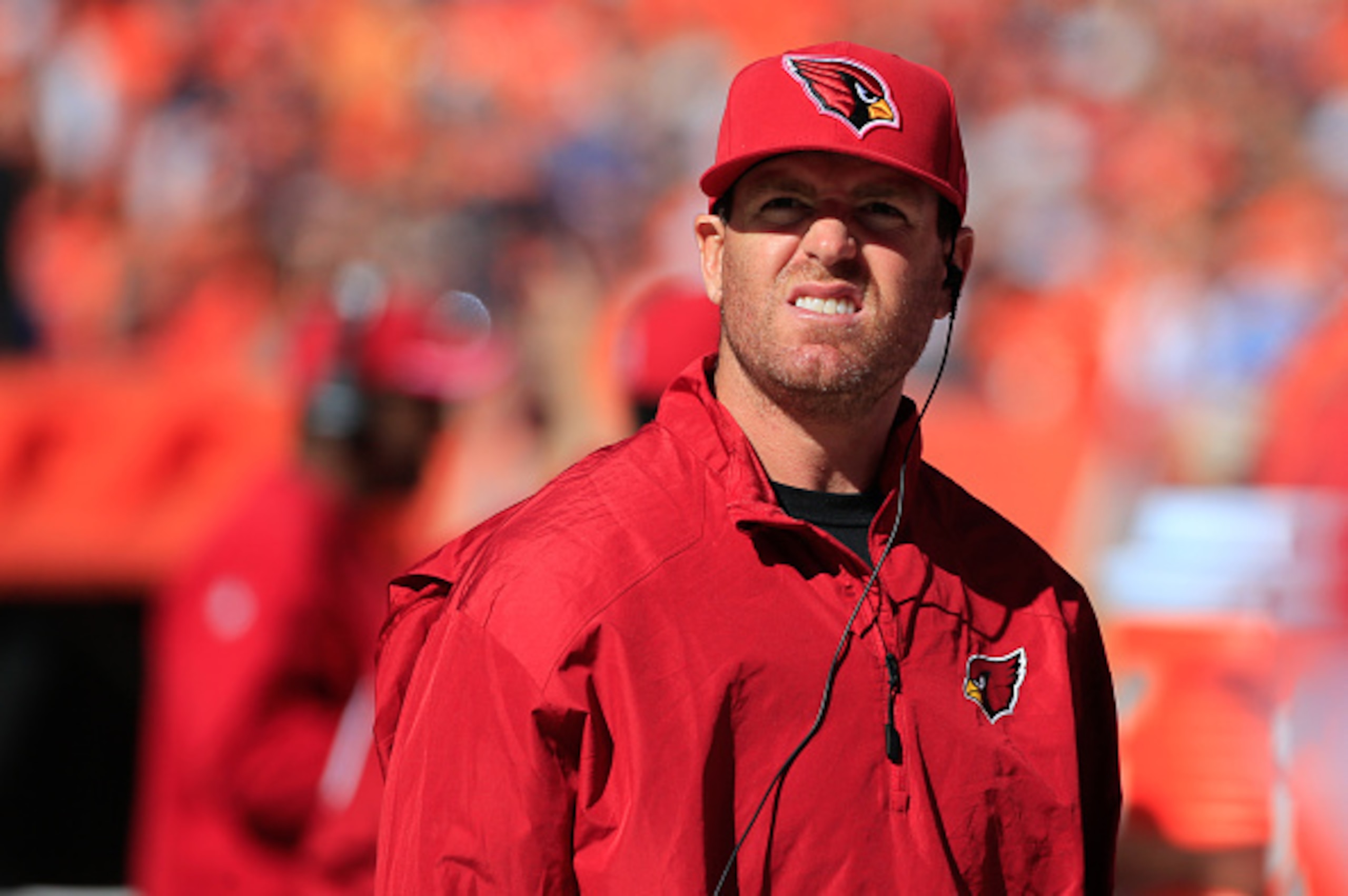
Player: Carson Palmer, QB, Arizona Cardinals
Injury: Axillary nerve contusion
Latest News: According to Cardinals writer Darren Urban, Palmer was "throwing some, not quite as gingerly as before" during Thursday's practice. Earlier this week, ESPN.com's Josh Weinfuss reported Palmer is working with Greg Roskopf, a shoulder consultant and CEO of Muscle Activation Techniques, who says the quarterback is improving. On Friday, The Arizona Republic's Kent Somers saw Palmer line up with the first team but only "lob" 35-yard passes.
Alert Level: Orange
Relevant Medicine and Anatomy: As mentioned last week, the axillary nerve controls two muscles in the shoulder that are crucial for throwing. A damaged nerve prevents those muscles from working as well.
Possible On-Field Limitations and Considerations: When Palmer returns—as of Friday afternoon, it remains unclear if he will play this week—fans should pay attention to the depth and accuracy of his deep throws.
Fantasy Advice: If the veteran does take the reins of the Cardinals offense this week, he will do so against a struggling Washington Redskins defense—an enticing matchup for any quarterback. Nevertheless, he has "game-time decision" written all over him—for an afternoon game, no less—putting fantasy owners in a very tough spot. Tread very carefully here.
Follow-Up: Nerve recoveries are difficult to predict—and, sometimes, maintain—but it seems like Palmer's injury is finally turning the corner.
Montee Ball, RB, Denver Broncos (Red)
6 of 14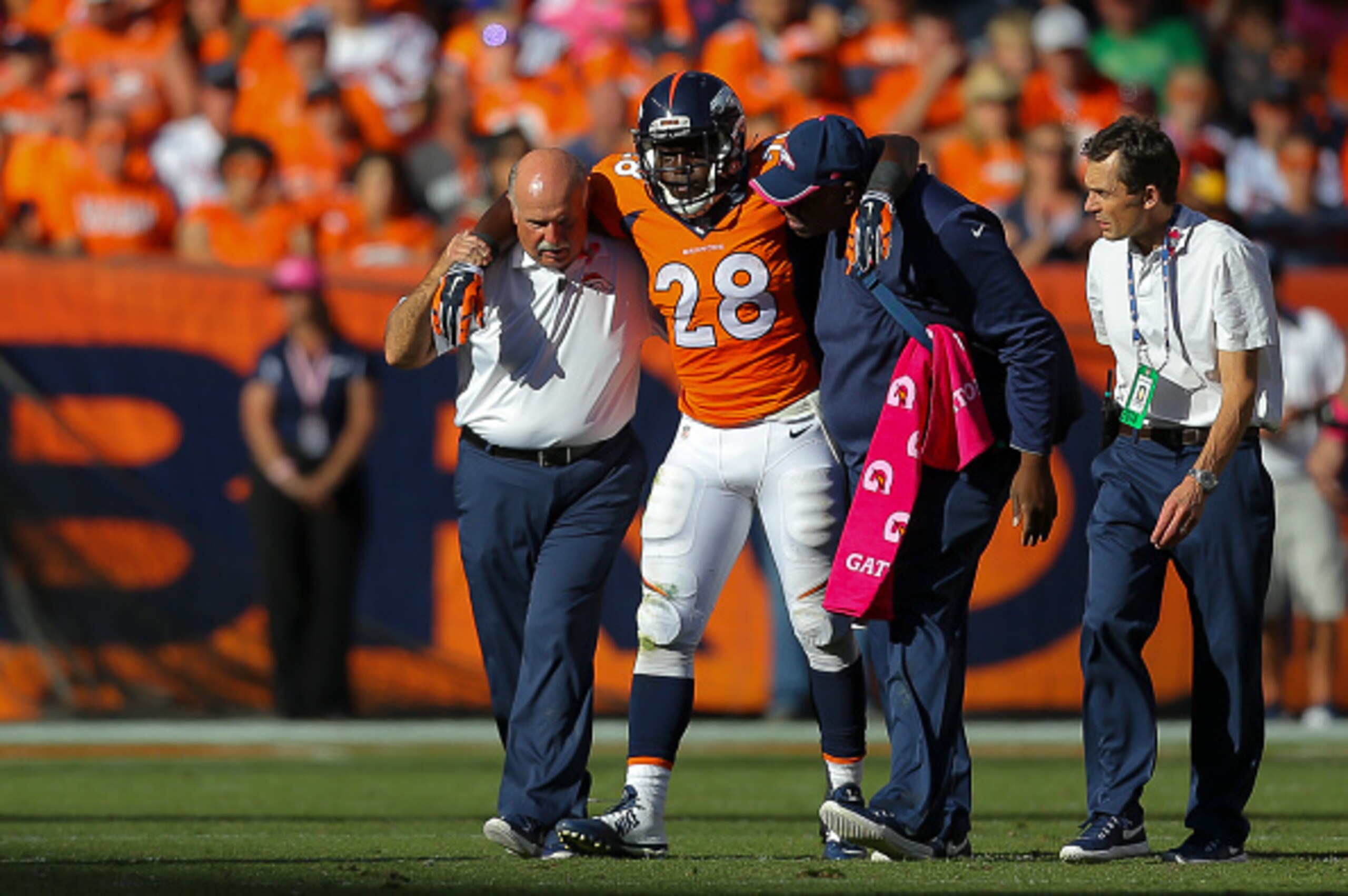
Player: Montee Ball, RB, Denver Broncos
Injury: Groin strain
Latest News: The Denver Post's Mike Klis reported Ball will miss "several weeks" due to his groin strain.
Alert Level: Red
Relevant Medicine and Anatomy: Klis mentioned that Ball blames the injury on a "freak accident":
"...as Ball was planting to take off, he went down.
And he stayed down for several minutes until the Broncos' medical staff helped him off the field.
'I was going to throw a little chip, and I kind of missed, and then I kind of stepped on his cleat and then my other cleat slipped,' Ball said. 'I did the splits a little bit. Freak accident.'
"
Ball's mechanism of injury matches his eventual diagnosis, as the groin muscles connect the thigh bone to the pelvis. If the legs suddenly and sharply slip apart, one or more of those muscles can stretch too far and tear.
Ball's projected recovery timeline suggests a diagnosis of a Grade 2 strain—a partial muscle tear—rather than the more common Grade 1, mild over-stretch.
Possible On-Field Limitations and Considerations: Partial tears usually heal with rest and rehab, but they also remain a candidate for re-injury. The sharp plants and cuts the running back position demands stress the healing muscle countless times per game.
Fantasy Advice: Ball's rough season continues. Consider avoiding him in fantasy lineups until he can make it through an entire game with around 15 carries and without suffering an aggravation.
Follow-Up: Once Ball returns to practice, keep a close eye on his practice status trend. A week that sees him going from zero to limited to full practice repetitions is reassuring, while a downward or variable pattern is the opposite.
Knowshon Moreno, RB, Miami Dolphins (Yellow)
7 of 14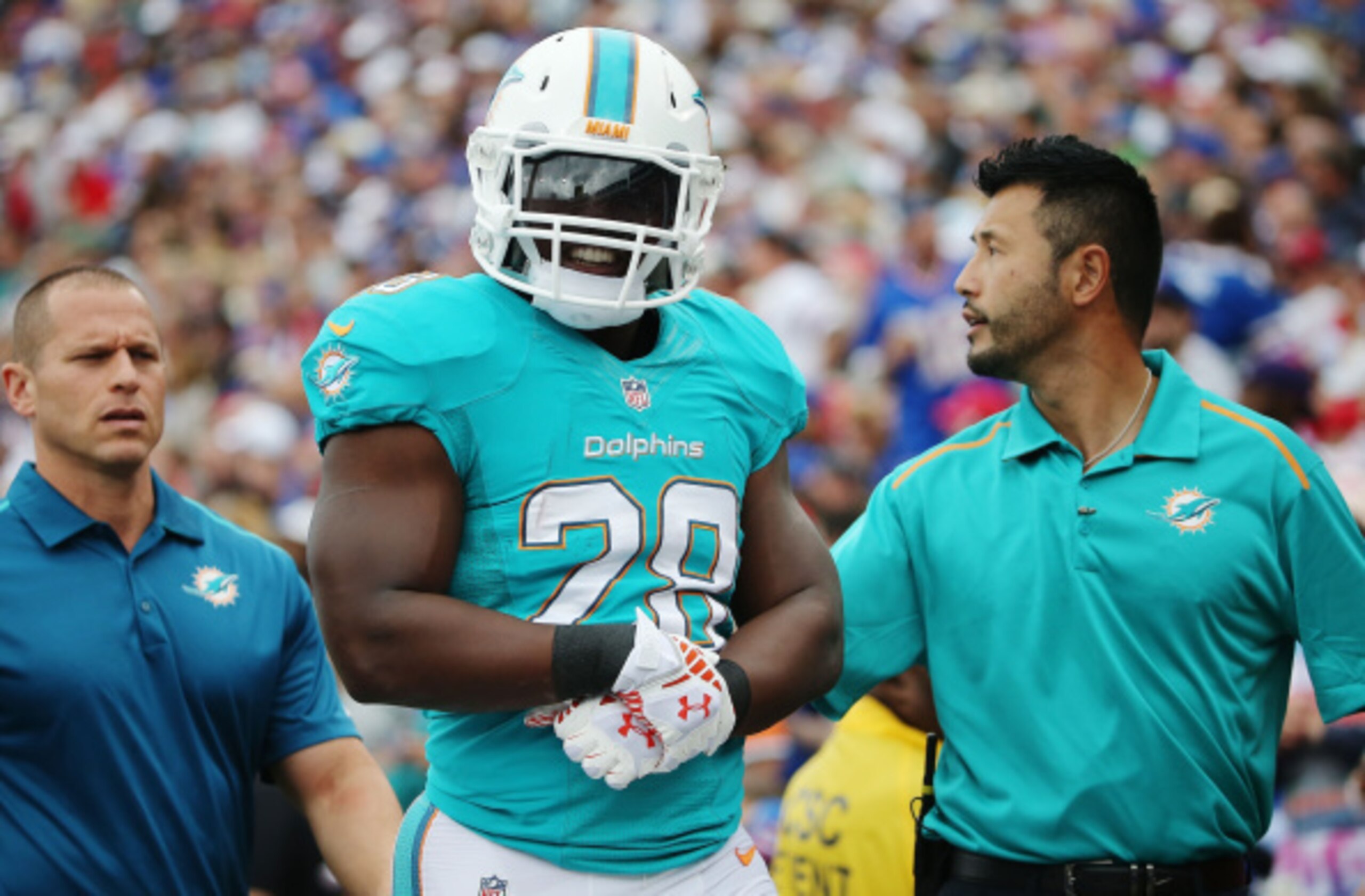
Player: Knowshon Moreno, RB, Miami Dolphins
Injury: Elbow dislocation
Latest News: Earlier this month, The Palm Beach Post's Andrew Abramson reported Moreno said he needed "like four more weeks" before returning. Not long after, the Miami Herald's Armando Salguero wrote the running back "hopes to play" this week.
Alert Level: Yellow, if active
Relevant Medicine and Anatomy: The elbow marks the joint where the forearm meets the upper arm, and it contains many muscles, ligaments, nerves and blood vessels. A "dislocation" describes an injury mechanism where an outside force causes the joint to slip out of place and misalign.
Recovery times following a dislocation depend on the extent of damage to the surrounding tissue as well as the presence or absence of a fracture.
Possible On-Field Limitations and Considerations: The next time Moreno takes the field, the Dolphins medical staff may fit him with an elbow brace. The brace can help support his elbow as it continues to recover and may help deter a repeat injury. However, it could theoretically interfere with ball-carrying and pass-catching mechanics and positioning.
Fantasy Advice: If Moreno plays this week, he can earn a start in fantasy lineups as he takes on a weak Green Bay Packers rushing defense. However, his situation needs close monitoring up until kickoff. Fortunately, he plays in an early game.
Follow-Up: As long as he avoids re-injury, Moreno's elbow should continue to strengthen. His recovery is apparently going quite well, and there is no reason to expect a setback.
Eric Decker, WR, New York Jets (Red)
8 of 14
Player: Eric Decker, WR, New York Jets
Injury: Recurring hamstring strain
Latest News: New York Daily News' Manish Mehta tweeted Thursday that Decker practiced on a limited basis. On Friday, ESPN's Rich Cimini tweeted that head coach Rex Ryan "had been hoping for more."
Alert Level: Red
Relevant Medicine and Anatomy: Decker represents an unfortunate but perfect example of why hamstring injuries can plague wide receivers. The all-out sprinting the position demands puts the ailing muscle group through rapid cycles of contraction and extension, lending to the possibility of aggravation after aggravation.
Possible On-Field Limitations and Considerations: Hamstring injuries not only cut down a wide receiver's top-end speed but can also send him to the sideline at any given moment.
Fantasy Advice: Stay away from Decker until he can make it through a complete game unscathed. Even if he does play this week, the re-injury risk remains too high, and the Jets quarterback situation remains too shaky. Also, the Denver Broncos defense remains too good.
Follow-Up: Once the wideout makes it through an entire game and week of practice without suffering another setback, start working him back into fantasy lineups as necessary. Until then, be extremely careful.
A.J. Green, WR, Cincinnati Bengals (Red)
9 of 14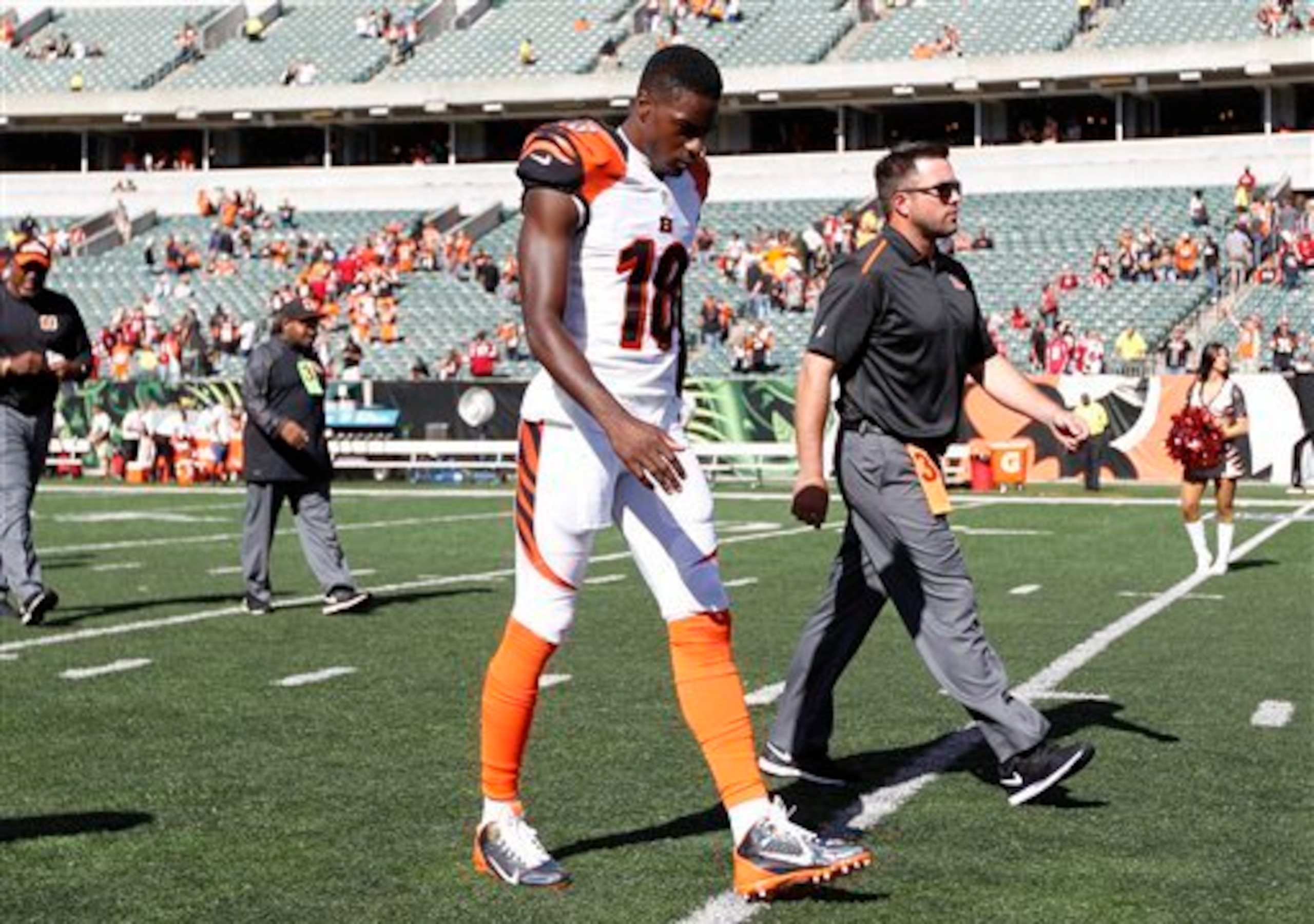
Player: A.J. Green, WR, Cincinnati Bengals
Injury: Turf toe and "more"
Latest News: Earlier this week, NFL Network's Ian Rapoport confirmed Green aggravated the toe injury he suffered earlier this season. Rapoport later added the wideout "is not expected to play" after meeting with a foot specialist this week.
Bengals writer Geoff Hobson provided more details Thursday:
"It's believed the MRI again showed no tears or breaks, but he's obviously still having discomfort in the ligament under the sesamoid bone in the ball of the foot underneath the big or great toe.
[...]
So anything is on the table pending what they prescribe for treatment, ranging to more treatments while playing, to shutting him down for a few weeks, or maybe longer.
"
On Friday, The Cincinnati Enquirer's Paul Dehner Jr. offered some positive news:
"A.J. Green showed up to practice wearing a boot on his right foot as a precaution for the great toe injury he aggravated at the beginning of practice Wednesday.
All indications Green will not play Sunday against Carolina even though the team officially listed him as questionable on the injury report. As far as if the injury could linger on for multiple weeks, Marvin Lewis sounded more optimistic regarding his star receiver's long-term diagnosis.
'It's day to day is what I was told today, which is a good thing,' he said. 'He's feeling good. It's positive.'
"
Alert Level: Red
Relevant Medicine and Anatomy: The first metatarsophalangeal (MTP) joint complex is a complicated beast. It marks the location where the base of the big toe meets the long bone that runs along the front portion of the inside of the foot. The area of the MTP joint houses bones, ligaments, cartilage and muscle tendons, all of which can heal quite slowly after injury.
MTP injuries can occur when a player sharply plants and turns his foot, thus bending his toe upward too forcefully and too far.
Possible On-Field Limitations and Considerations: Hobson mentioned the possibility of shutting Green down for at least a few weeks, but Dehner Jr. wrote Friday that head coach Marvin Lewis sounded more optimistic.
The entire situation remains murky, but a lingering MTP complex injury can worsen significantly with activity, not to mention cut down on a player's ability to cut.
Fantasy Advice: Even if Green somehow miraculously plays this week, as of Friday afternoon, owners should avoid him. There are just too many unknowns here.
Follow-Up: In the best-case scenario, the Bengals play Green this week and hope he avoids another aggravation. In the worst-case scenario, the injury lingers all season—possibly even longer—and eventually requires more aggressive intervention than simple rest, immobilization and rehab.
More than likely, the ultimate outcome will lie somewhere in the middle.
Calvin Johnson, WR, Detroit Lions (Red)
10 of 14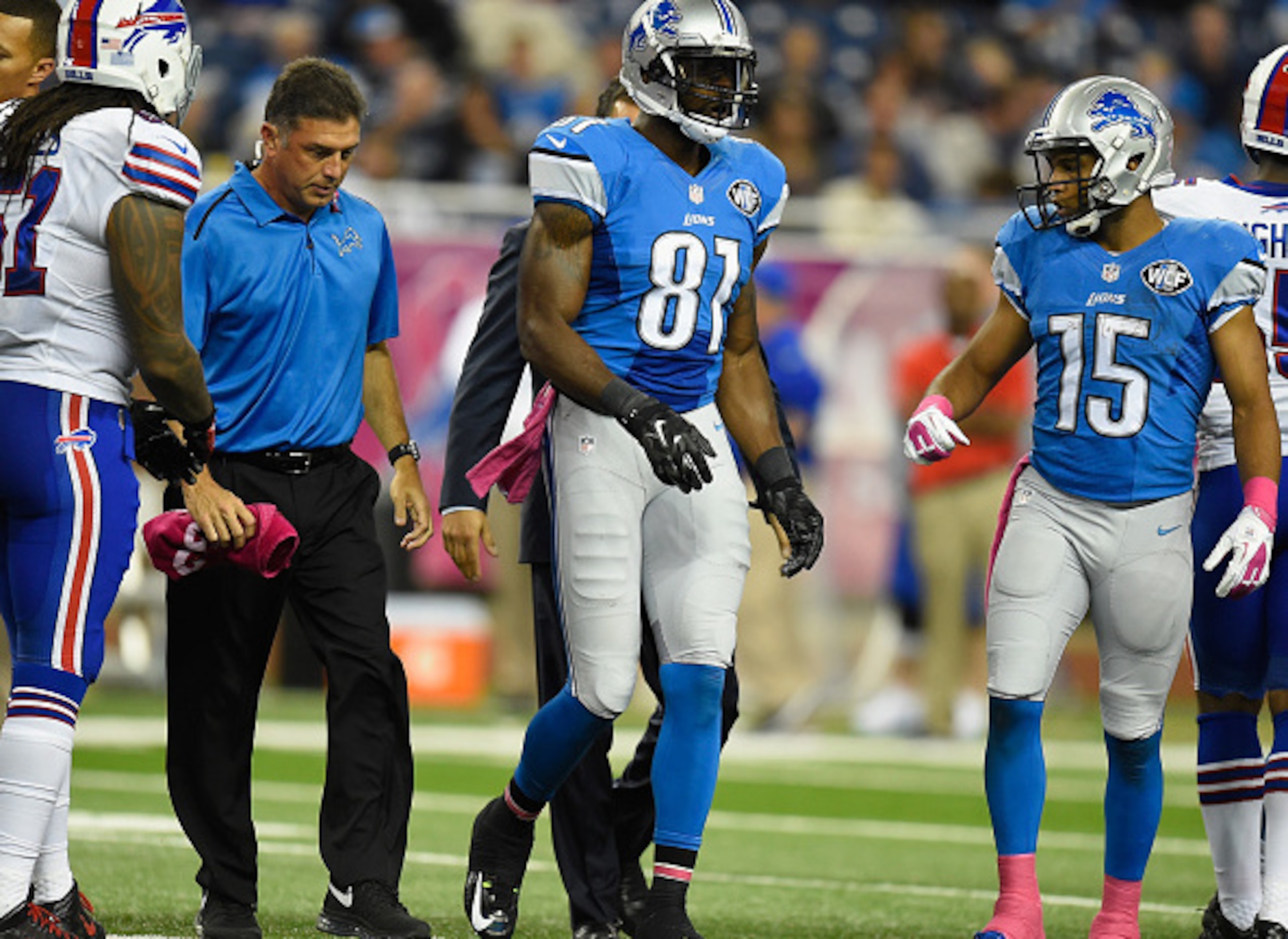
Player: Calvin Johnson, WR, Detroit Lions
Injury: High-ankle sprain
Latest News: The Detroit Free Press' Dave Birkett tweeted this week that Johnson hopes to play this week despite his high-ankle sprain. However, as of Wednesday, head coach Jim Caldwell is entertaining the idea of sitting the big wideout, according to ESPN.com's Michael Rothstein. Furthermore, on Friday, Birkett noted that Johnson did not practice all week.
Alert Level: Red
Relevant Medicine and Anatomy: A high-ankle sprain involves the ligaments that connect the bones of the lower leg to each other near the ankle. When a player attempts to plant and turn, they prevent the bones from rotating about each other. High-ankle injuries tend to heal at a much slower rate than their low-ankle counterparts.
Possible On-Field Limitations and Considerations: A wide receiver needs to cut away from defenders in order to get into the open field, and an ongoing high-ankle sprain can significantly diminish his ability to do so.
Fantasy Advice: If the past two weeks taught us anything, it's that even the mighty Megatron can fall to a decoy role. Even if he plays on Sunday—it looks like he won't—stay away. Avoid him until he puts up another game with at least a handful of targets or 50 to 60 receiving yards.
Yes, it felt weird to write that.
Follow-Up: Last year, Atlanta Falcons wide receiver Roddy White struggled to produce as he played through his own high-ankle sprain. The next few weeks—on the field or off—will determine whether Johnson follows suit.
Vernon Davis, TE, San Francisco 49ers (Orange)
11 of 14
Player: Vernon Davis, TE, San Francisco 49ers
Injury: Back
Latest News: CSN Bay Area's Matt Maiocco tweeted Thursday that Davis returned to practice Monday. He continues to recover from a back injury followed by spasms.
Alert Level: Orange, if active
Relevant Medicine and Anatomy: Back muscles spasm following injury in order to protect the area. As the injury heals, the spasms resolve.
Possible On-Field Limitations and Considerations: The exact nature of Davis' injury remains unclear, but it most likely involved a contusion or muscle strain. As long as he can avoid more direct contact to the area—not exactly a guarantee, to say the least—he can likely play somewhat well despite the injury.
Fantasy Advice: At this point, you might be desperate at the tight end position. If Davis plays, he is worth a start if you have no other options, but a Monday night game against a decent St. Louis Rams defense complicates matters a bit. Look for other options if you can, and if you must roll with Davis, have a backup plan.
Follow-Up: Nothing suggests a herniated disc or other more serious injury, and Davis' return to practice is promising. His time off also probably helped him recover from his recent ankle injury (h/t Pro Football Talk) that much more.
Jordan Reed, TE, Washington Redskins (Yellow)
12 of 14
Player: Jordan Reed, TE, Washington Redskins
Injury: Hamstring strain
Latest News: According to the Washington injury report, Reed practiced on a limited basis Wednesday and Thursday, but he started last week in the same manner before sitting out. However, NBC4's Dianna Marie Russini tweeted this week that it "sounds like (he) will play Sunday in Arizona...if all goes well." As of Friday, ESPN's John Keim also thinks he will play.
Alert Level: Yellow, if active
Relevant Medicine and Anatomy: Reed's prolonged absence likely implies a more significant hamstring injury than a run-of-the-mill pull. A partial muscle tear—a Grade 2 strain—can lead to a multi-week absence, as can a lingering Grade 1 injury.
Possible On-Field Limitations and Considerations: Tight ends do not find themselves in prolonged, all-out sprints as frequently as wide receivers, theoretically lowering Reed's relative re-injury risk. However, Washington fans and Reed's fantasy owners should not expect him to play at full speed.
Fantasy Advice: An 80-to-100-yard receiving game seems unlikely for a tight end who is returning from multiple weeks away from the field due to a hamstring strain. His fantasy production will probably depend on a catch (or two) in the red zone.
Follow-Up: If Reed can stay on the field for most or all of this week's game, consider him a safe fantasy start next week.
Joe Haden, CB, Cleveland Browns (Orange)
13 of 14
Player: Joe Haden, DB, Cleveland Browns
Injury: Hip injury
Latest News: The Cleveland Browns injury report sheds light on Haden's somewhat grim outlook for this week. However, Cleveland.com's Mary Kay Cabot notes he returned to practice Friday, albeit on a "very limited" basis, according to head coach Mike Pettine.
Alert Level: Orange, if active
Relevant Medicine and Anatomy: The hip marks the location where the femur—the thigh bone—meets the pelvis. The nature of Haden's injury is not clear, but a painful hip can limit a skill position player's ability to quickly rotate his legs and lower body.
Possible On-Field Limitations and Considerations: A single misstep against Pittsburgh Steelers star wide receiver Antonio Brown—Haden's likely matchup this week should he play—could mean six points for the Steelers.
Fantasy Advice: If Haden doesn't take the field, the Cleveland Browns defense goes from a pretty tough fantasy start to a downright bad one. Brown could have a field day.
Follow-Up: Details are scarce, but hip problems are not new to Haden. His last battle with a hip injury occurred just last season. Hopefully, his most recent setback is a coincidence, not a trend.
Fantasy Football Quick Hits
14 of 14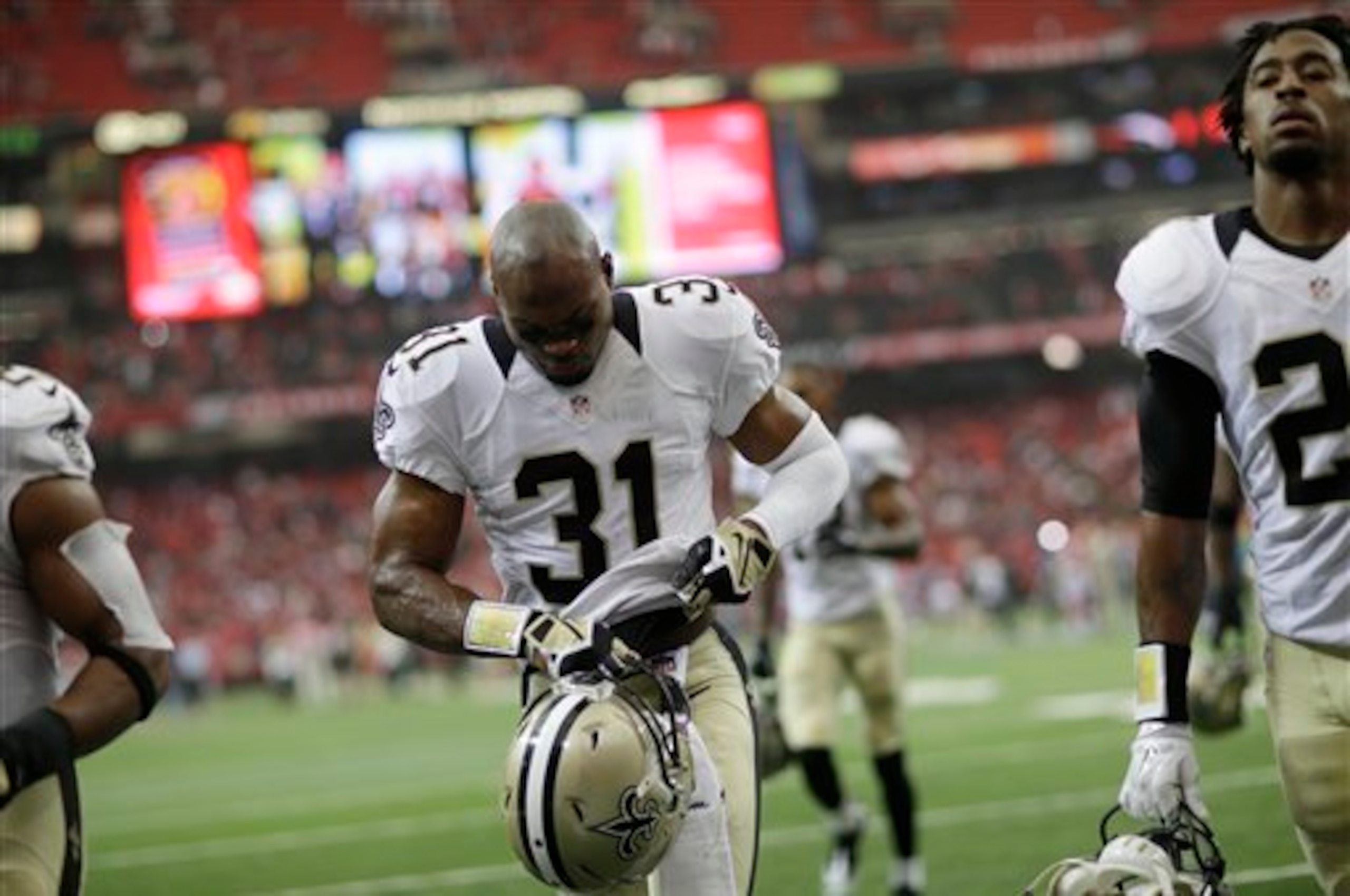
Quarterbacks
- According to ESPN.com's Bill Williamson, Oakland Raiders quarterback Derek Carr is recovering well from his apparently quite mild MCL and high-ankle sprains, writing that "all signs are pointing" to his return this week.
- The Tennessean's Jim Wyatt relayed the continuing injury struggles of Tennessee Titans quarterback Jake Locker. Even if the former Washington Husky plays, he isn't worth a fantasy start.
Running Backs
- Running back Andre Ellington remains on the Arizona Cardinals injury report with his foot injury, as he might for some time. As always, follow his status closely all the way up until kickoff.
- According to the Buffalo Bills injury report, running back Fred Jackson is dealing with an ankle injury but is practicing. With C.J. Spiller struggling—and with the help of some supportive ankle tape—Jackson can produce if he's active. However, check in on his status prior to his team's game to ensure he doesn't become a surprise scratch.
- According to NFL Media's Kimberly Jones (h/t NFL.com's Dan Hanzus), New York Giants running back Rashad Jennings is battling an MCL sprain. MCL sprains generally do not require surgery. Consider him a decent fantasy play once he returns.
Wide Receivers
- Atlanta Falcons wide receiver Julio Jones missed some practice time this week with an ankle injury, according to the team's injury report. That said, Jones continues to solidify his status as an elite, start-whenever-active fantasy player.
- Seattle Seahawks wide receiver Percy Harvin popped up on the team's injury report with a thigh injury. Monitor his status throughout the weekend.
- Jacksonville Jaguars wide receiver Cecil Shorts is making progress as he attempts to come back from another hamstring setback. He practiced in full on both Thursday and Friday, according to the team's injury report. Nevertheless, look elsewhere. The wide receiver "hamstring rule" applies in full here.
Tight Ends
- According to the team's injury report, Cleveland Browns tight end Jordan Cameron is dealing with an ankle injury on top of his AC sprain. If active, he remains a safe start, but his leash may understandably be shortening for many fantasy owners.
Others
- New Orleans Saints safety Jairus Byrd—one of this year's biggest offseason acquisitions—landed on injured reserve this week due to a lateral meniscus tear. Dr. James Andrews—the best of the best—repaired the injury. At the expense of a longer recovery, a meniscus repair can sometimes better preserve long-term knee health compared to a removal.
Dr. Dave Siebert is a second-year resident physician at the University of Washington and a member of the Professional Football Writers of America. He plans to pursue fellowship training in Primary Care (non-operative) Sports Medicine.
Stats were obtained from NFL.com official statistics.
Questions about players on this list? Not on this list? Send 'em to Dave on Twitter.
.jpg?w=2560 "Colts Football")