
Predicting the Best 3-Point Shooting Teams in NCAA Basketball for 2014-15 Season
Predicting which college basketball teams will successfully attempt the most three-pointers is hardly an exact science, but it's pretty safe to assume that Michigan will be among the best in the nation.
It's such an inexact science, in fact, that two of John Gasaway's projected top five three-point shooting teams (Insider subscription required) for this year made fewer than 33.0 percent of their three-point attempts last year. Not one of them ranked in the top 50 in three-point percentage.
Last season, Princeton led the nation in three-point attempts per field-goal attempt with 47.8 percent of its shots coming from beyond the arc. The Tigers made 35.7 percent of those attempts. The season before last, they shot 40.3 percent from downtown while only attempting 34.2 percent of their field goals from that distance.
Cleveland State ranked third in the country in three-point percentage in 2013-14 despite failing to finish any of the previous 12 seasons in the top 60.
In lieu of some magic formula to predict those drastic changes, we're left to put our faith in the teams returning a respectable number of above-average long-range shooters.
Teams on the following slides are ranked by how likely we feel they are to make at least 8.0 three-pointers per game while shooting 37.5 percent or better in the process—a feat that only 21 teams accomplished last season.
Statistics are courtesy of Sports-Reference.com and KenPom.com (subscription required).
Honorable Mentions
1 of 21
Duquesne Dukes
Eastern Washington Eagles
East Tennessee State Buccaneers
William & Mary Tribe
Each of these four teams has one of the most reliable three-point shooters in the country, but not much else.
When one minor injury or three-week cold spell can completely derail your three-point shooting season, it's hard to project you as one of the best shooting teams.
Iowa State Cyclones
Traditionally regarded as one of the best three-point shooting teams in the country, Iowa State ranked 101st in three-point percentage last year and lost one of its top three-point threats from that season (DeAndre Kane).
Naz Long is arguably the best three-point shooter on the team, and he might not even start in a lineup that includes Bryce Dejean-Jones (32.3 percent from three-point range last season), Georges Niang (32.7 percent), Dustin Hogue (34.4 percent) and Jameel McKay (6'8" PF).
Villanova Wildcats
Tough to omit because of how much they relied on the three-pointer last year, but the Wildcats haven't ranked better than 50th in three-point percentage since the 2001-02 season.
20. Sacramento State Hornets
2 of 21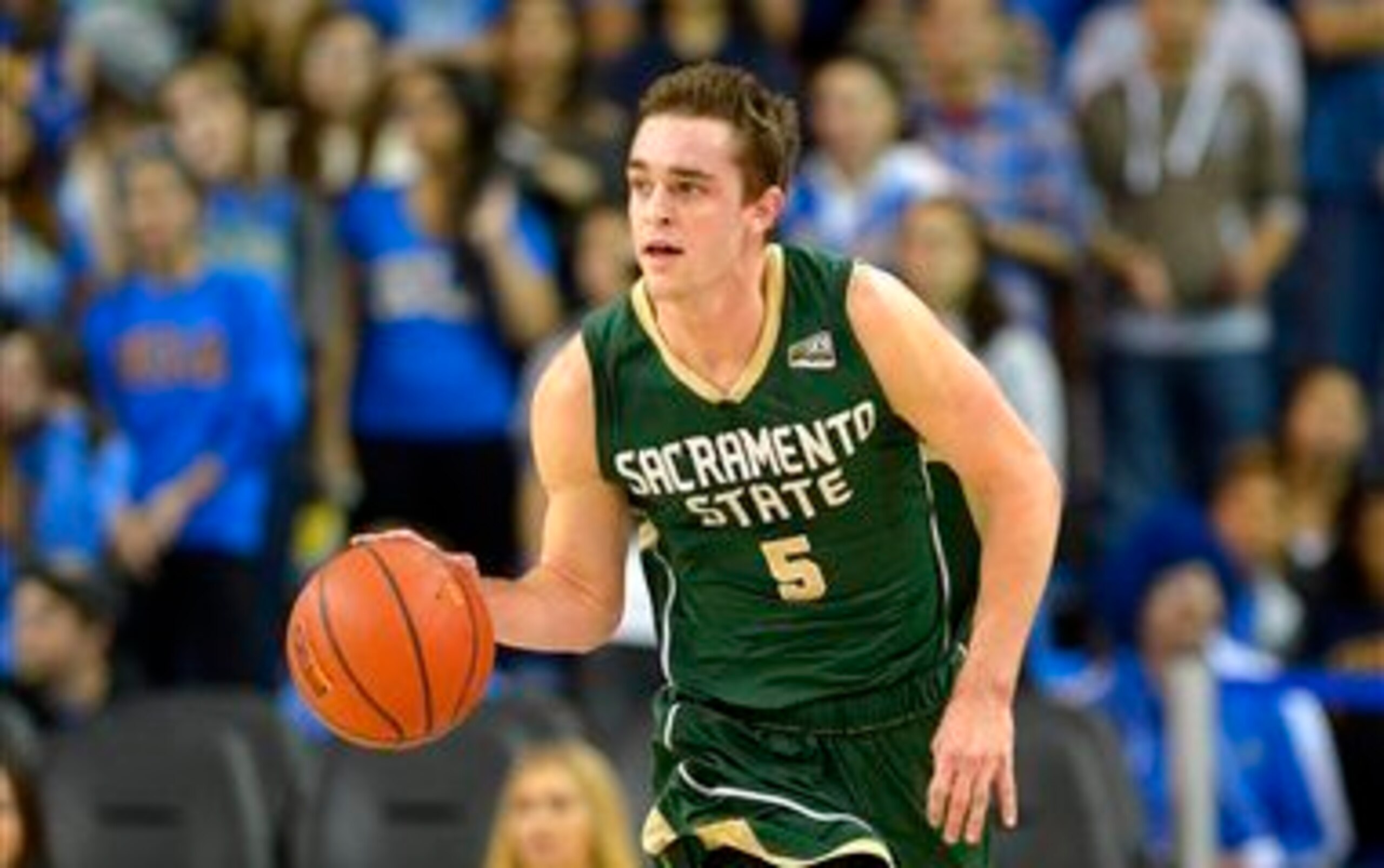
Team: 183/491, 37.3 percent, 30.8 3PA%
Top Gunners
Dylan Garrity (75/159, 47.2%)
Mikh McKinney (38/110, 34.5%)
Zach Mills (29/72, 40.3%)
Not a single Pac-12 team made the list, but three cheers to Sacramento State for keeping this list from having too much of an East Coast bias. You'll find Gonzaga later on near the top of the list, but those are the only representatives from west of the Rockies.
So why did this seemingly random school that most casual fans have never heard of make the list?
Quite simply, the Hornets have three seniors who shoot it well. Foremost among them is Dylan Garrity.
Among qualified players, Garrity ranked fourth in the nation in three-point percentage. Sacramento State played only four games in the month of March, but Garrity absurdly shot 20-of-33 (60.6 percent) from three-point range in those games. He also made 6-of-12 in a blowout loss to UCLA in November.
If Brian Katz does the right thing and lets Garrity do his best Marshall Henderson impression, the Hornets should have no trouble ranking in the top 10 percent in the country in made three-pointers per game.
19. Oklahoma State Cowboys
3 of 21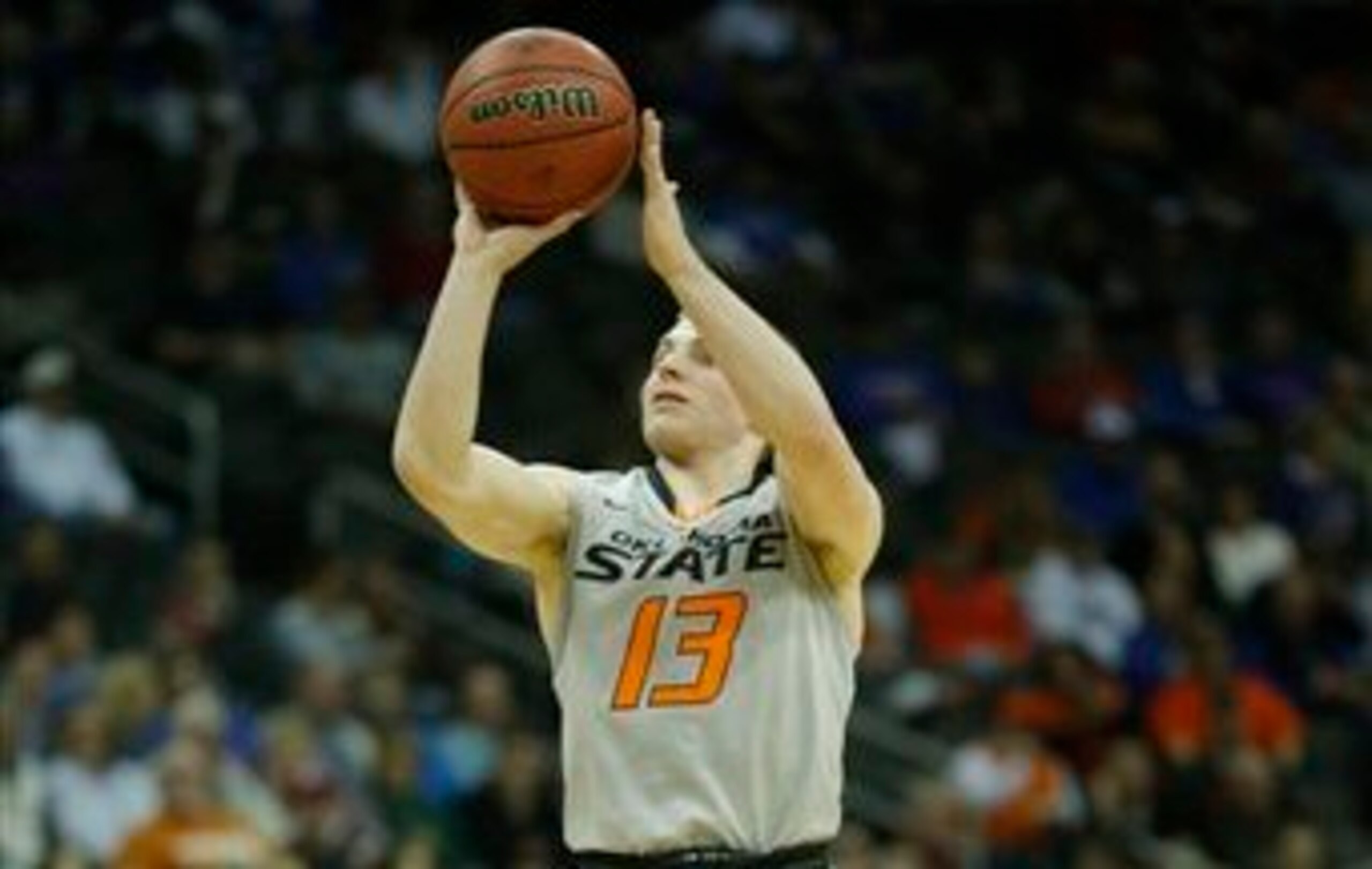
Team: 239/656, 36.4 percent, 33.8 3PA%
Top Gunners
Phil Forte (100/227, 44.1%)
Anthony Hickey (62/179, 34.6%)
Joe Burton (incoming freshman)
Oklahoma State's roster is undergoing quite the radical transformation.
Markel Brown graduated, Marcus Smart left early for the NBA and Stevie Clark was dismissed from the team in the middle of last season. Those three players were responsible for 353 of the 429 three-point attempts by players not named Phil Forte.
As a result, the second-best "returning" player for the Cowboys is a transfer from LSU.
But they get to stay in the top 20 because they have one of the best shooters in the country.
Forte and Florida's Michael Frazier II are the only returning players who made more than 80 three-pointers last season while shooting better than 44.0 percent. By a landslide, Forte was the most efficient player on Oklahoma State's roster. And his usage rating should only increase now that Smart and Brown aren't around to attempt 24 shots per game.
Oklahoma State is an undersized team in an otherwise mammoth conference. If the Cowboys don't average at least 25 three-point attempts per game, they'll have little chance of surviving in the Big 12.
18. Dayton Flyers
4 of 21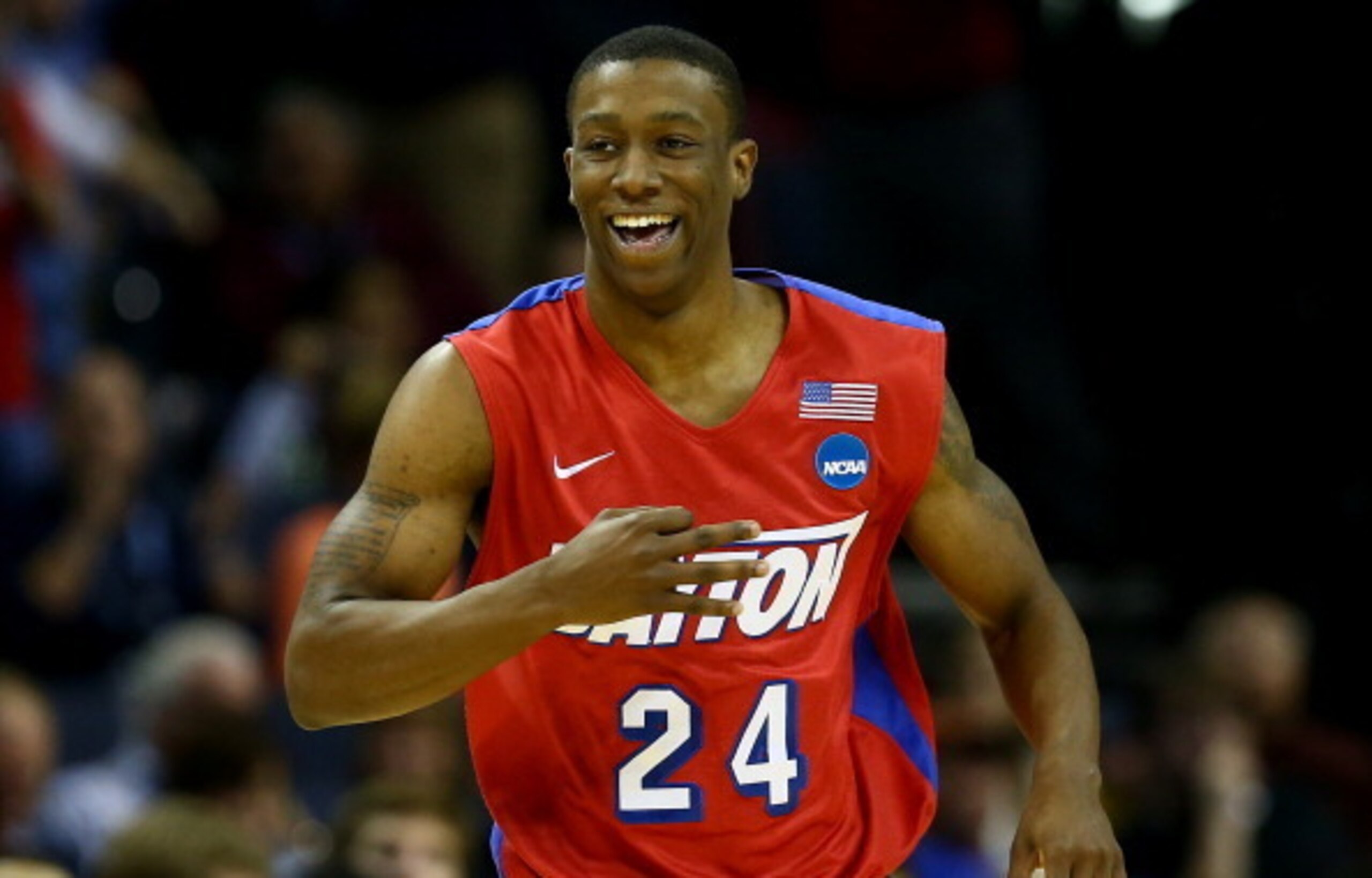
Team: 243/644, 37.7 percent, 31.9 3PA%
Top Gunners
Jordan Sibert (83/195, 42.6%)
Dyshawn Pierre (27/66, 40.9%)
With Devin Oliver graduating and Khari Price deciding to transfer to Southern Miss, including Dayton is probably the biggest reach on this list.
However, the Flyers do still have Jordan Sibert. Langston Galloway was the only A-10 player to make more three-pointers last season than Sibert, even though Sibert played in just 64.6 percent of possible minutes for the Flyers.
Dayton had a very deep rotation of guards last season, but now that both Price and Vee Sanford are out of the picture, it should be the Sibert and Dyshawn Pierre show in the backcourt.
Scoochie Smith is the big X-factor here. He should be in line for the bulk of the point guard duties, but he shot just 27.4 percent from three-point range last year as a freshman. If his stroke doesn't improve, Dayton won't belong anywhere near this list.
17. Radford Highlanders
5 of 21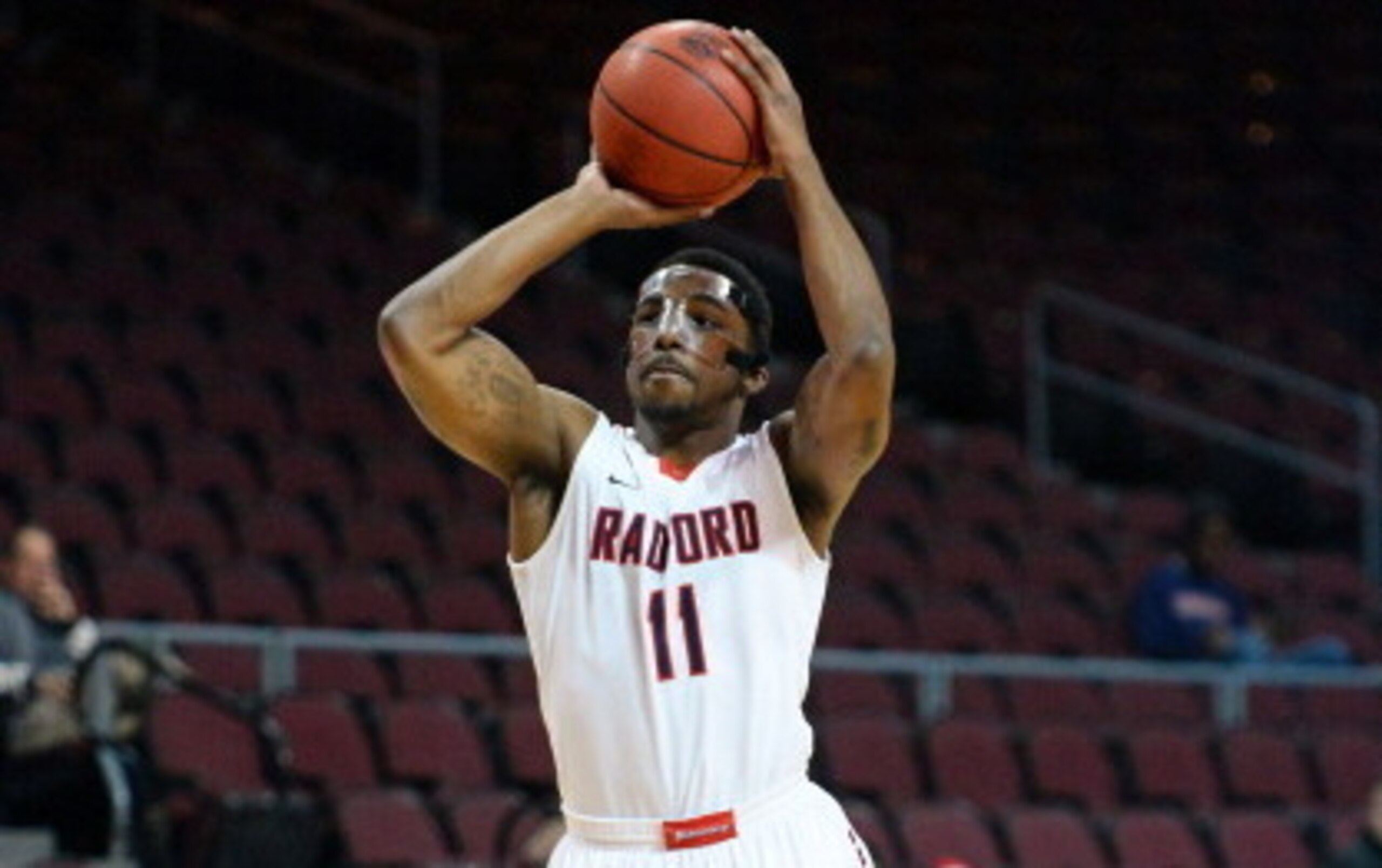
Team: 221/610, 36.2 percent, 29.9 3PA%
Top Gunners
Ya Ya Anderson (82/200, 41.0%)
R.J. Price (77/211, 36.5%)
Care to guess how many teams in the country are returning more than one player who made at least 75 three-pointers in 2013-14 while shooting 36.0 percent or better?
Here's a hint: Some say it's the loneliest number.
Though Radford didn't attempt a ton of three-pointers as a team—the Highlanders ranked 247th in 3PA%—they did have two players who were pretty solid from distance. Ya Ya Anderson and R.J. Price combined to attempt 15.8 three-pointers per 40 minutes, making 6.1 of them.
However, they'll need to discover another deep threat in order to make a run at the 8.0-per-game threshold. Kyle Noreen is the only other returning player on the team who attempted at least 2.0 three-pointers per 40 minutes while shooting 30.0 percent or better.
16. Northern Iowa Panthers
6 of 21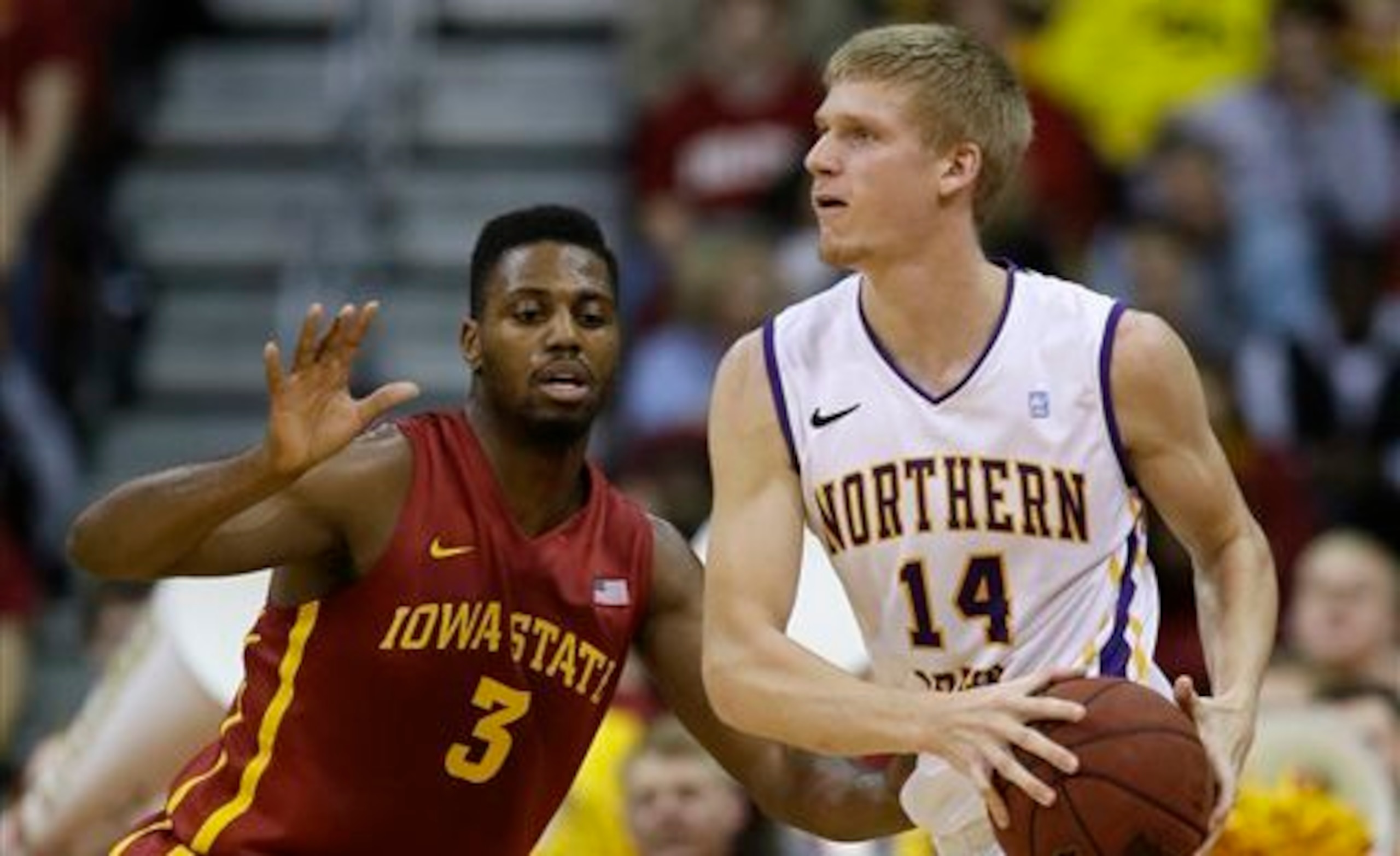
Team: 264/732, 36.1 percent, 43.6 3PA%
Top Gunners
Nate Buss (42/83, 50.6%)
Matt Bohannon (77/206, 37.4%)
In order to step foot on the court for Ben Jacobsen, it's a prerequisite that you be willing and able to shoot the three-pointer.
Five different players made at least 32 three-pointers last season for Northern Iowa, and four of them are back for another season.
Unfortunately, Nate Buss was the only one who was really reliable from that distance. The other three all shot worse than 37.5 percent—though departed senior Chip Rank was the worst of the bunch at 30.7 percent.
The biggest X-factor is Jeremy Morgan. As a freshman, he shot 32-of-90 from three-point range, playing his way into the starting lineup for the final month of the season. If he can become a slightly more consistent and significantly more frequent long-range contributor, the Panthers should be one of the best in the country.
15. Florida Gators
7 of 21
Team: 255/711, 35.9 percent, 34.6 3PA%
Top Gunners
Michael Frazier II (118/265, 44.5%)
Devin Robinson (incoming freshman)
Brandone Francis (incoming freshman)
Florida's spot in the end-of-season ranking will depend pretty heavily on whether Dorian Finney-Smith admits defeat and stops shooting three-pointers.
For the second straight season, Michael Frazier was unconscious from downtown. For his college career, he is shooting 45.2 percent beyond the arc. But a lot of his good was undone by Finney-Smith's bad, as the Virginia Tech transfer attempted 132 three-pointers and made just 29.5 percent of them.
Finney-Smith is an excellent rebounder and a plus-defender, but he needs to focus on those aspects of the game while allowing Frazier and the incoming freshmen to handle the long-ball duties.
If that happens, Florida could be the extremely rare breed of team that actually improves its efficiency after losing four starters from a team that earned a No. 1 seed.
14. Davidson Wildcats
8 of 21
Team: 273/726, 37.6 percent, 38.9 3PA%
Top Gunners
Tyler Kalinoski (61/134, 45.5%)
Brian Sullivan (90/237, 38.0%)
No, the Wildcats aren't suddenly getting Stephen Curry back.
However, they do bring back their two best three-point shooters from last season while graduating their three primary sources of two-point production.
If you thought Davidson attempted a lot of three-pointers last season, just wait until you see what Bob McKillop's team does this year after losing its three tallest starters and making the transition from SoCon to A-10.
Davidson might not quite be the most three-point-reliant team in the country, but it'll be close.
Good thing the Wildcats have a pair of aces in Tyler Kalinoski and Brian Sullivan. Kalinoski has steadily improved since shooting 29.3 percent from three-point range as a freshman. Sullivan has no concept of fear, averaging 8.8 three-point attempts per 40 minutes in his collegiate career.
It might not help them win very many games, but those two guys will be the driving force of a trigger-happy team.
13. Hartford Hawks
9 of 21
Team: 265/704, 37.6 percent, 44.1 3PA%
Top Gunners
Wes Cole (78/182, 42.9%)
Evan Cooper (41/104, 39.4%)
Taylor Dyson (52/143, 36.4%)
Corban Wroe (29/67, 43.3%)
Aside from three-point shooting, what other statistic could possibly have schools from the America East, Atlantic Sun, Big Sky, Big South, Ivy League and Patriot League all ranked in the top 20?
For the most part, Hartford is nothing special. In 30 years, the Hawks have yet to win more than 18 games or win a regular-season or conference tournament title.
But three-point shooting? They can do that.
Only nine schools in the nation had a higher 3PA% than Hartford in 2013-14. Unlike those other nine schools, Hartford gets back each and every one of the seven players who attempted at least 10 three-pointers last year.
Though Wes Cole (2.4) was the only player to average so much as 1.7 made three-pointers per game, the group effort carried the Hawks to an average of 8.0 triples per contest last season.
Might they be even better and more reliant on the three-pointer now that each of those players is a year older?
12. Oklahoma Sooners
10 of 21
Team: 285/752, 37.9 percent, 36.9 3PA%
Top Gunners
Buddy Hield (90/233, 38.6%)
Isaiah Cousins (38/94, 40.4%)
Frank Booker (42/114, 36.8%)
Jordan Woodard (27/73, 37.0%)
Three years ago, it would have been clinically insane to have Oklahoma on this list.
During the 2011-12 season, the Sooners attempted just 21.9 percent of their field-goal attempts from three-point range. They averaged just 4.5 made three-pointers per game.
But Lon Kruger has completely turned this team around to the point that they averaged 8.6 made three-pointers per game last season.
The two players with the best three-point percentage (Cameron Clark and Tyler Neal) both graduated, but they still have four above-average shooters on the roster who will help carry the team to another season loaded with triples.
11. Lafayette Leopards
11 of 21
Team: 231/580, 39.8 percent, 34.4 3PA%
Top Gunners
Joey Ptasinski (80/178, 44.9%)
Seth Hinrichs (40/96, 41.7%)
Bryce Scott (45/124, 36.3%)
What's shocking is that Lafayette didn't attempt more three-pointers last season.
The Leopards went 11-20 and were in a pretty constant state of playing from behind. But despite a plethora of above-average three-point shooters, they still averaged just 18.7 three-point attempts per game.
Moreover, Lafayette ranked in the top 45 in 3PA% in every season from 2004-13. Last season was the first time in more than a decade that the Leopards attempted fewer than 39.0 percent of their shots from downtown.
Considering they still have great shooters and the strategy didn't even remotely result in more wins, we're expecting a return to normalcy this season as the defenseless Leopards look to shoot their way to their first Patriot League title since 2000.
10. Duke Blue Devils
12 of 21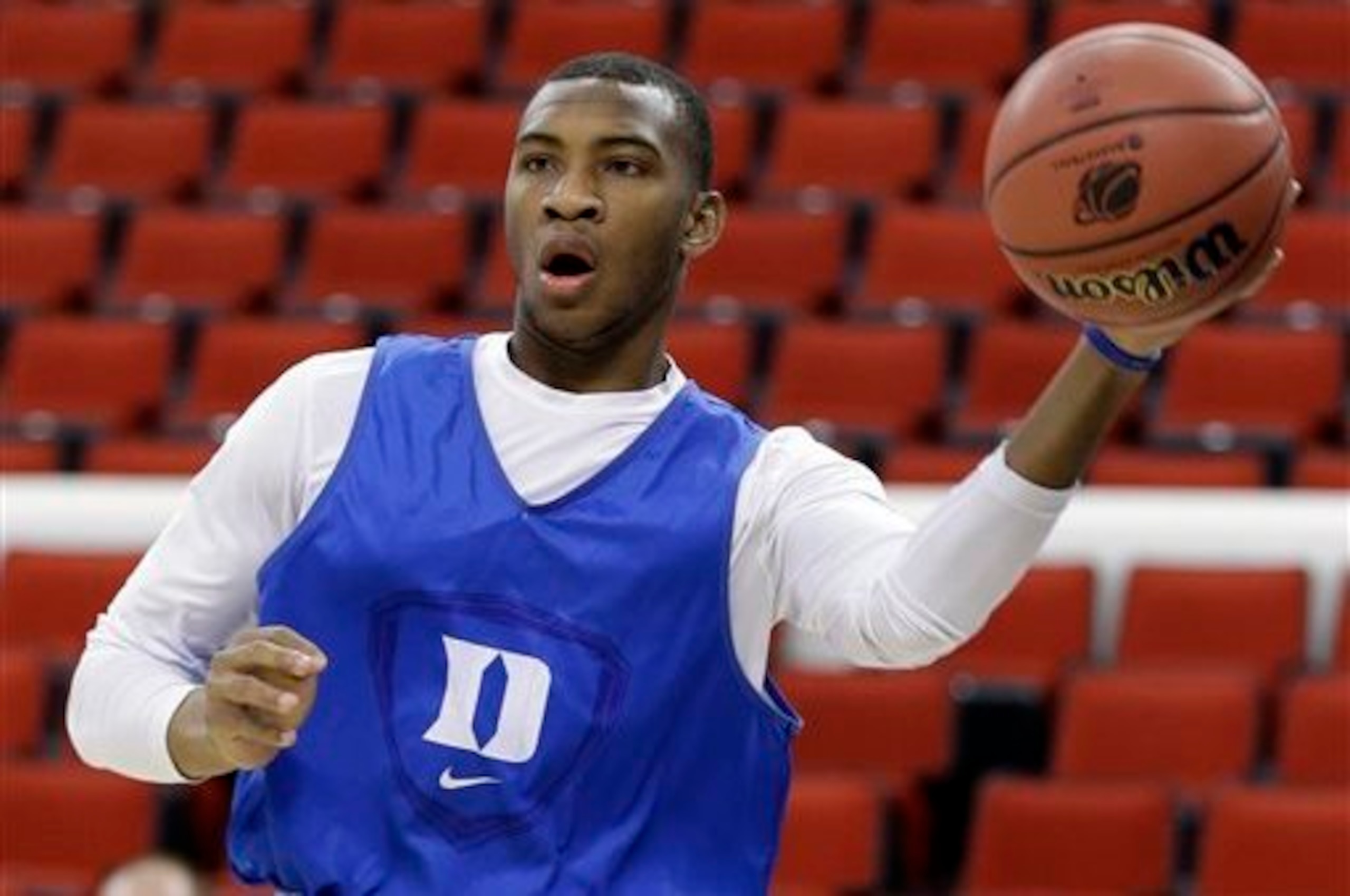
Team: 316/801, 39.5 percent, 39.7 3PA%
Top Gunners
Rasheed Sulaimon (43/105, 41.0%)
Quinn Cook (65/175, 37.1%)
Grayson Allen (incoming freshman)
It just wouldn't be a proper list of best three-point shooting teams without Duke, would it?
However, the Blue Devils lost a lot of quality shooters this summer. Rodney Hood, Andre Dawkins and Tyler Thornton each shot 42.0 percent or better from downtown last season. Jabari Parker was no slouch at 35.8 percent, either.
That leaves Rasheed Sulaimon and Quinn Cook as the only returning players who made so much as five three-pointers last season.
Grayson Allen should be good. Matt Jones should improve and play more. But in a list based on proven three-point shooters, it was tough to even justify putting Duke in the top 10—especially without one of Mike Krzyzewski's favorite toys: a stretch-4.
9. Lipscomb Bisons
13 of 21
Team: 275/778, 35.3 percent, 46.4 3PA%
Top Gunners
J.C. Hampton (82/212, 38.7%)
Martin Smith (68/189, 36.0%)
Josh Williams (41/115, 36.5%)
In terms of willingness to live and die by the three-pointer, Lipscomb had just about the biggest philosophical change in the country under new head coach, Casey Alexander.
Two years ago with Scott Sanderson at the helm, only 29.0 percent of their field-goal attempts came from downtown. The Bisons ranked 280th in the country in that category.
This past season, however, they ranked third. As a result, they were also fifth in the country in made three-pointers per game with 9.2 of them on average.
All three of their top three-point shooters are back this season. Two of them (Hampton and Williams) were just freshmen last season and should be headed for improved numbers as sophomores.
This isn't the first time this year that I've written about the Bisons, either. Back in July, I pegged them as one of the three teams most likely to become the next mid-major powerhouse.
If they can outlast Florida Gulf Coast and earn the Atlantic Sun's auto bid, watch out for this squad in the tournament. They can and will shoot the lights out.
8. Wisconsin Badgers
14 of 21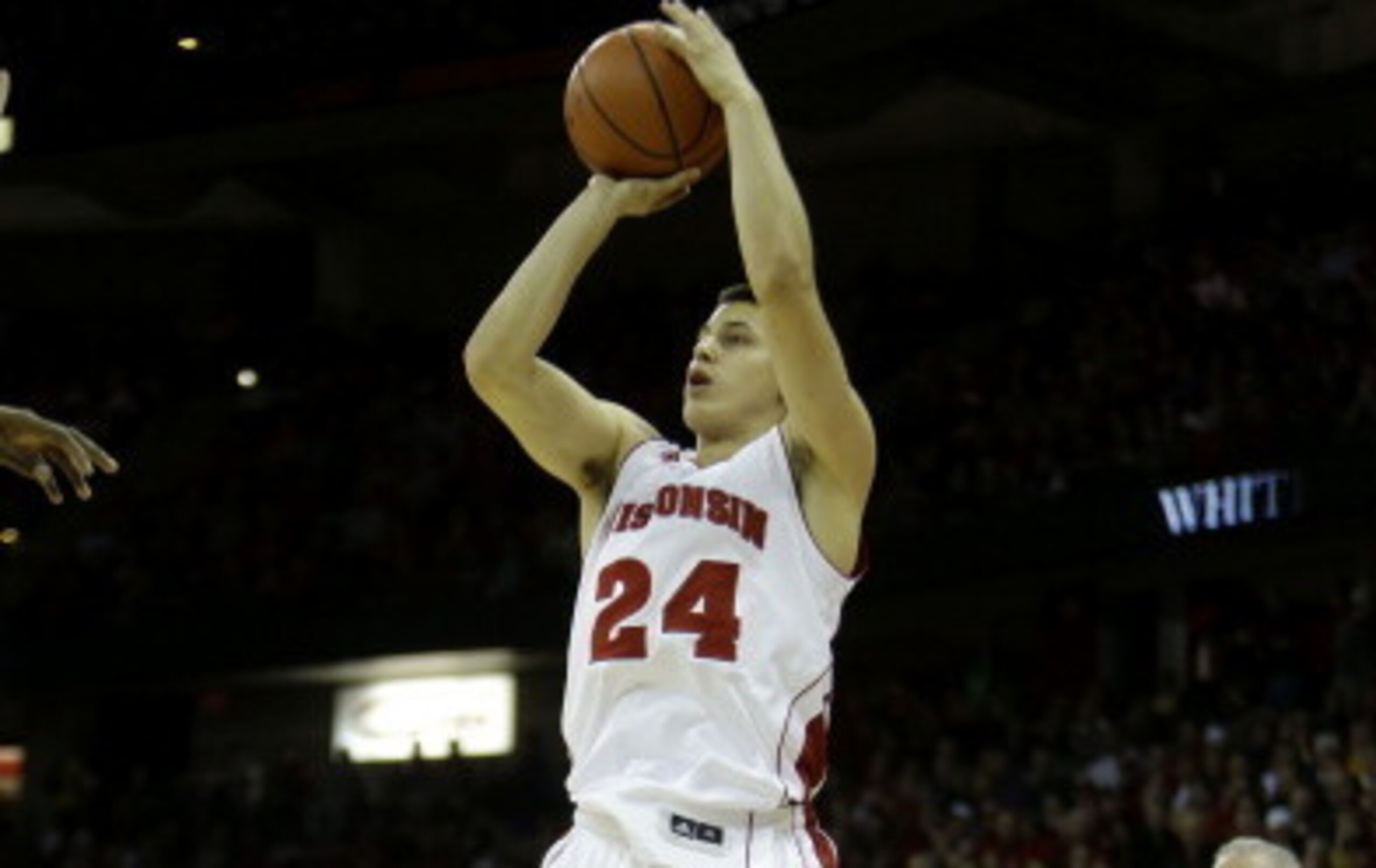
Team: 297/790, 37.6 percent, 39.1 3PA%
Top Gunners
Josh Gasser (47/109, 43.1%)
Frank Kaminsky (37/98, 37.8%)
Sam Dekker (42/129, 32.6%)
Traevon Jackson (34/89, 38.2%)
Bronson Koenig (22/67, 32.8%)
It's a testament to Wisconsin's depth that the Badgers were able to lose their top three-point shooter from last season (Ben Brust) and still check in this high on the list.
While most teams captured here have a couple of three-point assassins and then maybe a few guys capable of hitting the occasional triple, Wisconsin is just a lineup full of guys who are going to make one or two long-range shots per game.
Bronson Koenig only shot 32.8 percent on his 67 attempts last season, but his role will increase substantially as a sophomore. Whether he's the fifth starter or the sixth man, he just might lead the Badgers in three-pointers this season.
Sam Dekker's percentage was even worse than Koenig's, but see if you can find a single writer in the country who thinks Dekker is going to miss two out of every three attempts again this year.
And then everyone knows about Frank Kaminsky—unquestionably the best three-point shooting big man in the game now that Adreian Payne and Isaiah Austin are out of the conversation.
The only question is whether their slow pace of play will allow the Badgers to make 8.0 three-pointers per game. Considering they averaged 7.8 per contest last season, it's hardly out of the question.
7. Denver Pioneers
15 of 21
Team: 253/654, 38.7 percent, 42.9 3PA%
Top Gunners
Brett Olson (68/155, 43.9%)
Marcus Byrd (53/127, 41.7%)
Bryant Rucker (31/69, 44.9%)
Nate Engesser (27/63, 42.9%)
Jalen Love (46/127, 36.2%)
Four returning players who shot better than 41.5 percent last season and a 3PA% that ranked 17th in the nation is a pretty good way to guarantee oneself a spot in the top 10 on this list.
Like several other teams already mentioned, the Pioneers don't exactly have a singular go-to three-point shooter. Brett Olson is indisputably the best of the bunch, but any one of these five players is more than capable of breaking an opponent's back with a dagger three.
With Chris Udofia graduating and three other players transferring away, Denver should primarily run a six-man rotation featuring these five players and Cam Griffin.
Not since the 2010-11 season has a team eclipsed 48.0 3PA%, but Denver would seem to be the safest bet to reach that mark this year.
6. Winthrop Eagles
16 of 21
Team: 272/686, 39.7 percent, 37.2 3PA%
Top Gunners
Keon Johnson (64/145, 44.1%)
Andre Smith (71/170, 41.8%)
Keon Moore (64/163, 39.3%)
Like the aforementioned Lipscomb, Winthrop was one of my three candidates for the next mid-major powerhouse.
These three gunners—not to mention an extremely weak conference—are the primary reason for that.
Andre Smith attempted nearly twice as many three-pointers (170) as he did two-pointers (87) last season. Keon Moore and Keon Johnson combined to attempt 308 three-pointers against just 294 two-pointers.
Don't expect those ratios to change much this season, as those three guards led the Eagles to the ninth-best three-point percentage in the country last year.
And it's possible that Johnson was just getting warmed up. The 5'7" freshman guard made at least one triple in 30 of 33 games last season despite averaging just 25.4 minutes per contest.
High Point's John Brown and UNC-Asheville's Andrew Rowsey have to be considered the front-runners for Big South Player of the Year, but don't be surprised if Johnson shoots his way into that conversation.
5. Colgate Raiders
17 of 21
Team: 260/657, 39.6 percent, 40.1 3PA%
Top Gunners
Austin Tillotson (36/75, 48.0%)
Ethan Jacobs (51/123, 41.5%)
Damon Sherman-Newsome (52/127, 40.9%)
In 114 years of existence, Colgate has never won more than 18 games in a season.
Other than perhaps a projected order of the Patriot League standings, good luck finding the Raiders ranked fifth on any other list in the country.
But we don't discriminate based on wins and losses.
Colgate is one of just six teams in the country that shot at least 39.5 percent from three-point range while also attempting at least 39.5 percent of its field goals from that distance. Of the others in that club, Creighton and Iona graduate everyone, William & Mary was an honorable mention, Duke was at No. 10 and Michigan is yet to come.
The Raiders bring back three players who made at least one three-pointer per game while shooting better than 40 percent from beyond the arc.
For my money, Austin Tillotson is the best shooter in the country. His effective field-goal percentage (66.3) ranked sixth in the nation and his true-shooting percentage (68.1) ranked fifth. Michael Frazier II is the only other guard even remotely in the same stratosphere, and his percentages ranked 18th and 22nd, respectively.
But Colgate ranks well ahead of Florida because Tillotson has two other guys in his supporting cast who have already proved they can stroke it, too.
Colgate plays Ohio State on December 6 and Syracuse on December 22. Set your DVRs, as those might be your only chances to see them in action.
4. Indiana Hoosiers
18 of 21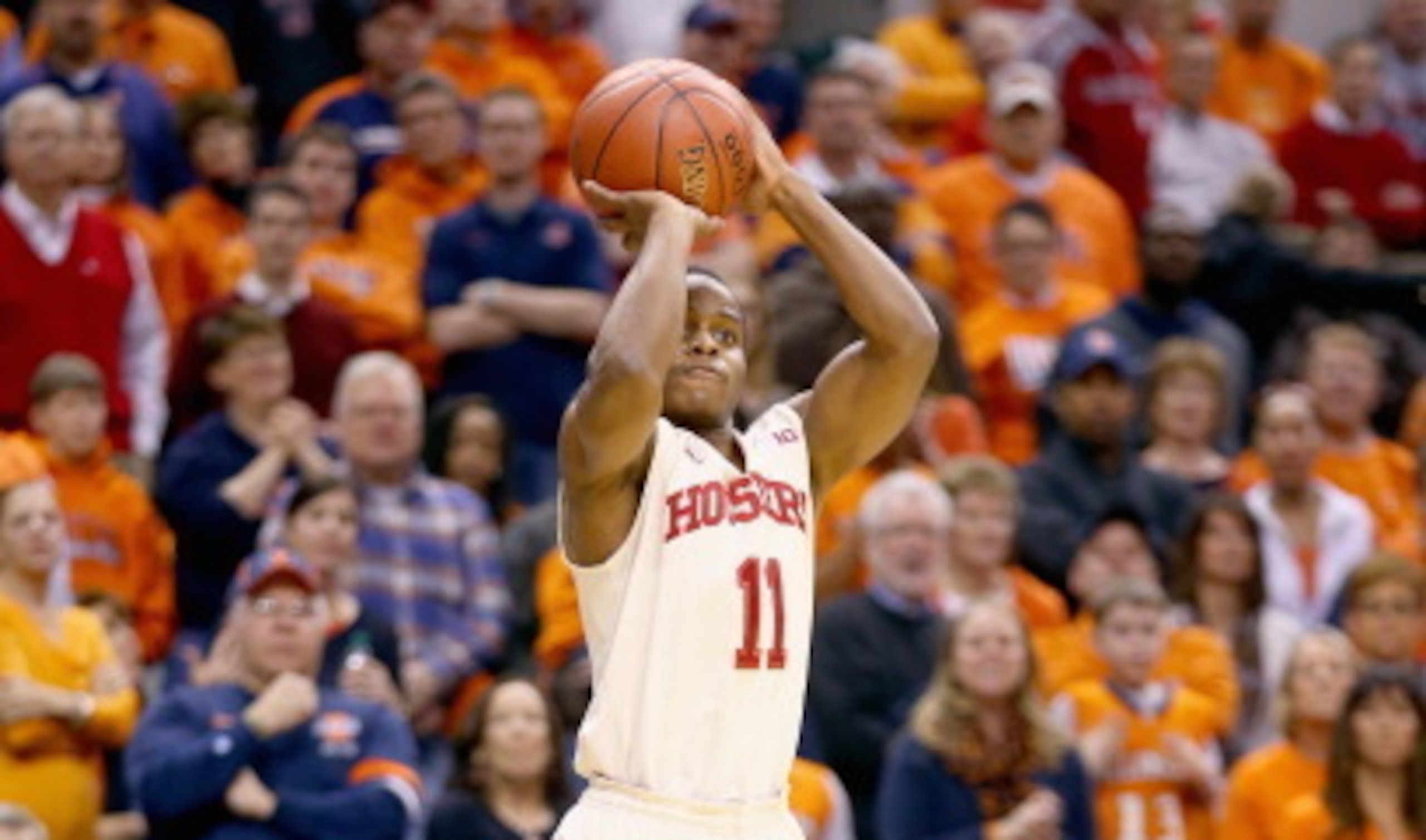
Team: 176/512, 34.4 percent, 29.4 3PA%
Top Gunners
Yogi Ferrell (88/220, 40.0%)
James Blackmon Jr. (incoming freshman)
Robert Johnson (incoming freshman)
What else is Indiana going to do?
Hanner Mosquera-Perea (6'9") is the only returning Hoosier taller than 6'7", and he played all of 224 minutes last season. Tom Crean has two incoming big men, but neither of them received more than two stars from 247Sports.com.
When the Hoosiers play a team with size in the paint like Wisconsin, Purdue or Nebraska, I'm not sure how they can expect to win without attempting at least 35 three-pointers.
Fortunately, they'll have some guys who can actually make some of those triples this year.
Yogi Ferrell was pretty much a one-man wrecking crew last year, but he'll have a pair of freshmen shooting guards alongside him this season. James Blackmon Jr. might be the best three-point shooting freshman in the nation.
At any rate, he'll need to be, or else it'll be another long season in Bloomington.
3. Columbia Lions
19 of 21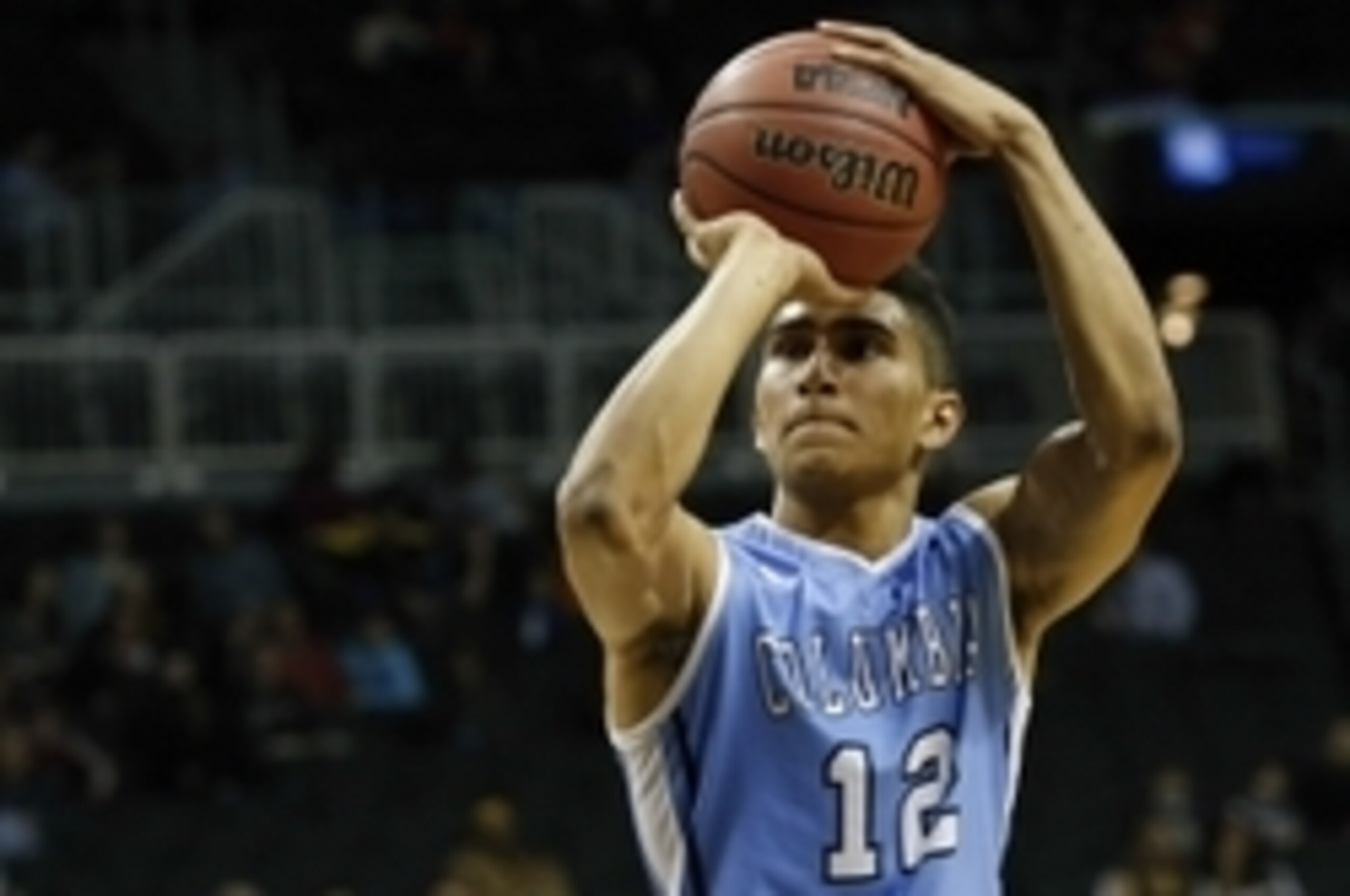
Team: 278/717, 38.8 percent, 42.4 3PA%
Top Gunners
Maodo Lo (76/170, 44.7%)
Alex Rosenberg (51/118, 43.2%)
Meiko Lyles (46/110, 41.8%)
If they can just reduce their turnover numbers this season, the Lions will be the Wisconsin Badgers of the Ivy League.
They play at one of the slowest paces in the country. They take a ton of three-pointers while keeping the opposition from doing the same (26.8 3PA% against last season). They don't grab many offensive rebounds (27.1 percent), but they don't allow many, either (25.8 percent).
However, they turned the ball over on 19.2 percent of possessions last season, as opposed to Wisconsin's mark of 12.7 percent.
As far as returning players and three-point shooters go, though, Columbia did not have a single senior on last year's 21-win team—the most wins the program has had in a season since its last tournament berth in 1968. That means the Lions bring back every single player from a team that ranked 18th in 3PA% and 28th in three-point percentage.
Three of those players shot 41.8 percent or better from three-point range—two of which weren't even starters until midway through last season.
The curious thing about Columbia is that three-point shooting really fell apart in conference play. The Lions shot just 33.9 percent against Ivy League teams and 41.8 percent against everyone else.
If they can figure out how to keep their legs throughout January and February, they could legitimately contend with Harvard for the Ivy League title.
2. Gonzaga Bulldogs
20 of 21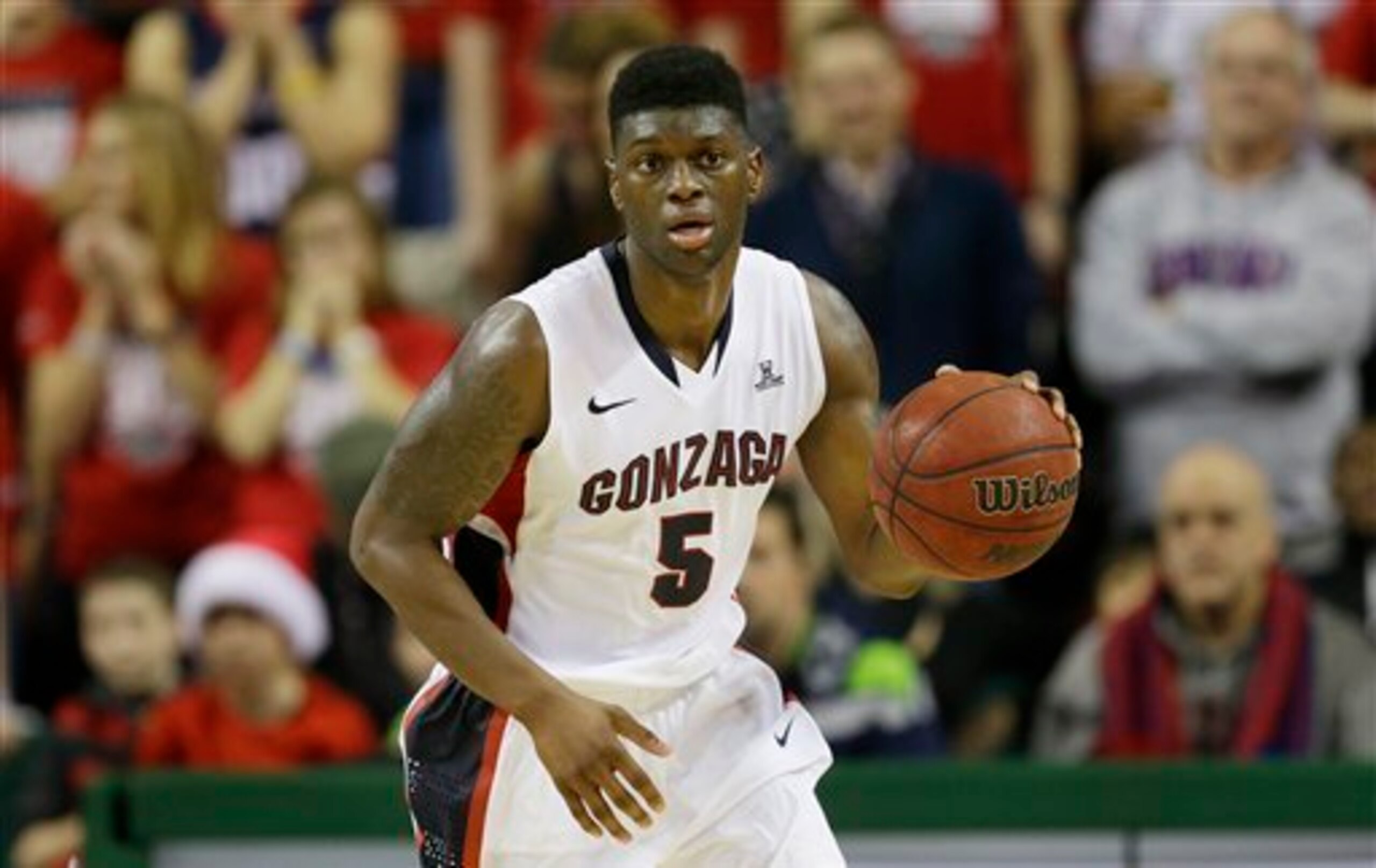
Team: 255/643, 39.7 percent, 32.7 3PA%
Top Gunners
Kevin Pangos (84/204, 41.2%)
Gary Bell Jr (56/131, 42.7%)
Kyle Dranginis (28/72, 38.9%)
Kyle Wiltjer (incoming transfer)
Gonzaga didn't attempt a metric ton of three-pointers this past season, but Kyle Wiltjer is the ultimate game-changer.
The Bulldogs religiously played two big men (Sam Dower and Przemek Karnowski) who very rarely ventured beyond the arc. Those two guys combined to attempt just 20 three-pointers last season.
Wiltjer, on the other hand, shot 39.0 percent from three-point range on his 231 attempts with Kentucky. He has averaged 7.4 three-point attempts per 40 minutes in his two collegiate seasons.
We're not expecting him to shoot 50 percent, but we are expecting him to attempt about 50 times as many three-pointers as Dower did in his final season.
Gonzaga also had a point guard (David Stockton) who shot an atrocious 23.2 percent from three-point range, but he graduated this summer.
Karnowski certainly won't be taking many three-pointers—he has just one attempt through 1,254 career minutes—but the other four players on the court will be legitimate threats to square up from downtown at any given moment.
1. Michigan Wolverines
21 of 21
Team: 319/794, 40.2 percent, 40.1 3PA%
Top Gunners
Zak Irvin (62/146, 42.5%)
Caris LeVert (60/147, 40.8%)
Derrick Walton Jr. (43/105, 41.0%)
How do you lose Nik Stauskas and still project as the best three-point shooting team in the country?
Having Zak Irvin doesn't hurt.
Irvin shot 42.5 percent from three-point range last season as a freshman while averaging 10.3 three-point attempts per 40 minutes.
For sake of comparison, Stauskas averaged just 6.5 three-point attempts per 40 minutes and was only marginally more accurate than Irvin at 44.2 percent.
Now that he figures to be a starter, Irvin could realistically lead the nation in made three-pointers.
And it's not like he's the only Wolverine who can shoot. Caris LeVert and Derrick Walton Jr. each made better than 40.0 percent of their more-than-100 three-point attempts last season.
Spike Albrecht certainly isn't a bad option as sixth man, either, as he has shot 44.2 percent from three-point range in his two seasons under John Beilein.
And like Indiana, Michigan figures to rely heavily on the long ball with nothing resembling an established post presence on the roster.
Kerry Miller covers college basketball for Bleacher Report. You can follow him on Twitter @kerrancejames.
.jpg?w=2560 "NFL Paris Football")

.jpg?w=2560 "Trevon Diggs Cut by Seahawks")