

Making Sense of the MLB Postseason Short-Rest Pitching Debate
Another MLB postseason means the return of the annual argument over whether baseball's top aces should attempt to save their teams' fates on short rest.
In this case, it is Clayton Kershaw, the best pitcher in the universe, who has pitched like anything but that in the month of October. Now just 1-4 with a 5.20 ERA in his postseason career, the Los Angeles Dodgers ace will try to force a Game 5 against the St. Louis Cardinals on Tuesday.
Though he has surrendered a mind-boggling 15 runs in his last two playoff starts, the good news is that he did manage to step up on short rest in last year's National League Division Series to help finish off the Braves.
TOP NEWS

MLB Commissioner Defends Salary Cap

Miz Sets WS Record Already ⛽
Brewers Get 1st WS Win Since 1982 💪
During my professional pitching career, I often found myself dealing with two fundamental yet divergent issues: wanting to play the role of team hero and wanting to stay healthy.
To be the man in the moment. It’s a dream everyone who puts on a baseball jersey lives by. Yet baseball is a cruel and fickle mistress.
She'll love you until she hates you, with no warning she's about to change her mind. She'll blame you for letting her down and lay crushing failure squarely on your shoulders, even if it's not your burden to bear. She'll entice you to do more than you can and destroy you when you can't. She'll break you, mock you and forget you. And she'll offer you that moment, the one you want so badly, just at the worst possible time.
If you're one of the lucky ones, one of the special few who thrive when it comes, she'll give you glory that lasts a lifetime. Blow it, and it's the steady march into the swirling ether of what could have been.
I was never good enough or on a team good enough that a season-deciding, legend-making moment hinged on how "healthy" my arm felt. But if I was, say, a Kershaw or an Adam Wainwright or a Madison Bumgarner, with untold riches on the line if I could just stay healthy, I'd like to think that, when the coach came asking, "Can you give me and the boys a few today?" I would without a second thought. To hell with a career that could stake my family for generations; the World Series is more important.
Kershaw provided his thoughts on the subject after pitching on short rest last postseason:
Funny, isn't it, that in the same season Tommy John surgery got dubbed an epidemic we'll likely see Kershaw and many more aces with piles of innings pitched already racked up through the course of the regular season sent to the mound nearly every chance they are able to be sent this postseason.
All talk of health concerns will be replaced by the narrative of heroism. And should, for some reality-defying reason, the player take the long view of his career and the shifting, lucrative market around ace arms and pass off the opportunity, he would be branded a selfish coward—even when during the regular season, trying to stay healthy and competitive for an increased total return on value would be perfectly logical.
But the postseason is not logical. It's emotional. Once it arrives, winning is all that matters—to hell with the cost. All the graphs and medical articles and interviews with Dr. James Andrews go out the window. If the ace can throw—and he'll never say he can't—he throws.
As I said, I was never a linchpin talent depended on to win a postseason campaign. I have, however, pitched on short rest—a lot, in fact. It's risky. Not just in terms of the moment, but in terms of your career as a whole. I've also been expected to jump from the bullpen to the rotation and back again—all things most ace pitchers are asked to do in the postseason, just for the opposite reason.
For a guy like me, blowing out my arm would induce little more than a shoulder shrug from management. I was a replaceable part in an operation that cannibalizes lesser arms in order to protect the aces.
As a matter of fact, I spent most of my career mopping up spilt innings or filling in for the talented arms of the world when they needed more rest. It was my job to blow out so they wouldn't. That's why their abuse in the postseason is so ironic to me.
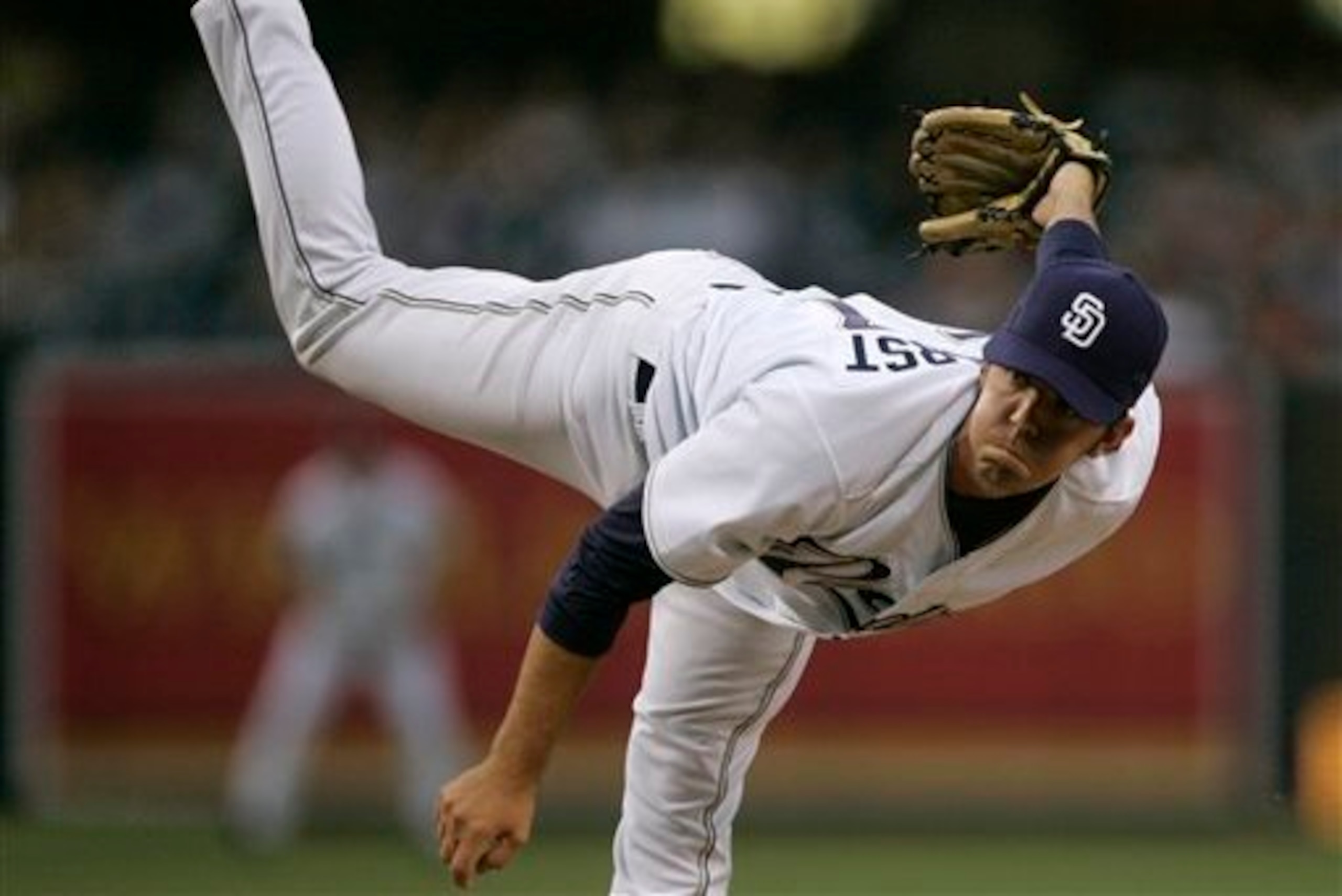
The first thing I can tell you about pitching on short rest is that it's like going to the gym when you're already sore. You can still go, but it hurts, your chance for injury increases and you get more bad from it than good.
Pitching on short rest feels like pitching after someone welded your muscles together. Instead of that fluid, fresh sense you have when fully rested, you feel all the unhealed scar tissue tearing as you wind your arm. Your scapula, that big, break-providing muscle in your back, feels like dry pie crust. Rusted, unoiled metal, grinding away on itself.
Once you get warm and start throwing, the pain doesn't so much go away as it turns dull, steady, like a throbbing bruise. You feel swollen, and, in truth, you are: full of lactic acid and dead blood that hasn't been flushed out yet.
This is why most starters run so much in between outings—to help the circulatory system flush out the toxins that come from extreme fatigue. Out with the bad blood, in with the good. But if you're expected to pull double shifts, you have to reserve your maintenance-routine energy for competition. After all, that's where your make-or-break career numbers are accumulated.
And it's that accumulation of numbers that's the worst of it, not the pain. Hell, if pain stopped players who committed their life to playing 162 games a season, there would be 100-man active rosters.
Everyone plays through something. The worst is how the pain causes you to do things you wouldn't normally do when healthy. It limits you, which in turn means you need to find ways, always unnatural, to get past those limits.
This is when bad habits start. You drop your arm slot. You change your delivery. You land funky. You don't extend on your fastball or finish your curveball. You shy away from pitches that hurt more than others. You lose velocity but think like you still have it. You put out a secondhand product but expect to get firsthand results. Sometimes you get lucky. Sometimes you get screwed.
More often than not, when you aren't you out there on the mound, bad things tend to happen. Baseball always tells you to pitch to your strength and play your game. Well, it's not your game when you're pitching hurt; instead, it's the game of trying to get as much as you can from whatever it is you have left over from the game that was your game.
In the postseason, you tend to think in the haze of the moment, that the baseball gods will respect and reward you for your sacrifice. Your diminished effectiveness will be effective enough. In a sense, you fall in love with your own narrative. If you come up big, you'll always be seen as a hero.
Unfortunately, if you don't, no one will say to you, "It's OK; you didn't have your best stuff today and we're going to make a note of that on your permanent record, so the folks who pay you based on your stats know they're inflated because you were doing the team a solid."
Pitchers aren't born creatures of routine. That routine gets formed out of respect for the physical needs of the pitcher. Changing that routine has physical and mental consequences.
As a freshman in college, pitching from the pen, I asked my pitching coach when I would get a turn to start. His response: "You'll get to start whatever batter we decide to bring you in against, be it the first one, the last one or any of the ones in between."
Summation: A pitcher's job is always the same—get an out. That said, I've known starters who can't pitch out of the pen because they don't have enough time to warm up and bullpen arms who throw an entire game in warm-ups because they're given too much time.

For players in the stratosphere of Kershaw or Wainwright—names you will most likely see pulling double-duty on short rest this postseason—they already have established roles they need not stray from.
They've also got money, success, respect and a slew of well-paid, extremely talented arms around them. Arms whose sole purpose is to bail them out and afford them rest so they don't get hurt, fall into bad habits or get out of the routine that makes them so effective.
Moreover, premium, resilient pitchers are more rare and more expensive than ever before. So much so that in this increasingly quantifiable age, where production to dollar value is measured incessantly, one could argue that winning the World Series at the expense of breaking your ace or sending him (and his bloated contract) into an early decline is not worth the payout.
You could also ask why a team pays all those non-ace arms so much money if it's not willing to use them when the ace arm is, in fact, not able to pitch like an ace. And, with player earnings going up and pitchers making the lion's share of it, why not temper the urge for heroics in one game with awareness of value over many?
As I said, because players—at least those of us who can—play for that big moment. To be heroes. For the grand opportunity that may present itself. It means more than the money.
Even if we do break, we are, for whatever reason, proud we did it when it mattered. An honorable if illogical sacrifice for glory. And while there is that other side, the value of health and its financial consequences, it's not big enough—and may never be—to make a player flinch at the chance to be a legend.
Dirk Hayhurst is a former pitcher who spent nearly a decade in professional baseball between MiLB and MLB. He is also an accomplished author and has appeared on Baseball America, ESPN, TBS' MLB postseason broadcasts, Sportsnet Canada and more.
.png?w=2560)


.jpg?w=2560 "NFL House in Paris Closes for Protests")
.jpg?w=2560 "Trevon Diggs Cut by Seahawks")




